Penn Pledges $100 Million to the School District of Philadelphia
University of Pennsylvania President Amy Gutmann, Philadelphia Mayor Jim Kenney, Philadelphia School Board President Joyce Wilkerson, and Superintendent of the School District of Philadelphia William R. Hite, Jr., announced that Penn will contribute $100 million to the School District of Philadelphia, representing an unprecedented commitment to the City and its public schoolchildren. This is the largest private contribution to the School District in its history.
Penn’s $100 million contribution to the School District—$10 million annually for 10 years—will be used to remediate environmental hazards, including asbestos and lead, in Philadelphia’s public school buildings. This funding will have an immediate impact, supplementing the ongoing efforts of the City and District, and enabling them to dramatically accelerate and expand their response to environmental concerns in our public schools.
“Nothing is more important than the health and welfare of our children, and few things are more crucial to a community than the safety and quality of its public schools,” said President Gutmann. “When Philadelphia’s schools and schoolchildren succeed, all Philadelphia succeeds. We are proud to be able to partner with our City and School District to significantly improve the learning environment for Philadelphia’s schoolchildren in a way that will have a long-lasting impact on the health, safety, and well-being of our entire City. This historic commitment by the University and Penn Medicine will help support a most critical and immediate need that will benefit generations of Philadelphia students, their teachers, and school staff.”
“All Philadelphia students deserve high quality and safe learning environments, but we know that achieving this system-wide in our aging school buildings requires significant resources,” said Mayor Jim Kenney. “I commend the University of Pennsylvania and Dr. Amy Gutmann for this historic gift. It will go a long way in accelerating the District’s aggressive environmental remediation work. I also hope it will inspire other institutions to follow Penn’s lead. It takes all of us working together—government, business, non-profit, and philanthropy—to tackle our most pressing challenges and ensure our kids have access to great schools in every neighborhood.”
Mayor Kenney, Superintendent Hite, and the Board of Education have embarked on aggressive environmental remediation efforts in School District buildings. The School District currently has an estimated $4.5 billion in unmet capital needs. Since 2018, the School District has fully stabilized lead paint in 54 elementary schools, completed work to certify an additional 25 schools as Lead Safe, and invested more than $23 million to complete asbestos-related projects. The District announced in November 2019 an Environmental Safety Improvement Plan that outlined new safety and inspection measures. The District approved $41 million in January 2020 for asbestos testing, abatement, project management, and other remediation resources.
“Every student in Philadelphia deserves the dignity of a safe and welcoming school building,” said School Board President Joyce Wilkerson. “This tremendous gift will not only help us to ensure these safe spaces for every student, it will free us to direct our focus to investing in a new and compelling vision for school facilities. I thank the University of Pennsylvania for this incredible gift which is an investment in all of our city’s children.”
“We are thrilled to have this very generous contribution from the University of Pennsylvania,” said Dr. Hite. “It will be a great support as we move forward to address the immediate environmental conditions in all of our schools. This will allow us to shift our focus to creating 21st century learning environments for all students.”
Penn’s commitment to environmental remediation is one of many contributions that the University makes to the School District and the broader community to provide important support to public education in Philadelphia. In partnership with the School District and the Philadelphia Federation of Teachers, the University has invested more than $25 million over the past 15 years in the District’s top-performing Penn Alexander School, providing land for the school, funding for construction, and annual payments of approximately $1 million for operations. In 2013, the University deepened its commitment to the nearby Henry C. Lea Elementary School with an expanded partnership. With a Penn Graduate School of Education-based liaison on site serving as a partnership coordinator, 16 Penn-affiliated organizations facilitate 37 district partner programs at Lea. Penn’s 12 undergraduate, graduate, and professional schools, led by Penn’s Graduate School of Education and Penn centers like the Penn Museum and Penn Libraries, operate more than 500 activities in 248 schools in every catchment area throughout the School District.
“Penn’s contribution will catalyze even more aggressive and comprehensive remediation of environmental hazards in all our public schools,” said President Gutmann. “Philadelphia is our home. Education is at the very heart of all that we do at Penn, and we will continue to ensure that we are doing all that we can to support the success of public education in Philadelphia. Our schoolchildren and teachers deserve no less.”
Lynn Meskell: Penn Integrates Knowledge University Professor
 Penn President Amy Gutmann and Provost Wendell Pritchett announced the appointment of Lynn Meskell as the University of Pennsylvania’s twenty-sixth Penn Integrates Knowledge University Professor.
Dr. Meskell, a world-renowned archaeologist, is the Richard D. Green University Professor, with joint appointments in the department of anthropology of the School of Arts and Sciences, the historic preservation program and department of city and regional planning in the Weitzman School of Design, and the Asian and Near East Sections of the Penn Museum, as a curator.
“Lynn Meskell exemplifies Penn’s commitment to bridging theory and practice and to using multidisciplinary perspectives to improve human understanding,” said President Gutmann. “Her work as an internationally preeminent archaeologist and anthropologist has helped explain and document the development of civilizations across Africa and Eurasia. She has also harnessed this fieldwork to improve the frameworks that scholars use to model human culture and to strengthen the important work of museums in bringing this knowledge to communities around the world.”
Dr. Meskell was most recently Ely Professor of Humanities and Sciences in the department of anthropology at Stanford University, where she had taught since 2005, and is the AD White Professor-at-Large at Cornell University from 2019 to 2025. Born in Australia, she has done pioneering archaeological work across the world, including research into Neolithic Turkey and New Kingdom Egypt. Her most current work explores World Heritage sites in India, especially how heritage bureaucracies interact with the needs of living communities, and the implications of archaeological research for wider contemporary challenges of heritage, national sovereignty, and multilateral diplomacy. Her landmark institutional ethnography of UNESCO World Heritage, A Future in Ruins: UNESCO, World Heritage and the Dream of Peace (Oxford University Press, 2018) – awarded the 2019 Best Book Award from the Society for American Archaeology – reframes the politics of preservation in relation to international history and global practices of governance and sovereignty.
Dr. Meskell served for six years as director of the Stanford Archaeology Center, is the founding editor of the Journal of Social Archaeology, and has published a dozen books, which explore the connections between archaeological research and a wide range of contemporary areas including ethics, class, feminist theory, and postcolonialism. She has been awarded grants and fellowships from the Mellon Foundation, the National Science Foundation, the Australian Research Council, and the American Academy in Rome, among many others, and is an Honorary Professor at the University of Oxford, the University of Liverpool, Shiv Nadar University, and the University of the Witwatersrand. She earned a PhD in Archaeology from the University of Cambridge, following a BA with First Class Honors from the University of Sydney, and began her academic career at Columbia University, where she taught from 1999 to 2005, following a two-year Salvesen Research Fellowship at New College of Oxford University.
Scott L. Bok: Next Chair of Penn Board of Trustees
 The University of Pennsylvania today announced that Scott L. Bok will become Chair of the Board of Trustees of the University of Pennsylvania effective July 1, 2021. Mr. Bok will succeed David L. Cohen, who has served as chair since November 2009.
Mr. Bok, a Penn alumnus, is chairman and chief executive officer of Greenhill & Co., Inc., an independent investment bank that he joined as a managing director in 1997, shortly after it was founded. Listed on the New York Stock Exchange, Greenhill focuses on providing financial advice globally on signifcant mergers, acquisitions, restructurings, and financings to corporations, partnerships, institutions, and governments.
“Scott is deeply committed to the mission and success of our University,” said Penn President Amy Gutmann. “Scott has an extensive understanding of the issues impacting the University, our faculty, staff, students and alumni. He brings decades of expertise in the business and financial world to bear, the firsthand experience of being a triple Penn degree holder and a double Penn parent, and I know he will provide wise counsel to the trustees and University leadership. We are very grateful that he is willing to make this important commitment to his alma mater.”
Current Board Chair David L. Cohen echoed President Gutmann’s praise of Mr. Bok. “Scott has been an outstanding trustee and someone who has been phenomenal to work with in his years on the board,” said Mr. Cohen. “Scott cares passionately about Penn. At a time when our country and higher education are facing many unique challenges, it is critical to have someone with Scott’s depth of knowledge and commitment as the leader of our trustees. He will be a tremendous chair and will assume this important leadership position with the full and unanimous support of the board.”
In welcoming Mr. Bok’s appointment, President Gutmann also lauded Mr. Cohen’s accomplishments as chair. “Penn is very blessed to have David Cohen serving magnificently as board chair for over a decade. As the longest serving chair in recent Penn history, he has been absolutely tireless in his commitment to Penn, and the University is so much better because of his stewardship. I cannot overstate what an extraordinary job David has done. We are most fortunate that he will continue to serve as a valued and respected member of our board.”
Before joining Greenhill, Mr. Bok was a managing director in the mergers, acquisitions and restructuring department of Morgan Stanley, where he worked from 1986 to 1997, based in New York and London. From 1984 to 1986, he practiced mergers and acquisitions and securities law at Wachtell, Lipton, Rosen & Katz in New York.
Mr. Bok serves as a member of the Board of Directors of Greenhill and the Board of Trustees of the American Museum of Natural History. A strong advocate of education equality, he is chair of the board of Prep for Prep, a New York-based organization that focuses on educational opportunities for students of color through college preparation, as well as support through college. He has also served on the board of the Chapin School in New York.
Mr. Bok first became a Penn trustee in 2005. Following 10 years of service as a term trustee, he was elected a charter trustee in 2016. He currently serves as vice chair of the Board and has been on the Investment Board since 2016. His committee service includes the Executive, Audit & Compliance, Academic Policy, Compensation, Development and Nominating committees.
Mr. Bok has also served on the Board of Advisors for the School of Arts & Sciences and the Board of Governors for the Lauder Institute of Management & International Studies. He was also deeply involved in the Making History and Power of Penn fundraising campaign steering committees.
The Bok family has contributed to Penn in many ways. The Bok Family Professorship in the Humanities in the School of Arts & Sciences was established in 2007 by Mr. Bok, his wife, Roxanne Conisha Bok (C’81), and the Bok Family Foundation. In 1996, as a member of the Kelly Writers House Advisory Board, he and his wife created the Bok Endowed Visiting Writers Series Fund, enabling honoraria compensation for a varied roster of novelists, poets, and journalists, as well as filmmakers, graphic novelists, critics and more.
A native of Michigan, Mr. Bok makes his home in New York City. He holds three Penn degrees. In 1981, he received a BSE in economics from the Wharton School, as well as a BA in political science from the College. He earned his JD from Penn Carey Law School in 1984. As an undergraduate, Mr. Bok was active with The Daily Pennsylvanian student newspaper and was appointed as student liaison to the Board of Trustees. He was an editor of the law review at Penn Carey Law School. The Boks are parents of son Elliot, a 2017 graduate of Wharton, and daughter Jane, a College junior.
From the Provost and EVP: Adhering to the City of Philadelphia’s COVID-19 Guidelines
A Message to the Penn Community, November 18, 2020
We are grateful to every member of the Penn community for your patience, resilience, and creativity as we navigate the global pandemic. The situation continues to evolve from day to day, bringing both positive news about vaccine trials and worrisome news about infection rates.
We know that many of you have questions about the new guidelines issued on Monday by the City of Philadelphia. These measures include the closure of indoor dining, gyms, museums, and libraries, among other public spaces, and restrictions on both indoor and outdoor gatherings. It is critical that every member of the Penn community in Philadelphia follow these guidelines, especially students living on or around the Penn campus. We are all in this together, and we must take collective responsibility for lowering the infection rate in the coming weeks and months, above all during the imminent holiday season.
Penn research operations continue, as do our on-campus testing operations. While there is currently no change to the plans for the spring semester announced at the end of October, we are continuing to monitor the situation carefully in partnership with local and regional public health agencies. Designated faculty and staff should continue to work from campus; most employees should continue to work from home. Penn Medicine faculty and employees should follow local guidance. Students should continue to follow the guidelines sent last week from our Chief Wellness Officer and Vice Provost for University Life, particularly if you are planning any travel for the Thanksgiving holiday. Students planning to return home to complete the semester are encouraged to do so now. All of us must continue to wear facial coverings, wash our hands, and maintain physical distance, the best ways to reduce transmission for ourselves and everyone around us.
If you are planning to travel for the Thanksgiving holiday, please be aware of the newest guidance from the Pennsylvania Department of Health, which requires a negative COVID-19 test 72 hours before returning to Pennsylvania. If testing is not available, travelers will be required to quarantine for 14 days.
We are enormously proud of the shared sense of purpose that we are seeing from every member of our community. Penn has thrived for hundreds of years, and we are confident that there are better days ahead in 2021. Thank you for your best efforts to bring us safely to that future.
—Wendell Pritchett, Provost
—Craig Carnaroli, EVP
Of Record: Rules Governing Final Examinations
The Rules Governing Final Examinations govern final examinations at the University of Pennsylvania. These rules are published each semester as a reminder to the academic community.
For Fall 2020, all exams must be conducted online, other than for clinical courses.
Instructors should hold asynchronous final exams whenever possible. Resources for developing asynchronous final exams, including both timed and untimed formats, can be found on the Center for Teaching and Learning website.
If an instructor believes that their exam must be held synchronously, the exam must be held at the time designated on the Final Exam Schedule in order to avoid conflicts. Students who are residing in a time zone other than Eastern Standard Time must be provided accommodations for synchronous timed exams.
The use of remote proctoring is not permitted for courses that are normally held in person unless explicitly authorized. View the Policy on Remote Proctoring.
- No instructor may hold a final examination nor require the submission of a take-home final exam except during the period in which final examinations are scheduled; when necessary, exceptions to this policy may be granted for postponed examinations (see 3 and 4 below). No final examinations may be scheduled during the last week of classes or on reading days.
- No student may be required to take more than two final examinations on any calendar day during the period in which final examinations are scheduled. If more than two are scheduled, the student may postpone the middle exam. If a take-home final exam is due on a day when two final examinations are scheduled, the take-home exam shall be postponed by one day.
- Examinations that are postponed because of conflicts with other examinations, or because more than two examinations are scheduled on the same day, may be taken at another time during the final examinations period if the faculty member and student can agree on that time. Otherwise, they must be taken during the official period for postponed examinations.
- Examinations that are postponed because of illness, a death in the family, for religious observance or some other unusual event may be taken only during the official periods: the first week of the spring and fall semesters. Students must obtain permission from their Dean’s office to take a postponed exam. Instructors in all courses must be willing to offer a make-up examination to all students who are excused from the final examination.
- No instructor may change the time or date of a final exam without permission from the appropriate Dean.
- No instructor may increase the time allowed for a final exam beyond the scheduled two hours without permission from the appropriate Dean.
- No classes or required class activities may be held during the reading period.
- The first examination of the day begins at 9 a.m. and the last examination concludes by 8 p.m. There will be one hour between exam time blocks.
- All students must be allowed to see their final examination. Exams should be available as soon as possible after being graded with access ensured for a period of at least one regular semester after the exam has been given. To help protect student privacy, a student should have access only to their own exam and not the exams of other students. Therefore, for example, it is not permissible to leave student exams (or grades or papers) in publicly accessible areas.
- Students may not be asked for their Social Security numbers. Instructors may not publicly display a student’s Penn ID or any portion of the Social Security number, nor use names, initials or any personally identifiable information to post grades. Even when an identifier is masked or absent, grades may not be posted in alphabetical order, to protect student privacy.
- Final exams for College of Liberal and Professional Studies (LPS) courses must be given on the regular class meeting night during the week of final examinations. No change in scheduling is permitted without unanimous consent of all students in the class and the director of LPS. LPS final exams may not be administered during the last week of class or on a reading day.
In all matters relating to final exams, students with questions should first consult with their Dean’s office. Faculty wishing to seek exceptions to the rules also should consult with their Dean’s office.
—Wendell Pritchett, Provost
Penn Libraries: Strategic Plan 2020-2025
In this epoch shaped by environmental uncertainty, a global pandemic, and a national focus on racial justice, change is the only constant. During these unprecedented times, the Penn Libraries remains agile and responsive, bolstering the University’s mission of teaching, research, and learning, with the evolving needs of our communities at the forefront of our priorities. The world has changed dramatically since we began writing our strategic plan in fall 2019, but we are unwavering in our commitment to deliver collections and services at point of need, anytime, anywhere. Looking ahead, we must continue building our capacity to address the essential information challenges and opportunities in an ever-changing world. We must sharply increase our efforts to acquire and provide digital content, to digitize pre-existing Penn-owned collections, and to make strategic investments in technology. It is critical that we continue to reimagine our physical spaces and services in increasingly virtual environments. At the same time, we must continue and strengthen the conversations launched in spring 2020 on what we as an organization can contribute to local and national movements to address the inequities of our society. Libraries are built to serve all people—whether in brick and mortar buildings or through virtual interactions. In building deep and distinctive collections, preserving knowledge, and increasing access to it, we have the ability to inspire, to offer hope, and to change people’s lives. As we move forward with our strategic plan, we reaffirm our commitment to creating a living and learning environment that is truly transformative, safe, and welcoming for all. Thank you for your support and partnership in advancing knowledge to power Penn and better the world.
—Constantia Constantinou, H. Carton Rogers III Vice Provost & Director of Libraries

After an 18-month process that entailed gathering and synthesizing information from the University of Pennsylvania community and beyond, the Penn Libraries has released a strategic plan to guide its work through 2025.
“Our extraordinary Penn Libraries are at the heart of our campus mission,” said Provost Wendell Pritchett. “They inspire learning for every member of our community, while facilitating research and scholarship that change the world. This rigorous strategic plan, developed with extensive input across our campus, will help us redefine library services to meet the evolving needs of the Penn community, especially in response to the many changes of this year and the years ahead.”
Through vision and mission statements, shared organizational values, and four core strategic priorities, the plan aligns the Libraries’ work with the Penn Compact 2022 pillars of inclusion, innovation, and impact, and the University’s goal of advancing knowledge for good.
“Our strategic priorities are the compass for navigating our future,” said Constantia Constantinou, H. Carton Rogers III Vice Provost and Director of the Penn Libraries. “With the plan in place, we will continue and expand the work we do with our campus partners and our wider communities to inspire staff and patrons and provide the tools and resources they need to thrive.”
The Libraries launched its strategic planning efforts in spring 2019 in collaboration with DeEtta Jones and Associates. As a first step, a Strategic Planning Steering Committee was formed with representatives from across the Libraries’ staff.
“Our Strategic Planning Steering Committee represented a constellation of Penn Libraries history and expertise,” said Michael Williams, Head of Global Studies Technical Services and co-facilitator of the planning committee. “We contributed experience in collection building, metadata management, student success, research partnerships, data analytics, storytelling, and above all, stewardship of our Libraries’ physical and digital spaces and care for the collections and patrons who occupy them.”
Charged with designing an actionable vision for the Libraries, the committee worked together to analyze trends across and beyond the library profession, examine the current state of peer and aspirational peer institutions, and convene structured conversations with Libraries staff to develop collective goals. Throughout the process, Penn faculty, students, and researchers were engaged through focus groups, presentations, and conversations on campus.
During spring 2019, the Libraries also engaged Athenaeum21, a user-centered strategy and technology firm, to review the Libraries’ digital programs, systems, and services and offer input to the planning process. As part of the review, Athenaeum21’s principals met with Penn Libraries staff members and stakeholders across the University. They provided recommendations to the Libraries on designing a digital strategy to meet the evolving needs of the Penn community and become a leader in digital strategy, collections, programs, and scholarship.
Of course, “evolving needs” took on new significance over the last seven months, with challenges presented by environmental uncertainty and a global pandemic, and an increased national focus on racial justice.
Along with many institutions, in spring 2020 the Libraries pivoted to provide services and resources in a largely virtual environment due to safety measures put in place during the pandemic. The Libraries’ leadership and staff took action to address the very real and urgent need to increase acquisition and delivery of digital content, applying creative solutions and accelerating strategic investments in technology. They also emphasized expert, personalized virtual support from librarians, from live chat services to videoconference consultations.
“Yes, the world has changed since we began writing this plan,” Dr. Constantinou said. “But we are committed to providing a personal touch and delivering collections, services, and expertise at point of need, anytime, anywhere. We are also committed to creating a living and learning environment that is truly transformative, safe and welcoming for all. As the world turns, we remain agile, responsive, and resilient.”
Next steps? To move from plan to action, ten staff-led teams will launch projects that connect the plan’s priorities and strategies to the overall operations of the Penn Libraries.
Find the full strategic plan on the Libraries’ website, and follow the Libraries’ news blog for stories and updates throughout the coming years.
Penn Medicine and Virtua Health: Strategic Alliance Until 2023
On November 12, Penn Medicine and Virtua Health announced the renewal of their strategic alliance in cancer and neuroscience services for another three years. The collaboration, which began in 2015, has enabled South Jersey residents to access comprehensive health care closer to home from a cross-disciplinary team of Penn and Virtua clinicians.
As part of the alliance, the two organizations are advancing plans to open South Jersey’s first proton therapy center on the Virtua Voorhees Hospital campus. Construction began in summer 2020, with an opening date anticipated for summer 2022. From evaluation to treatment, patients will access everything they need at the new facility, including clinical trials involving proton therapy.
“Over the first five years of our alliance with Virtua, thousands of patients in South Jersey have had access to the highest level of health care right in their own community,” said Kevin B. Mahoney, CEO of the University of Pennsylvania Health System. “The interdisciplinary care teams at Penn Medicine and Virtua have established a pathway for patients to access more robust, comprehensive care and treatment options. In the years to come, this extended partnership will provide patients with even more access to the health care services they need.”
Specifically, for cancer care, the Penn Medicine Virtua Cancer Program includes medical oncology, radiation oncology, surgical oncology, microvascular reconstructive surgery, and an array of support services, including nurse navigation, cancer genetics, and high-risk screenings. The program offers locations in Burlington, Camden, and Gloucester counties – most notably, the new Virtua Samson Cancer Center in Moorestown, NJ and the Virtua Voorhees Cancer Center.
The Penn Medicine Virtua Neurosciences Program is another way the two health systems are working together to ensure the highest level of care is available to Virtua patients and all South Jersey residents. Penn’s neuroscience experts provide neurosurgery, interventional radiology, and stroke support— including access to 24/7 imaging analysis to assess patients and evaluate treatment options.
“One of the best things about Penn Medicine is its commitment to extending outstanding, cutting-edge care to patients in communities outside of Philadelphia,” said Daniel Yoshor, chair of neurosurgery and vice president of Clinical Integration and Innovation in the Perelman School of Medicine at Penn. “The neuroscience collaboration with Virtua is a terrific example of that commitment and it has allowed us to bring advanced neurological care directly to patients in South Jersey. Virtua is a great partner, and we are pleased to continue this important program for years to come.”
The Penn Medicine and Virtua alliance not only impacts patient care and patient access to care, but it has also opened doors for additional education and training opportunities. Over the course of the next three years of this partnership, Penn Medicine and Virtua will continue to expand its collaborative efforts in both education and patient care, while exploring ways to bring even more to patients in South Jersey, like clinical trials.
“The world has changed considerably in the five years since our strategic alliance began,” said Dennis W. Pullin, president and CEO at Virtua Health. “What remains constant, however, is our shared commitment to providing people with the care they need and combining our resources to be an effective force for good.”
Vagelos Laboratory for Energy Science and Technology

The Vagelos Laboratory for Energy Science and Technology has received design approval from the University of Pennsylvania Board of Trustees. The new $173 million facility at 3200 Walnut Street will consolidate existing and emerging energy research programs by providing 110,000 square feet of state-of-the-art laboratory space. The building is a key element of the School of Arts & Sciences’ strategic plan and the University’s commitment to advancing research in energy and sustainability.
The project has been made possible through gifts totaling $70 million to the School of Arts & Sciences from P. Roy Vagelos, a Penn alumnus, and his wife, Diana T. Vagelos. This support included a 2019 gift of $50 million. An additional gift of $20 million earlier this year has allowed the building’s design to expand from six to seven stories. The project expansion will provide space to accommodate continued growth of the energy research program and enable additional faculty hires in the future.
“We are so grateful to Roy and Diana for their enduring support of Penn’s groundbreaking research in the area of energy research and sustainable energy solutions,” said Penn President Amy Gutmann. “Their tremendous generosity and trust in Penn’s collaborative approach, bringing Penn’s world-renowned physical scientists and engineers together to solve scientific and technological problems related to alternative sources of energy and energy use and storage, is a testament to Penn leadership and innovation in seeking a sustainable future.”
The facility will house the Vagelos Institute for Energy Science and Technology, bringing researchers from the School of Arts & Sciences and the School of Engineering and Applied Science together to solve scientific and technological problems related to energy. It will also be a home for the Vagelos Integrated Program in Energy Research (VIPER), an undergraduate dual degree program run jointly by Arts & Sciences and Engineering. Steven J. Fluharty, dean of the School of Arts & Sciences and Thomas S. Gates, Jr. Professor of Psychology,
Pharmacology, and Neuroscience, said the new Vagelos Laboratory for Energy Science and Technology aligns with a major pillar of the School’s strategic plan: Energy, sustainability, and the environment. “We have steadily built on investments in energy science, including faculty hiring and establishing the Vagelos Institute for Energy Science and Technology,” said Dean Fluharty. “Today we present a plan for a world-class facility, all this made possible through the continued generosity of Roy and Diana Vagelos.”
Dean Fluharty also acknowledged the partnership the School of Arts & Sciences has with the School of Engineering and Applied Science. “Together, we will ensure that basic discoveries translate into impactful technologies,” said Dean Fluharty.
Designed by Behnisch Architekten, the Vagelos Laboratory for Energy Science and Technology includes highly functional, flexible, and efficient wet chemistry research labs and optics research labs serving researchers in both schools. The facility also includes a complement of collaborative spaces and offices with a new landscaped courtyard linking the Walnut Street gateway and Shoemaker Green to the southwest.

 Silvia Pierini Dunn, an administrative coordinator in the department of religious studies, died on November 15 after a long battle with lung cancer. She was 51.
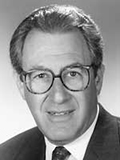 Former University Trustee Lawrence (Larry) Nussdorf (W’68) died on November 13. He was 74.
 Paul Morris Weinberg, a professor emeritus CE of pediatrics at the Perelman School of Medicine and the Children’s Hospital of Philadelphia, died on October 15. He was 74.
 Penn Dental Medicine’s Eva Anadioti has been recognized by the American College of Prosthodontists (ACP) as this year’s recipient of the Presidential Citation Junior Educator of the Year Award. The award was presented as part of the ACP’s 50th Annual Session, held virtually from November 1-7.