Nader Engheta: IOP Isaac Newton Medal and Prize
_resized.jpg) Nader Engheta, H. Nedwill Ramsey Professor in Electrical and Systems Engineering, Bioengineering and Materials Science and Engineering, has been awarded the 2020 Isaac Newton Medal and Prize by the Institute of Physics (IOP). The IOP is the professional body and scholarly society for physics in the UK and Ireland.
Nader Engheta, H. Nedwill Ramsey Professor in Electrical and Systems Engineering, Bioengineering and Materials Science and Engineering, has been awarded the 2020 Isaac Newton Medal and Prize by the Institute of Physics (IOP). The IOP is the professional body and scholarly society for physics in the UK and Ireland.
Dr. Engheta has been recognized for “groundbreaking innovation and transformative contributions to electromagnetic complex materials and nanoscale optics, and for pioneering development of the fields of near-zero-index metamaterials, and material-inspired analogue computation and optical nanocircuitry.”
“As one of the original pioneers of modern electromagnetic metamaterials, way ahead of his time, Engheta’s creativity has opened doors to numerous other new topics and innovations in nanophotonics and physics of light,” says the IOP. “His ideas of ‘materials that become analogue computers’ connect nanoscience of materials to ultrafast analogue computation with impacts in various fields of science and technology.”
Last year, Dr. Engheta published a study in Science that demonstrated this new form of computation, detailing a metamaterial device that can solve complex equations using electromagnetic waves.
As the recipient of the 2020 Isaac Newton Medal and Prize, Dr. Engheta will receive £1,000 (approximately $1,188) and a certificate, as well as an invitation to lecture at the Institute. Dr. Engheta is also the recipient of the Ellis Island Medal of Honor, Max Born Award, and IEEE Nanotechnology Council Pioneer Award in Nanotechnology, and was named a “Beacon of the Photonics Industry.“
25th Annual Perelman School of Medicine Awards of Excellence
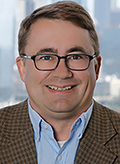 Ben E. Black, Eldridge Reeves Johnson Foundation Professor of Biochemistry & Biophysics, is the recipient of this year’s Stanley N. Cohen Biomedical Research Award. Dr. Black’s research centers on understanding a major question in genetics: what defines human centromeres, the chromosomal loci that confer genetic stability at cell division? Among the questions being explored by his lab are how genetic inheritance works; how epigenetic information was transmitted to us from our parents; whether building new artificial chromosomes can help us understand how natural chromosomes work; and how the key enzymes protect the integrity of our genome specifically and potently activated by potential catastrophes like DNA beaks or chromosome misattachment to the mitotic spindle. In addition to his work to advance technologies for building synthetic chromosomes for research and medicine, an exciting new area of interest to emerge in recent years has been with the enzyme PARP-1: a key component for signaling DNA damage and an important clinical target for small molecule inhibition. He serves as co-director of the newly established Penn Center for Genome Integrity. Noting his seminal contributions as an international leader in his field, his nominators said of him, “What has allowed Ben to excel is his unique blend of scientific knowledge, exceptional creativity and combination of complimentary experimental expertise in biophysics and cell biology, thus allowing him to use truly innovative approaches and challenge traditional paradigms in the field.”
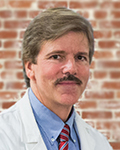 Douglas H. Smith, Robert A. Groff Endowed Professor of Research and Teaching in Neurosurgery, is the recipient of this year’s William Osler Patient Oriented Research Award. Dr. Smith is the foremost authority on diffuse axonal injury (DAI) as the unifying hypothesis behind the short- and long-term consequences of concussion. After realizing that concussion, or mild traumatic brain injury (TBI), was a much more serious event than broadly appreciated, he and his team have used computer biomechanical modeling, in vitro and in vivo testing in parallel with seminal human studies to elucidate mechanisms of concussion. The acute changes characterized by the Smith group have provided a pathway to develop novel diagnostic tools, and he has played a leading role in demonstrating that DAI can trigger long-term neurodegeneration that can persist for decades after injury. As the foremost expert in concussion and chronic traumatic encephalopathy, he was recently invited to serve as a founding member of the NFL’s Scientific Advisory Board and is also the Scientific Director of the Big 10/Ivy League’s Traumatic Brain Injury Research Collaboration. The U.S. State Department chose him to lead an investigation into neurological deficits induced in members of the embassy in Havana, which led to the development of diagnostic criteria for a newly discovered disorder, “Havana Syndrome.”
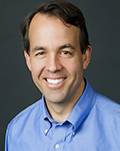 Peter P. Reese, associate professor of medicine and epidemiology, is this year’s recipient of the Samuel Martin Health Evaluation Sciences Research Award. Dr. Reese is an internationally-recognized leader in the areas of transplantation and nephrology. His research paved the way for the transplant field to make use of the thousands of discarded organs from donors infected with hepatitis C virus (HCV). Dr. Reese’s team recognized that new direct-acting antiviral medications created opportunities to offer these organs from deceased opioid epidemic victims to well-informed patients without HCV. His trials in the areas of kidney (THINKER), heart, and lung transplantation, designed with Penn colleagues, led to outstanding results, including 100% HCV cure rates, good allograft function, and manageable side effects. Through his collaboration with French researchers, Dr. Reese also paved the way for the use of organs from older and comorbid donors. He developed a widely cited ethical model of how centers should separate the interests of donors and transplant candidates and focus on donors with risk factors for kidney disease. He also made important contributions to health behavior change in transplantation and nephrology in the area of medication non-adherence. He is a winner of multiple awards, including the Presidential Early Career Award for Scientists and Engineers.
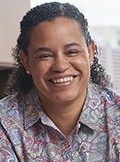 Donita C. Brady, Presidential Assistant Professor of Cancer Biology, is the recipient of this year’s Michael S. Brown New Investigator Research Award. Dr. Brady’s laboratory has been responsible for major conceptual advances in an entirely new field of oncogenic signaling that she herself helped to found. Her innovative research program centers on answering fundamental biological questions regarding the critical role played by metals, particularly copper (Cu), in oncogenic signaling and cancer biology. Her work involves a new paradigm in nutrient sensing and protein regulation in which redox-active metals control kinase activity, termed metalloallostery. The focal point of her research is the intersection of kinase signaling and Cu homeostasis and seeks to define the mechanistic regulating Cu-dependent kinases in order to target them via drug repurposing or development in the context of cancer. Her highly innovative and conceptually groundbreaking research has established her as a leader in her field, as evidenced by her numerous publications in high impact journals, her substantial extramural funding, her multiple invited talks, and the number of significant honors awarded to her. In addition, she co-founded Merlon, Inc. to enable targeting Cu-dependent activation of MEK1/2 and translate her findings to the clinic.
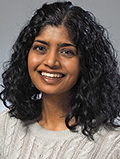 Meeta Prasad Kerlin, assistant professor of medicine, is the recipient of this year’s Marjorie A. Bowman New Investigator Research Award. Dr. Kerlin is internationally recognized as the world’s leading authority on how intensive care (ICU) physicians (“intensivists”) contribute to critically ill patients’ outcomes. Her primary research interests include optimizing the contribution of the ICU organization to outcomes of critical illness, implementation science with a focus on critical care interventions and understanding the role of the various clinicians involved in the care of ICU patients in quality of care and outcomes. Her work uses the tools of implementation science to reduce the knowledge-practice gap in ICUs in order to achieve the most cost-effective outcomes for hospitals’ sickest patients. She has successfully led complex secondary data analyses, randomized trials, experimental implementation studies, systematic reviews, survey studies, and qualitative studies. She led the only randomized clinical trial to evaluate the impact of intensivist staffing during nighttime hours on resource utilization and patient mortality. She also proved the more specific role of intensivists in the outcomes of patients who undergo mechanical ventilation. A colleague says Dr. Kerlin “is an exemplary physician and clinical educator and a uniquely talented research mentor,” and is an outstanding role model for women physician-scientists at Penn.
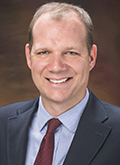 Neil D. Romberg, assistant professor of pediatrics at the Children’s Hospital of Philadelphia (CHOP) and the Jeffrey Modell Endowed Chair of Pediatric Immunology Research at CHOP, is the recipient of this year’s Lady Barbara Colyton Prize for Autoimmune Research. Dr. Romberg’s research is born out of the clinical observation that patients with primary immune disorders also develop inflammatory diseases. He has leveraged this observation to dissect the immunologic pathways that drive human autoimmunity. His work focuses on how molecular interactions between different follicular cell types influence germinal center formation and function. He has developed several effector T-cell/B-cell and effector T-cell/regulatory T-cell/B-cell co-culture methods using primary human cells permitting additional manipulation including gene over-expression, knockdown and modeling patient mutations via genetic editing. More recently, he has developed competencies in modern high-dimensional single-cell phenotyping and epigenetic analyses. One of his key innovations is applying these powerful new technologies to rare patients’ samples to discover new human immunology pathways that drive immunologic disease. His impressive program at CHOP and Penn has identified three new inborn errors of immunity, placing him in the top 1% of all gene sleuths in immunology. His work bridges patient care and translational research, with the goal of improving patient outcomes with personalized therapies.
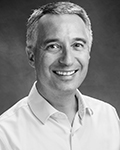 Matthew D. Weitzman, professor of microbiology, pathology and laboratory medicine, is the recipient of this year’s Arthur Asbury Mentoring Award. Dr. Weitzman has made wide-ranging contributions foundational to the fields of virology and DNA repair and has produced a number of highly successful trainees. One of his most significant contributions to the professional development of other faculty members has been his initiation of the Grant Proposal Success (GPS) groups. He began the first group in 2013 in the Children’s Hospital of Philadelphia (CHOP) Pathology department, and in subsequent years expanded this model throughout CHOP and PSOM. The GPS approach creates a flexible, community-based learning experience to teach participants effective grant-writing skills through peer review and cascading mentorship, applying structure and best practices. To date, over 250 trainees and Penn faculty have been involved in these groups, including Richard’s Society for GPS, begun in 2017 for tenure-track junior faculty. Assistant professors from various departments across PSOM attend these weekly meetings, and members credit Dr. Weitzman’s guidance and mentorship with the funding of previously unsuccessful grant proposals. As one Richard’s Society member said, “Dr. Weitzman has set a tone for providing and receiving critical feedback, sharing innovative ideas, and setting ambitious research goal and he has instilled in each of us how to be strategic in our grant development, how to push each other as colleagues, and to focus on the passion for science that has drawn each of us to Penn.”
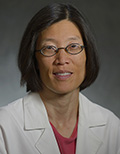 Carol M. Chou, professor of clinical medicine, is the recipient of this year’s Duncan Van Dusen Professionalism Award for Faculty. Dr. Chou is a nationally recognized expert in the field of relationship-centered healthcare communication, and her fundamental philosophy and approach to patient care and teaching is rooted in humanistic care. She holds a long-standing leadership position with the Academy on Communication in Healthcare, whose vision describes a health care system where all patients and providers feel valued, are treated equitably and with respect and compassion, and are actively engaged in healthcare decisions. Since her fellowship training at the Academy, she has worked to incorporate principles of relationship-centered care into daily behaviors, actions, and teachings. Dr. Chou applies this approach to her three teaching domains—clinical teaching of residents and students, serving as a personal coach for communication and professionalism, and didactic teaching in communication. In the medical student elective “The Healer’s Art,” she aims to instill those same values of respect for self and for others in her students. In her workshops on communication and professionalism topics, and as co-director of the Communication Curriculum for the Internal Medicine Residency Program, she creates dialogue and listens carefully to explore, honor, and respect her learners’ experiences.
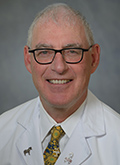 David C. Metz, professor of medicine at HUP, is this year’s Louis Duhring Outstanding Clinical Specialist Award recipient. Dr. Metz’s areas of expertise include esophageal diseases (EoE, GERD, achalasia), gastric diseases (H. Pylori infection, PUD, NSAID gastropathy) and neuroendocrine tumors-NETs. For the latter he is nationally and internationally recognized, has among the largest practices in the country, and recently served as the President of the North American Neuroendocrine Tumor Society. Dr. Metz integrates pathophysiology, diagnosis and management in patient care. He has long been the go-to physician for unusual “orphan” GI diseases such as short gut, gastroparesis, sclerosing mesenteritis and eosinophilic gastritides. An experienced clinical investigator, he is the principal investigator on numerous clinical grants, resulting in widely cited publications in leading journals. Dr. Metz is an expert endoscopist for esophageal, gastric and duodenal diseases, interpreter of esophageal manometric tests, and a leading analyst of radiologic tests. He has been recognized annually as a Philadelphia “Top Doc” for 25 years, and his worldwide referral practice is testimony to his wealth of knowledge and expert care. In addition, he is a superb teacher and mentor, able to integrate theory and practice with great ease.
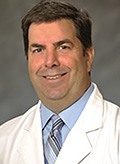 Louis M. DeStefano, clinical associate of family medicine and community health and Lead Physician, Penn Medicine Valley Forge, is the recipient of this year’s Sylvan Eisman Outstanding Primary Care Physician Award. For more than 20 years of his 33-year career, Dr. DeStefano has been one of the most respected primary care physicians in a busy Penn Medicine practice. He portrays all the qualities of an exemplary primary care physician, including outstanding clinical and diagnostic acumen, and the ability to provide care in a warm, compassionate and “patient centered” manner to a broad range of patients, always placing his patients’ needs above everything else. “Dr. DeStefano is unsurpassed as a primary care physician,” says one of his patients. “I’ve never come across anyone better.” “I travel to see him even with the location being over 45 minutes away,” says another. “I would never consider any other physician with my overall health.” He is described as a physician and colleague who exudes warmth and confidence in all his interactions, whether that be with other providers, staff, or his patients. Dr. DeStefano was the first physician chosen by Penn Medicine for the large, multi-specialty, clinical and teaching facility in Valley Forge, and the one selected to lead the implementation plans.
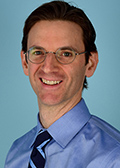 Christopher J. Miller, associate professor of dermatology at HUP, is the recipient of the Luigi Mastroianni Clinical Innovator Award. Malignant melanoma has traditionally been treated with excision based on the clinical appearance of the tumor, but more than 10% of patients with poorly defined melanomas on the head, neck, hands, and feet had incomplete excisions and required numerous surgeries. Dr. Miller recognized that doctors could assure complete melanoma removal and reduce the number of surgeries by treating specialty site melanomas with Mohs micrographic surgery and a relatively new immunohistochemical stain that highlights melanoma cells on frozen sections. This precise technique allows same-day excision, microscopic margin examination, and reconstruction with less than a 1% chance that the melanoma will recur. His team first published their technique and results in a landmark 2015 article, and they have since published a 0.3% long-term local recurrence rate in 1948 melanoma patients treated at Penn. Compared to the 10% historical rate of local recurrence after conventional excision, the high cure rates after Mohs micrographic surgery have spared hundreds of Penn patients unnecessary surgeries. Dr. Miller is at the forefront in the field of Mohs and reconstructive surgery, and he is the founder and Director of the highly regarded Penn Dermatology Oncology Center.
 Ronald B. Barg, Penn Primary Care/Clinical Care Associates physician, is the recipient of the 2020 Alfred Stengel Health System Champion Award. After joining Clinical Care Associates in 1995, Dr. Barg was instrumental in reorganizing this primary care physician network to increase its efficiency and bring financial stability. He was named executive director of CCA in 2005, a position he held until June 30, 2020, when he stepped down to return to clinical practice. Under his leadership, CCA grew to over 300 physicians across the region, including both primary care and multiple specialties. In 2017, He was named as inaugural medical director to the Primary Care Service Line, where he coordinated over 500 primary care practitioners across general internal medicine, family medicine, Penn Primary Care, and six hospitals. With his launch of the Service Line, he was able to engage stakeholders across Penn Medicine and successfully weave together a common framework and structure to help integrate, align and strengthen Penn Medicine’s primary care services, building a strong organizational culture and driving improvements in quality, operations, and finance. In particular, he oversaw a major improvement in patient experience scores over the past several years that have set a high water mark for the organization.


 The National Institutes of Health has selected two researchers from the Perelman School of Medicine at the University of Pennsylvania to receive its prestigious Director’s Awards, part of the NIH Common Fund’s High-Risk, High-Reward Research Program honoring exceptionally creative scientists.
 Provost Wendell Pritchett and Vice Provost for Faculty Laura Perna announce the appointment of Gwendolyn DuBois Shaw, associate professor of history of art in the School of Arts and Sciences, to the Class of 1940 Bicentennial Term Chair.
 Yue Hou, assistant professor of political science, has been named the Janice and Julian Bers Assistant Professor in the Social Sciences. Dr. Hou is an accomplished scholar of authoritarian politics and the politics of China. Her book, The Private Sector in Public Office: Selective Property Rights in China, addresses how China’s private sector manages to grow without secure property rights and proposes a new theory of selective property rights. Her work has appeared in a variety of academic journals, and has been featured in the New York Times, Boston Review, and South China Morning Post.
 Mayors for a Guaranteed Income (MGI), together with the University of Pennsylvania School of Social Policy & Practice (SP2), has established the Center for Guaranteed Income Research. The goal of the Center is to consolidate the key learnings from the pilots taking place in MGI member cities, to address knowledge gaps in the contemporary understanding of guaranteed income’s impact for Americans, and to allow the organization to layer data with anecdotal evidence in federal advocacy.
 Penn Nursing Dean Antonia Villarruel is one of five recipients of the 2020 Globy Award from the Global Philadelphia Association. The award recognizes international significant achievements of Philadelphia leaders in medicine and business entrepreneurship. The awardees will be honored during a virtual celebration on December 14.
 Penn alumnus Glenn Fuhrman earned an undergraduate degree from Penn in finance with a minor in art history in 1987, and an MBA from The Wharton School in 1988. He is the founder and CEO of his family office, Virtru Investment Partners. Previously, he co-founded MSD Capital, the private investment firm for Michael Dell, founded and was CEO of Dell Technologies, and served as managing director and head of the Special Investments Group at Goldman, Sachs & Co. Mr. Fuhrman serves as a board member of The Institute of Contemporary Art at the University of Pennsylvania, and as a trustee of The Museum of Modern Art and The TATE Americas Foundation. In 2008, he founded The FLAG Art Foundation in New York City as an independent exhibition space.
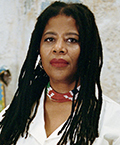 Simone Leigh has received numerous accolades for her work, most recently being named the American representative to the 2022 Venice Biennale—the first Black woman to represent the U.S. at this prestigious international exhibition. In addition, she has received a Creative Capital Award (2012), a John Simon Guggenheim Memorial Foundation Fellowship (2016), and the Hugo Boss Prize (2018), among other honors. Her work has been displayed in solo and group shows at major museums, galleries, and exhibition spaces, including a solo exhibit at the Solomon R. Guggenheim Museum in New York City (2019).