$6 Million Grant for Penn Engineering and CHOP Researchers to Make AI More Resilient to Attacks
 A team of researchers from the University of Pennsylvania’s School of Engineering and Applied Science and the Children’s Hospital of Pennsylvania (CHOP) have been awarded a five-year, $6 million Multidisciplinary University Research Initiative (MURI) grant. The MURI program is the signature research funding mechanism of the Department of Defense.
The Penn team’s proposal, “Robust Concept Learning and Lifelong Adaptation Against Adversarial Attacks,” aims to leverage insights from human cognitive development to make artificial intelligence systems better at protecting themselves from malicious disruptions.
With these systems increasingly interacting with the physical world, they are more vulnerable to being confused by ambiguous information. Rather than attempt to directly access the software that controls a self-driving car’s accelerator, an ill-intentioned person could subtly alter a speed-limit sign such that the car’s AI no longer recognizes it.
By imbuing AI with the kind of robust, adaptive learning capabilities that biological intelligences exhibit, these cyber-physical systems will be able to work with broader categories of information and thus be less prone to potentially dangerous confusion.
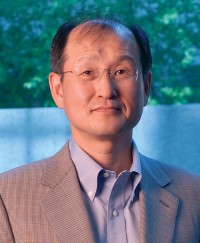
The team is led by Insup Lee, Cecilia Fitler Moore Professor in Penn Engineering’s departments of computer and information science (CIS) and electrical and systems engineering (ESE). Dr. Lee is also the director of the PRECISE Center, which is dedicated to researching advanced safety and security solutions of these cyber-physical systems.
Other team members include research assistant professor Osbert Bastani, Ruth Yalom Stone Professor Kostas Daniilidis, senior lecturer Eric Eaton, Eduardo D. Glandt Distinguished Professor Dan Roth, research assistant professor James Weimer, all in CIS, and Julia Parish-Morris, assistant professor of psychiatry at CHOP, who provides expertise in how children develop language and a theory of mind.
The need for insights from human cognitive development stems from the fact that current “deep learning” approaches require a significant amount of labeled data to be effective. Artificial intelligence systems may have perfect memory and react faster than any human, but their knowledge is limited to the narrowly focused domains that they have been explicitly trained in. Their ability to make correct decisions falls apart when applied in novel settings, while humans naturally apply lessons learned in one context to others with no explicit training.
“Robust, concept-learning techniques will assure that trained models operate effectively in the presence of malicious attacks, offering a substantial improvement over the vulnerability of today’s systems that can be easily compromised by even small anomalies,” Dr. Lee said.
“Research on neuro-inspired machine learning models has long been driven by biological principles, and the incorporation of learning mechanisms employed by young children is a natural extension of that,” said Dr. Weimer.
Altogether, this team’s work will benefit researchers and designers of autonomous systems by raising awareness of the danger these systems can present when placed in the real world, and by creating new tools and technologies to reduce these risks.
$5.4 Million Grant for Penn Medicine Researchers to Find Genetic Drivers of Testicular Cancer
 The international hunt to find more genetic risk markers for testicular cancer is expanding. A team of researchers led by Katherine L. Nathanson, deputy director of the Abramson Cancer Center and the Pearl Basser Professor for BRCA-Related Research in the Perelman School of Medicine at the University of Pennsylvania, was recently awarded $5.4 million over five years from the National Institutes of Health to continue the long-standing genomics work of the TEsticular CAncer Consortium (TECAC).
A total of nearly $7 million has been awarded to TECAC, which includes researchers from 27 institutions around the world, whose collaborative goal is understand the genetic susceptibility to testicular germ cell tumors (TGCT).
TGCT are the most common cancer in the United States and Europe in men between the ages of 15 to 45, and the number of cases has continued to rise over the past 40 years. Approximately 50 percent of the risk of disease is due to genetic factors, higher than for other cancer types.
To date, TECAC has identified 22 novel susceptibility alleles, bringing the total number of risk markers to 66. Dr. Nathanson led a study in 2017 published in Nature Genetics that identified eight of those markers in previously unknown gene regions, as well as four in previously identified regions.
Members of TECAC also were the first to identify CHEK2, a moderate penetrance gene for TGCT. Penetrance refers to the proportion of people with a mutation in specific gene. Unlike other solid tumor types (e.g. breast, ovarian), the inherited risk of TGCT is likely due to multiple variants rather than any single gene.
“Our work has revealed critical roles for genetic variants and mutations in testicular germ cell tumors and defined the biology of TGCTs as associated with defects in maturation of male germ cells, but there’s still much more to discover with this highly heritable disease,” Dr. Nathanson said. “This grant will allow us to continue to pool our resources and expertise to better understand its biology and etiology, as well as provide data that can help identify men at higher risk of the disease and in need of surveillance.”
The latest round of funding will focus on three initiatives: to identify rare and common variants using whole exome genetic sequencing from biosamples of more than 2,000 men; to conduct a transcriptome-wide association study, or TWAS, to identify novel candidate susceptibility genes in nearly 250,000 men (the largest to date); and to further evaluate any variants or gene discovered from those two projects using tools, such as CRISPR, in cells.
Other Penn collaborators on this grant (R01 CA164947 A1) include David Vaughn, Linda Jacobs, Li-San Wang and Mingyao Li.
Laura Alber and Ned Klingelhofer’s Gift to Endow SAS Professorship
Laura J. Alber, C’90, and Ned Klingelhofer, parents, have made a gift to establish the Alber-Klingelhofer Presidential Professorship to be held by a faculty member in Penn Arts & Sciences.
Presidential Professorships are awarded to exceptional scholars selected on the basis of their achievements with an emphasis on enhancing the diversity of Penn’s faculty. Presidential Professors enrich the academic community and bring new perspectives to our students and faculty.
“Laura and Ned’s thoughtful gift will provide the resources needed to recruit and retain dynamic faculty at the College,” said Penn President Amy Gutmann. “It is critically important that our professors represent diverse backgrounds and perspectives who can then share their knowledge and challenge our students to think critically. We appreciate Laura and Ned’s desire to support our core academic teaching and research mission, which will greatly benefit our students and ensure that they are stronger and more dynamic leaders when they embark on their futures.”
“In honor of my 30th reunion, we wanted to make a gift that would really have an impact,” said Ms. Alber. “Faculty members are leading scholars, but they also can create transformative experiences in the classroom. Making this gift is an expression of appreciation for my Penn Arts & Sciences education and an investment in learning for future generations of students.”
“I’m grateful for Laura and Ned’s continued partnership,” said Steven J. Fluharty, Dean and Thomas S. Gates Jr. Professor of Psychology, Pharmacology, and Neuroscience. “Advancing Faculty Distinction is a key priority in The Power of Penn Arts & Sciences Campaign. The Alber-Klingelhofer Presidential Professorship will be held by an outstanding member of our diverse group of dynamic, collaborative scholars.”
Ms. Alber graduated from the College of Arts & Sciences in 1990 with a degree in psychology. She is a University Trustee, a member of the Parent Leadership Committee, and a member of the Executive Committee of the Penn Arts & Sciences Board of Overseers. Ms. Alber is Chief Executive Officer, President, and Director of Williams-Sonoma, Inc. Mr. Klingelhofer is a portfolio manager at Bitterroot Enterprises and a member of the Parent Leadership Committee. Previously, Ms. Alber and Mr. Klingelhofer have supported the Alber-Klingelhofer Scholarship, the Ronald O. Perelman Center for Political Science and Economics, the Arts & Sciences Annual Fund, and Penn Athletics.
Peter Fixler: Chief Arborist, Morris Arboretum
 When Morris Arboretum began to establish its fundraising goals for the Ever Green campaign, which began in April 2018, several key priorities were obvious, none more so than the establishment of a $1.5 million endowed fund to support a Chief Arborist position. It is hardly imaginable that Morris Arboretum would function without a Chief Arborist, but the economic fallout from 2008 required exactly that. Since that time, it has been a key objective to reinstate this important position in a financially sustainable manner. Creating endowments for key positions is one of the most financially stable ways to sustain them.
Now, more than a decade later, the Arboretum is thrilled to announce that Peter Fixler has been hired as the Chief Arborist, a position made possible by the McCausland Foundation and Janet and John Haas, who have combined forces to fully endow the Chief Arborist position. In doing so, they have chosen to honor Paul W. Meyer, who recently retired after 43 years of service, 27 of those as the F. Otto Haas Executive Director. To be known as The Paul W. Meyer Chief Arborist, Mr. Fixler’s position will strengthen the Arboretum’s tree care program while also helping to advance arboriculture education and outreach programs.
“Funding the Chief Arborist position is something that we have been working toward for several years. It is remarkably gratifying to have secured the funding that has allowed us to fill this critical Arboretum role. I am so grateful to the McCausland Foundation and to Janet and John Haas for making this a reality,” said Anthony Aiello, The Gayle E. Maloney Director of Horticulture and Curator, Morris Arboretum.
Peter Fixler came to the Morris Arboretum with 20 years of professional experience. His background includes commercial experience at Bartlett Tree and The Care of Trees (now Davey Tree), as well as multiple years as a staff arborist at Longwood Gardens. He holds a BS in biology, with an emphasis on botany and entomology, from Coastal Carolina University. He has been actively involved in the Penn-Del ISA chapter since he started climbing trees and has been their Arbor Day Chair for 13 years.
With climate change taking its toll on woodlands in the Northeast, trees are more important than ever, and there is a greater need for more tree “doctors” according to The New York Times.
Mr. Fixler’s role is an important one at the Arboretum. Because its tree collection is the foundation of the Arboretum and a fundamental aspect of its mission, it is essential to preserve, maintain, and grow this collection to achieve the goals of research, horticulture, and education. It takes continual effort to improve the Arboretum’s arboriculture to ensure that this resource continues for future generations. The Chief Arborist is the person who heads up these efforts and manages the daily work flow that keeps the Arboretum’s trees safe and healthy, plans for future care, and contributes to teaching and outreach efforts. Mr. Fixler will oversee the Arboretum’s over 4,000 trees and manage signature specimens like the katsura tree, one of Morris Arboretum’s best-known trees. The Chief Arborist’s role is to ensure the health of these trees for many years to come.
New Penn Dental AEGD Program Established to Focus on Vulnerable Populations
Penn Dental Medicine has plans to launch an innovative postdoctoral training program in general dentistry designed to educate dental residents in primary dental care for vulnerable and underserved patients. The School has been awarded $2.1 million over five years from the Health Resources and Services Administration (HRSA) in support of this new Advanced Education in General Dentistry (AEGD) program.
“This new program builds on our ongoing efforts at Penn Dental Medicine to address persistent health disparities and difficulties in accessing oral health care for vulnerable and underserved patients in Philadelphia,” said Dr. David Hershkowitz, Division Chief of Restorative Dentistry at Penn Dental Medicine and Principal Investigator on the HRSA grant, who will be the AEGD Program Director. “It is our plan that program graduates will receive advanced knowledge, skills, and experiences to best serve these populations.”
Dental residents in the AEGD program are anticipated to be placed in two of the School’s community-based sites—Penn Dental Medicine at Sayre Health Center, a federally qualified health center (FQHC) where the School has a four-chair dental care center; and Penn Dental Medicine at Puentes de Salud, serving the Latino immigrant community, where Penn Dental Medicine provides primary dental care within a three-chair facility.
Dental residents will also complete clinical dental care within Penn Dental Medicine’s soon-to-open Care Center for Persons with Disabilities, and in the School’s clinical dental program for Survivors of Torture in partnership with Philadelphia’s Nationalities Service Center.
“Through Penn Dental Medicine’s substantial ongoing investment in treating vulnerable populations, we see not only the need for excellent comprehensive dental care, but also the need for advanced training in the delivery of that care,” said Dr. Olivia Sheridan, Professor of Clinical Restorative Dentistry, who leads the clinical care program for Survivors of Torture and will teach AEGD residents. “This program will provide that care and become a model for the advanced education of compassionate dental graduates to enhance their skills and understanding in the care of this population.”
Over the first planning year (July 2020–June 2021), Penn Dental Medicine will develop the program and apply for approval from the Commission on Dental Accreditation. It is anticipated that the first class will begin in July 2021, with four students accepted into the one-year program each year.
“The program will provide knowledge, skills, and clinical experiences in cultural competency and health literacy,” added Dr. Joan Gluch, Division Chief of Community Oral Health and a member of the program faculty. “We will also be tracking outcomes and develop systems for evaluating program impact regarding both access to care for the vulnerable and underserved and the quality of care received by patients.”
Collaboration on Impact Investing Data Collection
Chicago Booth’s Rustandy Center for Social Sector Innovation, the Harvard Business School Impact Collaboratory, and the Wharton Social Impact Initiative of the University of Pennsylvania’s Wharton School recently announced the launch of the Impact Finance Research Consortium (IFRC), a joint effort to collect comprehensive data on impact investing funds. The IFRC’s key initiative is to build a database on the financial performance, due diligence practices, investor relations, legal governance, strategy, and management of impact investing funds across the world. The resulting Impact Finance Database (IFD) will catalyze groundbreaking research on this young but rapidly expanding field.
This effort comes as impact investing is becoming an increasingly important part of the investment landscape, with individual and institutional investors seeking to combine private sector financing with the promise of achieving broader social and environmental aims. The upswell in impact investing is evident from allocations of large institutions, foundations, development finance institutions, and family offices, as well as the increase in funds focusing on private and publicly held securities that seek to achieve both financial and social returns.
At the same time, many questions remain. For example, many impact investors assert that social and environmental benefits can be achieved without sacrificing financial performance, but there is little independent research to support or refute this claim. In addition, the way impact investments are structured to maximize efficacy is an important but open issue.
The Impact Finance Database builds on the Wharton Impact Research and Evaluation Database (WIRED), which was originally launched in 2014 by the Wharton Social Impact Initiative under the guidance of Professor David Musto and Vice Dean Katherine Klein.
“At Wharton Social Impact, we’re focused on building the community and the evidence base for impact investing. Our partnership with Chicago Booth and Harvard Business School will expand and accelerate our efforts to do both. The data we collect will contribute to leading research on the intersection of finance and impact, while also demonstrating the value of collaboration among practitioners and academics,” said Dr. Klein.
“The field of impact investing is developing, and the accelerating growth of impact funds makes now the perfect time to collect data on the industry,” said Jessica Jeffers, assistant professor of finance at Chicago Booth. “This partnership has the potential to provide access to fund-level goals and other quantitative metrics. And with access to more data, we hope, will come new evidence-based practices to guide the future of impact investing.”
Harvard Business School finance professor Shawn Cole said, “We are pleased to collaborate with Wharton and Chicago Booth on this effort. Both schools bring considerable resources and talent to this project. Quality data and rigorous research—on both financial and social returns—will not only dramatically advance conceptual understanding but aid actual practice in this space.”
The IFRC is actively contacting impact investing firms, with hopes of building a large and representative sample of the sector within six months.

 Noah S. Prywes, professor emeritus of computer and information science in Penn’s School of Engineering and Applied Science, died on September 21. He was 94.
 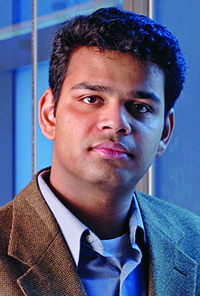 Ritesh Agarwal, professor in the department of materials science and engineering, has been elected a fellow of the Optical Society (OSA).
 Malitta Engstrom, faculty director of the master of social work (MSW) program at Penn’s School of Social Policy & Practice (SP2), has received a significant grant from the Substance Abuse and Mental Health Services Administration, a branch of the U.S. Department of Health and Human Services.
 The Minerals, Metals & Materials Society (TMS) has named Deep Jariwala, assistant professor in the department of electrical and systems engineering, a winner of their Frontiers of Materials Award.
 Eleni Katifori, associate professor of physics and astronomy, has been awarded the 2021 American Physical Society (APS) Early Career Award for Soft Matter Research for “the seminal use of physical principles in understanding living transport networks.”
 Jordan Raney, assistant professor in mechanical engineering and applied mechanics, has been awarded a DARPA Young Faculty Award. His research involves developing a way for robots to respond to their environments using properties that are built into their materials.
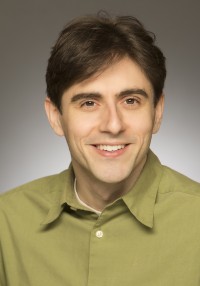 Joseph Subotnik, Edmund J. and Louise W. Kahn Term Professor of Chemistry, has been named a Fellow of the American Physical Society (APS). APS fellowships recognize those who have made advances in physics through original research and publication, or made significant innovative contributions in the application of physics to science and technology. Dr. Subotnik was honored “for pioneering advances in understanding the nature of nonadiabatic processes and merging electronic structure with chemical dynamics, advances that have allowed us to better model photo-induced processes and dissipation at metal-molecule interfaces.”