Welcome Back from the President: Beginning Anew
August 31, 2021
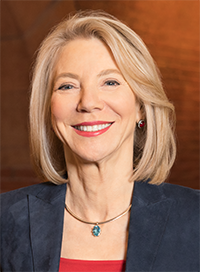 For many readers, this “Welcome Back” column is just that.
The new academic year is off and running, and this promises to be a truly spectacular semester back on campus for our staff, faculty, and students. Before we get swept away in a whirlwind of important and purposeful Penn activity, I would like to take this opportunity to say once again how pleased, proud, and deeply moved I am by the way our Penn community responded to the unprecedented challenges of the past 18 months.
Some of us delight in novelty. Others prefer the new and untested to unfold at a measured pace with some fair warning that change is coming. None of us likes having the rug yanked out from under our feet. Yet that is exactly what happened last March. One day, it was life and work as usual. The next day, most of us were suddenly working from home, not knowing what would lie ahead, and trying to learn how to love the Zoom.
It wasn’t easy (to say the least). It often wasn’t fun (that’s an understatement). There were times when the very great uncertainty of not knowing made even ordinary things seem daunting.
In the face of many challenges, Penn didn’t just persevere. We more than occasionally moved mountains to make sure the vital work of the University continued unabated. As much as possible, along the way we tried to acknowledge and share with the broader community all the amazing acts of bravery, kindness, extraordinary effort, and self-sacrifice that defined the Penn community’s response to the pandemic. These ranged from our front-line healthcare responders heroically providing comfort and care and saving lives, to the astonishing feat of our faculty moving thousands of courses online in a matter of weeks, to construction crews working around the clock to build additional beds and care capacity at the Pavilion, to students lowering pizza on ropes to help feed and cheer our community. The stories were many. They were heart-warming and cheering and, so often, they were inspiring.
But that’s not what I’m writing about here. For every great story that you saw in Penn Today, there were a thousand acts of care, concern, and kindness that went by unremarked. No doubt you saw some, you experienced some, and some you did yourselves. This is what is really on my mind as we begin this new semester. A place as large and complex and intricate as Penn cannot hope to succeed unless all our many communities, schools, centers, departments, and people work in accord, as one caring, giving, and high-performing University. None of us can know of all the admirable actions, large and small, the unheralded moments of bravery, sacrifice, and dedication, and the immense caring that enabled Penn to pull through the worst of this pandemic with flying colors.
What we do know—for certain—is that Penn met the challenge of these times magnificently. Thanks to a caring commitment to our deepest values that never wavered. Thanks to all of us working together.
While we wish it were not so, the pandemic is not yet over. We must remain vigilant and continue to do all we can to ensure our community’s health. All the while we advance our mission of unsurpassed teaching, research, service, and healthcare in an ever more diverse and inclusive community that defines this amazing Penn community. All of this, thanks to you.

—Amy Gutmann, President
Christopher Woods: Avalon Professor in the Humanities
 Christopher Woods, who recently joined Penn as Williams Director of the University of Pennsylvania Museum of Archaeology and Anthropology and professor of Near Eastern languages and civilizations, has been named Avalon Professor in the Humanities. Formerly the John A. Wilson Professor of Sumerology at the University of Chicago, Dr. Woods has published widely on Sumerian language and writing, the origin and development of writing and writing systems, and early Mesopotamian history, literature, religion, and state formation. At Chicago, he served as director of the Oriental Institute, one of the world’s leading centers for interdisciplinary research on Near East civilizations. Dr. Woods’ research has received support from the U.S. Department of State, the National Endowment for the Humanities, and the Andrew W. Mellon Foundation, among many others. He has served as the editor-in-chief of the Journal of Ancient Near Eastern Religions and the Journal of Near Eastern Studies and on the editorial boards of Languages of the Ancient Near East (Eisenbrauns) and Harvard Museum of the Ancient Near East publications, among others.
The Avalon Foundation Chair in the Humanities was established in 1966 by the Avalon Foundation, now the Andrew W. Mellon Foundation, to support the study of the humanities. The Avalon Foundation was founded in 1940 by Ailsa Mellon Bruce, daughter of Andrew W. Mellon.
Pierce Buller: Associate Vice President and Advisor to the President
Senior Vice President and Chief of Staff Gregory S. Rost has announced the appointment of Pierce Buller as Associate Vice President and Advisor to the President in the Office of the President, effective July 1. He will work on an array of special projects on behalf of the President’s Office, including providing strategic support for an array of University-wide initiatives. Mr. Buller joins Penn from Franklin & Marshall College, where he served as vice president and general counsel for the past seven years.
Before his time at Franklin & Marshall, Mr. Buller spent 10 years in Penn’s Office of General Counsel as associate general counsel, where he advised on issues related to employment, faculty and staff appointments, governance, admissions, community concerns, and institutional policies. A graduate of Colgate University and Villanova Law, with a MA in history from Penn, Mr. Buller was also formerly an attorney at Dilworth Paxson in Philadelphia.
Penn Center for Musculoskeletal Disorders: $4 Million NIH Grant Renewed
 Long-term funding for work at the Penn Center for Musculoskeletal Disorders has been renewed for another five years by the National Institute of Arthritis and Musculoskeletal, and Skin Diseases (NIAMS) of the National Institutes of Health (NIH). The additional $4 million in funding will continue the center’s investigations into all types of musculoskeletal tissue injury and repair.
“This center grant has allowed us to grow the community of musculoskeletal doctors and researchers in the Philadelphia region and neighboring states, and provide critical physical and intellectual resources to tackle the most important problems in our field,” said the center’s founding director, Louis Soslowsky, a professor of orthopaedic surgery.
Operating since 2006, the Penn Center for Musculoskeletal Disorders is the longest-running NIH-sponsored musculoskeletal research center in the United States. Since its start, the center’s research has delved into the fundamental understandings of the cause, development, diagnosis, treatment, and prevention of a spectrum of conditions, ranging from osteoporosis to rotator cuff tears.
“We have been able to grow to 17 partnering institutions in our region and are particularly excited about some of the outreach efforts that this next grant cycle will develop and support,” Dr. Soslowsky said.
Many research efforts focus on specific types of tissue, such as cartilage, ligaments, or bone. But that can limit discoveries. As such, researchers at the Penn Center for Musculoskeletal Disorders strive to learn from research across all tissues. For example, inflammatory cytokines—a type of signaling molecule—are fairly well researched for certain types of tissues, but whether the findings in one tissue apply to another are not as well understood. By avoiding the siloing of research and focusing on how each study applies to the entirety of the musculoskeletal system, the researchers at the Penn Center for Musculoskeletal Disorders hope to dispel some of those uncertainties.
Today, the Penn Center for Musculoskeletal Disorders has 204 faculty members, 76 more than it had the last time the grant was renewed, five years ago. Five different schools at Penn participate, including the Perelman School of Medicine, the School of Engineering and Applied Science, the School of Dental Medicine, the School of Veterinary Medicine, and the School of Arts and Sciences. Members of the center have $169 million in annual extramural funding, an increase from $105 million just five years ago.
Much of the focus in this round of funding will address developing a deep bank of researchers and infrastructure for continued high-level research. The center has three specific aims in its mission made possible by the new grant:
- To provide innovation within key areas that cross disciplines, such as microCT imaging, biomechanics, and histology
- Creation of a grant program for pilot of new ideas and collaborations before seeking outside funding
- Development of educational programs spanning tissue types and research approaches so that investigators can learn from leaders in the field and each other
“We are so grateful to the NIAMS at NIH for continuing to support our multidisciplinary research,” Dr. Soslowsky said. “We are excited to broaden the impact of our efforts locally and globally to better understand and treat musculoskeletal disorders for the better care of our patients.”
Update to the Recognized Holidays for Fiscal Year 2022
On behalf of the President, Interim Provost, and Senior Executive Vice President
The University has sponsored programs to recognize and honor Juneteenth for the last two years. We are pleased to share that Penn will now recognize Juneteenth as part of the University’s academic calendar and make it a recognized University holiday. Juneteenth commemorates June 19, 1865, the day when enslaved people in Galveston, Texas received word that President Lincoln had signed the Emancipation Proclamation more than two and half years earlier, and that they were free.
The University will observe this new federal holiday starting in Fiscal Year 2022.
On behalf of the Division of Human Resources
The following holidays will be observed by the University in the upcoming fiscal year (July 1, 2021 through June 30, 2022) on the dates listed below:
- Independence Day, Monday, July 5, 2021 (observed)
- Labor Day, Monday, September 6, 2021
- Thanksgiving, Thursday and Friday, November 25 & 26, 2021
- Christmas Day, Friday, December 24, 2021 (observed)
- New Year’s Day, Friday, December 31, 2021 (observed)
- Martin Luther King, Jr. Day, Monday, January 17, 2022
- Memorial Day, Monday, May 30, 2022
- Juneteenth, Monday, June 20, 2022 (observed)
To the University Community:
Each year, the President, Provost, and Senior Executive Vice President assess the feasibility of observing Penn’s traditional Special Winter Vacation. Thus, the Special Winter Vacation granted to faculty and staff will be December 27, 28, 29, and 30, 2021. If an employee is required to work to continue departmental operations for part or all of this period, the Special Winter Vacation can be rescheduled for some other time.
Staff members who are absent from work either the work day before a holiday, the work day after a holiday, or both days, will receive holiday pay if that absence is charged to pre-approved paid time off or to sick time substantiated by a written note from the staff member’s health care provider.
Vacations and holidays for hospital employees or those staff members in collective bargaining units are governed by the terms of hospital policies or their respective collective bargaining agreements.
—Division of Human Resources
|
|
Fiscal Year 2022
|
Fiscal Year 2023
|
Fiscal Year 2024
|
|
Independence Day
|
Mon., 7/5/21 (observed)
|
Mon., 7/4/22
|
Tues., 7/4/23
|
|
Labor Day
|
Mon., 9/6/21
|
Mon., 9/5/22
|
Mon., 9/4/22
|
|
Thanksgiving
|
Thurs. & Fr., 11/25 & 11/26/21
|
Thurs. & Fr., 11/24 & 11/25/22
|
Thurs. & Fr., 11/23 & 11/24/23
|
|
Christmas Day
|
Fri., 12/24/21 (observed)
|
Mon., 12/26/22 (observed)
|
Mon., 12/25/23
|
|
New Year’s Day
|
Fri., 12/31/21 (observed)
|
Mon., 1/2/23 (observed)
|
Mon., 1/2/24
|
|
Dr. Martin Luther King, Jr. Day
|
Mon., 1/17/22
|
Mon., 1/16/23
|
Mon., 1/15/24
|
|
Memorial Day
|
Mon., 5/30/22
|
Mon., 5/29/23
|
Mon., 5/27/24
|
|
Juneteenth
|
Mon., 6/20/22
|
Mon., 6/19/23
|
Wed., 6/19/24
|
Mark Oyama: Interim Chair, Clinical Sciences and Advanced Medicine
 Mark Oyama has been named interim chair of the department of clinical sciences and advanced medicine (CSAM) at the University of Pennsylvania’s School of Veterinary Medicine (Penn Vet), effective September 1, 2021.
Dr. Oyama succeeds Oliver Garden, who led the department since 2016. Dr. Garden will become Dean of Louisiana State University’s School of Veterinary Medicine.
Dr. Oyama served as an assistant and then associate professor of cardiology at the College of Veterinary Medicine at the University of Illinois before arriving at Penn Vet in 2005 as an associate professor of cardiology. Six years later, in 2011, Dr. Oyama became a professor of cardiology; he also served as chief of the section of cardiology through 2019. Last year, he was named as the Charlotte Newton Sheppard Endowed Chair of Medicine. Dr. Oyama serves as head of the clinical sciences research division of CSAM. His clinical and research interests involve mitral valve disease, novel therapies for heart failure, clinical epidemiology, and cardiac biomarkers.
A diplomate of the American College of Veterinary Internal Medicine (ACVIM), Dr. Oyama served as president of the ACVIM, specialty of cardiology. He is a member of the Perelman School of Medicine’s Institute for Translational Medicine and the Penn Cardiovascular Institute, and he serves as an associate scholar at Perelman’s Center for Clinical Epidemiology and Biostatistics.
Dr. Oyama earned his veterinary doctorate at the University of Illinois and his master’s degree from the University of Pennsylvania. He completed his residency at the University of California at Davis.
Annenberg School and SP2 Launch Digital Media for Social Impact Executive Education Program
The Center on Digital Culture and Society (CDCS) at the Annenberg School for Communication and the Center for Social Impact Strategy (CSIS) at the School of Social Policy and Practice (SP2) aim to help meet the need for changemakers and other social action workers to navigate the fast-changing world of digital media. The two schools have jointly launched a new executive education program entitled Digital Media for Social Impact (DMSI).
“The University of Pennsylvania has a long history of valuing collaborations between schools and disciplines,” said John L. Jackson, Jr., Walter H. Annenberg Dean of the Annenberg School and Richard Perry University Professor. “The DMSI program falls squarely within that tradition, and I am excited that Annenberg and SP2 will be working together to provide this interesting learning opportunity to social impact leaders across a variety of industries.”
Annenberg’s first executive education offering, the program combines action-oriented education with leading scholarship on digital media and social change. It is designed for media industry professionals, activists, community organizers, nonprofit leaders, and social entrepreneurs looking to build mission-aligned digital media strategies.
“DMSI is an initiative to create an institutional base for such engaged scholarship,” said Guobin Yang, the Grace Lee Boggs Professor of Communication and Sociology at the Annenberg School and the director of CDCS. “CSIS has done trailblazing work in this area, and I cannot think of a better partner in this venture.”
The five-month program is online and asynchronous, so students can go at their own pace. Courses will be taught by Penn experts on digital media, including Annenberg School professors Sarah J. Jackson, Jessa Lingel, Victor Pickard, and Guobin Yang, and Annenberg alums Rosemary Clark-Parsons, PhD’18, Emily Dean Hund, PhD’19, and Hanna E. Morris, PhD’21. Students will gather virtually every week to build community and learn from one another. In addition, the program features two online convenings and one on-campus convening.
Through the DMSI program, students will gain a critical understanding of digital media platforms’ affordances and limitations for social impact and social justice work, develop a tool kit for building and evaluating mission-aligned digital campaigns, and build a community of likeminded changemakers.
“DMSI is a unique opportunity because it combines leading scholarship in communication with a hands-on, action-oriented curriculum,” said Dr. Clark-Parsons, the program manager of CSIS. “This is a really exciting opportunity for anyone looking to take a research-driven approach to their digital outreach strategies and build their professional network along the way.”
Wharton Surpasses Historic Milestone of 50% Women in MBA Class of 2023
The Wharton School of the University of Pennsylvania has announced that, for the first time in its 140-year history, women will comprise more than 50% of the incoming first year class of MBA students. At nearly 52%, the percentage of women in the Wharton MBA Class of 2023 represents a 10% increase in female students over last year’s first year students. These achievements are the result of a years-long effort to promote diversity, equity and inclusion (DEI) throughout Wharton, which is led by Deputy Dean Nancy Rothbard and Dean Erika James, who is the first woman ever appointed to lead the school.
“This landmark achievement demonstrates Wharton’s commitment to providing a diverse and representative community for our students,” said Dean James. “As a female leader, I understand firsthand the significant impact that experiencing meaningful gender representation can have on women as they chart their careers. I also note the sobering reality that, even in 2021, women still command a small percentage of leadership positions in the corporate arena. If industry truly desires its organizations—and the leadership within them—to reflect the world around us, we must improve the diversity of the pipeline of future business leaders. In short, this crucial work must start here.”
Wharton builds and promotes gender representation in its MBA program through numerous initiatives, including a partnership with the Forté Foundation, fellowships for outstanding women students, on-campus visit days for women and conferences and networking opportunities via student clubs such as Wharton Women in Business. Students of any gender can also take courses like “Leading Diversity in Organizations” and engage with faculty researching DEI topics.
“As we do every year, we made a conscious effort to ensure female applicants felt wanted and welcomed at Wharton, and showed them the many resources and communities in our program where they can connect, collaborate and feel supported,” said Maryellen Reilly, Deputy Vice Dean of the Wharton MBA Program. “Diversity, equity and inclusion are central to our efforts, and while we are extremely proud to welcome this record number of women to our MBA community this year, we do hope that equitable gender representation soon becomes the norm among business schools, rather than the exception.”
In addition to attaining more than 50% women, two other Wharton MBA records were broken: the Class of 2023’s 733 average GMAT is the highest ever for an incoming class and LGBTQ+ representation reached 7%, also an all-time high. The class totals 897 students, including 36% international students and 35% Black, Indigenous and People of Color (BIPOC).

 Lila R. Gleitman, professor emerita of psychology and linguistics in Penn’s School of Arts and Sciences, died on August 8. She was 91.
  Robert Parris (Bob) Moses, a civil rights activist and the recipient of an honorary doctor of humane letters from Penn in 2017 (
 Ella Schaap, a former member of the Institute of Contemporary Art (ICA)’s board of overseers, died on July 10. She was 108.
  Robert A. (Bob) Schoenberg, GrS’89, the founding and longtime director of Penn’s LGBT Center, died on August 2 due to complications from cancer. He was 76.
 Robert Carpick, John Henry Towne Professor in the department of mechanical engineering and applied mechanics at Penn Engineering, has received the Nanotechnology Recognition Award from the Nanoscale Science and Technology Division (NSTD) of AVS, an interdisciplinary professional society centered on the fields of materials, interfaces, and processing.
 Ram Cnaan, director of Penn’s School of Social Policy & Practice Program for Religion and Social Policy Research, and Femida Handy, professor and director of the PhD program in social welfare at SP2, were awarded a $179,602 grant from the Giving USA Foundation’s Generosity Commission to study COVID-19 and Philanthropy: Changes in Giving and Volunteering.
 Penn Dental Medicine and Penn Engineering, which collaborated earlier this year to launch the Center for Innovation and Precision Dentistry (CiPD), recently awarded the center’s first IDEA (Innovation in Dental Medicine and Engineering to Advance Oral Health) Prize. Henry Daniell, W.D. Miller Professor and vice chair in the department of basic & translational sciences in Penn Dental Medicine, and his collaborator, Daeyeon Lee, professor of chemical and biomolecular engineering in Penn Engineering, are the inaugural recipients, awarded the prize for a project titled “Engineered Chewing Gum for Debulking Biofilm and Oral SARS-CoV-2.”
 The chairman, directors, and officers of the International Foundation for Research in Experimental Economics (IFREE) have announced that Judd Kessler, associate professor of business economics and public policy at the Wharton School of the University of Pennsylvania, has won the 2021 Vernon L. Smith Ascending Scholar Prize.
 The Foundation for the Advancement of Diversity in Intellectual Property has awarded Alicia Lai, L’21, the prestigious Jan Jancin Award, which recognizes students from diverse backgrounds who have made exceptional contributions to the intellectual property (IP) sector and intend to continue to pursue a career in the field.
 Yuan Liu, a research associate in the division of restorative dentistry, is the 2021 recipient of the IADR Joseph Lister Award for New Investigators. An annual IADR award supported by Johnson & Johnson Consumer Inc., this award recognizes young investigators with original research in oral disease prevention or oral health promotion.
 Zhi Ren has the unique distinction of being a double winner of the 2021 Hatton Awards in the AADOCR and the IADR. The Hatton Awards are IADR’s longest-running and the most competitive award that recognizes outstanding young dental researcher talents. The IADR Hatton Competition is designed to provide an opportunity for the best junior investigators from all IADR divisions and sections around the globe to present their research at the annual IADR General Session. Dr. Ren was one of the winners of the AADOCR Hatton Award, which qualified him to compete against worldwide competitors at the IADR Hatton Competition, where he won again, representing the IADR American Division (AADOCR).
 Penn Nursing’s Mary Naylor and Heather Kelley-Thompson will both be honored by the Sigma Theta Tau International Honor Society of Nursing (Sigma). The 2021 International Awards for Nursing Excellence, Board Awards, and Honorary Membership will be presented during Sigma’s 46th Biennial Convention, which will be held from November 6-10, 2021 in Indianapolis, Indiana.
 Nicholas L. Balderston, a research assistant professor of psychiatry with the Center for Neuromodulation in Depression and Stress, has been honored by the Brain & Behavior Research Foundation with the 2021 Klerman Prize for Exceptional Clinical Research. The annual award recognizes exceptional clinical and basic research in mental illness. Dr. Balderston’s lab uses experimental design, psychophysiology, neuroimaging, and neuromodulation to explore the mechanisms that mediate the expression and regulation of anxiety. The ultimate aim of his research is to provide the foundation for novel neuromodulatory treatments for individuals suffering from severe anxiety.
 Denise LaMarra, director of Penn Medicine’s Standardized Patient Program, received an Outstanding Educator of the Year award from the Association of Standardized Patient Educators (ASPE). Ms. LaMarra, who has served as director since 2006, helps the Standardized Patient Program serve thousands of learners across professions and at all levels of learning at Penn Medicine. Ms. LaMarra led the creation of a Standardized Patient Management System (SPMS), which several other medical schools in the U.S. and Canada have acquired to facilitate hiring, scheduling, managing expenses, and other related administrative tasks.
 Sally Nijim, a Perelman School of Medicine student, placed first, along with her team of four other aspiring physician-innovators, in a national pitch competition hosted by MD++.Through the innovation pitch competition, teams of medical students from across the United States came together to develop and propose solutions for improving health systems or for enhancing current health practices. Ms. Nijim and her team developed the concept for iKidney. The proposal surrounded creating personalized kidney care for patients with chronic kidney disease that brings together hardware (blood pressure and kidney function analysis in real time) with personalized software and coaching.
 Neha Vapiwala, a professor of radiation oncology and vice chair of education in radiation oncology, and Amit Maity, the Morton M. Kligerman Professor and executive vice chair of radiation oncology, have been named among the 28 fellows of the American Society for Radiation Oncology (ASTRO). The ASTRO Fellows program recognizes individuals who have made significant contributions to radiation oncology through research, education, patient care, and/or service to the field. Drs. Vapiwala and Maity will be recognized in October during the organization’s 63rd annual meeting in Chicago.
 Annenberg School Lecturer Carlin Romano recently received two first place awards from the American Jewish Press Association’s 40th annual Simon Rockower Awards.
 I have traveled up and down Locust Walk thousands of times over my twenty-five years connected to our University. However, my recent late-summer journeys through our beautiful campus have found me holding feelings that I have not felt here at Penn before. Or rather—it’s not that the feelings are new—it is the presence of these multiple emotions simultaneously that is new.