From the President, Interim Provost, and Executive Vice Presidents: A Message to the Penn Community About Campus Readiness for the Fall Semester
August 5, 2021

This year, more than any before, we look forward to the start of classes and our joyful pre-semester programs and events. We want to update everyone, in light of the ongoing pandemic, about our progress and the measures we are taking to keep our community safe and healthy.
We thank all of you who have provided your vaccination information, which is essential to resuming our campus life together. We expect our community vaccination rates to increase and reach 90% by September. To date, over 84% of our faculty and staff report being fully vaccinated. Even in advance of the start of classes, nearly 80% of our students enrolled in on-campus programs already report being fully vaccinated. We urge everyone to submit your vaccination records if you have not done so already: it is a quick and simple process for existing students, new students, and faculty/staff/postdocs.
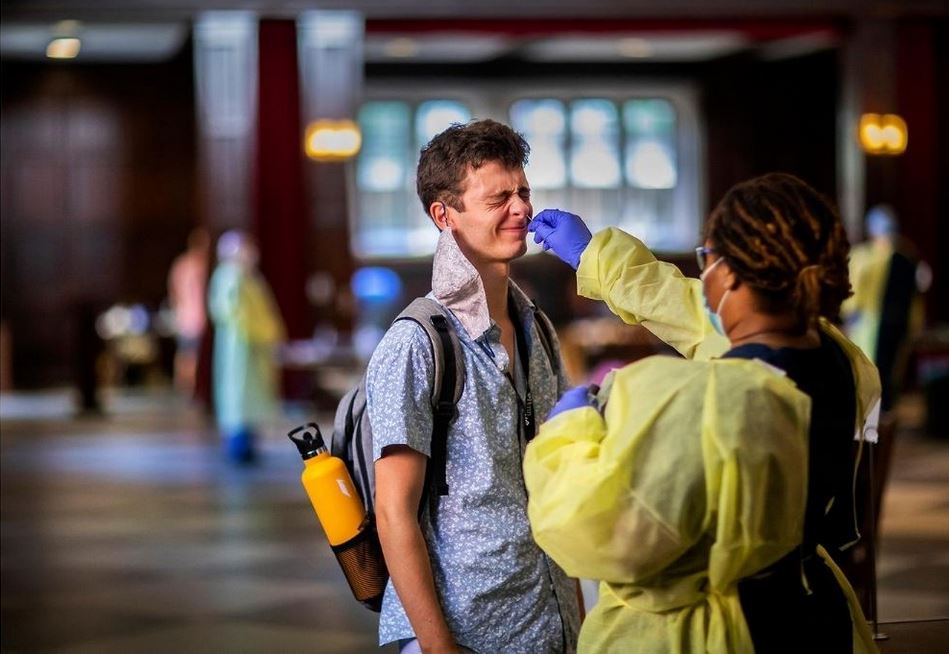
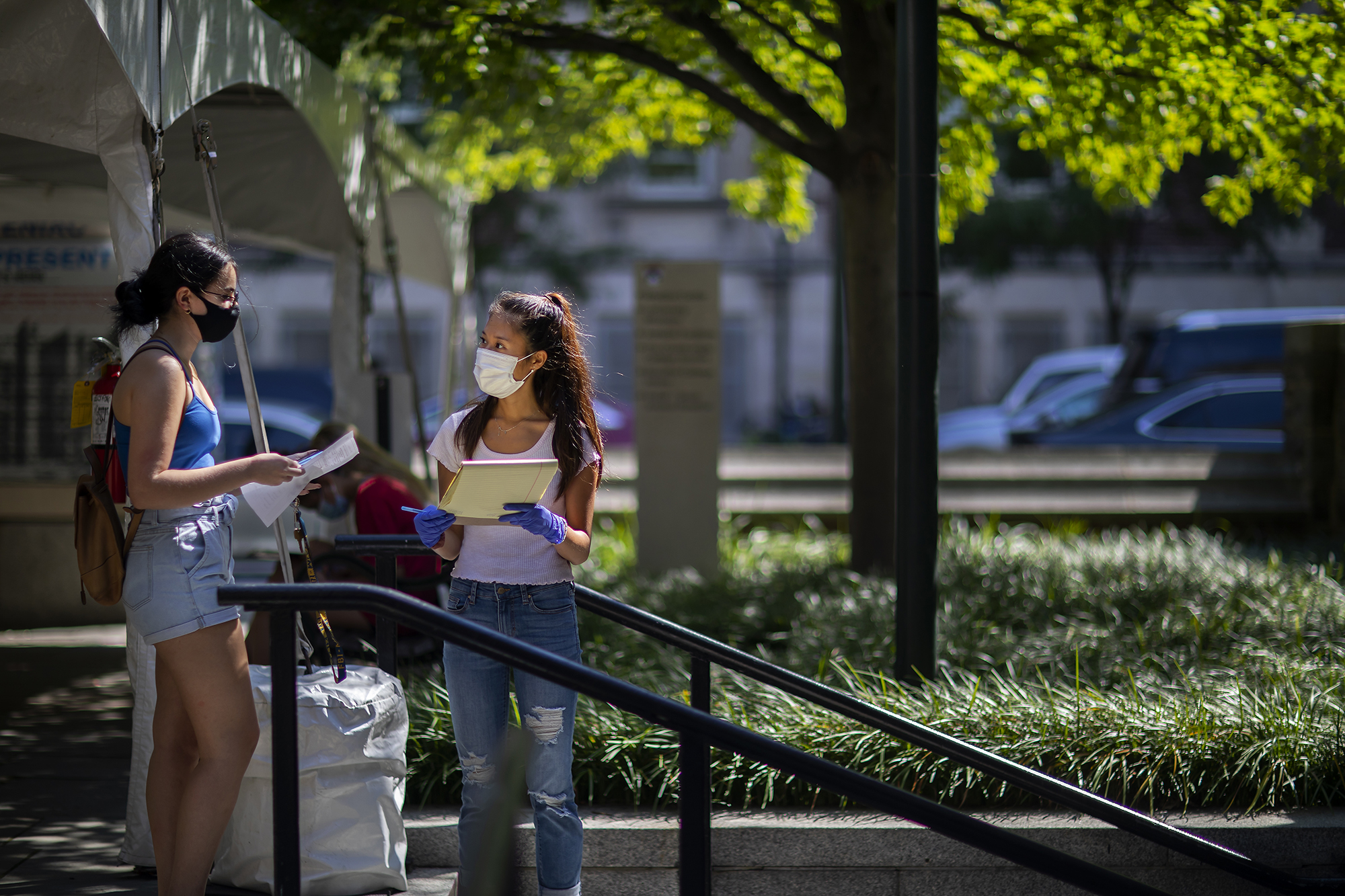
Consistent with the June 1 message to the community, the University requires every member of our community to provide proof of vaccination since vaccines remain our safest and most effective defense against COVID-19 and its variants. We also will continue to require regular screening tests for all members of the community who do not provide evidence of vaccination, tests for those who are symptomatic, and gateway testing (and isolating if necessary) for all students as they return to campus this month.
Our highest priorities are the safety and readiness of the Penn community, and we will all need to remain patient and flexible this semester as we respond collectively to the changing public health situation. The University’s Coronavirus Response Team and Recovery Planning Group carefully assess the trajectory of the virus and vaccines, working closely with the Philadelphia Department of Public Health. In accordance with the guidance of the Centers for Disease Control and Prevention for areas with high transmission rates, we are now requiring, effective immediately, that all members of the Penn community and visitors wear masks while indoors in public or shared spaces. Exceptions to the masking requirement include single occupancy offices and shared spaces where 6ft distancing can be maintained, with roommates in our college house suites/rooms, and by permission in instructional settings for pedagogical reasons. In addition, we are instituting a required twice-a-week testing program for members of our community who are not vaccinated or choose not to report their vaccination information. We will continue to adjust our plans as public health guidance unfolds.
We are continuing the highly effective mitigation strategies that we put in place over the last year, including: identifying and isolating COVID-19 cases; using PennOpenPass to assess symptoms of and exposure to COVID-19; enhancing cleaning and disinfecting on campus; monitoring buildings to meet national American Society of Heating, Refrigerating and Air-Conditioning Engineers standards for indoor air quality; and optimizing building ventilation by increasing air flow, maintenance, and filtration systems. In addition, we are exploring other public health measures such as wastewater testing and a second COVID-19 screening program for all students at the end of September. All members of the Penn community, regardless of your vaccination status, have access to COVID-19 testing on campus, which can help bring some added peace of mind to those with added concerns such as for vulnerable members of your household.
We have learned a lot over the past sixteen months, and we are enormously grateful to every member of the Penn community for your hard work and steadfast support. We will keep you updated as the situation evolves, and we are excited to see you on campus in the weeks ahead!
—Amy Gutmann, President
—Beth A. Winkelstein, Interim Provost
—Craig Carnaroli, Senior Executive Vice President
—J. Larry Jameson, Executive Vice President, Penn Medicine and Dean, Perelman School of Medicine
Plans for a New Student Performing Arts Center
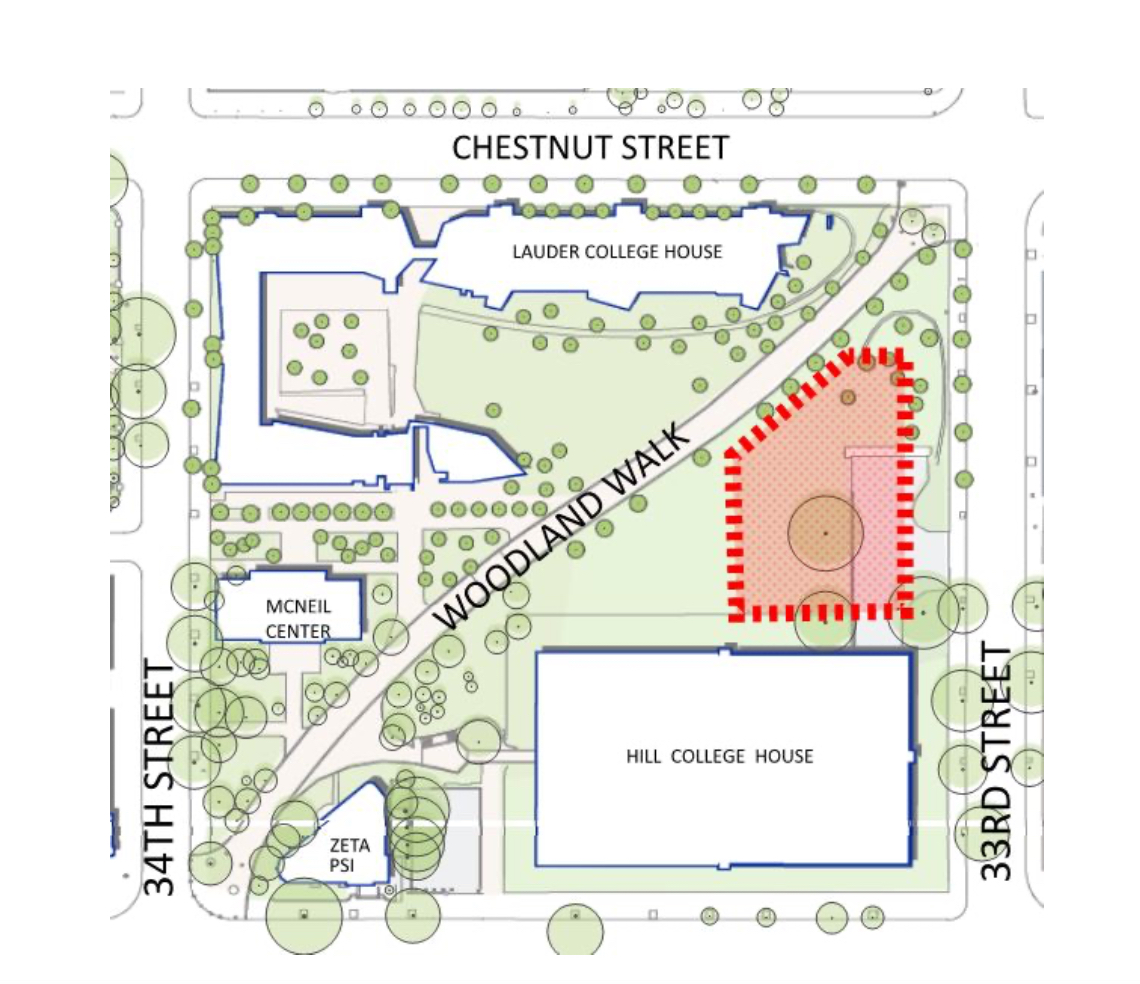
Penn President Amy Gutmann announced on August 5 that the University has begun the planning process to build a new student performing arts center at 33rd street and Woodland Walk adjacent to Lauder and Hill College Houses and proximate to King’s Court English College House. The University has issued a request for proposal for a feasibility study for the proposed $31-million, 36,000-square-foot center, a project which President Gutmann said has been in high demand by the collective undergraduate student body.
“We are thrilled to be undertaking this extraordinarily exciting project at Penn in support of the thousands of students avidly involved in the performing arts and the dozens and dozens of thriving, talented student performing arts groups on campus,” said President Gutmann. “This project would augment the incredible resources now serving student-run performance organizations, with Platt Student Performing Arts House providing leadership in the creation and implementation of arts programming for students at Penn.
“The proposed center would serve along with the Platt House, Irvine Auditorium, Houston Hall, Iron Gate Theatre, as well as additional spaces at the ARCH, to create a consortium of spaces for undergraduate students who are making important, imaginative, and innovative strides in theater, dance, instrumental and vocal music, comedy, and spoken word,” President Gutmann continued. “Responding to the expanding needs of Penn’s vibrant performing arts community, a terrific team has been quietly at work over the last year to discuss and consider this project. We are now excited to share this proposed vision for a new creative space at Penn.”
The proposed new student performing arts center would be entirely student-centered and include a dedicated performing arts space for undergraduate students. The facility also calls for a 450-seat theater and contemporary stage, as well as teaching, rehearsal, and practice space, and back-of-the-house support.
The center’s proposal grew from a study completed in 2019 for the University’s Vice Provost for University Life (VPUL), which concluded that additional performance and rehearsal space was needed to meet current and future demand. The study compiled an assessment of existing performing arts spaces on campus and evaluated data provided by the University’s Performing Arts Council (PAC), which consists of four student councils representing 47 student groups and approximately 1,100 students. In addition to these councils, there are an estimated 30 non-PAC groups.
In response to the study, based on extensive student input, a working group was formed including members representing the President’s Office, Office of the Provost, VPUL, Annenberg Center for the Performing Arts, and the Office of Facilities and Real Estate to move the project forward. The working group is now in the process of reviewing the proposals and conducting architect interviews while continuing to receive student input. Final architect selection and project approval are expected this fall.
Three Presidential Penn Compact Professors Join Arts and Sciences Faculty
Wale Adebanwi, Jennifer Morton, and Keisha-Khan Y. Perry have joined the School of Arts and Sciences as Presidential Penn Compact Professors, effective July 1, 2021. The Presidential Penn Compact Professorships were conceived by Penn President Amy Gutmann as a partnership with Penn Arts and Sciences to promote faculty excellence and diversity. Funding for this initiative is provided through the Penn Compact.
“I am thrilled to welcome Wale, Jennifer, and Keisha-Khan to the School,” said Steven J. Fluharty, dean and Thomas S. Gates, Jr. Professor of Psychology, Pharmacology, and Neuroscience. “Their research advances conversations that matter deeply to our world. As scholars and teachers, they will contribute to the robust intellectual inquiry of the Africana studies and philosophy departments and enrich the community across the University.”
 Dr. Adebanwi, a political scientist and anthropologist, was previously the Rhodes Professor of Race Relations at Oxford University. His research addresses the social mobilization of interest and power in contemporary Africa as manifested in nationalism and ethnicity, race relations, identity politics, elites and cultural politics, democratic process, newspaper press and spatial politics.
He is the author of three books, including Nation as Grand Narrative: The Nigerian Press and the Politics of Meaning. Since 2016, he has been co-editor of AFRICA: Journal of the International African Institute; previously, he was the co-editor of the Journal of Contemporary African Studies. Dr. Adebanwi joins Penn as Presidential Penn Compact Professor of Africana Studies.
 Also joining Africana Studies is Dr. Perry, who has been appointed Presidential Penn Compact Associate Professor. Dr. Perry comes to Penn from Brown University, where she was an associate professor of Africana studies. Her research is focused on race, gender and politics in the Americas, urban geography and questions of citizenship, intellectual history and disciplinary formation, and the interrelationship between scholarship, pedagogy and political engagement.
Her first book, Black Women Against the Land Grab: The Fight for Racial Justice in Brazil, won the 2014 National Women’s Studies Association Gloria Anzaldúa Book Prize. She is currently at work on her second book, which is focused on the ways in which state violence limits activist research and writing.
 Dr. Morton, the Presidential Penn Compact Associate Professor of Philosophy, is a scholar of the philosophy of education, with a particular emphasis on educational injustice. Her recent book Moving Up Without Losing Your Way: The Ethical Costs of Upward Mobility, which won the Association of American Colleges and Universities’ Frederic W. Ness Book Award, focuses on the hidden ethical costs faced by first-generation and low-income students.
Dr. Morton is highly engaged in public philosophy and has been interviewed for The Atlantic, Inside Higher Education, PBS, and IAI news. She has written pieces for Aeon, The Philosophers’ Magazine, The Chronicle of Higher Education and The New York Daily News.
New Endowed Chairs in the School of Arts and Sciences
Anthony Braga: Jerry Lee Professor of Criminology
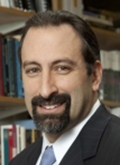 Anthony Braga has joined Penn Arts & Sciences as the Jerry Lee Professor of Criminology. Dr. Braga is one of the nation’s leading social scientists working to improve our understanding of crime and innovate in our justice system. His research cuts across many pressing topics of broad interest, including policing, gun violence, and crime prevention. His recent research includes a randomized controlled trial on the impact of police body-worn cameras, a study on the value of sustained investigative effort in solving homicides and nonfatal gun assaults, and the effect of court-ordered reforms on racial disparities in New York Police Department enforcement patterns. Dr. Braga is a fellow the American Society of Criminology, a fellow of the Academy of Experimental Criminology, and the 2014 recipient of the AEC’s Joan McCord Award, recognizing his commitment to randomized controlled experiments.
Dr. Braga will launch the Crime and Justice Policy Lab in the department of criminology, aiming to put Penn’s research expertise to work in addressing crime problems and solving justice system challenges in Philadelphia and beyond.
Dr. Braga is joining Penn after five years at Northeastern University, serving as the Elmer V. H. and Eileen M. Brooks Distinguished Professor of Criminology and Criminal Justice, the director of the School of Criminology and Criminal Justice, and the director of the Center on Crime and Community Resilience. From 2012 to 2016, Dr. Braga was the Don M. Gottfredson Professor of Evidence-Based Criminology at Rutgers University. Before his time at Rutgers, Dr. Braga was a lecturer in public policy and a senior research fellow at the Kennedy School of Government at Harvard University. He earned a PhD and an MA in criminal justice from Rutgers University, an MPA from Harvard University, and a BS in criminal justice from the University of Massachusetts.
The Jerry Lee Professorship was established in 2003 by Jerry Lee through the Jerry Lee Foundation to support the recruitment of faculty in the field of criminology. Mr. Lee is the founder and president of 101.1 More FM Radio in Philadelphia.
Ron Donagi: Thomas A. Scott Professor of Mathematics
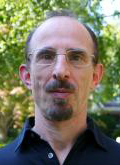 Ron Donagi, professor of mathematics and physics, has been appointed Thomas A. Scott Professor of Mathematics. Dr. Donagi is an internationally renowned scholar of algebraic geometry and string theory. His work is on the forefront of major research efforts in geometry, symplectic topology, quantum field theory, string theory and phenomenology, and the study of integrable models in condensed matter theory. Several of his former students are among the leaders in these fields. He has authored more than 100 research articles and seven books. His research has been supported by numerous National Science Foundation grants, and he is the co-recipient of a $10 million Simons Collaboration Grant to prove the Homological Mirror Symmetry Conjecture, one of mathematics’ outstanding open problems. Dr. Donagi has been selected as a Simons Fellow in Mathematics, as Deputy Director of the prominent Simons Collaboration on Homological Mirror Symmetry, and as a fellow of the American Mathematical Society.
The Thomas A. Scott Professorship of Mathematics was established by Thomas Alexander Scott, who served as the U.S. assistant secretary of war from 1861 until 1862 and later became president of the Pennsylvania Railroad, upon his death in 1881.
Douglas Durian: Mary Amanda Wood Professor of Physics
 Douglas Durian, professor of physics and astronomy, has been appointed the Mary Amanda Wood Professor of Physics. A condensed matter experimentalist, Dr. Durian has made groundbreaking contributions in the areas of non-equilibrium soft matter physics and optics, particularly in foams, suspensions, and granular materials, as well as in the development of multiple light scattering techniques for study of opaque materials. He is the author of nearly 150 articles, and his research has received support from numerous National Science Foundation and NASA grants. Dr. Durian has served as chair of the American Physical Society Topical Group on Soft Matter and of the Gordon Research Conference on Granular Matter. He currently serves on the editorial boards of Papers in Physics, NPJ Microgravity, and the Journal of Statistical Mechanics: Theory and Experiment. Dr. Durian leads the Interdisciplinary Research Group on Disordered Solids within the Penn Materials Research Science and Engineering Center.
This chair was established in 1947 through a bequest from James L. Wood, C’1887, in memory of his mother, Mary Amanda Wood. Mr. Wood was a well-known landscape artist.
Antonio Feros and Jared Farmer: Annenberg Professors of History

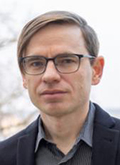 Antonio Feros, professor and chair of history, and Jared Farmer, professor of history, have been named Walter H. Annenberg Professors of History.
A leading scholar of Spain and early modern Europe, Dr. Feros is the author of two books, Kingship and Favoritism in the Spain of Philip III, 1598-1621 (2000) and Speaking of Spain: The Evolution of Race and Nation in the Hispanic World (2017), as well as three co-edited volumes and many articles. His latest publication is the co-edited volume The Iberian Worlds, 1450-1820 (2019). Dr. Feros is currently working on a book provisionally titled Post-War and Reconstruction in Spain, 1939-1969. Dr. Feros’ teaching has been recognized with the Penn Arts & Sciences Dean’s Award for Mentorship of Undergraduate Research and the history department’s Dunn Award for Distinguished Teaching.
Dr. Farmer is an environmental historian with temporal expertise in the 19th century and regional expertise in the American West. He is the author of three books and the recipient of nine book awards, including the Francis Parkman Prize from the Society of American Historians. He has received grants from the National Humanities Center, the American Council of Learned Societies, the National Endowment for the Humanities, the Alfred P. Sloan Foundation, and the American Academy in Berlin. In 2014, he won the Hiett Prize in the Humanities, and in 2017, he was named an Andrew Carnegie Fellow. Dr. Farmer joined Penn in January 2020 from Stony Brook University.
The late Ambassador Walter H. Annenberg received Penn’s Alumni Award of Merit in 1991. He and his wife, the late Honorable Leonore Annenberg, were both emeritus trustees of the University. The Annenbergs endowed many chairs in Penn Arts & Sciences and made many generous contributions to the University. They also endowed the Annenberg School for Communication at the University of Pennsylvania in 1958.
So-Rim Lee: Korea Foundation Assistant Professor
 So-Rim Lee has joined Penn Arts & Sciences as the Korea Foundation Assistant Professor of Korean Studies. Dr. Lee’s research and teaching explore the politics of representation in visual cultures and everyday embodiment in South Korea and the Korean diaspora from the intersection of performance studies, gender and sexuality studies, and cultural studies. After receiving her PhD in theater and performance studies from Stanford in 2018, Dr. Lee held postdoctoral fellowships at Columbia and Penn and taught courses at NYU and the School of the Art Institute of Chicago. She is currently writing her first book on the visual and narrative discourses of plastic surgery in South Korea.
The Korea Foundation Professorships were established by Penn’s Korea Foundation in 1997. The mission of the Korea Foundation is to promote better understanding of Korea within the international community and to increase friendship and goodwill between Korea and the rest of the world through various exchange programs.
Michael Glick: Director, Penn Dental Center for Integrative Global Oral Health
 Penn Dental Medicine has named Michael Glick to lead its new Center of Integrative Global Oral Health. He has joined the school as executive director of the center and professor of clinical restorative dentistry in the department of preventive & restorative sciences, effective July 1, 2021.
“We are thrilled to have Dr. Glick bringing his vision and leadership to our new center,” said the school’s Morton Amsterdam Dean, Mark S. Wolff. “Through public policy, education, and research initiatives, we will seek to find creative solutions to address unmet oral health needs facing us around the world, bringing together collaborators across disciplines and across borders. I’m eager to have Dr. Glick working with us to meet this challenge.”
Penn Dental is launching the center—the school’s first policy center—thanks to a $5 million gift made earlier this year by Garry Rayant, GD’77, a member of the school’s Board of Advisors, and his wife, Kathy Fields, providing the foundational support to establish the center (Almanac February 9, 2021).
Dr. Glick brings a depth of experience in academic leadership to this new role. From 2009 to 2015, he served as dean of the SUNY at Buffalo School of Dental Medicine, where he most recently remained as professor of oral diagnostic sciences. Before his time at Buffalo, he was a professor of oral medicine at Arizona School of Dentistry & Oral Health at A.T. Still University, also holding the post of associate dean of oral-medical sciences at A.T. Still’s School of Osteopathic Medicine. While part of the faculty at University of Medicine and Dentistry of New Jersey from 2001 to 2007, Dr. Glick served as chair of the department of diagnostic sciences and as director of both the division of oral medicine and the postgraduate training program in oral medicine.
This new position will be Dr. Glick’s second faculty appointment at Penn Dental Medicine; he previously served as an associate professor (1994-1999) and professor (1999-2001) of oral medicine. During that time, he also directed the school’s programs for medically complex patients and infectious diseases. Before his first tenure at Penn, Dr. Glick launched his academic career at Temple University School of Dentistry, directing its Infectious Diseases & Travel Clinic.
A widely published and highly respected lecturer, Dr. Glick has held numerous editorial roles, including editor-in-chief of the Journal of the American Dental Association (JADA) from 2005 to 2020. Among other wide-ranging involvement within organized dentistry, he has served as president of the American Board of Oral Medicine and in various capacities with the American Dental Association. Dr. Glick was also a contributor and reviewer for the Surgeon General’s Report on Oral Health in 2019 and 1999 and served as a state dental director for the National AIDS Education and Training Center Dental Working Group.
Dr. Glick completed specialty training in oral medicine at Penn Dental Medicine and a general practice residency at the Hospital of the University of Pennsylvania. He holds a DMD from Hebrew University-Hadassah School of Dental Medicine and Temple University School of Dentistry.
PSOM: Roberts Family Professorship and Fellowship for Vaccine Research and Development
On July 29, the Perelman School of Medicine at the University of Pennsylvania announced the establishment of the Roberts Family Professorship in Vaccine Research and the Katalin Karikó Fellowship Fund in Vaccine Development, providing a foundation for discoveries that will forge a new frontier in vaccine-based treatments, cures, and prevention strategies for an array of diseases.
The endowed chair and fellowship funds were created through a gift from the Aileen and Brian Roberts Foundation, underscoring the Roberts family’s strong support of Penn Medicine and their passion for cutting-edge healthcare.
Drew Weissman has been named the inaugural Roberts Family Professor in Vaccine Research. Both the professorship and fellowship honor mRNA trailblazers Dr. Weissman and Katalin Karikó, an adjunct professor of neurosurgery at Penn and a senior vice president at BioNTech. Their partnership and foundational research at Penn created a blueprint for the development of the historic COVID-19 mRNA vaccines now being deployed to combat the virus across the globe.
Designed to champion young scientists in the early years of their careers, the Katalin Karikó Fellowship Fund in Vaccine Development will provide financial support to a fellowship in vaccine research in the Penn Institute for Immunology, to be awarded to an inaugural recipient later this year. Both the professorship and the fellowship will support research aimed at creating vaccines for other infectious diseases and further cement Penn as a home for mRNA research and other novel vaccine-based approaches.
“The Roberts family has been an exceptional partner in Penn Medicine’s quest to investigate bold approaches that support our vision for the future of health care,” said J. Larry Jameson, executive vice president of the University of Pennsylvania for the Health System and the dean of the Perelman School of Medicine. “Drs. Weissman and Karikó’s work laid a foundation that ensured our world was prepared to meet the unprecedented challenge of the COVID-19 pandemic. Their groundbreaking science has inspired the world and now, buoyed by the Roberts family’s tremendous generosity, it has sparked an ambitious research agenda that we are excited to see unfold in the fight against many other infectious diseases and even conditions like cancer.”
“Penn has long been at the forefront of cutting-edge research and technology advancements, and its discovery of RNA-based vaccines is another incredible achievement for the institution and the city of Philadelphia. Drs. Weissman and Karikó’s unwavering commitment to and passion for scientific discovery is astounding,” said Aileen and Brian Roberts. “It is our family’s privilege to support the life-changing research conducted at Penn and we are eager to see how the next generation of scientists and physicians work to accelerate the development of the advanced therapies of the future.”
Dr. Weissman and his team are already working on a new vaccine to target the broader class of coronaviruses—knowing that even after this current pandemic wanes, other coronaviruses worldwide will continue to pose serious threats. To fight the COVID-19 pandemic that is still uncontrolled in many parts of the world, Dr. Weissman and his team are working with Chulalongkorn University in Thailand to help them generate an mRNA vaccine that will be specially dedicated to preventing COVID-19 in middle-to-low-income countries. Dr. Weissman is also at work to use the mRNA platform to create vaccines against other widespread and serious diseases, including influenza, genital herpes, HIV, and malaria.
Penn Association of Senior and Emeritus Faculty: 2020–2021 Annual Report
Overview
Founded in 2004, the Penn Association of Senior and Emeritus Faculty (PASEF) advocates for and supports the interests of members, organizes programs and activities for them, encourages them to be active in the intellectual and social life of the University and to provide service to the University and the community. PASEF members are seniors (age 55 and above) and retired members of the standing faculty or are associate professors or professors in the research faculty, full-time academic clinicians, or full-time practice professors at Penn. Current membership numbers are 1,179 senior faculty and 812 emeritus faculty. PASEF provides information and assistance to aid faculty in transitioning to, and in sustaining, retirement and organizes intellectual and social events such as lectures, excursions to cultural attractions, and attendance at theater, opera, and orchestra presentations. It is a member organization of AROHE, the Association of Retirement Organizations in Higher Education. The Association of Senior and Emeritus Faculty (ASEF–PSOM) is an analogous organization at the Perelman School of Medicine; its senior and emeritus faculty are also PASEF members. The two organizations regularly cooperate in planning joint programs and activities. The PASEF website is provost.upenn.edu/pasef/.
Administration
Governance and administration. PASEF operates under a set of bylaws and is governed by a council, which meets monthly during the academic year. The President, President-Elect, and Past President form the Steering Committee. Council members for 2020–2021 are listed in the Appendix. PASEF receives an annual budget from the Provost and reports to the Vice Provost for Faculty, Professor Laura Perna.
Facilities and support. PASEF has an office and an adjacent lounge on the first floor of Duhring Wing, next to the office of the Faculty Senate. Both the office and the adjacent lounge can accommodate meetings of small groups. Staff support is provided with exceptional care and diligence by Sarah Barr, PASEF’s full-time coordinator. During the past year, able assistance has also been given by the administrator for the Faculty Senate, Patrick Walsh. We are grateful for the intellectual, collegial, and financial support from Vice Provost Laura Perna. Personally, I thank the PASEF Steering Committee and Council and our ASEF-PSOM colleagues for their support, guidance, and collaboration.
Retirement
PASEF provides resources to aid senior faculty in planning the transition to retirement, as well as support for managing retirement. The closing of most in-person activities on campus due to COVID-19 created new challenges.
Special retirement program. Because many PASEF members had questions about the changes to Penn’s Retirement Savings program that occurred in spring semester, PASEF offered a special session with Susan Sproat and a TIAA representative. The virtual session, offered on February 17, 2021, focused specifically on how the changes affected retired faculty.
Road to Retirement programs. PASEF sponsored three programs this academic year on retirement. First, PASEF hosted “Road to Retirement: The Special Incentive Plan,” a special virtual presentation on November 2, 2020, featuring Vicki Mulhern and Hilary Lopez to explain and answer questions about the Special Incentive Plan, offered only in 2021 for faculty retiring by June 30, 2021. Almost 100 faculty attended this virtual presentation. Second, PASEF sponsored a panel discussion with four emeritus faculty members discussing their decisions to retire and their experiences with retirement in early March. The topic was “Negotiating the Retirement Transitions—What’s Next?” Ninety two faculty attended this presentation and a video is available at the PASEF website. Finally, Hilary Lopez and Vicki Mulhern presented their traditional annual “Planning for Retirement: Nuts & Bolts” session virtually on April 28, 2021 to 111 faculty.
Retirement planning. The 14th edition of PASEF’s publication Hitchhiker’s Guide to Faculty Retirement, under the editorship of Martin Pring and Janet Deatrick, was published in January. Sections on financial planning for retirement, transition to emeritus status, and retiree relations with the University are included, and the publication is available on the PASEF and ASEF–PSOM websites (the latter is www.med.upenn.edu/asef/). Both websites also house a guide to continuing care retirement communities (CCRCs) in the Philadelphia area.
Reception for newly emeritus faculty. Recently, between fifty and sixty standing faculty have taken emeritus status each year, and PASEF and ASEF–PSOM have co-sponsored an annual reception to honor the retirees. The in-person reception planned for May 2020 had to be cancelled. It was rescheduled as a virtual reception in September 2020, to honor 76 faculty who are 2019–2020 retirees. There was a second virtual reception on May 20, 2021 to honor 143 2020-2021 retirees.
Semi-annual meeting with Human Resources. PASEF leadership is commencing regularly scheduled meetings with the Vice President for Human Resources to discuss policies that affect emeritus faculty.
Survey of retirees’ experiences with Penn vendors. PASEF and SCOA (Senate Committee on Faculty and the Administration) conducted a survey of PASEF emeritus members to document their experiences with WageWorks and Health Advocate. Eight hundred and twenty five faculty members were surveyed and 245 (or 30%) responded. PASEF and SCOA have identified several issues for follow-up, as a result of the survey.
Activities and Events
Lectures. PASEF sponsors lectures throughout the academic year. These are open to all members of the University community and span a wide range of topics which are of general interest. Normally, there are monthly luncheon lectures at the University Club and featured fall and spring lectures. Due to COVID-19 requirements, all lectures for this year were live streamed and most are also available for viewing on the PASEF website.
Fall and spring outing. Each year PASEF and ASEF–PSOM jointly plan fall and spring outings to locations of cultural or historical interest in the Philadelphia area. These events were not held this year due to COVID-19 requirements.
Theater and orchestra attendance. The Membership Committee, chaired by Anita Summers, has during the past two years arranged attendance at open rehearsals of the Philadelphia Orchestra. The committee has also arranged theater outings. These events were not held this year due to COVID-19 requirements. The Membership Committee sponsored six virtual lectures with operatic performances from Opera Philadelphia in summer and fall 2020 that attracted large audiences. The presentations are available for viewing on the PASEF website.
Speakers Bureau. With encouragement and funding from Vice Provost Anita Allen, PASEF launched its Speakers Bureau in the spring of 2016. This work was spearheaded by Jack Nagel as chair of the Speakers Bureau Committee. The bureau enables community groups, including retirement communities, civic, social, and religious organizations, and high schools, to identify and invite PASEF members to speak to audiences in the Philadelphia area. The current roster of speakers numbers 31 and includes both senior and retired Penn faculty from schools across the University. Information about the bureau and the speakers and their topics is on the PASEF website. Opportunities were limited this year due to COVID-19 requirements. Nonetheless, seven speaking engagements from the bureau were held virtually this year.
Communications with members. PASEF also issued newsletters notifying members of University COVID-19 policies that affect senior and emeritus faculty. PASEF appreciated both the responsiveness and the efforts of Vice Provost Laura Perna to our concerns that these policies include senior and emeritus faculty.
Volunteers to help Penn. For the third year, PASEF volunteers assisted the Penn Global Engagement Fund by evaluating proposals submitted as part of a competitive grant program.
Task Force Planning
PASEF convened a retreat at the end of academic year 2019 for the PASEF Council to review operations. The implementation of suggestions coming from the retreat was discussed in our academic year 2020 report. One suggestion from the retreat, however, required actions that were undertaken in this academic year 2021: the expansion of PASEF membership to include research faculty, full-time academic clinicians, and full-time practice professors. The bylaws were amended in academic year 2021 to make this change in membership and we welcomed these new members this year.
Faculty Senate and University Council
PASEF sends non-voting representatives to the Senate Executive Committee, four Senate committees, and the University Council Committee on Personnel Benefits. The Senate committees are the Senate Committee on Faculty and the Administration, the Senate Committee on Faculty and the Academic Mission, the Senate Committee on Students and Educational Policy, and the Senate Committee on Faculty Development, Diversity and Equity.
PASEF Annual Election
Brian Salzberg chaired this past year’s Nominating Committee, and the committee’s proposed slate was approved by email voting. Marshall Meyer is the President-Elect, John Keene the Secretary, and David Manning the SEC Representative. Newly-elected at-large Council members who will serve three-year terms are Sherrill Adams, Mitch Marcus, and Ana Lia Obaid. David Manning was selected last fall to serve a three-year at-large term to fill a vacancy.
—Janice Madden, President (2020-2021)
Appendix: PASEF Council Members, 2020–2021
- Roger M.A. Allen, Near Eastern Languages and Civilizations (SAS), Representative to the Faculty Senate Committee on Faculty and the Academic Mission
- David Balamuth, Physics and Astronomy (SAS), at-large member of Council
- Janice Bellace, Legal Studies (Wharton), Representative to the University Council Committee on Personnel Benefits
- Peter Conn, English (SAS), at-large member of Council; chair, Program Committee
- Janet Deatrick, Family and Community Health (Nursing), President-elect; co-editor, Hitchhiker’s Guide to Faculty Retirement
- Marc A. Dichter, Neurology (PSOM), at-large member of Council
- Barbara Kahn, Marketing (Wharton), at-large member of Council
- John C. Keene, City and Regional Planning (Design), Secretary
- Janice Madden, Sociology (SAS), President
- David Manning, Pharmacology (PSOM), at-large member of Council
- Carolyn Marvin, Annenberg, at-large member of Council
- Ann Mayer, Legal Studies and Business Ethics (Wharton), at-large member of Council
- Marshall W. Meyer, Management (Wharton), Representative to the Faculty Senate Committee on Faculty and the Administration
- Jack Nagel, Political Science (SAS), chair, Speakers Bureau
- Martin Pring, Physiology (PSOM), Representative to the Faculty Senate
- Executive Committee; co-editor, Hitchhiker’s Guide to Faculty Retirement
- Brian M. Salzberg, Neuroscience (PSOM), at-large member of Council; chair, Nominating Committee
- Jorge J. Santiago-Aviles, Electrical and Systems Engineering (SEAS), at-large member of Council; Representative to the Faculty Senate Committee on Development, Diversity & Equity
- Paul Shaman, Statistics (Wharton), Past President
- Anita A. Summers, Business Economics and Public Policy (Wharton), chair, Membership Committee; Representative to Faculty Senate Committee on Students and Educational Policy
- Jeffrey Field, Pharmacology (PSOM), ASEF–PSOM co-President
- Yvonne Paterson, Microbiology (PSOM), ASEF–PSOM co-President
- Former Presidents: Benjamin S. P. Shen, Gerald J. Porter, Neville E. Strumpf, Vivian C. Seltzer, Roger M. A. Allen, Ross A. Webber, Rob Roy MacGregor, Jack H. Nagel, Anita A. Summers, Paul Shaman, Lois K. Evans.
PASEF Programs, 2020–2021
- JUNE 1: PASEF Spring Lecture with Dean Erika James.
- MAY 20: Newly Retired & Emeritus Faculty Program and Reception.
- MAY 18: PASEF Lunchtime Lecture. Dan Richter. The Lords Proprietors: America’s Forgotten Feudal Past.
- APRIL 28: Planning for Retirement: Nuts & Bolts. Vicki Mulhern and Hilary Lopez.
- APRIL 22: PASEF Lunchtime Lecture. Sean Kelley. Eastern State Prison: Architecture and Social Justice.
- MARCH 23: PASEF Lunchtime Lecture. Larry Silver. Rembrandt’s Angels.
- MARCH 4: Planning for Retirement: Negotiating the Retirement Transition: What’s Next? Panel discussion with Sherri Adams, Paul Lanken, Thomas Safley, and Anne Teitelman.
- FEBRUARY 23: PASEF Lunchtime Lecture. Rudra Sil. Russian Foreign Policy.
- FEBRUARY 17: Planning for Retirement: Changes to Penn’s Retirement Savings Plans. Sue Sproat and TIAA representative.
- JANUARY 25: PASEF Lecture. Inga Saffron. What Now?
- DECEMBER 17: PASEF Lunchtime Lecture. Ebony Elizabeth Thomas. The Dark Fantastic: Race and the Imagination in Youth Literature, Media, and Culture.
- NOVEMBER 23: Opera Philadelphia. Why is a “Mad Scene” Mad? - Lecture Series, Wozzeck-Alban Berg.
- NOVEMBER 17: PASEF Lunchtime Lecture. John S. Summers. The Innocence Project.
- NOVEMBER 16: Opera Philadelphia. Why is a “Mad Scene” Mad?-Lecture Series, Macbeth-Giuseppe Verdi.
- NOVEMBER 9: Opera Philadelphia. Why is a “Mad Scene” Mad?-Lecture Series, Lucia di Lammermoor-Gaetano Donizetti.
- NOVEMBER 2: Planning for Retirement: Special Incentive Plan. Hilary Lopez and Vicki Mulhern.
- OCTOBER 29: PASEF Lunchtime Lecture. Daniel Hopkins. The Activation of Prejudice and Presidential Voting.
- OCTOBER 1: PASEF Fall Lecture. Patrick T. Harker. The Fed, the Economy, and the Pandemic.
- SEPTEMBER 11: PASEF Lunchtime Lecture. Kristian Lum. Fairness, Accountability and Transparency: (Counter) Examples from Predictive Models in Criminal Justice.
- SEPTEMBER 9: Newly Retired & Emeritus Faculty Program and Reception.
- JULY 29: Opera Philadelphia. Puccini Heroine Lecture Series, Floria Tosca (Tosca).
- JULY 22: Opera Philadelphia. Puccini Heroine Lecture Series, Cio-Cio San (Madame Butterfly).
- JULY 15: Opera Philadelphia. Puccini Heroine Lecture Series, Mimi and Musetta (La Boheme).

 Joel S. Bennett, a groundbreaking blood researcher and a former professor of hematology/oncology at the Hospital of the University of Pennsylvania (HUP), passed away from complications of pancreatic cancer on June 21. He was 78.
 Jan Ellen Paradise, a former faculty member in the department of pediatrics in the Children’s Hospital of Philadelphia (CHOP) and at Penn’s School of Medicine, died on April 12. She was 71.
  Rev. Mother Dorcas Rosenlund (née Mary Loretta Rosenlund), a former faculty member in pediatrics in Penn’s School of Medicine and the Children’s Hospital of Philadelphia, and later a member of the Abbey of Regina Laudis in Bethlehem, Connecticut, passed away on May 20 from complications of old age. She was 93.
  Hugo Sonnenschein, the dean of Penn’s School of Arts and Sciences from 1988 to 1991 and later the eleventh president of the University of Chicago, died on July 15. He was 80.
 The inaugural Advancing Oral & Craniofacial Health Award was recently awarded to Eugene Ko, an assistant professor of clinical oral medicine in Penn Dental Medicine, and Shu Yang, the Joseph Bordogna Professor and chair of the department of materials science and engineering at Penn Engineering, for a project titled “Baby Seal: Promoting Intrinsic Sucking in Cleft Palate Infant Bottle Feeding.” The awards aim to develop new oral health care technologies and devices.
  Each year, MIT Technology Review culls through hundreds of nominations to select 35 young researchers, entrepreneurs, thought leaders and humanitarians “whose superb technical work promises to shape the coming decades.”
 Barbie Zelizer, the Raymond Williams Professor of Communication, Associate Dean for Research, and the director of the Center for Media at Risk in the Annenberg School for Communication, has been elected as a fellow of the British Academy in recognition of her contribution to the humanities and social sciences.