News

Penn’s Two Rhodes Scholars


caption: Ezzaty Binti Hasbullahcaption: Stephen DamianosPenn’s newest Rhodes Scholars are senior Nurul Ezzaty Binti Hasbullah from Selangor, Malaysia and May 2019 graduate Stephen Damianos from North Hampton, New Hampshire. 

“All of us at Penn are incredibly proud of our newest class of Rhodes Scholars,” said Penn President Amy Gutmann. “Each shares a passion for engagement and embodies the finest attributes of Penn scholars who are working to make a profound difference in the world. Each is truly deserving of this preeminent recognition.” 

“Ezzaty is passionate about social impact and has dedicated significant time and energy to reducing education inequality in Malaysia, while also participating in and organizing numerous international volunteering initiatives,” she said. “Stephen has dedicated himself to the cause of empowering refugees and is now studying the integration of refugees into formal labor markets and rights-based approaches to international development, with plans to attend law school.” 

The Rhodes is highly competitive and one of the most prestigious scholarships in the world. The scholarships provide all expenses for up to four years of study at Oxford in England. 

According to the Rhodes Scholarship Trust, 100 Rhodes Scholars will be selected worldwide this year, chosen from more than 60 countries around the world. Several have attended American colleges and universities but are not US citizens and have applied through their home country, including Ms. Binti Hasbullah in Malaysia. 

Mr. Damianos is one of the 32 American Rhodes Scholars chosen to represent the United States. This year more than 2,900 American students began the application process: 963 were endorsed by 298 different colleges and universities; and 236 applicants from 90 colleges and universities reached the final stage of the competition.

Ms. Binti Hasbullah is completing her bachelor’s degree in health and societies with a concentration in global health and a minor in anthropology in SAS. At Oxford, she will pursue a master’s in social data science followed by a master’s in public policy. She wants to find ways to reduce social inequalities along class and gender lines. 

At Penn, she has served on the Muslim Student Association board and Dining Advisory Board and currently co-chairs Rodin College House’s community service programming team as resident advisor. The recipient of a premier scholarship from the Malaysian government, she has also received Penn Alumni’s Association of Alumnae Rosemary D. Mazzatenta Scholars Award for her community service. She also received the Seltzer Family Digital Media Award.

She has been a volunteer in projects near and far, including collecting health data in Guatemala, tutoring refugee children in London, participating in relief efforts in Warsaw, and painting murals with school children in West Philadelphia.

Mr. Damianos graduated summa cum laude and Phi Beta Kappa in May with a bachelor’s degree in political science from SAS. He is currently pursuing a master’s degree in development studies at the University of Cambridge. He plans to attend law school and eventually work at the intersection of forced migration, labor policy and human rights. At Oxford, he hopes to earn a doctorate in migration studies with a focus on development.

While at Penn, he was the founder and president of Penn Undergraduates for Refugee Empowerment, which connects students with refugees, providing support such as academic tutoring and translation. Damianos continues to work with Penn’s employment administration and with refugees through Philadelphia resettlement centers. 

Mr. Damianos is a 2018 Truman Scholar. He was selected as a Dean’s Scholar and received the Sol Feinstone Award, James Howard Weiss Memorial Award, and Robert Holtz Memorial Prize for Excellence in Political Science, and he conducted independent research as a Perry World House Student Fellow. 

Ms. Binti Hasbullah and Mr. Damianos applied for the Rhodes Scholarship with assistance from the Center for Undergraduate Research and Fellowships (CURF). The awards bring the number of Penn Rhodes Scholars to 30 since the Scholarship’s inception in 1902.

Penn: Only US University with Two NIA Roybal Research Centers

caption: Scott HalpernA new five-year grant from the National Institute on Aging (NIA) for a new NIA Roybal Center makes Penn the only university in the country to have two. The center’s initial name states its purpose: “Transformative Residential Palliative Care for Persons with Dementia Through Behavioral Economics and Data Science.” 

The principal investigator, Scott Halpern, is professor of medicine, epidemiology and medical ethics and health policy at the Perelman School of Medicine (PSOM), director of Penn’s Palliative and Advanced Illness Research (PAIR) Center, and a senior fellow at the Leonard Davis Institute of Health Economics (LDI).

The National Institute on Aging’s Roybal Centers are designed to create research infrastructures for assembling multidisciplinary teams of scientists to solve practical problems in aging-related areas of health care. Penn’s first such center—the Roybal Center on Behavioral Economics and Health headed by PSOM professor and LDI senior fellow Kevin Volpp–was just renewed for the second time.

“This new Roybal Center provides support for research infrastructure and pilot grants and represents a collaboration with Genesis HealthCare, the largest owner of nursing homes in the United States,” Dr. Halpern said. “The idea is for Genesis facilities to be our ‘learning labs’ for pilot studies, and in the later years of the grant we plan to also partner with other owners of long-term services and support facilities.”

The new Penn center is one of four Roybal Centers studying dementia but the only one focused on the palliative care of dementia patients. It includes investigators from across Penn as well as from Harvard, Brown, Florida Atlantic University, Yale, Drexel, the University of Oregon, Mt. Sinai, University of North Carolina, Cornell, Penn State and the University of Indiana. Of the 47 affiliated investigators, 21 are LDI senior fellows.

“Palliative care in dementia, particularly in residential or nursing homes, is a huge problem,” said Katherine Courtright, co-principal investigator with Gary Weissman, of one of the first two pilot projects funded by the new center.

“The prevalence of Alzheimer’s and related dementia disease is high and growing,” Dr. Courtright continued. “The use of residential nursing homes is also high and these are facilities that historically weren’t designed and equipped with both the staff and expertise to address the end-of-life care and planning needs for this population.”

Dr. Courtright, assistant professor of pulmonary, allergy and critical care at PSOM and LDI senior fellow, said her initial pilot project is focused on clinicians rather than on the dementia patients themselves. The goal is to improve clinician ability to communicate more effectively with patients and family members about end-of-life planning and a better understanding of the patient’s situation and prognosis.

“This population has a very predictable clinical decline,” said Dr. Courtright, who pointed out that currently, palliative care facility physicians and other allied health-care professionals are often not able to initiate and conduct “prognostic communications” with dementia patients and family members.

“We know clinicians feel they don’t have the time to have these conversations,” said Dr. Courtright. “They may cite a lack of skills or knowledge about how to do them because of a lack of training. At the same time, they see an inordinate number of patients in a short period of time. They’re responsible for large swaths of patient care and often just don’t have the bandwidth to get into in-depth conversations.”

“Our pilot is going to explore the other aspects of being human that may contribute to the way a person may or may not communicate,” Dr. Courtright continued. “For example, we hypothesize there are intrinsic attributes that we all bring to the bedside, such as our own fear of death and dying, our own beliefs around aggressive or intensive end-of-life care, our own optimism biases, temporal discounting and psychological barriers to discussing difficult issues. It’s the ‘I don’t want to be the one who makes them cry’ effect.”

The second pilot project is headed by two faculty members and researchers from Penn Nursing: Nancy Hodgson, Anthony Buividas Term Chair in Gerontology and LDI senior fellow, and Mary Ersek, professor of palliative care.

“Very few individuals living with dementia will receive palliative care that honors their dignity and wishes at the end of life,” said Dr. Hodgson. “One reason is that the individual’s preferences and wishes regarding end of life care are not communicated and documented. Our pilot will be testing an approach that will overcome this barrier.”

Her research team will be testing a new version of Penn’s “Our Care Wishes,” an online advance care planning tool that has been revised for use with dementia patients in long-term care facilities.

“We’ll be testing the platform throughout the Genesis system to facilitate conversations and documentation of the care preferences of dementia patients,” said Dr. Hodgson. “It’s an exciting real-world challenge that brings together a multidisciplinary group of physicians, nurses and social scientists, leaders in palliative care, and enables us to address the leading barriers to improving end-of-life care for persons with dementia in long-term care settings.”

Cashier’s Office to Close

The Cashier’s Office located in the lobby of the Franklin Building will close effective December 24, 2019. The Division of Finance Cash Management team is working directly with departments to share more information and transition plans. This is an important step toward the University’s goal of reducing the flow of cash around campus. 

This change brings Penn in line with the practices of the majority of our peers in higher education and aligns with the large reduction seen in cash payments over the past few years as more and more transactions are completed electronically. Most importantly, reducing the prevalence of cash will greatly enhance the safety and security of students, faculty and staff on campus. 

The Division of Finance has begun the transition to new business practices this fall by closing smaller petty cash accounts and installing an automated safe in the Franklin Building lobby. Cash Management is working with departments to share updated procedures for securely depositing cash and checks in the Franklin Building. The Division is also communicating with students who have paid recent bills in cash to help them plan for future payments. 

Cash Management will continue to share information with partners throughout the semester to ensure that this change is as seamless as possible. For questions, please review the list of Frequently Asked Questions on the Cashier’s Office website https://www.finance.upenn.edu/cashier or contact Heather Seitz, cash manager, at heseitz@upenn.edu

Perry World House’s $500,000 Grant from Carnegie Corporation to Connect Academic Research with Policymakers

Perry World House, the University of Pennsylvania’s international affairs hub, has again been awarded a prestigious two-year grant from Carnegie Corporation of New York to connect Penn’s research and expertise with the global policy community. The new $500,000 grant, part of Carnegie’s “Rigor and Relevance” program, supports universities and will help underwrite a series of multi-disciplinary workshops, faculty support and communications efforts to disseminate new ideas widely.

“The Carnegie Corporation grant reaffirms the mission of Perry World House to make a tangible impact on essential challenges around the world,” said Penn Provost Wendell Pritchett. “We are grateful for this strong support, which enables Penn faculty and scholars to collaborate with distinguished global leaders in a wide range of important and innovative new areas.”

In 2017, Carnegie Corporation awarded Perry World House a first grant of $498,000 (Almanac November 7, 2017). With the support, Perry World House hosted workshops on how emerging technologies are affecting the global order, how cities are responding to climate change and how refugee return may work better. The grant also allowed Perry World House to support Penn faculty reshaping courses to be more policy relevant.

“Carnegie Corporation has been a wonderful partner for Perry World House, providing not just financial support but best practices in how to bridge the gap between academia and the policy community,” said Michael C. Horowitz, professor of political science and interim director of Perry World House, the principal investigator on the grant. “Together, we’ve catalyzed vital new research and with this new grant we will promote new workshops, new course work and new ideas.”

In addition to hosting new workshops and supporting additional course development, Perry World House will use the grant to emphasize evolving issue areas—including emerging technologies, human movements, climate change and the changing international order—where there is the greatest need for the academic and policy worlds to leverage one another. Drawing on lessons learned from the first grant, Perry World House will also experiment more with the functional form of workshops, increase the number and diversity of workshop perspectives and take insights directly to policymakers in national capitals and beyond.

William Burke-White, the inaugural director of Perry World House is on sabbatical for the 2019-2020 academic year as a visiting fellow at the Brookings Institution.

New International Collaboration

The Barbara Bates Center for The Study of The History of Nursing is collaborating with the School of Humanities of Shanghai Jiao Tong University to explore the development of nursing in China.

“Modern Nursing in China” will research how nursing developed in the country during the late-19th and early-20th centuries. The interdisciplinary project will also examine the intersections of medical and nursing missionary work, the establishment of military nursing and the process of professionalization from late Qing China through contemporary times.

Penn Nursing’s Patricia D’Antonio, director of the Bates Center and Cynthia Connolly, associate director of the Center, will participate along with Michael Shiyung Liu, distinguished professor in the School of Humanities of Shanghai Jiao Tong University, who created this project. 

“This is an exciting interdisciplinary project which promises to not only expand our knowledge of the global history of nursing but also to substantiate the critical historical and current role nurses have played in public health, hospitals and communities around the world,” said Dr. D’Antonio. “These exciting partnerships provide opportunities to use the experiences of nurses to address phenomena that cross national boundaries and cultural norms.”

The research project, currently in its early stage of development, will initially explore the collections at the Shanghai Municipal Archive, the Shanghai Academy of Social Science and the Bates Center. The resulting research questions involve the complicated relationships among the rhythms of nursing modernization in China and the internal reform of nursing education and system in the United States.

“The project will bring our understanding of modern nursing in China to a new front that has been rarely studied but is essential to Chinese society,” said Dr. Liu. “With the cooperation among members from the Bates Center at Penn Nursing and also researchers in China and Taiwan, the largely unknown historical work of Chinese nurses can finally be more fully understood.”

This project has the support of the Academy of War Trail and World Peace and the department of history at Shanghai Jiao Tong University. Also participating in the project will be several Taiwanese scholars and Chinese scholars. Projected results of this project are to establish plans for international historical data sharing and publishing results in both English and Chinese.

Aaron Spector: Jesselson Director of Student Disability Services

caption:Aaron Spector

Aaron Spector became the Jesselson Director of Student Disabilities Services at the Weingarten Learning Resources Center on November 1. Mr. Spector came to Penn from Temple University, where he served as director of disability resources and services. 

“Aaron is an experienced disability support administrator with a compassionate heart who wants to ensure equity and inclusion for all students,” said Weingarten Learning Resources Executive Director Jane Holahan.

“The Weingarten Center has a phenomenal reputation and a talented staff,” Mr. Spector added. “My goals as SDS director are to enhance the visibility of the disability community and to lead efforts to strengthen a culture of accessibility at Penn.”

The Weingarten Center provides a one-stop academic and personal support hub for undergraduate, graduate and professional students seeking to map out a challenging semester, tackle a specific course or write a dissertation. Weingarten also provides tailored assistance for international students navigating their studies in a second language.

The Office of Student Disabilities Services provides federally mandated accommodations for students with documented learning, psychological or physical disabilities. Services include in-class personal note-taking, exam extensions, technology, housing and transportation.

The Office of Learning Resources offers individual and group programs to enhance students’ reading and writing skills, refine study strategies and practice time management. 

The Tutoring Center provides individual and group assistance with specific academic courses, at locations across campus.

Malik Washington: Director of Penn Violence Prevention

caption:Malik Washington

Malik Washington has been named director of Penn Violence Prevention (PVP), effective immediately. He had been serving as interim director and associate director of the department that engages the campus community in education and training to prevent sexual violence, relationship violence, stalking and sexual harassment.  

Penn Violence Prevention will immediately commence a search for two key leadership positions: Mr. Washington’s replacement as associate director, and a second, newly created associate director position focused on enhancing services for graduate and professional students. The new position will bring PVP’s full-time staff from three to four.

“Malik Washington has greatly impressed students, staff and faculty engaged in the vitally important work of campus violence prevention,” said VPUL Valarie Swain-Cade McCoullum. “He thinks and cares deeply for the Penn community and is committed to enhancing students’ well-being and safety.”

“I’ve had the honor and privilege to work with Malik for the past three years,” said Associate Vice Provost Sharon Smith, who oversees Penn Violence Prevention. “I’m excited for the path we will take together.”

“Sexual and relationship violence is pervasive across our society, and changing culture is not easy, but I am continually inspired and motivated by my colleagues and students who are committed to this issue,” Mr. Washington shared. “Each year, we have extended the depth and scope of that work, and I am looking forward to ensuring that we continue building on that momentum.” 

Mr. Washington has more than 10 years of experience engaging diverse communities on healthy relationships, consent and bystander intervention. At Penn, he has been an integral part of an approach to prevention that includes developing programming to transform attitudes and behaviors, supporting and responding to students who have experienced harm and repairing the long-term impact of violence and harassment.

Mr. Washington came to Penn in 2016 as PVP’s first associate director, organizing Supporting Survivors training, leading educational programs and collaborating with schools and centers on innovative initiatives. He leads the annual Men & Masculinities Summit and advises Men Against Rape and Sexual Assault (MARS), helping to guide student leaders’ peer education and outreach efforts. He is a member of the University’s Anti-Hazing Working Group and Restorative Practices Steering Committee. He has also supported “We Need to Talk,” a discussion series among Black and Latinx students on prevention and accountability, as well as, engaging the Greek community. 

Mr. Washington is pursuing a master’s degree in the Education, Culture & Society program at GSE. He earned a bachelor’s degree from Howard University. Prior to Penn, he served as executive director of the William Kellibrew Foundation, as a peer educator at Break the Cycle, and as training and outreach specialist for the Washington DC Coalition Against Domestic Violence.

Jerry McConnell: William R. Wagner Head Coach of Sprint Football

caption:Jerry McConnell

Jerry McConnell has been named as the new William R. Wagner Head Coach of Sprint Football. He succeeds Head Coach Bill Wagner, who has concluded a 50-year career at Penn.

 “I am incredibly pleased that we are able to continue the amazing legacy that Wags has built for the sprint football program by hiring his longtime assistant Jerry McConnell,” said Grace Calhoun, the T. Gibbs Kane, Jr. W’69 Director of Athletics and Recreation at Penn. “Jerry has a deep appreciation for what the sprint football program means to the student-athletes and alumni, in addition to his coaching acumen developed at several different levels of high school and collegiate football.”

Mr. McConnell takes over as the 16th head coach of the program after spending 12 years as the Quakers’ offensive coordinator.

“I am honored and humbled to have the opportunity to follow Wags in leading the Penn sprint football program,” said Mr. McConnell. “I would like to thank Dr. Grace Calhoun and [sport administrator] Brad Fadem for this incredible opportunity. From the moment I joined Wags here at Penn and became part of his staff, I knew this was special—coaching kids who play for the love of the game and seeing the relationships he has developed with his former players.

 “Wags is an inspiration to all of us, and I can never thank him enough for what he has done for me and my family. I am excited to get started and I look forward to continuing the culture and traditions that Wags has created.”

Mr. McConnell’s offense has helped propel Penn to two Collegiate Sprint Football League (CSFL) championships in 2010 and 2016. Mr. McConnell has also produced two CSFL MVPs—running back Mike Bagnoli in 2010 and two-time honoree Mike McCurdy in 2015-2016.

“Jerry fills the position as head coach of our sprint football team with a great deal of integrity, loyalty and superior coaching knowledge of what the sport represents: ‘playing football for the love of the game’s competition,’” said Mr. Wagner. “The Penn sprint football program has a leader who will guide the team forward with great success for many years into the future. Jerry has done a tremendous job developing relationships with all his players, which is evidenced by how much the current and former, student-athletes adore him. I look forward to working with Jerry in a greater capacity in the years ahead.”

During Mr. McConnell’s tenure, the Quakers have had 105 offensive players receive an All-CSFL selection, with 37 of those players receiving First-Team honors, and Penn has finished the season as the CSFL’s leader in total offense four times.

Before Penn, he served as head coach for three seasons at Holy Cross High School in New Jersey,  where he compiled a 26-8 record and won two conference titles. He spent two years as an assistant at Temple (1991-1992), five years at Rowan (1993-1997) and one season at La Salle (2001).

Deaths

James Adams, Lacrosse

caption:Ace Adams

James F. (“Ace”) Adams IV, former lacrosse coach for whom the lacrosse field at the University of Pennsylvania is named, died November 11 of pancreatic cancer at his Charlottesville, Virginia, home. He was 91.

Mr. Adams was born in Baltimore, Maryland, and raised in Catonsville. He graduated from St. Paul’s School in 1946, where he was a star varsity athlete, earning three letters in football and basketball, and four in lacrosse.

He went on to attend Johns Hopkins University, where he was an end and quarterback on the varsity football team, forward on the basketball team, and midfielder and co-captain for their three-time national championship lacrosse team. He was a three-time All-American lacrosse player. 

After graduating in 1950, he returned to St. Paul’s, where he taught in the classroom, was head coach of the lacrosse and football teams and served one year as athletic director. He left St. Paul’s in 1953 when he became an insurance salesman, but he continued playing club lacrosse and served as his team’s head coach in 1957. Mr. Adams was named head lacrosse coach at West Point in 1958. He led Army to four national titles and was awarded the F. Morris Touchstone Award as USILA Coach of the Year in 1961. He was president of the USILA 1963-1964 and served on numerous NCAA, USILA and Lacrosse Foundation committees. 

In 1970, Mr. Adams was appointed the 17th head lacrosse coach at Penn, where he coached for eight years. The Quakers went a combined 51-34 under Mr. Adams, and he led the team to its first two NCAA Championship appearances in 1975 and 1977. During his time at Penn he coached 17 All-Americans and was Penn’s fourth-winningest lacrosse coach since the program started in 1900. He was inducted into the National Lacrosse Hall of Fame in 1975.

In 1978, Mr. Adams was hired to be the head lacrosse coach at the University of Virginia, where he remained until retiring in 1992. At that time, he was second behind only Massachusetts’ Dick Garber in career wins.

In 2011, Penn named its lacrosse field at Penn Park the James F. “Ace” Adams Field, making it the first field named for a former Penn coach. 

“Coach Adams taught his student-athletes not only to excel on the field and in the classroom, but also to have a positive impact on the world at large,” said Penn athletic director Steve Bilsky, at its dedication.

He was also a member and a former elder of the First Presbyterian Church in Charlottesville.

“Coach Adams was one of the great coaches and true gentlemen in our sport,” said James H. Greene, Jr. Head Coach of Men’s Lacrosse Mike Murphy. “Ace set the standard for our program which we strive to live up to every day. He was a great teacher, coach, mentor and friend to many. I am thankful for all he has done for the sport of lacrosse and for the Penn Lacrosse program. He will be missed, but his legacy will continue.”

Mr. Adams is survived by his wife, the former Betty Jane Sparks; daughters, Linda A. Martin, Sally C. Saxton, Helen Elizabeth “Beth” McGrath, Mary Jo Hill and Margaret Ann “Meg” Torres; 18 grandchildren; and 11 great-grandchildren.

A public celebration of his life will be announced at a later date.

Harish C. Rastogi, Provost’s Office

Harish Chandra Rastogi, former assistant director in the Provost’s Office, passed away on November 14 at the University of Maryland Charles Regional Medical Center. He was 87.  

Mr. Rastogi was born in India. He obtained his undergraduate degree in metallurgical sciences at the Banaras Hindu University in India and then an MBA from Drexel. He joined Penn in 1980 as an administrative assistant at the Morris Arboretum. In 1982, he became a financial administrator at the Arboretum and stayed there until 1988, when he took a position as an assistant director in the Provost’s Office. He stayed there until his retirement in 1999. 

Mr. Rastogi is survived by his wife, Sneh; daughter-in-law, Sunita Kulshrestha; brothers, Subhash Chandra Rastogi, Girish Chandra Rastogi and Sunil Kumar Rastogi; and sisters, Bala Rastogi, Sudha Rastogi and Poonam Rastogi.

To Report A Death

Almanac appreciates being informed of the deaths of current and former faculty and staff members, students and other members of the University community. Call (215) 898-5274 or email almanac@upenn.edu

However, notices of alumni deaths should be directed to the Alumni Records Office at Suite 300, 2929 Walnut St., (215) 898-8136 or email record@ben.dev.upenn.edu

Governance

From the Senate Office: SEC Agenda

The following agenda is published in accordance with the Faculty Senate Rules. Any member of the standing faculty may attend SEC meetings and observe. Questions may be directed to Patrick Walsh, executive assistant to the Senate Office, either by telephone at (215) 898-6943 or by email at senate@pobox.upenn.edu

Faculty Senate Executive Committee Agenda

Wednesday, December 11, 2019

3-5 p.m., The Agora, Annenberg Public Policy Center

All members of the Standing Faculty and C-E are encouraged to join this special meeting.

1. Penn Climate and Sustainability Action Plan 3.0, 2019-2024

           Discussion with invited panelists:

           Dawn Bonnell, Vice Provost for Research

           Mark Kocent, University Architect

           Anne Papageorge, Vice President for Facilities and Real Estate Services

           Marie Witt, Vice President for Business Services Division

2. Approval of the Minutes of November 20, 2019 

3. Chair’s Report

4. Past-Chair’s Report 

5. Moderated Discussion 

6. New Business

From the Senate Office: SEC Actions

The following is published in accordance with the Faculty Senate Rules. Among other purposes, the publication of SEC actions is intended to stimulate discussion among the constituencies and their representatives. Please communicate your comments to Patrick Walsh, executive assistant to the Senate Office, either by telephone at (215) 898-6943 or by email at senate@pobox.upenn.edu

Chair’s Report. Faculty Senate Chair Steven Kimbrough offered two announcements. The Office of the Provost invites nominations for the 2020-2021 Provost’s Distinguished Visiting Faculty Fellowship through January 15, 2020. More information may be found on the Faculty Senate website (https://provost.upenn.edu/senate/information-and-resources-faculty) and questions may be directed to Colleen McEntee (cmcentee@upenn.edu). Also, the Penn Alumni Association seeks nominations for its Faculty Award of Merit through February 29, 2020, at http://www.alumni.upenn.edu/education

Past Chair’s Report. A report was not offered.

2019 Senate Nominating Committee. SEC members voted to adopt a membership slate for the 2019-2020 Senate Nominating Committee. The slate is published in this issue of Almanac (at right) for comment by Standing Faculty members.

Update from the Office of the Provost. Provost Wendell Pritchett addressed questions submitted by SEC members in advance. The Chief Wellness Officer was named an Associate Provost and will report directly to the Provost. The reorganization allows for the Chief Wellness Officer to participate in decision-making with other senior leaders at Penn to consider the impact of wellness on decisions made by the Provost’s Office. On how non-academic, positive impacts of faculty can be rewarded in the hiring, tenure and promotion phases, Provost Pritchett noted that decisions are made at the departmental and school levels and welcomed input from SEC members on how the Provost could facilitate these decision-making processes.  He added that Academically Based Community Service courses serve as an opportunity for engaged scholarship for faculty as well as for students. On expansion of childcare availability on campus, he welcomed advice from faculty on the nature of childcare needs on campus. Provost Pritchett also welcomed faculty input on matters related to how the term “diversity” should be defined, measured and applied to faculty recruitment, support and retention, adding that both President Gutmann and he value diversity in all of its forms. He noted appreciation for efforts by the Faculty Senate to enhance the campus-wide voice and representation of the Associated Faculty and Academic Support Staff. Provost Pritchett then discussed other matters with SEC members, including policies on open expression, the development of the Climate and Sustainability Action Plan 3.0 and enhancing diversity training for faculty search committees.

Update from the Office of the Vice President for Public Safety. Maureen Rush, Vice President for Public Safety and Superintendent of the Penn Police Department, briefed SEC members on the PennReady emergency preparedness initiative. To be “PennReady” means “to prevent, prepare for, respond to and recover from any and all emergencies that could affect the Penn and University City communities. It also means having a comprehensive plan to prevent situations that cause emergencies, preparing personnel on the procedures to follow should a crisis occur, having a well collaborated response approach from University officials and City, State and Federal agencies to effectively mitigate any crisis, being ready and able to recover quickly from emergency events to keep the mission of Penn actively moving forward.” (Source:  https://www.publicsafety.upenn.edu/pennready/) The PennReady crisis management plan includes the UPennAlert emergency notification system that pushes notifications to personal electronic devices via text and email, to sirens and public address systems on campus, and to digital displays on the Public Safety website. VP Rush encouraged Penn community members to register for or ensure their contact information is current at https://www.publicsafety.upenn.edu/pennready/upennalert/ The Penn Siren Outdoor System (PENN SOS) can reach most individuals who are located outdoors on or near campus at the time of the announcement. Penn Guardian is a free app for all Penn community members that can determine a cell phone’s GPS location, communicate between the phone and Penn police via text message, and provide a confidential way to submit a tip to Penn police. The app may be downloaded at https://www.publicsafety.upenn.edu/pennguardian VP Rush reviewed emergency procedures for shelter-in-place, evacuation and lockdown-related emergencies on campus; these are illustrated in a video available on the PennReady website. VP Rush then replied to questions.

Moderated Discussion. The Senate Ad Hoc Committee on Scholarly Communications (announced in Almanac on September 4, 2019) will be chaired by Dan Raff (Associate Professor of Management).  More information is available at https://provost.upenn.edu/senate/senate-ad-hoc-committee-scholarly-communication SEC also established an ad hoc committee to address campus-related issues of climate change and sustainability Its charge and membership will be announced at a later time. Two name suggestions were offered for this committee: “Senate Ad Hoc Committee on Climate and Sustainability” (“SCOCS”) and “Senate Ad Hoc Committee on the Institutional Response to the Climate Emergency” (“CIRCE”).

From the Senate Chair: Senate Nominating Committee 2020

TO: Members of the Faculty Senate

FROM: Steven Kimbrough, Chair

SUBJECT: Senate Nominating Committee 2020

  1. In accordance with the requirements of the Faculty Senate Rules, notice is given to the Senate Membership of the Senate Executive Committee’s nine-member slate of nominees for the 2020 Nominating Committee. The Nominating Committee nominates candidates for election to the office of the Faculty Senate Chair, to the At-Large and Assistant Professor positions on the Senate Executive Committee, to the Senate Committee on the Economic Status of the Faculty, and to the Senate Committee on Academic Freedom and Responsibility. The nine nominees, all of whom have agreed to serve, are:
    • José Bauermeister (Presidential Professor of Nursing)

    • Mary Regina Boland (Assistant Professor of Informatics in Biostatistics and Epidemiology)

    • Russell Epstein (Professor of Psychology)

    • Michael McGarvey (Associate Professor of Neurology at the Hospital of the University of Pennsylvania)

    • Laura Perna (GSE Centennial Presidential Professor of Education)

    • Jennifer Pinto-Martin (Viola MacInnes/Independence Professor of Nursing)

    • Andrew Postlewaite (Harry P. Kamen Professor of Economics)

    • David Rubin (Professor of Pediatrics at the Children’s Hospital of Philadelphia)

    • Steven Scherer (Ruth Wagner Van Meter and J. Ray Van Meter Professor of Neurology)

  2. Pursuant to the Rules, additional nominations may be submitted by petition containing at least 25 signed names and the signed approval of the candidate. All such petitions must be received by December 10, 2019. If no additional nominations are received, the slate nominated by the Executive Committee will be declared elected. If additional nominations are received, a mail ballot will be distributed to the Faculty Senate membership. Please forward any nominations-by-petition via intramural mail to the Faculty Senate, c/o Patrick Walsh, at “Box 9 College Hall/6303” or by email to senate@pobox.upenn.edu  Questions may be directed to Mr. Walsh by email to the address above or by telephone at (215) 898-6943.

University Council Meeting Agenda

Wednesday, December 4, 2019 

4 p.m.

Bodek Lounge, Houston Hall

  1. Approval of the Minutes of October 23, 2019. (1 minute) 
  2. Follow Up Questions on Status Reports. (4 minutes)
  3. Update on Campus Security and Emergency Preparedness. (30 minutes)
  4. Open Forum. (70 minutes)
  5. New Business. (5 minutes)
  6. Adjournment

Open Forum Topics: University Council December 4, 2019

  1. Ensuring intellectual diversity on campus; Brandon Mayhew (G’21, L’21) 
  2. Funding for political groups on campus; Michael Nevett (C’22), Penn Democrats
  3. University financial aid policies for veterans; Alexander Norris (C’22) 
  4. Graduate student stipends and issues with Workday; Sonita Moss (G’16, Gr’23) 
  5. Timing of graduate student stipends; Sam Samore (Gr’29)
  6. Barriers to pursuing individualized majors and taking classes outside of the College; Desiree Izecksohn (C’22) 
  7. Fraternity life and sexual assault on campus and the implications of recent changes in space allocations in the center of campus; Sudeep Bhargava (C’22) 
  8. Increasing the Meals and Entertainment reimbursement amount for dinners per Policy 2359–Travel and Entertainment Policy; Lisa Henry (LPS’21), Penn Medicine Division of Endocrinology, Diabetes and Metabolism 
  9. How the University can serve low-income and vulnerable communities outside of Penn’s campus on a global and regional scale; Nyazia Sajdah-Bey (C’20)
  10. Policies around hiring, inclusivity, tenure and anti-racism efforts at the University;  Haley Pritchard (L’20) 
  11. The responsibility of the University to use its institutional influence to empower student groups; Andrew Nyholm (C’20, EAS’20), Student Eco Reps
  12. How Penn can address climate grief among students; Elliot Bones (C’21)
  13. Penn’s goal of reaching carbon neutrality by 2042; Kalyxa Roman (W’20), The Climate Reality Project
  14. Fossil Free Penn’s request for a Climate Town Hall; Claudia Silver (C’20)

Supplements

Policies

Rules Governing Final Examinations

The Rules Governing Final Examinations govern final examinations at the University of Pennsylvania.  These rules are published each semester as a reminder to the academic community.

  1. No instructor may hold a final examination nor require the submission of a take-home final exam except during the period in which final examinations are scheduled; when necessary, exceptions to this policy may be granted for postponed examinations (see 3 and 4 below). No final examinations may be scheduled during the last week of classes or on reading days.
  2. No student may be required to take more than two final examinations on any calendar day during the period in which final examinations are scheduled. If more than two are scheduled, the student may postpone the middle exam. If a take-home final exam is due on a day when two final examinations are scheduled, the take-home exam shall be postponed by one day.
  3. Examinations that are postponed because of conflicts with other examinations, or because more than two examinations are scheduled on the same day, may be taken at another time during the final examinations period if the faculty member and student can agree on that time. Otherwise, they must be taken during the official period for postponed examinations.
  4. Examinations that are postponed because of illness, a death in the family, for religious observance or some other unusual event may be taken only during the official periods: the first week of the spring and fall semesters. Students must obtain permission from their Dean’s office to take a postponed exam. Instructors in all courses must be willing to offer a make-up examination to all students who are excused from the final examination.
  5. No instructor may change the time or date of a final exam without permission from the appropriate Dean.
  6. No instructor may increase the time allowed for a final exam beyond the scheduled two hours without permission from the appropriate Dean.
  7. No classes or required class activities may be held during the reading period.
  8. The first examination of the day begins at 9 a.m. and the last examination concludes by 8 p.m. There will be one hour between exam time blocks.
  9. All students must be allowed to see their final examination. Exams should be available as soon as possible after being graded with access ensured for a period of at least one regular semester after the exam has been given. To help protect student privacy, a student should have access only to his or her own exam and not the exams of other students. Therefore, for example, it is not permissible to leave student exams (or grades or papers) in publicly accessible areas.
  10. Students may not be asked for their Social Security numbers. Instructors may not publicly display a student’s Penn ID or any portion of the Social Security number, nor use names, initials or any personally identifiable information to post grades. Even when an identifier is masked or absent, grades may not be posted in alphabetical order, to protect student privacy.
  11. Final exams for College of Liberal and Professional Studies (LPS) courses must be given on the regular class meeting night during the week of final examinations. No change in scheduling is permitted without unanimous consent of all students in the class and the director of LPS. LPS final exams may not be administered during the last week of class or on a reading day.

In all matters relating to final exams, students with questions should first consult with their Dean’s offices. Faculty wishing to seek exceptions to the rules also should consult with their Dean’s offices. Finally, the Council of Undergraduate Deans and Student Committee on Undergraduate Education (SCUE) urge instructors to see that all examinations are actively proctored.

—Wendell Pritchett, Provost

Research

Robots to the Rescue

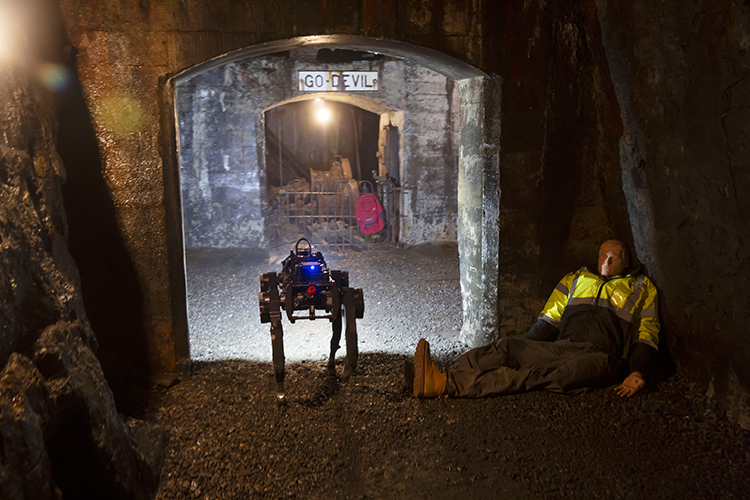
caption: Photograph Courtesy of University Communications.A group of Penn students, postdocs and faculty recently traveled to an experimental mine near Pittsburgh to participate in the first round of the Subterranean (SubT) Challenge, hosted by the Defense Advanced Research Projects Agency (DARPA). They were led by Camillo J. Taylor, a professor in Penn Engineering’s department of computer and information science and deputy director of the General Robotics, Automation, Sensing and Perception (GRASP) Lab. They teamed up with others outside the university to build robots to navigate and explore unknown underground environments.



The goal of SubT was to develop robots that could be sent into places too dangerous for humans, like a subway tunnel after a fire or a mine where workers are trapped. These robots could then send back reports on what it saw to a person who could remain in a safe location. 

Members of the Pennsylvania Laboratory for Underground Tunnel Operations team (PLUTO) had experience working with drones in challenging settings, but going underground meant that another type of platform was needed to carry heavy equipment while navigating narrow spaces. So they turned to the four-legged “dog” platforms developed by Ghost Robotics, a company co-founded by Penn alumni Avik De and Gavin Kenneally. 

Each dog carried a light detection and ranging device that uses laser light to create a 3D map, stereo RGB cameras to see artifacts, thermal cameras to detect heat signatures, and an onboard computer to process the data. PLUTO’s robots also need the ability to decide where to travel next, recognize artifacts and relay information to other dogs and to the humans outside the mine. 

Programs developed by Anthony Cowley, a SEAS PhD student, were used to generate a map of the robot’s location based on images collected by the sensors, while artifacts like backpacks and phones were detected using a program developed by PhD student Shreyas Shivakumar. 

Communication is particularly challenging underground since radio waves can’t travel through thick cave walls. PLUTO’s strategy, led by Fernando Cladera, a master’s student in robotics, was to create a “bucket brigade” system that allowed robots to share data with one another. That way, if a robot couldn’t get back to the entrance, the data it collected could still be relayed by other dogs to the base station. 

Bringing all of these abilities together requires high-level autonomy to allow the robots to plan their exploration strategies without direct human input. PhD student Ian Miller led this effort and helped make sure that all the sensors, hardware and algorithms worked together. 

PLUTO spent time at the Number 9 Coal Mine and Museum in Lansford, Pennsylvania over the summer and at the Colorado School of Mines experimental mine earlier this year to see how their automated systems performed underground. While their robots did not spot as many artifacts as hoped, the PLUTO team is pleased with how the system performed in such challenging and unknown environments.

The next round of SubT will be happening in February in an urban setting. Regardless of what lies ahead, creating and sending robots into challenging real-world environments is fundamental for progress both at Penn and in the field of robotics as a whole. For the complete story, visit https://penntoday.upenn.edu/news/robots-rescue-underground-DARPA

Predicting Success

New research from Angela Duckworth, the Christopher H. Browne Distinguished Professor of Psychology in Penn’s School of Arts and Sciences, and colleagues at Duke University and the United States Military Academy reveals that the answer to the question “What predicts success?” may not be so straightforward. The researchers published their findings in the Proceedings of the National Academy of Sciences.

In 2007, Dr. Duckworth published a paper showing for the first time that grit was an important predictor of accomplishment. She continued collaborating with West Point, eventually collecting data on 11,258 cadets who were part of nine separate classes that entered the military academy over the course of a decade. 

For each student, the researchers looked at grit score as measured by the Grit Scale created by Dr. Duckworth, entrance exams, and results from a battery of fitness tests each West Point hopeful must take before being admitted. West Point also provided data on whether cadets completed the Beast Barracks training (a six-week initiation during the summer preceding classes) and graduated from the academy, as well as their GPAs for academic, military and physical performance. Dr. Duckworth and colleagues then conducted a mega-analysis incorporating all these data. 

Dr. Duckworth and her team discovered that different personal characteristics predict different outcomes. During Beast Barracks, for example, grit is crucial. “The grittier you are, the less likely you are to drop out during that very discouraging time,” Dr. Duckworth explained, referring to Beast Barracks. But during the four years of combined classroom time and physical training that follow, cognitive ability is the strongest predictor of academic grades. Finally, grit and physical ability play a greater role than cognitive ability in determining who will graduate from West Point in four years versus who might leave before then. 

What are the practical implications, particularly for fields like human resources or university admissions? Employers and schools tend to emphasize cognitive abilities in their search process because objective tests like the SAT let them easily measure one candidate against another. But for noncognitive attributes, objective tests are lacking. 

The findings add to the canon of overall knowledge about what factors predict success. They also strengthen Dr. Duckworth’s original theories about grit and, at the same time, highlight other attributes that are key to long-term achievement. “If you want to lead a happy, healthy, helpful life,” she said, “you want to cultivate many aspects of your character, like honesty, kindness, generosity, curiosity”—and, of course, grit. 

For the complete story, visit https://tinyurl.com/Duckworthsuccess

Childhood Trauma and the Cost to Society

Millions of children in the United States each year become victims themselves or witness violence against a family member or someone in their community, and the consequences are well-documented. What’s less understood is how much access people have to treatment following these incidents and what this problem costs. 

Michal Gilad, Penn Law doctoral student and associate fellow with the Leonard David Institute for Health Economics, and Abraham Gutman, an economist and health policy expert now at The Philadelphia Inquirer, spent several years researching these questions. They published their results in the University of Illinois Law Review and the Fordham Urban Law Journal.  

Ms. Gilad created a survey about the availability of state-level resources, agencies responsible and mechanisms in place to identify children in need. “In most states, services are available, and state laws do recognize this as something that makes a child eligible for compensation for therapeutic services,” Ms. Gilad said. “The services are out there, but they’re not being used.”

Ms. Gilad then partnered with Mr. Gutman to look at the snowball effect of childhood exposure to violence and crime, building an economic model that incorporated prevalence of exposure using data from the National Survey of Children’s Exposure to Violence III and the US Census; attributable risk, to account for how the level by which crime exposure increases the likelihood for a child to experience each adverse outcome; and cost to the states and society for each outcome.

Their analysis determined that every year the US spends $458,750,671,262 on elements related to the problem of childhood crime exposure. At the individual level, the total cost comes to $194,413 during each person’s lifetime.

“If we know how much this costs us, then we can calculate more accurately how much we could save if we have policies in place to mitigate some of the negative outcomes,” Ms. Gilad said. 

For the complete story, visit https://tinyurl.com/giladtraumas

AT PENN

Events

Ashley Bryan Archive Celebration and Philadelphia Book Launch for Infinite Hope: December 5

On Thursday, December 5, 5-8 p.m., the Penn Libraries and members of the Ashley Bryan Center will celebrate internationally recognized children’s book author and illustrator, poet and humanitarian Ashley Bryan. One of the pioneers introducing characters of color—whether African, Caribbean or African American—into the realm of children’s literature, Mr. Bryan has written and illustrated more than 20 children’s books during the past three decades. This event marks the Philadelphia launch of his new World War II memoir, Infinite Hope, as well as the arrival of his archive at the Kislak Center for Special Collections, Rare Books and Manuscripts.

The program at the Van Pelt-Dietrich Library Center, Class of 1978 Orrery Pavilion, Kislak Center for Special Collections, Rare Books and Manuscripts will include Mr. Bryan and Dan Lief, a member of the Ashley Bryan Center Board of Directors, who will speak on the coming of the archive to Penn; Nick Clark, founding executive director of the Ashley Bryan Center, who will interview Mr. Bryan; and Mr. Bryan’s editor at Simon & Schuster, Caitlyn Dlouhy, who will speak on the making of Infinite Hope.

An exhibition of materials used in the book will be on display, and signed copies of Infinite Hope, along with the new 2020 Kislak Center calendar, Vibrant Wonders: A Year Celebrating the Illustrations of Ashley Bryan, will be available for sale.

Register: https://www.library.upenn.edu/about/exhibits-events/ashley_bryan

caption:Ashley Bryan (seated) with his nephew Sandy Campbell (left) and David McKnight (right), director of Penn’s Rare Book & Manuscript  Library, during a visit to the Penn Libraries  in January 2019.

Crimes

Weekly Crime Reports

Below are the Crimes Against Persons, Crimes Against Society and Crimes Against Property from the campus report for November 11-17, 2019View prior weeks' reports—Ed.

This summary is prepared by the Division of Public Safety and includes all criminal incidents reported and made known to the University Police Department for the dates of November 11-17, 2019.The University Police actively patrol from Market St to Baltimore and from the Schuylkill River to 43rd St in conjunction with the Philadelphia Police. In this effort to provide you with a thorough and accurate report on public safety concerns, we hope that your increased awareness will lessen the opportunity for crime. For any concerns or suggestions regarding this report, please call the Division of Public Safety at (215) 898-4482. 

11/12/19

4:55 PM

255 S 36th St

Secured bike taken

11/13/19

2:11 PM

133 S 36th St

Unsecured currency taken from multiple desk drawers which were unlocked

11/13/19

3:50 PM

300 S 34th St

Male wanted on warrant/Arrest

11/13/19

4:11 PM

101 S 39th St

Unsecured package taken from lobby

11/13/19

4:11 PM

105 S 41st St

Unsecured package taken/Arrest

11/14/19

12:27 AM

4100 Sansom St

Intoxicated male/Arrest

11/14/19

10:05 AM

3939 Chestnut St

Packages taken from lobby

11/14/19

10:54 AM

4009 Chestnut St

Unwanted messages received

11/14/19

12:06 PM

3602 Chestnut St

Male refused to leave area/Arrest

11/14/19

9:51 PM

4000 Spruce St

Complainant struck in face with glass

11/15/19

11:11 AM

3901 Locust Walk

Bike parts stolen/Arrest

11/15/19

11:44 AM

3925 Walnut St

Retail theft/Arrest

11/15/19

2:08 PM

3601 Market St

Bike taken from storage room

11/15/19

8:46 PM

3925 Walnut St

Cell phone taken by unknown male

11/16/19

2:33 AM

4001 Walnut St

Retail theft/Arrest

11/16/19

2:13 PM

209 S 33rd St

Unsecured laptop stolen

11/16/19

7:13 PM

51 N 39th St

Complainant struck by known person

11/17/19

8:39 PM

312 40th St

Secured bike taken

11/17/19

10:10 PM

4000 Sansom St

Unsecured cell phone stolen

18th District

Below are the Crimes Against Persons from the 18th District: 3 incidents (2 aggravated assaults and 1 robbery) were reported for November 11-17, 2019 by the 18th District covering the Schuylkill River to 49th Street & Market Street to Woodland Avenue.

11/14/19

9:52 PM

4000 Spruce St

Aggravated Assault

11/17/19

4:24 PM

48th & Pine Sts

Aggravated Assault

11/18/19

8:19 AM

47th & Hazel Ave

Robbery

Bulletins

Penn Offers Wintertime Backup Coverage for Caregivers

The winter season means cold, snow, potential school closures, little runny noses and a host of other events that may require you to find backup care for family members. That’s why Penn has a variety of programs and partnerships that help bring peace of mind. Be prepared for winter weather surprises by keeping Penn’s backup care options in mind.

Snow Day Child Care 

This program, offered in partnership with the Penn Children’s Center, provides all-day child care for benefits-eligible faculty and staff when inclement weather closes schools in the School District of Philadelphia while the University of Pennsylvania remains open.

Snow Day Child Care is available December 2, 2019 through March 27, 2020 for children ages 12 weeks to 12 years. It is not a requirement that your child be enrolled in a Philadelphia school to participate. 

The University covers most of the cost for Penn faculty and staff Snow Day Child Care, but there is a daily fee based on several factors, including your Penn salary, the age of your children and the number of children you place in care. Visit https://www.hr.upenn.edu/PennHR/wellness-worklife/family-care/snow-day-child-care for details.

Parents must register before there is a snow day by completing an online application at http://cms.business-services.upenn.edu/childcare/temporary-childcare/snow-day-care.html For more information, call the Penn Children’s Center at (215) 898-5268.

Care.com

Penn offers benefits-eligible faculty and staff backup care through Care.com If an elderly parent is visiting and needs extra assistance, your regular caregiver is out of town and you need another one or you could use help after surgery, Care.com has got you covered.

Through Care.com, you can have temporary backup care in your home, at an out-of-town work location or at an adult relative’s residence day or night, seven days a week, including holidays. Care.com puts you in touch with professionals who meet your family’s specific needs and expectations.

The University covers some of the cost of this care through a subsidy program. Subsidies are based on your annual base salary and other factors, including the number of family members receiving care and whether special needs exist. Visit https://www.hr.upenn.edu/PennHR/wellness-worklife/family-care/backup-care for eligibility and cost details.

Penn offers benefits-eligible faculty and staff up to 10 days of subsidized backup child or adult care per fiscal year.

Child Care—Care is available for children who are 17 years old or younger, typically in your home. You can also arrange to have the care at your business-travel location. Care.com can provide care for more than one child at a time and children who are sick. Please keep in mind that only mildly ill children are eligible for care. See https://www.hr.upenn.edu/docs/default-source/work-and-life-support/childcare_ill.pdf for details.

You can take your child to a vetted Backup Care Center. The Care.com safety team conducts on-site evaluations, audits and annual re-credentialing for every Backup Care Center. The service is available across the country, Monday-Friday, during center hours. Visit penn.care.com for reservations and details.

Adult Care—Adults 18 years of age and older in your immediate or extended family are eligible for care whether they reside with you or not. Immediate or extended family includes your spouse, as well as your parents and parents-in-law, siblings, grandparents and adult children. You can also use adult care when you need personal assistance due to illness or injury.

Services include meal preparation, light housekeeping, laundry, prompting for medication and assistance with bathing, dressing and other similar daily activities. Care can be provided at the family member’s location, even if it’s in another city.

Senior Care—This benefit connects eligible faculty and staff with the support and guidance of experienced Senior Care Advisors. Advisors offer caregiving strategies, such as finding the appropriate level of care, proactively planning and paying for care and assisting adult children whose parents do not want to accept care. The service also allows for free in-depth consultations with a geriatric social worker.

While not required, it is best to register with Care.com in advance of requesting child or adult care placement so that basic information about you and your family is in the system, including your home address, names and ages of your children and other pertinent details.

To request backup care, call (855) 781-1303, Monday-Thursday, 7 a.m.-8 p.m. and Friday 7 a.m.-5 p.m. If registered, you can also make a request through the Care.com Backup Care online system at https://penn.care.com/wps-enrollment-p1449-q71027713.html If you are not registered, please visit penn.care.com

For more information about work-life benefits, visit https://www.hr.upenn.edu/PennHR/wellness-worklife

—Division of Human Resources

Volunteer Opportunities

Become a Dropsite Volunteer: Participate in the four annual drives held by Penn Volunteers In Public Service (Penn VIPS) to benefit members of the surrounding community.

We are in need of locations around the University that can serve a drop-off point during our school, toy, gift drives as well as others. Your role would be to help advertise the event and to collect as well as deliver the donated items to our central location. We look forward to having you join us.

Create Your Own Volunteer Activity for Your Department: Would you and your colleagues or friends like to participate in a volunteer activity? Penn VIPS is happy to connect you to an activity or help you develop one of your own.

Donate Items to Penn VIPS: Remodeling the office? No longer need that file cabinet or desk? Want to do something useful with no longer needed items used by your department, but still in good condition?

Penn VIPS maintains an extensive list of local agencies and nonprofits in desperate need of your no longer needed items. We connect no longer needed items with members of the community that are happy to put donated items to good use. We can easily make arrangements for pick up. Don’t throw it out! Contact Penn VIPS.

Contact Isabel Mapp at 898-2020 or send an email to sammapp@pobox.upenn.edu for additional information and/or to make a donation.

—Isabel Sampson-Mapp, Associate Director, Netter Center for Community Partnerships

Back to Top