News

Rhodes Scholar: Penn Senior Adebisi Ogunrinde

Adebisi OgunrindeAdebisi (Debi) Ogunrinde, a University of Pennsylvania senior from Halifax, Nova Scotia, has won a Rhodes Scholarship; she is one of 11 recipients from Canada. Ms. Ogunrinde will pursue a master’s in social anthropology and a master’s in public policy at the University of Oxford.

Ms. Ogunrinde, a student in the Huntsman Program, will graduate from Penn in May 2016 with a dual bachelor’s degree in international studies from the School of Arts & Sciences and in economics from the Wharton School.

“We are thrilled that Debi has been awarded a Rhodes Scholarship. Her involvement in social entrepreneurship and engagement is already making a difference locally and globally,” said Penn President Amy Gutmann. “Debi’s brilliance combined with her determination and passion for others are evidenced in her research on discrimination against South African Rastafarians, her social impact research project in Lagos, Nigeria, and her volunteer work to assist West Philadelphia community members gain financial literacy and college application skills.  The Rhodes will help her make an even greater impact on the world, and we couldn’t be more proud of her.”

Ms. Ogunrinde continues to pursue her interest in competitive debate at Penn, something she has participated in since high school when she led the Canadian national debate team and coached the Zimbabwe national debate team. She also conducts additional research for the Wharton Zicklin Center for Business Ethics Research as part of the Ideas for Action team in collaboration with the World Bank.

Ms. Ogunrinde applied for the Rhodes with assistance from Penn’s Center for Undergraduate Research and Fellowships (CURF), which was established in 2000.

“We at CURF are extremely pleased that the Rhodes committee recognized Debi’s academic achievement and ongoing commitment to serving marginalized communities in Philadelphia and throughout the world,” said Wallace Genser, CURF senior associate director for fellowships and operations. “Debi’s keen mind and thoughtful approach to international development is inspiring, and it has been a delight working with her.”

Rhodes Scholarships have been awarded by the Rhodes Scholarship Trust since the death of Cecil Rhodes in 1902. Ms. Ogunrinde is the second Penn student to receive a Rhodes this year (Almanac November 24, 2015).

The Rhodes Scholarship provides for two years of study at the University of Oxford. Students are selected on the basis of a combination of intellectual excellence and personal character offering promise of outstanding service to the world.

$5.5 Million DARPA Grant for GRASP Lab at Penn

The University of Pennsylvania’s GRASP Laboratory has received a three-year, $5.5 million grant from the Defense Advanced Research Projects Agency (DARPA) to create new flying robots that are able to quickly and autonomously navigate unknown environments. These abilities would be invaluable in disaster situations where conditions are too dangerous for humans to inspect damage or search for trapped or injured people.

“Our emphasis is on three S’s: size, speed and smarts,” said Vijay Kumar, the Nemirovsky Family Dean of Penn’s School of Engineering & Applied Science. “A small, fast flying robot that can find its way through a partially collapsed building or a nuclear plant during a meltdown has the power to save lives.”

DARPA’s Fast Lightweight Autonomy, or FLA, program seeks unmanned aerial vehicles that weigh less than three kilograms and can fly at speeds as fast as 65 feet per second.

Such robots are already a common sight in the GRASP Lab at Penn Engineering, where swarms of palm-sized quadrotors fly in tight formations and zip around obstacles. However, those feats are accomplished with the aid of motion-tracking cameras mounted on the walls of the lab, which relay precise location information to a central computer and back to each robot in the swarm.

Enabling each robot to see and recognize features of a given environment, such as walls, doors, windows and people, is the first step toward autonomous navigation. Each robot must also be able to make sense of this information and plan its trajectory accordingly. Packing all of these abilities onto a fast, lightweight platform requires drawing on several engineering disciplines.

In addition to Dean Kumar, the principal investigator for the FLA program, GRASP Lab director Daniel Lee and members Camillo J. Taylor, Kostas Daniilidis and Jianbo Shi, along with their students, will provide necessary expertise for the project. Dr. Lee, who also leads Penn’s team in the DARPA Robotics Challenge and in the international robotic soccer competition RoboCup, is an expert in machine learning and autonomy. Dr. Taylor will provide insights into computer vision and object recognition, while Dr. Daniilidis will provide his expertise on 3-D vision for navigation in unknown environments and Dr. Shi will work on machine learning as it pertains to 3-D perception.

The DARPA grant will extend existing work on miniaturizing quadrotors that can fly autonomously in never-before-seen environments. Using a suite of on-board sensors and processors, such robots can enter a building, make three-dimensional maps of the space and use those maps to return to their starting point.

GRASP Lab members have already built a flying robot that can do aspects of this kind of navigation using the software and cameras on a customized platform but at more modest speeds.   

2015 Doer Award from Urban Affairs Coalition: Penn President Amy Gutmann

Amy GutmannPenn President Amy Gutmann recently received the 2015 Doer Award from the Urban Affairs Coalition in Philadelphia.

The award was presented to Dr. Gutmann at the group’s 46th Annual Breakfast with the theme “Breaking Barriers, Building Coalitions.” Ed Rendell, C’65, former Pennsylvania governor and Philadelphia mayor, was the namesake of the award when it was created 16 years ago as he completed his second and final term as mayor. Last month, he made the presentation to Dr. Gutmann, who is a true “Doer” like himself.

The award recognizes Dr. Gutmann as “a person who has made things happen and who has created opportunity for all.”

Mayor Michael Nutter, W’79, was among the city government officials in attendance. 

Dr. Gutmann has been president of Penn since 2004, and in 2009 President Barack Obama named her to chair the Presidential Commission for the Study of Bioethical Issues (Almanac December 8, 2009). She served as chair of the Association of American Universities in 2014-2015 (Almanac November 25, 2014) and serves on the National Commission on the Humanities and Social Sciences (Almanac March 1, 2011) and on the boards of the National Constitution Center and the Vanguard Group.

President Gutmann has been honored with the 2003 Harvard University Centennial Medal and the 2009 Carnegie Corporation Academic Leadership Award. In 2011, she was named by Newsweek as one of the “150 Women Who Shake the World,” and in 2014 she received the Anti-Defamation League’s Americanism Award.

Perry World House: Building a New Hub for Penn’s Growing International Activities

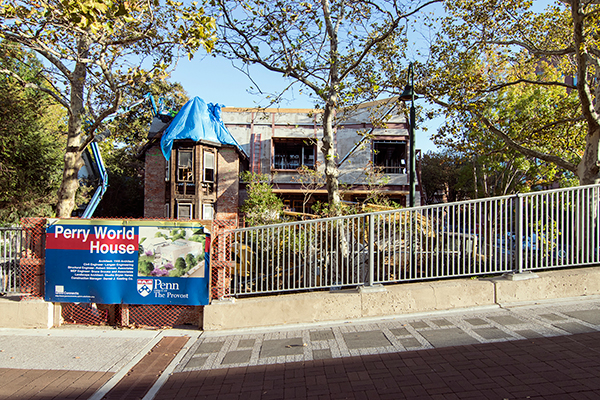
caption: As with every new building on Penn's campus, the Perry World House project (above) is targeting LEED Silver certification. Additional information is available at www.pennconnects.upenn.edu

Slated to open in the spring of 2016, the University of Pennsylvania’s Perry World House will be a hub for Penn’s growing international activities, anchoring its global resources on an interdisciplinary campus while creating cutting-edge strategic partnerships abroad.

Construction, which began in 2014, on the new 17,400-square-foot, $18.95-million project is approximately 40 percent complete and is being overseen by the construction management firm Daniel J. Keating Company. The “topping off,” in which a crane secured the uppermost beam atop the building’s frame, signifying the completion of the structural phase of the building, took place in July. By the start of the current academic year, the design form was visible.

While awaiting completion of the physical facility, Perry World House leadership has been engaged in its programmatic agenda.

“Perry World House will offer Penn a platform to participate in key policy debates about the world’s most pressing global challenges, further positioning the University as a global agenda setter,” said Ezekiel Emanuel, vice provost for global initiatives.

Established through a gift from University Trustee Richard C. Perry and his wife, Lisa Perry (Almanac March 26, 2013), the Perry World House will create a place connecting faculty and students across all of Penn’s 12 schools with scholars and policymakers from around the globe.

The design by 1100 Architect incorporates and partially preserves an existing Samuel Sloan-designed house on Penn’s campus. The southern entrance at 38th Street and Locust Walk includes a landscaped forecourt and lounge that retains the house’s signature bay window.

“By taking part of the house and fusing it with a new structure, the end product will be a kind of built ‘collage,’ with the new bluntly touching the old, respecting tradition but being forward thinking, both physically and academically,” says University Architect David Hollenberg. “The new building reinterprets the neo-Gothic architectural language of the original volume and attaches a dynamically shaped form.”

This hub will have several flexible classroom and conference spaces, including the World Forum, a glass-enclosed central 150-seat meeting space for lectures by visiting policymakers and international scholars. The facility will also house 14 offices for staff and visiting scholars.

As with every new building on Penn’s campus, the Perry World House project is targeting LEED Silver certification. Additional information is available at www.pennconnects.upenn.edu 

Rhodes Scholar: Penn Senior Jennifer Hebert

Jenna HebertUniversity of Pennsylvania senior Jennifer (Jenna) Hebert from Pittsburgh, Pennsylvania, has won the prestigious Rhodes Scholarship. She plans to pursue a master’s degree in psychiatry at the University of Oxford in England.

Ms. Hebert will graduate in May 2016 from Penn’s School of Arts & Sciences with a bachelor’s degree in the biological basis of behavior (BBB). Her senior honors thesis focuses on the effects of nicotine and stress on neural circuitry. She has published in Frontiers in Neuroscience and presented at the Society for Neuroscience’s conference. She has had a seat on the first varsity boat on the Penn Women’s Rowing Team since her freshman year and competed on the US National Rowing Team.

“All of us at Penn are extraordinarily proud of Jenna,” said Penn President Amy Gutmann. “She is making her mark in the world of neuroscience research as one of the most multi-talented young scholars in the United States. As an exceptional young scientist, an extraordinary athlete and a community volunteer, devoting her time and expertise to help others, she is a role model for students everywhere. Her energy and knowledge are going to have a profound impact on the world. Jenna is truly deserving of this prestigious recognition.”

Ms. Hebert was elected to Phi Beta Kappa during her junior year, while finding time to serve as a volunteer at the Philadelphia Adaptive Rowing Club, assisting and instructing physically and cognitively disabled rowers. She has studied the mechanisms underlying memory and has been drawn to drug addiction research.

Established in 2000, Penn’s Center for Undergraduate Research and Fellowships (CURF) assists students in applying for scholarships such as the Rhodes.  

“We at CURF are extremely pleased that the Rhodes committee recognized Jenna’s commitment to improving the world through her work understanding the biological basis of behavior,” said Wallace Genser, CURF senior associate director for fellowships and operations. “Jenna brought the same commitment and meticulous approach to applying for the Rhodes that she brings to her rowing and her scholarship, and it has been a genuine pleasure working with her.”

Ms. Hebert is among 32 American college students who were selected for a Rhodes. These have been awarded by the Rhodes Scholarship Trust since the death of Cecil Rhodes in 1902. Penn student Ellis T. Robins was among the first group of Americans named as scholars in 1904.

The Rhodes Scholarship provides for two years of study at the University of Oxford. Students are selected on the basis of a combination of intellectual excellence and personal character offering promise of outstanding service to the world.

NGSS Town-Hall on Pennant: December 9

Executive sponsors Michelle Brown-Nevers, Beth Winkelstein and Thomas Murphy, as well as project owners and managers for the Next Generation Student Systems (NGSS) project, invite the entire Penn community to a town-hall meeting from 1-2:30 p.m. on Wednesday, December 9 in Berger Auditorium of Skirkanich Hall (33rd Street south of Walnut).

The team will recap the successful launch of Pennant Accounts and share plans for upcoming releases, which will focus on student academic records, registration and financial aid.

Time will be reserved for questions from the audience. Whether you are just learning about Pennant or want to know how future releases will affect you, please bring your questions so everyone can benefit from a wide-ranging discussion.

For more information about NGSS and Pennant, consult the project web site at http://www.sfs.upenn.edu/ngss/

—Rob Tisot, NGSS Functional Project Mgr.

—Michael Kearney, NGSS Technical Project Mgr.

Providing Students with ISBNs and Price Information for Books

The Higher Education Opportunity Act requires universities to make available to students, for each course, the International Standard Book Numbers (ISBNs) and price information for required/recommended books and supplemental materials.

To comply with this requirement, the University of Pennsylvania has worked closely with Barnes & Noble, managers of the Penn Bookstore, to develop a simple and cost-effective process to provide ISBNs to our students. Through the Bookstore’s online system, students will have access to a complete list of materials for all their courses, along with the ISBNs for each listed text.

As in the past, textbook information can be provided to other vendors, and students are in no way required to purchase their books at the Penn Bookstore.

Faculty support will be a critical factor in the University’s efforts to act in accordance with this regulation. To that end, we encourage all Penn faculty members to work with the Bookstore as it communicates with you in the near future about this important resource for our students. 

—Vincent Price, Provost
—Beth Winkelstein, Vice Provost for Education

Center of Excellence in Environmental Toxicology (CEET) Pilot Project

The Center of Excellence in Environmental Toxicology announces the following pilot project opportunity. Applications are due on Monday, January 4, 2016.

Focus Research Awards:

Applications related to exposure biology are currently being accepted. Applications that use modern approaches to determine population or personal environmental exposures are encouraged, using tools such as GIS or cartographic modeling, fabrication and/or deployment of biosensors, and biomarkers of exposure and effect. Biomarkers can be small molecule, genomic, proteomic or metabolic signatures of exposure.  For applications that are biomarker-based, both animal and human subjects or derived material (urine, serum and cell lines) are allowable in the experimental design. Applicants can request up to $50,000 for one year. No salary support for the faculty member is allowable.

For All Awards: The awards cannot be used to support research that is already funded by an external agency. If funded, a progress report is required within 3 months of the end of the funding period and awardees must present their findings at a CEET Seminar within 6 months of the end of the funding cycle. The CEET must be acknowledged on all publications resulting from the supported research. 

Applications must be submitted in a single PDF for internal review by Monday, January 4, 2016 to webster@upenn.edu

Complete applications must include the following:

1. Title of application

2. Personnel information, name, position, title and contact information;

3. New page NIH biosketch (5 pages);

4. List of current and pending grant support;

5. An abstract (no more than 300 words);

6. A statement to indicate how this project would lead to extramural funding (not more than 1 page);

7. Specific aims (not more than 1 page);

8. Significance, which must state relevance to environmental health;

9. Preliminary studies;

10. Methods (including statistical power and analysis);

11. A brief outline of how the results from the pilot study will enable the submission of a subsequent NIH grant and a detailed plan for this subsequent grant submission;

Items 8 to 11 should not exceed 5 pages

12. References; and

13. Budget—Items that can be requested include salary of support personnel, supplies and minor equipment. Travel is not allowed. Budget must be justified.

All applications will be reviewed by a committee of CEET members and senior leadership, and successful applicants will be notified by February 15, 2016. Funding will have a start date of March 1, 2016. For an award to be made all IACUC and IRB protocols must be in place.

Eligibility

Any member of the standing or research faculty from any school may apply. For questions, contact webster@upenn.edu

Governance

From the Senate Office: Faculty Senate Executive Committee Actions

The following is published in accordance with the Faculty Senate Rules. Among other purposes, the publication of SEC actions is intended to stimulate discussion among the constituencies and their representatives. Please communicate your comments to Patrick Walsh, executive assistant to the Senate Office, either by telephone at (215) 898-6943 or by email at senate@pobox.upenn.edu

Faculty Senate Executive Committee Actions Wednesday, November 18, 2015

Chair’s Report. Faculty Senate Chair Reed Pyeritz reported that the Co-Chairs of the Senate Committee on the Economic Status of Faculty will present its findings at its December meeting. Dr. Pyeritz also informed SEC that the 2016 Faculty Senate symposium will be held on the afternoon of April 6, 2016. It will be open to the whole University community, and special guests and location will be announced at a later date.  Though a number of thoughtful and engaging topics were submitted by SEC members and considered, the chosen topic will examine the role that faculty will play in the evolution of higher education over the next several years.

Past Chair’s Report. Faculty Senate Past Chair Claire Finkelstein reported that the Academic Planning and Budget Committee held its third meeting and the Capital Council has its next meeting on November 19.  She gave an update on the Campaign for Community, informing SEC members that it has distributed more than $6,000 in grant funding to-date.  The spring grant cycle will open on December 1 and continue through March 15, 2016. Campaign for Community events, past and present, can be found at the event calendar on its website, https://provost.upenn.edu/initiatives/campaign/calendar Dr. Finkelstein also gave an update on the Senate Tri-Chairs’ recent conversations with University officials on the topic of faculty members as “responsible” reporters of incidents of sexual violence under Federal law; she noted that Wendy White, Senior Vice President and General Counsel, will visit SEC at its December meeting to discuss this topic.

Update from the Office of the President. President Amy Gutmann provided SEC with an update on the Penn Compact 2020, the University’s current strategic plan. Its goals are  inclusion (including student financial aid, faculty diversity and excellence, and innovative open learning), innovation (including endowed university-wide professorships, centers of multidisciplinary excellence, and the Pennovation Center at Pennovation Works), and impact (including the “Penn Connects 2.0” campus development plan, public policy initiatives, and the Penn Wharton China Center and Perry World House). She noted that Penn’s “all grant” financial aid packages have reduced the average debt of graduating students by more than 2% over the past year and that six-year graduation rates for African-American, Latino, and first generation students have all increased to 96%.  Graduate student support has dramatically increased since 2004, and faculty diversity is incrementally improving. Penn’s most recent 10-year annual fundraising average has increased to $490.1 million from the previous decade average of $301.8 million, and fundraising goals of $1 billion for student financial aid and $900 million  for new professorships are on track to be reached by 2019. President Gutmann noted concern about the steady decrease in federal research funding but that she is making an effort to engender Congressional support for increasing it. She thanked SEC members for their support of the Penn Compact 2020.

2016 Senate Nominating Committee. SEC members voted for the members of the 2016 Senate Nominating Committee.

Nomination of faculty members to University ad hoc committees.  SEC members were informed that a student group has developed a proposal to request the University to divest from fossil fuels. The University Council Steering Committee at its most recent meeting referred that proposal to an Ad Hoc Advisory Committee on Divestment for further study in accordance with the Guidelines and Procedures for Consideration by the Trustees of Proposals for Divestment from the University Endowment or Other Holdings Based Upon Social Responsibility Concerns of the Penn Community. Under these Guidelines, the Senate must aid in the creation of the Ad Hoc Committee by nominating a slate of Standing Faculty members as candidates to the Committee. SEC members were asked to submit nominations of faculty members to the Faculty Senate Office by December 4, 2015.

Faculty Senate Executive Committee Agenda

The following agenda is published in accordance with the Faculty Senate Rules. Any member of the standing faculty may attend SEC meetings and observe. Questions may be directed to Patrick Walsh, executive assistant to the Senate Office, either by telephone at (215) 898-6943 or by email at senate@pobox.upenn.edu

Faculty Senate Executive Committee Agenda, Wednesday, December 9, 2015, 3-5 p.m.

Room 205, College Hall

1. Approval of the Minutes of November 18, 2015 (1 minute)

2. Chair’s Report (5 minutes)

3. Past-Chair’s Report (9 minutes)

4. Discussion of Protocol for Sexual Assault Complaints Against

Faculty (30 minutes)
        Discussion with Wendy White, General Counsel

5. Discussion of the 2015-16 Economic Status of the Faculty Report draft (30 minutes)
        Discussion with Susan Margulies and Andrea Troxel,

    Co-Chairs of the Senate Committee on the

    Economic Status of the Faculty

6. Update from the Office of the Vice Provost for Faculty (30 minutes)
        Discussion with Anita Allen, Vice Provost for Faculty

7. Selection of Chair for the 2016 Senate Nominating Committee

    (5 minutes)

8. Selection of Final Slate of Nominees for Membership Consideration on the Ad Hoc Advisory Committee on Divestment (5 minutes)

9. New Business (5 minutes)

Senate Executive Committee Nominating Committee

SENATE:     From the Senate Chair

TO:     Members of the Faculty Senate

FROM:     Reed Pyeritz, Chair

SUBJECT:    Senate Nominating Committee 2016

1. In accordance with the requirements of the Faculty Senate Bylaws, notice is given to the Senate Membership of the Senate Executive Committee’s nine-member slate of nominees for the Nominating Committee for 2016. The Nominating Committee nominates candidates for election to the Offices of the Faculty Senate, to the At-Large and Assistant Professor positions on the Senate Executive Committee, to the Senate Committee on the Economic Status of the Faculty and to the Senate Committee on Academic Freedom and Responsibility. The nine nominees, all of whom have agreed to serve, are:

Norman Badler (Rachleff Family Professor, Department of Computer and Information Sciences, School of Engineering and Applied Sciences)

Peter Fader (Frances and Pei-Yuan Chia Professor and Professor of Marketing, Wharton School)

Claire Finkelstein (Algernon Biddle Professor of Law and Professor of Philosophy, School of Law)

Scott Francis (Assistant Professor of Romance Languages, School of Arts and Sciences)

Blanca Himes (Assistant Professor of Epidemiology in Biostatistics and Epidemiology, Perelman School of Medicine)

Guido Menzio (Associate Professor, Department of Economics, School of Arts and Sciences)

Maja Bucan (Professor of Genetics, Perelman School of Medicine)

Rosemary Polomano (Professor of Pain Practice, School of Nursing)

Harvey Rubin (Professor of Medicine, Perelman School of Medicine)

2. Pursuant to the Bylaws, additional nominations may be submitted by petition containing at least 25 signed names and the signed approval of the candidate. All such petitions must be received by December 8, 2015. If no additional nominations are received, the slate nominated by the Executive Committee will be declared elected. If additional nominations are received, a mail ballot will be distributed to the Faculty Senate membership. Please forward any nominations by petition via intramural mail to the Faculty Senate, Box 9 College Hall/6303. Please forward any questions to Patrick Walsh by email at senate@pobox.upenn.edu or by telephone at (215) 898-6943.

From the Office of the University Secretary: University Council Meeting Agenda

University Council Meeting Agenda

Wednesday, December 2, 2015, 4 p.m.

Bodek Lounge, Houston Hall

I. Approval of the Minutes of October 28, 2015. (1 minute)

II. Follow Up Questions on Status Reports.  (4 minutes)

III. Penn Connects 2.0. (40 minutes)
    IV. Open Forum. (70 minutes)

V. New Business. (5 minutes)

VI. Adjournment.

Features

An Assortment of Acronyms and Abbreviations at Penn

Below is an admittedly partial list of some of the many Penn acronyms and abbreviations; some have been around for decades and others are relatively new to the University. There are some that were on the first such list that Almanac published a dozen years ago, “A Primer of the Plethora of Penn Acronyms” (Almanac October 14, 2003), and others that came along by the time the second such list appeared (Almanac October 14, 2008). Many others now exist that were not yet around then.

An Assortment of Acronyms and Abbreviations at Penn
AARC logoAARC: African-American Resource Center, provides counseling, information, referral, workshops and advocacy to any member of the Penn community, with a particular focus on those of African descent.

ABA: Association of Business Administrators, promotes the exchange of information as well as communication among administrators of the University’s business and members of the association.

ACASA: Ackoff Collaboratory for Advancement of the Systems Approach, a think-tank created in 2000 by SEAS.

ARCH: Arts, Research and Culture House, home to three of Penn’s cultural resource centers: La Casa Latina, Makuu and PAACH, in addition to CURF and an eatery.

ASEF-PSOM: Association of Senior and Emeritus Faculty of the Perelman School of Medicine.

BBB: Biological Basis of Behavior, interdisciplinary major taught by faculty and staff in SAS, PSOM and Veterinary Medicine, created in 1978, one of the first neuroscience undergraduate programs in the country.

BEN: Business Enterprise Network, the suite of web-based applications that supports University-wide financial functions, released in 2000.

CAPS: Counseling and Psychological Services, provides free professional services to students who are having personal, social, academic and career issues.

CAROT: Center for Advanced Retinal and Ophthalmic Therapeutics, advancing the development of novel biologic and small molecule therapeutics for retinal and ocular diseases.
CASI logoCASI: Center for the Advanced Study of India, the first research institute in the US focused on contemporary India, founded in 1992.

CCN: Center for Cognitive Neuroscience, established in 1999.

CHOP: Children’s Hospital of Philadelphia, established in 1855, the first hospital in the US dedicated solely to the care of children, moved to this location in 1974, home to Penn’s pediatric department.

CIS: Center for Italian Studies, fosters the study of Italian language and culture from an interdisciplinary perspective, created in 1978, the first such center in the country.

CIS: Department of Computer and Information Science in SEAS.

CPCW logoCPCW: The Center for Programs in Contemporary Writing, formed in 2013 to bring together Penn’s writing programs, entities and projects into a collaborative whole.

CREF: China Research and Engagement Fund, five-year competitive matching program designed to stimulate and support activity in China and engagement with the PWCC, established in 2015.

CRESP: Center for Research and Evaluation in Social Policy, focuses on reviewing, generating and analyzing quality evidence relevant to policy in education and related social services fields.

CRRUCS: Center for Research on Religion and Urban Civil Society.

CRRWH: Center for Research on Reproduction and Women’s Health, a biomedical research enterprise that aims to increase the understanding of human reproduction and promote the wellbeing of women.

C-SAIL: Center on Standards, Alignment, Instruction and Learning, examines and evaluates how different college- and career-ready standards are implemented.

CSCC: Center for the Study of Contemporary China, established in 2012 to advance Penn’s leadership in programs, research and scholarship about the various factors shaping China and its role in the world today.

CURF logoCURF: Center for Undergraduate Research and Fellowships, supports and endorses students applying for the major, international, post-graduate and other competitive fellowships.

CWiC: Communication Within the Curriculum, launched as a pilot project, Speaking Across the University (SATU). In 2002 it became CWiC; it supports speaking as a means of communication and learning.

DAR: Development and Alumni Relations, manages programming of activities, communications outreach, and services designed to attract, inform and involve Penn’s alumni.

DMD: Digital Media Design, multidisciplinary undergraduate program, based in SEAS, with curriculum from the School of Design and the Annenberg School, created in 1998.

DPS: Division of Public Safety, collaborative effort between sworn University of Pennsylvania Police Officers, other personnel and several safety, security and law enforcement agencies.

DRIA: Division of Recreation and Intercollegiate Athletics.

DRL: David Rittenhouse Laboratory building, home to departments of mathematics and physics & astronomy, built in 1954, enlarged in 1967.

EHRS logoEHRS: Environmental Health & Radiation Safety, ensures compliance with government regulations regarding hazards, provides safety-related support services to Penn.

GEMS: Girls in Engineering, Math and Science Camp, launched in 2008, an opportunity for Philadelphia area middle school girls to spend a week participating in hands-on engineering activities at Penn.

GIC: Greenfield Intercultural Center, established in 1984 to address the needs of Penn’s increasingly diverse community.

GRASP: General Robotics, Automation, Sensing and Perception lab, a multi-disciplinary research lab housed in SEAS, established in 1979.

GSE: Graduate School of Education.

HR: Human Resources, the division dedicated to the recruitment, employment, development and retention of faculty and staff.

HUP: Hospital of the University of Pennsylvania.

IAST: Institute for Advanced Science and Technology.

IBI: Penn Institute for Biomedical Informatics, formerly PCBI.

ICA: Institute of Contemporary Art, founded in 1963 at Penn by former dean to expose students to what was “new and happening” in art and culture, in its own building since 1990.

ILI: International Literacy Institute, established in 1994 by UNESCO and Penn’s GSE.

IME: Institute for Medicine and Engineering, founded in 1996.

IOA: Institute on Aging, increases the quality and quantity of clinical and basic research as well as educational programs that focus on normal aging and aging-related diseases, founded in 1979.

IRCS: Institute for Research in Cognitive Science, fosters collaboration among departments in linguistics, mathematical logic, philosophy, psychology, computer science and neuroscience, established in 1990.

IRM: Institute for Regenerative Medicine, creates new cells and tissues for research, diagnostics and organ repair and replacement therapies.

ISAC: Integrating Sustainability Across the Curriculum, program established in 2012 to help Penn faculty introduce environmental sustainability into existing and new courses.

ISC: Information Systems and Computing, Penn’s central information technology organization, which provides infrastructure, services and support.

ISTAR: Institute for Strategic Threat Analysis and Response, created as a reaction to 9/11 attacks in the US, conducts research and analysis in the fields of risk assessment and strategic threat response.

ITMAT: Institute for Translational Medicine and Therapeutics, founded in 2005.

IUR logoIUR: Penn Institute for Urban Research, interested in global effects of growing urban populations and implications for public policy, founded in 2004.

JWS: Joseph Wharton Scholars, program founded in 1988 to emphasize the importance of scholarly research and the liberal arts and sciences within the framework of a business education.

KWH: Kelly Writers House, provides a supportive and accessible atmosphere where Penn writers of all kinds can share their works and ideas and enhance their writing skills together, founded in 1995.

LDI: Leonard Davis Institute of Health Economics, established in 1967, a cooperative venture among Penn’s schools of dentistry, medicine, nursing, law, Annenberg and Wharton; a center for health services research, health policy analysis and health care management executive education.
LGBT Center logoLGBT Center: Lesbian Gay Bisexual Transgender Center, established in 1982, one of the oldest such centers in the country.

LIFE: Living Independently For Elders, a program of all-inclusive care to foster independence and health, established in 1998 by the SON.

LPS: College of Liberal and Professional Studies, the continuing studies and lifelong learning division of SAS, formerly College of General Studies (CGS).

LRSM: Laboratory for Research on the Structure of Matter, the center for materials research created in 1960 to foster collaborative, interdisciplinary research.

LUCY: Loop through University City, SEPTA circulator bus, started in 1999 in conjunction with UCD to provide free transit service to/from 30th Street Station for those affiliated with the local institutions.

MAP: Major Advising Program, resource for students in the College to sample other majors.

MMS: Multi-Media Services, an instructional technology group that is part of SAS Computing and provides audio/visual support for academic and campus events.

MUSA: Master of Urban Spatial Analytics, interdisciplinary master’s program coupling spatial analysis skills and knowledge in an urban content area, jointly administered by IUR and PennDesign, launched in 2005.

NBC: New Bolton Center, a 700-acre campus located in Kennett Square, Chester County—home of the School of Veterinary Medicine’s George D. Widener Hospital for Large Animals, as well as a swine center, working dairy and poultry unit that provide research for agricultural industry.

NCAL: National Center on Adult Literacy, established at GSE in 1990.

NCOFF: National Center on Fathers and Families, an interdisciplinary policy research center established in 1994 at GSE to improve the wellbeing of children.

NELC: Near Eastern Languages & Civilizations, department that engages in interdisciplinary humanistic study and teaching of culture of the Near East.

NGSS: Next Generation Student Systems, developing the Pennant suite of systems including the first of three advancements, Pennant Accounts, which comprises the core student-profile and accounts-receivable application.

NSO: New Student Orientation, held at the beginning of the fall semester for incoming undergrads.

OCR: On Campus Recruiting, service that enables organizations to come to campus to interview students for post-graduate jobs and summer internships, managed by Career Services.

OID: Operations, Information and Decisions, Wharton department that trains students on business decision making. Formerly Operations and Information Management.

PACE: Programs for Awareness in Cultural Education, established in 1993 to facilitate dialogues across dimensions at GIC.

PASEF: Penn Association of Senior and Emeritus Faculty, organizes activities that encourage retired faculty members to continue to be active at Penn.

PASS: Program for Advanced Standing Students, two-year program designed for graduates of foreign dental schools who want to practice dentistry in the US, established in 1986.

PCAM: Perelman Center for Advanced Medicine.

PCC: Penn Children’s Center, provides child care for children ages three months to five years, administered by Business Services.
PCI logoPCI: Penn Center for Innovation, formerly the Center for Technology Transfer (CTT), helps to translate Penn discoveries and ideas into new products and businesses for the benefit of society and facilitates technology development connections between Penn and the private sector.

PENNCAP: College Achievement Program, established in 1971 through the Higher Education Equal Opportunity Program, works closely with academically talented students, many from low-income or first generation backgrounds, to support their success at Penn.

PennFLL: Penn FIRST LEGO League, team-based robotics competition for middle school students hosted by Penn in partnership with GRASP Lab and the School District of Philadelphia’s Secondary Robotics Initiative.

PennSTAR: Penn Specialized Tertiary Aeromedical Response, provides air and ground medical transportation within a 100-mile radius of Penn Med, provides transport of critical care patients between medical centers, as well as “on-scene” services at the site of accidents and trauma-related incidents. Helicopters and critical care ambulance operate 24/7.

TEM logoPennTEM: Penn Travel & Expense Management, the central travel department for University faculty, staff, students and guests, began in 2011 with the introduction of the online booking tool, Concur.

PHF: Penn Humanities Forum, runs annual topic-based programs and broader initiatives to invite those on and off campus to consider their common stake in the “thinking arts” since 1999.

PIER logoPIER: Penn Institute for Economic Research, founded in 1993.

PMI: Pennsylvania Muscle Institute, interdisciplinary group of research investigators with a mission to discover the mechanisms of muscle function, muscle disease and motile biological systems, develop technologies for the study of muscle and motile systems, and provide education and training.

PPE: Philosophy, Politics and Economics, cross-disciplinary undergraduate major in SAS.

PPSA: Penn Professional Staff Assembly, a network to serve monthly paid staff members at Penn.

PRECISE: Penn Research in Embedded Computing and Integrated Systems Engineering, founded in 2008.

PRP: Penn Reading Project, first started in 1991 with the book The Bacchae, PRP was created as an introduction for incoming freshmen to academic life at the University, part of NSO.

PSA: Penn Student Agencies, uses experiential learning model to provide students with a chance to live and learn entrepreneurship and business management, encompasses 10 agencies, first established in 1993 as “Self-Supporting Students,” adopted the PSA name in 1975 after other name changes.

PSOM: Perelman School of Medicine.

PVI logoPVN: Penn Video Network, closed-circuit campus cable television service and special video event network, first established in 1991 as the “Academic Video Network.”

PWC: Penn Women’s Center, founded in 1973, promotes gender justice at Penn and beyond.

PWCC: Penn Wharton China Center, opened in 2015, provides support for programs and collaborations between Penn’s 12 schools and academic, government and business partners in China.

RAD: Rape Aggression Defense, course for women about awareness, prevention, risk reduction and avoidance, and basics of hands-on defense training.

RAP-Line: Reach-A-Peer Helpline/Online, peer listener and reader program supported by the Office of Health Education, provides peer support, information and referrals.

SALT: Student Affairs Leadership Team, campus-wide collaboration of student affairs professionals, affiliated faculty, graduate students and other campus stakeholders, hosts open quarterly meetings on topics in student affairs and an annual conference. SAS: School of Arts & Sciences.

SAVA: Student Anti-Violence Advocate training, an interactive 6-hour training that educates students about the prevalence and impact of sexual violence, relationship violence and stalking.

SDM: School of Dental Medicine.

SEAS: School of Engineering & Applied Science.

SEC: Senate Executive Committee, the elected leadership of the Faculty Senate, representing faculty interests to the administration.

SEI: Scheie Eye Institute, serves as the department of ophthalmology of UPHS.

SFCU: Student Federal Credit Union, a non-profit founded in 1987 by three Wharton MBA students; the largest student-run credit union in the nation, the first and only student-run one in the Ivy League. 

SHS: Student Health Service, a full-service primary care center providing care designed to meet student needs.

SON: School of Nursing.

SP2: School of Social Policy & Practice.

SRFS: Office of Student Registration and Financial Services, provides financial services, products, counseling resources and information to meet the needs of students and their families, provides means for students to register for courses, maintains accurate records of academic achievement and student data, provides transcripts and schedules use of classrooms.

STAAR: Students Together Against Acquaintance Rape, a peer health program founded in the late 1980s, part of Office of Health Education.

TAP: Thrive at Penn, an online pre-orientation program that prepares students to make healthy choices as they begin their University experience, covers wellness and health, sexual violence prevention, risks associated with alcohol and drugs and other areas.

TPACE: Teaching Performing Art for Cross-Cultural Education, partnership between GIC and GSE, trains students to increase cross-cultural awareness.

UC: University Council, the University-wide advisory body, with representatives from all of the major constituencies.
UCD logoUCD: University City District, established by a partnership of University City institutions, businesses and community organizations in 1997, has worked to make the area cleaner and safer, and has also revitalized neighborhoods and been a partner in city-wide events.

ULAR: University Laboratory Animal Resources, provides veterinary care, animal husbandry and regulatory support for biomedical research schools at Penn and contributes to the animal care program.

UPHS: University of Pennsylvania Health System.

UPPD: University of Pennsylvania Police Department, part of DPS.

VPUL: Vice Provost for University Life, a division that nurtures the interests and aspirations of Penn students through activities, resources & service centers.

WIC: Weigle Information Commons, on the first floor of Van Pelt-Dietrich Library, supports collaborative learning using the latest technology.

WOCAP: Women of Color at Penn, committee organizes the annual Women of Color at Penn Day to award members of the Penn community who have made a difference in the lives of women of color.

WPPSA: Weekly-paid Professional Staff Assembly, formerly the A-3 Assembly, representing non-exempt and non-union employees.

WPTP: West Philadelphia Tutoring Project, program of Civic House, engages over 300 Penn student volunteers tutoring students aged 7-19 at local schools and on Penn’s campus.


AT PENN

Events

Update: November at Penn

FILM

30    NO! The Rape Documentary; introduction and Q&A with director Aishah Shahidah Simmons; 6-8 p.m., room D-26/27, Caster Building (Social Policy & Practice Nonprofit Leadership—Screening Social Justice Series).

Garden Railway’s Friday Night Lights

A model train on Morris Arboretum's Garden RailwayThe Morris Arboretum’s Holiday Garden Railway returns this Friday, November 27, after Thanksgiving. A quarter mile of track—featuring seven loops and tunnels with 15 different rail lines and two cable cars, nine bridges (including a trestle bridge you can walk under) and bustling model trains—is set in the garden. The display and buildings are all made of natural materials—bark, leaves, twigs, hollow logs, mosses, acorns, dried flowers, seeds and stones—to form a perfectly proportioned miniature landscape complete with small streams. Each building, while an exact replica of the original, is unique in its design. Masterpiece replicas of Philadelphia-area landmarks such as Independence Hall are made using pinecone seeds for shingles, acorns as finials and twigs as downspouts.
The buildings are all meticulously decorated for the holidays with lights that twinkle along the tracks and around the surrounding landscape. The Holiday Garden Railway features a Grand Opening Celebration on Saturday, November 28 from 1-3 p.m. and runs daily from 10 a.m.-4 p.m. through January 3, 2016 (closed Christmas Eve, Christmas Day and New Year’s Day).

During Friday Night Lights, visitors can enjoy the Holiday Garden Railway from 4:30-7:30 p.m. on December 4, 11 and 18. To purchase tickets for the three evenings this year, visit Ticket Leap at
http://bitly.com/MAFNL15

Human Resources: Upcoming December Programs

Professional and Personal Development

Improve your skills and get ahead in your career by taking advantage of the many development opportunities provided by Human Resources. You can register for programs by visiting knowledgelink.upenn.edu or contacting Learning and Education at (215) 898-3400.

Decision Making Strategies; 12/2; 1-2 p.m. Sharpen your skills in this one-hour refresher on the fine art of decision making. We’ll cover common types of decisions, a range of helpful decision-making tools and a number of tips and best practices that will help you work more efficiently.

Root Cause Analysis; 12/8; 9 a.m.-5 p.m.; $75. This one-day course provides participants the opportunity to develop their skills in key areas of problem solving and decision making. These include how to evaluate the potential impact of an upcoming solution or decision and what level of fact gathering, involvement of others and risk assessment is warranted; how to execute the solution of decision in the most effective manner; and how to evaluate the short-term and long-term results.

Career Focus Brown Bag—Resumes; 12/9; noon-1 p.m. Resumes and cover letters are your tools to market yourself for your next position. Do you wonder how to create an effective, dynamic resume? The workshop topic includes effective resume styles and formats. We’ll discuss how to focus on the employer’s needs versus your own; how to use powerful assertions; how to inspire and excite the employer; and buzzwords to include to catch the employer’s attention.

Quality of Worklife Workshops

Dealing with the demands of work and your personal life can be challenging. These free workshops, sponsored by Human Resources and led by experts from Penn’s Employee Assistance Program and Quality of Worklife Department, offer information and support for your personal and professional life challenges. For complete details and to register, visit www.hr.upenn.edu/myhr/registration or contact Human Resources at (215) 573-2471 or qowl@hr.upenn.edu

Breastfeeding Support Group; 12/7; noon-1:30 p.m. Come meet other new moms on campus, get help with breastfeeding challenges or share what’s worked for you. If you are breastfeeding, pumping and bottle-feeding, pregnant and thinking about breastfeeding, or formula-feeding and curious about breastfeeding, this group is for you. This group is open to Penn faculty, staff, students and post-docs and their partners. Funding for this group is provided by the Division of Human Resources, the Family Resource Center and the Penn Women’s Center.

Coping and Dealing with Difficult Personalities; 12/8; 1-2 p.m. The key to handling difficult personalities is learning how to manage conflict and avoid potential and unnecessary conflict. You won’t be able to control the difficult person, but you will be able to control yourself and help the situation. This workshop will provide participants with conflict management and communication tips to use when interfacing with difficult personalities at home and at work.

New and Expectant Parent Briefing; 12/10; noon-1 p.m. This is an introductory resource briefing designed for expectant parents and those who are new to parenting or child care. Participants will learn about local and University childcare and parenting resources, including breastfeeding support and the nursing mothers program, childcare locators, back-up care, adjusting to new schedules, and flexible work options, among other topics. Participants will also have the opportunity to network with other expectant and new parents.

Using Mindfulness Skills to Relax Into the Holiday Season; 12/15; noon-1 p.m. When you are being mindful, you are compassionately paying attention to the present moment. How might you use the skills of mindfulness to help you navigate the holiday season? Through discussion and fun-filled exercises, this interactive workshop will allow you to become more conscious of how you spend the precious hours in your day, so that you can become both more effective and more relaxed. You will also experience how meditation can help to increase your well-being and reduce stress.

Tips for Effective Meetings; 12/15; 1-2 p.m. Meetings consume much of the time we spend at work, but the effectiveness of these meetings is often questioned by the participants. We will discuss key things that can be done by both the meeting organizer and the participant to ensure meetings are more effective and productive.

Healthy Living Workshops

Get the tools you need to live well year-round. From expert nutrition and weight loss advice to exercise and disease prevention strategies, we can help you kick-start your body and embrace a healthy lifestyle. These free workshops are sponsored by Human Resources. For complete details and to register, visit www.hr.upenn.edu/myhr/registration or contact Human Resources at (215) 573-2471 or qowl@hr.upenn.edu

Chair Yoga; 12/2; noon-1 p.m. Plenty of people turn to yoga for exercise, but striking a pose isn’t for everyone. If you’ve been tempted to try it but don’t know where to start, it’s time to try chair yoga, a more moderate form of yoga that’s done while sitting in a chair or using a chair for support. You get the same benefits of a regular yoga workout (like increased strength, flexibility and balance) but don’t have to master complex poses. Chair yoga can even better your breathing and teach you how to relax your mind and improve your wellbeing. Ready to give it a try? Join us for a free Chair Yoga workshop. Don’t worry about your experience or flexibility—chair yoga can be modified for all levels. This workshop will be led by John Wylie, Department of Public Safety at Penn. Also 12/16.

Gentle Yoga; 12/4; 10:30-11:30 a.m. Let your body reward itself with movement! Join us for this Gentle Yoga session and explore the natural movements of the spine with slow and fluid moving bends and soft twists. During this session, you will flow into modified sun salutations that loosen those tightened muscles and joints of the lower back, neck, shoulders and wrists. As an added bonus, you’ll get a workout in the process. Mats and props will be provided. Also 12/11.

Guided Meditation—Take a Breath and Relax; 12/11; noon-1 p.m. Practice mindful breathing that focuses your attention on the present moment with kindness, compassion and awareness. Self-massage and gentle mindful movements that promote relaxation and reduce stress may also be included in the workshop. No experience necessary. Sandra Herman, the instructor for the course, has 30 years of experience in the fields of social work and health education. She has a special interest and expertise in holistic approaches to stress reduction. She has conducted individual wellness sessions and workshops in stress reduction and smoking cessation for Penn students. These sessions incorporate not only educational and behavioral counseling techniques, but also mind/body awareness practices, including meditation, reiki, guided imagery, self-massage and qigong. Ms. Herman also maintains a private consulting practice with individuals and organizations, where she shares these varied methods for increasing calm and balance in facing life’s many challenges.

—Division of Human Resources

Crimes

Weekly Crime Reports

The University of Pennsylvania Police Department Community Crime Report

Below are the Crimes Against Persons, Crimes Against Society and Crimes Against Property from the campus report for November 9-15, 2015View prior weeks' reports. —Ed.

This summary is prepared by the Division of Public Safety and includes all criminal incidents reported and made known to the University Police Department between the dates of November 9-15, 2015. The University Police actively patrol from Market St to Baltimore and from the Schuylkill River to 43rd St in conjunction with the Philadelphia Police. In this effort to provide you with a thorough and accurate report on public safety concerns, we hope that your increased awareness will lessen the opportunity for crime. For any concerns or suggestions regarding this report, please call the Division of Public Safety at (215) 898-4482.

11/09/15      9:22 AM         3820 Locust Walk     Vandalism                  Paint splattered on outside windows

11/09/15      7:58 AM         3400 Spruce St         Vandalism                  Writings found on bathroom stall

11/09/15      10:58 AM       3730 Walnut St         Theft                           Currency taken from desk

11/09/15      3:05 PM         418 Guardian Dr       Fraud                          Invalid check received

11/10/15      12:07 PM       3400 Spruce St         Disorderly Conduct   Male causing disturbance/Arrest

11/10/15      3:07 PM         3401 Walnut St         Fraud                          Unknown person(s) cashed complainant’s check

11/10/15      5:58 PM         200 S 33rd St            Theft                           Backpack and laptop taken

11/11/15      3:00 AM         3440 Market St         Robbery                      Merchandise taken without payment

11/11/15      10:20 AM       51 N 39th St              Assault                       Complainant punched by female

11/11/15      7:47 AM         3400 Spruce St         Other Offense             Unauthorized male in building/Arrest

11/12/15      1:13 PM         210 S 40th St             Liquor Law                Citation issued for underage drinking

11/12/15      3:37 PM         3610 Hamilton Walk   Theft                          Laptop taken

11/12/15      10:13 PM       3260 South St            Drunkenness             Intoxicated male/Arrest

11/12/15      11:51 PM       4200 Osage Ave        Auto theft                   Vehicle stolen; recovered prior to being reported

11/13/15      3:25 PM         3400 Market St          Sex Offense                Confidential

11/14/15      3:16 AM         3000 Market St          DUI                             Intoxicated driver arrested

11/14/15      1:15 PM         1 S 40th St                Narcotic                      Female in possession of narcotics/Arrest

11/14/15      2:22 PM         3661 Walnut St          Theft                           Merchandise taken without payment

11/14/15      6:50 PM         3720 Chestnut St      Theft                            Laptop taken

11/14/15      9:40 PM         3401 Spruce St         Theft                            Currency taken

11/14/15      11:19 PM       4000 Spruce St         Drunkenness               Intoxicated male/Arrest

11/15/15      12:41 AM       313 41st St               Other Offense              Unauthorized male in building/Arrest

11/15/15      2:39 AM         4200 Chestnut St      DUI                              Intoxicated female/Arrest

11/15/15      9:57 AM         3720 Chestnut St      Theft                            Purse taken

11/15/15      2:05 PM         4039 Walnut St         Vandalism                    Window broken

18th District

Below are the Crimes Against Persons from the 18th District: 5 incidents with 1 arrest (3 robberies, 1 aggravated assault, and 1 rape) were reported between November 9-15, 2015. by the 18th District covering the Schuylkill River to 49th Street & Market Street to Woodland Avenue.

11/09/15      7:39 PM         4500 Regent St         Robbery

11/10/15      9:27 PM         247 Farragut St         Robbery

11/11/15      3:02 AM         3440 Market St         Robbery

11/13/15      6:22 PM         3440 Market St         Rape

11/14/15      10:57 AM       4716 Chestnut St      Aggravated Assault/Arrest

Bulletins

Almanac Schedule

Due to the Thanksgiving Break, there is no issue scheduled for Tuesday, December 1. There will be an issue on Tuesday, December 8 as well as an issue on Tuesday, December 15, which will contain the January AT PENN calendar.

Almanac will resume publishing weekly starting with the Tuesday, January 12 issue. Submissions for that issue are due no later than Monday, January 4, space permitting.

Breaking news will be posted in the Almanac Between Issues section of the Almanac website and sent out to Express Almanac subscribers. To subscribe, see www.upenn.edu/almanac/express.html

​Penn’s Way Week 6 Winners

Penn's Way logo - October 5-November 20

Penne Restaurant & Wine Bar: $75 gift certificate—Rachael Rozenberg, Presbyterian Medical Center

Morris Arboretum: Family membership—Jessica McCullion, HUP

National Constitution Center: Four admissions—Diane Galeone, ISC

Parc Restaurant & Bistro:  Brunch for two—Marc Lewin, HUP

SSM Group: Padfolio w/ $25 restaurant gift card—Danielle Dagrosa, HUP

QVC:  Studio tour for six—Barbara Riegel, School of Nursing

Philip Rosenau Company: $50 Barnes & Noble gift card—Denise Engle, CCA-NJ

Philadelphia Zoo: Four passes—Rhoda Sulzbach, Pennsylvania Hospital

YouDecide: BJ’s one-year membership—Marissa McGeehan, Perelman School of Medicine

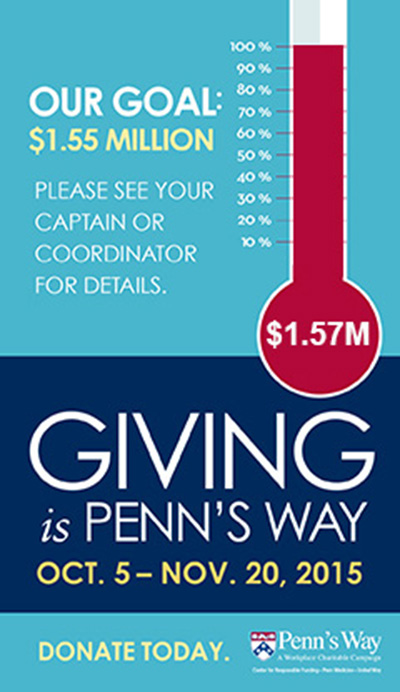
Thermometer showing that at $1.57 million, Penn's Way exceeded its $1.55 million fundraising goal

Penn’s Way 2016 Raffle Grand Prize (12/1 drawing)

Penn Business Services MacBook Air 13” 128 GB plus Brenthaven carrying case ($1,000 value).

Talk About Teaching & Learning

Reducing Student Anonymity and Increasing Engagement

Katherine J. Kuchenbecker

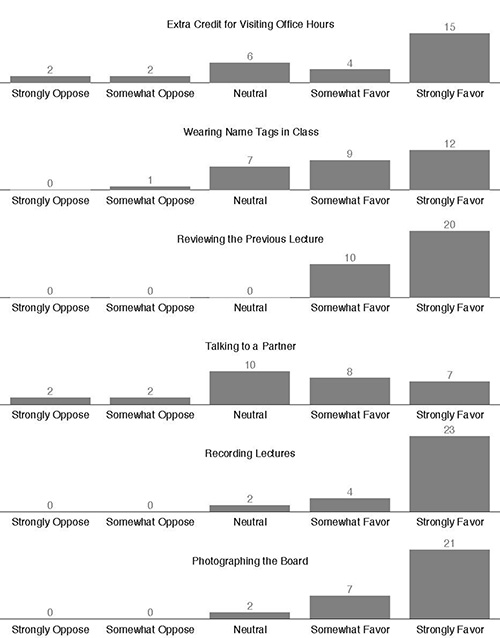
When I was a sophomore in college, I had to take a lecture course that was required for my major but that didn’t particularly interest me. The professor was enthusiastic and experienced, but class met at 10 a.m. (early!), and I was one of about one hundred students. I hated the experience of falling asleep in lecture, and I knew I wouldn’t be missed if I stayed in bed or worked in the machine shop instead of going to class. Now as a faculty member here at Penn, I have taught a comparable course for the last six spring semesters—MEAM 211: Dynamics. Over my first few years of lecturing, low attendance showed that many of my students were skipping class, so I started changing small aspects of my teaching to see if I could help them get more out of my lectures. Specifically, I sought ways to reduce student anonymity, make my lectures more coherent and engaging, and enable students to learn from my lectures after class. After several years of experimentation and refinement, I settled on the six ideas described below. As shown in Fig. 1, an anonymous online survey yielded feedback on these ideas from 30 of the 93 students whom I taught in spring 2015.

To make my students feel less anonymous, I offer one extra credit point for visiting my office hours (OH) during the first four weeks of the semester. More than half the class typically stops by, giving me the chance to start learning their preferred names and where they’re from. Most survey respondents favored this idea, commenting that the extra credit helped them overcome their shyness and that visiting once made it easier to visit OH later, when they needed it. Students also liked knowing that their professor wanted to get to know them. Two students opposed this idea because they had conflicts during all of my OH. Another good suggestion was to offer extra credit for visiting the TA office hours.

I also combat anonymity by having each student wear a clip-on name tag showing his or her preferred name during the first four weeks of lecture and recitation. Made during the first class, these name tags enable me to call on a wide range of individuals and practice names learned in OH. Students can stop wearing their name tag when they think I know their name, and I am not ashamed of occasionally messing up or asking for a hint. Respondents largely favored this idea, commenting that they really liked having a professor use their names. Students also appreciated learning the names of their classmates. On the negative side, a few students found bringing their name tag annoying, and another felt awkward wearing theirs when others did not.

A bar graph showing students' responses to survey questions about their attitudes towards several teaching policies

To increase coherence and engagement, I start every lecture with a five-minute summary of the previous class. Supported by just one projected slide, I emphasize the important concepts, formulas and examples from the last class, building a natural bridge into upcoming topics. All 30 respondents either somewhat favored or strongly favored this idea—a very strong showing of support! Enthusiastic comments noted that these reviews helped them get into the mindset of the course, making it easier to learn new material. A few students wished my review slides were more organized. One student mentioned these reviews made them feel it was acceptable to arrive late to lecture, and another suggested including an important (ungraded) question to make the reviews more interactive.

I also seek to make lectures more engaging by having students talk about a tricky question with a partner, usually twice per class. After a few minutes I lead the class in discussing the question, calling on various student teams to share their thoughts. This idea received the most mixed ratings, with approximately half favorable and most of the rest neutral. Respondents who favored this idea commented that talking with a partner helped them develop their own intuition for the material and let them brainstorm new solutions before being told the answer. Others said that these discussions provide a nice break in lecture, although several mentioned that I sometimes gave them too much time for the discussion. Students who opposed this idea preferred to sit alone in class, found it difficult to find a partner for the discussion or felt the discussions were ineffective.

To enable access to my lectures after class, I use Penn’s lecture recording system. It automatically captures and posts online what I show on the projector and what I say into a wireless lapel microphone. Over several years, I moved most of my instructional materials into computer-based media so they could be recorded. Personally, I find that being recorded improves my focus, and listening to a few recordings helped me understand how I sound to the students. Students overwhelmingly favor the use of the lecture recording system, stating that it helped them stay caught up with the course when they were sick, had to travel or slept through lecture. Supporters also mentioned that the recordings were useful for reviewing confusing topics and studying for exams. The only two students who were neutral about lecture recordings never used them. One student recommended improving the recording frame rate to better handle movies and simulations.

Finally, drawing diagrams and solving problems by hand are important skills in my discipline, but the current lecture recording system cannot capture what one writes on the board. Thus, I photograph all of the chalkboards at the end of every lecture, and I insert these photographs into my slides before posting them online.  This simple step takes just a few minutes and beneficially gives me a perfect record of what I wrote on the board for next year. Students overwhelmingly favor this practice, saying it was extremely helpful to see what I had written when listening to the lecture recording. Others mentioned that the photographs helped them study for exams. A few students mentioned that my board work was sometimes hard to follow, and others would prefer a hand-written solution captured by the lecture recording system or simply posted online afterward.

These six ideas are just a few of the many adjustments I have explored to increase the effectiveness of my lectures. As you can see from the student ratings and comments, they succeed to varying degrees, and there are many ways in which they could be improved. I value this continual process of small innovations, student feedback, refinements and more small innovations because it matches the ever-changing tide of students while keeping me engaged in teaching a subject that I first learned about when I was just a sophomore in college.

Katherine J. Kuchenbecker is the Class of 1940 Bicentennial Term Chair and associate professor of mechanical engineering and applied mechanics in the School of Engineering and Applied Science; she received a 2014 Lindback Award for Distinguished Teaching.

This essay continues the series that began in the fall of 1994 as the joint creation of the College of Arts and Sciences, the Center for Teaching and Learning and the Lindback Society for Distinguished Teaching.

See https://almanac.upenn.edu/talk-about-teaching-and-learning-archive for previous essays.

Back to Top