2025 School of Arts and Sciences Teaching Awards
The School of Arts and Sciences has announced the following recipients of 2025 SAS teaching awards. These honors will be presented on Thursday, May 1 at a reception that is open to the University community. The event will take place at 4 p.m. at the Penn Museum.
Listed below are the School of Arts and Sciences recipients of its 2025 teaching awards:
Ira H. Abrams Memorial Award for Distinguished Teaching
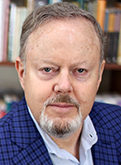
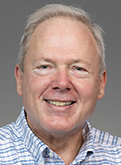 This year’s recipients of SAS’s highest teaching honor are Brendan O’Leary, the Lauder Professor of Political Science, and David W. Christianson, the Roy and Diana Vagelos Professor in Chemistry and Chemical Biology. The Ira H. Abrams Award was established in 1983 and recognizes teaching that is intellectually challenging and exceptionally coherent. The award honors faculty who embody high standards of integrity and fairness, have a strong commitment to learning, and are open to new ideas.
In the words of one of his students, “Professor O’Leary is one of the best Penn has to offer.” Citing his brilliance as a scholar, his eloquence as a teacher, and his boundless energy as an advisor, the department of political science strongly recommended Dr. O’Leary, while his undergraduate students credit Dr. O’Leary with sharpening their critical thinking skills and challenging them with critical and honest feedback. “This might be the hardest course you take at Penn,” one student wrote of Dr. O’Leary’s course Power Sharing in Deeply Divided Spaces, “but boy, is it worth it.”
A member of the department of chemistry for over thirty years, David Christianson does not seek to rest on his laurels; rather, he seeks innovation. His students report that he sets a high bar and motivates them with energy and verve. Reminiscing on their time, one student wrote that the entire class was “enchanted by Dr. Christianson’s excitement for biochemistry and its applications. Dr. Christianson took great care in cultivating our minds for critical thinking and careers in science.”
Dennis M. DeTurck Award for Innovation in Teaching
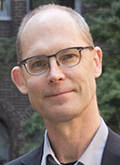 James F. English, the John Welsh Centennial Professor of English, is the 2025 recipient of the Dennis M. DeTurck Award for Innovation in Teaching. This award, which is named after Dennis DeTurck the Robert A. Fox Leadership Professor and former dean of the College of Arts & Sciences, recognizes exceptional creativity and innovation in instruction.
Dr. English is the founder of the Price Lab for Digital Humanities, where he served as faculty director from 2015 to 2024. He also directed the Penn Humanities Forum from 2011 to 2018 and oversaw its relaunch as the Wolf Humanities Center. Students and colleagues praise Dr. English for his novel teaching, including an audiobook class—“no reading!”—and Novel of the Year, where students learn about what goes into the selection of a literary prize winner. As one student said, “he is an educator who wants to push his students towards fulfilling their academic potential and is someone who does not only encourage academic pursuits but actively helps students accomplish their goals.”
Dean’s Award for Mentorship of Undergraduate Research
 This year’s Mentorship of Undergraduate Research Award goes to Arnold Mathijssen, an assistant professor of physics and astronomy. The award is given in recognition of faculty members who have excelled in nurturing undergraduate students’ desires and abilities to conduct meaningful research. Students and colleagues describe Dr. Mathijssen as “generous with his time,” engaged in outreach, and committed to broadening participation in science, including encouraging students with no prior laboratory experience to engage in research.He was instrumental in securing Penn’s participation in the American Physical Society’s Conference for Undergraduate Women in Physics. As director of the “Kitchen Science” outreach series, he has organized monthly events at local Philadelphia high schools, hosted student visits to Penn, and led cooking workshops with local chefs.
Dean’s Award for Distinguished Teaching by an Assistant Professor
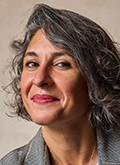 This award recognizes a member of the junior faculty who demonstrates unusual promise as an educator. This year SAS honors Secil Yilmaz, an assistant professor of history, who studies the sexuality, gender, and medicine of the Ottoman Empire and modern Turkey.
“Professor Yilmaz’s teaching methodology was revolutionary in how it wove together multiple forms of historical documentation,” one student said.
She showed the class how to look at historical moments not just through textbooks, but also through songs, films, oral histories, and everyday objects. In the end, Dr. Yilmaz “fundamentally transformed not just my understanding of history, but my approach to knowledge itself,” the student said.
Dean’s Award for Distinguished Teaching by Affiliated Faculty
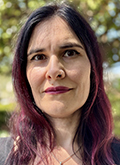
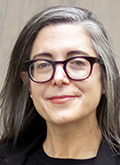 Alyssa Bohen, a lecturer in chemistry, and Melissa Jensen, a lecturer in English, are the recipients of this award, which recognizes contributions to undergraduate education made by the school’s non-standing faculty.
Alyssa Bohen joined the chemistry department just as the University was returning to in-person instruction after the shutdown during the COVID-19 pandemic. “We could not have found a better person for the job,” her colleagues have reported, as Dr. Bohen offers experimental organic chemistry within a well-structured format for undergraduates.
As an author of children’s books, Melissa Jensen adds a unique perspective to teaching and learning at Penn. Students praise Ms. Jensen’s dedication, experience, and her commitment to students, saying that she both encouraged them and showed them how to improve.
Liberal & Professional Studies Award for Distinguished Teaching in Undergraduate and Post-Baccalaureate Programs
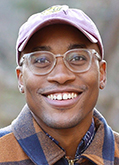
 Clay Colmon is the director of curriculum design in the College of Liberal & Professional Studies, using his skills in instructional design to help faculty to develop strong asynchronous online classes and develop and teach his own classes across three different subject designations: Digital Strategies and Culture, Social Difference, and English Literature. Students say that Dr. Colmon “teaches in a way that is engaging, thought-provoking and very hands on” and is “calming” and “engaging,” discussing challenging but rewarding material.
Liberal & Professional Studies Award for Distinguished Teaching in Professional Graduate Programs
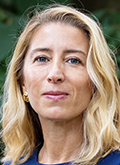
Nazlı Bhatia is an associate professor of practice who researches and teaches negotiation and organizational behavior. Colleagues praise Dr. Bhatia as “an excellent educator and mentor” with “expertise, enthusiasm and teaching talent.” One student reported that Dr. Bhatia “made even the driest academic theories feel like a Netflix thriller” and used Dr. Bhatia’s teaching in practice to secure higher wages in her own job negotiations.
Dean’s Award for Distinguished Teaching by Graduate Students
This award recognizes graduate students for teaching that is intellectually rigorous and has a considerable impact on undergraduate students. This year’s awardees are:
- Krishan M. Canzius, Mathematics
- Jordan Carrick, Classical Studies
- Christy Dickman, Political Science
- James Paul Mesiti, Spanish and Portuguese
- Jacob K. Nielsen, English
- Henry Wright Noe, Chemistry
- Tyler Colby Re, Philosophy
- Gwendalynn Carlene Roebke, Philosophy
- Julian Noah Tash, History
- Andres Villatoro, Sociology
2025 School of Veterinary Medicine Teaching Awards
Zoetis Distinguished Veterinary Teacher Award
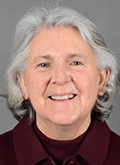 This year’s Zoetis Distinguished Veterinary Teacher Award was presented to Patricia Sertich. The Zoetis Distinguished Veterinary Teacher Award is the most prestigious teaching award in veterinary medicine. It is presented annually to a faculty member at each college of veterinary medicine in the United States. Its purpose is “to improve veterinary medicine education by recognizing outstanding instructors who, through their ability, dedication, character and leadership, contribute significantly to the advancement of the profession.” The entire Penn Vet student body votes on the recipient.
Patricia L. Sertich is an associate professor-clinician educator in reproduction and behavior at Penn Vet. Based at the Georgia and Philip Hofmann Research Center for Animal Reproduction at New Bolton Center since 1983, Dr. Sertich evaluates large animals for breeding soundness and develops treatment plans to optimize their fertility. Dr. Sertich provides consultation on reproductive issues of patients in the George Widener Large Animal Hospital and is a critical member of its high-risk pregnancy management team. As a diplomate of the American College of Theriogenologists (ACT), she serves as its secretary and is on the ACT Examination Committee, which determines board certification for veterinarians specializing in animal reproduction. She received the 2022 David E. Bartlett Award for Lifetime Achievement in Theriogenology. Dr. Sertich has mentored many ACT Diplomates and received numerous teaching awards, including three Carl J. Norden Distinguished Teaching Awards and the Christian R. and Mary F. Lindback Foundation Award (Almanac April 17, 2001). Grateful that she can teach students in all four years of veterinary school, Dr. Sertich identifies students with a strong interest in reproduction early. As faculty liaison for the student chapter of the Society for Theriogenology, she facilitates training for those students to develop excellent clinical skills, provides opportunities to gain clinical experience, and connects them with practices that will direct them to a satisfying and productive career in veterinary medicine.
William B. Boucher Award for Outstanding Teaching at New Bolton Center
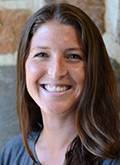 The Boucher Award honors a house officer at New Bolton Center for excellent teaching, as was exemplified by William Boucher over four decades at Penn Vet. The graduating class votes on the recipient. The selection criteria include teaching skills, knowledge in the candidate’s area of expertise, responsiveness to the needs of the students, willingness to participate in off-hour seminars and discussions, and general dedication to New Bolton Center and to the veterinary profession. Jessica Cathcart is a large animal internal medicine resident at New Bolton Center. She received her BS in animal science and chemistry from Berry College and her veterinary degree from the University of Georgia. In addition to teaching, she has clinical interests in neonatal intensive care, internal medicine, and emergency medicine.
Class of 2025 and Class of 2026 Best New Bolton Center Instructor Awards
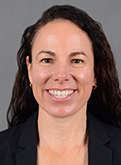 Kyla Ortved is an associate professor of large animal surgery at Penn Vet’s New Bolton Center. She received her DVM degree from the University of Guelph in 2006 and completed her large animal surgical residency training at Cornell University in 2010. Dr. Ortved was board certified by the American College of Veterinary Surgeons in 2011. Following her residency, she went on to obtain a PhD in gene therapy for equine cartilage repair at Cornell. In 2016, Dr. Ortved was board certified by the American College of Veterinary Sports Medicine and Rehabilitation. She joined the large animal surgery faculty at New Bolton Center in 2016 as an equine orthopedic surgeon and was named the Jacques Jenny Endowed Chair of Orthopedic Surgery in 2019. Her research program focuses on understanding the pathophysiology of equine osteoarthritis and developing gene and cell-based therapies to improve cartilage repair and prevent osteoarthritis.
Class of 2025 Best Ryan Instructor Award
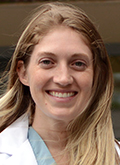 Erin Gibson is an assistant professor on the clinician-educator track and the Pamela Cole Career Development Chair of Small Animal Minimally Invasive Surgery. Ms. Gibson graduated magna cum laude from California Polytechnic University with a BSc in animal science. She received her DVM from the School of Veterinary Medicine at the University of California at Davis (UC Davis). After veterinary school, Ms. Gibson was a small animal medicine and surgery intern at the University of Minnesota’s Veterinary Medical College. After her internship, Ms. Gibson returned to her veterinary school alma mater, UC Davis, as a surgery resident and a surgery fellow. She is board certified by the American College of Veterinary Surgeons (Small Animal) and has recently been named a fellow of the ACVS in recognition of her continued work on the prevention, diagnosis, treatment, and rehabilitation of animal patients undergoing MIS therapies. Her research in minimally invasive surgery focuses on new techniques for embolization, or blocking blood vessels, to cancerous regions in the liver. An author or co-author of 15 peer-reviewed papers, Ms. Gibson is currently co-principal investigator on two grants investigating MIS techniques in companion animals with hepatocellular cancer.
Class of 2026 Best Ryan Instructor Award
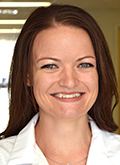
 Anna Massie is an assistant professor of orthopedic surgery at Penn Vet’s Ryan Hospital. She earned her veterinary degree from the University of Illinois Urbana-Champaign. AFter graduating, she completed a small animal rotating internship at Purdue University, a surgical specialty internship at North Houston Veterinary Specialists, and a surgical residency at University of California, Davis. Dr. Massie is board-certified by the American College of Veterinary Surgeons. She is passionate about teaching students orthopedics, both in the classroom and in clinics. Her research interests include bone quality assessment and translation of the animal model to human implant design.
Class of 2027 Best Lecturer Award
Mark P. Rondeau is a professor of clinical medicine at Penn Vet’s Ryan Hospital. He is a graduate of Tufts University’s Cummings School of Veterinary Medicine. Following a rotating internship at VCA South Shore Animal Hospital in Massachusetts, Dr. Rondeau completed his residency in small animal internal medicine at Penn Vet. He has been a member of Penn’s internal medicine staff since 2002 and is a diplomate of the American College of Veterinary Internal Medicine. His primary areas of interest include canine and feline gastroenterology and hepatology.
Class of 2027 Best Lab Instructor Award

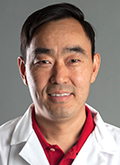 Deborah Gillette attended Purdue University as an undergraduate, then completed veterinary school at Cornell University. After completing a pathology residency at Penn Vet, she earned a PhD in comparative pathology at University of California, Davis, and became board certified. Dr. Gillette joined the faculty at the University of Wisconsin for one year before joining the pathology faculty at New Bolton Center. During this time, she received a master’s degree in health professions education from Penn’s Graduate School of Education. Dr. Gillette left Penn Vet to become a pathologist in the toxicology department of Rohm and Haas Company (now part of Dow Chemical). After retiring, she returned to Penn Vet in 2018, working in the pathology department on the Philadelphia campus. Dr. Gillette also serves as photo editor of the journal Veterinary Pathology.
Class of 2028 Best Lecturer Award
P. Jeremy Wang is a professor of developmental biology and the Ralph L. Brinster President’s Distinguished Professor, as well as director of the Center for Animal Transgenesis and Germ Cell Research. Currently, he teaches in the reproduction/development block and the digestion/metabolism block. Dr. Wang serves as editor-in-chief of Biology of Reproduction and was the recipient of the Society for the Study of Reproduction’s 2021 Research Award. His current research interests are in the study of reproduction in mice and humans: biology of mammalian germline stem cells, molecular genetics of meiotic recombination, regulation of meiotic cell cycle, piRNA biogenesis, RNA m6A epitranscriptomics, epigenetic control of transposable elements, and genetic causes of infertility in humans.
Class of 2028 Best Lab Instructor Award
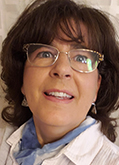 Nancy Gartland teaches on the histological basis of pathology and developmental biology at Penn Vet and is the director of their respective labs. After earning her undergraduate and graduate degrees in biology at Rutgers University, Dr. Gartland taught there for ten years. She then came to Penn, where she has taught for 25 years; she has also taught at Camden County College for the last 15. She also recently completed a doctorate in education from Rowan University. In 2006, Penn Vet gave Dr. Gartland its Best Teacher of the Decade award, and in 2024, she received the Provost’s Award for Teaching Excellence by Non-Standing Faculty from the University of Pennsylvania (Almanac April 2, 2024). “I am truly grateful to be able to come to work with such a wonderful group of faculty, staff, and administrators,” said Dr. Gartland. “However, I am mostly honored and truly lucky to be able to teach so many wonderful, brilliant, and hardworking students, who I expect will change the world for the better.”
Penn ATLAS Team Shares 2025 Breakthrough Prize in Fundamental Physics
Researchers from the ATLAS Collaboration at CERN, which includes physicists in the Penn ATLAS group, have received the 2025 Breakthrough Prize in Fundamental Physics for their work studying high-energy collisions from the Large Hadron Collider (LHC). ATLAS shares the $3 million award with three other experiments at CERN—CMS, ALICE, and LHCb—recognizing the efforts of some 13,500 scientists worldwide.
More than two dozen members make up the Penn ATLAS team, which includes Joseph Kroll, the Robert I. Williams Endowed Term Professor of Physics and Astronomy; Evelyn Thomson, a professor of physics and astronomy; Elliot Lipeles, a professor of physics and astronomy; Dylan Rankin, an assistant professor of physics and astronomy; and Brig Williams, an emeritus professor of physics and astronomy, as well as numerous PhD students, postdocs, and technical staff in Penn’s School of Arts & Sciences.
“To do this great science you need a really big team,” Dr. Lipeles said. “The LHC is the most complicated piece of equipment ever built. I don’t think anything even comes close. Which means in the end, all the different bits and pieces have different groups responsible for them.”
The Breakthrough Prize, one of science’s highest honors, is awarded annually in the categories of life sciences, mathematics, and fundamental physics. Presented as an Academy Award–style honor for scientists, the prize—and the event around it—frequently attracts big names from Hollywood and Silicon Valley. But for all the glitz and glamor, the award itself honors intensive, painstaking work.
At Penn, that has meant a variety of efforts. The ATLAS group played a leading role in the discovery of the Higgs boson particle 12 years ago and continues to make precision measurements of the particle’s properties. One of the most intriguing ongoing searches entails looking for signs that the Higgs boson can decay invisibly to dark matter. “Searches are also underway for signs of new particles that are partners to the Higgs boson,” Dr. Thomson said.
In addition, the research team is confirming and investigating facets of the Standard Model, an extraordinarily successful model in particle physics that can be used to describe elementary particles and their interactions in a range of environments, from proton collisions in labs to the early universe.
Yet scientists understand that the model is incomplete. To that end, Drs. Lipeles, Kroll, and Thomson are all working on aspects of something called supersymmetry, which tries to fill in some of the Standard Model’s holes. “Supersymmetry could offer explanations for the nature of dark matter, why the Higgs boson has the mass it does, even whether we’re in a stable or unstable universe,” Dr. Kroll said.
Then there is the extensive data coming out of this project. Dr. Rankin, for example, uses machine learning to analyze whether the Standard Model’s predictions match the outcomes. “We have the Standard Model, which we use to predict what should happen when we collide protons,” Dr. Rankin explained. “We can look at the data and say, is this what actually happens? The signals we are looking for are hidden in this enormous volume of data, and machine learning is allowing us to look in places and in ways that we simply wouldn’t have been able to look otherwise.”
Penn Medicine: $4.9 Million for Wyss Orthoplastic Global Education and Innovation Hub
Thousands of patients with severe limb injuries will benefit from advanced surgical techniques and potential limb-saving procedures, thanks to a $4.9 million donation establishing the Wyss Orthoplastic Global Education and Innovation Hub at the Perelman School of Medicine at the University of Pennsylvania. The donation from the Wyss Medical Foundation will fund research, create fellowships, and establish a conference in the emerging field of orthoplastic surgery, which combines expertise from both plastic and orthopaedic surgery to improve patient outcomes.
“Orthoplastic surgery transforms how we treat and reconstruct severe limb injuries, and the creation of this new hub will allow for us to spread knowledge and training that could help tens of thousands of people,” said L. Scott Levin, chair emeritus of orthopaedic surgery, the Paul B. Magnuson Professor of Bone and Joint Surgery, and a professor of plastic surgery at Penn Medicine.
A pioneer in the field of orthoplastic surgery, Dr. Levin has helped develop many new techniques in “limb salvage,” in which severely injured arms and legs are treated to avoid amputation when possible, optimize treatment and recovery, and potentially return function.
Among the hub’s planned offerings are:
- Orthoplastic and limb salvage surgery fellowships: Preparing and training the next generation of surgeons and surgical leaders in orthoplastic surgery techniques and tools
- A global orthoplastic surgery conference: Hosting surgeons from around the world to increase opportunities for collaboration and to advance understanding of the field and the opportunities it provides to patients for improved quality of life
- Funding for orthoplastic surgery research: Seed money to support multiple new projects in the field, allowing scientists and surgeons the opportunity to study novel ideas and techniques
- “Flap” education: An annual course taught by Penn Medicine faculty in the practice of restoring limb function after injuries via microvascular surgery to bring “flaps” of healthy tissue with their intact blood supply from one part of the body to another
“Having a greater opportunity to pass on knowledge and increase the chance that a patient who needs orthoplastic services will come across a trained surgeon is fantastic,” said Dr. Levin. “What is now possible with this hub in place is thrilling.”
Spread over five years, the new donation means that the non-profit Wyss Medical Foundation, founded by Swiss businessman Hansjörg Wyss, has now donated more than $11 million to Penn’s orthopaedic surgery program.
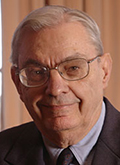 Curtis Randall Reitz, C’51, L’56, an emeritus professor at the University of Pennsylvania Law School and Penn’s provost from 1971 to 1972, died on April 2. He was 95.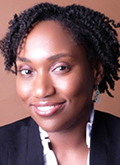
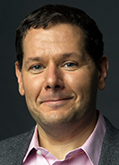 Marcia Chatelain of the department of Africana studies and Matthew Levendusky of the department of political science, both in the School of Arts & Sciences, have been named 2025 John Simon Guggenheim Memorial Foundation Fellows.
.jpg) Penn Dental Medicine’s Michel Koo is the 2025 recipient of Columbia University College of Dental Medicine’s Birnberg Research Medal Award. One of the longest-running research awards, the Birnberg Research Medal Award was established in the early 1950s to recognize and encourage research excellence. Since 1954, 65 leaders in dental medicine have received this honor, selected for their important interdisciplinary contributions to the profession through research and education.
Penn Dental Medicine’s Michel Koo is the 2025 recipient of Columbia University College of Dental Medicine’s Birnberg Research Medal Award. One of the longest-running research awards, the Birnberg Research Medal Award was established in the early 1950s to recognize and encourage research excellence. Since 1954, 65 leaders in dental medicine have received this honor, selected for their important interdisciplinary contributions to the profession through research and education.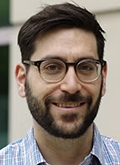 The Carnegie Corporation of New York has announced that Annenberg School for Communication associate professor Yphtach Lelkes has been awarded a 2025 Andrew Carnegie Fellowship, one of the most prestigious honors in the social sciences and humanities.
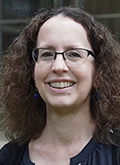 Liza Vick, head of the Penn Libraries’ Otto E. Albrecht Music Library and the Eugene Ormandy Music & Media Center, is co-recipient of the 2025 A. Ralph Papakhian Special Achievement Award from the Music Library Association (MLA).
 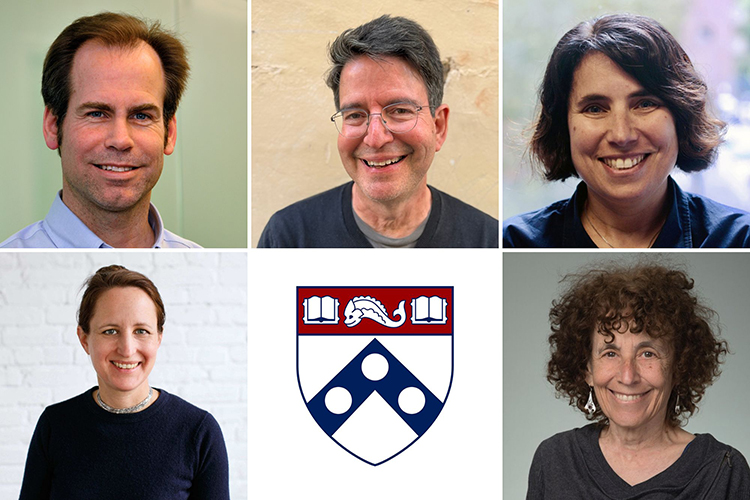 Five faculty at the University of Pennsylvania have been elected to the American Academy of Arts and Sciences, an honorary society and independent research center founded in 1780. They are Dennis E. Discher of the School of Engineering and Applied Science, Michael Jones-Correa of the School of Arts & Sciences, Cherie Kagan of the School of Arts & Sciences and Penn Engineering, Sophia Rosenfeld of the School of Arts & Sciences, and Susan R. Weiss of the Perelman School of Medicine. They are among nearly 250 new members honored in 2025, recognized for their excellence, innovation, leadership, and broad array of accomplishments.