News

From the Interim President: A Message to the Penn Community

January 28, 2025

Like you, I am closely monitoring recent developments from Washington that directly affect higher education. These include executive orders and pending legislation on research funding, financial aid, visas, immigration status, student loans, endowments, and DEI programs. Because these immediately affect our missions, operations, and community, I write today to provide guidance to sustain our missions while ensuring Penn complies with federal law.

First, we do not know how these developments will play out. We have convened members of Penn’s administration, the Faculty Senate, the Council of Deans, and other leaders to review these orders, understand their implications, and ensure that we are taking appropriate action. Given the rapidly changing landscape, we are also reviewing our policies, programs, and practices.

Second, Penn’s financial outlook is sound, and the Penn community should continue its essential research and other work. We know these announcements from Washington have caused uncertainty and anxiety. If you have questions or if your funding agency has specifically requested that you pause your research, please get in touch with your dean’s office.

Third, we will uphold Penn’s values. Our values, like our University motto, have served Penn well for centuries and through many societal shifts. Our success as a world-class academic institution is inextricably linked to our commitment to non-discrimination and prizing excellence. This approach guides how we identify and recruit the most talented individuals based on their accomplishments and potential. In my meetings with faculty, students, and alumni, I never cease to be amazed by the brilliant and aspirational people at Penn and by the impact that we are having on the world.

The American higher education system is the envy of the world and one of America’s greatest strengths. A social contract has long enabled U.S. colleges and universities to serve individuals, communities, and government for the good of all. This contract has been a cornerstone of innovation and opportunity in our society.

I ask every member of the Penn community to come together and do what we must: take care of one another, seek help when needed, and ensure the continuation of our critically important work. Together, we will protect and preserve what defines us as Penn.

—Sincerely, J. Larry Jameson, Interim President

Wharton School and the Leonard Davis Institute Receive $3.5 Million Gift to Establish the Davis Family SUMR Program Endowment Fund and $1 Million Challenge Grant

The Wharton School of the University of Pennsylvania and the Leonard Davis Institute of Health Economics (Penn LDI) have announced a landmark $3.5 million gift to establish the Davis Family SUMR Program Endowment Fund, with an additional $1 million matching challenge from the Leonard and Sophie Davis Fund. This fund will provide long-term support for the summer undergraduate mentored research (SUMR) program, a cornerstone initiative focused on advancing equity in the healthcare profession.

The Davis Family SUMR Program Endowment Fund will allow the program to expand its impact by increasing support for undergraduate students from underrepresented backgrounds in pursuing research careers aimed at expanding access to healthcare. The gift also fortifies the established SUMR+ program, an extended mentorship and training opportunity for select scholars. Additionally, the gift will support Penn LDI programs focused on improving insurance coverage and healthcare access, including policy engagement activities, ensuring that research findings are communicated effectively to policymakers and other stakeholders.

Wharton Dean Erika H. James emphasized the importance of the Davis Fund’s commitment to Wharton and Penn LDI. “This remarkable gift represents the power of collaboration in addressing systemic challenges in healthcare. By supporting programs like SUMR, we are helping to create and maintain a pipeline of healthcare researchers and leaders that will advance innovation in healthcare through powerful policy decisions.”

Expanding Access to Healthcare Through Research and Training

Founded in 2000 by Penn LDI and Wharton’s department of healthcare management, the SUMR program offers a 12-week immersive research experience for students committed to addressing inequities in healthcare access. With over 425 alumni and an impressive 85% of participants pursuing healthcare careers, SUMR has been instrumental in shaping the next generation of leaders dedicated to improving access to care. The recently-established SUMR+ initiative extends the program to 15 months, enabling select scholars to deepen their expertise and tackle more complex challenges in the field.

“The Davis family’s extraordinary generosity underscores their commitment to expanding access to health insurance and to healthcare services,” said Rachel M. Werner, executive director of the Leonard Davis Institute, the Robert D. Eilers Memorial–William Maul Measey Professor in Health Care Management and Economics in the Wharton School, and a professor of medicine in the Perelman School of Medicine. “This gift not only broadens the reach of SUMR but ensures that our students have the resources and mentorship needed to drive impactful change in healthcare delivery and policy.”

The Matching Challenge

The Davis Fund’s $1 million matching grant invites additional support for the SUMR and SUMR+ programs, effectively doubling the impact of new contributions. This match will accelerate the growth of the program, providing increased stipends to attract top talent and enabling innovative policy engagement efforts to translate research into actionable solutions.

“The Leonard and Sophie Davis Fund has a long history of supporting initiatives that create meaningful change,” said Alan S. Davis, president of the fund. “This gift builds on our family’s legacy by empowering diverse voices in the healthcare field and expanding access to care for underserved populations.” Mr. Davis added, “The goal is twofold: I hope this matching gift will inspire others to join in supporting this important work and help expand LDI’s impact.”

A Continuing Partnership

The Davis family have been long-standing and stalwart supporters of Penn LDI and Wharton. The Leonard Davis Institute of Health Economics is named in honor of Leonard Davis, founder of the Colonial Penn Group, Inc., and a pioneer in creating the U.S.’s first health insurance plans for retirees. Leonard Davis, alongside his wife Sophie, dedicated his life to advancing healthcare services and education. His innovative solutions addressed the lack of insurance options for older Americans, setting a model for the industry.

A close collaborator of Ethel Percy Andrus, the founder of AARP, Leonard Davis played a pivotal role in advocating for Medicare legislation and testified before Congress on aging-related issues. In 1967, he established the Leonard Davis Institute of Health Economics at Penn to address the financial challenges of healthcare, and in 1976, he endowed the U.S.’s first school of gerontology at the University of Southern California. Mr. Davis’s legacy continues to inspire progress in improving access to care and aging research.

Alan Davis, the son of Leonard and Sophie Davis, continues the legacy of support at Penn, philanthropy, and health advocacy through his role as president and CEO of the Leonard and Sophie Davis Fund.

School of Arts & Sciences: Three Endowed Chairs and an Endowed Lectureship

Nikhil Anand: Daniel Braun Silvers, and Robert Peter Silvers, Family Presidential Associate Professor of Anthropology

caption: Nikhil AnandNikhil Anand, an associate professor of anthropology in the School of Arts & Sciences, has been named the Daniel Braun Silvers, W’98, WG’99, and Robert Peter Silvers, C’02, Family Presidential Associate Professor of Anthropology.

An environmental anthropologist whose research focuses on cities, infrastructure, state power, and climate change, Dr. Anand is the author of Hydraulic City: Water and the Infrastructures of Citizenship (Duke University Press, 2017), which was named the Best Book in Urban Affairs/Urban Studies by the Urban Affairs Association. His new book project, Urban Seas, is supported by grants from the National Science Foundation, the Wenner-Gren Foundation, and the Penn Global Inquiries Fellowship. He currently serves as the associate faculty director of the Center for the Advanced Study of India, the director of Penn Envirolab, and a member of the advisory board of Penn’s Environmental Innovations Initiative.

Patricia Braun Silvers, CW’72, and David Silvers, C’71, parents, established the Daniel Braun Silvers, W’98, WG’99, and Robert Peter Silvers, C’02, Family Presidential Professorship in 2021 in honor of their children. Ms. Silvers was a member of the Center for High Impact Philanthropy advisory board and is chair of the gift committee for the Class of 1972. She is also an emerita member of the Trustees’ Council of Penn Women and a former member of the Board of Advisors at the School of Social Policy & Practice. She founded Patricia Silvers/Executive Search in New York. Mr. Silvers is a partner at U.S. Realty Advisors LLC. In addition to the endowed professorship, for many years, they have supported other initiatives at Penn, including undergraduate financial aid, the School of Social Policy & Practice, the Jewish Studies Program, and the Penn Fund.

Radwa El Barouni: J. Dean Amro Endowed Lectureship

caption: Radwa El BarouniRadwa El Barouni has been appointed to the J. Dean Amro Endowed Lectureship in Arabic Language and Study in the School of Arts & Sciences. Dr. El Barouni is currently the director and coordinator of the Arabic language program at Penn in the  department of Middle Eastern languages and cultures.

Much of Dr. El Barouni’s research explores historical fiction. Her doctoral dissertation (at the University of Texas at Austin) focused on a dynamic archive of historical fiction produced in the late 19th to 21st centuries. Dr. El Barouni analyzed how the works problematize and process their subjects’ relationship to their pasts, presents, and potential futures. Dr. El Barouni is also interested in the depiction of non-human animals in Arabic and Persian texts, and the configuration of their relations with humans and place in the surrounding environments, both in theocentric and non-theocentric paradigms.

Before joining Penn, Dr. El Barouni taught Arabic literature, language, and translation at Williams College of Durham University (U.K.), and at UT Austin. She also taught and was the main curricula developer in the flagship capstone year abroad program (Egypt, Morocco) and the Middlebury CV Starr program (Egypt), among other study abroad programs. Currently, Dr. El Barouni is co-organizer of Penn’s TAFL Talks, a series of events conducted in Arabic and designed to foster discussions that bridge theory and practice in the teaching of Arabic as a second language. She is also co-authoring a book for advanced students of Arabic literature with Laila Familiar at NYU Abu Dhabi.

The J. Dean Amro Endowed Lectureship was established by Dean Amro, C’97, and Amira Amro in 2022. Dean Amro graduated from the College of Arts & Sciences with a degree in international relations and a minor in economics. He is a principal at the Brodsky Organization, a family-run business that develops, owns, and manages residential and mixed-use real estate in New York City. He also serves on the Board of Governors of the Real Estate Board of New York. For the past 10 years, Mr. Amro has been a trustee of the Lycée Français de New York and is currently chair of its board.

Adriana Petryna: Francis E. Johnston Term Professor of Anthropology

caption: Adriana PetrynaAdriana Petryna, who directs the MD/PhD program in anthropology at Penn in conjunction with Penn’s medical scientist training program, has been named the Francis E. Johnston Term Professor of Anthropology in the School of Arts & Sciences.

In her anthropological studies in the U.S., Europe, and Brazil, Dr. Petryna focuses on the socio-political nature of science, how populations are enrolled in experimental knowledge-production, and what becomes of citizenship and ethics in the process. Her work has advanced the social scientific study of environmental disasters, biomedical research and equity, and global health.

Dr. Petryna has written award-winning books, including Life Exposed: Biological Citizens After Chernobyl and When Experiments Travel: Clinical Trials and the Global Search for Human Subjects. She is the co-editor of Global Pharmaceuticals: Ethics, Markets, Practices and When People Come First: Critical Studies in Global Health. Her body of work was awarded the Royal Anthropological Institute’s Wellcome Medal for Anthropology as Applied to Medical Problems.

Her most recent book, Horizon Work: At the Edges of Knowledge in an Age of Runaway Climate Change, examines the climate crisis through the lens of “horizoning,” a mode of reckoning that considers unnatural disasters against horizons of expectation within which people and societies can still act. Dr. Petryna takes readers inside the work of scientists and emergency responders as they grapple with rapid ecological change and craft operational footholds in combustible worlds.

A former Guggenheim Fellow, Dr. Petryna’s research has been supported by the National Science Foundation, the National Endowment for the Humanities, the Wenner-Gren Foundation, the Social Science Research Council, and the School for Advanced Research. She has been a member of the School of Social Science at the Institute for Advanced Study and a Laurance S. Rockefeller Visiting Faculty Fellow at Princeton University’s Center for Human Values.

The Francis E. Johnston Term Professorship was established through the bequest of G. Frederick Roll, W’34, and is named in honor of the late Francis E. Johnston, a biological anthropologist and emeritus professor of anthropology at Penn. Dr. Johnston completed his PhD at Penn in 1962 and served on the faculty of the department of anthropology for nearly four decades, as well as department chair from 1982 to 1994. He also founded the Netter Center for Community Partnerships’ Urban Nutrition Initiative, a project that has helped to improve community nutrition and wellness in West Philadelphia.

Timothy Rommen: Martin Meyerson Endowed Professor in Interdisciplinary Studies

caption: Timothy RommenTimothy Rommen has been named the Martin Meyerson Endowed Professor in Interdisciplinary Studies in the School of Arts & Sciences. Dr. Rommen has been a professor in SAS since 2002, most recently the Davidson Kennedy Professor and a professor of music and Africana atudies. He was also recently named Penn’s inaugural vice provost for the arts.

Dr. Rommen specializes in the music of the Caribbean, with research interests that include popular music, sacred music, critical theory, ethics, tourism, diaspora, and the intellectual history of ethnomusicology. He is currently engaged in a musical ethnography of Dominica.

The author of Funky Nassau: Roots, Routes, and Representation in Bahamian Popular Music (University of California Press 2011), Dr. Rommen also wrote Mek Some Noise: Gospel Music and the Ethics of Style in Trinidad (University of California Press 2007), which won the Alan Merriam Prize for the best book of the year in ethnomusicology. In 2023, Dr. Rommen received the Ira H. Abrams Award for Distinguished Teaching, Penn Arts & Sciences’ highest teaching award.

Dr. Rommen has served as chair, director of graduate studies, and director of undergraduate studies in the department of music, as well as interim chair of the department of Africana studies. He is a board member of Penn’s Center for Africana Studies, Greenfield Intercultural Center, Sachs Program for Arts Innovation, and Wolf Humanities Center, among others. He is also a member of several University committees, including the Provost’s Arts Advisory Council, the Faculty Senate Subcommittee on Research, the University Council Committees on Diversity & Equity and Academic & Related Affairs, the School of Arts & Sciences Committee on Undergraduate Education, and the College of Arts & Sciences Cultural Diversity in the U.S. Curriculum Committee.

The late Margy Ellin Meyerson, G’93, endowed the professorship in memory of her husband, Penn president emeritus Martin Meyerson, HON’70.

President Meyerson was a distinguished teacher, administrator, and urban planner who served as Penn’s president from 1970 to 1981. The professorship is designated for an outstanding faculty member whose pursuits exemplify the integration of knowledge.

Penn Libraries Signs New Three-Year Open Access Agreement with Elsevier and One-Year Pilot with Emerald

The Penn Libraries have entered a new, three-year (2025-2027) open access agreement with Elsevier, the largest academic publisher in the world.

This successful negotiation by the libraries marks a milestone for the University in terms of open access. With the agreement in place, Penn authors publish nearly 50% of their publications with publishers who have entered into open access agreements with the Penn Libraries.

“By embracing open access initiatives, we extend our reach, sharing Penn’s intellectual riches with a worldwide audience and reinforcing the University’s role as a knowledge leader,” said Brigitte Weinsteiger, the H. Carton Rogers III Vice Provost and director of the Penn Libraries. “This agreement with Elsevier significantly expands our capacity to open Penn scholarship and reaffirms our deep commitment to equitable information access.”

The new Read and Publish agreement enables Penn-affiliated authors to publish articles open access in Elsevier’s core hybrid journal collection without paying article processing charges (APCs) themselves, while continuing to offer the Penn community access to read over 2,400 Elsevier journals through the Penn Libraries subscription.

The Penn Libraries have also entered a one-year pilot Read and Publish agreement with the social sciences publisher Emerald. The agreement covers Penn authors’ APCs for open access publishing in Emerald hybrid journals and expands the Penn community’s access to Emerald publications. Penn faculty, staff, and students can now read all titles in Emerald’s eJournals Premier collection, an increase from 120 to 313 titles.

Increasing Reach, Saving Costs

In its commitment to open access, the Penn Libraries build on Penn’s broader goal to be a global university, contributing solutions to the world’s most pressing problems.

Studies show that open-access publications are cited more than those behind a paywall. Citations of open publications also reach a broader audience, covering a wider range of geographic locations, institutions, and disciplines. As a result, open access scholarship—including cutting-edge scientific experiments and impactful research studies—spreads rapidly and stimulates new research, which in turn impacts real-world problem solving in forms that include governmental policies, treatments for health problems, economic investment in promising new technologies, and rebuilding public trust in science and higher education.  

Penn’s ethos is to discover, disseminate, and employ knowledge for its sake and also for the benefit of humankind. Open access breeds new and meaningful ways for Penn to contribute to the world, including educational opportunities, scientific breakthroughs, and deep understanding that improves all our lives.

Beyond increasing the reach and impact of Penn’s research, the libraries’ commitment to open access helps the University comply with federal mandates for public access and provides sustainable, cost-effective support for Penn’s publishing activity.  

The Penn Libraries currently hold transformative open access agreements with Cambridge University Press, the Company of Biologists, Elsevier, Emerald, the Institute of Physics (IOP), the Royal Society of Chemistry, Sage, Springer, and Wiley.

Details for Penn Authors

For more information on what the Elsevier and Emerald agreements mean for Penn researchers, including details about eligible authors and articles, please see the online guide to Open Access Agreements for Penn Authors. Find descriptions of different open access models and additional background on open access publishing in the libraries’ Open Access Publishing guide.

The Penn Libraries also offer comprehensive ongoing support for authors who are preparing to publish their research. The libraries can support you in developing a better understanding of open access, copyright, citation best practices, Creative Commons licenses, choosing a journal or other publication venue, preprints, publisher contracts, and more. Find publishing resources, contacts, and workshops on the Penn Libraries website.

Deaths

George L. Flickinger, School of Medicine

caption: George FlickingerGeorge Latimore Flickinger, Jr., V’58, Gr’63, a former research professor in obstetrics/gynecology in Penn’s School of Medicine, died on October 9, 2024. He was 91.

Born in Hanover, Pennsylvania, Dr. Flickinger graduated from Pennsylvania State University in 1954 with a bachelor’s degree in agricultural science. He then attended Penn’s School of Veterinary Medicine, earning his DVM in 1958, and completed a PhD in pathology (endocrinology) there five years later while working at the Philadelphia Zoo. In 1961, while he was earning his PhD, Dr. Flickinger joined Penn’s faculty as an instructor in pathology. The next year, he became an associate in comparative medical pathology. In 1964, Dr. Flickinger became a research associate, leading a lab that researched reproductive endocrinology for Penn's School of Medicine. Five years later, he joined the tenure track as an assistant research professor in obstetrics and gynecology; he became an associate research professor in 1972 and a full research professor in 1987. He helped design and then oversaw the in vitro fertilization program for the department of obstetrics and gynecology.

Dr. Flickinger left Penn in 1991 and moved to Dallas, Texas, to become head of the in vitro fertilization program at Dallas Presbyterian Hospital. Later, after retiring from Dallas Presbyterian, he returned to Philadelphia to assist his daughter, Barbara Flickinger, C’81, V’85, in her veterinary practice. His wife, Karen Combs Flickinger, who predeceased him in 2024 (Almanac October 29, 2024), was a former instructor in periodontics and dental care systems in Penn Dental Medicine.

He is survived by his three daughters, Anne (Paul) Lobb, Barbara (Marta) Flickinger, and Kristin (David) Michener; and by his seven grandchildren, Sarah and David Lobb, and Hannah (Allie), Madeline, Michaela, Joel and Justin Michener. In lieu of flowers, a donation can be made to your local animal rescue organization or to the Philadelphia Zoo.

Richard Easterlin, Economics and Associate Dean of SAS

caption: Richard EasterlinRichard A. (Dick) Easterlin, WG’49, WGr’53, a former professor of economics in the Wharton School and the former associate dean for budget and planning in the School of Arts & Sciences, died on December 16, 2024 at home in Pasadena, California. He was 98.

Born in Ridgefield Park, New Jersey, Dr. Easterlin studied engineering at the Stevens Institute of Technology in Hoboken, New Jersey, earning a degree in mechanical engineering in 1945. He then earned his MA (1949) and PhD (1953) in economics from Penn’s Wharton School. While working toward his MA, he became an instructor in economics at Penn in 1948. Upon graduating in 1953, he joined the tenure track as an assistant professor; he became an associate professor in 1956 and a full professor in 1960. He served several stints (1958-1960, 1962-1962, 1965, and 1968) as chair of the department, and also chaired the economics graduate group.

Dr. Easterlin chaired Penn’s Committee on Undergraduate Admissions, authoring a 1970 report that advocated for Penn to implement a need-blind admissions policy, and served on the University Council. In 1974, Vartan Gregorian, then the dean of the Faculty of Arts & Sciences (today's SAS), tapped Dr. Easterlin to serve as the school’s associate dean for budget and planning (Almanac October 22, 1974). In that role, Dr. Easterlin helped to organize the FAS’s budget and selected and chaired a committee that advised Dean Gregorian on the school’s budgetary operations. He served in this role until 1980, and, after becoming the William R. Kenan, Jr. Professor in Economics in 1978, continued to teach at Wharton until 1982. That year, he left Penn to become a professor of economics at the University of Southern California (USC) Dornsife College of Letters, Arts and Sciences. Dr. Easterlin later became a University Professor there, a role he held until his retirement in 2018.

Dr. Easterlin’s work uncovered the relationship between economic growth and human happiness. Beginning with his landmark 1955 paper, “Study of Population Redistribution and Economic Growth in the United States,” Dr. Easterlin studied human happiness under different economic circumstances. This work culminated with his 1974 paper, “Does Economic Growth Improve the Human Lot? Some Empirical Evidence,” which proffered the Easterlin Paradox: at a large scale, happiness does not necessarily increase with income over time. Another of his theories, the Easterlin Hypothesis, explained long-term demographic trends like baby booms as a product of relative income rather than absolute income levels.

Over the course of his career, Dr. Easterlin’s work earned numerous honors, including fellowships in learned societies such as the American Academy of Arts and Sciences, the Econometric Society, the John Simon Guggenheim Memorial Foundation, the United States National Academy of Sciences, and the American Economic Association. He received the Irene B. Taeuber Award of the Population Association of America, the Distinguished Researcher Award of the International Society for Quality of Life Studies, the IZA Prize in Labor Economics of the Institute for the Study of Labor, the Laureate Award of the International Union for the Scientific Study of Population, and several USC teaching awards. In addition to his primary faculty roles at Penn and USC, he also held a visiting professorship at Stanford University and a staff position at the National Bureau of Economic Research.

Dr. Easterlin is survived by his wife, Eileen Crimmins; his children, Dan, Nancy, Sue, Andy, Matt, and Molly; and his grandchildren, Zack, Emma, Keaton, Tyler, Ryder, Owen, Ada, and Enzo.

In lieu of flowers, the family requests donations be made to Young & Healthy—Pasadena (https://yhpasadena.org/).

--

To Report A Death

Almanac appreciates being informed of the deaths of current and former faculty and staff members, students and other members of the University community. Call (215) 898-5274 or email almanac@upenn.edu.

However, notices of alumni deaths should be directed to the Alumni Records Office at Suite 300, 2929 Walnut St., (215) 898-8136 or email record@ben.dev.upenn.edu.

Governance

January University Council Meeting Coverage

At the University Council meeting on January 29, 2025, Interim President J. Larry Jameson referenced his message to the University community, and noted that Penn continues to closely monitor developments in Washington, D.C., and assess the impact on Penn. He expressed his appreciation to the Council and underscored the importance of higher education to society and Penn’s commitment to creating knowledge for good.

Jonathan Epstein, interim executive vice president for the health system and interim dean of the Perelman School of Medicine, provided the focus issue presentation—Penn Medicine: Serving a Changing World, which was an update on PSOM’s strategic plan. He discussed the plan’s five pillars: leading with humanity in everything PSOM does; making breathtaking discoveries and putting them to work; simplifying care delivery and placing it within reach; developing people for great accomplishment; and uplifting the community, the environment, and ourselves. Associate vice president and associate University secretary Lizann Boyle Rode provided responses to topics raised during the open forum portion of the December 4, 2024 meeting, including:

  • Penn administration has opened a conversation about how Penn can best support military-affiliated groups on campus.
  • Ghost Robotics is no longer located at Pennovation Works.
  • Regarding Penn Police’s execution of a search warrant on October 18, 2024, Penn Police have the same law enforcement authority as other police departments in the Commonwealth of Pennsylvania. The October 18, 2024 search was conducted in response to an open vandalism charge and was compliant with all practices. Vice President for Public Safety Kathleen Shields Anderson and Senior Executive Vice President Craig Carnaroli have convened a committee to review DPS’s warrant execution process and increase community trust in the search execution process.
  • Concerning former Penn professor Albert Kligman, Ms. Rode referred the council to a statement written in 2019 by then PSOM dean J. Larry Jameson.
  • Concerns of graduate student union leaders were shared with relevant administrators.
  • Working groups were formed to explore the possibility of distributing free menstrual products campus-wide and it was noted that free products are already available in several campus buildings.
  • Wellness at Penn and the Disabled Coalition have discussed the PennChart health tracking system, including opt-out options.
  • The security barriers surrounding College Hall are gradually being phased back.

The following topics were raised by Council members during the new business portion of the meeting:

  • A representative of GAPSA called for Penn to communicate updates to those affected by federal research guidelines and that the University advocate for academic research at the national level.
  • A representative of the Undergraduate Assembly called for the disclosure of securities held by Penn’s Office of Investments.
  • The vice president of advocacy of GAPSA called for Penn to support first generation graduate students such as providing targeted resources, including peer networks and internship opportunities.
  • A representative from ASAP asked that Penn recommit to Title IX and support for survivors of assault.
  • The Latinx Coalition expressed concern regarding the increased prevalence of ICE raids in Philadelphia and asked that guidance be provided as to how Penn plans to respond to the presence of ICE agents on campus.
  • A postdoc representative requested additional protections for those in postdoctoral status at Penn.

The minutes of the January 29, 2025 meeting will be posted on the Office of the University Secretary’s website at https://secretary.upenn.edu/univ-council/meeting-materials and accessible to those with a PennKey.

The next meeting of the University Council, including an open forum, is scheduled for March 5, 2025.

From the Office of the University Secretary: University Council Open Forum

All members of the University community are invited to bring topics for consideration to

University Council Open Forum

Wednesday, March 5, 2025, at 4 p.m.

Hall of Flags, Houston Hall

A PennCard is required to attend University Council meetings.

PennCard holders who want to be assured of speaking at Open Forum must submit a request to the Office of the University Secretary (ucouncil@pobox.upenn.edu) by 10 a.m. on Monday, February 17, 2025, briefly indicating the subject of the intended remarks. Speakers’ statements are limited to three minutes and should be framed to present topics of general University interest and be directed to University Council as a body through the moderator, and not to an individual.

Those who have not submitted a timely request to the Office of the University Secretary will be permitted to speak at the discretion of the moderator of University Council if time remains after the registered speakers.

For the meeting format and guidelines for remarks, please consult the University Council website at https://secretary.upenn.edu/univ-council/open-forum.

The Office of the University Secretary can be contacted at ucouncil@pobox.upenn.edu or (215) 898-7005.

—Office of the University Secretary

Honors

2025 Keedy Cup Winners

Ari Goldstein, L’25, WG’25, and Douglas Snyder, L’25, MBE’26, are the 2025 Edwin R. Keedy Cup winners. Mr. Goldstein and Mr. Snyder argued for the respondents in the competition’s case, NVIDIA Corporation v. E. Ohman J:or Fonder AB.

The Keedy Cup, named for Edwin R. Keedy, who served as dean of the Penn Law School during World War II, is the Penn Carey Law School’s intramural moot court competition.

Mr. Goldstein was also named Best Oralist, and Benjamin Kilano, L’25, and Raymond LaMotta, L’25, argued for the petitoners.

The competition begins in the spring, when all second-year students are invited to enter the Keedy Cup Preliminaries. The four students who receive the highest score in the Preliminaries, based on written briefs and three rounds of oral argument, move on to the Keedy Cup Finals.

In the Keedy Cup Finals, the four finalists brief and argue a pending Supreme Court case, NVIDIA Corporation v. E. Ohman J:or Fonder AB, before a panel of sitting federal judges in Fitts Auditorium.

Swedish investment management firm E. Öhman J:or Fonder AB, along with others, filed a class action on behalf of individuals and entities who purchased NVIDIA Corporation stock. They claimed NVIDIA had intentionally understated its reliance on sales to cryptocurrency miners, a volatile market. The district court dismissed the complaint, finding that it did not meet the heightened pleading standards required by the Private Securities Litigation Reform Act (PSLRA), designed to prevent abuses in securities litigation.

The plaintiffs appealed, and a divided panel of the Ninth Circuit Court of Appeals reversed the district court’s ruling, determining that the plaintiffs’ pleadings were sufficiently specific under the PSLRA. NVIDIA then appealed to the U.S. Supreme Court, which agreed to consider two key questions:

  1. Whether plaintiffs alleging scienter (intent to deceive) under the PSLRA must detail the contents of internal company documents with particularity; and
  2. Whether plaintiffs can meet the Act’s falsity requirement by using expert opinion instead of specific factual allegations.

Features

Penn Center for Innovation Celebrates 10 Years
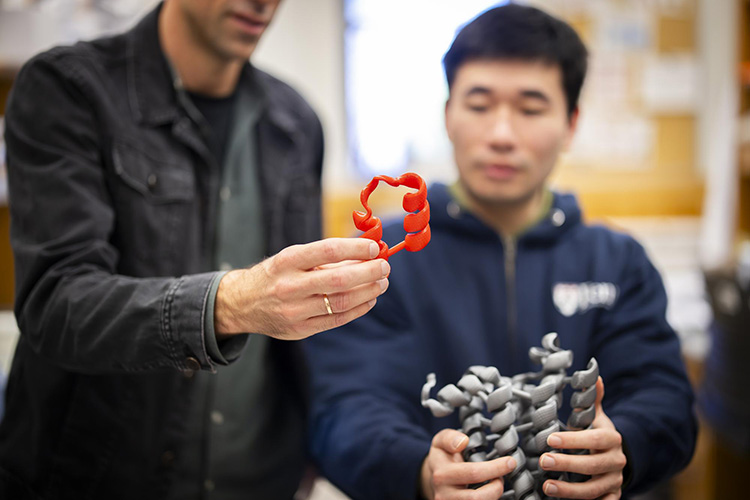
caption: César de la Fuente, who recently developed a state-of-the-art AI model that can predict whether a given amino acid sequence will have antibiotic properties.

As the University’s hub for technology transfer, the Penn Center for Innovation (PCI) helps faculty and researchers transform their discoveries into real-world applications that benefit society by forging and fostering partnerships with commercial entities. These collaborations between the private sector and Penn-led researchers have accelerated the implementation of significant biomedical innovations, including CAR T cell therapy—a pioneering cancer treatment spearheaded by Penn Medicine’s Carl June—and mRNA vaccines—the Nobel Prize-winning technology developed by Penn Medicine’s Katalin Karikó and Drew Weissman that successfully enabled COVID-19 vaccines.

Now entering its second decade, PCI’s impact continues to grow. The center has catapulted Penn to the top of national rankings in annual licensing income, supported the formation of more than 300 startups, facilitated over 7,000 commercialization agreements, and secured more than $1 billion in commercially sponsored research funding.

“I think the success of PCI can be attributed to many things,” said associate vice provost for research and PCI managing director Ben Dibling. “This includes Penn’s strategic vision that included a focus on impact and innovation, and, I think, a unique appreciation of the importance and value of engagement with the commercial sector.”

Dr. Dibling notes that this reflects a broader shift in how academic institutions approach technology transfer. A sentiment echoed by his predecessor at PCI, former managing director and now Penn’s first chief innovation officer, John Swartley. “I think what really set PCI apart was its emphasis on building long-term, transformative partnerships with the private sector,” Dr. Swartley said, pointing to examples like Penn’s alliance with Novartis, which led to the development of the first FDA-approved CAR T therapy, and ongoing collaborations with BioNTech to advance new therapies based on mRNA technologies.

“Penn has long been a home to scientific breakthroughs that change lives,” said interim president J. Larry Jameson. “Penn’s innovative faculty create breakthroughs—ideas and tools that address some of the great challenges of our time, from climate change to COVID-19 vaccines to cancer treatments. PCI has been instrumental in facilitating this innovative work, enabling our faculty to collaborate with academic and commercial partners to have a broader impact on society. Our inventive founder Ben Franklin would be proud, and I too proudly celebrate their 10 years of accomplishments.”

The Emergence of Technology Transfer

Dr. Swartley recalls that the path to modern technology transfer offices at universities wasn’t always clear—or even possible. In fact, for much of the 20th century, university research rarely left the confines of government or academia.

“In the decades following World War II, a surge in federally funded research, from organizations like the National Institutes of Health, really transformed American universities into powerhouses of research and innovation,” he said. “Yet, much of this newly created intellectual capital remained untapped.”

Under the rules of the time, any invention created with federal dollars automatically belonged to the government, and without an efficient mechanism to license or commercialize these innovations, “groundbreaking ideas often languished unused,” creating a bottleneck that stifled innovation and kept new ideas from benefiting the public. “It was a single-node system, and it wasn’t particularly efficient,” Dr. Swartley said.

By the late 1970s, piles of unlicensed government-owned inventions, patents, and related intellectual property were gathering dust on federal shelves, frustrating policymakers and scientists alike. Recognizing the need for change, Senators Birch Bayh, a Democrat from Indiana, and Robert Dole, a Republican from Kansas, spearheaded the passage of the Bayh-Dole Act in 1980, a bipartisan legislative shift that gave universities the ability—and responsibility—to patent and commercialize federally funded research. 

Over the past 25 years, the Bayh-Dole Act has generated $1.9 trillion in economic impact and supported the creation of 6.5 million jobs across the United States, according to a report from the Biotechnology Innovation Organization and the Association of University Technology Managers. At Penn, Dr. Swartley noted, the catalytic action driven by the Bayh-Dole Act enabled the formation of the Center for Technology Transfer (CTT) in the 1980s, which later became PCI. Like many other research universities at the time, the center’s early efforts were focused on managing the newly granted ability to file patents and license technologies.

“From the ’80s through to about the mid-90s, CTT functioned more as an administrative and transactional office facilitating patent protection and licensing, rather than a more diversified driver for partnered commercial innovation,” Dr. Swartley said.
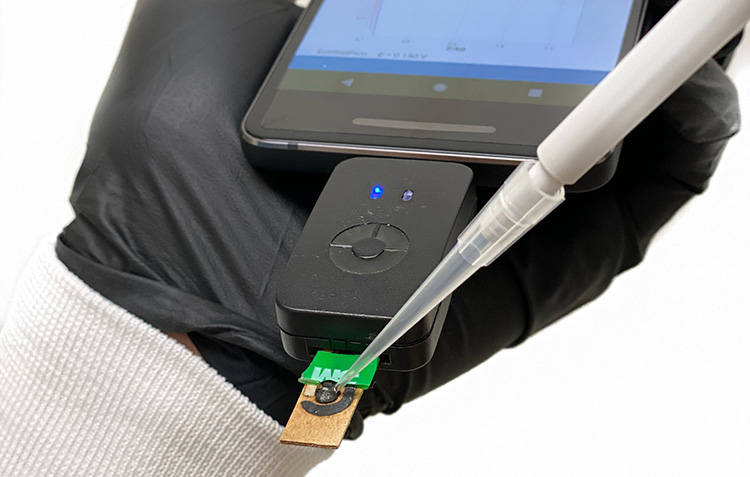
caption: Created in the lab of Dr. de la Fuente and licensed through PCI, this miniaturized, portable version of a rapid COVID-19 test is compatible with smart devices and can detect SARS-CoV-2 within four minutes with nearly 100% accuracy. Photo courtesy of César de la Fuente.

From Bench to Business

Around this time, Dr. Swartley was making strides on his switch from academia to business. As a researcher at Emory University, Dr. Swartley was focused on molecular biology, genetics, and infectious diseases, but began to feel constrained by the type of focus required for academic success.

After meeting with Emory’s office of technology transfer office to file a patent for a tool his lab developed, Dr. Swartley grew increasingly interested in the work they were doing. “I found it really inspiring how they were helping scientists, like me, to further develop their inventions for societal benefit.”

Recognizing the potential in technology transfer as a “wonderful way to stay in science, but also accelerate discovery and development in a meaningful way,” he pursued an MBA at night, describing the experience as “language lessons” in business speak. After finishing the program and gaining initial exposure to tech transfer at Emory, he moved on to work at Yale’s Office of Cooperative Research. Dr. Swartley points out that, at Penn, a major sea change came in the early-to-mid 2000s when Penn President-Emerita Amy Gutmann began implementing a more deliberate, strategic framework based on tapping into the true potential of transformative research. It was through this initiative that Dr. Swartley’s predecessor and mentor at CTT, Michael Cleare, was brought into the fold.

“Cleare brought an entrepreneurial mindset to our office, recognizing that universities needed to do more than simply file patents—they needed to create an ecosystem that nurtures entrepreneurial faculty, brings in venture capital, and builds meaningful industry partnerships,” Dr. Swartley said. And Dr. Swartley said it was Dr. Cleare and the clear vision of Penn’s leadership that convinced him to join Penn. 

Innovating the Approach to Innovation

Soon after Dr. Swartley joined in 2007, he saw that Penn, a pioneer in gene therapy and immunotherapy, was poised to be a leader in tech transfer by adopting a more proactive, partnership-driven approach. This shift in strategy prompted an effort to reorganize CTT and bring in new talent. A few years into Dr. Swartley’s tenure as managing director, he recruited Dr. Dibling, a fellow scientist-turned-innovator.

Dr. Dibling joined Penn’s tech transfer ecosystem in 2016 and, like Dr. Swartley, had a background in molecular biology, having completed his PhD in clinical medicine at the University of Leeds, followed by postdoctoral research in cancer biology at the University of Chicago. He, too, found himself drawn to the broader impact that tech transfer could offer.

“John and I both come from life science research backgrounds, which has given us valuable insights, and really guided our approach to tech transfer in this space,” Dr. Dibling said. “But we also love all forms of innovation, including technologies such as robotics, software, devices, electronics, and novel materials that are outside of our scientific training. We understand the importance of evaluating each opportunity and putting it in the best position to leave the lab and make a real-world impact, so we’re thrilled to work with researchers in all areas who have inventions or discoveries that might address an unmet need.”

For instance, Dr. Dibling notes that pharmaceutical and biotech products can take years or even decades to pass through clinical trials and gain FDA approval, while other innovations—such as software and technologies from the physical sciences and engineering—can be commercialized more quickly.

Dr. Dibling points to the School of Engineering and Applied Science’s work in unmanned aerial vehicles (UAVs), highlighting Exyn Technologies, a robotics company co-founded by SEAS dean Vijay Kumar with the support of PCI, and based on technology developed in Penn’s General Robotics, Automation, Sensing & Perception (GRASP) Lab.

“Exyn moved relatively quickly from formation and licensing of Penn’s technology to having products on the market,” Dr. Dibling said. “Although this still took years and a huge effort on the part of Exyn, the timeframe and the capital required to achieve this are significantly less than what would typically be observed with a biotechnology or pharmaceutical asset.”

PCI sees a broad range of technologies arising from Penn’s substantial research enterprise, which requires the office to take a flexible approach when determining the optimal pathway for further development and commercialization. In some cases, the best approach to support translation of a technology may be to identify and foster a relationship with an established company that already has the requisite experience and resources, while in others it may be more effective for PCI to work with faculty and investors to support the establishment of a new venture.

In the area of physical sciences and engineering, Dr. Dibling explains, established companies will frequently view university technology as being too early or ultimately disruptive to their business. Forming a new company can sometimes be the only viable approach to advancing the opportunity towards a new product.

PCI takes an adaptable, proactive approach to venture creation and actively markets promising technologies to relevant companies and investors. Dr. Dibling cites PCI’s targeted outreach strategies, which include showcasing technologies on their website and at conferences, reaching out directly to potential partners and investors, and helping faculty form companies when a strong commercial opportunity exists.

caption: Penn researchers developed a scalable microfluidics platform that could transform RNA therapeutic and vaccine production. This SCALAR 256x chip is fabricated on a single 4-inch silicon wafer. Photo courtesy of Sarah J. Shepherd.

Current and Future Growth Opportunities

For both Drs. Swartley and Dibling, PCI’s ongoing success is rooted in its ability to evolve alongside emerging fields. They point to the rising significance of AI, data, and sustainability as key drivers for future ventures, underscoring the need for Penn to remain nimble in its approach to innovation. An example of PCI’s investment in AI comes from presidential associate professor César de la Fuente, a researcher from Penn Medicine with a secondary appointment in Penn Engineering, whose lab has been deeply embedded in PCI’s ecosystem since his arrival. Dr. de la Fuente, who specializes in applying artificial intelligence to antibiotic discovery, has worked closely with PCI to patent numerous innovations from his lab.

“I think I’ve filed dozens of patents through PCI,” Dr. de la Fuente said. “The team was very receptive from the minute I got to Penn, integrating me into the tech transfer ecosystem because my research is very translational.”

Dr. de la Fuente’s lab recently developed APEX, a state-of-the-art AI model that can predict whether a given amino acid sequence will have antibiotic properties. Using experimental data collected over time in the de la Fuente Lab, the model skips the usual step of identifying molecular structures and instead goes directly from sequence to function, making the discovery process faster and more efficient. This has the potential to dramatically accelerate antibiotic discovery, from years to just a few hours.

Dr. de la Fuente credits PCI with helping his lab navigate the patenting and commercialization process to ensure that these innovations can reach the market and have a real-world impact. And, while still in early stages, Dr. de la Fuente’s lab is in the process of commercializing several technologies through PCI, including the formation of a potential company around their AI-driven discoveries.

“There’s ongoing work to commercialize some of the [intellectual property] we’ve developed,” he noted. “PCI has been instrumental in making sure we stay on track with invention disclosures and timelines, and that we have someone assigned to our lab who understands what we’re working on.”

Another faculty member benefiting from PCI’s hands-on approach is Michael Mitchell, an associate professor of bioengineering in Penn Engineering and the lipid nanoparticle delivery group leader at the Penn Institute for RNA Innovation. When Dr. Mitchell arrived at Penn in 2018, he found himself quickly pulled into PCI’s ecosystem when Janssen Pharmaceuticals reached out to his lab about a potential partnership to develop next-generation lipid nanoparticle technologies for genomic medicines. The challenge? Dr. Mitchell had never been involved in negotiating a sponsored research agreement before.

Dr. Mitchell’s prior experience with tech transfer offices at institutions like Cornell and MIT had mostly focused on invention disclosures. But he said PCI stood out for its broader approach to supporting faculty.

“With PCI, they have been helpful in many more areas,” he said, “they not only facilitate invention disclosures and filing patents, but they are also incredibly helpful in strategizing how to license our technologies, partner with companies, or form new companies based on our research.”

Dr. Mitchell’s lab has worked closely with former licensing officer Tracy Chen and executive director of licensing Terry Bray at PCI to build a comprehensive IP portfolio around lipid nanoparticles for mRNA delivery. He said the relationship has become a cornerstone of his lab’s operations, with regular meetings to review new patents, licensing agreements, sponsored research, and company formation. Dr. Mitchell founded a new biotechnology company, Liberate Bio, in 2022 to translate his lipid nanoparticle technologies into new genomic medicines.

“They are an incredible resource that has added an entirely new dimension to the lab,” Dr. Mitchell said. “We just finalized a large, sponsored research agreement with a biopharmaceutical company to develop next-gen lipid nanoparticles for mRNA delivery. And we’re in the process of starting new companies focused on women’s health and cancer nanomedicine.”

PCI dedicates time each year to honor Penn inventors and organizations whose patents have led to real-world commercialization achievements. At PCI’s most recent Celebration of Innovation, which recognized Penn-led efforts towards sustainability and tackling climate change, Penn Engineering’s Jen Wilcox was awarded Startup of the Year for her groundbreaking carbon capture technology, offering a practical solution to one of the world’s most pressing challenges. Also recognized was the Penn Center for Health Devices and Technology, known as Penn Health-Tech, a cross-disciplinary community that facilitates the development of novel medical devices and healthcare technologies while connecting and training innovators across the University.

“We’re not just about licensing patents anymore,” Dr. Swartley said. “We’re about building partnerships and giving innovators—new and more seasoned—the tools they need that will really help them grow and succeed.”

Adapted from a Penn Today news article by Nathi Magubane, January 17, 2025.

Events

2025 Women of Color Day Awardees

WOCAP logo

To Members of the University and Surrounding Community:

Please join the Women of Color at Penn (WOCAP) in extending congratulations to our 2025 awardees.

  • Undergraduate Award: Grace Edwards
  • Graduate Award: Mayowa Fageyinbo
  • Faculty/Staff Award: Imani Hester
  • Community Award: Elana Evans
  • Joann Mitchell Outstanding Legacy Award: Desirae Cesar
  • Helen O. Dickens Lifetime Achievement Award: Valerie De Cruz

The annual WOCAP Awards Luncheon will be held on Friday, March 21, 2025, 12-2 p.m. at the Inn at Penn. More details will be forthcoming.

Luncheon tickets are now available for purchase.

  • Tickets: $85 per person
  • Table (10 ppl.) + Full Page Ad: $950
  • Full Page Ad: $250
  • Half Page Ad: $175
  • Quarter Page Ad: $90

You may send ticket requests, camera-ready ads, and journal info to wocaptix@gmail.com.

Learn more about the 2025 WOCAP Day Awards Program at: https://aarc.upenn.edu/women-color/women-color-awards.

—Women of Color Executive Planning Committee

Update: February AT PENN

Fitness & Learning

5          Argentine Music Performance Workshop for String Players; Guillermo Rubino, violinist and tango specialist, will discuss unique techniques and stylistic approaches to Argentine music, both traditional tango and contemporary popular music; 7-9 p.m.; room 101, Lerner Center (Music).


Penn Libraries

Various locations. Info: https://www.library.upenn.edu/events.

4          Library 101 (How Do I Library?); will cover finding, checking out and renewing books at the Penn Libraries, how you can get PDF scans of articles, and the best way to quickly get books from other libraries; 11 a.m.; room 114, Van Pelt Library.

7          Bookbinding: Japanese Stab Binding; learn stab-stitch binding, called Yotsume Toji in Japan, and bind your own book; noon-3 p.m.; Common Press, Fisher Fine Arts Library.


On Stage

Penn Live Arts

In-person events. Info and tickets: https://pennlivearts.org/events/.

7          Pan-Asian Dance Troupe Presents “Stars Aligned”; journey through the serene and radiant wonders of the grand universe; 7 p.m.; Iron Gate Theater; tickets: $11-$13. Also February 8, 7 p.m.

            One Acts 2025; an annual collaboration across the seven groups in the Theatre Arts Council, composed of five five student-written, directed, and produced plays; 7 p.m.; Class of 1949 Auditorium, Houston Hall; tickets: $4-$8. Also February 8, 1 p.m. and 5 p.m.


Readings & Signings

Kelly Writers House

In-person events at Arts Café, Kelly Writers House. Info and to register: https://writing.upenn.edu/wh/calendar/0225.php.

6          A Conversation; Kate Glasheen, artist; 6 p.m.


Penn Bookstore

In-person events at 2nd floor conference room, Penn Bookstore. Info: https://www.business-services.upenn.edu/bookstore-events-by-month/202502.

4          Predatory Data: Eugenics in Big Tech and Our Fight for an Independent Future; Anita Chan, University of Illinois, Urbana-Champaign; 5:30 p.m.

5          Kidnapped at Sea: The Civil War Voyage of David Henry White; Andrew Sillen, Rutgers University; 5:30 p.m.

11        Slavery After Slavery: Revealing the Legacy of Forced Child Apprenticeships on Black Families, from Emancipation to the Present; Mary Frances Berry, history; 5:30 p.m.


Special Events

10        Energy Week 2025; schools, centers, institutes, student groups, and more host events for Energy Week 2025, ranging from Lightning Talks hosted by the Kleinman Center to a talk about climate change and artificial intelligence; full schedule: https://energyweek.upenn.edu/ (Kleinman Center for Energy Policy, Vagelos Institute for Energy Science and Technology). Through February 14.  


Talks

4          Digital Twins for the Earth System; Paris Perdikaris, mechanical engineering & applied mechanics; 10:15 a.m.; Wu & Chen Auditorium, Levine Hall (Mechanical Engineering & Applied Mechanics).

            Moving Towards the Frontier: Migrating Miners, Shifting Mining Centers, and Changes in Knowledge Making from the Ming to the Qing; Yijun Wang, New York University; noon; room 543, Williams Hall (Center for East Asian Studies).

            Understanding the Impact of Stress and Masculinity on Condom Use Intentions Among Black Emerging Adult Males: A Critical Approach to STI Prevention and Health Care Delivery; Jade Burns, University of Michigan; noon; auditorium, Colonial Penn Center; register: https://tinyurl.com/burns-talk-feb-4 (Leonard Davis Institute).

            A Review of Instrumental Tango; Guillermo Rubino, violinist and tango specialist; 3:30 p.m.; room 101, Lerner Center (Music).

            Argentine Popular Music; Guillermo Rubino, violinist and tango specialist; 5:15 p.m.; room 101, Lerner Center (Music).

5          Einstein-Rockefeller-CUNY Center for AIDS Research; Meena Jagadeesan, University of California, Berkeley; noon; room 414, Amy Gutmann Hall, and Zoom webinar; join: https://upenn.zoom.us/j/95467348262 (ASSET Center).

            Functional Classification of Breast Cancer-Associated Genetic Variants Using Saturation Genome Editing and Mammary Organoids; Sounak Sahu, National Cancer Institute; 4 p.m.; Austrian Auditorium, CRB, and Zoom webinar; join: https://tinyurl.com/sahu-talk-feb-5 (Cancer Biology).

            Mortevivum: Photography and the Politics of the Visual (On Seeing); Kimberly Juanita Brown, Dartmouth College; 4 p.m.; room 329A, Max Kade Center; register: https://tinyurl.com/brown-talk-feb-5 (Africana Studies).

6          Beyond the Binary: Reimagining Sexual Difference Through Relational Ontologies; Deion Dresser, GSWS; Love Thy Neighbor: Christian Embodiment, Heteropatriarchal Fantasies, & Queer Anxieties; Hank Owings; noon; Zoom webinar; register: https://tinyurl.com/dresser-owings-feb-6 (Gender, Sexuality & Women’s Studies).

            Scandinavian Social Democracy as an Alternative to Liberal Democracy? Jenny Andersson, Uppsala University; Troels Skadhauge, University of Copenhagen; noon; Zoom webinar; join: https://tinyurl.com/andersson-skadhauge-feb-6 (Andrea Mitchell Center for the Study of Democracy).

            Engineering Cell State-Specific Gene Regulation with AI and Synthetic Biology; Sebastián Castillo Hair, University of Washington; 3:30 p.m.; in-person TBA, and Zoom webinar; join: https://tinyurl.com/hair-talk-feb-6 (Bioengineering).

            Adaptive Immune Responses in Pulmonary Fibrosis; Anne Sperling, pulmonary and critical care medicine; 4 p.m.; room 11-146, Smilow Center (Penn-CHOP Lung Biology Institute).

            Mortal Divinity: Epiphanic Feeling in the Theogony, Homeric Hymn to Demeter, and Beyond; Carman Romano, Bryn Mawr College; 4:45 p.m.; room 402, Cohen Hall (Classical Studies).

            Weitzman Fine Art Lecture Series; Leslie Thornton, artist; 6 p.m.; Institute of Contemporary Art, and Zoom webinar; register: https://icaphila.org/events/weitzman-fine-art-lecture-series-leslie-thornton/ (ICA).

10        Dentistry at the University of Regensburg, Germany; Sebastian Hahnel, University of Regensburg; noon; William W.M. Cheung Auditorium, Penn Dental Medicine; register: https://tinyurl.com/hahnel-talk-feb-10 (Penn Dental Medicine).

            Soviet Antisemitism Reconsidered: The Case of Jews in the NKVD; Oleg Budnitskii, Higher School of Economics, Moscow and Cullman Center, New York Public Library; 5:30 p.m.; room 209, College Hall (History).

11        The Ethics of Personal Energy Consumption Choices; Travis Rieder, Johns Hopkins University; 4 p.m.; room 100, Golkin Hall; register: https://tinyurl.com/rieder-talk-feb-11 (Penn Program on Regulation).

            Weaponizing and Mobilizing T Cells to Cure HIV; Harris Goldstein, Einstein-Rockefeller-CUNY Center for AIDS Research; 4 p.m.; Austrian Auditorium, CRB (Center for AIDS Research).

            Generative Living; Makoto Fujimura and Haejin Shim Fujimura, authors; 6 p.m.; Hall of Flags, Houston Hall; RSVP: https://tinyurl.com/FujimaraAtPenn (Office of Social Equity and Community).


Chemistry

In-person events at Carolyn Hoff Lynch Lecture Hall, 1973 Chemistry Building. Info: https://www.chem.upenn.edu/events.

5          Imaging, Editing, and Deciphering the Lipidome; Jeremy Baskin, Cornell University; noon.

6          Printing Soft and Living Matter in Three Dimensions; Jennifer A. Lewis, Harvard University; 4 p.m.

11        Metallacarbatrane and Related Platforms for the Synthesis of Main Group Metal Hydride Compounds and Catalysts for the Reduction of CO2; Ged Parkin, Columbia University; noon.


Mathematics

Info: https://www.math.upenn.edu/events.

4          Probing Moduli Spaces With Sub-Line Bundles; Duong Dinh, mathematics; 3:30 p.m.; room 4C4, DRL.

            Stable Invariants of Words From Random Matrices; Doron Puder, Tel Aviv University; 3:30 p.m.; room 4C8, DRL.

6          Regularity for the Landau and Boltzmann Equations via the Fisher Information;

Nestor Guillen, Texas State University; 3:30 p.m.; room 4C4, DRL.

10        On the Eco-Evolutionary Dynamics of Inefficient Viral Infections; Joshua Weitz, University of Maryland; 4 p.m.; room 4C8, DRL.


This is an update to the February AT PENN calendar. To submit events for an upcoming AT PENN calendar or weekly update, email almanac@upenn.edu.

Crimes

Weekly Crime Reports

Division of Public Safety
University of Pennsylvania Police Department Crime Report

About the Crime Report: Below are the Crimes Against Persons and/or Crimes Against Property from the campus report for January 20-26, 2025. The Crime Reports are available at: https://almanac.upenn.edu/sections/crimes. Prior weeks’ reports are also online. –Eds.

This summary is prepared by the Division of Public Safety (DPS) and contains all criminal incidents reported and made known to the Penn Police, including those reported to the Philadelphia Police Department (PPD) that occurred within our patrol zone, for the dates of January 20-26, 2025. The Penn Police actively patrol from Market Street to Baltimore Avenue and from 30th Street to 43rd Street in conjunction with the Philadelphia Police.

In this effort to provide you with a thorough and accurate report on public safety concerns, we hope that your increased awareness will lessen the opportunity for crime. For any concerns or suggestions regarding this report, please call DPS at (215) 898-7297. You may view the daily crime log on the DPS website.


Penn Police Patrol Zone
Market Street to Baltimore Avenue and from 30th Street to 43rd Street

Crime Category

Date

Time

Location

Description

Aggravated Assault

01/25/25

11:16 PM

51 N 39th St

Complainant was thrown to the ground and assaulted by a patient

Assault

01/22/25

5:15 PM

3925 Chestnut St

Complainant received threatening phone calls by unknown offender


01/24/25

2:05 PM

3400 Spruce St

Domestic incident inside of hospital; criminal trespass by offender/Arrest

Auto Theft

01/21/25

11:31 AM

3000 Walnut St

Theft of a parked motor vehicle from highway

Bike Theft

01/25/25

11:43 PM

3720 Chestnut St

Theft of a secured bicycle

Fraud

01/24/25

1:15 PM

3900 Chestnut St

Checking account used without authorization


01/24/25

5:52 PM

418 Curie Blvd

Unauthorized withdrawals made on account

Harassment

01/21/25

4:43 PM

3451 Walnut St

Unwanted phone calls received by unknown offender

Retail Theft

01/20/25

6:58 AM

3440 Market St

Report of a retail theft


01/21/25

8:01 PM

3744 Spruce St

Retail theft of consumable goods


01/23/25

11:02 AM

4233 Chestnut St

Retail theft of alcohol


01/23/25

3:04 AM

3744 Spruce St

Retail theft of consumable goods


01/24/25

6:26 PM

4233 Chestnut St

Retail theft of alcohol


01/24/25

7:45 AM

3604 Chestnut St

Retail theft of cigarettes


01/26/25

6:39 AM

3330 Market St

Retail theft of consumable goods

Sex Offense

01/23/25

2:18 PM

Confidential

Confidential

Theft from Building

01/20/25

1:28 PM

3333 Walnut St

Airpods taken from unsecured cabinet


01/22/25

12:21 PM

3600 Sansom St

Computer taken from lobby


01/22/25

11:48 PM

51 N 39th St

Theft of a tablet from front lobby desk


01/23/25

12:41 PM

3600 Chestnut St

Package taken from mailroom


01/23/25

5:35 PM

4247 Locust St

Package taken from mailroom


01/23/25

9:31 PM

3701 Walnut St

Theft of clothes and personal items from a locker


01/26/25

7:01 PM

1 Convention Ave

Wallet containing personal items taken from employee locker

Theft from Vehicle

01/23/25

12:08 PM

3500 Walnut St

Theft of a backpack from an unsecured vehicle

Theft Other

01/22/25

12:02 AM

4211 Chestnut St

Theft of an engagement ring from lobby


01/23/25

1:24 PM

4104 Walnut St

Package taken from location


Philadelphia Police 18th District
Schuylkill River to 49th Street & Market Street to Woodland Avenue

Below are the Crimes Against Persons from the 18th District: 6 incidents were reported for January 13-19, 2025 by the 18th District, covering the Schuylkill River to 49th Street & Market Street to Woodland Avenue.

Crime Category

Date

Time

Location

Aggravated Assault

01/24/25

10:50 AM

4806 Market St

Assault

01/20/25

4:47 PM

3609 Chestnut St


01/21/25

12:16 PM

478 S 40th St


01/21/25

4:48 PM

3451 Walnut St


01/22/25

4:42 PM

S 49th & Spruce Sts


01/22/25

5:47 PM

3925 Chestnut St


01/23/25

7:17 AM

4501 Chestnut St


01/24/25

3:40 PM

3400 Spruce St


01/25/25

6:17 PM

4840 Walnut St

The Division of Public Safety offers resources and support to the Penn community. DPS developed a few helpful risk reduction strategies outlined below. Know that it is never the fault of the person impacted (victim/survivor) by crime.

  • See something concerning? Connect with Penn Public Safety 24/7 at (215) -573-3333.
  • Worried about a friend’s or colleague’s mental or physical health? Get 24/7 connection to appropriate resources at (215) 898-HELP (4357).
  • Seeking support after experiencing a crime? Call Special Services - Support and Advocacy resources at (215) 898-4481 or email an advocate at specialservices@publicsafety.upenn.edu
  • Use the Walking Escort and Riding services available to you free of charge.
  • Take a moment to update your cellphone information for the UPennAlert Emergency Notification System
  • Download the Penn Guardian App which can help Police better find your location when you call in an emergency.
  • Access free self-empowerment and defense courses through Penn DPS.
  • Stay alert and reduce distractions; using cellphones, ear buds, etc. may limit your awareness.
  • Orient yourself to your surroundings. (Identify your location, nearby exits, etc.)
  • Keep your valuables out of sight and only carry necessary documents.

Bulletins

From the Office of the Provost: Call for Nominations for the Provost’s Distinguished Visiting Faculty Fellowship

The Office of the Provost is accepting nominations for the Provost’s Distinguished Visiting Faculty Fellowship. The appointment is intended for a senior scholar of national or international prominence, with the aim of enriching the intellectual and cultural life of the Penn community. Fellows may be from any academic discipline, with preference for those whose scholarship promotes civic engagement, scholarly innovation, and inclusive communities; is interdisciplinary in nature; and advances novel research, scholarly themes, or methods. Fellows may be asked to mentor Penn undergraduate and graduate students, participate in panels and public discussions with senior Penn colleagues, collaborate on research projects, and provide at least one annual talk of significance to the Penn community. 

With the written approval of their home institutions, fellows may spend several intensive consecutive weeks on Penn’s campus or spread their visit over a full semester. Penn will offer the fellow a stipend of up to $40,000, in addition to reimbursement up to $5,000 to cover travel and accommodation costs associated with the visit. 

Fellows will work out the details of their fellowship (such as schedules, office space, and lecture dates) with the host school. 

Nominations for the 2025-2026 academic year can be submitted to provost-fac@upenn.edu by Friday, March 21, 2025. Nominations may come from a center, department, or school and should be endorsed by the appropriate chair or dean. Nominations should include a letter of support and current curriculum vitae of the candidate. Please direct questions about the program to Colleen McEntee at cmcentee@upenn.edu.

TCPW Accepting Grant Applications

Trustees’ Council of Penn Women

The Trustees’ Council of Penn Women (TCPW) is accepting applications for its annual grants program and encourages members of the University community to apply.

Grants ranging from $1,000 to $3,000 will be available to individuals or organizations which promote:

  • Women’s issues
  • The quality of undergraduate and graduate life for women
  • The advancement of women
  • The physical, emotional, and psychological well-being of women

Favorable consideration will be given to projects that:

  • Affect a broad segment of the University population
  • Foster greater awareness of women’s issues
  • Provide seed money for pilot programs that have the potential to become ongoing self-supporting programs

To apply, visit the TCPW website at TCPW Grant. Applications must be submitted no later than February 17, 2025. Awards will be announced in the spring of 2025, and funds will be distributed in July/August 2025 for projects in the 2025-2026 academic year. For more information, contact Terri Welsh at welsh@upenn.edu.

Penn Nursing: Call for Innovation Accelerator Funding Proposals

Penn Nursing is offering funding of up to $20,000, depending on the track, to assist with the creation and testing of early-stage solutions to improve health and healthcare outcomes with a priority on populations of greatest need. The innovation accelerator offers funding, mentorship, and education to help advance an innovative concept, provided the applicant already has a low-fidelity prototype. A low-fidelity prototype allows the end user to interact with your solution and provide feedback. It is a simple representation of an idea; for example, it could be a sketch or flow diagram on paper or a product made from cardboard.

Winners will attend a six-week educational session designed to sharpen their business strategy.

The lead innovator for the application must be a full-time member of the Penn Nursing faculty (standing, associated, or teaching faculty) or a matriculated student in a Penn Nursing program with a minimum of one calendar year remaining in their program.

Nurses employed full-time in a Penn Medicine hospital or a Penn affiliated hospital or practice partner such as AtlantiCare, the Philadelphia Veteran’s Affairs Medical Center, Children’s Hospital of Philadelphia, ChristianaCare, and Nemours Children’s Health are welcome to participate in the innovation accelerator if they partner with a Penn Nursing faculty or student lead or co-lead. Penn Medicine nurses or nurses in an affiliated hospital who need help finding a Penn Nursing co-lead can reach out to innovation@nursing.upenn.edu.

To apply or register for an information session, visit https://www.nursing.upenn.edu/our-expertise/innovation/innovation-accelerator/. The deadline to apply is February 28, 2025. The pitch event will take place on April 15, 2025.

Back to Top