
Richard Easterlin, Economics and Associate Dean of SAS
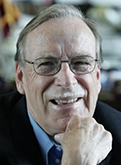 Richard A. (Dick) Easterlin, WG’49, WGr’53, a former professor of economics in the Wharton School and the former associate dean for budget and planning in the School of Arts & Sciences, died on December 16, 2024 at home in Pasadena, California. He was 98.
Born in Ridgefield Park, New Jersey, Dr. Easterlin studied engineering at the Stevens Institute of Technology in Hoboken, New Jersey, earning a degree in mechanical engineering in 1945. He then earned his MA (1949) and PhD (1953) in economics from Penn’s Wharton School. While working toward his MA, he became an instructor in economics at Penn in 1948. Upon graduating in 1953, he joined the tenure track as an assistant professor; he became an associate professor in 1956 and a full professor in 1960. He served several stints (1958-1960, 1962-1962, 1965, and 1968) as chair of the department, and also chaired the economics graduate group.
Dr. Easterlin chaired Penn’s Committee on Undergraduate Admissions, authoring a 1970 report that advocated for Penn to implement a need-blind admissions policy, and served on the University Council. In 1974, Vartan Gregorian, then the dean of the Faculty of Arts & Sciences (today's SAS), tapped Dr. Easterlin to serve as the school’s associate dean for budget and planning (Almanac October 22, 1974). In that role, Dr. Easterlin helped to organize the FAS’s budget and selected and chaired a committee that advised Dean Gregorian on the school’s budgetary operations. He served in this role until 1980, and, after becoming the William R. Kenan, Jr. Professor in Economics in 1978, continued to teach at Wharton until 1982. That year, he left Penn to become a professor of economics at the University of Southern California (USC) Dornsife College of Letters, Arts and Sciences. Dr. Easterlin later became a University Professor there, a role he held until his retirement in 2018.
Dr. Easterlin’s work uncovered the relationship between economic growth and human happiness. Beginning with his landmark 1955 paper, “Study of Population Redistribution and Economic Growth in the United States,” Dr. Easterlin studied human happiness under different economic circumstances. This work culminated with his 1974 paper, “Does Economic Growth Improve the Human Lot? Some Empirical Evidence,” which proffered the Easterlin Paradox: at a large scale, happiness does not necessarily increase with income over time. Another of his theories, the Easterlin Hypothesis, explained long-term demographic trends like baby booms as a product of relative income rather than absolute income levels.
Over the course of his career, Dr. Easterlin’s work earned numerous honors, including fellowships in learned societies such as the American Academy of Arts and Sciences, the Econometric Society, the John Simon Guggenheim Memorial Foundation, the United States National Academy of Sciences, and the American Economic Association. He received the Irene B. Taeuber Award of the Population Association of America, the Distinguished Researcher Award of the International Society for Quality of Life Studies, the IZA Prize in Labor Economics of the Institute for the Study of Labor, the Laureate Award of the International Union for the Scientific Study of Population, and several USC teaching awards. In addition to his primary faculty roles at Penn and USC, he also held a visiting professorship at Stanford University and a staff position at the National Bureau of Economic Research.
Dr. Easterlin is survived by his wife, Eileen Crimmins; his children, Dan, Nancy, Sue, Andy, Matt, and Molly; and his grandchildren, Zack, Emma, Keaton, Tyler, Ryder, Owen, Ada, and Enzo.
In lieu of flowers, the family requests donations be made to Young & Healthy—Pasadena (https://yhpasadena.org/).
--
To Report A Death
Almanac appreciates being informed of the deaths of current and former faculty and staff members, students and other members of the University community. Call (215) 898-5274 or email almanac@upenn.edu.
However, notices of alumni deaths should be directed to the Alumni Records Office at Suite 300, 2929 Walnut St., (215) 898-8136 or email record@ben.dev.upenn.edu.