News

Beth A. Winkelstein: Reappointed as Deputy Provost

caption: Beth WinkelsteinProvost John L. Jackson, Jr. has announced the reappointment of Beth A. Winkelstein, the Eduardo D. Glandt President’s Distinguished Professor of Bioengineering in the School of Engineering and Applied Science and a professor of deurosurgery in the Perelman School of Medicine, as deputy provost. Dr. Winkelstein has served as Deputy Provost since 2020. She also served as interim provost from July 2021 through May 2023 and as vice provost for education from 2015 to 2020.  A former Penn undergraduate, she has taught at Penn for more than twenty years, becoming in that time one of the world’s leading innovators in research on new treatments for spine and other joint injuries and applications of novel engineering approaches to detect tissue failure and dysfunction. Her pioneering interdisciplinary research focuses on the mechanisms of pain and its development and persistence—especially from injury and/or degenerative disease—and has been continuously supported by the National Institutes of Health, the National Science Foundation, and the Department of Defense, among many others, including a Presidential Early Career Award from the NSF.

“Beth Winkelstein has been one of our most invaluable academic leaders for more than ten years,” said Provost Jackson. “Her great value to the University was shown yet again last year, when she was asked to lead our implementation of the recommendations that emerged out of the important work of both the Presidential Commission on Countering Hate and Building Community and the University Task Force on Antisemitism, on which she served as vice chair. Beth’s partnership, wisdom, and strategic insight have been essential to me as Provost, as I know they have been to so many others during her time at Penn. In the Provost’s Office, she has worked closely with me to develop the new roles of vice provost for the arts and vice provost for climate science, policy, and action, while also continuing to supervise the Penn Libraries. Going forward in her next term, she will oversee the vice provostial portfolios in arts, education, libraries, research, and climate science, policy, and action, along with other critical areas of our work. We will soon announce searches for the next vice provost for education and vice provost for research, forming consultative committees that Beth will chair, and nominations of outstanding Penn faculty leaders for both posts will be welcomed at that time.”

Dr. Winkelstein is the author of Orthopaedic Biomechanics (2012) and has published more than 175 papers and book chapters. She served as editor of the Journal of Biomechanical Engineering from 2012 to 2020 and currently serves as chair of the Board of Editors of the American Society of Mechanical Engineers and an executive committee member of the World Council on Biomechanics. She is a fellow and former member of the Board of Directors of the Biomedical Engineering Society and a fellow of the American Society of Mechanical Engineers, which has recognized her groundbreaking research with its Van C. Mow Medal and Y.C. Fung Early Career Award. Her leadership in advancing new educational initiatives at Penn has included the launch of Penn First Plus, a six-year grant from the Howard Hughes Medical Institute to increase inclusivity in STEM teaching and learning, and a five-year grant from the Association of American Universities to improve the quality of STEM education across campus. SEAS students twice awarded her the Ford Motor Company Award for Faculty Advising, and in 2012-13 she led a cross-campus working group that studied best practices in undergraduate research as part of the University’s reaccreditation by the Middle States Commission on Higher Education.

“I am deeply honored to continue my work as deputy provost,” said Dr. Winkelstein. “This is an exciting time at Penn, and I look forward to partnering with the Provost, our great team in the Provost’s Office, and our many outstanding students, faculty, and staff to help advance our shared mission of education and research in the years ahead.”

Dr. Winkelstein joined the Penn faculty in 2002, following a two-year postdoctoral fellowship at Dartmouth College and a PhD in bioengineering from Duke University (1999). She earned a BSE cum laude in bioengineering from Penn in 1993 as a Benjamin Franklin Scholar.

MIC Center to Receive $1.2 Million Grant from City of Philadelphia to Support Digital Equity

The Media, Inequality & Change (MIC) Center at the Annenberg School for Communication and the Pennsylvania Broadband Research (PBR) Institute will partner with the City of Philadelphia to evaluate and support their initiative to create a more digitally empowered city.

MIC’s $1.2 million grant is a part of the city’s approval and recommendation for a five-year, $11.9 million grant from the Department of Commerce’s National Telecommunications and Innovation Administration (NTIA), backed by $1.25 billion in funds authorized by the Digital Equity Act.

The funds will go toward reporting on and assessing the impact of grant-funded activities, facilitating data collection, and providing strategic plans to support grant programs around broadband access. Evaluation from MIC and its PBR Institute will focus on the economic impacts, education and healthcare implications, social and civic engagement, and community access around internet technology.

caption: Victor Pickard“It’s vitally important that all Philadelphians are able to fully participate in society, which requires guaranteed access to reliable and affordable broadband services,” said Victor Pickard, co-director of MIC and the C. Edwin Baker Professor of Media Policy and Political Economy.

Dr. Pickard added that the MIC Center and PBR Institute are looking forward to conducting in-depth empirical research to evaluate local internet initiatives. “It’s important to evaluate so that such programs can successfully intervene against predictable market failures in broadband services.”

MIC, a collaboration between the Annenberg School and Rutgers University’s School of Communication and Information, explores the intersections between media, democracy, technology, policy, and social justice. The PBR Institute, a joint research group with the Donald P. Bellisario College of Communications at Pennsylvania State University, focuses on digital equity. Since its launch in 2023, the PBR Institute has analyzed internet access in underserved communities in Pennsylvania as a whole, looking at cost, infrastructure, policy, and access.

Together, they are among four government offices and 18 local non-profits and universities who will work with the City of Philadelphia’s Office of Innovation and Technology (OIT) to provide better internet resources, digital training, and access to devices for communities in Philadelphia.

“We are thrilled to be able to build upon our work helping Philadelphia residents access internet, devices, and the digital skills required in today’s world,” said Juliet Fink Yates, the broadband and digital inclusion manager at OIT. “This funding will tie together several systems across the city, making it easier for residents to get the support they need to be prepared for a digital future.”

Claire DeMarco: Associate Vice Provost for Operations of the Penn Libraries

caption: Claire DeMarcoPenn Libraries have announced the appointment of Claire DeMarco as associate vice provost for operations. In this senior strategic role, she will lead efforts to integrate advanced technologies and sustainable practices across all facets of library operations, enhancing the Penn Libraries’ ability to support the University’s research and educational missions.

“Claire has a proven track record of building collaborative teams, enhancing operational excellence, and fostering innovation,” said Brigitte Weinsteiger, the H. Carton Rogers III Vice Provost and director of the Penn Libraries. “With her leadership, we will strengthen our ability to implement data-driven strategies and cultivate a culture of continuous improvement, ensuring the Penn Libraries adapts proactively to the changing needs of our diverse scholarly community. “

Since 2021, Ms. DeMarco has served as director of information discovery services at Harvard Library. She began working at Harvard in 2012 in the faculty support services and research services groups at Harvard Law School Library. In 2017 she joined Harvard Library to implement the initiatives outlined in the library’s first digital strategy, including the reimagining of the online catalog Library. Harvard, the creation of CURIOSity Digital Collections, and expanding the use of interoperable metadata standards and structures, including linked data and IIIF.

In the broader library science field, Ms. DeMarco has served as the chair of the American Library Association (ALA) CORE Technical Services Directors of Large Research Libraries Committee and as secretary of the LD4 Steering Group, and she is an active member of the IPLC Technical Services Group. Previously, Ms. DeMarco worked as a managing attorney in health care practice and as a research specialist in legislative and regulatory affairs at both state and federal levels. She has also served as an adjunct faculty member at Northeastern University School of Law. At Penn, Ms. DeMarco will play a critical role in driving innovations that align with the rapid evolution of information discovery and academic library services. She will direct a team of 90 staff, overseeing the areas of preservation; conservation; physical processing; acquisitions, access, and licensing; access services; and technical services, and the stewardship of the Libraries’ high-density storage facility, LIBRA.

“I’m thrilled to be joining the Penn Libraries—to learn from the broad range of experts across the operations portfolio, to collaborate creatively with this new leadership team, and to align and uphold the community’s vision of progress in principle and practice,” said Ms. DeMarco.

She holds an AB from Mount Holyoke College, an MSLIS from Drexel University, and a JD from Suffolk University Law School. Her first day in her new post at the Penn Libraries will be February 24.

Alexa Pearce: Gershwind & Bennett Family Associate Vice Provost for Collections and Scholarly Communications for Penn Libraries

caption: Alexa PearcePenn Libraries have announced the appointment of Alexa Pearce as the Gershwind & Bennett Family Associate Vice Provost for Collections and Scholarly Communications. As a member of the Penn Libraries’ senior leadership team, she will direct collection strategy, scholarly communications, academic and community engagement, and the administration of eleven departmental libraries and centers that serve professional schools and specific subject areas across Penn.

“Alexa is a strong leader who will champion Penn’s faculty, academic leaders, and students and ensure robust support for their research and educational goals,” said Brigitte Weinsteiger, the H. Carton Rogers III Vice Provost and director of the Penn Libraries. “Our libraries are an integral part of Penn’s academic fabric, and Alexa will lead our continued success in advancing library services to campus, enhancing academic and community engagement, and providing unparalleled access to resources, data tools, and expert guidance.”

Ms. Pearce will lead a team of 90 staff, oversee a $30 million collections budget, and steward the libraries’ world-renowned collections of 9.8 million print and electronic volumes and vast array of digital resources. She will also administer departmental libraries and centers across Penn, including the Lippincott Library of the Wharton School, Fisher Fine Arts Library, Albrecht Music Library, Penn Museum Library, Holman Biotech Commons, Levy Dental Medicine Library, two Veterinary Medicine libraries, Chemistry Library, Math/Physics/Astronomy Library, and Center for Global Collections.

Ms. Pearce will play a key role in shaping the local and global scholarly communications ecosystem, advocating for open access, and implementing innovative publishing solutions that promote the broad dissemination of Penn’s scholarship. She will also direct staff in actively engaging with the broader Philadelphia community and maintaining a strong program with libraries in the School District of Philadelphia.

“I am thrilled to join the Penn Libraries and University of Pennsylvania community in this role that touches so many of the University’s strategic pursuits and elements of its core mission,” said Ms. Pearce. “It is an exciting time to grow and enhance the libraries’ effective and inventive integration of resources and expertise into Penn’s academic and research activities, especially noting the opportunities to disseminate Penn’s distinctly impactful contributions of scholarship, evidence, and interventions. I look forward to building relationships and partnerships in service to Penn’s mission.”

Currently Ms. Pearce is the associate university librarian for research at the University of Michigan Library. Her previous roles at Michigan have included director of the Social Sciences & Clark Library and librarian for history & American culture. She has also worked as the librarian for journalism, media, culture, and communication at NYU and held teaching appointments at the University of Michigan School of Information, the Pratt Institute School of Information, and Long Island University’s Palmer School of Library and Information Science.

Ms. Pearce’s professional service includes participation in the OCLC Research Library Partnership Leadership Roundtable, HELIOS Open, CHORUS Academic Advisory Working Group, and Big Ten Academic Alliance Heads of Public Services. She received an MA in world history from New York University and a MSLIS from LIU’s Palmer School. Ms. Pearce will begin work at Penn on March 10.

Paul Cobb: Director of the Middle East Center in SAS

caption: Paul CobbPaul Cobb, the Edmund J. and Louise W. Kahn Term Professor in the department of Middle Eastern languages and cultures (MELC) in the School of Arts & Sciences, has been appointed director of the school’s Middle East Center (MEC).

The MEC is a hub for nurturing research, teaching, and an appreciation of the Middle East, drawing on the extensive resources Penn has dedicated to the region. The center offers a major and minor in modern Middle Eastern studies, teacher training workshops and programing with community colleges and minority-serving institutions, and more than 100 events a year, including lectures, workshops, and cultural programs, all of which are open to the public.

“My work with Penn’s students, alumni, and faculty tells me one thing clearly: Penn’s community is hungry for knowledge about the Middle East to help us make sense of current events and to better understand the deep global significance of the region,” said Dr. Cobb. “I am hugely excited to get to work in pursuing the continued mission of the center, which will include offering new events, resources, and other initiatives that adhere to the highest academic standards and that highlight the diverse histories, politics, and cultures in this region that means so much to so many of us.”

Dr. Cobb has been teaching at Penn since 2008. He served as chair of MELC from 2015 to 2021 and is also director of Penn’s program in global medieval and Renaissance studies. Dr. Cobb is a specialist in the history of the premodern Middle East, and his areas of interest include animal studies, Christian-Jewish-Muslim relations, and the history of travel and exploration. He is a recognized authority on the history of the medieval Crusades in their Islamic context.

Dr. Cobb’s publications include The Book of Contemplation: Islam and the Crusades (2008), a translation of the “memoirs” and other works of Usama ibn Munqidh, and The Race for Paradise: An Islamic History of the Crusades (2014), which has been translated into multiple languages.

Governance

From the Faculty Senate Office: Faculty Senate Executive Committee Actions

The following is published in accordance with the Faculty Senate Rules. Among other purposes, the publication of SEC actions is intended to stimulate discussion among the constituencies and their representatives. Please communicate your comments to Patrick Walsh, executive assistant to the Faculty Senate Office, by email at senate@pobox.upenn.edu.

Faculty Senate Executive Committee Actions
Wednesday, January 22, 2025

Tri-Chairs’ Report. Faculty Senate chair Eric Feldman reminded Faculty Senate members of three spring 2025 colloquia organized by the Faculty Senate on “The Future of American Universities.” The first, on January 30 at 4 p.m., will examine “Higher Education and the State: Are Politicians Reshaping America’s Great Universities?” The second, on February 26 at 4:30 p.m., will consider “The Value of Higher Education: Are Four Years of College Worth the Cost?” The third, on April 9, at 4:30 p.m., will address “The Future of Higher Education.” More information is available on the Faculty Senate website.

Proposal from the School of Veterinary Medicine to Increase the Cap on Clinician Educators in the School from 50% to 60% of the Standing Faculty. Olena Jacenko, associate dean of faculty affairs at the School of Veterinary Medicine (SVM), elaborated on the school’s proposal, which was first raised during the November 2024 SEC meeting.

Following a robust discussion, the proposal was called to question. SEC members rejected the proposal, by vote among those present of one in favor without conditions added, 14 in favor with a condition added that the school’s faculty numbers be audited every five years, and 25 opposed, with one abstention.

Discussion of the Challenges Facing Higher Education and How to Respond. SEC members identified a set of challenges currently facing Penn and higher education and expressed a commitment to work with University administration and with peer institutions to combat threats posed by those challenges. Issues identified included threats to academic freedom and pedagogical independence; federal defunding of diversity, equity, and inclusion initiatives; reduction in research funding opportunities from federal agencies; changes in immigration policies affecting students and faculty; increasing attack on faculty protections through tenure; and effectively communicating the value of higher education to the public.

From the Office of the University Secretary: University Council Agenda

Wednesday, January 29, 2025
Hall of Flags, Houston Hall
4-6 p.m.

  1. Welcome.
  2. Approval of the minutes of December 4, 2024.
  3. Follow-up comments or questions on Status Reports.
  4. Focus Issue: Penn Medicine, Serving a Changing World.
  5. Responses to Open Forum and New Business topics raised at the December 4, 2024, University Council meeting.
  6. Announcement of Open Forum.
  7. New Business.
  8. Adjournment.

Supplements

2025 Summer Camps and Programs at Penn

Penn has a variety of learning and developmental activities available this summer. The URLs in each listing provide the most up-to-date information. Information about additional camps and programs will be provided as it becomes available.

Enrichment & Recreation
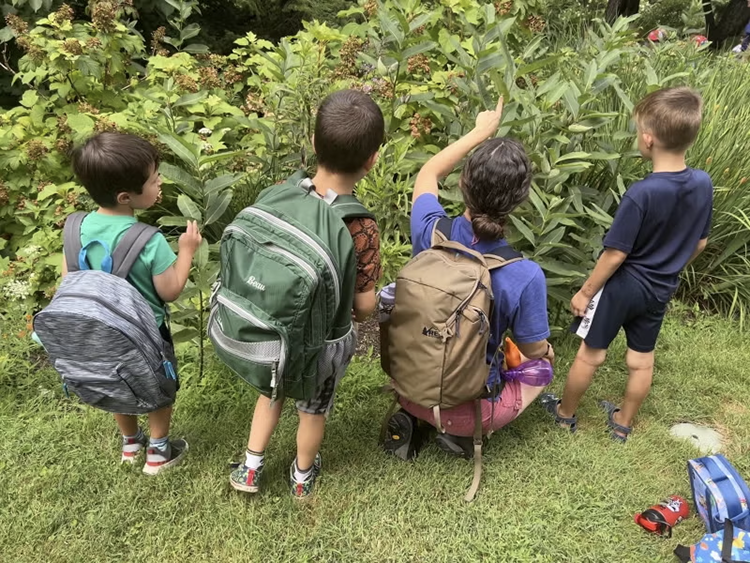
caption: Morris Aboretum & Gardens offers a variety of camps for children ages 4-10. Led by experienced educators, the camps aim to inspire new generations of environmentally aware citizen scientists.

Morris Arboretum & Gardens Nature Explorers Camp: Awaken your child’s curiosity and nurture their appreciation for nature by registering them for Morris Arboretum & Gardens’ Nature Explorers Camp. Led by experienced educators, the camp aims to inspire new generations of environmentally aware citizen scientists. Little Lightning Bugs is designed for children ages 4-5, and Bloomfield Buddies is designed for children ages 6-10. Fees: $370/week for non-Morris Arboretum & Gardens members; $340/week for members. Register: https://www.morrisarboretum.org/learn-discover/kids-families/summer-camp. Deadline: May 30.

Little Lightning Bugs 2025 Themes:

  • June 30-July 3: Discovering Nature
  • July 7-11: Animals of the Arboretum
  • July 14-18: Trees & Bees
  • July 21-25: Fairies & Friends
  • July 28-August 1: Pollinator Party
  • August 4-8: Nature Artists

Bloomfield Buddies 2025 Themes:

  • June 30-July 3: Sense of Adventure
  • July 7-11: Animal Superheroes
  • July 14-18: Budding Botanists
  • July 21-25: The Magic Forest
  • July 28-August 1: Mighty Pollinators
  • August 4-8: Art and Adventure

Penn Band High School Summer Camp: July 6-12. The Penn Band High School Summer Music Camp (grades 8-12) is a week-long instrumental music experience. This student-centered and student-driven program provides visiting musicians with a unique blend of music and mirth, set against the backdrop of Penn’s historic campus and the City of Philadelphia. Cost: $1,250/overnight; $595/commuter; 10% faculty/staff discount and 10% early bird (by March 15) discount. Register: https://camp.pennband.net/summerband.html#top. Deadline: June 30.

Penn Museum Anthropology Camp: Dive into an unforgettable summer of adventure at the Penn Museum Anthropology Camp. Each week offers an exciting theme inspired by the museum’s world-renowned collections, blending hands-on workshops, expert talks, gallery explorations, and creative projects. With themes changing weekly, there’s always something new to learn and create. Penn Museum Anthropology Camp is designed for children ages 6-13 who will be entering grades 1–8 in the 2025-2026 school year. Fees: $385/week for non-Penn Museum members; $355/week for members. Scholarships are available. Register: https://www.penn.museum/events/camp. Deadline: April 15.

Penn Museum Camp Themes 2025:

  • June 23-27: Monsters, Giants, and Mythical Creatures
  • June 30-3: Ancient Science
  • July 7-11: Adventures on the Nile 
  • July 14-18: Archaeology for Beginners
  • July 21-25: Pop Culture Mythology
  • July 28-August 1: Building the Ancient City
  • August 4-8: Monsters, Giants, and Mythical Creatures
  • August 11-15: Ancient Science

Lavner Education Tech Revolution STEM Camp: June 16-August 15. Camp Tech Revolution’s mission is to provide a best-in-class experience in summer enrichment and prepare our students for the future in STEM. Tech Revolution STEM Summer Camps are filled with the hottest topics in tech, and offer a unique camp experience that prioritizes experiential, hands-on learning, serious skill building, exciting weekly events, and tons of fun that is found only at Camp Tech Revolution. For ages 6-14. List of camps and fees and registration: https://www.lavnercampsandprograms.com/location/philadelphia-pa-summer-camp-university-of-pennsylvania-upenn/.  

Academics

Penn Carey Law Pre-College Academy: Residential Session: July 5-26. Commuter Session: July 7-25. The Penn Carey Law School’s Pre-College Academy offers high school students a unique opportunity to immerse themselves in a law school environment. This three-week program is the only of its kind: classes are held in an actual law school with standing faculty members and high-level legal practitioners providing students a comprehensive introduction to the American legal system and specialized areas of law. Fees: $9,899/residential; $6,299/commuter. Register: https://www.law.upenn.edu/academics/legaleducationprograms/pre-college-summer.php.

Penn Medicine Summer Program: June 29-July 25. Spend four weeks experiencing Penn’s Perelman School of Medicine's intensive summer program, which is designed for high school juniors and seniors interested in medical careers and modeled after actual first-year Penn medical school classes. Gain exposure to the basics of medical training including practical experiences, simulations, and live demonstrations. Also, experience the life of a college student on Penn’s campus. For students entering grades 11-12. Fees and to register: https://www.boldsummers.com/summer-programs/penn-medicine-summer-program/. Deadline: February 27.

Engineering Summer Academy at Penn: July 6-26. Spend three weeks experiencing Penn Engineering’s intensive summer program ,designed for high school students interested in engineering careers. The academy’s curriculum combines sophisticated theory with hands-on practical experience in cutting-edge technologies. Work with leading faculty while earning college credit. Plus, experience the life of a college student on Penn’s campus. For students entering grades 10-12. Fees and to register: https://esap.seas.upenn.edu/about/. Deadline: March 1.

caption: Penn SAS Summer Academies are subject-intensive three-week programs that fuse sophisticated scientific or social theory with relevant applications.

Penn SAS Summer Academies: July 5-26. Academies are subject-intensive three-week programs that fuse sophisticated scientific or social theory with relevant applications. The science academies draw upon Penn’s cutting-edge technology and resources to provide innovative lab experiences while the humanities academies draw upon the rich history and diversity of Philadelphia to provide a sociologically comprehensive summer experience. Academies are led by Penn faculty and long-standing professionals in their field of study with support from graduate and undergraduate teaching assistants. Upon successful completion of the program, students may request letters of recommendation from their Penn instructors. Open to students entering grades 10-12. Register: https://hs.sas.upenn.edu/. Deadline: April 27.

Biomedical Research Academy. This residential academy introduces the experimental basis of cellular, molecular, and genetic aspects of biology, focusing on relevance to diseases. Fusing daily lectures, faculty research talks, laboratory experiments, and small group investigations with current research topics, students gain insight into the core of biomedical research. Register: https://hs.sas.upenn.edu/summer-programs/academies/biomedical.  

Chemistry Research Academy. Penn’s chemistry department is a leading center for molecular research and instruction whose researchers are at the frontier of modern chemistry, tackling a wide variety of important societal challenges. This residential academy provides students with the foundational knowledge to understand this cutting-edge research, while providing opportunities to learn directly from research professors and students. Register: https://hs.sas.upenn.edu/summer-programs/academies/chemistry.  

Economics Academy. Students will engage with economic models and thinking in an approach that relies on limited math background, enabling them to participate in discussions about economics and economic policies. They will gain an understanding of basic economic terms and models of analysis, engage with economics in the workplace and everyday life, and learn about the global contexts of economic policy making. Register: https://hs.sas.upenn.edu/summer-programs/academies/economics.

Experimental Physics Research Academy. This residential academy focuses on current physics, specifically mechanics, electromagnetism, quantum dynamics, and astrophysics. Through lectures, activities, projects, and discussions with their instructors, students move past memorized equations to gain an understanding of cause and effect, and ultimately an appreciation of physics on a higher level. Register: https://hs.sas.upenn.edu/summer-programs/academies/experimental-physics.

Global Culture and Media Academy. This academy seeks to introduce students to the intricate and complex relationship between language, culture, communicative practices, and the role we play as individuals in a globalized world. The course will provide a basis for nuanced practices, reflections, and strategies of a global citizen. Register: https://hs.sas.upenn.edu/summer-programs/academies/global-culture-media.

Microbiology and Infectious Diseases Academy. This academy will introduce students to the basic cell and molecular biology, microbiology, immunology, genetics, epidemiology and public health initiatives surrounding the study of infectious disease. Malaria, HIV/AIDS, COVID-19, influenza, smallpox, as well as other endemic and pandemic species, both old and new, will be discussed Register: https://hs.sas.upenn.edu/summer-programs/academies/microbiology-infectious-diseases.  

Neuroscience Research Academy. Taught by members of Penn’s biological basis of behavior program, this residential academy introduces students to this cutting-edge field in both research and medicine, which has provided important insights into understanding the mind in both health and disease. Register: https://hs.sas.upenn.edu/summer-programs/academies/neuroscience

Social Justice Research Academy. Designed to encourage discussion and critical thinking about the political, historical, and cultural context of inequality and resistance, this residential program welcomes students with a variety of academic interests across the social sciences, humanities, and arts. Topics include climate change, immigration and refugee/asylum policy, LGBTQ rights, #BlackLivesMatter, and disability studies. Register: https://hs.sas.upenn.edu/summer-programs/academies/social-justice.  

caption: Penn Summer Prep offers high school students grades 10-12  non-credit, immersive study in disciplines across the sciences, arts, and humanities.

Penn Summer Prep: July 5-19. This two-week program offers non-credit, immersive study in disciplines across the sciences, arts, and humanities. Students choose two modules as they experience life on Penn’s historic campus and explore the vibrant city of Philadelphia. Open to students entering grades 10-12. Register: https://hs.sas.upenn.edu/summer-programs/summer-prep. Deadline TBA.

Pre-College Programs: Residential Session: July 1-August 9. Online Sessions: May 27-July 2 and July 3-August 8. Designed for academically curious high school students interested in the intellectual challenge of Ivy League academics. Students enroll in credit-bearing undergraduate courses from a wide array of disciplines taught by Penn faculty, staff, and visiting scholars and are in class alongside other Penn undergrads. Open to students entering grades 11-12. Register: https://hs.sas.upenn.edu/summer-programs/pre-college-program. Deadline TBA.

Penn Summer Abroad: Dates vary. Penn Summer Abroad offers the opportunity to study in exciting international locations for a span of weeks—rather than a semester—while still getting the full cultural experience. Students can dig deep into topics with Penn faculty experts, meet peers who share their interests, and discover new ideas and traditions around the globe. Programs are open to Penn undergraduate students, domestic undergraduate students studying at an accredited college or university, and international undergraduate students studying at an accredited college or university. Summer 2025 locations include the Alps, Cannes, Florence, London, Madrid, and Tours. Register: www.upenn.edu/summerabroad. Deadline TBA.

Penn Summer Global Institute: July 2-August 8. Penn Summer Global Institute is a comprehensive academic experience for top undergraduates from around the world with high English language proficiency. Students will spend six weeks as a visiting student, experience everything Penn has to offer, and earn Ivy League credits alongside other Penn students, living on campus, and socializing with other Penn students from the U.S. and abroad. Fees and registration: https://summer.sas.upenn.edu/programs/international-students/psgi. Deadline TBA.

Penn Summer Sessions: Dates vary. Penn Summer Sessions offers undergraduate classes in the School of Arts & Sciences, the School of Engineering and Applied Science, the Weitzman School of Design, Penn Carey Law, and the Wharton School—daytime, evening, and online. Open to all Penn and visiting undergrads. See website for tuition details. Register: https://summer.sas.upenn.edu/programs/penn-summer-sessions. Deadline TBA.

Penn Summer Science Initiative (PSSI): July 7-31. This free, four-week summer program is open for local high school students interested in materials science and engineering. The program consists of lectures on materials, a computer lab, experimental labs, and field trips to both industrial and Penn facilities. Register: https://www.lrsm.upenn.edu/outreach/pssi/. Deadline: March 1.

Teen Research and Education in Environmental Science (TREES): Dates TBA. TREES is a unique summer research and mentorship program offering hands-on environmental research opportunities to motivated high school students. Each summer, approximately eight high-school students work one-on-one with mentors on projects that they choose and design. Tuition-free. Register: https://ceet.upenn.edu/education-training/high-school/. Deadline: February 28.

Wharton Global Youth Program: The Wharton Global Youth Program mobilizes its academic community to educate and inspire pre-collegiate students to explore business practices, analyze the world’s complex challenges, and take the first steps in becoming leaders who will transform the global economy. Open to students entering grades 9-12. Fees and to register: https://globalyouth.wharton.upenn.edu/.  

On-Campus Programs

Product Design Academy. June 8-28. This three-week hands-on program enables students to research, brainstorm, prototype, and design a product through the lens of the design thinking process. Students will gain technical prototyping skills using the Studios@Venture Labs, a collection of workspaces and labs that house digital and analog fabrication technologies. Fee: $9,799. Register: https://globalyouth.wharton.upenn.edu/programs-courses/product-design-academy/. Priority deadline: January 29. Final deadline: April 2.

Essentials of Entrepreneurship. Session 1: June 8-21. Session 2: June 22-July 4. Session 3: July 13-26. Session 4: July 27-August 9. With a two-week schedule filled with lectures, recitations, and activities, students will learn how a successful startup is created and learn core techniques in user research, opportunity testing, MVP developing, marketing, scaling and exiting. Fee: $7,899. Register: https://globalyouth.wharton.upenn.edu/programs-courses/essentials-of-entrepreneurship/. Priority deadline: January 29. Final deadline: April 2.

Essentials of Finance. Session 1: June 8-21. Session 2: June 22-July 4. Session 3: July 13-26. Session 4: July 27-August 9. This program introduces students to the theory, methods, and concerns of the world of finance. Learn about the fundamentals of both personal and corporate finance. Delve into topics like the time value of money, the trade-off between risk and return, equities, and corporate accounting. Fee: $7,899. Register: https://globalyouth.wharton.upenn.edu/programs-courses/essentials-of-finance/. Priority deadline: January 29. Final deadline: April 2.

Leadership in the Business World (LBW). Session 1: June 8-28. Session 2: June 29-July 19. Session 3: July 20-August 9. Designed to provide students with a glimpse of Wharton’s undergraduate curriculum, LBW offers opportunities to learn about leadership in 21st century organizations through a dynamic and rigorous mix of classes with Wharton professors and business leaders, real-time business simulations, and team-building activities. Fee: $11,399. Register: https://globalyouth.wharton.upenn.edu/programs-courses/leadership-in-the-business-world/. Priority deadline: January 29. Final deadline: April 2.

Data Science Academy. July 13-August 2. Students will not only learn about essential data science techniques such as data visualization and data wrangling but will also be exposed to modern machine learning methodologies, which are all building blocks for today’s AI field. Fee: $9,799. Register: https://globalyouth.wharton.upenn.edu/programs-courses/data-science-academy/. Priority deadline: January 29. Final deadline: April 2.

Moneyball Academy. July 6-26. This program teaches students how to apply advanced statistical concepts to sports analytics. Instruction will focus on fundamentals of statistical thinking, real applications employed by statistics professionals in sports analytics, and an introduction to statistical programming languages. Fee: $9,799. Register: https://globalyouth.wharton.upenn.edu/programs-courses/moneyball-academy/. Priority deadline: January 29. Final deadline: April 2.

Management & Technology Summer Institute. July 6-26. M&TSI is a fast-paced college course that introduces students to the fundamental knowledge and skills necessary for successfully linking technology and management concepts in just three weeks. Fee: $9,000. Register: https://fisher.wharton.upenn.edu/management-technology-summer-institute/. Priority deadline: January 29. Final deadline: April 2.

Location-Based Programs

Public Finance and Society. July 19-August 1. Set in Cambridge, U.K., this two-week program explores the role of the government in various markets as well as core microeconomic concepts, such as supply and demand, externalities, and public goods. Fee: $9,199. Register: https://globalyouth.wharton.upenn.edu/programs-courses/cambridge-public-finance/. Priority deadline: January 29. Final deadline: April 2.

Strategy and International Management. July 5-18. Featuring interactive lectures by Wharton faculty, as well as guest speakers from the UK, this two-week program at Cambridge acquaints students with core concepts of management and international business. In addition, the course invites students to apply strategy and international management frameworks to relevant, contemporary business problems. Fee: $9,199. Register: https://globalyouth.wharton.upenn.edu/programs-courses/cambridge-uk/. Priority deadline: January 29. Final deadline: April 2.

AI Leadership. July 6-18. Students will dig deep into the latest AI developments, ranging from generative AI (GenAI) foundation models to machine learning applications to autonomous vehicles. Based at Wharton San Francisco, the program allows students to gain a skill set that will place them on the cutting edge of business. Fee: $8,599. Register: https://globalyouth.wharton.upenn.edu/programs-courses/ai-leadership/. Priority deadline: January 29. Final deadline: April 2.

caption: Wharton’s San Francisco campus is the site for the Innovation and Startup Culture program, which is a introduction to the world of new venture creation during an intensive two-week summer program.

Innovation and Startup Culture. Session 1: July 6-18. Session 2: July 20-August 1. Set on Wharton’s San Francisco campus, this program is a whirlwind introduction to the world of new venture creation. Throughout the intensive two-week summer program, students will learn the strategies successful entrepreneurs use to generate new ideas and develop them into disruptive high-growth ventures. Fee: $8,599. Register: https://globalyouth.wharton.upenn.edu/programs-courses/san-francisco-ca/#-tab-one. Priority deadline: January 29. Final deadline: April 2.

Online Programs

Future of the Business World. Session 1: June 16-27. Session 2: July 7-18. Session 3: July 21-August 1. This intensive two-week summer program takes students through the framework of design thinking, the business aspects of scenario planning and the strategies to work in a team. This program also features two interactive business simulations to help students practice what they have learned to solve real-world problems. Fee: $4,099. Register: https://globalyouth.wharton.upenn.edu/programs-courses/future-of-the-business-world/. Priority deadline: April 2. Final deadline: May 1.

Essentials of Leadership. Session 1: June 16-27. Session 2: July 7-18. Participants will develop leadership, teamwork, and communication skills, while learning from and collaborating with Wharton faculty, guest speakers, and other talented high school students from around the world. This new online experience involves case competitions and interactive digital simulations. Fee: $4,099. Register: https://globalyouth.wharton.upenn.edu/programs-courses/essentials-of-leadership/. Priority deadline: April 2. Final deadline: May 1.

Financial Decision Making. Session 1: June 16-27. Session 2: July 7-18. By delving into the basics of economics and fundamental financial principles, students will develop a robust understanding of financial concepts and navigate the complexities of the financial world confidently. Fee: $4,099. Register: https://globalyouth.wharton.upenn.edu/programs-courses/financial-decision-making/. Priority deadline: April 2. Final deadline: May 1.

Moneyball: Training Camp. Session 1: June 23-27. Session 2: July 21-25. Wharton Moneyball Training Camp is a one-week, online program broadly introducing students to statistics through a sports lens. Fee: $2,299. Register: https://globalyouth.wharton.upenn.edu/programs-courses/moneyball-academy-training-camp/. Priority deadline: April 2. Final deadline: May 1.

Sports Business Academy. July 7-25. Through academic lectures, guest speakers, and engaging activities, students will explore their potential as future sports business leaders. Fee: $4,799. Register: https://globalyouth.wharton.upenn.edu/programs-courses/sports-business-academy/. Priority deadline: April 2. Final deadline: May 1.

Understanding Your Money. Self-paced. Students will access the program on the Wharton Online learning platform. This program is on-demand and self-paced, so participants can move through the material as their schedule allows. Fee: $329. Register: https://globalyouth.wharton.upenn.edu/programs-courses/understanding-your-money/. Deadline TBA.

Pre-Baccalaureate Program: Summer Session 1: May 26-July 2. Summer Session 2: July 3-August 8. Pre-baccalaureate courses are selected from across Wharton’s academic departments and are designed to instill a deep understanding of how business works. Courses are offered at the introductory level and convey the rigor and relevance of a Wharton undergraduate education. Fee: $4,230 per course. List of courses and registration: https://globalyouth.wharton.upenn.edu/pre-baccalaureate-program/. Deadline for Summer Session 1: March 26. Deadline for Summer Session 2: April 30.

Athletics

Campus Recreation Adventure Camp: Session 1: July 7-11. Session 2: July 14-18. Session 3: July 21-25. Session 4: July 28-August 1. Children will engage with the West Philadelphia and Penn communities for a safe and fun-filled sport and recreation experience. For youth ages 6-12. Fee: $340 before February 1; $365 from February 1-April 1; $390 after April 1. Register: https://www.pennreccamps.com/.

John Yurkow Baseball Camp: Several sessions June through August. The camp gives the player the opportunity to compete, learn, and improve with a high level of instruction. It also gives staff the chance to know the personality of the athlete they are working with and teaching. Register: https://www.pennbaseballcamp.com/.
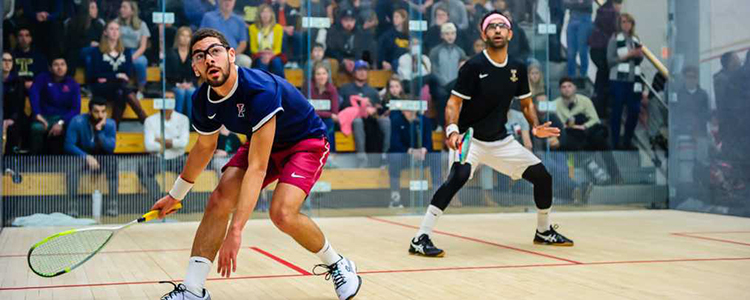
caption: During Penn Squash Camp, Penn’s head coaches helps beginner, intermediate, and elite players develop their game in the University’s brand new, world-class facility.

Penn Squash Camp: Session 1: June 16-19. Session 2: June 22-26. Session 3: July 6-10. Session 4: July 13-17. Session 5: July 21-24. The camp’s purpose is to help beginner, intermediate, and elite players develop their game in Penn's brand new, world-class facility. Campers receive elite-level instruction from Penn’s head coaches. Open to all skill levels, ages 9-18. Fee: $1,150 for day campers, $2,050 for overnight campers. Register: https://www.pennsquashcamp.com/. Deadline TBA

Wilson Collegiate Tennis Camps: Weekly sessions from June 9-August 29. Wilson Collegiate Tennis Camp is the nation’s most popular tennis camp. Hosting close to a thousand campers each summer, the camp has built a reputation for top-flight instruction, fun and well-organized days. Open to children aged 5-18. Fee: $485/week. Register: https://www.wilsontenniscamps.com/penn/.


Honors

Sigal Ben-Porath: National Academy of Education

caption: Sigal Ben-Porath

Penn GSE professor Sigal Ben-Porath has been elected to the National Academy of Education (NAEd). The organization, founded in 1965, is an honorific society of U.S. members and international associates elected based on outstanding education-related scholarship. NAEd’s mission is to advance high-quality education research and its use in policy formulation and practice.

“Professor Ben-Porath’s election to the National Academy of Education is a testament to her groundbreaking scholarship and unwavering dedication to fostering democratic values in education,” said Katharine O. Strunk, dean and the George and Diane Weiss Professor of Education. “Not only is Sigal a brilliant scholar, and well-deserving of this honor, but she is a true citizen of the academy, always willing to share her ideas and expertise with institutions working to become more inclusive and equitable learning environments. We are absolutely thrilled to see Sigal and her contributions recognized at the highest level of the field.”

Dr. Ben-Porath is the MRMJJ Presidential Professor of Education at Penn GSE and has been a faculty member there since 2004. The faculty director of the Stavros Niarchos Foundation Paideia Program, Dr. Ben-Porath holds secondary appointments in the department of philosophy and the department of political science in the School of Arts & Sciences. A world-renowned scholar of democratic theory and practice—especially the role of schools and colleges as democratic institutions and hubs of free speech and civil discourse—her scholarship has focused on how schools and universities can help sustain and advance democracy. Dr. Ben-Porath’s insights on free speech and education have been featured in The New York Times, The Washington Post, and NPR, among others, making her a leader in national conversations about educational policy and civic engagement.

Dr. Ben-Porath joins an esteemed group of Penn GSE scholars who have demonstrated exceptional commitment to advancing educational research and practice and been elected to the academy. This group includes professors Vivian Gadsden, Howard Stevenson, Nancy Hornberger, and Laura Perna; professors emeriti John Fantuzzo and Diana Slaughter-Kotzin; former deans Pam Grossman and Andy Porter; and Penn President Emerita Amy Gutmann, a secondary faculty member of Penn GSE.

Presidential Early Career Award for Scientists and Engineers for Five Penn Faculty Members

Five Penn faculty members are among nearly 400 recipients of the 2024 Presidential Early Career Awards for Scientists and Engineers (PECASE), the highest honor bestowed by the United States government upon science and engineering professionals in the early stages of their independent research careers. The awards are conferred annually at the White House following recommendations from participating federal agencies.

Honorees from Penn are:

  • Allyson Mackey, associate professor of psychology, department of psychology, School of Arts & Sciences
  • Catherine McDonald, Dr. Hildegarde Reynolds Endowed Term Chair of Primary Care Nursing, department of family & community health, School of Nursing
  • Melanie Pellecchia, assistant professor of psychology, department of psychiatry, Perelman School of Medicine, Penn Center for Mental Health
  • Andy Tan, associate professor of communication, Annenberg School for Communication
  • Bo Zhen, Jin K. Lee Presidential Associate Professor, department of physics and astronomy, School of Arts & Sciences

This year’s awardees are employed or funded by 14 participating agencies within the U.S. Departments of Agriculture, Commerce, Defense, Education, Energy, Health and Human Services, Interior, Transportation, and Veterans Affairs and the Environmental Protection Agency, the intelligence community, the National Aeronautics and Space Administration, the National Science Foundation, and the Smithsonian Institution.

Established by President Clinton in 1996, PECASE recognizes scientists and engineers who show exceptional potential for leadership early in their research careers. The award recognizes innovative and far-reaching developments in science and technology, expands awareness of careers in science and engineering, recognizes the scientific missions of participating agencies, enhances connections between research and impacts on society, and highlights the importance of science and technology for the nation’s future.

AT PENN

February AT PENN 2025

The 2025 February AT PENN calendar is now available. Click here to view the calendar, and click here to view a printable PDF.

Events

Update: January AT PENN

Conferences

30        Nuclear Weapons and International Law 2025: Nuclear Risks Through a Legal Lens; 9 a.m.-6:30 p.m.; Zoom webinar; register: https://tinyurl.com/cerl-conf-jan-30 (Center for Ethics & the Rule of Law).


Fitness & Learning

29        ComPITence Project Workshop for Faculty and Graduate Students; learn how to use nine Public Interest Technology learning competencies that have been developed to help teachers create a syllabus, develop assignments and adopt in your curricula; 2 p.m.; Zoom webinar; register: https://tinyurl.com/5N7TYD8B (Paideia Program).

30        Virtual Summer Humanities Internship Program (SHIP) Information Session; learn about a 10-week funded program in which students intern in arts, cultural, or historic organizations throughout Philadelphia; 1 p.m.; Zoom webinar; register: https://tinyurl.com/curf-ship-jan-30 (Center for Undergraduate Research & Fellowships).

            Healing in the Face of Harm: The Future of Racial Equity on College Campuses; an essential conversation bringing together students, alumni, and campus partners to explore the evolving landscape of social justice and racial equity within university spaces; 6 p.m.; room 108, ARCH (Makuu).

31        Spring Career & Internship Fair; enhance your search for full-time postgraduate positions and/or summer internships by taking the opportunity to connect with a variety of employers; 11 a.m.-3 p.m.; Hall of Flags, Houston Hall; register: https://tinyurl.com/career-fair-jan-31 (Career Services).


Penn Libraries

Unless noted, online webinars. Info and to register: https://www.library.upenn.edu/events.

28        Setting Up Your Gradebook; will provide step-by-step guidance on how to set up the Canvas Gradebook; noon; Zoom webinar.

29        LaTeX Reference Management with BibTeX; learn more about formatting academic publications for your thesis or dissertation; 11 a.m.; Research Data and Digital Scholarship Exchange, Van Pelt Library.

30        Computational Thinking & Board Games; see how computer science concepts show up in games like Catan, Ticket to Ride, etc.; 11 a.m.; Research Data and Digital Scholarship Exchange, Van Pelt Library.

31        Studio Use Training: Letterpress Printing; learn and practice the basics of letterpress printing and typesetting; 10 a.m.; Common Press, Fisher Fine Arts Library.


Readings & Signings

Kelly Writers House

In-person events at Arts Café, Kelly Writers House. Info and to register: https://writing.upenn.edu/wh/calendar/0125.php.

28        Muriel Rukeyser's "Waking This Morning"; Jane Malcolm, University of Montreal; Kathy Lou Schultz, University of Memphis; Evie Shockley, poet; noon.

30        Kelly Writers House Prize Presentations; 6 p.m.


Special Events

28        LGBT Center Family Dinner; a delicious free meal and a chance to connect with lots of different folks and meet LGBT Center staff; 5 p.m.; LGBT Center (LGBT Center).

30        Korean Language and Culture Table: Celebrate Korean Seollal; learn about traditional Korean New Year traditions and enjoy Korean food; 5:30 p.m.; suite 310, 3600 Market Street (Korean Studies).


Talks

28        Living Deliberately Through Existential Despair; Justin McDaniel, religious studies; noon; Café 58, Irvine Auditorium (Knowledge By the Slice).

29        Efficient Sharing of AI Infrastructures with Specialized Serverless Computing; Yao Fu, University of Edinburgh; noon; room 414, Amy Gutmann Hall, and Zoom webinar; join: https://upenn.zoom.us/j/95090162762 (SEAS Asset Center).

            Emergence of Inflammatory Fibroblasts in Hermansky-Pudlak Syndrome; Brandon Banaschewski, pulmonary medicine; noon; room 213, Stemmler Hall (Penn-CHOP Lung Biology Institute).

            Toward Spatial Intelligence with Limited Data; Guandao Yang, Stanford University; 3 p.m.; room 307, Levine Hall, and Zoom webinar; join: https://upenn.zoom.us/j/98540261772 (GRASP Lab).

            Decentralized Mechanism Design: Cryptography Meets Game Theory; Elaine Shi, Carnegie Mellon University; 3:30 p.m.; Wu & Chen Auditorium, Levine Hall (Computer & Information Science).

            Engineering Technologies for Enhanced Modeling, Detection, and Treatment of Neurological Disease; Alice Stanton, Massachusetts Institute of Technology; 3:30 p.m.; Wu & Chen Auditorium, Levine Hall (Chemical & Biomolecular Engineering).

            Paul Klee’s Automata; Francesca Ferrari, Metropolitan Museum of Art; 5 p.m.; Arthur Ross Gallery, Fisher Fine Arts Library; register: https://tinyurl.com/ferrari-talk-jan-29 (Arthur Ross Gallery).

            The Cunningham Lecture; Bjarke Ingels, architect; 6:30 p.m.; Plaza Gallery, Meyerson Hall (Architecture).

30        Tuning Nanostructured Materials for Combustion Applications; Kerri-Lee A. Chintersingh, New Jersey Institute of Technology; 10:30 a.m.; Wu & Chen Auditorium, Levine Hall (Materials Science & Engineering).

            Asian American Across the Disciplines; Elise Dudley, Bon Appétit; Shahzad Khan, Penn Dining; noon; room 337, Cohen Hall, and Zoom webinar; register: https://tinyurl.com/asam-talk-jan-30 (Asian American Studies).

            Backlash Against Gender Quotas to Enhance Women’s Political Representation in South Korea; Ki-young Shin, Ochanomizu University; noon; suite 310, 3600 Market Street (Korean Studies).

            Death in Custody: How America Ignores the Truth and What We Can Do About It; Jay Aronson, Carnegie Mellon University; noon; room 240A, Silverman Hall (Criminology).

            Opportunities and Challenges in Bridging Orthodontic Education and Innovation – Optimized Teaching for Personalized Care; Chenshuang (Monica) Li, Penn Dental Medicine; noon; room LL20A, Evans Building, and Zoom webinar; register: https://tinyurl.com/li-talk-jan-30 (Penn Dental Medicine).

            Assumption-Lean (Causal) Modeling; Stijn Vansteelandt, Ghent University; 1 p.m.; room 701, Blockley Hall, and Zoom webinar; join: https://tinyurl.com/vansteelandt-talk-jan-30 (Biostatistics, Epidemiology & Informatics).

31        Learn Your History: Ballroom, Femme Queen Performance, and Appropriation Today; Niambi Stanley and Eva Pensis, ballroom scholars and performers; 5:30 p.m.; Public Trust, 4017 Walnut Street; register: https://publictrust.org/learn-your-history (Public Trust).


Biology

Hybrid events at room 109, Leidy Laboratory, and Zoom webinar. Info: https://www.bio.upenn.edu/events.

30        Exploring Evolutionary Novelty in Human-Altered Landscapes: Mechanisms of Survival and Persistence Under Global Change; Anthony Snead, New York University; noon.


Chemistry

In-person events at Carolyn Hoff Lynch Lecture Hall, Chemistry 1973 Building. Info: https://www.chem.upenn.edu/events.

29        Building Molecular Complexity Through Visible Light Photocatalysis: Spotlight on Undergraduate Research; Emily McLaughlin, Bard College; noon.

31        Exploring and Repurposing Nature’s Molecular Machinery for Applications in Chemistry and Biology; Kai Chen, University of California, Berkeley; 10:30 a.m.


Economics

In-person events. Info: https://economics.sas.upenn.edu/events.

30        Semiparametric Bayesian Inference for a Conditional Moment Equality Model; Christopher D. Walker, Harvard University; 4 p.m.; room 100, PCPSE.


Microbiology

In-person events at Austrian Auditorium, CRB. Info: https://www.med.upenn.edu/micro/seminars-and-events.html.

29        Importance of Commensal Fungi to Group B Streptococcal Vaginal Colonization; Kelly Doran, University of Colorado; noon.


Physics & Astronomy

Info: https://www.physics.upenn.edu/events/.

29        Cellular Collective Behavior in Spatially Complex Environments; 3:30 p.m.; room A8, DRL.


This is an update to the January AT PENN calendar. To submit events for an upcoming AT PENN calendar or weekly update, email almanac@upenn.edu.

Crimes

Weekly Crime Reports

Division of Public Safety

University of Pennsylvania Police Department Crime Report

About the Crime Report: Below are the Crimes Against Persons and/or Crimes Against Property from the campus report for January 13-19, 2025. The Crime Reports are available at: https://almanac.upenn.edu/sections/crimes. Prior weeks’ reports are also online. –Eds.

This summary is prepared by the Division of Public Safety (DPS) and contains all criminal incidents reported and made known to the Penn Police, including those reported to the Philadelphia Police Department (PPD) that occurred within our patrol zone, for the dates of January 13-19, 2025. The Penn Police actively patrol from Market Street to Baltimore Avenue and from 30th Street to 43rd Street in conjunction with the Philadelphia Police.

In this effort to provide you with a thorough and accurate report on public safety concerns, we hope that your increased awareness will lessen the opportunity for crime. For any concerns or suggestions regarding this report, please call DPS at (215) 898-7297. You may view the daily crime log on the DPS website.


Penn Police Patrol Zone

Market Street to Baltimore Avenue and from 30th Street to 43rd Street

Crime Category

Date

Time

Location

Description

Auto Theft

01/13/25

4:45 PM

240 S 40th St

Secured scooter taken from bike rack


01/15/25

4:46 PM

3400 Sansom St

Secured scooter taken from bike rack/Arrest


01/16/25

1:17 PM

209 S 33rd St

Secured scooter taken from bike rack


01/16/25

6:02 PM

3300 Market St

Theft of a secured electric scooter


01/16/25

6:18 PM

3600 Civic Center Blvd

Theft of a secured scooter from bike rack


01/17/25

12:58 PM

210 S 34th St

Bait bike scooter theft; scooter recovered/Arrest

Bike Theft

01/18/25

1:03 AM

3565 Sansom St

Theft of an unsecured MERT bicycle from highway

Burglary

01/17/25

12:08 PM

4200 Ludlow St

Burglary of an unsecured apartment

Fraud

01/17/25

4:23 PM

3408 Sansom St

Complainant reported that a group of patrons left without paying their bar tab

Purse Snatch

01/13/25

10:12 AM

4000 Market St

Complainant reported that an unknown offender took her purse and fled the area

Retail Theft

01/13/25

8:25 AM

3330 Market St

Retail theft of candy products


01/13/25

8:45 AM

3330 Market St

Retail theft of assorted candy/Arrest


01/14/25

1:21 PM

3330 Market St

Retail theft of candy and other consumables


01/15/25

1:58 PM

3330 Market St

Report of a retail theft


01/17/25

9:52 AM

4233 Chestnut St

Retail theft of alcohol


01/18/25

4:50 PM

3604 Chestnut St

Retail theft of candy and cigarettes

Sex Offense

01/19/25

1:07 AM

Confidential

Confidential

Theft from Building

01/15/25

1:35 PM

3800 Locust Walk

Package delivered to location taken


01/17/25

8:04 PM

3601 Market St

Theft of a jacket and wallet from location


01/18/25

2:24 PM

4042-4044 Chestnut St

Packages taken from common area

Theft from Vehicle

01/14/25

3:25 PM

3400 Civic Center Blvd

Wallet taken from vehicle


01/17/25

1:42 PM

3900 Spruce St

Theft of power tools from vehicle parked on highway

Theft Other

01/14/25

8:31 AM

4213 Pine St

Package taken from location


01/16/25

9:51 AM

15 S 33rd St

Theft of extension cords from parking lot


Philadelphia Police 18th District

Schuylkill River to 49th Street & Market Street to Woodland Avenue

Below are the Crimes Against Persons from the 18th District: 6 incidents were reported for January 13-19, 2025 by the 18th District, covering the Schuylkill River to 49th Street & Market Street to Woodland Avenue.

Crime Category

Date

Time

Location

Assault

01/16/25

1:59 AM

3401 Civic Center Blvd


01/17/25

5:50 PM

3609 Chestnut St

The Division of Public Safety offers resources and support to the Penn community. DPS developed a few helpful risk reduction strategies outlined below. Know that it is never the fault of the person impacted (victim/survivor) by crime.

  • See something concerning? Connect with Penn Public Safety 24/7 at (215) -573-3333.
  • Worried about a friend’s or colleague’s mental or physical health? Get 24/7 connection to appropriate resources at (215) 898-HELP (4357).
  • Seeking support after experiencing a crime? Call Special Services - Support and Advocacy resources at (215) 898-4481 or email an advocate at specialservices@publicsafety.upenn.edu
  • Use the Walking Escort and Riding services available to you free of charge.
  • Take a moment to update your cellphone information for the UPennAlert Emergency Notification System
  • Download the Penn Guardian App which can help Police better find your location when you call in an emergency.
  • Access free self-empowerment and defense courses through Penn DPS.
  • Stay alert and reduce distractions; using cellphones, ear buds, etc. may limit your awareness.
  • Orient yourself to your surroundings. (Identify your location, nearby exits, etc.)
  • Keep your valuables out of sight and only carry necessary documents.


Bulletins

One Step Ahead: Be Mindful When Using Social Media: Protect Penn and Yourself!

Another tip in a series provided by the Offices of Information Security, Information Systems & Computing and Audit, Compliance & Privacy

One Step Ahead Security and Privacy Made Simple logo

As individuals increasingly turn to social media for information, entertainment, and to connect with others, it is important to be mindful of maintaining safe and respectful environments for Penn employees, staff, faculty, students, and alumni to engage and share information within the social media space.  

When managing official Penn accounts or engaging with social media platforms, avoid sharing sensitive personal or proprietary information. Ensure that you follow institutional guidelines for protecting Penn’s intellectual property and comply with relevant data privacy laws, such as the Family Educational Rights and Privacy Act (FERPA). We encourage you to familiarize yourself with the University’s updated Guidelines for the Use of Social Media at Penn, which discusses social media account management, and social media in the context of teaching, research, hiring, personal safety, website tracking, and policy compliance. By keeping in mind these best practices, you can help protect both yourself and others. 

Guidelines for the Use of Social Media at Penn: https://almanac.upenn.edu/articles/from-penns-offices-of-audit-compliance-and-privacy-information-systems-computing-and-university-communications-guidelines-for-the-use-of-social-media-at-penn

Family Education Rights and Privacy Act (FERPA) resources: https://oacp.upenn.edu/privacy/penndata/appropriate-use-of-penn-data/ferpa/

--

For additional tips, see the One Step Ahead link on the Information Security website:  https://www.isc.upenn.edu/security/news-alerts#One-Step-Ahead

Opportunity for Faculty: Paid Student Support to Integrate Sustainability into your Coursework

The Integrating Sustainability Across the Curriculum (ISAC) Program helps course instructors at Penn introduce environmental sustainability into new and existing courses. The program, run by the Environmental Innovations Initiative with support from the Penn Sustainability Office, provides full funding for graduate or undergraduate summer research assistants, who work directly with faculty and lecturers to update or create new syllabi, lectures, assignments, texts, and/or tests that incorporate environmental themes. 

The 2025 ISAC program offers support for instructors to incorporate sustainability into a new or existing course scheduled for the 2025-2026 academic year by fully funding a paid undergraduate or graduate research assistant for the academic summer term (May 27 to August 8). 

Research assistants will be selected in March and matched with instructors based on experience, knowledge, and interests. Students will work both independently and with faculty for the duration of the program. Each student devotes 15 hours a week to two different faculty or lecturers, for a total of 30 working hours a week. Research assistants’ responsibilities can include updating course material, developing new teaching methods, evaluating current course topics, and/or reviewing new assignments. 

Faculty and Lecturers: To apply, submit a one-page proposal that includes: 

  • Description of the existing or new course 
  • Purpose for integrating sustainability in an existing or new course 
  • Brief work plan for student research assistant 

Proposals should be submitted by Wednesday, January 29, 2025 to contact@environment.upenn.edu, using the email subject, “ISAC Faculty Proposal 2025”.

Talk About Teaching & Learning

Where Did They Go? Bringing Students Back Into the Classroom

Elizabeth Woodward

Attracting students to come to class has been a challenge in recent years, especially in our post-pandemic world. Attendance at lectures is frequently low, and many faculty feel strongly that students should be in class. This essay explores some reasons for absenteeism and approaches that have worked for me in the classroom.

First, I ask: Why aren’t students coming to class? Low attendance is multifactorial, but one main driver is that most lectures in the modern classroom are recorded. Recordings are incredibly valuable for students who are sick or for students wishing to review difficult topics, but videos are a double-edged sword when it comes to attendance, as they enable students to stay home. Is this what we want? Is the benefit worth the disadvantage? Each instructor may have a different response to this question. In my classroom, I limit the nature of what is recorded. Didactic lectures are recorded, but active learning and review sessions are not. Attending these activities in person is most beneficial, and I see little reason to record them.

Students tell me that they are trying to manage their time to increase efficiency. They state that in the face of information overload, it is sometimes easier to learn from home, watching lectures at 1.5x speed, or during times of the day when they feel most able to absorb information. With that, the academic load should be reasonable. With the ever-increasing amount of available knowledge, it can be difficult to determine which topics to cut. One review summarizes the importance of finding an appropriate workload to encourage deep learning. When deciding what content to present, I recall which points were most helpful for me when I was first learning the material and which didn’t add to my understanding. This is not to say that these extras are irrelevant, but that they may be more appropriate for the learner who has mastered a basic level of understanding. For example, when teaching reproductive physiology, I could go down many (exciting!) rabbit holes in the classroom. However, overindulging in these can overwhelm and confuse students, given their level of mastery at that time. 

In my lectures, I consult with clinicians and other experts in the field as I develop content, adding clinical context to help concepts “stick.” As they learn, I help students connect across topics to easily chunk material. I like to think that with a challenging yet manageable workload, students may be more inclined to come to class. 

Another commonly reported reason for not coming to class is that lectures are not engaging in a way that requires in-person attendance. To address this, I have adjusted how I interact with students in the classroom, moving beyond strictly didactic lectures. I make time to engage with students to solidify difficult concepts. Even pausing a few times mid-lecture to ask students to answer a few questions energizes them. Doing this does not drastically stray from the traditional lecture format or require making a new lesson plan.

Activities can be more developed, requiring group work. For example, I lecture on how electrical impulses are initiated and transmitted through the heart when teaching cardiac physiology. Students learn the basics of an electrocardiogram (ECG) and what each wave represents. I then move into the active learning component of the lecture and define some deviations from normal (tachycardia, bradycardia, and heart blocks). Up to this point, they have no understanding of the diseased heart, and that is what I want: a blank slate so they can exercise their critical thinking of normal mechanisms. I ask them to draw what they think the ECG might look like for each individual with the defined conditions. We discuss. This activity takes 15-20 minutes, engages students in class, and helps me identify their misunderstandings.

Second, I ask: Why do we want students to come to class? Understanding our own “whys” is important. Colleagues have shared with me that they feel students learn better when in the classroom, benefiting from the ability to ask questions during lectures, hear their peers’ questions, and catch important details discussed in class. However, this assumption may also carry with it that if a student does not attend class, that student is also not watching the lecture. In my experience, this is largely inaccurate, and students do watch the recordings. Many studies report a positive correlation between attendance and performance, while others do not.  

Also, how much of my desire for a full classroom is for my own gratification? Given the immense amount of energy and time that creating a good lecture requires, it is disheartening when a fraction of the class attends. However, absent students listen to our lectures and pour over our slide sets, albeit remotely. One survey investigating reasons for low attendance found that students heavily relied on recorded lectures and course materials. Does knowing that help us feel less underappreciated as instructors? 

One option is to require attendance. This approach is not my preference. It artificially buffers grades; being in the classroom does not equate to paying attention or putting forth effort. Further, it does not address the reasons for missing class, which I feel is a more prudent approach to take. Our students are adults and should be permitted the autonomy to decide what to do with their time. 

Instead, I see attendance as a reflection of my abilities. Am I engaging? Is the material presented in an interesting and inspiring way? Am I delivering the right amount of material, or are they so overwhelmed that they stay home? If attendance is low, I see it as a personal challenge to improve my skills, and I am motivated to create an experience where students feel that showing up is the best use of their time. 

In closing, the issue of poor attendance is a hot one. It is no longer enough to give a traditional didactic lecture and expect a full house when lectures are recorded.  Open communication is important to understand the student experience and the reasons for absenteeism. We would benefit from exploring our motivations for wanting students in class. Once we understand those things, we can create materials and teaching approaches that entice students through the door. Finally, we ought to let go of any angst for the students who don’t come to class, so as to be fully present for the ones who do show up. Have a wonderful and engaging year!

--

Elizabeth Woodward is a clinical associate professor in the School of Veterinary Medicine. She won the Zoetis Distinguished Teacher Award in 2022.

This essay continues the series that began in the fall of 1994 as the joint creation of the College of Arts and Sciences, the Center for Teaching and Learning and the Lindback Society for Distinguished Teaching. 

See https://almanac.upenn.edu/talk-about-teaching-and-learning-archive for previous essays.

Back to Top