Penn Medicine Researchers: Nearly $10 Million NIH Grant to Study Environmental Impact on Health in Black Neighborhoods in Philadelphia

 In an unprecedented effort to address the harmful effects of structural racism on health, 60 predominantly Black neighborhoods in Philadelphia will be part of an ambitious study to assess the impact of a multi-component intervention addressing both environmental and economic injustice on health and well-being, led by Penn Medicine researchers Eugenia South and Atheendar Venkataramani.
At the community level, the study includes tree planting, vacant lot greening, trash cleanup, and rehabilitation of dilapidated, abandoned houses. For households, the study will help connect participants to local, state, and federal social and economic benefits, including food, unemployment, and prescription drug assistance, provide financial counseling and tax preparation services, and offer emergency cash assistance.
This randomized controlled trial (RCT) is funded by a nearly $10 million grant from the National Institutes of Health (NIH), awarded to researchers at the Perelman School of Medicine at the University of Pennsylvania through the NIH Common Fund’s Transformative Research to Address Health Disparities and Advance Health Equity initiative. Through this initiative, the NIH has announced 11 grants totaling $58 million over five years for highly innovative health disparities research across the U.S.
“Previous efforts to reduce racial health disparities have been less impactful than we would like because they often only address a small number of the many mechanisms by which structural racism harms health,” said Atheendar Venkataramani, assistant professor of medical ethics and health policy and director of the Opportunity for Health Lab. “Our multi-component intervention is designed to address these multiple mechanisms all at once.”
Recent research illustrates that the roots of poor health in Black neighborhoods are structural, resulting from decades of disinvestment and neglect. The impacts of structural racism are evident from neighborhood-level factors such as crumbling houses, lack of green space, trash build-up, and declining economic opportunity. The impact on the health of individuals living in those communities is profound and includes increased rates of depression, post-traumatic stress disorder, and heart disease compared to their white counterparts.
The researchers also aim to make it easier for individuals to navigate the process of determining their eligibility and getting help from multiple providers through development of a platform that makes collaboration between community financial service agencies simpler and more efficient. Community partners, including the Pennsylvania Horticultural Society, Campaign for Working Families, Benefits Data Trust, and Clarifi will implement the interventions.
“Black communities are centered in this proposal,” said Eugenia South, assistant professor of emergency medicine and the faculty director of the Penn Urban Health Lab. “Collectively, our team has spent a significant amount of time talking and working with leaders and community groups in Black Philadelphia neighborhoods and with this study we are committed to being responsive to the economic and environmental needs they have identified. We will also be hiring four full-time community members to the Penn Medicine team to advise on the entire process and lead recruitment.”
The researchers will enroll 720 predominantly Black adults across the 60 study neighborhoods, half of whom will receive the proposed interventions. The study will meet participants where they are via door-to-door recruitment, rather than relying on clinic referrals or responses to flyers, which may exclude the most vulnerable adults. Investigators will use standardized surveys to evaluate the overall health and well-being of participants at multiple times over the course of the trial. They will also evaluate the impact on violent crime.
The overall goal is to show that deeply entrenched racial health disparities can be closed by concentrated investment in Black neighborhoods. Researchers are hopeful that their interventions will be successful in improving the health not just of participants in the study, but other members of the household and of the whole community. The findings of this bold project could serve as evidence to policymakers that these sweeping, “big push” interventions work and should be implemented broadly.
Shelley Welton: Presidential Distinguished Professor of Law and Energy Policy
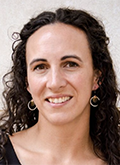 Shelley Welton has accepted an appointment at the University of Pennsylvania as a Presidential Distinguished Professor of Law and Energy Policy. From decarbonization in a democracy to clean energy justice, Dr. Welton’s legal research focuses on how climate change is transforming energy and environmental law.
Dr. Welton’s faculty appointment is at Penn Carey Law, where she will hold an affiliation with the Kleinman Center for Energy Policy in the Weitzman School as part of President Amy Gutmann’s 2019 commitment to building a multidisciplinary energy policy faculty affiliated with the Kleinman Center.
“I’m thrilled and honored to be joining Penn Carey Law and the Kleinman Center. I look forward to collaborating across the University to enhance Penn’s leadership in climate and energy scholarship, policymaking, and education,” said Dr. Welton.
Dr. Welton will start her tenure at Penn in the fall of 2022. This year, she is already connecting with Penn faculty and students by participating in law school seminars; she will also serve in the spring as a Kleinman Center visiting scholar. Starting next fall, she will teach environmental law and host an advanced climate and energy seminar at Penn Carey Law in addition to her Energy and Climate course at the Kleinman Center.
“In her work, Shelley explores the relationship of law to real-world environmental challenges and imagines meaningful solutions,” said Fritz Steiner, Dean and Paley Professor at Weitzman.
Dr. Welton will be the second faculty research appointment at the Kleinman Center, following the 2020 hiring of carbon capture expert Jennifer Wilcox (Almanac September 15, 2020), who is now on leave at the Department of Energy. Both appointments are possible due to an anonymous $30 million gift to the Kleinman Center in 2019, as well as generous University support.
Dr. Welton comes to Penn from the University of South Carolina School of Law, where she has taught administrative law, energy law, environmental law and policy, and climate change law. Her scholarship has appeared in publications like the California Law Review, Columbia Law Review, and Harvard Environmental Law Review. Before entering academia, Dr. Welton worked as the deputy director of Columbia Law School’s Sabin Center for Climate Change Law. She also was a clerk for Judge David Trager of the Eastern District of New York and Judge Allyson Duncan of the Fourth Circuit.
Perry World House: $500,000 Grant to Connect Academic and Policy Communities
Perry World House, the University of Pennsylvania’s international affairs hub, has been awarded a new grant from Carnegie Corporation of New York. The $500,000 grant will support Perry World House’s efforts to connect Penn’s research and expertise with the global policy community as the world recovers from the COVID-19 pandemic.
“This Carnegie grant affirms Perry World House’s mission to make a tangible impact on the world’s most urgent shared challenges,” said Penn Interim Provost Beth A. Winkelstein. “As we continue to emerge from the pandemic, the grant will enable Penn scholars to work together with global leaders and policymakers to help shape the future of our changing world.”
Since 2017, two other major grants from Carnegie Corporation of New York have helped Perry World House to inform policy debates and shape academic research agendas on the world’s biggest challenges. The most recent grant, awarded in fall 2019, supported policy and academic convenings on how COVID-19 affected global mobility; the dynamics shaping the future of transatlantic security; and how the United Nations can tackle the twin challenges of a pandemic and great power competition, among others. The grant also underpinned Perry World House funding for Penn faculty, helping them to transform their teaching and make it more relevant to global policy.
“We are delighted to renew our partnership with Carnegie Corporation of New York this fall,” said Perry World House Director and Richard Perry Professor Michael C. Horowitz. “In the past four years, their support, expertise, and faith in our work have been essential in building and strengthening bridges between Penn and the policy community, and this grant will support yet more new workshops, new teaching, and new ideas.”
In addition to hosting new workshops and supporting additional course development, Perry World House will use the grant to emphasize evolving issue areas where there is the greatest need for the academic and policy worlds to connect, which may include trust in emerging technologies and global security, questions surrounding climate governance, and examining how systemic racism impacts U.S. foreign policy. Drawing on lessons learned from the first two grants, especially the experience of remote operations during the COVID-19 pandemic, Perry World House will also experiment with new formats for workshops, continue to expand participation in its programs from the Global South, and engage directly with government officials in the United States and beyond.
Alonso Carrasco-Labra: Faculty Appointment at Penn Dental Medicine
 Building upon the scope and depth of the school’s academics and scholarship, Penn Dental Medicine welcomes Alonso Carrasco-Labra to its faculty. A leading authority in evidence-based health care, Dr. Carrasco-Labra joined the school on October 25. He was appointed an associate professor on the tenure track in the department of preventive & restorative sciences pending approval by the school’s personnel committees and the Provost’s Office.
“We are tremendously pleased to have Dr. Carrasco-Labra with us,” said Penn Dental Medicine’s Morton Amsterdam Dean, Mark S. Wolff. “He is one of the top global experts in evidence-based dentistry and evidence-informed health policy and will contribute greatly to expanding our leadership in these areas.”
Dr. Carrasco-Labra comes to Penn Dental Medicine from the American Dental Association (ADA), where he served as senior director of the department of evidence synthesis and translation research within the ADA Science and Research Institute. Before that role, he was the director of ADA’s Center for Evidence-Based Dentistry.
He earned his DDS from the University of Chile and completed his PhD in health research methodology and a master’s in clinical epidemiology from McMaster University in Canada. Dr. Carrasco-Labra has an extensive portfolio as a widely published author, invited lecturer, and national and international consultant. He has served as clinical practice guideline and policy methodologist for the Pan-American Health Organization/World Health Organization (PAHO), the World Bank, the U.S. Food and Drug Administration (FDA), the American Gastroenterological Association (AGA), as well as the governments and health care agencies in Saudi Arabia, Spain, Dominican Republic, the U.K., Canada, Colombia, Chile, and other ministries of health worldwide. For many years, Dr. Carrasco-Labra has also been active in Cochrane, an independent global organization internationally recognized as the benchmark for high-quality information about the effectiveness of health care. Presently, he serves on Cochrane’s Oral Health Group, the Wounds Group, the Patient Reported Outcome Methods Group, and the GRADEing Group.
In the realm of research, Dr. Carrasco-Labra is currently principal investigator of an FDA-funded grant titled “Evidence-Based Clinical Practice Guideline for the Management of Acute Dental Pain: Development, Implementation, and Evaluation Using Data Analytics to Target an Implementation Strategy.” Over his career, he has held faculty appointments and has been a visiting scholar at the Faculty of Dentistry, University of Chile; the Faculty of Dentistry, University of Toronto; the School of Dental Medicine, University of Buffalo; and the School of Dentistry, University of North Carolina at Chapel Hill.
At Penn Dental Medicine, Dr. Carrasco-Labra will work as part of the school’s new Center for Integrative Global Oral Health (CIGOH), which launched earlier this year (Almanac August 10, 2021).
University of Pennsylvania Libraries Receives Major Gift of Photographic Plates by Edward S. Curtis
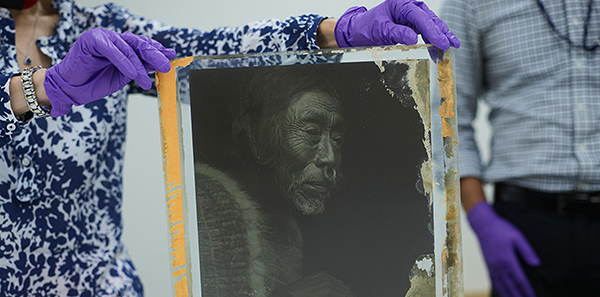
The University of Pennsylvania Libraries has received a rare collection of 151 interpositive glass plates by photographer Edward S. Curtis (1868–1952) from collector William H. Miller III. Appraised at $4.2 million, this gift to the Penn Libraries complements holdings across the University, making Penn a major center for research and work on Mr. Curtis, who was one of the most prolific American photographers of the late 19th and early 20th centuries.
Mr. Curtis photographed Native Americans from more than 80 tribes over three decades. Selecting from among the 40,000 photographs he took, he produced a 20-volume work titled The North American Indian, published between 1907 and 1930.
“The Penn Libraries has made it a strategic priority to build, preserve, and steward collections with a focus on education, access, and resource-sharing,” said Constantia Constantinou, H. Carton Rogers III Vice Provost and Director of Libraries. “It is an honor to receive this gift, which significantly expands our collections in the history of photography.”
Mr. Curtis used a photogravure process in which interpositive glass plates represent a key moment between capture and a final printed image. Every 14 x 17 glass negative that Mr. Curtis prepared was printed again as a glass positive before the image was moved onto a copperplate for etching. The vast majority of the interpositive glass plates that Mr. Curtis had produced were destroyed. The collection of 151 plates received by the Penn Libraries is the largest group known to have survived and contains details lost in the printing process.
Mr. Miller made the gift to the Penn Libraries based on guidance from Stephan Loewenthiel, founder and president of the 19th Century Rare Book and Photograph Shop and a member of the Penn Libraries Board of Advisors.
"The use of glass plates by the great 19th century photographers, including Edward Curtis, required a cumbersome and time-consuming process involving heavy equipment, delicate glass plates, volatile chemicals and great artistic ability to make each photograph successful,” said Loewenthiel. “The Penn Libraries, in conjunction with the Penn Museum, will allow this process and resulting masterworks to be exhibited and studied, allowing for both wide public exposure and study by experts, students and the interested public."
Scholars have noted that Mr. Curtis removed aspects of modernity, such as alarm clocks, from the final prints he made, and that many of his images are highly stylized. Mr. Curtis often posed the people he photographed for his North American Indian volumes dressed in traditional clothing.
“Edward S. Curtis’s photographs raise complex issues of representation of Native American peoples in both the past and the present” said Christopher Woods, Williams Director of the Penn Museum. “This gift to the Penn Libraries complements the Penn Museum’s existing Curtis collection. Through interdisciplinary collaboration at the University and beyond, we can create meaningful opportunities to expand teaching and research in conversation with today’s living Native American photographers, scholars, artists, students, and community members.”
The Penn Museum’s link to Mr. Curtis dates back to 1912, when he first exhibited his photographs there. The Museum Archives includes among its holdings 66 platinum prints signed by Mr. Curtis and 109 photogravures. The Museum Library has a nearly complete set of the original edition of The North American Indian. It is missing volumes one and four among its 20 volumes of text and portfolio—12 among the accompanying 20 volumes of portfolio plates.
The collection of interpositive glass plates from Mr. Miller also complements growing photographic collections held by the Penn Libraries’ Kislak Center for Special Collections, Rare Books, and Manuscripts, which include recent gifts by Arthur Tress and Laurence Salzmann. The Curtis plates will join foundational collections in the history of photography, such as the Eadweard Muybridge Collection, and collections focused on Native American cultures and histories, such as the Berendt-Brinton Linguistic Collection and the Brinton Library; the Robert Dechert Collection; and the Caroline Schimmel Collection. Related materials across the University include Muybridge collections at the University of Pennsylvania Archives, two Curtis photographs in the Penn Art Collection, and other collections of Curtis materials at the Penn Museum Archives.
Curators in the Penn Libraries and in the Penn Museum will work together to study, interpret, and introduce audiences to these works, and to understand their significance alongside other objects, artifacts, images, and books.
“Teaching with collections and making them accessible to researchers is central to our work,” said Sean Quimby, Associate University Librarian and Director of the Kislak Center. “The staff of the Kislak Center are developing a plan to catalog, preserve, and provide access to the glass plates in the classroom, exhibition galleries, and online. We look forward to partnering with colleagues at Penn to steward this collection.”
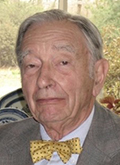 Robert Elder Forster II, M’43, an emeritus professor of physiology in the Perelman School of Medicine, passed away on September 19, 2021. He was 101.
 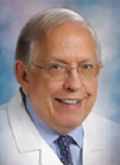 Michael Byron Simson, the Samuel Bellet Associate Professor in the department of cardiology in internal medicine at the Perelman School of Medicine, passed away on September 14. He was 77.
  The Division of Public Safety is committed to enhancing the quality of life for the campus community by integrating the best practices of public and private policing with state-of-the-art technology. A critical component of a comprehensive security plan using state-of-the-art technology is Closed Circuit Television (CCTV).
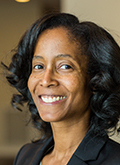






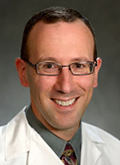

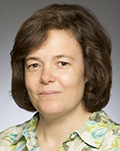 Chemistry’s Zahra Fakhraai and Marisa Kozlowski will be honored by the American Chemical Society, one of the world’s largest scientific organizations with more than 155,000 members in 150 countries.