News

Frederick Steiner: Term as Dean of Weitzman School of Design Extended

caption: Frederick SteinerFrederick “Fritz” Steiner’s term as dean of the Stuart Weitzman School of Design at the University of Pennsylvania has been extended two years to June 30, 2025. The announcement was made on October 18, 2021 by Penn President Amy Gutmann and Interim Provost Beth A. Winkelstein.

“As we continue to chart our recovery from the global COVID-19 pandemic,” President Gutmann said, “we are especially pleased to recognize Dean Steiner’s many impressive achievements. Thanks to his strong, far-sighted leadership and collaborative approach, the Weitzman School of Design is perfectly aligned with our Penn Compact vision and is more inclusive, innovative, and impactful than at any point in its history.” 

Under Dean Steiner’s leadership, the Weitzman School’s achievements have been significant. The school was renamed in honor of award-winning designer and Wharton School alumnus Stuart Weitzman, who was recognized for his ongoing philanthropic support of the University and the Weitzman School and his extensive and ongoing engagement in the Weitzman School. Also, significant and ongoing increases in financial support for students have been a hallmark of Dean Steiner’s first term, including support from Mr. Weitzman, the Moelis Scholars Program, the Witte-Sakamoto Family Medal and Prize in City and Regional Planning, the Kanter Tritsch Medal and Prize in Architecture, and the Julian Abele Fellowship in Architecture. These investments in financial aid have enabled the Weitzman School to attract more top students in all departments and have greatly increased its student body diversity.  

The faculty has been strengthened with the appointment of Lynn Meskell, a Penn Integrates Knowledge University Professor who has an appointment in the Weitzman School, as well as with significant growth in faculty and postdoctoral fellows from backgrounds underrepresented in the design professions and the fine arts.  

The Weitzman School’s facilities have also seen considerable progress under Dean Steiner’s leadership, with a new Advanced Research & Innovation (ARI) robotics laboratory and new homes for the Center for Architectural Conservation, the Integrated Product Design program, and new studio spaces for architecture and city and regional planning students. Research facilities have also been created and expanded, including ARI, the Kleinman Center for Energy Policy, the Center for Safe Mobility, the Center for the Preservation of Civil Rights Sites, and the Ian L. McHarg Center for Urbanism and Ecology.

“We are confident that, with Dean Steiner’s continued leadership, the Weitzman School of Design will maintain its historic and abiding commitment to creating positive change in Philadelphia and around our nation and the world,” Interim Provost Winkelstein said. “The years to come will present both opportunities and challenges, and we are confident that Dean Steiner is the right person to lead the Weitzman School community in responding to them.”  

Brighid Dwyer: Inaugural Vice Dean for Diversity, Equity, and Inclusion in the School of Arts and Sciences

caption: Brighid DwyerSteven J. Fluharty, School of Arts and Sciences Dean and Thomas S. Gates, Jr. Professor of Psychology, Pharmacology, and Neuroscience, has announced that Brighid Dwyer will serve as the inaugural Vice Dean for Diversity, Equity, and Inclusion in the School of Arts and Sciences, effective December 6, 2021. She comes to Penn from Princeton University, where she has served as Associate Dean for Diversity and Inclusion in the Office of the Vice President for Campus Life since 2018.

“The depth of Brighid’s experience makes her an outstanding leader, partner, and guide for our community as we continue to work together to advance diversity, equity, and inclusion in our school,” said Dean Fluharty. In this new role, Dr. Dwyer will provide leadership in pursuit of the school’s core commitments to achieving and maintaining excellence through diversity, including those articulated in the SAS Inclusion and Anti-Racism Initiatives published last year. She and the new Office of Diversity, Equity, and Inclusion that she is charged with establishing will serve the entire school community, including faculty, students, postdoctoral fellows, and staff.

“I am thrilled to join the Penn community to support and strengthen the great work already underway. This is a really exciting time to join Penn, as the University and school deepen commitments to diversity, equity, and inclusion,” said Dr. Dwyer. “I look forward to learning from my colleagues and creating meaningful partnerships that will positively shape the experiences of students, faculty, staff, and postdoctoral fellows. I am so excited to become a part of this community.”

Dr. Dwyer brings to Penn twenty years of experience as a practitioner, scholar, and teacher addressing issues of equity in higher education. At Princeton, she has worked with a wide range of campus partners to develop and implement strategies and programs that promote an inclusive community. She developed a variety of special curricula and workshops primarily for students, to enhance their learning and capacity to engage in thoughtful dialogue on issues of diversity, equity, and inclusion, as well as programming to deepen diversity competencies tailored for faculty, students, and staff. She also supervised Princeton’s Women’s Center and LGBT Center. Before coming to Princeton, Dr. Dwyer served at Villanova University, where she was director of the Program on Intergroup Relations and assistant director of the Center for Multicultural Affairs.

Since 2018, Dr. Dwyer has also served as a faculty affiliate and curriculum developer at the Race and Equity Center and Equity Institutes at the University of Southern California. At Villanova, she was an assistant professor in the departments of education and counseling and communication and an adjunct faculty member in those departments and the Center for Peace and Justice Education and College of Professional Studies. She has also taught at Delaware County Community College in the public service and social science divisions.  

Dr. Dwyer is Vice Chair of the Board of Directors of the Difficult Dialogues National Resource Center. She received her undergraduate degree in sociology from UCLA and a Ph.D. from the Center for the Study of Higher and Postsecondary Education at the University of Michigan. 

Weingarten Center: $2.6 Million Gift from the Moh Foundation
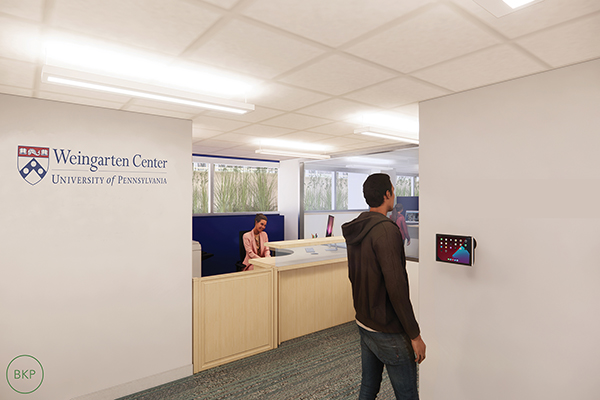
caption: Architectural rendering of the entrance to the testing center, which will be located in the Biotech Commons building.On October 19, 2021, the University of Pennsylvania announced a $2.6 million gift from the Moh Foundation that will be used to enhance academic support, disability services, and tutoring at the Weingarten Center.

The Moh Foundation Integrated Learning Care Initiative gift will directly impact Penn students by providing support for innovative, cross-campus collaborations; state-of-the-art space for accommodations and learning; and reimagined services that benefit every student on campus. 

“This gift is reflective of the Moh Foundation’s deep awareness of the greatest needs of our students,” said Mamta Accapadi, Penn’s Vice Provost for University Life. “Peggy Moh’s mentorship and advocacy, along with the generosity of the Moh Foundation, are great acts of love in service of justice and tenderness for Penn students.” 

This landmark gift from the Moh Foundation will provide new resources that will enable the Weingarten Center to better support the academic experience of every Penn scholar, especially those with unique learning needs. 

“With a shared interest in promoting equity and inclusion, our foundation was committed to funding Penn’s most urgent priorities around accessibility and support services for students with disabilities,” said Peggy Moh, PAR’20 ‘22, president of the Moh Foundation, and member of the Weingarten Center Advisory Board. “By providing resources for programmatic experimentation, new technology and capital enhancements, we hoped to help solidify the center’s position as the leader of student support services in the country.”

A new testing center is scheduled to open in the fall of 2022 in Penn Libraries’ Biotech Commons. The space will provide an accessible, quiet exam site for students requiring testing accommodations. Previously, students who needed extra time, specific lighting, or other exam requirements used assigned spaces scattered across Penn’s campus. With this centralized testing location, a wide variety of accommodations will be offered in one space including services for students with visual and/or audial impairments. “This is a truly transformative gift,” said Jane Holahan, executive director of the Weingarten Center. “We are destigmatizing disability and empowering all of our students through an integrated learning model.” 

A hub for academic support services outside the classroom, the Weingarten Center is an important element of student achievement. The Moh Foundation’s gift will allow Penn to pilot a case management approach designed to increase student success. By offering personalized academic support, the center enables all students to be fully supported throughout their Penn journey through holistic, accessible, and equitable disability services and learning resources. “This gift highlights the importance of the Weingarten Center as a destination for all students who seek academic support to optimize their success,” said Sharon Smith, Associate Vice Provost for University Life.

Technology and new programming are also part of the gift that will enhance the student experience. “Student feedback is a key part of this gift,” Ms. Smith added. “We are interested in continually evaluating our initiatives, experimenting, and offering what’s most urgent for our student population.”

The Weingarten Center, which is part of Penn University Life, serves students in several ways through academic support and disability services. Learning specialists work with students to build and strengthen their study skills and develop strategies for coursework through individual consultations, group workshops, and asynchronous resources. Tutoring provides more content-specific support for many courses through a variety of formats. Disability services provides the necessary support for students who have disabilities to gain access to programs and facilities. Together, academic support and disability services comprise the Weingarten Center, which has a unified mission of accompanying students along their academic journey.

Steve Dolan: Frank Dolson Director of the Penn Relays

caption: Steve DolanSteve Dolan, currently the James P. Tuppeny/Betty J. Costanza Director of Track and Field and Cross Country at the University of Pennsylvania, has additionally been named the Frank Dolson Director of the Penn Relays. Mr. Dolan will continue in his role leading Penn’s track and field and cross-country teams, which will further align the intercollegiate programs with one of the premier events in track and field, the Penn Relays. Mr. Dolan succeeds Dave Johnson, who announced his retirement as the director in September 2020.

“As the former long-time executive director of the Penn Relays, it gives me great pleasure to name Steve Dolan as our next director,” said Alanna Shanahan, the T. Gibbs Kane, Jr. W’69 Director of Athletics and Recreation at Penn. “Steve has the vision and experience to take this nationally and internationally recognized event and make it even more impactful. By continuing in his role with Penn track and field, there will be greater alignment between the varsity programs and the Relays, benefitting both programs immensely.”

“I also want to thank Dave Johnson for his decades of service to Penn and Penn Relays,” Ms. Shanahan continued. “The Relays are in a better place in 2021 due to Dave’s leadership, care, and love of this event for more than three decades in an official capacity, and many more as a fan and contributor.”

Mr. Dolan has been guiding Penn’s track and field and cross-country programs since 2012, and intends to lead the Penn Relays by recruiting elite participants, creating a more entertaining experience for participants and fans, building upon the Penn Relays brand year-round and in the community, and hosting more track and field events at historic Franklin Field.

“I am honored by the opportunity to help lead the next chapter of the Penn Relays and humbled to follow Dave Johnson with this responsibility,” Mr. Dolan said. “Dave did an outstanding job both developing and leading the Penn Relays over the last twenty-six years as the event director.

“As we look to the future, I am inspired to work with Alanna and Scott Ward [senior associate athletic director, chief operations officer/executive director of the Penn Relays] to build on the incredible history of the event. Having attended the Penn Relays over the last three decades and as both a coach and a parent, I am keenly aware of the profound positive impact this event has on so many people.”

Aligning the track and field and Penn Relays offices allows Penn Athletics to sync strategic goals and resources and will ultimately help both grow in the coming years. Penn has recently expanded its track and field and cross-country coaching staff, and an associate director of Penn Relays will assist Mr. Dolan with meet management and promoting the sport of track and field in the local and regional community. The growth of future staffing will benefit both track and field and Penn Relays.

“The Penn Relays is a tradition like no other for our campus community, the City of Philadelphia and the track and field world at-large,” Mr. Dolan said. “We are excited to host a great Penn Relays Carnival in 2022. I can’t wait to see everyone in Franklin Field the last week in April!”

Mr. Dolan is currently in his tenth season as the director of track and field/cross country at Penn, where he oversees all aspects of the men’s and women’s track and field and cross-country programs and serves as the distance coach for the men’s program.

One of the most highly regarded coaches in the country, Mr. Dolan has transformed the Quakers in his time in Philadelphia. In each of his first eight seasons at the helm (pre-pandemic), Penn sent at least 11 NCAA Outdoor qualifiers, including 20+ men and women combined each from 2016-19, and produced at least one outdoor All-American each year. 

Throughout his career, Mr. Dolan has coached five college Championship of America relay teams at the Penn Relays, including the women’s distance medley relay and the men’s 4 x mile at Penn, and two men’s 4 x mile teams and one men’s distance medley relay at Princeton. 

In those first eight years, Mr. Dolan has led Penn to a total of seven team Ivy League championships (two men’s cross-country, three women’s indoor track and field and two women’s outdoor track and field). A total of 33 All-Americans, 81 individual Heptagonal champions, 190 All-Ivy honorees and 42 Academic All-Ivy recipients have competed for Mr. Dolan, who is a seven-time unanimous Ivy League Coach of the Year. More than 50 current program records, men’s and women’s combined, have come under Mr. Dolan’s supervision.

Before his time at Penn, Mr. Dolan spent eight years at Princeton, where he served as the head men’s cross-country coach and assistant men’s track coach. While at Princeton, Mr. Dolan was honored as NCAA Regional Coach of the Year on four occasions. 

Before arriving at Princeton, Mr. Dolan was the director of Men’s and Women’s Track and Cross Country at The College of New Jersey (TCNJ) for 11 years. Under Mr. Dolan’s tenure, TCNJ became a national power. Mr. Dolan’s teams and top individuals were regularly among the best in the nation. Mr. Dolan coached 66 All-America award winners that combined for 126 All-America citations. This group includes five NCAA champions. Mr. Dolan was named as the NCAA Division III Regional Coach of the Year 12 times as the head of the track and cross-country programs at TCNJ.

Mr. Dolan is a native of Bloomington, Minnesota. He received his bachelor’s degree at the University of St. Thomas (Minnesota) in business administration in 1992. While at UST, he was the 1992 NCAA Division III national champion in the decathlon and was runner-up in the event in 1991. Mr. Dolan set school records in the decathlon, pentathlon and javelin while at UST and was inducted into the school’s Athletic Hall of Fame in 1998. He received his master’s degree at TCNJ in athletic administration in 1994.

Mr. Dolan and his wife, Nicole, have two children: Tim, a senior track athlete at Penn, and Sean, a junior track athlete at Villanova. As part of the Hopewell Valley High School Boys Distance Medley Relay, Tim and Sean helped set a Penn Relays record in the event in 2018.

Penn Vet Establishes Institute for Infectious and Zoonotic Diseases

caption: Christopher HunterReflecting the world’s vulnerability to disease, the School of Veterinary Medicine at the University of Pennsylvania (Penn Vet) is launching the Institute for Infectious and Zoonotic Diseases (IIZD) to confront emerging and re-emerging zoonotic and vector-borne diseases, with a goal to foster innovations in disease surveillance, treatment, and vaccine development.

With 75% of all newly emerging infectious diseases being zoonotic, there is an alarming and urgent need for early detection and prevention of these threats. The new institute will rapidly scale up research on infectious agents and summon Penn Vet’s extensive bench to tackle new or re-emerging disease. The institute will have a particular focus on diseases within the northeastern United States. With four major ports of entry, and a population of more than 64 million people, the region is exceedingly vulnerable to spillover of disease between animals and humans; and across rural, agricultural, suburban, and urban landscapes.

The institute mobilizes 30 Penn Vet faculty, 110 research investigators, and Penn affiliate faculty on broadening the understanding of viral, bacterial, and parasitic pathogens; vector biology; antimicrobial resistance; immune response; the role of wildlife and the environment; and antivirals and vaccines. The institute’s new Martin and Pamela Winter Infectious Disease Fellowship will provide support to graduate students focusing on infectious diseases of animals and humans; and the institute’s pilot grant program will fund research that supports infection diagnosis, surveillance, or treatments. 

The Institute is led by Christopher Hunter, PhD, Mindy Halikman Heyer Distinguished Professor of Pathobiology, who has advanced the understanding of cytokine networks in regulating immune responses to inflammation and infection.

“The public’s awareness of infectious diseases has never been higher; the COVID pandemic has made it clear that there is an imperative to expand our focus to local and global infectious diseases,” said Dr. Hunter. “This institute represents a steadfast commitment to protect populations against deadly animal and human health threats such as rabies, West Nile virus, Lyme disease, and COVID-19.”

“We have one of the largest zoonotic disease programs in the world. Bringing that expertise to bear on regional disease outbreaks gives us a significant geographic advantage in mitigating health risks that are literally in our own backyard,” said Andrew Hoffman, the Gilbert S. Kahn Dean of Veterinary Medicine. “The institute will allow us to integrate communications across our veterinary health networks, respond to disease impacts in real time, and truly transform public health for the communities and economies that we serve.”

The institute’s core leadership team, led by Dr. Hunter as inaugural director, includes De’Broski Herbert, Lisa Murphy, Dan Beiting, and Julie Ellis. The team will provide an ongoing source of integrative leadership and coordination for the institute’s research and outreach agendas, educational priorities, and disease response. 

To learn more about the new Institute for Infectious and Zoonotic Diseases, visit its website at www.vet.upenn.edu/IIZD.

Two Multilingual Films by the Annenberg School’s Juan Castrillón
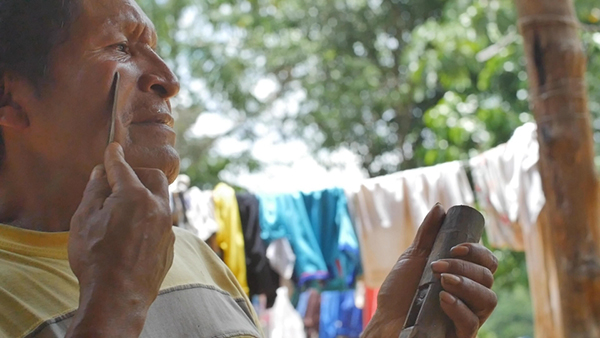
caption: Still from Juan Castrillón’s film, Kiraiñia (Long Flutes). Dr. Castrillón is the Annenberg School for Communications's inaugural Gilbert Seldes Postdoctoral Multimodal Fellow.The Visual and New Media Review of the Society for Cultural Anthropology will feature Rehavi (Timekeepers) and Kiraiñia (Long Flutes), two films produced by Juan Castrillón, the Annenberg School for Communications’s inaugural Gilbert Seldes Postdoctoral Multimodal Fellow. The films will be available to stream as part of The Screening Room, the SCA’s virtual film series.

Kiraiñia (Long Flutes), filmed in Pamie and Spanish with English subtitles, is an immersive essay film that delves into the process of remaking instruments and the affect in Camutí (Joroda Kipori), an Indigenous community living at the Vaupés River Valley in Southern Colombia.

Rehavi (Timekeepers), filmed in Turkish and Spanish with English subtitles, is the story of an old migrant watch that renders the philosophy of time and the holography between clocks and human beings, two central themes of Muslim spirituality in Anatolia.

Both films will be hosted in their multilingual versions and, until October 28, will be available to view free of charge through The Screening Room’s website.

“I am very excited to see my multimodal work available at one of the most innovative experiments in scholarly publishing today,” Dr. Castrillón said. “After being seen through film festivals widely, these two films bring home the performative responses to contemporary debates that inspired them in the first place. I feel glad that the infrastructures for publishing multimodal research are expanding the ways to legitimize other forms of knowledge production.”

A virtual and open access series, The Screening Room features films that “play with the boundaries of fiction and documentary, that experiment with creating visual languages for theoretical concepts, and create stories from origin points outside the usual centers of knowledge and artistic production.” The series also features curatorial introductions to each film, teaching tools to accompany the films, and academic film reviews.

Dr. Castrillón is a multimodal cultural anthropologist and ethnomusicologist with regional expertise in Turkey and the northwest Amazon in Colombia. His research interests include relations between music pedagogy, theology and critical theory, semiotics, and modalities of inscription. Dr. Castrillón’s multimodal work has been published in academic journals; exhibited at film festivals, art galleries, and academic conferences around the world; and distributed among local communities in indigenous languages.

Governance

University Council Open Forum: December 1, 2021

Section IV.3(c) of the Council bylaws provides that a University Council meeting “shall incorporate an open forum to which all members of the University community are invited and during which any member of the University community can direct questions to the Council.”

All members of the University community are invited to bring issues for discussion to the:

University Council Open Forum 

Wednesday, December 1, 2021 at 4 p.m. 
Bodek Lounge, Houston Hall

Individuals who want to be assured of speaking at Open Forum must inform the Office of the University Secretary (ucouncil@pobox.upenn.edu) by 10 a.m. on Monday, November 8, 2021. Please indicate the topic you would like to discuss. 

Those who have not so informed the Office of the University Secretary will be permitted to speak only at the discretion of the moderator of University Council and in the event that time remains after the scheduled speakers.

Please see the meeting format provided below. Questions may be directed to the Office of the University Secretary at (215) 898-7005 or ucouncil@pobox.upenn.edu.

—Office of the University Secretary 

Format for University Council’s Open Forum

December 1, 2021

The University Council will devote a substantial portion of its December 1, 2021 meeting to a public forum. The purpose of the Open Forum is to inform Council of issues important to the University’s general welfare and of the range of views held by members of the University. The forum is open to all members of the University community under the conditions set by the bylaws, following guidelines established by the Steering Committee of University Council: 

  1. Any member of the University who wishes to do so may attend the meeting.  Individuals who want to be assured of speaking, however, must inform the Office of the University Secretary (ucouncil@pobox.upenn.edu) by 10 a.m. on Monday, November 8, 2021, indicating briefly the subject of their remarks. Those who have not so informed the Office of the University Secretary will be permitted to speak only at the discretion of the moderator of University Council and in the event that time remains after the scheduled speakers.
  2. Speakers should expect to be limited to three minutes. The moderator may restrict repetition of views.
  3. Following the deadline for speakers to sign up with the Office of the University Secretary, the chair of the Steering Committee and the moderator of University Council will structure the subject matter themes, speakers, and times for the Open Forum session. In the event that there is not enough time available at the meeting to provide for all those who have requested to speak, the two officers may make selections which accommodate the broadest array of issues having important implications for University Council’s work and represent the breadth of University Council’s constituencies. The resulting order of Open Forum topics will be made available no later than the Tuesday before the meeting, to be published on the Office of the University Secretary website (https://secretary.upenn.edu/univ-council/open-forum) and, if deadline constraints allow, in Almanac.
  4. Speakers’ statements should be framed to present policy issues and be directed to University Council as a body through the moderator. The moderator will have discretion to interrupt statements that are directed against persons and otherwise to maintain the decorum of the meeting, as provided for in the bylaws.

From the Office of the University Secretary: University Council Meeting Agenda

University Council Meeting Agenda
Wednesday, October 27, 2021 at 4 p.m.
Virtual via BlueJeans Events

I.  Approval of the minutes of September 21, 2021. 1 minute 

II. Follow-up comments or questions on status reports. 10 minutes

III. Presentation by the President, Provost, and other administrators on the State of the University. 60 minutes (presentation 30 minutes, discussion 30 minutes)

IV. New business. 5 minutes

V.  Adjournment.

University of Pennsylvania Trustees Meetings: November 4-5, 2021

On Thursday, November 4 and Friday, November 5, there will be meetings of the Trustees. Observers may attend the public meetings via conference phone.

The meetings are:

Thursday, November 4

  • Local, National, and Global Engagement Committee, 8:30–10 a.m.
  • Facilities and Campus Planning Committee, 10:15–11:45 a.m.
  • Student Life Committee, 1:45–3:15 p.m.
  • Academic Policy Committee, 3:30–5 p.m.
  • Budget and Finance Committee, 3:30–5 p.m.

Friday, November 5

  • Stated Meeting of the Trustees, 11:30 a.m.–12:30 p.m.

Anyone wishing to attend an open public committee meeting can find the attendee link on the Secretary’s website, https://secretary.upenn.edu/trustees-governance/open-trustee-meeting, on the day of the meeting.

Agenda and call-in information will be posted at https://secretary.upenn.edu/trustees-governance/open-trustee-meeting. Please contact the Office of the University Secretary at (215) 898-7005 or ofcsec@pobox.upenn.edu with questions regarding Trustee meetings or your attendance plans.

AT PENN

Events

Update: October AT PENN

Conferences

29        Penn Law Antitrust Association’s Annual Seminar Competition Around the Globe and Beyond; will host leading scholars and practitioners from the public and private sectors to explore the latest antitrust discussions spanning various areas around the globe; 9 a.m.-4 p.m.; room 100, Golkin Hall; register: https://forms.gle/MmK6nsURoL29w1AAA (Penn Law).


Exhibits

29        Temperature of Wait; first-year master of fine arts exhibition; Addams Fine Art Gallery. Through November 12.


Penn Museum

Online and in-person events. Info: https://www.penn.museum/calendar.

29        Virtual Global Guide Tour: Asia Galleries; 2:30 p.m.

30        Middle East Galleries Tour; 11 a.m. Also October 31, 11 a.m.

            Global Guide Tour: Middle East Galleries; 2:30 p.m.

31        Global Guide Tour: Africa Galleries; 2:30 p.m.


Films

28        In Search of a City and Oranges; online screenings; 7 p.m.; tickets: https://pennlivearts.org/event/pew-fellows-x-pla-short-films (Penn Live Arts, Pew Fellows).


Fitness & Learning

27        History Department Open House; meet history students, faculty and advisors and learn about spring courses; 1-3:30 p.m.; room 209, College Hall (History).

28        Penn Alumni Water Forum Networking Lunch and Learn Water Trivia; hear from several water-related speakers and learn trivia about New York, D.C., and Chicago; noon; online event; register: https://tinyurl.com/water-trivia-oct-28 (Water Center).


Graduate School of Education (GSE)

Online events. Info: https://www.gse.upenn.edu/news/events-calendar?date=2021-10.

29        Friday Virtual Chats With Admissions; 9 a.m.


Penn Carey Law School
Unless noted, online events. Info: https://www.law.upenn.edu/newsevents/calendar.php#!view/all.

26        Asian Pacific American Law Student Association (APALSA) Panel; 7 p.m.

28        Master In Law Fall Semester Reception; 4:30 p.m.; courtyard, Penn Law.


LGBT Center

In-person and online events. In-person and online events. Info: https://tinyurl.com/lgbt-center-calendar.

29        Pumpkin Painting; 3 p.m.; LGBT Center.

            International LGBTQ+ Student Pizza Night; 5 p.m.; Goodhand Room, LGBT Center.


Music

29        Penn Symphony Orchestra: Primosch, Beethoven & Dvorak; performance featuring a tribute to late Penn professor and composer James Primosch; 8 p.m.; Irvine Aduitorium (Music).


On Stage

28        Bloomers Presents Off The Rails; a fun and transit-themed performance by Penn’s primarily women-led sketch comedy group; 8 p.m.; Harold Prince Theatre, Penn Live Arts; tickets: https://pennlivearts.org/event/bloomers-comedy (Bloomers, Penn Live Arts). Also October 29; 6 and 9 p.m.; October 30, 7:30 p.m.


Readings & Signings

Kelly Writers House

Unless noted, in-person events at the Kelly Writers House. Info: http://writing.upenn.edu/wh/calendar/1021.php.

28        A Conversation With Jessica Goodman; 5 p.m.


Special Events

28        Virtual Wistar Legacy Awards & 25th Jonathan Lax Lecture; honors the Wistar Institute’s extraordinary research partners and includes a lecture by Anthony Fauci, director, National Institute of Allergy and Infectious Diseases; 5:30-7:45 p.m.; GoToWebinar event; register: https://register.gotowebinar.com/register/2829771712578722575 (Wistar Institute).


Talks

26        An Amalgamation-Based Statistical Learning Paradigm for Microbiome Data; Kun Chen, University of Connecticut; 3:30 p.m.; BlueJeans meeting; join: https://bluejeans.com/812676289/1348 (CCEB).

            Chemical Approaches for Modulating Lysine Post-Translational Modifications; George Burslem, chemistry; 3:30 p.m.; Carol Lynch Lecture Hall, Chemistry Complex and Zoom; join: https://upenn.zoom.us/j/97682459971 (Chemistry).

27        The Water-Energy Nexus – Opportunities & Innovation; panel of speakers; noon; location TBA; register: https://tinyurl.com/water-center-talk-oct-27 (Water Center).

            A People’s Art is the Genesis of Their Freedom: The Claudia Jones Project; panel of speakers; 12:30 p.m.; online event; join: upenn.zoom.us/my/ascmedarisk (Center for Media At Risk).

            Calling in the Calling Out Culture; Loretta Ross, Smith College; 7 p.m.; Zoom meeting; register: https://tinyurl.com/ross-talk-oct-27 (Paideia Program).

28        Transforming Ideas to Reality: Emerging Nanotechnologies from the “Lab” to the “Fab”; Max Shulaker, MIT; 10:30 a.m.; room 225, Towne Building and Zoom; join: https://upenn.zoom.us/j/2822214402 (Electrical & Systems Engineering).

            Inequality in Bronze: Shared Authority and Collaborative Commemoration at Stenton; Laura Keim, historic preservation; noon; Morgan Gallery, Meyerson Hall; register: https://tinyurl.com/keim-talk-oct-28 (Historic Preservation).

            Interrupting Violence at the Point of Disclosure; Malik Washington, Penn Violence Prevention; noon; room 345, Fisher-Bennett Hall (GSWS).

            Optics on the Nanoscale: Conquering Absorption with Nonlinear Optics; Natalia Litchinitser, Duke University; 12:30 p.m.; auditorium, LRSM Building (Mechanical & Systems Engineering).

            Neutrophil and Barrier Dysfunction in Sepsis: Insights from Animal and Organ-on-a-Chip; Laurie Kilpatrick, Temple; 4 p.m.; room 11-146, Smilow Center (Penn-CHOP Lung Biology Institute).  

29        Armenian Photographers, a Turkish Sultan, a French Empress, and an American Doctor; Nicholas Brenner and John Pollack, Kislak Center; noon; room 626-627, Van Pelt Library (Kislak Center).

            How Status Seeking and Social Learning Shape Political Polarization on Social Media: Evidence from a Mixed-Method Field Experiment on Twitter; Christopher Bail, Duke University; noon; Zoom meeting; join: https://tinyurl.com/bail-talk-oct-29 (Annenberg School).

            A Model for External Aerodynamics Based on Building-Block Flows; Adrián Lozano-Durán, MIT; 2 p.m.; PICS conference room, 3401 Walnut Street (Penn Institute for Computational Science).

            The Latest in Nanoscale Drivers of Large-Scale Earth Processes; Michael Hochella, Virginia Tech; 3 p.m.; room 358, Hayden Hall (Earth & Environmental Science).


Africana Studies

Online and in-person events. Info: https://africana.sas.upenn.edu/events.

27        Intimacies to Apocalypso: Decolonizing Diasporas & Afro-Atlantic Worldviews; Yomaira Figueroa-Vásquez, Michigan State; 5:30 p.m.; room 401, Fisher-Bennett Hall.


Asian American Studies (ASAM)

In-person events at room 473, McNeil Building. Info: https://asam.sas.upenn.edu/events.

28        Interrogating Identity in Latin America: A Conversation on the Asian Diaspora; Evelyn Hu-Dehart, Brown University; 6 p.m.


Economics

In-person events. Info: https://economics.sas.upenn.edu/events.

26        Uncertainty and the Demand for Insurance; Ricardo Serrano-Padial, Drexel; 4 p.m.; room 101, PCPSE.

27        Financial Frictions and the Skewed Bank Distress Channel; Dohan Kim, economics; room 100, PCPSE.

            Competition in Employer-Sponsored Health Insurance: Implications for Public Option; Stuart Craig, economics; 3:30 p.m.; room F45, Huntsman Hall.

            Job Attachment and Life Cycle Gender Wage Differences; Ni Wang, economics; 4 p.m.; room 100, PCPSE.

28        The Equilibrium Effects of Public Provision in Education Markets: Evidence from a Public School Expansion Policy; Michael Dinerstein, University of Chicago; 3:30 p.m.; room 100, PCPSE.


Latin American and Latinx Studies (LALS)

Online and in-person events. Info: https://clals.sas.upenn.edu/events.

27        Afro-Cuban Invisibility and the Cuban People’s Protests; Amalia Daché, GSE; 11 a.m.; Silverstein Forum, Stiteler Hall.


Mathematics

In-person and online events. Info: https://www.math.upenn.edu/events.

26        Gene Expression Dynamics and the Stability of Gene Regulatory Networks; Ariel Amir, Harvard; 4 p.m.; room 4C8, DRL.

29        Artin’s Theorems in Supergeometry; Nadia Ott, mathematics; 3:30 p.m.; room A4, DRL.


Nursing

BlueJeans meetings. Info: https://www.nursing.upenn.edu/calendar/view/month/date/20211001.

29        Conversations with Nurse Leaders: Nursing Leadership, Social Determinants of Health, and Health Equity; Ashley Darcy-Mahoney, George Washington University; Marcus Henderson, Penn Nursing; 4 p.m.


Sociology
Online and in-person events. Info: https://sociology.sas.upenn.edu/.

27        Here, There, and Elsewhere: The Making of Immigrant Identities in a Globalized World; Tahseen Shams, University of Toronto; noon; room 150, McNeil Building.

            Teaching In Person in the Present Circumstances: Strategies for Supporting Students Through the Fall of 2021; Melissa Wilde, sociology and physics & astronomy; 2 p.m.; room 134, Van Pelt Library.

29        Defying Death: Pediatric Chronic Health Conditions and Believability; Hillary Steinberg, Drexel; noon; Zoom meeting.

--

The October AT PENN calendar is online. To submit events for a future calendar or update, email us at almanac@upenn.edu

Crimes

Weekly Crime Reports

University of Pennsylvania Police Department Crime Report

Below are the Crimes Against Persons, Crimes Against Society and Crimes Against Property from the campus report for October 11-17, 2021. View prior weeks’ reports. —Ed.

This summary is prepared by the Division of Public Safety and includes all criminal incidents reported and made known to the University Police Department for the dates of October 11-17, 2021. The University Police actively patrol from Market St to Baltimore and from the Schuylkill River to 43rd St in conjunction with the Philadelphia Police. In this effort to provide you with a thorough and accurate report on public safety concerns, we hope that your increased awareness will lessen the opportunity for crime. For any concerns or suggestions regarding this report, please call the Division of Public Safety at (215) 898-4482.

10/11/21

8:56 AM

3737 Market St

Unknown offender threatened complainant

10/11/21

2:44 PM

3700 Walnut St

Cable secured scooter stolen

10/12/21

1:16 AM

231 S 34th St

Cable secured bait bike stolen/Arrest

10/12/21

9:58 AM

3600 Sansom St

Unauthorized female in building/Arrest

10/12/21

11:47 AM

255 S 36th St

Secured scooter taken from bike rack

10/12/21

12:07 PM

699 Hollenback Dr

Catalytic converter taken from vehicle

10/12/21

12:47 PM

3604 Chestnut St

Merchandise taken without payment

10/12/21

3:27 PM

3910 Irving St

Secured bike taken from bike rack

10/12/21

4:38 PM

200 S 40th St

Wallet taken from purse

10/12/21

5:40 PM

3700 Chestnut St

Unsecured vehicle taken

10/13/21

12:01 AM

3400 Spruce St

Complainant pushed and bitten by offender/Arrest

10/13/21

7:30 AM

51 N 39th St

Defiant trespass by offender/Arrest

10/13/21

11:24 PM

3744 Spruce St

Merchandise taken without payment

10/14/21

9:48 AM

215 S 33rd St

Cash and sneakers stolen from an unsecured bag

10/14/21

10:18 AM

3335 Woodland Walk

U-lock secured bike stolen

10/14/21

11:00 AM

3925 Walnut St

Offender threatened employee and took merchandise from store/Arrest

10/14/21

2:56 PM

3800 Chestnut St

Complainant struck by offender

10/14/21

9:30 PM

4109 Walnut St

Complainant struck by offender/Arrest

10/14/21

9:34 PM

3700 Chestnut St

Three offenders stole unattended and running automobile/Arrest

10/16/21

10:51 AM

4233 Chestnut St

Ex-girlfriend struck complainant in face

10/16/21

1:56 PM

3400 Spruce St

Unsecured cell phone taken

10/17/21

4:31 AM

4201 Walnut St

Vehicle left running and stolen

10/17/21

5:46 PM

104 S 40th St

Offender threw the complainant to the ground and kicked him in the face

10/17/21

5:56 PM

3925 Walnut St

Merchandise removed without payment


18th District

Below are the Crimes Against Persons from the 18th District: 13 incidents (5 assaults, 4 aggravated assaults, 3 robberies, and 1 domestic assault) with 4 arrests were reported for October 11-17, 2021 by the 18th District, covering the Schuylkill River to 49th St & Market St to Woodland Avenue.

10/11/21

5:50 PM

S 40th & Market Sts

Robbery

10/12/21

9:43 PM

4438 Chestnut St

Robbery

10/13/21

12:53 AM

3400 Spruce St

Aggravated Assault/Arrest

10/13/21

6:04 PM

S 46th & Walnut Sts

Robbery

10/13/21

11:23 PM

220 S 47th St

Aggravated Assault/Arrest

10/13/21

11:23 PM

220 S 47th St

Aggravated Assault/Arrest

10/14/21

8:21 AM

6 S 43rd St

Assault

10/14/21

12:03 PM

4446 Sansom St

Assault

10/14/21

4:04 PM

3816 Chestnut St

Assault

10/14/21

9:32 PM

4109 Walnut St

Assault/Arrest

10/14/21

11:16 PM

S 47th St & Baltimore Ave

Aggravated Assault

10/16/21

10:29 AM

4233 Chestnut St

Domestic Assault

10/17/21

6:28 PM

104 S 40th St

Assault


Bulletins

Voting Reminder

Vote buttonTuesday, November 2, 2021 is Election Day. Philadelphia polling places are open from 7 a.m. to 8 p.m. 
Today, October 26, is the last day to apply for a mail-in or civilian absentee ballot in Pennsylvania. 

Visit http://www.vote.pa.gov or www.vote.upenn.edu for more information.

Volunteer Opportunities

Dear Penn Community,

We have begun our planning for the holiday season. We trust that you are all well, and that you will once again be able to join us in this undertaking during the upcoming holiday season. The Penn community continues to have a major impact during the holidays in spite of the challenging times.  We look forward to working with you again this year as we strive to make a difference in the lives of our deserving neighbors while we work to minimize the impact of COVID-19 and other challenges.

Below is a list of current opportunities. Your contributions allow us to respond to various requests from local agencies and families for donations during the holiday season. 

Holiday Food Drive, November 8-18: Let’s take a bite out of hunger! In the season of thanks and giving, please contribute to the annual Food Drive coordinated by Penn VIPS. We are collecting non-perishable foods (cans and boxed foods) as well as turkeys. Donations will help re-stock the pantry at the Salvation Army, Southwest Family Services, the People’s Emergency Center, and local schools, as well as help many deserving families in the area.

Holiday Giving Gift/Toy Drive, December 1-16: Please join us in the Annual Penn Volunteers In Public Service Holiday Drive. As you buy toys and presents for the holiday season, please consider spreading some cheer to deserving members of our community. All toys and gifts donated will support the efforts of the People’s Emergency Center, local schools, Potter’s House Mission, Southwest Family Services, and more. All items for the holiday drive must be new, not used, and should be unwrapped. We are also undertaking a new sneaker drive to benefit the homeless.

Please contact one of the Dropsite Committee members listed below for more information about the Holiday Food Drive and Gift/Toy Drive: 

President's Office Brenda Gonzalez gonzalez@pobox.upenn.edu
Human Resources/Franklin Building Lobby Chris Hyson chyson@upenn.edu
Van Pelt Library Rachelle Nelson nelsonrr@pobox.upenn.edu
Netter Center Isabel Sampson-Mapp sammapp@upenn.edu
Wharton Jennifer O'Keefe jenncole@wharton.upenn.edu
Residential Services Linda Kromer lkromer@upenn.edu
Research Services Evelyn Ford fordej@upenn.edu
FMC Gretchen Ekeland gekeland@upenn.edu
Comptroller's Office Celestine Silverman celes@upenn.edu
Van Pelt Library Illene Rubin rubinir@upenn.edu
Physics and Astronomy  Michelle Last michlast@sas.upenn.edu
Nursing Pat Adams padams@nursing.upenn.edu


Adopt-a-Family for the Holidays Program: Several departments have adopted a deserving family for the holidays and will provide the family with toys, food, and gifts so that they can have a joyous holiday. The adoption is usually done in lieu of departmental gift exchanges. The assigned family is treated to presents and sometimes a holiday dinner. Families participate in the program on a one-time basis. Families are assigned to departments based on request. Departments choose the size of the family they would like to adopt. Departments can also request the ages of the children they are interested in adopting.

Departments may request a “wish list” from the family or they may choose their own gifts for the family members. Departments choose the number and types of gifts they will provide. Departments are provided with size of the family, names, ages and sizes of each family member, and a wish list if requested. Departments are encouraged to deliver gifts to the families, but they may also request to have gifts delivered. Also, if departments would like to use services like Amazon, gifts can be shipped directly to the family. Families are selected from the Baring House Family Service Agency, local agencies and shelters. A small number of referrals are also accepted. Selection of families begins in November and assignments are made by mid-December.

Career buddies needed: Volunteer to provide support to graduates of the University-Assisted Community Schools (UACS) Night Professional Development Program. Local members of the community will undertake classes in resume writing, interviewing techniques, time management, customer service, and more in preparation for job hunting. Career coach buddies will be assigned a participant and will work virtually with them over a three month period by being encouraging, suggesting resources, doing follow-up, and being a friend. Buddies make one weekly contact with their assigned participant.

Become a dropsite volunteer: Participate in five annual drives held by Penn Volunteers In Public Service (Penn VIPS) to benefit members of the surrounding community. We are in need of locations around the University that can serve as a drop-off point during our school, toy, gift drives as well as others. Your role would be to help advertise the event and to collect and deliver the donated items to our central location. We look forward to having you join us.

Create your own volunteer activity for your department: Would you and your colleagues or friends like to participate in a volunteer activity? Penn VIPS is happy to connect you to an activity or help you develop one of your own. Penn VIPS also maintains an extensive list of local agencies and nonprofits in desperate need of your no-longer-needed items. We connect no-longer-needed items with members of the community who are happy to put donated items to good use. We can easily make arrangements for pickup. 

Contact Isabel Sampson-Mapp at (215) 898-2020 or sammapp@pobox.upenn.edu for additional information about the opportunities above and/or to make a donation.

—Isabel Sampson-Mapp, Associate Director, Netter Center for Community Partnerships

One Step Ahead: Smaller Screens Can Mean Bigger Danger

One Step Ahead logo

Another tip in a series provided by the Offices of Information Security, Information Systems & Computing and Audit, Compliance & Privacy

With email systems becoming more secure against fraudulent phishing messages, scammers have started to resort to text/SMS messages, social media accounts, and even phone calls to trick unsuspecting victims. These platforms often don’t have the same phishing protections that your work and personal email accounts do.

While the accounts may be different, the way scammers try to trick you is very much the same. The techniques you use to identify phishing emails can be used to protect you elsewhere. Scammers try to introduce a sense of urgency, like an “Are you available?” text message from your manager or their manager, or a phone call that claims to be the Internal Revenue Service or law enforcement. 

When you get messages like these, stop and evaluate: who is contacting you, and what do they want? Would your manager’s manager actually contact you via text message, rather than email? Would they expect you to purchase gift cards using personal funds? The University has strict rules regarding financial transactions, and they do not permit the purchase of gift cards with personal funds for departmental or University business. 

Of course, presumed contact from law enforcement, immigration officials, or the Internal Revenue Service may feel intimidating. However, these organizations don’t collect fines by using text messages or social media, nor do they request payment using gift cards. 

Remember, before you attempt to make any type of contribution or payment in response to being contacted by others, always be sure to use the official, published contact information for the organization in question —not the false information given to you by scammers—to confirm any obligations you may have. All major web search engines can readily guide you to contact information for major organizations.

If you are concerned about anyone contacting you in this manner, disconnect or hang up—and then seek help, which includes reporting your experience to ISC at security@isc.upenn.edu

For additional tips, see the One Step Ahead link on the Information Security website: https://www.isc.upenn.edu/security/news-alerts#One-Step-Ahead

Penn’s Way Raffle Prize Drawings

Penn's Way logo

Visit https://pennsway.upenn.edu for more information. Paper forms must be submitted by noon on Friday, and online participation must be completed by midnight on Sunday for inclusion in a given week’s drawing that Monday morning. Note: list subject to change.

Week Three drawing—October 25

  • ThermoFisher Scientific: Gift card to Fearless Restaurants ($100 value): Steven Lewandowski, UPHS
  • Shake Shack: Gift card ($50 value): Michael Cerdan, UPHS
  • The National Constitution Center: Four passes ($58 value): Jane Urban, UPHS
  • Philadelphia Catering Company: Gift certificate for catering ($100 value): Annamarie Marotta, UPHS
  • MilliporeSigma: Amazon gift card ($50 value): Tina Stratford, UPHS
  • The Chambers Group: gift card to Target ($50 value): Melisa Stanton, UPHS
  • Soul Cycle: Two one-day passes ($68 value): Marquelda Bulgin, UPHS

Week Four drawing—November 1

  • Business Services: Travel set ($50 value)
  • ThermoFisher Scientific: Gift card to New Deck ($50 value)
  • Business Services: Amazon Echo Dot ($40 value)
  • Graphic Arts: B&N gift card ($50 value)
  • Acronym Media: Spa gift card ($100 value)
  • 12th Street Catering: Gift certificate for a dessert tray ($100 value)
  • Soul Cycle: Two one-day passes ($68)

Penn's Way 2022 Go Far Together logo

Talk About Teaching & Learning

Methods to Demystify Methods

Amrit Thapa

Presently, I am a senior lecturer in the International Educational Development program in the Graduate School of Education at University of Pennsylvania. This is my sixth year at Penn, where I have been teaching graduate-level courses such as Economics of Education in Developing countries, Principles of Monitoring and Evaluation (M & E) of International Education Development (quantitative course), Advanced topics in M & E (quantitative course), and Global Perspectives on School Climate. I have been fortunate to get varied teaching experience in my teaching career so far. I have taught at the undergraduate and graduate levels, small and big size classes, and in both developed and developing countries. I feel good to function in this profession. In all my academic positions, I have tremendously enjoyed teaching and the interactions with students from all over the world and from diverse professional and backgrounds. In this article, I would like to share some of my observations, challenges and personal experiences regarding teaching methods course for an average student in a class with high variance of statistical backgrounds. 

As the name of the program suggests, students in the IEDP program come from multiple countries and varied racial/ethnic and cultural backgrounds. I find that so fascinating. At the same time, there is a fair degree of deviation of statistical knowledge/skills among students in a  typical program like this. As an instructor of Methods/Quantitative course, this could be challenging to create a fair and conducive learning environment for all. One of the challenges in such settings is to teach the course in a non-intimidating manner, and at the same time maintaining the quality of the content, which is integral to students’ learning. There are many variables that need to be identified and solved, and it is not always as straightforward as a logic model

First, one observational point about students, both cross-sectionally and longitudinally, is that statistics is not usually the favorite subject for a range of students. In social science graduate programs (except for a few disciplines), students usually are required to take a minimum of one or two of these courses. They might not be always taking the course due to a love for the subject. Rather, many students have so-called “fear” of the subject. Given the nature of the subject, this is a valid concern. To negate this seemingly skewed perspective towards the subject, I have  found that the tone of the class is immensely important. Or else, there is high probability that instructor would find oneself as an outlier :) So, I try my best to keep the classroom climate normal, friendly, welcoming and respectful. Sometimes I do that with a quick ice-breaker activity. This could be related to topic of discussion, or something exogenous. Yes, qualitative ideas can be mixed into a quantitative course. 

Second, the mode of the class is also important. Being aware that all students have different ways of learning and understanding the subject matter, I would use variety of mediums for instruction such as intuitive explanations, relevant videos, figures and graphs, mathematical expositions, and plenty of examples to explain concepts. In the same token, even with regards to students’ evaluations, I like to diversify the student assessments across different areas, including problem sets, tests, class participation, presentations, and writing assignments. This not only gives the instructor a balanced view of students’ learning, but also helps the students to correlate their understandings with what has been taught in the class. 

It is the central tendency of our human brain to diverge away to other things if something is not interesting. So, whenever possible, I try to take the opportunity to include “fun” aspects in the course. This is important particularly for courses such as quantitative methods, which have the propensity to lose students’ attention quickly. In my classes, I like to include variation in learning methods. This convergence strategy to direct their attention back to the subject matter could range from activities like quizzes, group discussions, panel discussions, video clips and even debates. Whenever these “fun aspects” are randomly distributed in the course, I have found students’ participatory rates going high. This is a reliable strategy. Likewise, I have found that even for virtual/online sessions, including a variety of components such as videos, interactive diagrams, and fun cartoons has a greater likelihood of engaging students compared to just lecturing. 

Third, the interaction effect is an essential ingredient. I have found that making the classroom as interactive as possible is one component that has power. Although lectures and readings are essential aspects of my teaching, I give high critical value to classroom discussions and students’ participation. In this regard, I have found a few trials helpful. For example, asking students to solve a problem in the class in small samples is a good experiment. Likewise, organizing multiple mini quiz-like sessions is helpful as well. 

Fourth, I believe that each student must understand the concepts taught in the classroom and apply that reasoning in everyday life. In other words, the concept of lab has a much greater confidence interval than just learning statistical softwares. I have discovered a few strategies to realize these objectives. I have discovered that while talking about class content, sharing with students varied examples is enriching. At times, it is also logical to ask students for examples of what they have been thinking or doing as part of their assignments in other courses. That way, they relate to the content, and this could help them with their learning curve. Likewise, assignments play a huge role in helping students learn the topics. The choice and format of the assignments seem important. What I have learned is that giving them the opportunity to play and explore real life data is helpful. Similarly, challenging them to replicate a statistical analysis using data of their own exploration is an important piece of the equation

Fifth, helping students to calm down their anxiety relating to statistics seems to work well, particularly with those set of students who self-select by thinking: “can I also do it?” We all are aware, thanks to all the recent research on various disciplines like science, psychology, and education, that stress is a huge inhibitor of learning and success. The intervention need not be complicated. For example, in simple ways, one could carefully craft each week’s lecture depending on how students are taking in and monitoring their learning. In addition, giving personal attention to students and talking about their anxieties about the course and sharing easy to digest resources for the course is particularly helpful. Moreover, affability goes a long way. It is helpful to make sure that students don’t feel biased and are comfortable approaching the instructor with questions both in the classroom and outside individually. Morals sometimes can turn out to be more helpful than models. 

To motivate students to be in the line of best fit in respect to their learning could be daunting. Students, at times, are dependent on the instructor, and at times look so independent. There are numerous identification problems, and it is not always linear as we sometimes assume. But, one simple identification strategy to motivate students is to constantly remind students of the higher benefits of the skills that they are acquiring as compared to the costs they incur in the learning process. They need this reassurance, and this is truly effective. For example, I have noticed that they find it fascinating to hear in what kind of analysis they could anticipate in their internships, as part of their jobs, and so on. Sometimes sharing your own journey and work (if needed, in a simplified way) can be instrumental in inspiring them. This will also help them to avoid regressing to where they were in their learning scale. And it helps to overcome their learning discontinuity.  

In summation, I am reminded of a line from my own teacher, “There are three kinds of teachers: one who complains, one who explains, and one who inspires.” My hope is to be in the third category. But I should confess that the path is challenging, and there is no one treatment to demystify the methods. Furthermore, there are many unobservables that we cannot control in a particular setting. Each course is different, each session is new, and each student is unique. We are also nested in a multi-level hierarchical manner amidst disciplines, programs and schools. Therefore, I am fully aware that the points that I have shared here might not have high external validity and should be interpreted with caution. But, these could be helpful data points and can be tested for their impact and robustness. I firmly believe that I am a continuous learner, and I feel fortunate to have the opportunity to learn many things in day-to-day interactions with students and colleagues in the University. I find it truly fulfilling when I can use my knowledge and my research to share with students, and in a way that will contribute to this field and welfare of society in a significant manner. 


Amrit Thapa is a senior lecturer in GSE-IEDP.

This essay continues the series that began in the fall of 1994 as the joint creation of the College of Arts and Sciences, the Center for Teaching and Learning and the Lindback Society for Distinguished Teaching. 


See https://almanac.upenn.edu/talk-about-teaching-and-learning-archive for previous essays.

Back to Top