Penn Medicine: Nearly $7 Million to Study Influenza Viruses
 The National Institute of Allergy and Infectious Diseases (NIAID), part of the National Institutes of Health, has selected Penn Medicine as one of five sites across the country to serve as a Center of Excellence for Influenza Research and Response (CEIRR), with the goals of better understanding influenza viruses around the world and learning about the viral strains that have the potential to cause pandemics. Penn Medicine has been awarded nearly $7 million in first-year funding. The contract is expected to be supported for six additional years.
The CEIRR contracts are a major funding mechanism for flu research in the Unites States. Scott Hensley, an associate professor of microbiology at the Perelman School of Medicine at the University of Pennsylvania, will serve as Penn’s CEIRR program director.
“This is an opportunity for Penn Medicine to become a major hub for influenza research,” Dr. Hensley said. “This contract will allow us to lead cutting-edge studies that have the potential to improve the seasonal flu vaccine that millions of people receive every year, and to be better prepared for the next flu pandemic.”
NIAID launched the first network of this kind in 2007, known then as Centers of Excellence for Influenza Research and Surveillance (CEIRS), awarding contracts every seven years for 14 years. All CEIRR contracts have five main focus areas: longitudinal human influenza studies, influenza surveillance, risk assessment and response research, pre-pandemic and pandemic emergency response, and pathogenesis and immune response research.
Investigators in the CEIRR network will conduct domestic and international influenza surveillance studies with an emphasis on rapid characterization of viruses that have the potential to cause pandemics. Researchers will collect hundreds of samples from humans, pigs, and birds across the world each year. The CEIRR’s longitudinal studies will seek out how human responses to flu evolve over time. Over the next seven years, the network will conduct a series of studies to better understand influenza virus evolution, how influenza viruses jump from animals to humans, and how humans mount protective immune responses against these viruses. With better scientific knowledge of these aspects, experts will be able to more accurately decide which of the thousands of flu strains should go into the annual flu shot, and which ones have the potential to cause the next pandemic.
“Penn Medicine has been studying influenza for more than 100 years and is especially well-positioned to launch this center because of the expertise of top researchers, like Scott Hensley and his team, who have already been deeply focused on influenza viruses,” said Jonathan A. Epstein, Senior Vice President, Executive Vice Dean, and Chief Scientific Officer of Penn Medicine. “This funding will allow researchers at Penn Medicine to advance knowledge and limit the spread of the seasonal flu.”
The Penn-CEIRR’s Pre-Pandemic and Pandemic Emergency Response Project will test viral strains with pandemic potential that are found in the surveillance projects, as well as viral strains identified at other CEIRR sites. With each viral strain with pandemic potential, researchers will complete large screens to assess human population immunity and other factors that would determine how easily the strain could spread. They plan to identify genetic mutations associated with virulence and transmission, and determine how susceptible these viral strains are to currently available therapies.
“In the event of a flu pandemic, our network will rapidly characterize the new virus and we will determine how the human immune system responds to the new virus,” Dr. Hensley said. “We are also well positioned to respond to pandemics caused by other respiratory viruses like the current coronavirus pandemic.”
Other researchers at the University of Pennsylvania who will be heavily involved in the CEIRR include E. John Wherry, chair of the department of systems pharmacology and translational therapeutics and director of the Penn Institute for Immunology in the Perelman School of Medicine at the University of Pennsylvania, Michael R. Betts, a professor of microbiology and program leader in the Penn Institute for Immunology, and Sara Cherry, a professor of pathology and laboratory medicine.
Vartan Gregorian, Former Provost and Dean, Dies
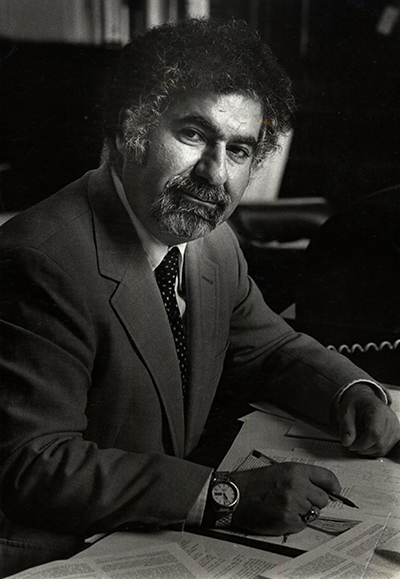 Vartan Gregorian, former provost, dean, and faculty member at the University of Pennsylvania, died on April 15.
Dr. Gregorian joined Penn’s faculty in 1972 as the Tarzian Professor of Armenian History and Culture. In 1974, he was appointed the founding dean of the Faculty of Arts and Sciences, now known as the School of Arts and Sciences. As dean, he strengthened ties and promoted scholarly exchanges between Penn and the Sorbonne and helped preserve the high academic standing of Penn’s department of romance languages. He served as provost from 1977 to 1981 before resigning when Sheldon Hackney was named President (Almanac October 28, 1980).
After leaving Penn, Dr. Gregorian was named president of the New York Public Library. When Dr. Gregorian took the helm, The New York Public Library was in the midst of a fiscal and morale crisis and he restored its stature as a vibrant cultural resource. In 1989, Dr. Gregorian left the New York Public Library to become President of Brown University. During his tenure at Brown, he oversaw the addition of eleven new departments and over 270 faculty members, and more than doubled its endowment. He left Brown in 1997 to serve as president of the Carnegie Corporation of New York, a position he held until his death.
Dr. Gregorian was a renowned historian and scholar. He was the author of several books, including The Road to Home: My Life and Times; Islam: A Mosaic, Not a Monolith and The Emergence of Modern Afghanistan, Politics of Reform and Modernization, 1880-1946, and several articles on history and global affairs. Dr. Gregorian was elected to the American Academy of Arts and Sciences, the American Philosophical Society and other scholarly institutions.
Dr. Gregorian received awards from the French, Italian, Austrian, and Portuguese governments, as well as numerous honorary degrees, including from Brown, Dartmouth, the Juilliard School, the University of Aberdeen, and the University of St. Andrews. He was awarded the medal of Chevalier of the French Legion of Honor at a ceremony at the Cultural Services of the French Embassy in 2017. The award recognized his 30-year effort to strengthen relations between France and America, to improve links between French and American institutions of higher education, and to promote the study of French culture and language (Almanac February 21, 2017).
In 1986, he was awarded the Ellis Island Medal of Honor as part of the inaugural class, which also included Muhammad Ali and Walter Cronkite. In 1998, President Bill Clinton awarded him the National Humanities Medal and in 2004, President George W. Bush conferred upon him the Presidential Medal of Freedom, the nation’s highest civilian award.
In 2004, in his honor, the Annenberg Foundation endowed a $2 million Vartan Gregorian Chair in the Humanities at Penn (Almanac November 2, 2004). “Vartan Gregorian is a scholar, a humanitarian, and a truly remarkable individual, whose wisdom, leadership, and counsel have benefited several universities and important philanthropic endeavors,” said the late Leonore Annenberg, then president of the Annenberg Foundation, when the chair was established.
“A lion for public learning and a renowned leader in higher education, Vartan was truly one-of-a-kind,” said Penn President Amy Gutmann. “No matter what task he undertook, from his years of service to Penn to our service together on the Carnegie Corporation Board of Trustees, Vartan always did so with trademark genius and unsurpassed passion for growing the common good. The world will not see his like again.”
Born to Armenian parents in Tabriz, Iran, Dr. Gregorian arrived in the U.S. in 1956 to study at Stanford University where he earned dual doctoral degrees in history and the humanities. He taught European and Middle Eastern history at San Francisco State College, UCLA, and the University of Texas at Austin before joining Penn’s faculty in 1972.
Dr. Gregorian was predeceased by his wife of 58 years, Clare Russell Gregorian. He is survived by his sons, Vahé (Cindy), Raffi, and Dareh (Maggie); his sister, Ojik Arakelian; and five grandchildren, Juan, Maximus, Sophie, Miri, and Dashiell.
From the President, Provost, and Executive Vice President: An Update on Penn’s Plans for the Fall Semester
April 22, 2021
The widespread distribution of the COVID-19 vaccine now taking place and the many safeguards we have established across campus reinforce our expectation to return to an in-person teaching, research and residential environment for the fall of 2021, as we indicated in our March 16 message. We write today to provide an update and to share new information on what will be involved in our return to a more normal campus experience.
Vaccination Requirement for Students
With the safety and effectiveness of the COVID-19 vaccines now well-established, and with the importance of mass vaccination so central to our commitment to having a safe campus environment, the most significant new element of our plans for the fall is a requirement that all students be vaccinated. Exceptions will only be provided for medical or religious reasons. Students should plan on being fully vaccinated (i.e., two weeks after the last dose of the vaccine) before they return to campus for the fall semester. For any students who have not been vaccinated by the time they return to campus, the University will provide vaccination clinics, however students will need to quarantine for two weeks after receiving their first dose. Further guidance will be forthcoming for international students who received vaccines not currently approved in the United States. In addition to COVID-19 vaccines, flu vaccines will also be mandatory, beginning later in the fall. Information regarding current student immunization requirements can be found here.
Specific details regarding vaccination expectations for faculty and staff are under consideration and will be provided in the near future. With increasing availability of highly effective vaccines, at this time the University strongly encourages faculty and staff to become vaccinated for your safety and for the long-term safety of our community.
Additional Safety Requirements
Even with increasing numbers of people being vaccinated, we still expect that masks will be required in many campus settings, testing and contact tracing for COVID-19 may still be necessary, and large gatherings may still be limited or modified. Everyone on campus will need to be mindful of social distancing, hand washing and completing their daily PennOpen Pass. The Student Campus Compact will be updated with any changes in expectations for student conduct early in the fall. All students should remain familiar with the standards for behavior that it outlines.
The Academic Year
Barring any significant new developments in the course of the pandemic, we expect to begin the fall semester on time, with move-in beginning on August 25 and New Student Orientation occurring August 25-30. In recognition that our returning sophomores did not have an in-person orientation this past fall, we also will have an orientation program for them along with the Second Year Experience programming. More information about NSO will be shared in the near future. Convocation for the first-year students will take place on August 30, and the first day of classes will be August 31.
We expect that undergraduate class instruction will be primarily delivered in-person, although online and hybrid delivery is expected in some cases for large classes. Our academic policies regarding grading will return to their regular, pre-COVID standards. Graduate and professional students will be contacted directly by their schools and programs with information relating to their classroom and research experience.
Housing and Dining
Residence halls will return to their normal occupancy in the fall, and dining options will be expanded and should resemble pre-pandemic configurations, although some social distancing and other health considerations will still be in place. We will continue to follow established health guidelines and best practices in our College Houses and dining facilities and will update our policies as needed. Extra cleaning and ventilation checks will continue in all Penn facilities.
Campus Visitors
As we begin this summer to repopulate the campus, schools, centers, and departments can again consider bringing in scholars and visitors to campus in accordance with social distancing and facility planning guidelines. Visitors must comply with all Penn health guidelines and policies and participate in PennOpen Pass. All Penn identification holders will have access to testing and vaccination opportunities in accordance with University and municipal and state health policy guidelines.
Domestic and International Travel
Beginning May 18, 2021, Penn will move from suspended to restricted travel. All domestic and some international travel will no longer require a petition if the travelers are fully vaccinated. International travel will still require registration in MyTrips but will not require petitions if it is to a CDC Level 1 or 2 country. Non-vaccinated travelers and travelers to CDC Level 3 or 4 countries will continue to require a petition. Group travel (defined as 5 people or more traveling on the same itinerary) cannot commence before July 1, 2021. All travelers are expected to follow local and state guidelines regarding quarantine, testing, masking, etc., and should be prepared for changes and modifications. As government restrictions and guidelines pertaining to domestic and international travel continue to evolve, we encourage anyone planning to travel to consult the Penn Global Travel Guidance website for the most up-to-date information.
Research
Academic research will return to full operations in the fall semester, in alignment with University policies on general space use, gathering, and travel. New practices that evolved to support safe engagement in the internal and external research community will continue to inform the expansion of research activity in the fall. We look forward to welcoming more faculty, undergraduate students, graduate students, post docs, and research staff to in-person research on campus in the fall.
Returning to On-Campus Work
For more than a year, most faculty and staff have been working remotely. This was necessary to ensure health and safety on campus as the pandemic continued to spread. With vaccines now plentiful and the possibility of safe campus workplaces ahead of us, we expect to begin to repopulate campus with most faculty and staff returning to their pre-COVID work schedules on campus beginning in July. This will continue to be based on guidance from the city and Commonwealth health officials. The University continues to evaluate hybrid work options and will provide more information as we begin to phase-in the return to campus plans this summer. Penn’s Division of Human Resources has developed a comprehensive guide for the return to in-person work, which will be updated as the guidance continues to evolve.
Conclusion
We remain enormously grateful to everyone in the Penn community for the resilience you have demonstrated as we have managed our way through the many challenges presented by the pandemic. This has been a huge undertaking. The conscientiousness of students, faculty, and staff in complying with our COVID-19 safety procedures has been inspiring, as have been your creativity and determination in together getting through this past year. As we look ahead to the fall, we see the opportunity for a return to campus activities and interactions that are much more in keeping with what we have always known at Penn. We await that with great anticipation.
—Amy Gutmann, President
—Wendell Pritchett, Provost
—Craig Carnaroli, Executive Vice President
From the Leadership of the University: A Message to the Penn Community on Racial Equity and Justice
April 19, 2021
As leaders of the University of Pennsylvania, we write today to affirm unequivocally and in the strongest possible terms Penn’s unwavering commitment to advancing racial equity and social justice in our nation. These are principles that rest at the very soul of our mission.
Talking about race can be difficult. But we should never let that difficulty stand in the way of speaking up for fairness, equity and compassion for all Americans, and for every member of our Penn community.
Inclusion has always stood as one of the three main pillars of the Penn Compact. Our University’s commitment to equity is long-standing. We are proud of the many steps that the University has taken historically, as well as the initiatives we have been able to launch in recent years, to strengthen our efforts to achieve greater equity. We know we have much work still to do but believe that many recent efforts are helping to move us in the right direction. We recently created the Office of Social Equity and Community, led by Vice President Chaz Howard, which is developing programs and initiatives that deepen awareness and help to advance the University’s mission of fostering social equity, diversity, and inclusion. Joann Mitchell has been promoted to Senior Vice President and Chief Diversity Officer, the first time the University has had such a position, giving diversity a truly senior voice at Penn.
Numerous initiatives are also having a meaningful impact, including:
- The Campus Iconography Group, which just completed a report that outlines steps to ensure the placement and presence of statues and other prominent iconography on campus better reflects the University’s achievements and aspirations to increase the diversity of the Penn community.
- A Comprehensive Review of the Division of Public Safety, which was designed to focus on ensuring a physically and emotionally safe environment on campus in a way that prioritizes and promotes anti-racism, racial equality and justice.
- Action Plan for Faculty Diversity and Excellence has proven to be an important blueprint in bringing greater diversity to our faculty.
- Penn First Plus and many other student-focused programs are helping to diversify our student body and provide support for low-income and first-generation students.
In addition to our many University, school, Health System, and center-led initiatives to combat racism, we are proud of the initiatives of all members of our community, including faculty and student initiatives such as the Penn & Slavery Project and the Paideia Program’s panel conversations with faculty and guest experts tackling racial disparity.
As the country continues to grapple with enhancing racial equity, and as the Derek Chauvin trial for the murder of George Floyd concludes in Minneapolis and the emotions it touches rise ever more in people’s consciousness, we want everyone in the Penn community to know that there are resources available to support you if you are feeling stress, anxiety, or have any other concerns that this case has brought to the surface. A list of many of those resources is available here.
This has been a tumultuous time for our community and our country. But with our ongoing work we are hopeful that good will spring from it in the form of increased awareness of the challenges that have confronted so many in minority communities across America and ultimately—and most importantly—in greater racial equity. Penn stands proudly with all of our communities of color on campus in the fight for equal treatment and equal justice.
—Amy Gutmann, President
—David L. Cohen, Chair, Board of Trustees
—Scott L. Bok, Vice Chair, Board of Trustees
—Wendell Pritchett, Provost
—Craig Carnaroli, Executive Vice President
—J. Larry Jameson, EVP, Penn Health System, Dean, Perelman School of Medicine
—Kevin Mahoney, CEO, University of Pennsylvania Health System
—Joann Mitchell, Senior Vice President for Institutional Affairs and Chief Diversity Officer
—Gregory S. Rost, Senior Vice President and Chief of Staff
—Wendy White, Senior Vice President and General Counsel
—John Zeller, Senior Vice President for Development and Alumni Relations
—Jeffrey Cooper, Vice President for Government and Community Affairs
—John J. Heuer, Vice President for Human Resources
—Charles “Chaz” Howard, Vice President, Office of Social Equity and Community
—Trevor Lewis, Vice President, Office of Budget Planning and Analysis
—Stacey J. Lopez, Vice President, Institutional Research and Analysis
—Stephen J. MacCarthy, Vice President, University Communications
—MaryFrances McCourt, Vice President, Finance and Treasurer
—Thomas H. Murphy, Vice President, Information Technology
—Medha Narvekar, Vice President and University Secretary
—Anne Papageorge, Vice President, Facilities and Real Estate Services
—Gregory J. Pellicano, Vice President, Office of Audit, Compliance and Privacy
—Maureen Rush, Vice President, Division of Public Safety
—Marie Witt, Vice President, Business Services
—Sara Bachman, Dean, School of Social Policy and Practice
—Steven J. Fluharty, Dean, School of Arts and Sciences
—Pam Grossman, Dean, Graduate School of Education
—Andrew Hoffman, Dean, School of Veterinary Medicine
—John L. Jackson, Jr., Dean, Annenberg School for Communication
—Erika James, Dean, Wharton School
—Vijay Kumar, Dean, School of Engineering and Applied Science
—Theodore Ruger, Dean, University of Pennsylvania Carey Law School
—Frederick R. Steiner, Dean, Stuart Weitzman School of Design
—Antonia Villarruel, Dean, School of Nursing
—Mark S. Wolff, Dean, School of Dental Medicine
—Beth A. Winkelstein, Deputy Provost
—Dawn Bonnell, Senior Vice Provost for Research
—Ezekiel Emanuel, Vice Provost for Global Initiatives
—Valarie Swain-Cade McCoullum, Vice Provost for Student Engagement
—Mamta Accapadi, Vice Provost for University Life
—Constantia Constantinou, Vice Provost and Director of Libraries
—Laura Perna, Vice Provost for Faculty
—Peter Ammon, Chief Investment Officer
—Russell Di Leo, University Comptroller
A Statement from Penn President Amy Gutmann Regarding the Verdict in the Derek Chauvin Trial
April 20, 2021
Today’s verdict is an important step towards justice in this case, but we as a campus community and a country have much more to do in our work toward racial justice and healing. Our thoughts are with Mr. Floyd’s family and we hope that the jury’s verdict brings them some measure of comfort. We must and we will continue to work with renewed resolve to ensure that the University and our nation move ever closer to fulfilling our pledge of liberty and justice for all.
University of Pennsylvania Three-Year Academic Calendar for 2021-2022 through 2023-2024
The updated Three-Year Academic Calendar for 2021-2022 through 2023-2024 is now available.
Graduate and professional programs may follow their own calendars; check the website for each School or program.
The University’s Three-Year Academic Calendar is subject to change. In the event that changes are made, the latest, most up-to-date version will be posted to Almanac’s website, almanac.upenn.edu/penn-academic-calendar.
Rosh Hashanah, Yom Kippur, the first two days of Passover and Good Friday are religious holidays that affect large numbers of University community members and that fall during the academic year. To view the University’s policy regarding these and other holidays, please visit https://catalog.upenn.edu/ pennbook/secular-religious-holidays/.
School of Arts and Sciences 2021 Teaching Awards
Penn's School of Arts and Sciences announces the following recipients of its 2021 teaching awards.
Ira H. Abrams Memorial Award for Distinguished Teaching

 This year’s recipients of SAS’s highest teaching honor are Campbell Grey, associate professor of classical studies, and Eve Troutt Powell, Christopher H. Browne Distinguished Professor of History and Africana Studies. Created in 1983, the Ira H. Abrams Award recognizes teaching that is intellectually challenging and exceptionally coherent and honors faculty who embody high standards of integrity and fairness, have a strong commitment to learning, and are open to new ideas.
Described by a faculty colleague as “Socratic, self-reflexive and inclusive,” Dr. Grey is praised for his ability to get students to think deeply and critically. According to the undergraduate chair, “he has a vivid presence in a classroom—or on Zoom—that makes even Roman tax law exciting. In a seminar, he does all the ground work—provocative readings, set-up questions in Perusall or discussion boards —such that the students run the show in class, doing their own thinking and making their own discoveries.”
A hallmark of Dr. Troutt Powell’s teaching is her exceptional skill in engaging students in some of the most challenging problems in the history of the modern Middle East and the Ottoman Empire. Students describe not only a dynamic lecturer, but also one who is able to convey extremely complicated and nuanced events in a clear and stimulating manner. According to one, “Professor Troutt Powell is one of the most inspiring professors at Penn. She is always so full of energy and spirit when she comes into class, and so wonderfully helpful in office hours. Truly one of Penn’s gems.”
Dennis M. DeTurck Award for Innovation in Teaching
 This award, which is named after Robert A. Fox Leadership Professor and former College dean Dennis DeTurck, recognizes exceptional creativity and innovation in instruction.
The 2021 recipient is Marisa Kozlowski, professor of chemistry.
The new features Dr. Kozlowski has introduced into the organic chemistry laboratory course for remote instruction in light of the pandemic are described by the undergraduate chair as “nothing short of remarkable... She has led my organic colleagues and our entire department with a series of ‘firsts’ that have changed the way we teach chemistry.”
Dean’s Award for Mentorship of Undergraduate Research
 This award, which recognizes faculty members who have excelled in nurturing undergraduate students’ desires and abilities to conduct meaningful research, goes to Zahra Fakhraai, associate professor of chemistry, for her fierce commitment to training the next generation of scientists and to helping every student realize their full potential. One colleague explains that over the last decade, not only has Dr. Fakhraai mentored no fewer than twenty-seven undergraduate research students who have participated in cutting-edge research in her laboratory, but the work of these undergraduate students has resulted in twelve publications in high-profile journals, a sustained level of productivity that is truly impressive.
Dean’s Award for Distinguished Teaching by an Assistant Professor
 This award recognizes a member of the junior faculty who demonstrates unusual promise as an educator. The 2021 recipient is Mary Channen Caldwell, assistant professor of music. Dr. Caldwell is commended for enabling vibrant classroom discussions and encouraging students to be experimental and creative in thinking about medieval music. As a student notes, “she would often engage in thought experiments and hypotheticals, showing us that we didn’t always need to have an answer to the questions that interested us and the benefits of pushing ourselves beyond our intellectual comfort zones.”
Dean’s Award for Distinguished Teaching by Affiliated Faculty

 Staver Bezhani, senior lecturer in biology, and Anne Duchene, senior lecturer in economics, are the recipients of this award, which recognizes the contributions to undergraduate education made by the School’s non-standing faculty.
One faculty member notes that in providing his students with an excellent introduction to the fundamentals of biology, Dr. Bezhani “makes a point of connecting with each of them, allowing him to identify those students with hidden potential, and he strives to ensure that they have an opportunity to reach that potential.” His students agree; one calls him “an amazing lab instructor” while another states that “He is the reason I love biology now.”
Dr. Duchene not only earns strong praise from her students in Introduction to Microeconomics, which has an enrollment of 900 per year, but she also stands out for “working tirelessly, creatively, and successfully in fall 2020 to rearrange her instruction in ways designed to keep students active and engaged in the virtual environment.”
College of Liberal and Professional Studies Award for Distinguished Teaching in Professional Graduate Programs
 The recipient of this award, which recognizes teaching excellence in LPS graduate programs, is Leona Brandwene, lecturer in positive psychology and associate director of Education at the Positive Psychology Center.
Highlighting Ms. Brandwene’s attention to detail and thorough dedication, one student states, “she does such a superb job of constructing a meaningful, cogent longitudinal educational experience, assembling the most incredible guests, ensuring each module is impactful in its own right and complementary to the stage of project and course, and ensuring we get to put the rubber to the road in practice.”
Dean’s Award for Distinguished Teaching by Graduate Students
This award recognizes graduate students for teaching that is intellectually rigorous and has a considerable impact on undergraduate students.
This year’s awardees are:
- Erik Broess, Music
- Samantha Gillen, Romance Languages
- Lauren Harris, Sociology
- Zain Mian, Comparative Literature
- Brandon Orzolek, Chemistry
- Sammy Sbiti, Mathematics
- Mikhail Strokan, Political Science
- Stephanie Wesson, Philosophy
- Yosiane White, Linguistics
- Clinton Williamson, English
Penn Reading Project 2021-2022: Ma Rainey’s Black Bottom
On behalf of the President, Provost, and Council of Undergraduate Deans, New Student Orientation & Academic Initiatives are pleased to announce that the 31st Penn Reading Project will be August Wilson’s play, Ma Rainey’s Black Bottom. Early in the summer, Penn’s incoming Class of 2025 will have access to the text and supporting materials; immediately before the start of classes, they will participate in small group discussions with other Penn students, faculty, and staff about the book and its ties to the ongoing Provost’s Academic Theme of Civic Engagement.
August Wilson’s 1982 play Ma Rainey’s Black Bottom is a fictional narrative built around a legendary real-life performer: Gertrude “Ma” Rainey, one of the earliest artists to popularize the blues. Set in Chicago in 1927, the story finds Ma and her band at a recording session where the stakes are high—in an era when records were still a relatively new technology, the results here could bring wider fame to these musicians. But the situation is fraught with personal and professional tensions—particularly between Ma and her gifted but temperamental trumpeter, Levee—that threaten to bring the proceedings to a crashing halt.
Mr. Wilson’s play has been produced nationally (including on Broadway in 1984 and 2003) and internationally. It received the New York Drama Critics’ Circle Award for Best American Play of 1985 and was nominated for Tony and Drama Desk Awards. A highly-acclaimed film version for Netflix was released in 2020; produced by Denzel Washington and starring Viola Davis, it also features Chadwick Boseman in his final film appearance. Reviewing the movie, New York Times critic A. O. Scott wrote that “Ma Rainey’s Black Bottom is a powerful and pungent reminder of the necessity of art, of its sometimes terrible costs and of the preciousness of the people, living and dead, with whom we share it.”
Ma Rainey will offer our incoming Penn students an opportunity to explore the nature of art, as well as themes of race, community, and families, both blood relations and the families we create for ourselves. By turns exuberant and harrowing, Mr. Wilson’s poetic and theatrical story is anchored in history, yet powerfully resonant today. As always with Penn Reading Project texts, the work will also open doors to programming on related topics that intersect and support the academic theme: in this case, Civic Engagement.
One such focus is the larger world of August Wilson’s canon. Ma Rainey is an installment of his “Century Cycle” of ten plays, an omnibus that today is universally recognized as a pinnacle of 20th century American theater. Mr. Wilson, who died in 2005, twice received the Pulitzer Prize for Drama, both times for works in the cycle: Fences (1987) and The Piano Lesson (1990). The plays, each set in a separate decade, feature different characters—but taken together, they are a deep exploration of the connections between generations of Black families and the neighborhoods and communities (particularly in Mr. Wilson’s native city of Pittsburgh) that they build and sometimes uneasily inhabit.
Through Ma Rainey, the Penn Reading Project will also look more broadly at blues and jazz not only from a musical perspective but also as a metaphor for American identity and character, representing some of the best aspects of America and Americans. As Duke Ellington said, “Jazz is a good barometer of freedom... In its beginnings, the United States of America spawned certain ideals of freedom and independence through which, eventually, jazz was evolved, and the music is so free that many people say it is the only unhampered, unhindered expression of complete freedom yet produced in this country.”
More information, and opportunities to sign up as a PRP Discussion Facilitator, will be available early in the summer. If you have immediate questions, please contact David Fox, director of New Student Orientation & Academic Initiatives, at dfox@upenn.edu.
Class of 2021 President’s Engagement and Innovation Prize Winners










University of Pennsylvania President Amy Gutmann has announced the recipients of the 2021 President’s Engagement Prize and President’s Innovation Prize. Awarded annually, the prizes empower Penn students to design and undertake post-graduation projects that make a positive, lasting difference in the world. Each prize-winning project will receive $100,000, as well as a $50,000 living stipend per team member. The prizes are the largest of their kind in higher education.
“This year’s prize-winning projects are inspiring and are important examples of putting a Penn education to work to meet urgent and important human needs in local, national, and global communities: from addressing eating disorder risk among our city’s youth, to improving the experiences of patients and frontline health care workers, to aiding in the global refugee crisis through clean water and agricultural training,” said President Gutmann. “The recipients embody Penn’s core commitment to leadership through service, a most vital and urgent calling during these challenging times.”
The prizes are generously supported by Emerita Trustee Judith Bollinger and William G. Bollinger, in honor of Ed Resovsky; Trustee Lee Spelman Doty and George E. Doty, Jr.; Emeritus Trustee James S. Riepe and Gail Petty Riepe; Trustee David Ertel and Beth Seidenberg Ertel; Wallis Annenberg and the Annenberg Foundation; and an anonymous donor.
The following student recipients will spend the next year implementing their projects.
Elizabeth Carson Eckhard, Natalia Rommen, and Sarah Simon for Project HOPE: Ms. Eckhard, Ms. Rommen, and Ms. Simon will address the lack of legal and reentry support to incarcerated Philadelphians by serving as the core of an expansive advocacy network. They are mentored by Marissa Boyers Bluestine, assistant director of the University of Pennsylvania Carey Law School’s Quattrone Center for the Fair Administration of Justice.
Martin Leet and Leah Voytovich for Maji: Mr. Leet and Ms. Voytovich will install a solar-powered water tank for both household use and for irrigation in the Olua I refugee settlement camp in Uganda, as well as offer hands-on agricultural training and first aid medical training to refugees. They are mentored by Ocek Eke, director of global and local service-learning programs in the School of Engineering and Applied Science.
Christina Miranda and Amanda Moreno for Be Body Positive Philly: Ms. Miranda and Ms. Moreno will address eating disorder risk among Philadelphia high school students by implementing a validated body-positivity curriculum and an innovative near-peer mentorship model. They are mentored by Caroline Watts, director of school and community engagement at Penn’s Graduate School of Education.
Aris Saxena and Yiwen Li for Mobility: Mobility aims to provide patients across the globe access to healthcare right in their home. The company has created a software solution for health clinics in Africa to seamlessly coordinate at-home primary health deliveries. The software is designed specifically for under-resourced areas with little technological access, requiring minimal WiFi, data usage, and user response. Mr. Saxena and Mr. Li are mentored by Tyler Wry, associate professor of management in Penn’s Wharton School.
Anthony Scarpone-Lambert for Lumify Care: Lumify Care aims to improve the patient experience by developing innovative tools and resources needed to support frontline health care workers. Its flagship product is the uNight Light, a wearable LED light allowing health care workers to illuminate their workspace while decreasing patient sleep disturbances. Mr. Scarpone-Lambert is mentored by Therese S. Richmond, the Andrea B. Laporte Professor of Nursing and associate dean for research and innovation in Penn’s School of Nursing.
“From incarcerated Philadelphians to chronic disease patients in South Africa, Project HOPE, Maji, Be Body Positive Philly, Mobility, and Lumify Care have the capacity to improve the lives of some of the most vulnerable around us,” said President Gutmann. “These members of the class of 2021 have set out to implement extraordinarily promising ventures, and each has brought to the table an outstanding ability and an infectious eagerness to make a tangible, substantial, and sustainable impact.”
This year’s finalists also included, for the President’s Engagement Prize: Angela Kumirai and Arabang Dingalo for Central Pharma, a platform that aims to increase access to vital medications in rural Zimbabwe by improving the medication purchasing experience and reducing stock-outs at healthcare facilities; Abraham Mascio and Rouguiatou Sall for La Graine de Guinee, which aims to address rising diabetes rates in Guinea by enacting a culturally sensitive diabetes awareness program; and Samira Mehta for WASH for San Juan Tlacotenco, which aims to increase access to clean water and sanitation services in Mexico. Ricky Pati was a President’s Innovation Prize finalist for 3Cor Bio, a low-cost, rapid diagnostic platform that has the potential to target multiple infectious diseases, starting with COVID-19.
Ninety Penn seniors, a record total, submitted applications for both prizes this year, with proposals spanning an impressive array of innovative and impactful ideas. Faculty and staff mentors and the staff of the Center for Undergraduate Research and Fellowships worked closely with the students to develop the projects.
“Our great Penn students,” said Provost Wendell Pritchett, “are producing the ideas that will change the future. These exciting projects demonstrate their strong commitment to helping others—and to finding solutions to the most urgent global challenges. They focus especially this year on health and wellness, which will be vital priorities as the world emerges from the pandemic in the years ahead. We are indebted to their faculty advisors and to the Center for Undergraduate Research and Fellowships, who are invaluable partners in developing these visionary ideas.”
 Robert (Bob) Allen Fox, C’52, an emeritus trustee and longtime donor to Penn, died peacefully on April 14. He was 91.
 Frank Alexander Welsh III, an emeritus professor of biochemistry in the Perelman School of Medicine’s department of neurosurgery, died on April 2. He was 77.
 Sebastian Angel, Raj and Neera Singh Term Assistant Professor, is the latest in a line of educators from Penn Engineering to be granted funding through the NSF’s Faculty Early Career Development Program.
 Sam Apple, a faculty member in the School of Arts and Sciences’ creative writing program, was awarded the Beltran Family Award for Innovative Teaching and Mentoring at the Kelly Writers House.
 Dakota Becker, a student in the Master of Social Work (MSW) program at Penn’s School of Social Policy & Practice (SP2), has been selected for a Post-Master’s Fellowship in Advanced Clinical Social Work by the Yale Child Study Center at the Yale School of Medicine. The highly competitive two-year training program, which provides advanced multidisciplinary and discipline-specific training aimed at developing clinical social work leaders, offers only two fellowship spots during each application cycle.
 Joseph Francisco, President’s Distinguished Professor of Earth and Environmental Science and professor of chemistry, has been elected a member of the German National Academy of Sciences Leopoldina. The election of new academy members is a rigorous process and demands a consensus of agreement between the Presidium and the Senators of the academy. Election to the academy recognizes scientific achievements and personal standing and members are expected to take an active role in giving talks, nominating new members, and organizing scientific events.
 Toorjo Ghose, an associate professor in the Social Policy & Practice, has received a Fulbright U.S. Scholar Program award to India. Dr. Ghose will be hosted by Presidency University in Kolkata as part of a project to document and teach about the strategies deployed by sex workers to negotiate the COVID-19 pandemic.
 Julie Nelson Davis, professor of history of art, has received a 2021 fellowship from the John Simon Guggenheim Memorial Foundation. She is among 184 writers, scholars, artists, and scientists chosen as fellows in the U.S. and Canada from nearly 3,000 applicants.
 School of Arts & Sciences Senior Sakshi Sehgal has received a Harry S. Truman Scholarship, a merit-based award of as much as $30,000 for graduate or professional school to prepare for a career in public service.