Mackenzie Fierceton: 2021 Rhodes Scholar
 Mackenzie Fierceton, a University of Pennsylvania May graduate who is currently completing her master’s degree at Penn, has been awarded a Rhodes Scholarship for graduate study at the University of Oxford.
Ms. Fierceton earned her bachelor’s degree in political science from the College of Arts & Sciences and is currently completing her clinical master’s in social work degree after submatriculating into the School of Social Policy & Practice program in 2018.
“We are extremely proud of Penn’s newest Rhodes Scholar. Committed to research and advocacy to make a positive impact in the world, Mackenzie is so deserving of this prestigious opportunity to build upon her Penn education and experience,” said Penn President Amy Gutmann. “As a first-generation low-income student and a former foster youth, Mackenzie is passionate about championing young people in those communities through her academic, professional, and personal endeavors, dedicating herself to a life of public service.”
The Rhodes is highly competitive and one of the most prestigious scholarships in the world. The scholarships provide all expenses for as long as four years of study at Oxford in England.
Ms. Fierceton is one of the 32 American Rhodes Scholars chosen to represent the United States. According to the Rhodes Trust, this year more than 2,300 American students began the application process; 953 were endorsed by 288 different colleges and universities; and 238 applicants from 86 colleges and universities reached the final stage of the competition.
As a former foster youth, and queer first-generation low-income student, Ms. Fierceton works to uplift the voices of her communities through her academic, professional, and personal pursuits, including her capstone thesis on the foster care-to-prison pipeline and her youth-centered community organizing work.
Ms. Fierceton is a Civic Scholar and has served as a leader within the Civic House community throughout her Penn career with a commitment to civic engagement, social justice, and service. Outside of Penn, she is a policy fellow for Philadelphia City Council member Helen Gym, and she is a volunteer birth doula with the Philadelphia Alliance for Labor Support.
At Oxford, Ms. Fierceton plans to pursue a Doctor of Philosophy degree in social policy. Upon returning to Philadelphia, she intends to continue her career in public service.
Ms. Fierceton applied for the Rhodes Scholarship with assistance from Penn’s Center for Undergraduate Research and Fellowships. The award brings the number of Penn Rhodes Scholars to 31 since the Scholarship’s creation in 1902.
Sonal Khullar: W. Norman Brown Professor
 Sonal Khullar has joined Penn’s history of art department as the W. Norman Brown Associate Professor of South Asian Studies. Dr. Khullar came to Penn from the University of Washington, where she was an associate professor of art history. Her research, which focuses on the art of South Asia from the 18th century onward, has been supported by grants and fellowships from the American Council of Learned Societies, the American Institute of Indian Studies, the Paul Mellon Centre for Studies in British Art, and the Japan Foundation.
Dr. Khullar’s first book, Worldly Affiliations: Artistic Practice, National Identity, and Modernism in India, 1930-1990, received the Bernard S. Cohn Prize of the Association for Asian Studies and the Millard Meiss Publication Award and Meiss/Mellon Author’s Book Award of the College Art Association. Her second book, The Art of Dislocation: Conflict and Collaboration in Contemporary Art from South Asia, is under contract with University of California Press. She is editing a volume, From Kitabkhana [Library] to Karkhana [Workshop]: The Arts of the Book in South Asia, under contract with the University of Washington Press.
The W. Norman Brown Professorship in South Asian Studies was established anonymously in 1981 in honor of the late Penn Professor W. Norman Brown. Dr. Brown advanced the study of the South Asian subcontinent throughout his career. Founder of the first academic department of South Asian Studies (which was at Penn), he spent the early part of his life in India and was a leading scholar of that region.
Yoichiro Mori: Calabi-Simons Professor
 Yoichiro Mori, who recently joined Penn as a professor of mathematics and biology, has been appointed Calabi-Simons Professor in Mathematics and Biology, effective July 1, 2020. An expert in mathematical physiology and biophysics, as well as applied and numerical analysis, Dr. Mori is an internationally recognized leader in the application of mathematics to important problems in biology and biophysics. After completing medical school at the University of Tokyo, he obtained a PhD in mathematics from New York University. He was a postdoctoral fellow at the University of British Columbia and a professor at the University of Minnesota for 11 years before joining Penn in 2019 as a visiting professor. He is the recipient of several distinguished fellowships and awards, including the Leslie Fox Prize in Numerical Analysis, the McKnight Land-Grant Professorship, and the Sloan Foundation Fellowship.
The Calabi-Simons Professorship in Mathematics and Biology was established jointly by The Simons Foundation and Eugenio and Giuliana Calabi to recruit a faculty member to hold a joint appointment between the departments of biology and mathematics. Eugenio Calabi is a visionary mathematician whose work has had profound implications beyond his own field of complex differential geometry. Dr. Calabi has been on the faculty in Penn’s Department of Mathematics since 1964 and is the Thomas A. Scott Professor of Mathematics Emeritus. In 2014, he was awarded an honorary Doctor of Sciences from the University of Pennsylvania (Almanac February 18, 2014). The Simons Foundation is a private foundation incorporated in 1994 by Jim and Marilyn Simons. The foundation’s mission is to advance the frontiers of research in mathematics and the basic sciences, and it sponsors a range of programs that aim to promote a deeper understanding of our world.
From the President and Provost: Three Additional Days with No Classes in Spring Semester
December 3, 2020
A Message to Penn Undergraduates
We hope that all of you enjoyed your holiday last week, even in the face of current circumstances. It is invaluable to take time off to recharge, maintain our wellness, and do our best work at Penn. In that context, we have heard your concerns about creating a shorter Spring Break in 2021 due to the pandemic. We are grateful for all the constructive engagement that has helped us find a better way forward for the spring semester.
We are very pleased to let you know that, working closely with our deans and student leaders, we will now plan three additional days with no classes in the spring semester: Friday, February 12; Tuesday, March 30; and Monday, April 12. These three days also will have neither course assessments nor asynchronous classes. They will offer self-directed activities that advance our community, both to engage with Philadelphia for our Year of Civic Engagement and to explore opportunities and faculty expertise at Penn, including asynchronous preceptorials and other events with campus organizations.
This schedule—including the two days of Spring Break on Wednesday, March 10 and Thursday, March 11—preserves five weekdays off in the spring semester, while spreading them across the term to provide consistent breaks and still discourage travel during the pandemic. This also will help us reaffirm our Penn and Philadelphia communities at a time when we need these connections more than ever. In the new semester, we will follow up with more details about these activities and initiatives.
We look forward to coming together in January for a better year ahead, and we wish you all the best for the closing weeks of the fall semester.
—Amy Gutmann, President
—Wendell Pritchett, Provost
From the Provost and EVP: New COVID-19 Screening Test
December 3, 2020
A Message to the Penn Community
As we prepare for the Spring semester, we would like to thank the University community for your ongoing efforts and dedication to supporting our COVID-19 response. We all share the responsibility of creating a healthy, safe environment, and testing is a critical part of that response.
In that context, we would like to share some important news about the University’s new saliva-based screening test. Starting Monday, December 7, we are inviting students, faculty, staff, and post-docs who are enrolled in the Fall testing program and are still living in the Philadelphia area to experience Penn’s new saliva-based screening test for the remainder of the Fall. This FDA-approved test is as effective as the current nasal tests while being easier and less invasive, and it will allow us to ramp up our testing capacity as we prepare to welcome more students for the Spring semester.
Screening testing will now be by appointment only; the nature of this test does not allow us to do walk-in screenings. Testing if you are asymptomatic will only be available if you are currently enrolled in the Fall screening program. Using PennOpen Pass will continue to help those who need testing based on symptoms or a notification of exposure to COVID-19.
As we navigate this pandemic, we must continue to be vigilant about wearing facial coverings, remaining physically distant, and washing our hands frequently. We encourage all students who have not returned home to do so now, as traveling during non-peak holiday times will be safer. Thank you for your partnership as we work together to reduce the risks to ourselves and our communities.
—Wendell Pritchett, Provost
—Craig Carnaroli, Executive Vice President
Julian Abele Endowed Fellowship Fund
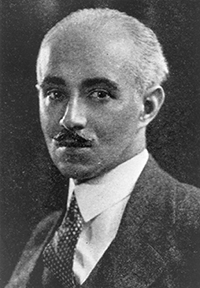 Among the Weitzman School’s latest efforts to advance diversity, equity, and inclusion within their community and the design professions, the School has established the Julian Abele Fellowship in Architecture, which will be given annually to a graduate architecture student or students once the fund is fully endowed. The Fellowship is named for the first Black architect to graduate from Penn.
“Julian’s extraordinary design talent is on full display in some of 20th-century America’s most prestigious buildings, and, as a family, we are so pleased that the Weitzman School is recognizing his remarkable contributions,” said Peter D. Cook, the great-grand-nephew of Mr. Abele, a graduate of Columbia University’s architecture program, and a design principal at HGA architects in Washington, D.C. “As of 2019, based on AIA membership, Black architects made up less than three percent of the profession. This initiative will, hopefully, inspire increased diversity in the profession while honoring Julian’s legacy.”
Born in 1881, Julian F. Abele, B.Arch’1902, was recruited—and quickly promoted to be chief designer—by famed Philadelphia architect Horace Trumbauer, but for much of the 20th century his achievements were under-recognized. Among the iconic buildings Mr. Abele designed or helped to design are the Widener Memorial Library at Harvard University, the Free Library of Philadelphia, and the Philadelphia Museum of Art. He also contributed to the design of Irvine Auditorium—often cited by visitors and alumni as their favorite interior space on campus, along with the Fisher Fine Arts Library, designed by Frank Furness—and other buildings on Penn’s campus. Mr. Abele provided original drawings for the design of Duke University’s campuses in Durham, North Carolina, though the school did not begin admitting Black students until the early 1960s. Mr. Abele was never able to visit the campus, and Duke officials did not formally acknowledge his role in designing it for decades. Mr. Abele died at home in Philadelphia in 1950.
In recent decades, both Philadelphia and Duke have paid tribute to Mr. Abele. In 1984, he was honored by the City of Philadelphia for the design of the Central Library and, shortly thereafter, for his contribution to the design of the Philadelphia Museum of Art. Historical markers were placed at each site. In 1987, through the efforts of Mr. Abele’s great-great-niece, Susan Cook, then a student there, Duke University installed a commissioned portrait of Mr. Abele in the lobby of the Allen Building (the University’s main administration building). In 2016, Duke’s leadership hosted a daylong ceremony attended by trustees, faculty, and Mr. Abele’s family to dedicate the University’s central West Campus quad the “Abele Quad.” (A quotation on the bronze marker reads, “If you seek his monument, look around.”)
Reflecting on these honors, Julian Abele’s son, Julian Abele Jr., says, “Dad was not around to receive any [of them], but I’m sure that no honor would be greater than any he might receive from his alma mater.”
The Weitzman School has received a $25,000 gift from a lead donor to establish the Fund, and is seeking to raise an additional $50,000 in gifts and multi-year commitments to be eligible for a $25,000 Weitzman Fellowship Match. A minimum of $100,000 is needed to establish an endowed fellowship fund at the School. The School hopes to go beyond the minimum amount to add greater value and a larger fellowship amount for perpetuity.
When it comes to awarding the new fellowship, consideration will be given to the applicant’s socioeconomic and educational background, status as a member of an under-represented minority group, and commitment to ensuring diverse voices in the field of architecture so as to enhance the experience of students in the graduate architecture programs and advance its mission.
Visit the Penn Giving page to contribute to the Julian Abele Endowed Fellowship Fund.
To discuss opportunities for giving, contact Jeff Snyder, the Weitzman School’s Assistant Dean for Development and Alumni Relations, at (215) 898-8738, or jsnyder2@design.upenn.edu.
Law School’s Future of the Profession Initiative
 The University of Pennsylvania Carey Law School announced on November 12 that its Future of the Profession Initiative (FPI) will partner with Access to Justice Tech Fellows (A2J Tech Fellows), a nonprofit organization that develops summer fellowships for law students seeking to leverage technology to create equitable legal access for low-income and marginalized populations. A2J Tech Fellow’s Founder and Executive Director, Miguel Willis, will serve as FPI’s inaugural Innovator in Residence.
The new affiliation will expand summer professional development opportunities available to Penn Law students and will support the growth of partnerships among A2J Tech Fellows, the Law School, and community partners who serve the public interest. The A2J Tech Fellows Program pairs law students with legal services organizations to develop projects that support the use of technology, data, and design thinking to bridge the justice gap in America. The program also promotes greater equity and inclusion within the legal profession through the cultivation of future leaders whose lived experiences can inspire law students from traditionally underrepresented backgrounds.
In his new role as Innovator in Residence with FPI, Mr. Willis will work closely with FPI leadership and colleagues around the Law School to educate new lawyers about the American access to justice crisis and the power of technology to better connect more individuals and small businesses with the legal system. Through mentorship, teaching, and continued leadership of the A2J Tech Fellows fellowship program, Mr. Willis will work collaboratively to build upon the Law School’s focus on developing novel solutions to the growing problems that pervade the legal services ecosystem while developing a new generation of leaders from a variety of backgrounds.
“We are delighted to welcome Miguel to the Penn Law School community,” said Ted Ruger, Dean of Penn Law. “In his brief legal career, Miguel has already forged a leadership role that demonstrates that new approaches to durable problems can create real impact. We are thrilled he will be able to continue growing his work through his role with FPI while introducing our students the emerging career opportunities and social justice solutions a rapidly changing legal landscape invites.”
“I am deeply honored to assume this exciting new role and am enthusiastic that A2J Tech Fellows will call Penn Law home,” said Mr. Willis. “Affirming the importance of legal innovation, access to justice, and race equity, this new role and partnership will create opportunities for future lawyers to develop more innovative and effective ways to address our nation’s justice gap.”
Immediately prior to joining FPI, Mr. Willis served as the Law School Admissions Council’s (LSAC) inaugural Presidential Innovation Fellow.
“Miguel’s commitment to ensuring equitable access to justice drove many exciting initiatives during his time with us,” said LSAC President and CEO Kellye Testy. “We are delighted that our incubator program was successful in helping Miguel’s young organization advance its important work and that A2J Tech Fellows has now found its home at Penn Law. Through this fitting new partnership, we know Miguel will continue the charge for closing the nation’s justice gap, and we look forward to the wonderful strides he and his new colleagues will make together.”
Mr. Willis earned a BA in political science from Howard University. While completing his undergraduate degree, Mr. Willis worked with the Department of Justice’s Office of Immigration Litigation. He is a 2017 graduate of the Seattle University School of Law, where he founded A2J Tech Fellows and co-created CaseBooker, a textbook marketplace app for law students. During law school, he served as President of the Black Law Student Association and on the National Black Law Student Association National Board. Mr. Willis was recognized as the 2016 National Jurist Law Student of the Year. His entrepreneurial spirit, drive to innovate, and commitment to diversity and access to justice earned him the ABA’s designation as one of 2018’s Legal Rebels.
“We’re proud to have been an early supporter of Miguel’s innovative program,” said Seattle University School of Law Dean Annette Clark. “This is exactly the kind of values-driven leadership we love to see in our alumni, and we applaud Miguel as he continues to change the legal industry—and legal education—for the better.”
Penn Law School launched FPI in October 2019 in recognition of the rapidly changing landscape that defines the modern legal profession. FPI’s mission is to “teach, lead, and transform” by educating law students about the dynamic forces shaping the future of the profession, leading profession-wide conversations about innovation and attracting creative thinkers to the law school to transform the way legal services are delivered.
Behavior Change for Good Initiative: Research Study to Identify Communications that Encourage Vaccinations
The Behavior Change for Good Initiative (BCFG) at the Wharton School and School of Arts and Sciences of the University of Pennsylvania has partnered with Walmart to conduct the largest-ever communication research study aimed at increasing flu vaccinations during the Fall 2020 flu season. The results of the study will be well-timed to assist with encouraging COVID-19 vaccinations.
As Penn Professors Katy Milkman, Mitesh Patel, and Angela Duckworth noted in their recent USA Today op-ed about the American COVID-19 response, “In the war to establish herd immunity, developing a vaccine is only half the battle. We also need behavior change techniques to encourage an unprecedented number of Americans to choose vaccination when the time comes.”
The BCFG-Walmart study focuses on closing what behavioral scientists call the intention-action gap.
“We focused on giving people an extra nudge to do something they already intended to do so it wouldn’t slip through the cracks. Sometimes that’s just a timely reminder, but it can also include a dose of encouragement when the task at hand feels arduous and easy to put off indefinitely. Past research suggests that we fail to act on anywhere from a third to two thirds of our intentions, particularly when it comes to our health,” said Katy Milkman, Wharton professor and BCFG Co-Director.
The goal is to learn how scientifically-informed messages can help increase vaccinations at scale. When a COVID-19 vaccine becomes available, these learnings can then be deployed to help motivate people to receive the vaccine and combat the spread of the virus.
BCFG’s interdisciplinary team of scientific experts designed 22 distinct text messaging strategies to encourage flu vaccination among hundreds of thousands of Walmart pharmacy customers who had agreed to receive messages from their pharmacy. These 22 communication strategies were then evaluated simultaneously in a massive A/B test in September 2020 to determine which were most effective at increasing flu shot uptake overall, as well as which were most effective among different sub-populations.
Some text messages prompted people to text “I will get a flu shot” to their pharmacy — a commitment to spur future action. Others took a more jovial approach to motivating vaccination by sharing a joke about flu season. Still other texts asked people to encourage others to get flu shots by passing along a motivational message that could easily be copied and pasted. Each of these messaging techniques was designed to provide the last needed boost for getting vaccinated.
BCFG will rapidly analyze the results of this A/B test and share the most effective communication strategies in early 2021 to ensure healthcare providers around the world can benefit from these insights.
“I am incredibly excited about the potential of this project to advance knowledge and save lives,” said Angela Duckworth, Penn and Wharton Professor and BCFG Co-Director.
“Walmart is well-prepared for flu season, and we want to better learn how to encourage our customers to get vaccines to keep themselves, their families and their communities safe,” said Michelle LeClerc, Walmart Pharmacist. “Providing access to immunizations and effective communication of the importance of getting a flu shot is another way we can help people live better.”
Walmart took many steps in 2020 to make it easier than ever for customers to get a flu shot. Walmart also launched a digital scheduler so customers could pre-book an appointment for a flu shot at any one of their 4,700+ pharmacies and hosted twice-weekly “fast flu” events to encourage customers to get flu shots during their regular shopping trips. Walmart has also ensured its 1.5 million associates have access to flu shots with no out-of-pocket costs, regardless of their insurance status.
The Water Center at Penn: Working at the Crossroads of Water, Equity and Climate Change
Water infrastructure is often a stark physical manifestation of the deep systemic racial and social inequities with which our country continues to struggle. Over the course of American history, the biases that resulted in these inequities have at times been unconscious, but often all too intentional.
Less resourced communities face increasing threats to their water security. Flooding, rising sea levels, and drought not only threaten people’s homes, but also their lives and the environment they rely on. This is true despite the fact that there are few public services more fundamental to public health and safety, community social and economic sustainability, and climate resilience. Communities facing deep systemic inequities also grapple with aging infrastructure and limited financial and technical capacity to maintain and improve existing systems, let alone move toward a more integrated water management approach. Many of the poorest municipalities in the country–whether in riverine or coastal environments, have long recognized flooding as a “fact of life.” This comes at great economic and social cost. Initial underinvestment in flood protection or stormwater management infrastructure begets ongoing commercial and social disinvestment as those with the resources to do so seek “higher ground.”
The personal and societal cost of these issues would be an ongoing national tragedy even without the spectre of climate change. But the problem is increasingly compounded by the effects of climate change, which in many parts of the country already include intense precipitation, increased storm surge, tidal flooding, and sewage backups.
These problems are not limited to large metropolitan centers. There are many small cities and towns, often in the shadow of larger metropolitan areas, where complex social factors and governance issues are at play, and where there is diminishing community capacity to manage these water related challenges. Elected officials and managers responsible for water management in these communities often want to do more but are stuck bouncing from crisis to crisis. While deeply committed to their communities, they may lack the time, knowledge, expertise or funding to get ahead of their communities’ water management challenges.
With the generous support of the Kresge Foundation, and in partnership with WaterNow Alliance (“WNA”), the Water Center is working to generate a thoughtful, objective, straight-talking guide for local elected and appointed decision makers to help navigate the dizzying array of resource options for water related technical assistance and funding. The guide, which will be hosted alongside WNA’s Tap Into Resilience Toolkit, is specifically designed for local managers, board members, and elected officials responsible for local stormwater management systems in under-resourced urban areas, and is designed to be relevant to such decision makers across the U.S.
While a single resource cannot solve all issues, the guide can serve as the first in a series of resources targeted to addressing critically important water issues in overlooked communities across the country.
Visit https://watercenter.sas.upenn.edu/research/projects/ to learn more about the projects that are underway at the Water Center.
.jpg) Louise Reid Coursey, a former employee at Penn Libraries, died on October 6. She was 87.
Louise Reid Coursey, a former employee at Penn Libraries, died on October 6. She was 87..jpg) Nabil Farhat, professor emeritus in the department of electrical and systems engineering, passed away on November 3 at his home in West Mt. Airy. He was 87.
Nabil Farhat, professor emeritus in the department of electrical and systems engineering, passed away on November 3 at his home in West Mt. Airy. He was 87..jpg) Linda Hatfield, associate professor of evidence-based practice in Penn Nursing, died on November 20 after a long battle with breast cancer. She was 66.
Linda Hatfield, associate professor of evidence-based practice in Penn Nursing, died on November 20 after a long battle with breast cancer. She was 66..jpg) Marjorie Jeffcoat, an emeritus professor of periodontics and former dean of Penn’s School of Dental Medicine, died on November 21. She was 69.
Marjorie Jeffcoat, an emeritus professor of periodontics and former dean of Penn’s School of Dental Medicine, died on November 21. She was 69.