Transformational Growth of Morris Arboretum Since 1976

With the retirement of Paul Meyer, the F. Otto Haas Executive Director of Morris Arboretum of the University of Pennsylvania, this spring after 43 years of service, it’s a fitting time to reflect on how the Arboretum transformed in that time. Under Mr. Meyer’s leadership, Morris Arboretum has grown from a hidden gem into one of the region’s most vibrant garden destinations and a world-class institution.
Morris Arboretum saw fewer than 25,000 visitors per year when Mr. Meyer arrived in 1976; in 2018, it saw more than 140,000. It was designated the Official Arboretum of the Commonwealth of Pennsylvania in April of 1988, serving as a model for its peers.
During the past four decades, Morris Arboretum’s finances have shown tremendous growth that have set the Arboretum on a stable and sustainable path. The operating budget has more than tripled from the time Mr. Meyer became director to $9 million today, and the Arboretum’s endowment has grown tenfold since 1991 to its current value of $60.4 million.
Mr. Meyer pointed to others who share the credit. “The strides that Morris Arboretum has made over the years would not have been possible without the hard work of the Arboretum’s staff, board and volunteers whose invaluable contributions continue to enable Morris Arboretum to fulfill its role as a premier public garden.”
Renewal and Restoration
Mr. Meyer began his career at Morris Arboretum as its curator in 1976 and became director in 1991.
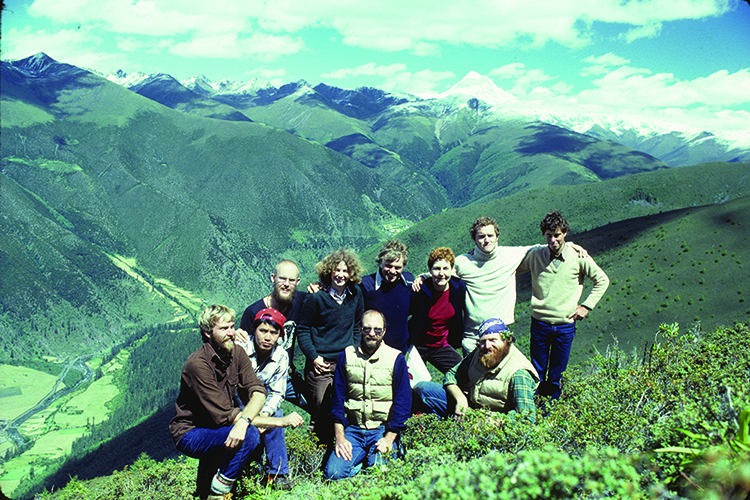
He led the clearing of overgrown sections of the garden and the renewal of living collections through expeditions abroad. In all, he completed 12 expeditions to countries including China, Korea, Taiwan, Armenia and the Republic of Georgia, where he collected plants from various sources to introduce greater genetic diversity. He also searched for plants that would specifically grow in stressful urban conditions. Mr. Meyer was a founding member of NACPEC (North America-China Plant Exploration Consortium).
Mr. Meyer’s mantra, according to Morris Arboretum supporter and advisory board member John Shober, was to “think big and take small steps.” Under Mr. Meyer’s guidance, the Fernery, Log Cabin, Springhouse, historic gardens, architecture and vistas with notable plant collections were all restored, and various other attractions were enhanced.
Restoration of the Fernery and Log Cabin are two particularly good examples of stewardship toward revitalizing the Arboretum’s assets. Originally built in 1899, the Fernery documented the British obsession with ferns and glasshouses during the Victorian era. The original building was constructed using locally-mined stone and utilized cutting-edge technology in glass cutting, steam heating and architectural elements. It slowly fell into disrepair over the century that followed its construction. It was not until 1994 that it was fully restored to its original grandeur, with a donation from Arboretum board member Dorrance (“Dodo”) H. Hamilton and other contributors who responded to a major matching grant from the National Endowment for the Humanities (Almanac October 4, 1994). This $1.2 million renovation included restoring the roof to the original curvature, replacing and updating the heating and electrical systems, installing an advanced climate control system and restoring the waterfall, ponds and stone walls. The blue flagstone plaza was also installed during this project to welcome visitors, and provide a shaded relaxing place to stop and enjoy the arboretum. The Dorrance H. Hamilton Fernery is the only remaining freestanding Victorian fernery in North America.
The Log Cabin was originally built as a garden retreat in 1908 by John and Lydia Morris. They used it to entertain friends, and she spent many hours on the porch enjoying the stream and woodlands. With its river-stone cobble chimney, the cabin is similar in style to those often built in the Adirondacks. The building was cool in the summer and provided the warmth of a fireplace in the winter. However, the shady, damp environment can result in faster than normal deterioration to the structure. Now fully restored, the structure and its serene location with its adjacent babbling brook delight visitors.
Education and Building for the Future
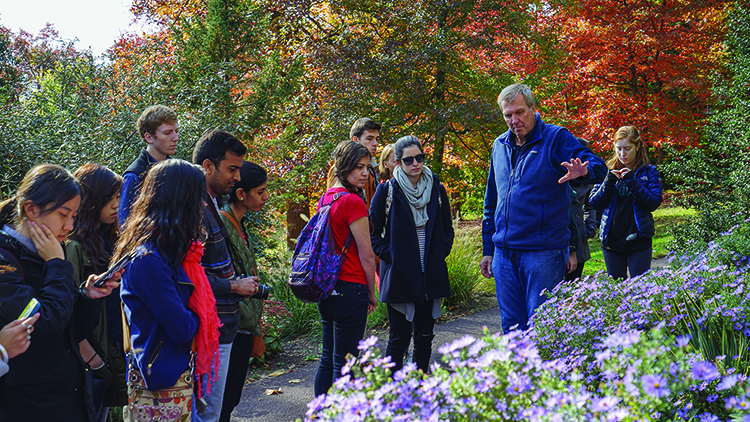
Since its inception, research and education have been at the core of Morris Arboretum’s mission, and the education and scientific programs for professionals and the general public also grew and thrived during the past 40 years. The Arboretum built its botanical staff and its reputation for regional floristic studies. Publications published under Mr. Meyer’s tenure include two editions of Plants of Pennsylvania and Aquatic Plants of Pennsylvania by Drs. Timothy Block and Ann F. Rhoads, both of which serve as reference manuals for professionals far and wide.
During this past fiscal year, Morris Arboretum offered 188 continuing-education classes, lectures and experiences serving over 3,500 participants. Engaging youth with the plant world is a long-term commitment for the Arboretum, with the goal of cultivating young environmental stewards and scientists. Providing more immersive experiential summer programs was another strategic goal achieved in both revenue-generating summer camp programs and partnerships with underserved youth. The endowed Internship Program of nine interns celebrated its 39th program year in 2018, and it remains a national model for professional development in horticulture, education, urban forestry and plant sciences.

Another aspect of educational outreach is Morris Arboretum’s Urban Forestry team, which supports the educational mission by disseminating tree care knowledge and providing unbiased arboriculture consulting services and technical assistance to clients including municipalities, institutions, universities, tree care companies, landscape architects and businesses throughout the region. The team also realizes the Arboretum’s educational mission by spreading urban forestry and tree care knowledge through their School of Arboriculture, which provides classes for a wide audience including arborists, allied professionals and industry leaders. While the classes target people in these disciplines, the general public is encouraged to attend to further their arboricultural knowledge.
Beyond education, Morris Arboretum has also focused on building for the future in a more literal sense. The $13 million Horticulture Center at Bloomfield Farm, across the street from the Arboretum’s public garden, completed in 2010, was the first LEED Platinum certified building for the University of Pennsylvania, and only the second in the state of Pennsylvania (Almanac November 23, 2010). Environmentally friendly design features at the 20,840-square-foot Center include an efficient ground-source heat pump that provides heat and air-conditioning for the building, photovoltaic panels that provide on-site generation of renewable energy and other sustainable elements, including geothermal wells to help keep office temperatures comfortable, green roofs that showcase drought-tolerant plants and cisterns that catch rainwater and make it available to be used to irrigate the landscape. The Center provides flexible work space for the Arboretum’s horticulture, education, maintenance and facilities staff.
Leadership Transition
Bill Thomas, executive director of Chanticleer and 2017 Scott Medal Recipient, deemed Paul “horticultural royalty” and truly deserving of this crown. “Throughout his 40-year career, Paul has made outstanding regional, national, and global contributions to the science and art of gardening. Paul has led the renaissance of the Morris Arboretum of the University of Pennsylvania, making it an internationally significant institution known for its collections, aesthetics, education and research. He has promoted collaboration and cooperation among international as well as local organizations, is a world leader in plant exploration and has been instrumental in preserving open space,” Mr. Thomas said.
With Mr. Meyer’s retirement effective March 31, Robert Gutowski, director of education & visitor experience at the Arboretum, will serve as interim executive director effective April 1 through approximately June 30. Mr. Gutowski has served the Arboretum in a variety of capacities for more than 30 years.
Tribute to Paul Meyer
The tribute to Mr. Meyer will be on Sunday, March 31, 3-5 p.m. at Springside Chestnut Hill Academy. To register or make a donation to Morris Arboretum in his honor, visit www.morrisarboretum.org/events_paul_meyer_retirement.shtml or call (215) 247-5777 ext. 131.
Ten Penn Women with the Power of the Pen
In recognition of Women’s History Month, here is a selection of some of the award-winning women authors who currently teach or recently taught at Penn.
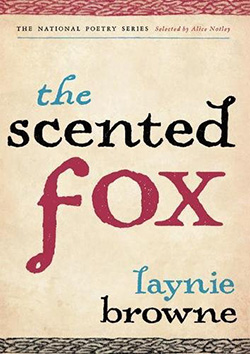 Laynie Browne, lecturer in creative writing, is a poet whose work explores the notions of silence and the invisible. She won the National Poetry Series Award in 2007 for The Scented Fox and is a three-time recipient of the Gertrude Stein Award in Innovative American Poetry. Her work has appeared in The Norton Anthology of Postmodern American Poetry, Conjunctions, Fence, Monkey Puzzle, Ecopoetry: A Contemporary American Anthology and Poet’s Choice. She is co-editor of I’ll Drown My Book: Conceptual Writing by Women. One of Ms. Browne’s most recent projects, You Envelop Me, utilizes the elegy to investigate birth and loss within the context of the mourning process.
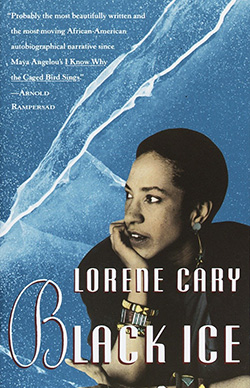 Lorene Cary, senior lecturer in the English department and creative writing, published a memoir, Black Ice, in 1991 about her time as a scholarship student in the formerly all-white, all-male elite St. Paul’s School in New Hampshire. It made the 1992 Notable Book list from the American Library Association and has been taught in colleges and high schools across the country since publication. Her first novel, The Price of a Child, fictionalized the story of a female fugitive from slavery and was selected in 2003 as the inaugural choice of One Book, One Philadelphia.
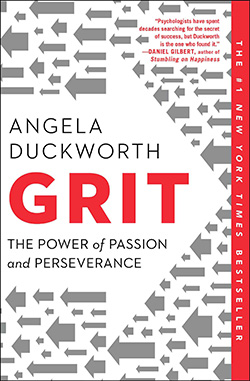 Angela Duckworth, the Christopher H. Browne Distinguished Professor of Psychology, senior scientific advisor for the Positive Psychology Center, faculty co-director of the Penn-Wharton Behavior Change For Good Initiative, faculty co-director of Wharton People Analytics, and founder and CEO of Character Lab, studies grit and self-control. Her book Grit: The Power of Passion and Perseverance, was a #1 New York Times best seller. She founded a non-profit summer school for low-income children that won the Better Government Award for the state of Massachusetts and was profiled as a Harvard Kennedy School case study. In 2013, she was selected as a MacArthur Fellow.
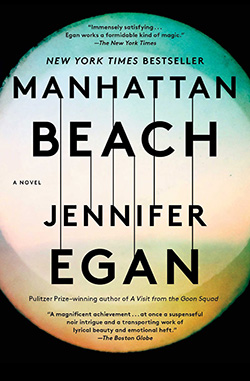 Jennifer Egan, artist-in-residence in English, is a novelist and short story writer. Her 2017 novel, Manhattan Beach, received the 2018 Andrew Carnegie Medal for Excellence in Fiction. Her novel The Invisible Circus became a feature film starring Cameron Diaz in 2001. She also wrote Look at Me, a finalist for the National Book Award in fiction in 2001 and A Visit From the Goon Squad, which won the 2011 Pulitzer Prize, the National Book Critics Circle Award for Fiction and the LA Times Book Prize. Also a journalist, she has written frequently in the New York Times Magazine. Her 2002 cover story on homeless children received the Carroll Kowal Journalism Award, and “The Bipolar Kid” received a 2009 NAMI Outstanding Media Award for Science and Health Reporting from the National Alliance on Mental Illness.
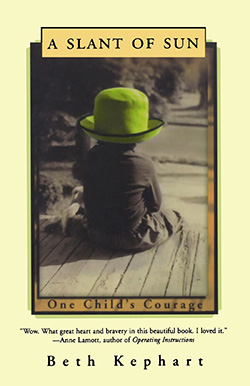 Beth Kephart, lecturer in creative writing, is the author of more than 20 books of fiction, non-fiction and fable. She was a National Book Award Finalist for A Slant of Sun: One Child’s Courage. Handling the Truth: On the Writing of Memoir, based in part on her teaching at Penn, won the 2013 Books for a Better Life Award, Motivational Category, was featured as a top writing book by O Magazine and was named a Best Writing Book by Poets and Writers. This Is the Story of You was a Junior Library Guild and Scholastic Book Club selection, among other honors. Small Damages was named a 2013 Carolyn W. Field Honor Book and a best book of the year by many publications. Going Over was the 2014 Parents’ Choice, Gold Medal Winner/Historical Fiction, named a Booklist Editor’s Choice and was voted a 100 Children’s Books to Read in a Lifetime by Goodreads, among other honors. One Thing Stolen was a 2015 Parents’ Choice Gold Medal winner and an Amazon pick, among other honors. Her 2013 middle grade historical novel, Dr. Radway’s Sarsaparilla Resolvent was named a top book of the year by Kirkus.
 Carmen Machado, artist-in-residence in creative writing, has won numerous awards for her debut short story collection, Her Body and Other Parties. It was a finalist for the National Book Award, the Shirley Jackson Award, the Kirkus Prize, LA Times Book Prize Art Seidenbaum Award for First Fiction, the Dylan Thomas Prize and the PEN/Robert W. Bingham Prize for Debut Fiction, and the winner of the Bard Fiction Prize, the Lambda Literary Award for Lesbian Fiction and the National Book Critics Circle’s John Leonard Prize. In 2018, the New York Times listed Her Body and Other Parties as a member of “The New Vanguard,” one of “15 remarkable books by women that are shaping the way we read and write fiction in the 21st century.”
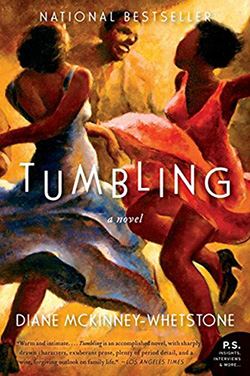 Diane McKinney-Whetstone, former lecturer in creative writing, is the author of six novels and works of short fiction that have appeared in numerous publications. She has written three critically acclaimed novels: Tumbling, Tempest Rising, and Blues Dancing. She is the recipient of numerous awards, including the American Library Association Black Caucus Literary Award for Fiction, which she has received twice, a special citation from the Athenaeum of Philadelphia for an outstanding work of fiction by a Philadelphia author, an award from the Zora Neale Hurston Society for creative contribution to literature, and resolutions from the City of Philadelphia and Senate of Pennsylvania for her portrayal of urban life.
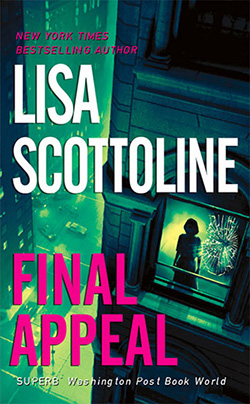 Lisa Scottoline, who has taught a course on Justice and Fiction at Penn Law, earned her BA in English from Penn and is also a graduate of Penn Law. She has written more than 30 bestselling novels, including Look Again and Don’t Go, both of which reached number two on The New York Times best seller list. Her book Final Appeal received an Edgar Award for excellence in crime fiction. She was recognized as a Fun Fearless Female by Cosmopolitan and a PW Innovator by Publisher’s Weekly. She also writes a weekly column, “Chick Wit,” with her daughter for the Philadelphia Inquirer. She has served as President of the Mystery Writers of America.
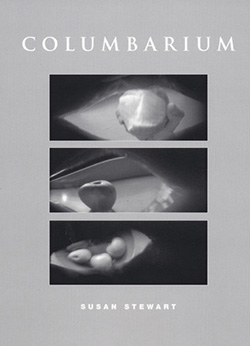 Susan Stewart, former Regan Professor of English, is a poet whose work has been widely published. She is a Berlin Prize Fellow and won an Academy Award in Literature from the American Academy of Arts and Letters. She won the National Book Critics Circle Award in Poetry for Columbarium and the Truman Capote Prize for Literary Criticism for Poetry, the Christian Gauss Award of Phi Beta Kappa, and Honorable Mention, James Russell Lowell Award of the MLA, for Poetry and the Fate of the Senses. She was a MacArthur Fellow and recipient of the Literary Award from The Athenaeum of Philadelphia for The Forest. In 2005 she was elected a Chancellor of the Academy of American Poets and a member of the American Academy of Arts and Sciences.
 Simone White, assistant professor in the English department, specializes in contemporary poetry and poetics, experimental writing, American literature and the genealogical lines of “American soul,” African-American cultural studies, sound studies and critical legal studies. She is the author of Dear Angel of Death, Of Being Dispersed, House of Envy of All the World and the chapbooks Unrest and Dolly (with Kim Thomas). In 2017, she received the Whiting Award for poetry. Her work has been featured in The New York Times Book Review, Harper’s Magazine, BOMB Magazine, Chicago Review and Harriet: The Blog.




 The Gene Therapy Program Preclinical Vector Core in the Perelman School of Medicine at the University of Pennsylvania has been awarded a Gene Therapy Resource Program (GTRP) contract for a third consecutive five-year period from the National Heart, Lung and Blood Institute (NHLBI) of the National Institutes of Health (NIH).
_resized.jpg) Jerome H. Sklaroff, professor of orthodontics in Penn’s School of Dental Medicine for 67 years, died peacefully at his home in Philadelphia on March 18. He was 96.
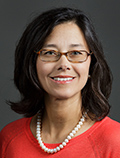
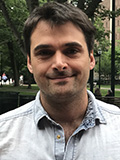
Jerome H. Sklaroff, professor of orthodontics in Penn’s School of Dental Medicine for 67 years, died peacefully at his home in Philadelphia on March 18. He was 96. Jessica Anna, assistant professor of chemistry and Elliman Faculty Fellow, and Davi Maximo, assistant professor of mathematics, both in Penn’s School of Arts and Sciences, are among the 126 recipients of this year’s Sloan Research Fellowships, which recognize early-career researchers and scholars in North America. Each will receive a two-year, $70,000 fellowship for research.
 Dr. Maximo studies variational problems from geometry. His research focuses on minimal surfaces, which are surfaces that minimize area on a local level—for example, a soap film that stretches across a loop of wire. Minimal surfaces are an important model for describing many natural phenomena and have been used in bioengineering and materials science, and in understanding black hole topology within the theory of general relativity. Dr. Maximo’s work aims to understand how these surfaces minimize area on a local level and how they can be used to understand the geometry of complex shapes more broadly.
 Penn physicists Charles Kane and Eugene Mele of SAS have been awarded the 11th Banco Bilbao Vizcaya Argentaria (BBVA) Foundation Frontiers of Knowledge Award in the Basic Sciences category “for their discovery of topological insulators, a new class of materials with extraordinary electronic properties—they behave as conductors on the surface, but as insulators in the interior,” the selection committee stated.