
Transformational Growth of Morris Arboretum Since 1976

With the retirement of Paul Meyer, the F. Otto Haas Executive Director of Morris Arboretum of the University of Pennsylvania, this spring after 43 years of service, it’s a fitting time to reflect on how the Arboretum transformed in that time. Under Mr. Meyer’s leadership, Morris Arboretum has grown from a hidden gem into one of the region’s most vibrant garden destinations and a world-class institution.
Morris Arboretum saw fewer than 25,000 visitors per year when Mr. Meyer arrived in 1976; in 2018, it saw more than 140,000. It was designated the Official Arboretum of the Commonwealth of Pennsylvania in April of 1988, serving as a model for its peers.
During the past four decades, Morris Arboretum’s finances have shown tremendous growth that have set the Arboretum on a stable and sustainable path. The operating budget has more than tripled from the time Mr. Meyer became director to $9 million today, and the Arboretum’s endowment has grown tenfold since 1991 to its current value of $60.4 million.
Mr. Meyer pointed to others who share the credit. “The strides that Morris Arboretum has made over the years would not have been possible without the hard work of the Arboretum’s staff, board and volunteers whose invaluable contributions continue to enable Morris Arboretum to fulfill its role as a premier public garden.”
Renewal and Restoration
Mr. Meyer began his career at Morris Arboretum as its curator in 1976 and became director in 1991.
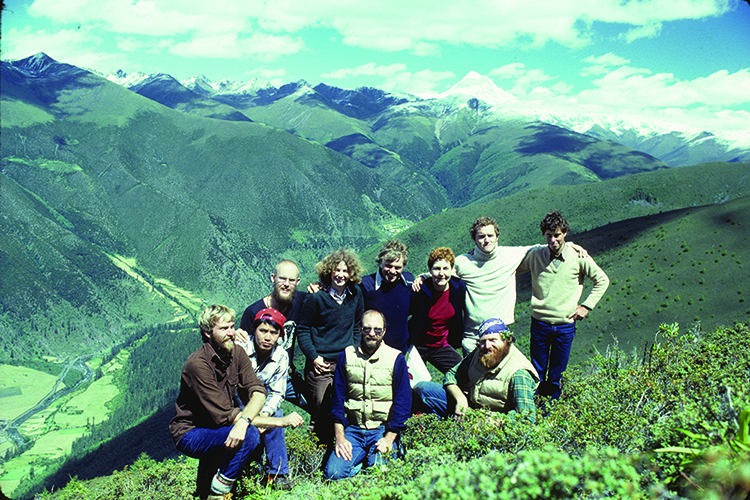
He led the clearing of overgrown sections of the garden and the renewal of living collections through expeditions abroad. In all, he completed 12 expeditions to countries including China, Korea, Taiwan, Armenia and the Republic of Georgia, where he collected plants from various sources to introduce greater genetic diversity. He also searched for plants that would specifically grow in stressful urban conditions. Mr. Meyer was a founding member of NACPEC (North America-China Plant Exploration Consortium).
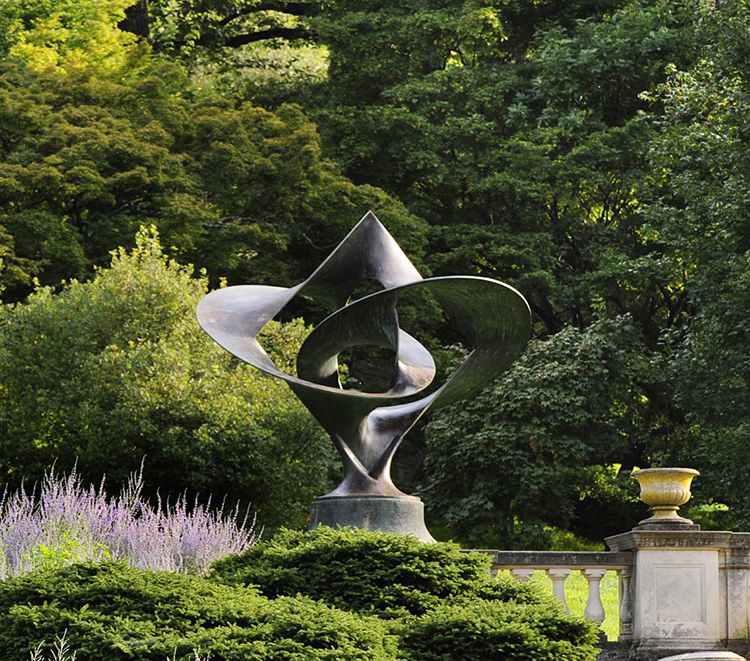
Mr. Meyer’s mantra, according to Morris Arboretum supporter and advisory board member John Shober, was to “think big and take small steps.” Under Mr. Meyer’s guidance, the Fernery, Log Cabin, Springhouse, historic gardens, architecture and vistas with notable plant collections were all restored, and various other attractions were enhanced.
Restoration of the Fernery and Log Cabin are two particularly good examples of stewardship toward revitalizing the Arboretum’s assets. Originally built in 1899, the Fernery documented the British obsession with ferns and glasshouses during the Victorian era. The original building was constructed using locally-mined stone and utilized cutting-edge technology in glass cutting, steam heating and architectural elements. It slowly fell into disrepair over the century that followed its construction. It was not until 1994 that it was fully restored to its original grandeur, with a donation from Arboretum board member Dorrance (“Dodo”) H. Hamilton and other contributors who responded to a major matching grant from the National Endowment for the Humanities (Almanac October 4, 1994). This $1.2 million renovation included restoring the roof to the original curvature, replacing and updating the heating and electrical systems, installing an advanced climate control system and restoring the waterfall, ponds and stone walls. The blue flagstone plaza was also installed during this project to welcome visitors, and provide a shaded relaxing place to stop and enjoy the arboretum. The Dorrance H. Hamilton Fernery is the only remaining freestanding Victorian fernery in North America.
The Log Cabin was originally built as a garden retreat in 1908 by John and Lydia Morris. They used it to entertain friends, and she spent many hours on the porch enjoying the stream and woodlands. With its river-stone cobble chimney, the cabin is similar in style to those often built in the Adirondacks. The building was cool in the summer and provided the warmth of a fireplace in the winter. However, the shady, damp environment can result in faster than normal deterioration to the structure. Now fully restored, the structure and its serene location with its adjacent babbling brook delight visitors.
Education and Building for the Future
Since its inception, research and education have been at the core of Morris Arboretum’s mission, and the education and scientific programs for professionals and the general public also grew and thrived during the past 40 years. The Arboretum built its botanical staff and its reputation for regional floristic studies. Publications published under Mr. Meyer’s tenure include two editions of Plants of Pennsylvania and Aquatic Plants of Pennsylvania by Drs. Timothy Block and Ann F. Rhoads, both of which serve as reference manuals for professionals far and wide.
During this past fiscal year, Morris Arboretum offered 188 continuing-education classes, lectures and experiences serving over 3,500 participants. Engaging youth with the plant world is a long-term commitment for the Arboretum, with the goal of cultivating young environmental stewards and scientists. Providing more immersive experiential summer programs was another strategic goal achieved in both revenue-generating summer camp programs and partnerships with underserved youth. The endowed Internship Program of nine interns celebrated its 39th program year in 2018, and it remains a national model for professional development in horticulture, education, urban forestry and plant sciences.

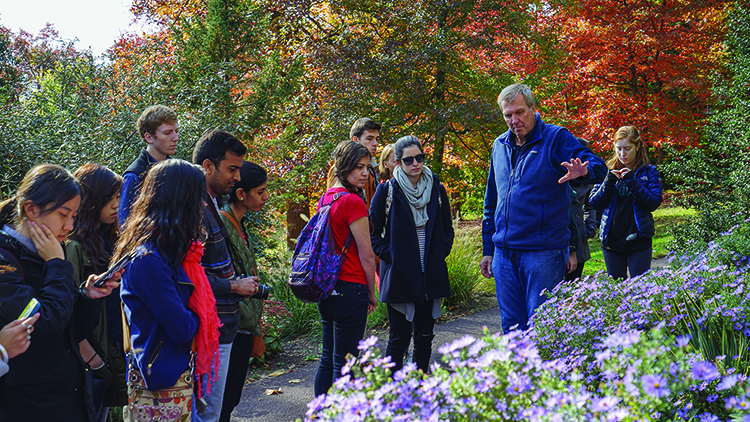
Another aspect of educational outreach is Morris Arboretum’s Urban Forestry team, which supports the educational mission by disseminating tree care knowledge and providing unbiased arboriculture consulting services and technical assistance to clients including municipalities, institutions, universities, tree care companies, landscape architects and businesses throughout the region. The team also realizes the Arboretum’s educational mission by spreading urban forestry and tree care knowledge through their School of Arboriculture, which provides classes for a wide audience including arborists, allied professionals and industry leaders. While the classes target people in these disciplines, the general public is encouraged to attend to further their arboricultural knowledge.
Beyond education, Morris Arboretum has also focused on building for the future in a more literal sense. The $13 million Horticulture Center at Bloomfield Farm, across the street from the Arboretum’s public garden, completed in 2010, was the first LEED Platinum certified building for the University of Pennsylvania, and only the second in the state of Pennsylvania (Almanac November 23, 2010). Environmentally friendly design features at the 20,840-square-foot Center include an efficient ground-source heat pump that provides heat and air-conditioning for the building, photovoltaic panels that provide on-site generation of renewable energy and other sustainable elements, including geothermal wells to help keep office temperatures comfortable, green roofs that showcase drought-tolerant plants and cisterns that catch rainwater and make it available to be used to irrigate the landscape. The Center provides flexible work space for the Arboretum’s horticulture, education, maintenance and facilities staff.
Leadership Transition
Bill Thomas, executive director of Chanticleer and 2017 Scott Medal Recipient, deemed Paul “horticultural royalty” and truly deserving of this crown. “Throughout his 40-year career, Paul has made outstanding regional, national, and global contributions to the science and art of gardening. Paul has led the renaissance of the Morris Arboretum of the University of Pennsylvania, making it an internationally significant institution known for its collections, aesthetics, education and research. He has promoted collaboration and cooperation among international as well as local organizations, is a world leader in plant exploration and has been instrumental in preserving open space,” Mr. Thomas said.
With Mr. Meyer’s retirement effective March 31, Robert Gutowski, director of education & visitor experience at the Arboretum, will serve as interim executive director effective April 1 through approximately June 30. Mr. Gutowski has served the Arboretum in a variety of capacities for more than 30 years.
Tribute to Paul Meyer
The tribute to Mr. Meyer will be on Sunday, March 31, 3-5 p.m. at Springside Chestnut Hill Academy. To register or make a donation to Morris Arboretum in his honor, visit www.morrisarboretum.org/events_paul_meyer_retirement.shtml or call (215) 247-5777 ext. 131.