News

Welcome Back From the President: At Home in the World
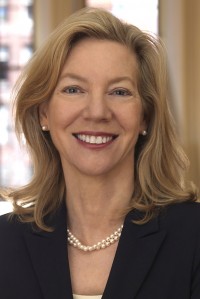
caption: Amy GutmannA warm welcome back to all as we begin Penn’s 276th year! This will be a year of new ventures and new levels of engagement across the globe, bookended by important events early in the fall and later in the spring semesters.

At the start of the fall semester, I will join alumni and many of Penn’s deans and senior leaders in Beijing for a very special presentation of the 2015 David M. and Lyn Silfen University Forum. Our discussion will focus on the role of China and the United States in shaping political, economic, technological and social developments in the 21st century. The Silfen Forum will be the culminating event of the “First 100 Days” celebrations that began in March, marking the launch of the Penn Wharton China Center in Beijing.

The members of the Silfen Forum panel who will explore the challenges and opportunities that lie ahead for the United States and China are notable for their breadth of expertise and depth of experience: Former United States Secretary of State General Colin Powell, USA (Ret.); Former Minister of Foreign Affairs for the PRC Ambassador Li Zhaoxing; CEO and Co-Founder of SOHO China LTD Zhang Xin; and Co-Chairman of Oaktree Capital Management LLC Howard Marks, W’67.  Of particular interest for everyone are the ways in which higher education can foster understanding, cooperation and trust between nations oftentimes perceived as at far remove—even at odds—in their cultural perspectives and politics.

Penn has a century of history in China and nearly 10,000 alumni currently living in Asia, many of whom live and work in the major cities of Shanghai, Beijing and Hong Kong. Locating the 2015 Silfen Forum in Beijing provides a unique opportunity to celebrate Penn in China. But even more, the Forum offers a timely opportunity to consider how the paired engines of cooperation and competition will define the China-U.S. relationship in areas as far ranging as business, technology, finance, climate change and health care, arts and culture, and higher education for decades to come. One important question I will pose is how, looking ahead, we can best foster creativity and innovation for the betterment of humankind both within each of our great countries and also between them. In addition to the Silfen Forum, we will host many School events at the Penn Wharton China Center, focusing on everything from the future of robotics, to advances in medicine and healthcare, to the role of design in China and more. These events aim to expand and deepen connections that already exist between Penn and Asia to bring about increased levels of interaction and cooperation.

At the same time as we are forging new Penn connections in Asia, we are building a new home at the heart of Penn’s campus—on Locust Walk and 38th Street—that will link our faculty and students to programs and activities across the globe. Perry World House is scheduled to open before the end of spring semester 2016, and I look forward to inaugurating it as an international hub for Penn’s global activities. A meeting place for faculty, students, visiting scholars and dignitaries to discuss and deliberate issues of international concern, Perry World House’s Global Innovations Institute will marshal interdisciplinary research and generate new insight into global challenges. Even before construction is completed, it has been engaged in supporting Penn global initiatives, hosting international gatherings and welcoming noteworthy speakers to campus as part of its mission to help bring Penn to the world and the world to Penn. Perry World House will serve to unite the focus of Penn’s people and programs engaging with the global community; as the center itself so aptly describes its mission, it will be “a catalyst, a connector and a communicator for international research, teaching and engagement.”

Although these important mileposts in the academic year ahead of us will occur half a world apart, Penn’s engagement in China and Perry World House are in fact different expressions of one and the same vision. The core of the University of Pennsylvania is an outward-looking community of students and scholars determined to acquire understanding, promote new knowledge and make important discoveries for the benefit of societies, communities and individuals all across the globe. This year we mark two undertakings that will serve to advance our efforts enormously while underscoring Penn’s unwavering commitment to global engagement. We are out front, looking ahead. That’s Penn’s place in the world and what the world, increasingly, expects from Penn.

Stanton Wortham: Faculty Director of the Online Learning Initiative
caption:

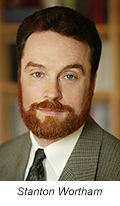
Provost Vincent Price and Vice Provost for Education Beth Winkelstein announce the appointment of Stanton Wortham, Judy and Howard Berkowitz Professor in the Graduate School of Education (GSE), as Faculty Director of the Online Learning Initiative, effective September 1, 2015.

“Stanton Wortham brings an extraordinary depth of expertise to help Penn chart the future of online learning,” said Provost Price. “We particularly welcome his insights into the power of online learning to provide opportunities to new generations of students and shape their social and cultural identities. He is the ideal scholar to build on the transformative work of Ed Rock, our inaugural faculty director of online learning, whose energy and vision were indispensable to developing online learning at Penn in its first three years.”

Dr. Wortham has taught at Penn since 1998, serving twice as interim dean of GSE and for ten years as associate dean for academic affairs. His pioneering research applies linguistic anthropology to education and classroom discourse, especially in the development of social identities and social positioning. Most recently, he has been leading a multi-year ethnographic and discourse analytic study of social identities among Mexican immigrants in the “New Latino Diaspora” of American towns that have become home to large numbers of new immigrants over the past decade.

He received his PhD (1992) from the University of Chicago and his BA (1985) with highest honors in psychology from Swarthmore College.

Penn has been a leader in online open learning since 2012, when it became one of the founding university partners of Coursera, the online open learning platform that today offers more than 1,000 courses from more than 120 universities around the world. Penn courses have now reached more than two million unique users, across a wide range of academic disciplines, and will also soon be available on the edX online open learning platform. On campus, the SAIL (Structured, Active, In-class Learning) Initiative, supported in part by a major grant from the Association of American Universities, brings new models of active learning to Penn classrooms, especially in introductory science, math and engineering courses.

Penn to Suspend Normal Operations on Friday, September 25

A Message to the Penn Community on Penn’s Preliminary Plans for the Pope’s Visit

Due to anticipated logistical and transportation issues related to the historic visit of Pope Francis to Philadelphia, the University will suspend normal operations on Friday, September 25. As a result, classes and University-sponsored events are cancelled on this date.

Designated essential personnel—including offices such as but not limited to Public Safety, Dining Services and Facilities that provide essential services, University emergency personnel and those responsible for the health and safety of students and lab animals—will be required to report to work and should consult with their supervisors about accommodations and scheduling. Other staff members, faculty members and students should treat the day under the same protocols as a weather-related suspension of operations. Penn Medicine staff should consult with their supervisors about work schedules.  

With as many as 2 million people expected to attend the weekend’s events in Philadelphia, faculty and staff could notice some transportation delays beginning earlier that week. Road closures around Center City and in the West Philadelphia area could begin as early as Thursday night after rush hour. We urge all faculty and staff to pay close attention to traffic and transportation plans that will soon be finalized by the City and SEPTA. The University will share the final plans as they become available.

Our priority is to ensure that our students, faculty and staff remain safe and that patients at our hospitals continue to receive world-class care. We know that the weekend of the Pope’s visit will create some inconveniences and challenges for members of the Penn community, and we appreciate everyone’s patience as the University works with the City in accommodating visitors during this very special event.

Vincent Price, Provost

Craig Carnaroli, Executive Vice President

The Katz Fund for Research on Leadership and Emotional Intelligence
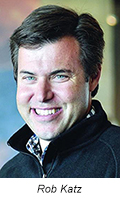
caption: The Wharton School of the University of Pennsylvania is pleased to announce a $1 million gift from Rob Katz, W’88, to establish the Katz Fund for Research on Leadership and Emotional Intelligence. With the goal of enhancing the creation and dissemination of knowledge on emotional intelligence in the workplace, the Fund will directly support the Wharton Center for Leadership and Change Management’s research and curriculum development in the areas of emotions and organizational behavior, headed by Sigal G. Barsade, Joseph Frank Bernstein Professor and professor of management.

“The entire Wharton community is incredibly grateful for Rob Katz’s gift. Emotional intelligence is crucial to business success, and the knowledge generated by the Wharton Center for Leadership and Change Management with the support of the Katz Fund will greatly benefit the global business network. We look forward to working with Professor Sigal Barsade at the Center to identify new opportunities for research, collaboration and education in this important field,” said Wharton Dean Geoffrey Garrett.

The Katz Fund will enable support for research, academic conferences, curricular materials, practitioner conferences, seminars and popular press dissemination. The funds will also be used to move research and pedagogy forward through the creation of a new comprehensive emotional intelligence assessment with the goal of benefitting academics, students and practitioners across industries.

Mr. Katz, who received his B.S. in economics from the Wharton School, is the chairman and chief executive officer of Vail Resorts.

“In today’s fast paced and more transparent and connected business environment, emotional intelligence is critical for leaders at all levels and in all industries,” said Mr. Katz. “I feel fortunate to be able to further the amazing work on this topic already underway by Professor Barsade and the efforts of the Wharton School in educating our future business leaders.”

Founded in 1881 as the first collegiate business school, the Wharton School of the University of Pennsylvania is recognized globally for intellectual leadership and ongoing innovation across every major discipline of business education. With a broad global community and one of the most published business school faculties, Wharton creates ongoing economic and social value around the world. The School has 5,000 undergraduate, MBA, executive MBA and doctoral students; more than 9,000 annual participants in executive education programs; and a powerful alumni network of more than 94,000 graduates.

Penn Excellence through Diversity Fund: Eight Projects

The Action Plan for Faculty Diversity and Excellence, first issued in 2011, made a commitment to create a fund in support of interdisciplinary research on topics related to equity, inclusion and diversity. This Excellence through Diversity Fund was established in the 2012-2013 academic year. The eight projects supported in the Fund’s third cycle, listed with principal investigators, are:

• The Revisit Weekend for Diversity Scholars, co-hosted by the Fontaine Society and the Ernest E. Just Biomedical Society, encourages URM (Under Represented Minority) students newly admitted to biomedical graduate studies to meet faculty and prospective colleagues and learn more about Penn, biomedical graduate studies, graduate student life and diversity initiatives. Michael Nusbaum, Arnaldo Diaz Vazquez (PSOM).

The Women and Liberty in Early Modern Philosophy of Education Conference will bring together Penn faculty and students with leading global scholars to advance the interdisciplinary understanding of the role played by women in developing theories and practices of education in the 17th and 18th centuries. Karen Detlefsen (SAS).

• The Penn Institute on Sex and Gender in Health will expand the work of the existing Penn Center for the Study of Sex and Gender, which is centered in the Schools of Medicine and Veterinary Medicine, to include faculty from across the University in considering the essential roles of sex and gender in human health, health conditions and engagement with health care, including support for an international conference in May 2016. C. Neill Epperson (PSOM).

• The Penn Center for Minority Serving Institutions Speaker Series will invite distinguished scholars and practitioners to share their experiences with the Penn and local communities about the important role of Minority Serving Institutions of higher education, which enroll 26% of US students and offer significant opportunities for advancement to low income and historically underrepresented individuals and communities. Marybeth Gasman (GSE).

• The Penn Special Interest Group in Health Disparities and Health Equity will advance cross-disciplinary inquiry and collaborations across the University about health disparities and health equity, with the aim of increasing Penn’s institutional visibility and external funding in the essential areas of health policy, practice and research. Eve Higginbotham, Karen Glanz, Diana Harris, Said Ibrahim, Daniel Polsky (PSOM); Antonia Villarruel (SON).

• The Women in Business Academia Conference will bring together doctoral students and faculty across disciplines and universities for constructive dialogue about their identities as scholars and open discussions of the unique challenges faced by women in academia, including such topics as navigating the academic job market, seeking formal and informal mentors, managing work/life boundaries and understanding day-to-day life as a professor. Eric Bradlow (Wharton).

• The UPHS-CHOP Alliance of Minority Physicians aims to develop leaders in medicine through national recruiting of URM students and residents, professional development workshops and networking events, mentorship and community outreach for URM faculty, staff and medical students at UPHS, CHOP and PSOM, as well as economically disadvantaged and first generation college graduates entering medical school and others who may be underrepresented in their specific disciplines. Iris Reyes, Eugenia South (PSOM).

The Penn Honors Diversity Symposium will host URM undergraduate students interested in learning more about graduate school at a multi-day event at which they can present their work in a poster session, meet Penn faculty and graduate students and learn more about admissions, funding, research opportunities and student life at Penn. Eve Troutt Powell (SAS); Michael Nusbaum (PSOM).

Dan Hawryschuk: Chief Technology Officer, ISC

caption:ISC named Dan Hawryschuk as executive director, chief technology officer effective July 8. Mr. Hawryschuk leads ISC’s new Technology Services Group, which provides systems engineering, operations, networking and telecom services to the University.

Mr. Hawryschuk is a technology leader with 25 years of experience developing and managing both university and large corporate programs in technical implementation, risk management, infrastructure optimization and organization transformation. He was recently director of information technology at Cornell Information Technology (CIT), where he was instrumental in supporting the transformation of CIT’s Support Organization and broader campus IT services.

Prior to Cornell, he held senior IT positions for the Raymond Corporation at Toyota Material Handling North America, American Greetings Corporation, Affiliated Resource Group and Endurance Corporation.

Mr. Hawryschuk has great enthusiasm for innovation and embraces several practices from his days at Toyota. He says, “My favorite is Genchi Genbutsu, which translates to ‘go and see.’ The concept is that to fully understand a situation one needs to go to where the work is done. I like to visit the teams to understand what they are working on, experience their challenges and help to guide change based on real-world understanding.”

Mr. Hawryschuk completed his MBA at the University of Iowa’s Tippie School of Business and earned his bachelor’s degree in information systems administration and business management at Limestone College.

Emily Morton-Owens: Director of Digital Library Development

caption:Emily G. Morton-Owens became the director of digital library development and systems for the University of Pennsylvania Libraries in July.

Prior to coming to Penn, Ms. Morton-Owens was responsible for library applications and systems for the Seattle Public Library. She also worked at the NYU Health Sciences Library, where she was assistant curator and managed the library’s website and other systems. She teaches Digital Library Technology at the College of Computing & Informatics of Drexel University.

Ms. Morton-Owens holds a master’s degree in computer science from the Courant Institute of New York University, a master’s degree in library and information science from Drexel University and a bachelor’s degree in German studies from Yale University.

Ms. Morton-Owens presently sits on the editorial board of Information Technology and Libraries and is co-chair of the Library Information Technology Association (LITA) Patron Privacy Technologies Interest Group. She has previously served on the Books Panel of the Medical Library Association (chair), the LITA Research & Assessment Committee and the LITA Top Tech Trends Committee (chair).

Call for Nominations: The Faculty Award of Merit Presented by Penn Alumni

The Faculty Award of Merit Presented by Penn Alumni was established in 2014 by Penn Alumni and the Office of the Provost. It is presented annually to an individual or group of collaborators that has made an outstanding contribution to alumni education and engagement at Penn by sharing their unique scholarship work with the alumni community. Special emphasis is placed on faculty members who go above and beyond the call of duty by engaging Penn alumni with the University as their intellectual home, and on those who educate the faculty community about the alumni engagement opportunities available to them. The 2015 honoree was Engineering Professor Daniel D. Lee.

The award consists of both a $2,500 cash award and a formal citation, and will be presented during the February Penn Alumni Volunteer Leadership Retreat.

All Penn faculty, staff and alumni are eligible to nominate a faculty member for this award. To nominate a faculty member or for more information about award criteria and eligibility, visit http://www.alumni.upenn.edu/s/1587/gid2/index.aspx?sid=1587&gid=2&pgid=1406

Nominations are due by October 30, 2015.

Report of the Office of Student Conduct

To the University Community:

The Office of Student Conduct is committed to issuing case-related data reports on an annual basis each summer. As in past years, the following report combines academic integrity and student conduct cases. This year the data for complaints of sexual violence, relationship violence and stalking include data for cases handled by OSC prior to February 1, 2015 with data for cases filed subsequent to that date being provided by the Sexual Violence Investigative Officer.

—Julie Nettleton, Director, Office of Student Conduct
Incident Type (by respondents)
Academic Year
Academic Year
Academic Year
Academic Year
 
2011-2012
2012-2013
2013-2014
2014-2015
Academic Integrity (total)
68
148
160
185
    Undergraduate
37
96
127
151
    Graduate/Professional
31
52
33
34
Student Conduct (total)
215
141
162
177
    Undergraduate
163
118
134
158
    Graduate/Professional
52
23
28
19
Academic Integrity and Student Conduct (total)
3
7
2
1
    Undergraduate
3
4
1
1
    Graduate/Professional
0
3
1
0
Mediation (participants)
0
18
22
26
Group Cases (Student Organizations/Fraternities/etc.)*
8
5
3
4
TOTAL:
294
319
349
393
*Group Cases include several individuals but are being counted as one respondent.
Case Investigations: Academic Integrity**
Plagiarism
34
84
56
77
Unauthorized collaboration/use of performance of another person’s work
26
32
78
67
Misconduct during an exam
10
11
10
3
Submission of false data
0
1
0
6
Falsification of grades or transcripts
0
1
0
0
Other academic violation
0
7
1
5
Altering of exam/paper for re-grade
2
0
5
3
Misrepresentation of academic records
2
3
3
1
Provided information to another student
1
10
7
2
Cheating
14
16
23
26
Fabrication
3
2
3
3
Multiple submission
1
2
1
1
Facilitating academic dishonesty
10
17
25
15
Unfair advantage over fellow students
2
4
7
7
Case Investigations: Student Conduct**
Alcohol violation: First offense
36
20
42
15
Alcohol violation: Other
11
7
2
4
Assault
8
9
19
8
Attempted theft
1
0
3
3
Burglary
6
1
1
1
Criminal mischief
0
1
0
0
Disorderly conduct
41
37
14
36
Drug violation
17
9
15
6
Fire code violation
3
11
3
18
Forgery
0
2
2
2
Fraud
3
5
2
0
Fraudulent use of Penn ID
1
0
0
0
Harassment
3
4
8
2
Sexual violence***
4
8
7
9
Indecent exposure
0
3
1
0
Malicious mischief
3
0
0
0
Miscellaneous security violations
1
3
1
0
Disturbance/investigation of person
2
0
2
0
Relationship Violence
***
***
***
10
Retail theft/shoplifting
0
2
5
1
Stalking
***
***
***
6
Theft
5
3
3
2
Trespassing
1
1
1
2
Vandalism
14
8
2
4
Other conduct violation
2
2
5
2
Propulsion of object
5
12
0
0
Receiving stolen property
0
0
1
0
Use or possession of fake ID card
3
1
0
0
Recklessly endangering another person
0
3
1
0
Hazing
2
5
5
13
Terroristic threats
0
0
1
1
Ethnic intimidation
1
0
0
1
Incident Type (by respondents)
Academic Year
Academic Year
Academic Year
Academic Year
 
2011-2012
2012-2013
2013-2014
2014-2015


Use or possession of air guns/firearms/dangerous articles
0
1
0
0
Threats
4
1
2
3
Violation of safety regulations
0
1
2
1
Dangerous articles in residences
1
0
0
1
Possession of stolen property
1
0
0
0
Misappropriation of funds
1
0
0
0
Noise violation
18
14
2
1
Threats with dangerous article
0
0
0
0
Computer violation/violation of ethical behavior in the digital environment
82
47
38
60
Violation of agreement
0
0
2
0
Misrepresentation of status to the University
0
0
1
0
False identity
0
1
0
0
Sexual harassment
1
1
2
0

**Number of Case Investigations does not equal the number of respondents because some cases involve more than one type of misconduct.

***Sexual Violence, Stalking and Relationship Violence were specifically outlined in the University’s new policy in June 2014 under the now Sexual Violence, Relationship Violence and Stalking Policy. Prior handlings of related cases were all categorized under indecent/sexual assault and harassment.

Sanctions: Academic Integrity****
Academic support
23
14
14
30
Apology
1
2
1
5
Community service
0
0
1
0
Counseling
0
4
4
2
Deferred dismissal
1
0
0
0
Essay
18
22
53
58
Meet with appropriate person related to charge
0
6
0
1
Expulsion
0
0
2
2
Notation on transcript
2
2
1
2
Other (specialized)
7
5
1
1
Probation
20
27
32
30
Reprimand
3
24
29
46
Restitution
1
0
0
0
Suspension
8
19
5
5
Suspension not imposed
6
15
29
23
Suspension not imposed and imposed
8
14
12
2
Warning
0
5
11
28
Withdraw permanently from the University
3
3
0
2
Withhold/delay diploma
1
0
2
4
Sanctions: Student Conduct****
Academic support
0
0
1
0
Alcohol and drug education/evaluation
16
18
14
17
Alcohol/drug fine
6
6
17
2
Apology
0
12
5
5
CAPS substance abuse evaluation
0
3
6
2
Community services
30
17
12
11
Counseling
10
14
7
9
Deferred dismissal
1
0
0
0
Essay
4
3
6
11
Expulsion
0
0
1
0
File sharing community service/educational module
71
28
3
58
File sharing fine
47
20
3
0
Fine
0
1
0
0
Meet with appropriate person related to charge
1
2
0
0
No contact
5
8
1
2
Notation on transcript
0
1
0
1
Other (specialized)
1
10
22
3
Probation
22
16
10
15
Reprimand
108
53
54
17
Restitution
6
4
4
4
Suspension
1
6
1
4
Suspension not imposed
2
3
4
5
Suspension not imposed and imposed
3
2
4
0
Warning
3
5
5
30
Withdraw permanently from the University
3
3
0
1
Withhold/delay diploma
1
1
0
0
****Number of Sanctions does not equal the number of respondents because some cases result in more than one type of sanction.
Mode of Resolution of Cases
Signed agreement
230
223
128
216
Hearing
2
3
3
7
No formal disciplinary action/unfounded complaint or informal resolution
77
87
85
39
Mediation
#
9
11
13
Required educational module (Electronic File sharing only)
##
##
##
58
Unresolved*****
8
12
46
43

*****Unresolved can mean that a student is no longer a member of the Penn community, that the investigation is on-going, or that a conclusion has been reached but an agreement has not been reached.

# The Mediation Program formally began in 2012.

# The OSC has created an education-based response to file sharing cases.

Deaths

Julian Bond, Pappas Fellow

Julian Bond, the civil rights activist and former NAACP chairman, died of complications of vascular disease on August 15 in Fort Walton Beach, Florida. He was 75 years old.

Mr. Bond was born in Tennessee. He attended Morehouse College in Atlanta, Georgia. In 1965, he was elected to the Georgia House of Representatives, but his fellow lawmakers refused to let him take office. He took his seat in 1967, when the Supreme Court ruled in his favor. He served in the Georgia House of Representatives until 1975, followed by six terms of service in the Georgia Senate, ending in 1986. In 1971, he founded the Southern Poverty Law Center, which he helped to oversee for the rest of his life.

Mr. Bond came to Penn as a Pappas Fellow in the spring of 1989 (Almanac November 29, 1988). He taught courses in the history of the civil rights movement at Penn, among other universities. He served as chairman of the board of the NAACP from 1998 until 2010.

Mr. Bond is survived by his wife, Pamela Horowitz, and five children.

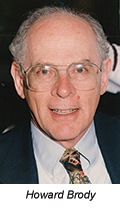
Howard Brody, Physics

caption:Howard Brody, professor emeritus of physics at Penn, died on August 11 of complications from Parkinson’s disease at Bryn Mawr Hospital. He was 83 years old.

Dr. Brody was born in Newark, New Jersey. He earned his bachelor of science in physics from Massachusetts Institute of Technology (1954), where he also played on the varsity tennis team. He then earned a master of science (1956) and a doctorate (1959), both in physics, from California Institute of Technology.

He taught physics at Penn from 1959 until his retirement in 1999. Famous for his insights into the physics of tennis, he wrote several books on the topic. Science Made Practical for the Tennis Teacher was published by the U.S. Professional Tennis Registry in 1986. Tennis Science for the Tennis Player was published by the University of Pennsylvania Press in 1987 and is still in print.

Much of Dr. Brody’s research focused on the interaction between the tennis ball and racket, including the optimal racket size and stiffness. He found that on larger rackets, the percussion center is closer to the physical center of the racket head, making larger rackets easier for many players to use. Some of his findings upended accepted beliefs: he found that looser racket strings allow for the ball to be hit with greater power than tighter strings.

Dr. Brody was a member of the sports scientific committee of the U.S. Tennis Association. He was also inducted into the International Tennis Hall of Fame as an educator.

Dr. Brody is survived by two daughters, Victoria Stevenson and Deirdre Bernstein, and five grandchildren. Donations may be made payable to the Trustees of the University of Pennsylvania, for the Lisa Lin Brody Foley Fund, and mailed to Laura Weber, Penn Arts and Sciences Office of Advancement, 3600 Market Street, Suite 300, Philadelphia, PA 19104.

David Premack, Psychology

caption:David Premack, professor emeritus of psychology at Penn, died on June 11 in Santa Barbara, California. He was 89 years old.

Dr. Premack was born in Aberdeen, South Dakota. He attended the University of Minnesota, where he earned his BA in chemistry and liberal arts (magna cum laude, 1943), his MA in experimental psychology and statistics (1951) and his PhD in experimental psychology and philosophy (1955). He served in the U.S. Army from 1943 to 1946.

Dr. Premack held faculty appointments at the University of Minnesota; the University of Missouri; the University of California, Los Angeles; the University of California, Santa Barbara and Harvard before joining Penn as a professor of psychology in 1975. He also established a primate study center in Honey Brook, Pennsylvania.

Dr. Premack’s career in psychology spanned a major revolution in the field. In his early work, he was a major contributor to the dominant American behaviorist enterprise with his “Premack principle,” which stated that any behavior A that is more common than another behavior, behavior B, can serve as a reinforcer for B. In his mid-career, he played a major role in the cognitive revolution by embracing it and by providing some of the best ideas and experiments to support it.

The behaviorists held that humans were just very complicated animals, with nothing qualitatively different between humans and animals. Dr. Premack showed that chimpanzees were more cognitively sophisticated than previously believed, by showing that they could comprehend and produce conceptual relations using a “language” of visual symbols.

In 1978, with his Penn graduate student Guy Woodruff, he introduced the idea of a “theory of mind,” an understanding that there are other minds. The two presented evidence for this theory in chimpanzees and gave birth to a major area of research in child development and other parts of modern psychology that are flourishing today. While Dr. Premack showed much greater intelligence in apes than had been previously thought, he also noted some uniquely human features, such as the syntax of language and the prevalence of intentional teaching as a fundamental activity. He is almost unique in psychology in his combination of theoretical and empirical excellence, and in being a contributor to two strongly opposed views of what psychology is about.

Dr. Premack retired from Penn in 1990 and moved to France, where he studied cognition in young children with his wife, Ann. They eventually returned to the Santa Barbara area. In 2005, he was designated a William James Fellow of the American Psychological Society.

Dr. Premack is survived by his wife, Ann, and three children.

Evan Rose, Urban Design

caption:Evan Rose, professor of practice in urban design at Penn, died after a long illness on July 13 at his home in Brooklyn, New York. He was 50 years old.

Mr. Rose grew up in New Jersey. He earned his bachelor’s degree from Reed College in Portland, Oregon in 1986 and his master’s degree in architecture from the University of California, Berkeley in 1992. He began his career in San Francisco’s planning department. As senior urban designer, he authored the award-winning San Francisco Waterfront Urban Design and Access Plan and initiated, authored and implemented San Francisco’s acclaimed Downtown Streetscape Plan.

In 1997, Mr. Rose joined the San Francisco firm SMWM, where he led the urban practice for 11 years and built the New York office. In 2007, he was diagnosed with ossifying fibromyxoid tumor, a rare form of cancer, and in 2008 he moved to New York for treatment. That year, he launched Urban Design+. In 2012, he launched SITELAB Urban Studio with Laura Crescimano.

Mr. Rose joined the Penn faculty in 2011 as a full-time professor of practice in the School of Design. He taught the Public Realm studio for second-year urban design students. In May of 2015, as part of the School’s graduation activities, PennDesign students awarded him with the G. Holmes Perkins Award for Outstanding Teaching, a citation given in recognition of distinguished teaching and innovation in the methods of instruction in the classroom, seminar or studio (Almanac May 26, 2015).

Mr. Rose was also an adjunct associate professor of architecture at Columbia University, where he taught in the graduate urban design program. He served as a board member for the San Francisco AIA and the California Council of the AIA, was a past president of the Architecture and Design Forum at the San Francisco Museum of Modern Art, where he also sat on the board of directors, and was a regular critic for architecture and urban design studios at MIT, SCI-ARC, UCLA, CCA, Stanford and UC Berkeley.

Mr. Rose is survived by his wife, Josslyn Shapiro, and their son, Ryder. An event to remember Mr. Rose and his work will be held by SPUR in San Francisco on September 25 (http://www.spur.org/blog/2015-07-20/memoriam-evan-rose); a memorial service in New York City is being planned for the fall. In lieu of flowers, his family requests donations be made in his honor to Team Evan at the Memorial Sloan-Kettering Cancer Center Cycle for Survival (http://mskcc.convio.net/site/TR?team_id=50300&fr_id=2490&pg=team).

Donald Schotland, Neurology

Donald Schotland, professor emeritus of neurology at Penn, died on August 13 in Bryn Mawr, Pennsylvania. He was 85 years old.

Dr. Schotland earned his AB in 1952 and his MD in 1957, both from Harvard University. He was a resident in neurology and fellow in neuropathology at Columbia University, where he was also a member of the faculty from 1962 to 1967.

Dr. Schotland was a pioneering researcher in neuromuscular disease who trained a generation of academic neurologists. He joined the Penn faculty in 1967 as an associate professor of neurology. In 1971, he was promoted to professor of neurology. He eventually became director of the Henry Watts Center for Neuromuscular Research. In 1998, he retired from Penn.

Dr. Schotland is survived by his sons, John, Gr’86, M’96, Tom and Peter, Gr’01, and four grandchildren.

E. Craig Sweeten, Alumni Relations

caption:E. Craig Sweeten, W’37, the legendary former senior vice president for Developement and University Relations at Penn, died on August 7 at the age of 100.
Mr. Sweeten graduated from Penn’s Wharton School and as Bowl Man of his class, he was elected one of four “Honor Men” in his senior year. He was the class’s perennial president, starting in his freshman year.

Mr. Sweeten began working for the University of Pennsylvania two days after graduation and was a member of the administration until his retirement in 1981. He began as an alumni field worker with the University’s Bicentennial Campaign until its culmination in 1940, when he was appointed to the University’s Placement Service as assistant director and later as director.

A lieutenant commander in the Naval Reserve, he served in the Pacific and other stations for four years during World War II.

During his career, he served as director of Colonial Penn Insurance Co., Bellevue Stratford Hotel, Walter B. Gallagher Co. and the Good Neighbor Foundation of Bay Village in Florida.

In 1956, he was named Penn’s director of development (Almanac February 1956). In 1965, he became vice president for development and public relations, in which capacity he was responsible for the operations of the Offices of the Director of Development and the Director of Public Relations (Almanac April 1965). For 11 years, State Relations was also his responsibility, and he was almost as much at home in Harrisburg as he was on campus.

Mr. Sweeten became senior vice president for Program for the Eighties in 1975 (Almanac October 7, 1975). This encompassed the supervision of the University’s five-year, $225 million fundraising campaign, which was completed on schedule on June 30, 1980 (Almanac July 10, 1980).

In January of 1981, the University of Pennsylvania presented Mr. Sweeten with the Alumni Award of Merit, calling him “a man nationally respected for his experience and insights in the art of raising funds for higher education, and whose immeasurable contributions gave the University energy and direction…” (Almanac January 13, 1981).

When he retired from the University, the Trustees of the University of Pennsylvania named a building on Locust Walk to house the General Alumni Society, the department of Alumni Relations, the Alumni Council on Admissions and The Pennsylvania Gazette as the E. Craig Sweeten Alumni House (Almanac July 14, 1981).

Mr. Sweeten spent the next 20 years in the Pocono Mountains in Skytop, Pennsylvania, where he served as a Trustee of East Stroudsburg University and a director of the Pocono Medical Center. He was named “Man of the Year” by the Pocono Chamber of Commerce.

The Sweetens moved to Venice, Florida, where Mr. Sweeten was an elder of the Venice Presbyterian Church and a member of the local Venice/Nokomis Rotary Club. For four years, he was president of the local Penn Alumni Club and on the board of directors of the Sarasota Ivy League Club.

In 1990, the Sweetens moved to Bay Village, a long-term continuing care retirement community in Sarasota, Florida. There, Mr. Sweeten was active in the Pine Shores Presbyterian Church. He had been married for 37 years to Nancy Rafetto Leech Sweeten, former vice dean of Penn’s College of Women and a lecturer in the English department at Penn, who died in 2005.

Mr. Sweeten is survived by two daughters, Barbara Lynn Schabel and Jane Elizabeth Gillis, CW’70; a stepson, Douglas Leach, WG’83; six grandchildren and seven great-grandchildren.

In lieu of flowers, donations may be made to the Pine Shores Presbyterian Church, 6135 Beechwood Avenue, Sarasota, FL 34231.

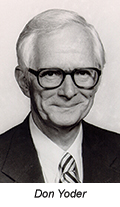
Don Yoder, Folklife Studies, Religious Studies and American Studies

caption:Don Yoder, professor emeritus of folklife studies, religious studies and American studies at Penn, died of natural causes on August 11 at his home in Devon, Pennsylvania. He was 93 years old.

Dr. Yoder was born in Altoona, Pennsylvania. He received his PhD in religious studies from the University of Chicago in 1947. In his early career, he taught at Franklin and Marshall College and Muhlenberg College. In 1949, he co-founded the Pennsylvania Folklife Center with Alfred L. Shoemaker and J. William Frey. In 1950, they established the Kutztown Folk Festival, the first ethnic festival of its kind.

Dr. Yoder taught at Penn for four decades and directed 60 PhD dissertations. In 1956, he joined the Penn faculty as instructor and assistant professor of religious thought. In 1966, he became associate professor of religious thought. In 1974, he became associate professor of folklore and folklife and in 1975, he attained the rank of professor of folklore and folklife. In 1996, he became professor emeritus. Dr. Yoder chaired Penn’s graduate program in folklore and folklife from 1966 until 1969. He then served as co-chair of the graduate program from 1969 until 1971. In 1986, he won the Lindback Award for Distinguished Teaching (Almanac April 15, 1986).

Dr. Yoder was responsible for the introduction of the term “folklife” to its present academic use in the United States, and he helped to found the Center for American Folklife at the Library of Congress.

He was the co-owner of the Roughwood Collection with his cousin, William Woys Weaver. He has published seventeen books and countless articles on Pennsylvania Dutch folk culture. According to his colleagues, he was widely known in Europe and his work influenced the German composer Paul Hindemith and the German-American writer H. L. Mencken. Dr. Yoder was considered the dean of German-American genealogy. A self-described “incurable Pennsylvanian,” he devoted his life to the study and cultural preservation of the folkways of his native people and inspired new generations in reviving and maintaining the spirit of the Pennsylvania Dutch.

Dr. Yoder is survived by his cousin, William Woys Weaver.

A memorial service will be held at Haverford Friends Meeting, 855 Buck Lane, Haverford, PA 19041 on Saturday, October 24 from 10:30-11:30 a.m.

Governance

Welcome Back From the Senate Chair: Managing Change

As Chair of the Faculty Senate, I have the distinct pleasure and privilege of welcoming you, our distinguished and diverse faculty, our excellent and supportive staff members and our outstanding and eager students, back to our eminent University and to our great and growing campus.

The Faculty Senate comprises all members of the standing faculty (tenured, tenure-track and clinician educator) across all 12 schools of the University. These (approximately) 2,600 members have elected a Senate Executive Committee (SEC) that is headed by the Tri-Chairs: Chair-Elect Laura Perna, Past Chair Claire Finkelstein and me. I note with pride that Penn is one of only three among our Ivy peers to have a Senate that represents the entire standing faculty. The SEC oversees nine committees that will be working assiduously over the coming academic year on a series of charges given by last year’s committees and SEC, but it will also stand ready to respond to any new challenges that emerge. In the spirit of shared governance that permeates all our endeavors, the Tri-Chairs meet regularly with the President and Provost, invite them and other senior administrative officers to SEC meetings, and work with them to coordinate the University Council and its own seven committees. We all rise to the challenge of achieving the goals of the Penn Compact 2020.

In the dynamic landscape of the academy, numerous issues confront the faculty and the University this academic year. Among them are: the evolution and evaluation of open learning initiatives (for example, massive open online courses (MOOCs) have morphed into small private online courses (SPOCs) at some institutions); the establishment of a program to improve faculty awareness of and responses to mental health concerns among students; consideration of a Faculty Advocate for confidential counsel when our colleagues have professional and career worries; our response to and accommodations for the persistent constriction in governmental and other funding sources for research; and clarification and harmonization of University conflict of interest policies. In helping to set our agenda and lead our efforts, I am reminded of a proverb often attributed to Charles Darwin:  It is not the strongest or most intelligent who will survive but those who can best manage change.

For those of our colleagues who are participating in SEC and its committees currently or who have done so in the past, we appreciate your service. For those who see such service as an opportunity to create a brighter future for us all, please contact Laura, Claire or me at the Office of the Faculty Senate (senate@pobox.upenn.edu) and express interest in participating. And while not formally represented by SEC, I also encourage our more than 2,000 colleagues on the non-standing faculty (e.g., academic clinician, research track, adjunct, emeritus faculty) to voice your suggestions and concerns to the Tri-Chairs.

This summer we welcomed our new Executive Assistant to the Senate, Patrick Walsh; he invites you to contact him with your issues or questions (walshjam@upenn.edu; (215) 898-6943). Andreana Thomas served admirably in an interim role, and we wish her well as she moves to new responsibilities within the University. I also acknowledge Dwight Jaggard, who was Past-Chair last year, from whose wisdom and perspectives I have benefited tremendously. Finally, never hesitate to contact me with your insights, questions, suggestions or good humor (reed.pyeritz@uphs.upenn.edu).

2015-2016 SEC Meetings

Senate Executive Committee meetings are held on Wednesdays at 3 p.m. in room 205, College Hall, unless otherwise noted below. The agenda will be announced in Almanac prior to each meeting.

September 30, University Club     

January 20    

February 10

October 21    

November 18

December 9             

March 16, Van Pelt-Dietrich Library 

April 13

May 11, Singh Center

2015-2016 Council Meetings

Members of the University community are invited to attend University Council meetings provided they register with the Office of the Secretary via ucouncil@pobox.upenn.edu or by telephone at (215) 898-7005. Meetings take place on Wednesdays from 4-6 p.m. in Bodek Lounge, Houston Hall. The agenda will be announced in Almanac prior to each meeting.

October 7    

October 28    

December 2 

January 27

February 17

March 23

April 20

2015-2016 Trustees’ Meetings

The University of Pennsylvania Trustees’ Open Meetings schedule is as follows:

October 1    

November 5-6    

December 10

February 25-26

March 17 (if needed)

May 12

June 16-17

Call (215) 898-7005 if you plan to attend. Open committee meeting schedules will be announced in Almanac prior to each meeting.

2015-2016 PPSA Meetings

Penn Professional Staff Assembly meetings are held from 11 a.m.-noon. For locations and to RSVP, see http://penn-ppsa.org

September 11    

October 16    

November 13    

December 11    

January 15    

February 12

March 11

April 8

May 13

June 10

2015-2016 WPPSA Meetings

Meetings are held in room 217, Stiteler Hall, from 12:30-1:30 p.m. For updates and information on other WPPSA events, see www.upenn.edu/wpsa

October 6    

November 17

WPPSA Open House: September 8

The Weekly-Paid Professional Staff Assembly will hold its open house on Tuesday, September 8 from 12:30-1:30 p.m. in room 217, Stiteler Hall, first floor. All weekly paid (non-union) staff members are welcome to attend. For questions, contact WPPSA chair Rosa Vargas at rvargas@sas.upenn.edu or see www.upenn.edu/wpsa

WXPN Board Meetings

Meetings are held at noon at WXPN, 3025 Walnut Street. They are open to the public. For more information, call (215) 898-0628. The meetings will be announced in Almanac prior to each meeting.

September 16    

November 11    

January 13

March 9

Policies

Policy on Secular and Religious Holidays

This year Rosh Hashanah will be observed on Monday, September 14 and Tuesday, September 15. As a reminder, Jewish holidays begin at sunset; thus Rosh Hashanah begins at sundown on Sunday, September 13. Yom Kippur will be observed on Wednesday, September 23. Observance begins at sunset on Tuesday, September 22.

––Vincent Price, Provost

Effective July 1, 1996; Revised March 30, 2001; Revised September 7, 2010

1. The University recognizes/observes the following secular holidays: Martin Luther King, Jr. Day, Memorial Day, July 4, Thanksgiving and the day after, Labor Day and New Year’s Day.

2. The University also recognizes that there are several religious holidays that affect large numbers of University community members, including Christmas, Rosh Hashanah, Yom Kippur, the first two days of Passover and Good Friday. In consideration of their significance for many students, no examinations may be given and no assigned work may be required on these days. Students who observe these holidays will be given an opportunity to make up missed work in both laboratories and lecture courses. If an examination is given on the first class day after one of these holidays, it must not cover material introduced in class on that holiday.

Faculty should realize that Jewish holidays begin at sundown on the evening before the published date of the holiday. Late afternoon exams should be avoided on these days. Also, no examinations may be held on Saturdays or Sundays in the undergraduate schools unless they are also available on other days, nor should seminars or other regular classes be scheduled on Saturdays or Sundays unless they are also available at other times.

3. The University recognizes that there are other holidays, both religious and secular, which are of importance to some individuals and groups on campus. Such occasions include, but are not limited to, Sukkot, the last two days of Passover, Shavuot, Shemini Atzeret and Simchat Torah, as well as Chinese New Year, the Muslim New Year, Diwali and the Islamic holidays Eid Al-Fitr and Eid Al-Adha. Students who wish to observe such holidays must inform their instructors within the first two weeks of each semester of their intent to observe the holiday even when the exact date of the holiday will not be known until later so that alternative arrangements convenient to both students and faculty can be made at the earliest opportunity. Students who make such arrangements will not be required to attend classes or take examinations on the designated days, and faculty must provide reasonable opportunities for such students to make up missed work and examinations. For this reason it is desirable that faculty inform students of all examination dates at the start of each semester. Exceptions to the requirement of a make-up examination must be approved in advance by the undergraduate dean of the school in which the course is offered.

For the dates of the Recognized Holidays for FY 2016, see

http://www.upenn.edu/almanac/volumes/v61/n33/recognized-holidays.html

For the Academic Calendar, see: http://www.upenn.edu/almanac/3yearcal.html

Honors

Mark Allen: 2016 Daniel E. Noble Award for Emerging Technologies

caption:Mark Allen, the Alfred Fitler Moore Professor in the department of electrical and systems engineering and scientific director of the Krishna P. Singh Center for Nanotechnology, received  the IEEE Daniel E. Noble Award for Emerging Technologies in June “for contributions to research and development, clinical translation and commercialization of biomedical microsystems.”

Dr. Allen is a pioneer in the field of micro-electromechanical systems, or MEMS, and nanofabrication technology. His research allows the creation of structures, sensors and actuators that exploit the unique potential of the small scale. He received his PhD in microelectronics from MIT and his BSE (chemical engineering and electrical engineering) and BA (chemistry) from Penn.

2015 American Academy of Arts and Sciences Members

Jean Bennett and Paul A. Offit of the Perelman School of Medicine at the University of Pennsylvania have been elected as new members to the American Academy of Arts and Sciences, one of the nation’s most prestigious honorary societies and a leading center for independent policy research. They will be inducted at a ceremony on October 10.

Dr. Bennett is the F.M. Kirby Professor of Molecular Ophthalmology at the Perelman School of Medicine.

Dr. Offit is the Maurice R. Hilleman Professor of Vaccinology and a professor of pediatrics at the Perelman School of Medicine. He is also a professor in the division of infectious diseases and the director of the Vaccine Education Center at the Children’s Hospital of Philadelphia.

Ralph Brinster: Honorary Doctor of Laws, University of Calgary

caption:Ralph Brinster received an honorary Doctor of Laws degree in May from the University of Calgary. Dr. Brinster, one of the world’s most accomplished veterinary scientists, received the honors at the Cumming School of Medicine and the faculties of law, veterinary medicine and graduate studies. The Richard King Mellon Professor of Reproductive Physiology at Penn’s School of Veterinary Medicine, he performs cutting-edge research and is developing novel techniques for the culture and genetic modification of germline stem cells to restore fertility in male children undergoing cancer treatment. Dr. Brinster earned his VMD and PhD at Penn.

CAPS: International Accreditation

Counseling and Psychological Services (CAPS) at Penn has been formally accredited by the International Association of Counseling Services, Inc. (IACS), an Alexandria, Virginia-based organization of US, Canadian and Australian counseling agencies. CAPS was evaluated by IACS against high standards of counseling practice and was found to offer competent and reliable professional services to its students. Approval by IACS is also dependent upon evidence of continuing professional development as well as demonstration of excellence of counseling performance. While there are dozens of accredited college counseling centers nationwide, Penn is only the second Ivy institution (following Princeton) to have the designation; among the larger list of Ivy Plus peers, only Stanford, Johns Hopkins and Georgetown are accredited.

David Christianson: 2015-2016 Radcliffe Institute Fellow

caption:In July, the Radcliffe Institute for Advanced Study at Harvard University selected David W. Christianson as the Elizabeth S. and Richard M. Cashin Fellow for the 2015-2016 academic year. Dr. Christianson, the Roy and Diana Vagelos Professor of Chemistry and Chemical Biology in Penn Arts and Sciences, is among only three percent of applicants accepted to the program.

At the Radcliffe Institute, Dr. Christianson will work to develop “blueprints” to understand and guide the protein engineering of terpenoid cyclases. As a visiting professor of chemistry and chemical biology at Harvard in the spring semester, he will also develop and teach a course on organic chemistry of life processes, which he will bring to Penn when he returns.

Steven Douglas: 2015 ISNV Paradigm Builder Lectureship

caption:Steven D. Douglas, professor of pediatrics at the Perelman School of Medicine, University of Pennsylvania, and chief of the section of immunology at Children’s Hospital of Philadelphia, received the 2015 International Society for NeuroVirology (ISNV) Paradigm Builder Lectureship award in June.
Dr. Douglas is recognized for his seminal and continuous contributions to the field of leukocyte biology, with emphasis on monocyte/macrophage biology in HIV infection. His research has intersected the disciplines of psychiatry, immunology, neurology and AIDS, utilizing the antiemetic drug Aprepitant (an NK1R/SP antagonist) as a potential therapeutic agent for HIV infection.

Nader Engheta: SPIE Gold Medal

Nader Engheta, the H. Nedwill Ramsey Professor of Electrical and Systems Engineering at Penn, received the Gold Medal from SPIE, the international society for optics and photonics. He was recognized for his transformative and groundbreaking contributions to optical engineering of metamaterials and nanoscale plasmonics, metamaterial-based optical nano circuits and biologically-inspired optical imaging. The Gold Medal is the highest honor bestowed by SPIE.

For more information on Dr. Engheta, see the July 14, 2015 issue of Almanac.

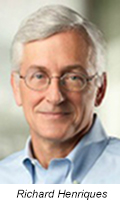
Richard Henriques: Senior Fellow, Center for High Impact Philanthropy

caption:Richard “Dick” Henriques was appointed a senior fellow at the University of Pennsylvania’s Center for High Impact Philanthropy, with a joint appointment at the Wharton Social Impact Initiative. He is the former chief financial officer of the Bill & Melinda Gates Foundation and a two-time Penn alumnus, having earned his BA from the College in 1978 and his MBA from the Wharton School in 1981.

Mr. Henriques will work alongside the Center’s team to develop practical guidance on vehicles for achieving philanthropic goals, with an initial focus on how foundations and other funders can use program-related investments, or PRI, to do the most good.

Michael Knoll: ESADE Award

caption:In July, Penn Law professor Michael S. Knoll was presented with the award for academic excellence at the 8th Aptíssimi Awards organized by the ESADE Alumni Law Club. The Aptíssimi Awards honor individuals from Spain and abroad whose work has contributed to the world of business law.

Professor Knoll is the Theodore K. Warner Professor of Law and Professor of Real Estate, co-director of the Center for Tax Law and Policy and deputy dean of the Law School. He was honored for his work on the application of finance principles to questions of international tax policy, particularly the connection between taxation and competitiveness. He also researches the implications of domestic tax policy and its connection to business.

Emily Kramer-Golinkoff: Champion of Change

caption:Emily Kramer-Golinkoff was one of nine “Champions of Change” honored at the White House in July for making a difference in health treatment. Ms. Kramer-Golinkoff, a 30-year-old with advanced stage cystic fibrosis, cofounded Emily’s Entourage to raise funds and awareness for new treatments and a cure for the rare form of her disease. Since its founding in 2011, Emily’s Entourage has raised more than $1.5 million and led worldwide efforts to fast track research on rare “nonsense” cystic fibrosis mutations.

Ms. Kramer-Golinkoff is manager of strategic initiatives and operations at the Penn Medicine Social Media and Health Innovation Lab. She completed her master’s degree in bioethics and certification in clinical ethics mediation at Penn in 2013. In 2007, she graduated cum laude from Penn’s Annenberg School for Communication, where she received the Honorable Walter H. Annenberg Award.

Penn: AACC and EPA Awards

In May, the African American Chamber of Commerce (AACC) of Pennsylvania, New Jersey and Delaware honored the University of Pennsylvania with its 2015 Corporate Advocate of the Year Award in recognition of the University’s commitment to diversity and inclusion with minorities, women and local businesses through its Economic Inclusion Program. Penn’s economic inclusion strategy includes annual goals for engaging local, minority and women-owned businesses and workforce participation in the areas of purchasing, human resources and construction and an array of programs and partnerships aimed at building capacity and community engagement.

Penn also finished in first place in the U.S. Environmental Protection Agency’s nationwide 2015 College and University Green Power Challenge. The Environmental Protection Agency (EPA) began its Green Power Challenge for higher education institutions in 2006. Penn has been the winner every year for the Ivy League, and since 2009, the overall winner in the College and University category.

Penn-made President: Jim Johnsen

Jim Johnsen, the current senior vice president of human resources and process transformation at Alaska Communications, was named the 14th president of the University of Alaska in July. He will assume the presidency on September 1, 2015.

Dr. Johnsen previously served as senior vice president of administration at Doyon, Limited and as vice president of administration and chief of staff at the University of Alaska. He is a member of the Alaska State Chamber of Commerce board of directors, a trustee of the University of Alaska Foundation and a commissioner of the Western Interstate Commission on Higher Education. He earned his doctorate in higher education management from the University of Pennsylvania in 2006.

Paul Robinson and Six Law Students: U.S. Military Honors

Six students in a spring 2015 course, “Using Law to Interdict Foreign Terrorist Fighters,” taught by Paul H. Robinson, the Colin S. Diver Professor of Law, received an official commendation recognizing their “outstanding support to Special Operations Command Pacific” (SOPAC). The students, Nicole Bredariol, Jennifer Cilingin, Adria Cranman, Bethan Jones, Tory Morris and Sierra Shear, were each awarded a special military coin from the SOCPAC Commander. For his work in organizing the project, Professor Robinson has been nominated for the military’s prestigious Eugene G. Fubini Award, which is given to the private sector advisor who has made the most significant contribution to the Department of Defense and its mission each year.

John Trojanowski: AANP Award

caption:John Q. Trojanowski, a professor of pathology and laboratory medicine in the Perelman School of Medicine and the director of Penn’s Institute on Aging, received the American Association of Neuropathologists’ (AANP) Award for Meritorious Contributions to Neuropathology.

Dr. Trojanowski is recognized for his long career as a leader and pioneer in the research and treatment of neurodegenerative diseases. The AANP described his work as a “steady contribution to the study of neurodegenerative disease that spans many diseases, disciplines, genes and domains.”

​Kevin Volpp: ACTS and NIH Awards

caption:Kevin Volpp, a professor of medicine and health care management in the Perelman School of Medicine and the Wharton School at the University of Pennsylvania, received the 2015 Association for Clinical and Translational Science (ACTS) Distinguished Investigator Award for Career Achievement and Contribution to Clinical and Translational Science in May.
In June, he received the 2015 Matilda White Riley Award from the National Institutes of Health (NIH) Office of Behavioral and Social Sciences Research.

Dr. Volpp, whose research focuses on the impact of financial and organizational incentives on health outcomes, is the founding director of the Center for Health Incentives and Behavioral Economics (CHIBE) and vice chair of health policy in the department of medical ethics and health policy at Penn. He holds a medical degree from the Perelman School of Medicine and a doctorate in applied economics and managerial science from the Wharton School.

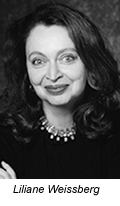
Liliane Weissberg: 2015-2016 USC Shoah Foundation Teaching Fellow

caption:Liliane Weissberg, a professor of German comparative literature in the School of Arts and Sciences of the University of Pennsylvania, has been awarded the University of Southern California (USC) Shoah Foundation 2015-2016 Rutman Teaching Fellowship. Established by Penn alumna Lori Rutman Fife in memory of her parents, Henry and Sherry Rutman, the award is offered annually by the Spielberg Foundation to a Penn faculty member to teach about the Holocaust.

As a Fellow, Dr. Weissberg will meet with USC Shoah Foundation staff to learn how to integrate its Visual History Archive testimonies into her research and teaching. In the spring semester of 2016, she will teach a course for undergraduate students of all majors called “Witnessing, Remembering and Writing the Holocaust.” The course will draw on her interest in memory, writing and the role of the witness and will incorporate literary sources as well as the Visual History Archive

Jeremy Wilusz: 2015 Rita Allen Foundation Scholar

caption:Jeremy E. Wilusz, an assistant professor of biochemistry & biophysics in the Perelman School of Medicine at the University of Pennsylvania, was awarded a $500,000 grant from the Rita Allen Foundation in July. He will receive $100,000 per year for five years as a 2015 Rita Allen Foundation Scholar.
Dr. Wilusz studies circular RNAs, a recently discovered version of ribonucleic acid. He and his team seek to describe and understand how circular RNAs are generated and regulated and how they function. They also investigate whether circular RNAs are mis-regulated in various diseases, such as cancer, and if they can be therapeutically targeted against the diseases in which they may play a role.

WXPN and Bruce Warren: FMQB Awards

WXPN, the member-supported radio station at the University of Pennsylvania, and its associate general manager, Bruce Warren, won national “Station of the Year” and “Program Director of the Year,” respectively, at the annual FMQB Triple A Conference in August.

The FMQB Triple A Conference has honored the best in the Triple A industry since 2010. Winners were selected by radio and record company executives, as well as artist management companies throughout the nation.

Features

Sacred Writings: Extraordinary Texts of the Biblical World Centerpiece Exhibition

They are treasures that have survived centuries and even millennia: one of the world’s oldest fragments of the gospel of Saint Matthew; the first Bible printed in the Americas, in the Native American language of Massachuset; a New Testament Bible published in twelve languages in Nuremberg, Germany, 1599; the earliest version of the Mesopotamian flood story, pre-dating the Biblical story of Noah, written on clay over 3,500 years ago.

In honor of the first visit by Pope Francis and the World Meeting of Families in Philadelphia, the Penn Museum—in conjunction with the Penn Libraries—offers Sacred Writings: Extraordinary Texts of the Biblical World, a special exhibition of rare artifacts from the Museum Collection and rare books and manuscripts from the Penn Libraries. On view now through November 7, Sacred Writings provides the centerpiece experience for a Museum visit, where a special focus on the ancient Near East, Egypt, the Canaan and Ancient Israel galleries and beyond affords visitors a unique opportunity to delve into ancient cultures and Bible-era art and artifacts.

Ten texts are featured in Sacred Writings: Extraordinary Texts of the Biblical World.

Treasures from the Penn Museum

One of the world’s oldest fragments of the gospel of Saint Matthew, written on papyrus and dating to the 3rd century CE, was once part of a codex (book). This fragment, written in ancient Greek, contains the beginning of the Gospel of Matthew (Chapter 1: 1-9 and 12-20), a section that details the lineage of Jesus. (This is one of two genealogies of Jesus provided in the New Testament; the Gospel of Luke offers a largely different genealogy.)

An ancient clay tablet in Sumerian cuneiform from the site of Nippur in Mesopotamia (now in Iraq), circa 1650 BCE, contains the earliest version of the Mesopotamian flood story. This tale becomes part of the Epic of Gilgamesh, and tells of a flood that destroyed humankind—the story closely parallels the biblical story of Noah.

A richly decorated, illuminated Qur’an from Iran, believed to have been made in Cairo in 1164, is written in Naskhi (early Arabic script), and features the complete text of the Qur’an in black script, with commentary in red script.

One of the world’s oldest fragments of the gospel of Saint Matthew, written on papyrus and dating to the 3rd century CE, was once part of a codex (book).

Treasures from the Penn Libraries

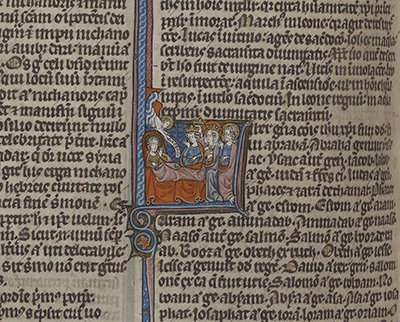
• An illuminated Latin Bible produced in Arras, France in the late 13th century.

• The first authorized Roman Catholic translation of the New Testament Bible into English, printed at Reims, France, through the efforts of English Catholic exiles, in 1582.

• The first complete Bible printed in the New World, a monumental translation of the Bible into the Native American Massachuset language, by Puritan missionary John Eliot, in 1663.

• A polyglot New Testament Bible compiled by German scholar Elias Hutter with side by side text in 12 languages—Syriac, Hebrew, Greek, Latin, German, Czech, Italian, Spanish, French, English, Danish and Polish—printed in Nuremberg, Germany in 1599.

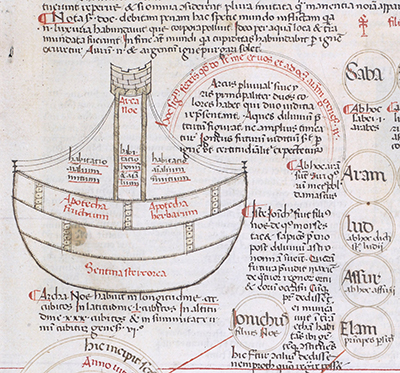
• A late 15th century Italian illustrated manuscript copy of Werner Rolevinck’s history of the world from the creation to the election of Pope Sixtus IV.

• An early 16th century Rabbinic Bible from the famed Hebrew printing house of Daniel Bomberg in Venice, Italy.

• A limited edition contemporary Bible from the Pennyroyal Caxton Press, 1999, designed and illustrated by Barry Moser.

Bringing together scholars from diverse areas at the University of Pennsylvania, Sacred Writings: Extraordinary Texts of the Biblical World is co-curated by Mitch Fraas, curator, Special Collections, the Kislak Center for Special Collections, Rare Books and Manuscripts, University of Pennsylvania Libraries; Renata Holod, curator, Near East Section, Penn Museum; Phillip Jones, associate curator and keeper, Near East Section, Penn Museum; Steve Tinney, associate curator-in-charge, Near East Section, Penn Museum; and Jennifer Wegner, associate curator, Egyptian Section, Penn Museum.

A section of the Saint Matthew gospel from an illuminated Latin Bible produced in Arras, France in the late 13th century, from the Penn Libraries’ Kislak Center for Special Collections, Rare Books and Manuscripts.

Bible Era and Bible Region Galleries

In addition to the special exhibition, Sacred Writings: Extraordinary Texts of the Biblical World, visitors interested in the biblical era and region can step back in time to explore rare art, artifacts and large-scale photographs in several galleries: the Museum’s renowned Egypt (Sphinx) gallery and a side gallery, Amarna, Ancient Egypt’s Place in the Sun; Iraq’s Ancient Past: Rediscovering Ur’s Royal Cemetery; Canaan and Ancient Israel; and Sacred Spaces: The Photography of Ahmet Ertug, featuring spectacular large-scale photographs of Byzantine-era churches in Constantinople (Istanbul) and the Cappadocia region of Turkey.

An enlarged diagram of the ark associated with the biblical story of Noah in a late 15th century manuscript copy documenting the history of the world. The manuscript copy spans from the creation to the election of Pope Sixtus IV.

AT PENN

Events

Human Resources: September Upcoming Programs

Professional and Personal Development

Improve your skills and get ahead in your career by taking advantage of the many development opportunities provided by HR. You can register for programs by visiting knowledgelink.upenn.edu or contacting Learning and Education at (215) 898-3400.

9/2; Effective Listening; noon-1 p.m. Effective Listening skills can help anyone become a better listener. Two things can stand in the way of effective listening: bad habits and style differences. The first step to becoming a better listener is to break and eliminate those habits. The second step is to understand the different ways people listen, along with their benefits and potential trouble spots. Participants explore the difference between effective and ineffective listeners and participate in a listening self-assessment.

9/9; STEP UP: First Steps to Excellence; 9 a.m.-noon; $150 for the seven-part course. STEP UP is a new pre-supervisory training program designed for motivated individuals who aspire to be supervisors or managers. This course, First Steps to Excellence, is the entry point for the Pre-Supervisory Curriculum. For your scheduling convenience, all seven courses are offered multiple times on a rotating basis throughout the year. Please also enroll in the STEP UP Pre-Supervisory Curriculum, which tracks your program completion. By the end of the First Steps to Excellence, you’ll have a deeper understanding of your five signature strengths and discover additional ways to take charge of your career at Penn.

9/9; Mastering the Art of Small Talk; 1-2 p.m. Being able to connect with others through small talk can lead to big things at work and in life in general, but many people have difficulty determining what to say and how to say it when they meet new people or are placed in new situations. In this session, we will explore how to start conversations, how to build rapport, how to maintain conversations and how to end those conversations tactfully.

9/10 & 9/16; The Art of Presentation; 9 a.m.-noon; $75 for a two-part course that will help you improve your presentations skills, whether you are persuading, educating or informing. This interactive workshop focuses on professional business communication, including preparation, structure, delivery and strategy. Personal presentations will be followed by peer evaluations and coaching and personalized one-on-one feedback from the instructor. In addition, participants will receive a tool-kit containing information on the use of visual aids, PowerPoint Dos and Don’ts and handling Q&A.

9/15; Creating and Maintaining an Engaged Team: A Program for Managers; 9 a.m.-noon; $75. Engagement matters more than you may think! Research shows that an employee’s level of engagement in the workplace is directly tied to achieving goals, increased productivity and greater financial viability. In this session you will have the opportunity to understand the importance of engagement to your teams, understand what the drivers and influencers of engagement are, and then to think through how to create and maintain engagement. We will also get you thinking about the University-wide engagement survey.

9/17; How to Become a Better Communicator; 9 a.m.-noon; $75. If you are supervising or managing other employees and feel the need to learn more about how to prepare for and conduct performance appraisals, then this is the course you’ve been looking for! Join us to find out best practices for this important annual procedure.

9/23; Building Effective Workplace Relationships; 9 a.m.-noon; $75. Being a team player is a complex skill and one that’s increasingly important to all of us in today’s work world. You will have the opportunity to reflect upon the challenges of being a team player, assess your collaboration skills, examine ways that you can promote teamwork, practice team facilitation and identify and commit to teamwork strategies you will apply “on the job.”

Quality of Worklife Workshops

Dealing with the demands of work and your personal life can be challenging. These free workshops, sponsored by HR and led by experts from Penn’s Employee Assistance Program and Quality of Worklife Department, offer information and support for your personal and professional life challenges. For details and to register, visit www.hr.upenn.edu/myhr/registration or contact HR at (215) 573-2471 or qowl@hr.upenn.edu

9/8-9/29; Mindfulness Skills Course; noon-1:30 p.m. The four-week course, offered by Penn’s EAP, is designed to teach you the core principles and practices of mindfulness, which include breathing meditation, body scan, sitting meditation and movement meditation. Each class will focus on a theme linking mindfulness, stress and quality of life. Ample time will be devoted to experiential guided meditations. After all, the best way to learn about mindfulness is to practice it yourself! The course emphasizes skill-building and sharing one’s experience with mindfulness practice in a group format. This session currently has a waiting list. To register for an upcoming session, call EAP at 1-888-321-4433, select option 3, and ask to register for the mindfulness course.

9/11-10/9; Mindfulness Skills Course; 3:30-5 p.m. For details, see the 9/8 to 9/29 description. This session currently has a waiting list. To register for an upcoming session, call EAP at 1-888-321-4433, select option 3, and ask to register for the mindfulness course.

9/14; Breastfeeding Support Group; noon-1:30 p.m. Come meet other new moms on campus, get help with breastfeeding challenges or share what’s worked for you. If you are breastfeeding, pumping and bottle-feeding, pregnant and thinking about breastfeeding, or formula-feeding and curious about breastfeeding, this group is for you. This group is open to Penn faculty, staff, students, post docs and their partners. During the  semester, the group will meet on 9/14, 10/5, 11/2 and 12/7. Funding for this group is provided by HR, the Family Resource Center and the Penn Women’s Center.

9/18; New and Expectant Parent Briefing; noon-1 p.m. This is an introductory resource briefing designed for expectant parents and those who are new to parenting or child care. Participants will learn about local and University childcare and parenting resources including breastfeeding support and the nursing mothers program, childcare locators, back-up care, adjusting to new schedules, and flexible work options. Participants will also have the opportunity to network with other expectant and new parents.

9/18; Webinar: Planning for Long Term Care; noon-1 p.m. We will discuss the seven simple steps you can take immediately to overcome obstacles that caregivers and seniors encounter regarding healthcare, finances and opening the lines of communication to keep your independence and enjoy your golden years without worry.

9/22; Mastering Change at Home and at Work; noon-1 p.m. This will highlight skills for coping, handling and managing change on a day-to-day basis. It will also cover adaptive strategies to help you anticipate and prepare for future changes and situations.

9/30; Thinking About Retirement; 9 a.m., 10:30 a.m. and 1 p.m. If you’re retiring soon or just considering it, Penn offers an informative program just for you. The information sessions cover the essentials of your retirement package, including your Penn Retirement Plan, Social Security and Medicare.

Healthy Living Workshops

Get the tools you need to live well year-round. From expert nutrition and weight loss advice to exercise and disease prevention strategies, we can help you kick-start your body and embrace a healthy lifestyle. These free workshops are sponsored by HR. For complete details and to register, visit www.hr.upenn.edu/myhr/registration or contact HR at (215) 573-2471 or qowl@hr.upenn.edu

9/11; Fall Wellness Walk; noon-1 p.m. Take a lunchtime break and get moving for a one mile stroll along Locust Walk! Meet the Center for Public Health Initiatives staff in front of College Hall by the Ben Franklin statue and walk a loop down Locust Walk, returning to College Hall. Bring your water bottle and don’t forget your sneakers!

9/15; Workspace Ergonomics; noon-1 p.m. The goal of this workshop is to enhance your workspace comfort, health and productivity. It will be led by Valerie Perez, a Penn industrial hygienist with 15 years of experience in occupational health & safety, and Maureen Malachowski, a senior industrial hygienist with 18 years of experience. They will provide tips for improving your workspace and preventing ergonomic-related injuries and you’ll learn techniques for maximizing your “fit” with your equipment and environment.

9/2 and 9/9; Gentle Yoga; noon-1 p.m. Let your body reward itself with movement! Join us for Gentle Yoga. During this session, you will flow into modified sun salutations that loosen those tightened muscles and joints of the lower back, neck, shoulders and wrists. As an added bonus, you’ll get a workout in the process. Mats and props will be provided.

9/30; Chair Yoga; noon-1 p.m.. Chair Yoga is a more moderate form of yoga that’s done while sitting in a chair or using a chair for support. You get the same benefits of a regular yoga workout but don’t have to master complex poses. Ready to give it a try? Join us for a free Chair Yoga workshop. And don’t worry about your experience or flexibility—chair yoga can be modified for all levels! This workshop will be led by John Wylie, Department of Public Safety at Penn.

Division of Human Resources

Home Ownership Workshop Series

Penn Home Ownership Services (PHOS) begins its popular Fall Education Series with Purchasing a Home through PHOS. Lending partner Finance of America will join PHOS representatives to discuss what prospective homeowners need to know as they consider purchasing a home through PHOS’s program.The workshop, open to employees of the University and its health system, will be held on Tuesday, September 1 from noon-1 p.m. at Learning and Development, Suite 1A South, 3624 Market Street. Lunch will be provided; advance registration for this event is required. Please visit www.upenn.edu/homeownership for more information. 

Early-Bird Registration for XPN Musicians On Call 5K Benefit Run

The early-bird registration deadline is August 31 for the XPN Musicians On Call 5K Benefit Run. Join XPN members and music lovers in the USATF certified 5K run October 4. Bring the family to this scenic run to support WXPN Musicians On Call. Enjoy the music-filled course through Penn Park. The course begins and ends at the park across from the lower level of XPN/World Cafe Live at 31st Street below the Walnut Street Bridge. Net proceeds from the XPN 5K Run benefit WXPN Musicians On Call, which has delivered the healing power of music to more than 70,000 patients and their families in the Delaware Valley since 2004. Volunteer musicians will perform along the course. Registration includes an option to add a $10 donation in support of WXPN Musicians On Call. To register, visit http://www.xpn.org/events/xpn-5k-run

Crimes

Weekly Crime Reports

The University of Pennsylvania Police Department Community Crime Report

About the Crime Report: Below are the Crimes Against Persons, Crimes Against Society and Crimes Against Property from the campus report for August 10-16, 2015Prior weeks’ reports are also online. —Eds.

This summary is prepared by the Division of Public Safety and includes all criminal incidents reported and made known to the University Police Department between the dates of August 10-16, 2015. The University Police actively patrol from Market Street to Baltimore Avenue and from the Schuylkill River to 43rd Street in conjunction with the Philadelphia Police. In this effort to provide you with a thorough and accurate report on public safety concerns, we hope that your increased awareness will lessen the opportunity for crime. For any concerns or suggestions regarding this report, please call the Division of Public Safety at (215) 898-4482.

08/11/15          12:46 AM       3800 Hamilton Walk   Theft                Secured bike taken/Arrest

08/11/15          1:41 PM          4221 Pine St              Theft                Unsecured bike taken/Arrest

08/11/15          7:03 PM          4508 Chestnut St       Theft                Items taken from unsecured auto

08/11/15          9:49 PM          3700 Locust Walk       Other Offense Male wanted on warrant/Arrest

08/12/15          4:57 PM          3300 Walnut St           Vandalism       Male punched windshield damaging same/Arrest

08/12/15          5:48 PM          3400 Spruce St           Theft               Cell phone taken

08/12/15          9:53 PM          3420 Moravian St       Assault            Complainant assaulted by female

08/12/15          11:57 PM        3910 Delancey St       Vandalism       Red paint discovered on hood of vehicle

08/14/15          1:03 AM         4000 Walnut St             Liquor Law     Male cited for underage drinking

08/14/15          1:20 AM         51 N 39th St                 Theft               Unsecured cell phone taken

08/14/15          7:02 AM         3400 Market St            Drunkenness   Intoxicated male/Arrest

08/15/15          12:19 AM       4200 Spruce St            Theft                Cell phone taken

08/15/15          11:57 PM        3915 Delancey St        Fraud               Employee took currency from cash register

18th District Report

Below are the Crimes Against Persons from the 18th District: 3 incidents with 0 arrests (2 assaults and 1 robbery) were reported between August 10-16, 2015 by the 18th District covering the Schuylkill River to 49th Street & Market Street to Woodland Avenue.

08/12/15    11:34 AM    4323 Spruce St    Assault

08/12/15    10:57 PM    3401 Walnut St    Assault

08/16/15    11:51 PM    4400 Sansom St    Robbery

Bulletins

One Step Ahead Security & Privacy Made Simple

Welcome Back! Here’s a Map to Good Information Security

Each year, Penn’s Provost’s Office sponsors a series of events around a theme chosen by faculty, staff and students.  This academic year is the “Year of Discovery.” In that spirit, we propose three security and privacy tips to help you explore safely:

1. Find a Good Guide: Your Local Support Provider (LSP) can help you protect your systems and data from compromise or loss.  They can also work with you to determine the appropriate protections based on the type of data you work with. Make them your first stop on the road to adventure! (See www.upenn.edu/computing/view/support/ for assistance finding your LSP).

2. Pack the Basics:

Passwords: Make sure they are strong and unique between important accounts (for example, is your PennKey different from your banking password?)

Patching: Set all your devices to “auto-update,” both the operating system and applications.

Firewall and Anti-Virus: Make sure your system firewall is enabled at all times and install the anti-virus software that Penn provides (for free!): https://secure.www.upenn.edu/computing/resources/content/connect-penn

3. Secure Your Gear: Make sure you have up-to-date backups of your data, and that mobile devices (like laptops, tablets and phones) are encrypted whenever possible. Your LSP can help.

For more details and additional tips contact security@isc.upenn.edu or check out our Top 10 suggestions at http://www.upenn.edu/computing/security/checklists/Top10/

Volunteer Opportunities

Dear Penn Community,

Thank you for your spirit of volunteerism. Many benefit from your willingness to share. We receive many expressions of gratitude from community members and agencies we have partnered with. The University community continues to work towards being good neighbors in our shared community. We thank you for your overwhelming support and for your generosity. Contact Isabel Mapp at sammapp@upenn.edu for additional information.

—Isabel Mapp, Associate Director, Netter Center for Community Partnerships, Office of Government and Community Affairs

Become a Mentor in the Penn Workplace Mentoring Program! Encourage 7th graders from a local school to do well in school. Talk to them about the importance of college. Share your area of expertise in your job with them and help them to think about their futures. Make a difference in the life of a young person! Mentors meet with students once a month from September-May. All sessions are held on Penn’s campus. Training is held in September.

Teach at the Nonprofit Institute: The Nonprofit and Communities of Faith Nonprofit Institute provides high-impact training to help individuals, nonprofits and communities of faith improve the quality of services to their constituencies. Through the Institute, participants learn how to build organizational and program capacity through the study of funding, technology and capacity building. Do you have a skill you would like to teach to local nonprofits? Are you familiar with developing business plans? Can you think of any other information you might be able to share with a nonprofit? Classes range from 2-3 hours and are taught twice a year, once in the spring and once in the fall.

Become a Dropsite Volunteer! Dropsite volunteers are located throughout the University and provide the site for collections during our annual school, food, gift and change drives. All that is required is for you to set up a collection area, put up a flyer and collect the donations. There are only approximately 3-4 activities per year.

Join the Penn Team for Making Strides of Philadelphia Saturday, October 17, 2015; 7:30 a.m., Memorial Hall, West Fairmount Park,
4231 Avenue of the Republic, Philadelphia.

Back to Top