Penn Integrates Knowledge Professor: Michael Platt
Penn President Amy Gutmann and Provost Vincent Price are pleased to announce the appointment of Michael Platt as the University of Pennsylvania’s sixteenth Penn Integrates Knowledge Professor (PIK), effective July 1.
Dr. Platt is a world-renowned neuroscientist whose research focuses on how the brain makes decisions. He is now the James S. Riepe University Professor, with appointments across three schools: the department of neuroscience in the Perelman School of Medicine, the department of psychology in the School of Arts & Sciences, and the department of marketing in the Wharton School.
“Michael’s research,” said President Gutmann, “creatively examines some of the most complex, fascinating and fundamental questions regarding individual decision-making and behavior—including why different people make different decisions and how individuals adapt their decision-making under uncertainty and in social situations. He has brought together innovative scholars and researchers from a multitude of relevant disciplines, and his presence at Penn will productively bridge our Perelman School of Medicine, School of Arts & Sciences and Wharton School in pathbreaking areas of neuroscience. Best known for his studies of decision-making, social cognition and attention, Michael exemplifies Penn’s commitment to integrating knowledge in order to address both timely and timeless questions of great societal impact.”
Dr. Platt had been a professor of neurobiology, director of the Duke Institute for Brain Sciences and director of the Center for Cognitive Neuroscience at Duke University, where he taught since 2000. His research has been supported by the National Institutes of Health, the Sloan Foundation, the Klingenstein Foundation, the McDonnell Foundation and the Department of Defense, among many others, and has been featured in such media as the New York Times, Washington Post, Wall Street Journal, National Public Radio, ABC, BBC and PBS.
He is the former president of the Society for Neuroeconomics and a pioneer of neuroeconomics, the innovative field that fuses economics, psychology and neuroscience to better understand human decision-making. He began his career with a postdoctoral fellowship in neuroscience at New York University, after earning a PhD (1994) in biological anthropology from Penn and a BA cum laude (1989) in biological anthropology from Yale University.
“A Penn graduate,” said Provost Price, “Michael returns to campus as not only a brilliant, pathbreaking researcher but also a formidable collaborator. He has a striking track record of building productive partnerships at Duke and with scholars around the world. I am confident that he will quickly galvanize alliances both across and beyond our campus, significantly advancing Penn’s global leadership in neuroscience—as well as its connections to some of the most exciting and innovative work being done in psychology and economics.”
The Penn Integrates Knowledge program was launched by President Gutmann in 2005 as a University-wide initiative to recruit exceptional faculty members whose research and teaching exemplify the integration of knowledge across disciplines and who are appointed in at least two Schools at Penn.
The James S. Riepe University Professorship honors James S. Riepe, W’65, WG’67, Hon’10, senior advisor and retired vice chairman of the T. Rowe Price Group, who chaired Penn’s Board of Trustees from 1999-2009 and the Penn Medicine Board from 2009-2011. Before his retirement in 2006, he served as chair of the T. Rowe Price Mutual Funds, oversaw the firm’s global mutual fund and institutional investment activities and played an active
UPS Foundation Professor: Daniel Lee
Penn Provost Vincent Price is pleased to announce the appointment of Daniel Lee as the UPS Foundation Professor in Transportation.
Dr. Lee is a professor of electrical and systems engineering in the School of Engineering & Applied Science and director of the General Robotics, Automation, Sensing and Perception (GRASP) Lab. He joined the Penn faculty in 2001, after six years in the theoretical physics and biological computation departments of Bell Labs. His research focuses on improving the speed and efficiency with which computers and other artificial systems process information, in part by using biological systems as a model for intelligent robotic systems that can learn from experience.
As director of the GRASP Lab, he leads a $13 million research center that integrates computer science, electrical engineering and mechanical engineering to develop technological innovations. GRASP researchers have pioneered such vital areas as building autonomous vehicles and robots, developing self-configuring humanoids and making robot swarms a reality. Dr. Lee served from 2008-2011 as the Evan C Thompson Term Professor for Distinguished Teaching and in 2006 received the Lindback Award for Distinguished Teaching, Penn’s highest cross-University teaching award (Almanac April 11, 2006).
He is a Fellow of the Institute of Electrical and Electronics Engineers (IEEE) and in 2004 received the prestigious Presidential Early Career Award from the National Science Foundation. He earned his PhD in physics (1995) from the Massachusetts Institute of Technology and his AB summa cum laude in physics (1990) from Harvard.
The UPS Foundation Chair in Transportation, one of three UPS Foundation Chairs at Penn, supports studies of transportation management as enabled by technology.
The UPS Foundation was established in 1951 with a mission to help build stronger and more resilient communities around the world, focusing on:
- diversity, creating opportunities for underrepresented communities;
- volunteerism, promoting volunteerism and building capacity within the nonprofit sector;
- community safety, enhancing community well-being through road safety and humanitarian relief; and
- environment, supporting energy conservation and reforestation.
$8 Million NIH Renewal to Penn Medicine’s Center of Excellence in Environmental Toxicology
The National Institutes of Environmental Health Sciences (NIEHS), part of the National Institutes of Health (NIH), has renewed its funding to the Center of Excellence in Environmental Toxicology (CEET) at the University of Pennsylvania’s Perelman School of Medicine for the next five years. This grant will continue CEET’s work serving the environmental health needs of southeastern Pennsylvania, building on ten years of excellence in environmental health research at Penn. The new grant totals over $8 million. CEET was established in 2004 with a four-year, $4.1 million grant from NIEHS to study the effects of environmental pollutants on human health.
CEET is one of only 20 designated Environmental Health Science Core Centers in the United States and the first in Pennsylvania. It is a partnership between research scientists and communities, and its main charge is to better understand how environmental exposures lead to disease. Understanding these processes can lead to early diagnosis, intervention and prevention strategies.
“This new award allows us to continue to build environmental health research at Penn so that we remain an elite, competitive institution in this area,” said Trevor Penning, CEET director and professor of systems pharmacology and translational therapeutics.
“The synergistic combination of basic and clinician-scientists allows CEET to conduct high-impact, translational environmental health sciences research,” added Reynold Panettieri, CEET deputy director and professor of pulmonary medicine. “This award will allow for better studies in environmental health science and designing precision therapy for vulnerable individuals.”
Through CEET’s Community Outreach and Engagement Core, environmental health questions raised by the community are translated into research questions to be addressed by CEET investigator teams. Using this approach, CEET supports the Penn Superfund Research Center, which studies the remediation, transport and fate of asbestos at the BoRIT superfund site in West Ambler, Pennsylvania, and mechanisms to mediate the adverse health effects of asbestos including mesothelioma.
Using similar approaches, CEET investigators are also tackling the health consequences of hydraulic fracturing and the impact of urban air pollution in Philadelphia.
Overall, CEET provides the tools for faculty to conduct
- Integrative Health Sciences Facility Core for human subject studies
- Translational Biomarker Core to measure biomarkers of exposure and effect
- Informatics Core to integrate genetic and metabolic biological data with the physiological affects of exposure to environmental toxins
- “Affinity” groups—teams of scientists that address environmental health problems. The Lung and Airway Disease Affinity Group addresses diseases associated with poor air quality, ozone, PM2.5 and asbestos exposure; the Oxidative Stress and Oxidative Stress Injury Affinity Group elucidates how environmental exposures exacerbate oxidative stress and inflammation; the Reproduction, Endocrinology & Development Group studies how environmental exposures act at windows of susceptibility to cause defects from conception to adulthood; and the Gene-Environment Interactions Group determines how environmental exposures confer disease risk due to differences in the genome and epigenome.
2015 Penn Law Teaching Awards
The University of Pennsylvania Law School recognizes excellence in teaching with five teaching awards for the 2014-2015 academic year. The recipients are: Shyamkrishna Balganesh (A. Leo Levin Award for Excellence in an Introductory Course); R. Polk Wagner (Robert A. Gorman Award for Excellence in Teaching); Joseph Sedlack (Adjunct Teaching Award); Gideon Parchomovsky (inaugural LLM Teaching Award) and Catherine Struve (Harvey Levin Memorial Award for Teaching Excellence).
A. Leo Levin Award for Excellence in an Introductory Course
Shyam Balganesh, professor of law, specializes in intellectual property and innovation policy and focuses on how those fields can benefit from the use of ideas, concepts and structures from different areas of the common law—especially private law. This year, he taught Property, Copyright and Modern American Legal Theory.
Students said, “Professor Balganesh is stellar. This course was everything I was looking for when coming to law school. His style of teaching engaged me and led me to read every single case in full and with a higher level of analysis. His approach to property changed the way that I prepare and read cases, and I am quite pleased with my choice to take property with him.” “He really draws out information from the cases that are ‘hidden’ or buried that I never would’ve spotted.” “This course definitely made me think about law, legal reasoning and judicial opinions in a way that will make me not only a better student, but a better lawyer.”
Robert A. Gorman Award for Excellence in Teaching
R. Polk Wagner, professor of law, focuses his research on intellectual property law and policy, with a special interest in patent law. This year, a team from his Patent Law Appellate Advocacy course won the AIPLA National Patent Law Moot Court competition. He also taught Intro to Intellectual Property Law and Policy.
Students said, “Prof. Wagner’s really great at asking the class to explore the policy under the law and why the law is the way it is.” “He is great at getting policy discussions going and getting people to speak their minds.” “Professor Wagner’s excitement for the topics really showed through in the course, and his ability to tie in his own research with the subject matter made students think about the unsettled areas of the law.”
Adjunct Teaching Award
Joseph Sedlack, adjunct professor of law, is a partner at Reed Smith, LLP, where he specializes in corporate, partnership, real estate, mergers, acquisitions, international tax, and estate and tax planning. He is also an adjunct instructor at the Wharton School, where he lectures on the tax aspects of mergers and acquisitions. This year, he taught Corporate Taxation.
Students said, “Extremely engaging and capable professor. Easily one of my favorite law school classes.” “Professor Sedlack does a fantastic job of bringing the material to life by using examples, problems, and telling stories about his experiences as a tax lawyer.” “Professor Sedlack is one of the best professors I’ve had in law school. He is extremely engaging and explains complicated concepts very well.”
LLM Teaching Award
Gideon Parchomovsky, the Robert G. Fuller, Jr. Professor of Law, specializes in intellectual property, property law and cyber law and has written numerous articles for major law reviews on property and liability rules, insider trading, trademarks, domain names and patents. Since joining the Law School in 2002, he has received the A. Leo Levin Award for Excellence in an Introductory Course. This year, he taught Copyright and Trademarks.
Students said, “Prof. Parchomovsky was incredibly motivating and passionate about his material! He also asked very thought provoking questions.” “He’s definitely interested in the material—it’s all up to date, relevant and real world applicable. That sort of interest and energy really rubs off in class and makes you want to learn more.” “Professor Parchomovksy is very passionate about this subject and inspires that same passion in his students.”
Harvey Levin Memorial Award for Teaching Excellence
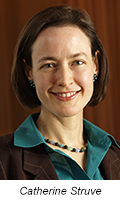
By democratic vote, the Penn Law 2015 graduating class selected Catherine Struve, professor of law, to receive the Harvey Levin Memorial Award for Teaching Excellence. She joined the Law School in 2005 and teaches and researches in the fields of civil procedure and federal courts. She also serves as reporter to the Judicial Conference Advisory Committee on Appellate Rules and as reporter to a Third Circuit task force that has prepared model jury instructions in civil cases. This is her third time receiving the Harvey Levin Award, having also received the award in 2003 and 2009. This year, she taught Civil Procedure, Federal Indian Law and Advanced Problems in Federal Procedure.
Students said, “Professor Struve is the best—respectful in class, accessible outside of class, and always helpful.” “Professor Struve is a wonderful discussion facilitator. Because of the small class size, we were often able to discuss interesting topics that were not part of the core material to be covered—but Professor Struve also made sure not to compromise any of the core material either.” “Professor Struve is one of the best teachers at the law school.”
2015 Penn Dental Medicine Teaching Awards
Penn Dental Medicine faculty members were honored for excellence in teaching at the School’s Senior Farewell in May at the Hyatt at the Bellevue. Each year, the graduating class recognizes members of the faculty with teaching awards at an event celebrating the passage of students to professional dentistry and welcoming them into the Penn Dental Medicine Alumni Society.
The awards and recipients included the following:
Senior Outstanding Teaching Award
This award is presented to a faculty member who has gone beyond the scope of his/her responsibilities to significantly impact the class’s education at Penn Dental Medicine. This year, the Senior Outstanding Teaching Award was presented to Mel Mupparapu, professor of oral medicine and director of radiology. Dr. Mupparapu, who has been part the School’s faculty since 1996, is the course director for two freshman radiology courses, one sophomore radiology course and two clinical radiology courses at Penn Dental Medicine. He also directs the radiology fellowship program and radiology honors program at the School.
The Joseph L. T. Appleton Award
This award is presented to a part-time faculty member for excellence in clinical teaching. This year’s recipient is Thomas R. Berardi, clinical associate professor of oral medicine. Dr. Berardi, who has been a member of the Penn Dental Medicine faculty since 2008, is a clinical instructor/attending in the Oral Diagnosis Admissions and Emergency Care Clinics, teaching students in all four years of their dental school experience. He focuses his instruction on the medical management of the dental patient and conducts small-group, patient-centered medical seminars. The Appleton Award is named in honor of Joseph Appleton, a 1914 alumnus of Penn Dental Medicine, who served as dean of the School from 1941 to 1951. The award was founded in 1979 by Abram Cohen, a member of the Class of 1923 and father of Dean Emeritus D. Walter Cohen, Class of 1950.
The Basic Science Award
This award is presented for excellence in teaching within the basic sciences. This year’s recipient is Michael S. Speirs, lecturer in the department of anatomy & cell biology. Dr. Speirs has been teaching at Penn Dental Medicine since 2006 and a member of the Penn faculty since 1996. He is course director of both the Gross Anatomy and Cadaveric Anatomy courses taken by first-year dental students. He has directed the didactic course for the past four years and the lab course for the last nine.
The Earle Bank Hoyt Award
This award is presented for excellence in teaching to a Penn Dental Medicine graduate who is a full-time faculty member. The award was established by a grateful patient in honor of Dr. Hoyt, a distinguished clinician and educator and member of the Class of 1918. This year’s recipient is David C. Appleby, clinical professor of restorative dentistry and a 1974 graduate of Penn Dental Medicine. Dr. Appleby, who has been a member of the School’s faculty since 2012, teaches within the clinic and also teaches Quality Assurance in Removable Prosthodontics. Dr. Appleby is a Diplomate of the American Board of Prosthodontics, a Fellow of the American College of Prosthodontists, a member of the OKU dental honor society and professor emeritus at the Kornberg School of Dentistry at Temple University.
The Robert E. DeRevere Award
This award is presented for excellence in preclinical teaching by a part-time faculty member. The award is named in honor of Dr. DeRevere, a member of the Penn Dental Medicine Class of 1945 who served on the School’s faculty. This year’s recipient is Yi-Tai Jou, director of the predoctoral endodontic program. Since 1996, he has been teaching pre-doctoral clinical and preclinical endodontics at the School as well as postdoctoral endodontics.
From the President and the Provost: Reappointment of Denis Kinane as Dean of the School of Dental Medicine
We have received the report of the Consultative Review Committee on the Reappointment of Denis Kinane as Dean of the School of Dental Medicine, and we are delighted to recommend to the Trustees the reappointment of Dean Kinane for a second term, to run through June 30, 2021.
The Consultative Committee conducted a comprehensive review of Dean Kinane’s first term as Dean and identified the major challenges and opportunities facing Dean Kinane and the School of Dental Medicine in the years ahead. We concur with the Committee’s conclusion that Dean Kinane’s first term was marked by a commitment to reenergizing and rebuilding the School across its missions and in a wide array of domains. With an ambitious vision and through a series of bold moves, the Dean has realized significant change in virtually every aspect of the School’s programs and operations.
Penn Dental today—its stature, scholarship, clinics, finances and facilities-—is considerably stronger and better positioned than it was just six years ago. Dean Kinane’s five key priorities for Penn Dental Medicine—institutional effectiveness, educational programs, faculty and staff, patient care and research—have helped advance, in his words, an impressive and broad-based commitment to “pre-eminence and sustainability” at the School.
While important progress has been made during Dean Kinane’s first term, important work remains to be done. The Dean’s second term will present an opportunity to bring strategies and plans to fruition and to further strengthen and deepen relationships with stakeholders and friends across the School, the Penn campus, the profession and the community.
Dean Kinane has performed exceptionally well in his first term, and we are confident that he is the academic leader best able to work with the School’s faculty and the University administration to articulate a future vision for the School and to develop and implement the plans necessary to realize it. We look forward to working closely with him in the months and years ahead as the School of Dental Medicine continues along its ambitious and exciting path.
—Amy Gutmann, President
—Vincent Price, Provost
Final Report of the Consultative Committee on the Appointment of a Vice Provost For Education
In January 2015, Provost Vincent Price convened a consultative committee to advise him on the appointment of a Vice Provost for Education. Its members were:
- Dwight Jaggard, Professor of Electrical and Systems Engineering, School of Engineering & Applied Science; Past Chair, Faculty Senate (Chair)
- Marisa Bartolomei, Professor of Cell and Developmental Biology, Perelman School of Medicine
- Patricia D’Antonio, Killebrew-Censits Professor in Undergraduate Education; Chair, Department of Family and Community Health, School of Nursing
- Gwendolyn DuBois Shaw, Associate Professor and Undergraduate Chair, Department of the History of Art, School of Arts & Sciences
- Marybeth Gasman, Professor, Graduate School of Education
- Larry Gladney, Associate Dean for Natural Sciences; Kahn Professor for Faculty Excellence; Professor of Physics and Astronomy, School of Arts & Sciences
- Robert Inman, Mellon Professor of Finance, Wharton School
- Joshua Chilcote, Vice President, Undergraduate Assembly
- Justine Sefcik, 2014-2015 Chair, Graduate and Professional Student Assembly
- Lynne Hunter, Assistant Provost (Staff)
The Vice Provost for Education reports directly to the Provost and is a member of his senior leadership team for academic and strategic planning. He or she has primary responsibility for undergraduate and graduate education at Penn, developing and implementing policies that promote academic excellence, innovative teaching and learning, and interdisciplinary knowledge across the University. The Vice Provost for Education chairs the Council of Undergraduate Deans, the Council of Graduate Deans, the Council of Professional Master’s Degree Deans, the Graduate Council of the Faculties and the Faculty Advisory Council for Access and Academic Support Initiatives and works closely with the wide range of student services and resources overseen by the Vice Provost for University Life. College Houses and Academic Services, the Center for Undergraduate Research and Fellowships, the Center for Teaching and Learning, the Graduate Student Center and the Office of Student Conduct all report to the Vice Provost for Education.
The Committee sought nominations of and applications from currently tenured faculty members at Penn with demonstrated administrative skills and experience, extensive knowledge of the University and its policies and practices and experience addressing sensitive issues in an effective and principled manner, handling confidential information tactfully and discreetly and working well with faculty, staff, deans and department chairs in negotiating difficult situations.
Nominations and applications were solicited through an email to all faculty members and an announcement in Almanac.
Thirty-eight faculty members were nominated or applied, of whom 16 were women and five were members of historically underrepresented groups. The Committee interviewed 10 candidates, of whom four were women and one was a member of a historically underrepresented group, and recommended six candidates to the Provost. From this list, Beth Winkelstein, professor of bioengineering and associate dean for undergraduate education in the School of Engineering & Applied Science, was appointed by the Provost as Vice Provost for Education, effective July 1, 2015.
Jane Gilbert: Senior Director for Student Systems in Student Registration & Financial Services (SRFS)
Student Registration and Financial Services (SRFS) announces the appointment of Jane E. Gilbert to the newly created position of Senior Director for Student Systems in SRFS.
Ms. Gilbert serves as the project owner for the implementation of the Banner/Pennant student systems supporting student accounts, academic records and registration and financial aid. This project requires her to collaborate with many University constituents including but not limited to the 12 schools and centers within the University, the Provost’s Office, the Office of the Vice President for Finance and Treasurer and the Office of Information Systems and Computing.
In addition, Ms. Gilbert assumes the role of primary leader for all SRFS systems development and operation, and is responsible for systems-related planning, decision-making, project management and support. She manages a staff of directors, team leaders, analysts and technicians who are responsible for the NGSS Project, the mainframe systems and advanced networking and desktop technology.
Before joining Penn, Ms. Gilbert was executive director of administrative systems and programs at LaSalle University. While at LaSalle, she led institution-wide improvement efforts as they related to Banner and internal web application development and implemented other projects such as a Luminis V portal, an online Freshmen Checklist portal, a Board of Trustees portal, online-course evaluation tools and a mobile application platform.
Ms. Gilbert reports to Michelle Brown-Nevers, associate vice president for student registration and financial services, who stated: “I am excited to have this opportunity to work with Jane. She is knowledgeable, connected and collaborative. Her experience on both the technical and functional side of administration is what we need in this position.”
Edward Morrisey: Director of Penn Center for Pulmonary Biology
Edward E. Morrisey, professor of cell and developmental biology, is the inaugural director of the Penn Center for Pulmonary Biology, a new center bridging basic and translational research programs on airway health at the Perelman School of Medicine at the University of Pennsylvania and the Children’s Hospital of Philadelphia (CHOP). Dr. Morrisey is also the scientific director of the Penn Institute for Regenerative Medicine.
“In addition to the strengths of the Pulmonary Medicine Divisions at Penn and CHOP, the Penn Center for Pulmonary Biology will help promote pulmonary research in several notable areas of excellence, including cardiovascular, pediatric, immunology and cancer research,” Dr. Morrisey said. “The ultimate goal is to build a world-class center that will have an important impact on human health.”
“I am confident that under Ed’s leadership, the Penn Center for Pulmonary Biology will become the nation’s leading research program focused in the area of basic and translational lung biology,” said Michael S. Parmacek, chair of the department of medicine. Throughout his career, he has incorporated evolving technologies in his research, including iPS cells and genome editing.”
Dr. Morrisey’s lab at Penn focuses on the molecular pathways that regulate heart and lung development. His seminal discoveries include the identification of a multipotent cardiopulmonary progenitor cell, transcriptional programs that direct lung epithelial cell differentiation, and molecular pathways that govern lung repair and development.
Dr. Morrisey holds a PhD in molecular biology from Northwestern University. His work has been published in more than 100 academic journals, including Nature, Science, Nature Medicine, Nature Genetics, PNAS, Genes and Development, Developmental Cell and Science Translational Medicine.
Penn Joins edX Partnership, Expands Free Online Classes
The University of Pennsylvania announced a partnership with leading nonprofit online learning platform edX, expanding the University’s open learning course offerings to reach millions of additional learners worldwide.
“Expanding access to higher education remains the highest priority at Penn and is the foremost goal of the Open Learning Initiative. Penn is thrilled to partner with edX, which will allow us to share our high-quality learning opportunities with edX’s group of online learners,” said Edward Rock, director of Open Learning Initiatives and Saul A. Fox Distinguished Professor of Business Law at Penn.
Penn was among the first universities in the world to use MOOCs, or Massive Open Online Courses, to open its doors to online learners, as one of the four founding university partners of the Coursera platform. The University will continue to add to its online offerings via both Coursera and edX.
Offering free online Penn faculty-led courses across a wide range of disciplines, Penn’s Open Learning Initiative has to date reached more than two million learners in nearly 200 countries. The partnership with edX will further extend Penn’s reach, exploration and innovation.
Under the name PennX, the first courses expected to launch on edX in the coming months include “Analyzing Global Trends for Business and Society” taught by Mauro Guillén, the Joseph H. Lauder Institute of Management & International Studies Professor in the Wharton School at Penn; “Intellectual Property Law and Policy” taught by R. Polk Wagner, professor of law, Penn Law; and “Going Out on a Limb: The Anatomy of the Upper Limb” with James White, adjunct associate professor in the Perelman School of Medicine at Penn.
“We are honored to welcome Penn to the edX platform,” said Anant Agarwal, edX CEO and a professor at the Massachusetts Institute of Technology. “As a pioneer in online learning, Penn offers a quality, engaging student experience, and we believe their courses will be a tremendous draw for the more than four million edX learners around the world.”
“We selected edX to expand our MOOC offerings specifically because of their open source platform,” said Professor Rock. “With open source experimentation, innovation and flexibility, Penn will be able to explore different ways of presenting content online and continue to improve the learning experience. We expect the innovative features of the edX platform to be valuable for our teaching on campus, as we further integrate technology in teaching.”
Additional information on Penn’s Open Learning Initiative is available at openlearning.upenn.edu
Guidelines for Addressing Academic Issues of Students with Disabilities
The Provost’s Office periodically issues guidelines for addressing academic issues of students with disabilities. These are intended to remind the University community of our obligation and commitment to provide reasonable accommodations to students with disabilities and to describe relevant resources and procedures. The Guidelines that follow were updated by the VPUL Office of Student Disabilities Services (SDS).
The Guidelines have been reviewed and approved by the Council of Undergraduate Deans, the Council of Graduate Deans and the Council of Professional Master’s Program Deans.
—Vincent Price, Provost
Policy Statement
The University of Pennsylvania is committed to providing access and equal educational opportunities to all students, including students with disabilities. Penn does not discriminate against students with disabilities. The University provides reasonable accommodation to a student’s known disability in order to afford that student an equal opportunity to participate in all University-sponsored academic and extracurricular programs, activities and services.
Reason for Policy Guidance
This guidance, known as the Provost’s Memorandum, serves two purposes:
- to provide guidance to faculty and staff so that they may reasonably accommodate and support students with disabilities without compromising academic standards and requirements;
- to assure students with disabilities that the University will provide access to all University-sponsored programs, benefits and activities through reasonable accommodation and program accessibility as required under the Rehabilitation Act of 1973 and the Americans with Disabilities Act of 1990, as amended (“ADA”).
Protection from Discrimination
The Rehabilitation Act and the ADA prohibit discrimination against people with disabilities by institutions like Penn that receive or benefit from federal financial assistance. These and other laws require that reasonable accommodations be provided to otherwise qualified individuals with a disability.
Some Key Definitions
Disability–A person with a disability is defined as an individual who (1) has a physical or mental impairment that substantially limits one or more major life activities, (2) has a record of such an impairment, or (3) is regarded as having such an impairment. Examples of recognized disabilities include, but are not limited to, blindness, deafness, paralysis, diabetes, epilepsy, lupus, bipolar disorder, generalized anxiety disorder, HIV/AIDS, specific learning disabilities, autism spectrum disorder and Attention Deficit Hyperactivity Disorder (ADHD).
Reasonable Accommodation–A reasonable accommodation is a modification or adjustment that enables an otherwise qualified individual with a disability full access to participation in University-sponsored programs. These modifications should not fundamentally alter the purpose or requirements of the course or program. Reasonable accommodations are determined on an individual basis and take into account the functional limitations of the impairment. Accommodations may vary from class to class depending upon course content and format. They are intended to be effective and reasonable; they may not be exactly what the student wishes or requests.
Appropriate Documentation–Appropriate documentation is a written evaluation or report provided by a clinician in a specific profession or area of expertise who is considered qualified to make the diagnosis. The documentation must be current and comprehensive and may include clinical and social histories from parents, counselors and specialists. A diagnosis must be included. Documentation must identify the student’s specific functional limitations within the academic setting and must show substantial limitation compared to most people. The documentation should conform to well-established practices in the specific area(s)/field(s). For more information, see Documentation Guidelines on the Student Disabilities Services website at the following link: https://www.vpul.upenn.edu/lrc/sds/ps_documentation_guidelines.php
Responsible University Office
Students with disabilities and temporary conditions are served by the Office of Student Disabilities Services (SDS). The office is located in the Weingarten Learning Resources Center (WLRC), a department under the Office of the Vice Provost of University Life. SDS is responsible for assessing all student requests for accommodations and determining reasonable accommodations for students with disabilities.
The Office of Student Disabilities Services is available to assist faculty and professional staff with the provision of academic accommodations and for consultation regarding students with disabilities.
Phone: (215) 573-9235
TTY: (215) 746-6320
Fax: (215) 746-6326
Email: sdmail@zimbra.upenn.edu
Accommodation Procedures
Responsibilities of Students
Students with disabilities who seek accommodation at Penn are responsible for self-identifying with SDS. Identification may take place upon admission or at any time during the student’s course of study.
Students requesting accommodations are responsible for providing documentation, at their own expense, according to the guidelines published on the SDS website: http://www.vpul.upenn.edu/lrc/sds SDS may request additional information if the documentation provided does not support the existence of a disability or the need for the accommodations requested.
The SDS Documentation Review Committee thoroughly reviews the documentation and accommodations are determined through an interactive process with input from the student. Consultation with faculty may be important in determining how to best accommodate a student in a specific course. A determination from the Committee may take four to six weeks, or longer if additional information is needed. For examples of reasonable accommodations, please see the SDS website: http://www.vpul.upenn.edu/lrc/sds
Students who are approved for accommodations must authorize SDS to inform professors about their approved accommodations. They must also make online requests to SDS for individual exam accommodations each semester. Students are encouraged to introduce themselves to professors to initiate a dialogue about their particular needs.
Responsibilities of Faculty and Staff
Faculty and staff are responsible for ensuring equity and access in their programs and classrooms. The SDS approved accommodations should not fundamentally alter the academic requirements essential to a course or program of study or to licensing prerequisites. It is also important to recognize that students with disabilities must reach the same performance standards to fulfill degree requirements as their non-disabled peers. Accommodations provide students with disabilities equal access, not an unfair advantage.
Instructors are required to accommodate students only after receiving an email from SDS indicating the accommodations that have been approved.
A statement about services for students with disabilities should be included in the syllabus for each course. Below is a sample syllabus statement:
Sample Syllabus Statement
The University of Pennsylvania provides reasonable accommodations to students with disabilities who have self-identified and received approval from the Office of Student Disabilities Services (SDS). If SDS has approved your request for accommodations, please make an appointment to meet with me as soon as possible in order to discuss the arrangements for your accommodations.
If you have not yet contacted Student Disabilities Services, and would like to request accommodations or have questions, you can make an appointment by calling (215) 573-9235. The office is located in the Weingarten Learning Resources Center at Stouffer Commons, 3702 Spruce Street, Suite 300. Please visit the SDS website at http://www.vpul.upenn.edu/lrc/sds/index.php
SDS services are free and confidential.
Accommodated Exams
In order to effectively manage the logistics of exam accommodations, instructors are expected to respond promptly to SDS emails requesting information about exam accommodations. Although the exam may not be written until shortly before the exam date, other details are needed by the SDS accommodations staff as early as possible in order to arrange for exam administration and inform students of the arrangements. Professors are encouraged to provide SDS with exams as early as possible prior to the exam to allow SDS time to prepare exam materials. Exams are locked in a secure location until the exams are being administered.
In the event that questions arise during the administration of the exam at SDS, it is important that SDS has contact information for the instructor or TA (phone, text and/or email).
The Standards for Accommodating Exams for Students with Disabilities is available on the SDS website: http://www.vpul.upenn.edu/lrc/sds/StandardsforAccommodatingExams.php This document provides guidelines for accommodated exams that are administered by faculty or their designees.
Note-taking Announcements
Faculty may be asked to assist SDS by identifying note-takers through an announcement or email to the class and referring interested note-takers to SDS. A template for the email will be included when SDS contacts faculty regarding note-taker accommodations.
Accessibility of Information and Course Materials
Faculty should collaborate with their department offices and SDS to ensure that their course materials, presentations, audio-visual materials and exams are available in an accessible format for students with sensory and print disabilities.
Confidentiality
All disability documentation provided by the student is confidential and remains in the Office of Student Disabilities Services for the purpose of determining reasonable accommodations. Students may not request accommodations from faculty that have not been approved by SDS. If documentation is provided to the instructor, it should be returned to the student and the student should be referred to SDS.
Faculty should refrain from discussing a student’s disabilities and accommodations in front of the class, in the presence of other students or to faculty or staff not directly involved in the accommodation process.
Reconsideration Process
Students may request reconsideration of the SDS accommodation determination through the SDS Reconsideration Process found on the website at: https://www.vpul.upenn.edu/lrc/sds/reconsiderationprocess.php
Concerns and Complaints
The Office of Affirmative Action and Equal Opportunity Programs is responsible for overseeing the University’s implementation of its equal opportunity and nondiscrimination obligations arising under Federal, Commonwealth and local laws. Any concerns or complaints should be addressed to the Office of Affirmative Action and Equal Opportunity Programs, Sansom Place East, 3600 Chestnut Street, Suite 228, Philadelphia, PA 19104-6106 or (215) 898-6993 (voice) or (215) 746-7088 (fax) or http://www.upenn.edu/affirm-action/discrimination.html
Additional Information
Related policies and procedures are available on the SDS website (http://www.vpul.upenn.edu/lrc/sds/) in the section for Faculty and Staff.
This Memorandum is available in alternate format upon request.
Student Disabilities Services
Weingarten Learning Resources Center
3702 Spruce Street, Suite 300, Stouffer Commons
Philadelphia, PA 19104-6027
(215) 573-9235

















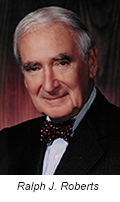





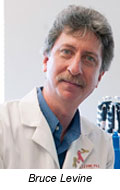

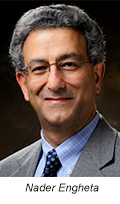


 Cleveland State University (CSU) presented Ira Harkavy, associate vice president and founding director of the Barbara and Edward Netter Center for Community Partnerships at Penn, with an Honorary Doctor of Urban Studies in May. The CSU Board of Trustees and faculty voted to award this degree in recognition of Dr. Harkavy’s outstanding leadership in building university-community-school partnerships in urban areas.
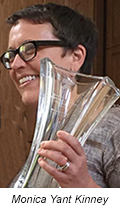
 The Schoenberg Institute for Manuscript Studies (SIMS) and the Herbert D. Katz Center for Advanced Judaic Studies announced the first recipient of the combined SIMS-Herbert D. Katz Center for Advanced Judaic Studies Fellowship in Jewish Manuscript Studies and the David B. Ruderman Distinguished Scholar Fellowship in April. Y. Tzvi Langermann, professor of Arabic at Bar-Ilan University in Israel and an internationally recognized authority on Hebrew and Arabic medicine and the study of scientific manuscripts, is currently in residence at Penn to research and catalog a 15th-century Sicilian medical miscellany containing texts and notes written in Judeo-Arabic, Hebrew and Arabic. The manuscript is a recent addition to the Penn Libraries’ extensive collection of medieval and early modern scientific manuscripts. Professor Langermann will share his discoveries at a public lecture in the fall of 2015.