
News

RTW Foundation Donates $8 Million to Reimagine Medical Education at Penn’s Perelman School of Medicine

A landmark $8 million gift from the RTW Foundation, led by Penn Medicine Board of Trustees member Rod Wong, M’03, and Marti Speranza Wong, C’98, will launch a bold initiative to reimagine medical education at the Perelman School of Medicine at the University of Pennsylvania (PSOM). It is the single largest donation to support curriculum innovation in PSOM history, ensuring that the nation’s first medical school will continue to lead in training physicians for generations to come.

The project, known as FRAME: Fueling Re-imagination to Advance Medical Education, will bring together faculty, staff, and students to create and implement a new curriculum built for the future of medicine: an era when gene therapies have reshaped the promise of cures for an array of diseases, artificial intelligence is putting new treatments closer at hand than ever, and the rise of remote monitoring and telemedicine are changing the ways in which doctors interact with patients.

The reimagined curriculum will integrate technology, AI, and data in powerful ways, providing greater flexibility and customized learning plans to students through the concept of precision education, a methodology inspired by precision medicine, which personalizes treatments for patients based on factors including environment, genetics, and lifestyle.

Emerging tools like ambient listening technology, for instance, will help students develop clinical reasoning skills and work in teams with other types of healthcare professionals. Customized AR/VR simulations will help students to better understand anatomy, master crucial knowledge to diagnose illness and develop treatment plans, and enhance training for procedural skills such as IV placement and suturing. By building a vast ecosystem of data and interwoven AI tools—such as insights drawn from how students use Penn’s electronic medical record (EMR) system during clinical education—each of the school’s nearly 800 student doctors will have a more personalized pathway to guide their education.

Together, these elements will support training flexibility and innovation as the field races ahead. Those same qualities have also guided Rod Wong’s entrepreneurial success and vision through a professional journey spanning medicine, business, and biotech investment.

“Rod and Marti exemplify the best of Penn—visionary alumni leaders whose commitment to advancing medicine will shape generations to come,” said J. Larry Jameson, President of the University of Pennsylvania. “This gift from the RTW Foundation, powering a leading approach to medical education with an entrepreneurial model, will be another groundbreaking way that the Perelman School of Medicine is setting the standard for the future of medicine.”

“I believe medical innovation is the key to life being better in the future than it is today,” Dr. Wong said. “And as science accelerates, to train physicians for the future, so should education. Penn has the courage and the team to pursue this, which is why I am so excited to have the opportunity to support this effort.”

Dr. Wong and the RTW Foundation have a history of encouraging outside-of-the-box thinking at the Perelman School of Medicine. In 2013, PSOM created the innovative, student-led PennHealthX with Dr. Wong’s support—a program which encourages students to explore their interests at the intersection of healthcare management, entrepreneurship, and technology. Among other activities, the program has funded more than 50 student-run startups in areas ranging from allergen detection in food to top-rated medicine reminder apps to AI caregiving companions.

The new gift will also allow PSOM to host the Roderick Wong, M’03 Endowed Lectureship in business and entrepreneurship twice each year, which will bring leaders in medicine and healthcare innovation to campus. In addition, it will establish the Roderick Wong Entrepreneurship Pathway, designed to provide mentorship, workshops, and project-based learning to support bold thinking. The model builds on Penn’s longstanding tradition of empowering students to incorporate passions and interests that draw on the University’s 12 schools.

“I’ve been at Penn for 30 years, and I’m so proud of the doctors who’ve trained here, whether they have pursued clinical care, research, entrepreneurship, or other paths,” said Jonathan A. Epstein, Dean of the Perelman School of Medicine and Executive Vice President of the University of Pennsylvania for the Health System. “But much has changed in that time, both in the information we must teach and in the ways students can learn best. This generous gift empowers us to experiment with cutting-edge teaching methods and tools to build a curriculum that keeps pace as medicine continues to evolve.”

Historically, medical student education has been structured as a one-size-fits-all approach, with lecture and small-group courses covering all the body’s systems, labs, and clinical rotations to get real-world patient care experience. The PSOM curriculum reimagination is a new chapter that began with the “Curriculum 2000” initiative under the leadership of longtime PSOM Senior Vice Dean for Education Gail Morrison, who introduced training in the late 1990s that emphasized professionalism, patient-centered care, and humanism. Curriculum 2000 also saw the creation of a robust “standardized patient” program using medical actors that continues to be an essential part of PSOM training.

The new effort will be led by Lisa M. Bellini, Executive Vice Dean of the Perelman School of Medicine and Senior Vice President of Academic Affairs for the University of Pennsylvania Health System, and Jennifer R. Kogan, Vice Dean for Undergraduate Medical Education—both internationally recognized leaders in medical education and faculty development who have built their careers at Penn Medicine.

Conducting research and testing the new approaches will also be a key focus. By sharing new tools in an open-source format for other schools to use, the fresh curriculum has the potential to influence medical education around the world, building on Penn Medicine’s partnerships with VinUniversity in Vietnam, where leaders helped establish the country’s first private not-for-profit medical school, and the American University in Dubai, where the UAE’s premier medical school will open in 2027.

“Training the next generation of physicians who will shape and advance medicine requires weaving new technologies into education while helping students understand both community needs and the power of highly personalized care,” Dr. Kogan said. “We are building on Penn’s legacy of leading in education to create a more flexible, personalized journey that fuels curiosity and innovation, supports student well-being, and prepares them to give every patient the very best care.”

I. Joseph Kroll: Fay R. and Eugene L. Langberg Professor of Physics and Astronomy

caption: I. Joseph Kroll I. Joseph Kroll has been named the Fay R. and Eugene L. Langberg Professor of Physics and Astronomy in the School of Arts & Sciences. He formerly held the Robert I. Williams Endowed Term Chair. Dr. Kroll’s research is in accelerator-based experimental particle physics, and he has worked on the study of proton-proton collisions, proton-antiproton collisions, and electron-positron collisions. 
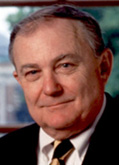
Dr. Kroll is currently a member of the ATLAS experiment at the CERN Large Hadron Collider in Geneva, Switzerland. There, his group has played a leading role in the search and discovery of the Higgs boson and in searches for as-yet-undiscovered particles that may explain unanswered questions in the current standard model of particle physics.

Dr. Kroll is a fellow of the American Physical Society and a fellow of the American Association for the Advancement of Science. He is a co-recipient of prestigious awards, including the 2013 European Physical Society (EPS) High Energy and Particle Physics Prize for the discovery of the Higgs boson, the 2019 EPS High Energy and Particle Physics Prize for the discovery of the top quark, and the 2025 Breakthrough Prize in Fundamental Physics for advances in high-energy collisions at the Large Hadron Collider.

The Langberg Professorship was established in 2002 through the bequest of Eugene L. Langberg, CCC’42, G’45. The late Mr. Langberg was an electrical physicist who held positions at the U.S. Naval Research Lab in Washington, D.C., and at the Franklin Institute. He also served as a commissioner of Upper Gwynedd Township, Pennsylvania. Mr. Langberg’s wife, the late Fay Ruth Moses Langberg, was a member of the College for Women Class of 1947.

Wharton Online Launches Entrepreneurship Certificate

Wharton Online announced on January 21, 2026 the launch of its new Entrepreneurship Certificate, a fully online, self-paced credential designed to help professionals cultivate an entrepreneurial mindset, identify high-potential opportunities, and execute ideas that create real-world impact.

Built around a clear three-stage learning journey—Inspiration, Identification, and Implementation—the certificate brings together Wharton faculty research and practical frameworks to demystify entrepreneurship and make it accessible to a broad range of learners. Participants may enroll in individual courses or complete all three to earn the Entrepreneurship Certificate.

“Entrepreneurship is not limited to founding a startup,” said Lori Rosenkopf, vice dean of entrepreneurship at the Wharton School and academic director of the program. “It is about creating value through innovation, whether you are building something new, leading change inside an organization, acquiring and growing an existing business, or pursuing a mission-driven venture. This certificate meets learners where they are and gives them evidence-based tools to move forward with confidence.”

The Entrepreneurship Certificate is designed for professionals navigating uncertainty, career transitions, and increasing pressure to innovate. Drawing on decades of Wharton research, the program emphasizes disciplined thinking, experimentation, and relationship-building rather than anecdotal advice or one-size-fits-all formulas.

The certificate consists of three integrated online courses, each requiring approximately 12–18 hours of engagement and featuring short faculty-led videos, applied exercises, and guided reflections:

Becoming Entrepreneurial: Purpose, Paths, and Inspiration—Led by Lori Rosenkopf, this course reframes entrepreneurship as value creation through innovation. Participants explore seven distinct entrepreneurial pathways and clarify how their skills, values, and experiences align with different routes to impact.

From Idea to Impact: Entrepreneurial Opportunity Identification—Taught by Christian Terwiesch and Karl Ulrich, this course equips learners with structured methods to distinguish promising opportunities from distractions. Participants apply proven frameworks such as innovation tournaments, jobs-to-be-done, and the triple diamond model to evaluate and test ideas with rigor.

From Plan to Performance: Venture Implementation—Led by Henning Piezunka, this course focuses on execution. Learners examine how to build and lead teams, manage boards, engage investors, and form partnerships that enable sustainable growth and effective implementation.

Together, the three courses form an end-to-end learning experience that mirrors the real stages of an entrepreneurial journey, moving from mindset and inspiration to opportunity validation and execution.

Courses are delivered fully online and asynchronously, allowing participants to begin at any time and progress at their own pace. Each course awards a digital badge and continuing education units upon completion, and learners who complete all three earn the Entrepreneurship Certificate, a verified Wharton credential that can be shared on professional profiles and resumes.

The program is designed for aspiring entrepreneurs, intrapreneurs, career changers, founders, and leaders across industries who want to apply entrepreneurial thinking to their work. No prior background in entrepreneurship is required.

Enrollment for the Entrepreneurship Certificate and each individual course is now open.

Deaths

Michael T. Aiken, Former Provost

caption: Michael AikenMichael T. Aiken, former provost of the University of Pennsylvania, former Dean of the School of Arts & Sciences, and a former professor of sociology in the School of Arts & Sciences, died on August 25, 2025, in Cody, Wyoming. He was 93. 

Born in 1932 in El Dorado, Arkansas, Dr. Aiken moved with his family to Sardis, Mississippi, where he graduated from high school. He went on to earn a bachelor’s degree in sociology, psychology, and mathematics from the University of Mississippi in 1954, then enrolled at the University of Michigan, where he received his master’s degree in sociology in 1955. He then entered the U.S. Army for a 3.5-year tour of duty, most of which he spent in France, before returning to the University of Michigan and earning his PhD in sociology in 1964.

From 1963 to 1984, Dr. Aiken served on the faculty of the University of Wisconsin, Madison, a tenure that included two years (1980 to 1982) as associate dean of the College of Letters and Science. He also held visiting professor positions at Columbia University in New York City, Washington University in St. Louis, Katholieke Universiteit Leuven, and Université Catholique de Louvain (the last two in Belgium). While at these institutions, he conducted research in organizational theory and authored and co-authored many peer-reviewed publications on job displacement and unemployment, community structure and identification of leadership, politics in several European cities, and other topics relating to the sociology of organizations. 

In 1984, Dr. Aiken came to Penn as a professor of sociology in the School of Arts & Sciences. A year into his time at Penn, he was named Dean of the school (Almanac May 28, 1985). “Michael Aiken is a leader,” said then-Penn provost Tom Ehrlich. “In the course of his distinguished career, he has been a leading scholar, teacher, and administrator. He understands the centrality of the liberal arts and will move forcefully and effectively to enhance the school and its strengths. He is also a deeply caring person with a strong commitment to affirmative action. He will be a superb Dean.” As Dean, Dr. Aiken led the SAS faculty in developing a school-wide five-year plan and in overhauling undergraduate distribution requirements. Two years, later, Dr. Aiken was elected Penn’s provost (Almanac September 1, 1987). Penn president Sheldon Hackney described Dr. Aiken as “a proven academic leader, both thorough and fair, who has provided SAS with a sure sense of direction in his two years as Dean.” 

In 1993, Dr. Aiken left Penn to serve as the University of Illinois Urbana-Champaign’s sixth chancellor. His leadership led to the development of UIC’s new Research Park, an annual New Student Convocation ceremony, expanded study abroad opportunities, and many community-building initiatives. He led UIC’s first strategic planning initiative, which worked to strengthen undergraduate education and maintain competitive salaries for faculty members and graduate students. He led a record-breaking $1 billion fundraising campaign and worked to build relationships between the university and the community before retiring in 2001. His work at UIC was honored with an honorary Doctor of Science and Letters. 

Dr. Aiken is survived by his wife, Catherine (Comet) Aiken; his daughter, Caroline Aiken (Jonathan Isom); and his two nephews, niece, great-nephew, and great-niece. 

In lieu of flowers, donations can be made to the Michael Aiken Chair Fund and the Michael Aiken Women’s Basketball Scholarship Fund at the University of Illinois Foundation.

Jeffrey Draine, School of Social Policy & Practice

caption: Jeffrey DraineJeffrey (Jeff) Noel Draine, PhD’95, a former professor in the School of Social Policy & Practice (SP2), died on September 7, 2025, from complications of young-onset Alzheimer’s Disease. He was 62.
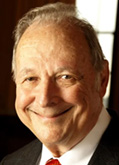
Born in 1962 in Lively, Virginia, Dr. Draine moved among Methodist parsonages throughout Virginia in his childhood. He attended the University of South Carolina before transferring to Virginia Commonwealth University, where he graduated with a BS in rehabilitation and urban affairs in 1986. After college, Dr. Draine remained in Richmond, working with Freedom House, a nonprofit that addressed the needs of the homeless population. He then earned an MSW in social planning from Temple University in 1990. During his time at Temple, he also worked as a research associate at Hahnemann University (now part of Drexel University) under the mentorship of Phyllis Solomon. He followed Dr. Solomon to Penn to pursue doctoral studies, receiving a PhD in social welfare there in 1995.

While working towards his PhD, Dr. Draine became a research associate in Penn’s School of Social Policy & Practice and the Perelman School of Medicine, working in the latter’s psychiatry department. He also lectured in both schools, and in 1999, he joined the tenure track in SP2 as an assistant professor. He became an associate professor in 2003 and a full professor in 2010. In SP2, Dr. Draine taught graduate students and led a research program. In 2011, he was recruited by Temple University to chair the School of Social Work in the College of Public Health, where he served until 2018.

A housing advocate his entire life, Dr. Draine’s work was grounded in social justice. “He was a dedicated, skilled, and highly successful researcher who understood that—when done right—research could be a form of resistance,” said his family in a tribute. “He was involved in pioneering research on peer-delivered services and was a leading researcher in understanding the experiences of people with mental illnesses in the criminal justice system. He was a vocal advocate for mental healthcare in prisons and a staunch prison abolitionist, challenging the systems he worked within to be more humane and equitable. The quintessential social worker, Jeff knew that mental illness was real, but cared a lot more about addressing the poverty, racism, and other forms of oppression that make mental health problems so much more intractable and difficult to live with.” 

Dr. Draine is survived by his wife, Debora Dunbar; his sister, Betsy Draine; five children, Olly Baldwin (Jacob), Ben Dunbar (Lela), Maddy Draine Eberle (Naomi), Isaac Dunbar (Romina), and Leah Dunbar (Jafar); and four grandchildren, Suzannah (Sookie) Baldwin, Jett Baldwin, Gabriel Dunbar, and Andre Dunbar. 

In lieu of flowers, the family requests donations to the Penn Memory Center at https://tinyurl.com/PennMemoryCenter

Frank Goodman, Penn Carey Law

caption: Frank GoodmanFrank Ira Goodman, an emeritus professor of law in the Penn Carey Law School, died on December 26, 2025. He was 93.

Born in 1932 in Omaha, Nebraska, Mr. Goodman graduated from Thomas Jefferson High School in San Antonio, Texas, and then attended Harvard University, where he played varsity tennis and graduated summa cum laude. He went on to study philosophy, politics, and economics as a Rhodes Scholar at Oxford University, earning a master’s degree in 1956. He returned to the U.S. to earn his law degree from Harvard Law School in 1959, where he was an editor of the Harvard Law Review. After law school, Mr. Goodman was a clerk for Judge William H. Hastie, the first African American appointee to the federal appellate bench and one of President John F. Kennedy’s final candidates for the Supreme Court, on the Third Circuit. 

Mr. Goodman briefly practiced entertainment law at a small Beverly Hills firm from 1960 to 1962, representing Hollywood heavyweights Gregory Peck, Marlon Brando, Jimmy Stewart, the Marx Brothers, Grace Kelly, and Alfred Hitchcock, among others. He then returned to the east coast, where he took a position as a government lawyer in President Kennedy’s Federal Power Commission (now the Federal Energy Regulatory Commission) before joining Solicitor General Archibald Cox’s eight-lawyer staff. In 1965, he joined the faculty at the University of California, Berkeley School of Law, where he taught courses in constitutional law, torts, poverty law, and trusts/estates until 1972. After serving for a year as research director of the Administrative Conference of the United States—a small agency that brought together lawyers, judges, and academics to study and recommend reforms of the federal administrative process, Mr. Goodman came to Penn’s Law School in 1973.

Initially a visiting professor and then, beginning in 1975, a full professor, Mr. Goodman taught Constitutional Law, Federal Courts, and Constitutional Theory. As the school noted in 2014, “Prof. Goodman is a Law School legend, as well-known (and beloved) for his occasional forgetfulness as for the intellectual playfulness and depth of his thinking about topics as diverse as constitutional law, legal philosophy, administrative law, environmental law, sports law, and welfare law.” Mr. Goodman was known to stay after class with students, debating the fine points of the law and advanced constitutional theory, investing time in students’ personal experiences, and writing numerous letters of recommendation. Mr. Goodman retired from Penn in 2014 and took emeritus status. Read recollections of Mr. Goodman from his colleagues and former students here. During the 1980s, Mr. Goodman also taught in Penn’s Graduate School of Education. 

To share a memorial remembrance, visit www.law.upenn.edu/live/news/18228-remembering-frank-goodman

Mr. Goodman is survived by his wife of 65 years, Joan; their children, Lisa, Barak, Ellen, and Jonathan; 11 grandchildren; and one great grandson.

Governance

University Council January Meeting Coverage

The University Council met in the Hall of Flags at Houston Hall on January 21, 2026.

President J. Larry Jameson discussed the up­coming U.S. Semiquincentennial celebration and commended Penn Libraries and others for their work on programming and events to mark this milestone. He then updated the Council on Penn Forward. Reports from the six working groups are being reviewed, and some initiatives will be implemented in the near term. He thanked those who participated for their ideas on how to position Penn for the next decade and beyond. President Jameson also thanked the Penn community members who had coordinated the Rev.  Dr. Martin Luther King, Jr. Symposium Day of Service events on January 19 and the 25th annual MLK Jr. Social Justice Lecture and Award on January 20, which honored celebrated film director Spike Lee.

Vice Provost for Global Initiatives Ezekiel Emanuel, executive director of Penn Wash­ington Celeste Wallander, and director of academic engagement at Penn Washington Patrick Hark­er made the focus issue presentation, Launching Penn Washington. Dr. Emanuel indicated that Penn Washington helps realiz­e fundamental aspects of the Universi­ty’s strategic framework, In Principle and Prac­tice. The center aims to bring knowledge- and fact-based solutions to the U.S. and global pol­icy communities, connect Penn to Washington, D.C., and support the education and profession­al development of Penn’s students and schol­ars. Dr. Wallander said that the center hosted 92 events in 2025 and works with all 12 Penn schools and with many other centers at the University.

In response to procedural confusion regarding them amendment of the University Council bylaws at the December meeting (Almanac December 9, 2025), Faculty Senate Chair Kathleen Brown made a motion to rescind that action, which was approved. She then made a motion to amend the bylaws to change the name of and amend the charge for the Committee on Diversity and Equity to the Committee on Community and Equal Opportunity as provided in the meeting materials. After discussion in support of and against the action, the motion was approved. An overview of the discussion can be found in the University Council meeting minutes, which will be available on the Office of the University Secretary’s website.

Associate Vice President and Associate Uni­versity Secretary Lizann Boyle Rode addressed open forum and new business topics raised at the December University Council meeting. During the new business portion of the meeting, mem­bers:

  • Urged Penn to reevaluate the compensation of full-time lecturers
  • Expressed concern that a the federal visa processing pause could prevent researchers from leaving and then reentering the United States
  • Urged Penn to convey its support for students amidst fears about Immigration and Customs En­forcement (ICE).

The next University Council meeting is scheduled for February 18, 2026.

Policies

Of Record: Suspension of Normal Operations

As we welcome our community back to begin the spring semester, there has been an increase in the opportunity for inclement weather in our region. We offer the following reminder to the Penn community about University policies and procedures regarding weather-related campus operation suspension or modification and resulting class cancellations. The University schedule is carefully coordinated, and the expectation should be that all academic, health system, and business operations will be maintained as usual unless you receive a University notification indicating otherwise.

—John L. Jackson, Jr., Provost
—Mark F. Dingfield, Executive Vice President
—Kathleen Shields Anderson, Vice President for Public Safety 

Suspension of Normal Operations

Notification Methods

Should there be a suspension of normal operations, delayed opening, or early closure, members of the Penn community will receive a text message and email from the UPennAlert emergency notification system. Please take this time to confirm your UPennAlert emergency phone number by following the instructions below. Additional information will be provided on the Public Safety website, at www.publicsafety.upenn.edu, as well as on the University home page, at www.upenn.edu.

This information is also conveyed through the University’s notification phone line, (215) 898-MELT (6358), and via KYW News Radio (103.9 FM & 1060 AM), the City of Philadelphia’s official storm emergency center. The University’s emergency radio identification code numbers are “102” for day classes and schools/centers and “2102” for evening classes. The message that accompanies the code number will provide the operating status of the University. Please note that radio and television stations other than KYW are not to be considered “official” sources of information.

In case of an inclement weather event, know that the University will closely monitor and assess the situation. You may expect a notification as soon as a decision is made should there be a need to suspend or modify operations. Please ensure you are receiving UPennAlert texts and using the website and MELT line for updates to the status of the University’s operations.

Visit the SEPTA website to familiarize yourself with alternate transportation plans should they be needed.

Attendance Expectations

When University normal operations are suspended, employees are generally not expected to work unless they are designated essential.

Essential University staff for critical campus operations and life sustaining operations and all health system physicians and staff are required to report to work at their regularly scheduled start time. Please consult with your supervisor should you have any questions.

With the prior approval of the Executive Vice President and Provost and advance notification to employees, fully online academic programs, executive format programs, and/or programs that operate from a different geographic location may follow different closing decisions. Check with your program administrator should you have any questions.

For details, review the policy Suspension of Normal Operations (upenn.edu).

Register/Confirm UPennAlert Information

Students

We encourage you to stay informed through UPennAlert. Confirm that your information is accurate by updating your Learning From Address, Emergency Contact and Missing Person Contact, and UPennAlert numbers in Path@Penn (how-to guide linked below).

How to add/update: UPennAlert Number(s)/Learning From Address/Emergency Contact and Missing Person Contact

All information is secure and confidential. If you have any problems updating your personal contact information, please email the Division of Public Safety at the Public Safety Feedback Line.

Staff/Faculty

The UPennAlert System’s effectiveness depends upon the accuracy of recipients’ personal contact information. To register for the system, or to update your contact information, visit the UPennAlert site and follow the link that best applies to you. All information is secure and confidential. If you have any problems updating your personal contact information, please email the Division of Public Safety at the Public Safety Feedback Line.

For more information on the UPennAlert Emergency Notification System and Emergency Procedures, please visit the Public Safety website on how to be PennReady.

Penn Guardian

Also, please remember to download the Penn Guardian app, a service that rapidly provides personal information to the Division of Public Safety during an emergency. Members of the Penn community can build a personal profile with emergency information and directly text PennComm dispatchers. Learn more about this free service on the Penn Guardian site.

AT PENN

February AT PENN Calendar Now Available

The February AT PENN 2026 calendar is now available! Click here to view the online version of the calendar, and click here to view a printable PDF. 

Events

Update: January AT PENN

Conferences

30        The University of Pennsylvania Journal of International Law Symposium: Whose International Law? Power, Accountability, and Inequality in a Changing World; expert panels will explore how international law is adapting to three critical challenges: climate regulation, evolving trade and tariffs, and governance of rapidly advancing artificial intelligence technologies; 10 a.m.-4 p.m.; room 100, Golkin Hall; register: https://tinyurl.com/jil-conf-jan-30 (Penn Carey Law School).


Exhibits

31        A World in the Making: The Shakers; explores the design legacy of the Shakers, a religious group whose values of community, labor, and equality shaped their furniture, architecture, and everyday objects; through works by contemporary artists influenced by the Shakers, alongside original Shaker-made pieces, the exhibition considers how their design principles remain relevant today; Institute of Contemporary Art. Through August 9.


Fitness & Learning

28        Summer Research RPA Mixer; event for undergraduate students who are thinking about summer research opportunities, have questions about summer research applications, or are curious about getting started in research; 7 p.m.; Bodek Lounge, Houston Hall (Center for Undergraduate Research & Fellowships).

29        Our Faculty Voice: Understanding Shared Governance at Penn; Kathy Brown, chair of the Faculty Senate, will discuss the work of the Faculty Senate and the role of every faculty member in shared governance at Penn; noon; Zoom webinar; register: https://tinyurl.com/pfwf-webinar-jan-29 (Penn Forum for Women Faculty & Gender Equity).

30        PAACH Mandala Coloring & Welcome Event; a mindfulness mandala coloring event to welcome the spring 2026 semester; mandalas created during the event will become part of the upcoming PAACH Mural; students will reflect on the cultural significance of mandalas and what they mean in their own lives; donuts and hot drinks will be provided; 3-4:30 p.m.; room 108, ARCH; register: https://www.tinyurl.com/paachmandala (Pan-Asian American Community House).

31        Migrating Lives: Mural Painting Session at Penn; a participatory art initiative that highlights the vital role of immigration in shaping Greater Philadelphia; brings together community voices through murals that reflect the history, culture, and lived experiences of immigrant and refugee communities; 1 p.m.; 3rd floor, Addams Hall (Asian American Studies, Sachs Program for Arts Innovation, Center for Latin American & Latinx Studies).


Morris Arboretum & Gardens

In-person events at Morris Arboretum & Gardens. Info and to register: https://www.morrisarboretum.org/.

28        Dancing in the Winter Light: An Embodied Movement Experience; hybrid indoor/outdoor class ideal for all fitness skill levels; chance to keep moving, warming ourselves from the inside out, combining elements of Open Floor Dance, Nia Technique and mindfulness practices; fee for three sessions: $80/general, $70/members. Also February 4, 11.


Penn Libraries

Various locations. Info and to register: https://www.library.upenn.edu/events.

28        Print Your Own Postcard: Learning How to Set Type and Letterpress-Print; learn and practice the basics of letterpress printing and typesetting while creating your own postcard; 1-4 p.m.; Common Press, Fisher Fine Arts Library.

            Community Study Session: New Year, New You—Get Help with Goal Setting; a focused, supportive study environment with snacks and a librarian on hand to answer questions or help you get unstuck; 3-5 p.m.; Weigle Information Commons, Van Pelt Library.

29        Coffee with a Codex: Statutes of Vigliano d'Asti; Kislak Center curator Dot Porter will discuss Ms. Codex 55, a 15th century copy of the Statutes of Vigliano d'Asti; noon; online webinar.

            Learn How to Use CAD and CAM Technologies; session regarding CAD and CAM technologies and its applications; 2 p.m.; Education Commons.

30        AI in the Classroom; explore ways to support student learning by integrating AI into teaching, setting expectations, and encouraging open dialogue around student AI use; 10 a.m.; room 223, Van Pelt Library.

            Reinterpreting the Declaration: A Creative Typesetting Workshop; in this creative typesetting workshop, the Declaration text will be split amongst registered participants, and each participant will have the freedom to choose to include, edit, or redact the words in their segment; noon-5 p.m.; Common Press, Fisher Fine Arts Library. Also January 31, noon-5 p.m.


On Stage

31        Penn Raas Presents: Heist; premier garba/raas (Hindu folk dancing) team, composed of both undergraduate and graduate students; plans the heist of the year; 6 p.m.; Iron Gate Theater; tickets: $10-$12 (Platt Performing Arts House).

            Penn Dhamaka Presents: DhaBron's Legacy; Penn Dhamaka, Penn’s premier competitive all-male fusion dance troupe, presents an explosive fusion of the LeBron James’s legendary career with high-octane South Asian fusion dance; 8:30 p.m.; Iron Gate Theater; tickets: $6-$8 (Platt Performing Arts House).


Readings & Signings

29        Roots to Routes; Judd Kessler, Wharton School; noon; room 1, College Hall; register: https://tinyurl.com/kessler-reading-jan-29 (SNF Paideia Program).


Talks

27        Taming High Energy Intermediates with Macromolecular Catalysis; Cole Sorensen, Princeton University; 10:30 a.m.; Carolyn Hoff Lynch Lecture Hall, 1973 Chemistry Building (Chemistry).

            Ahead of the Disaster: Turning Prediction into Protection and Prevention; Mami Mizutori, UN Office for Disaster Risk Reduction (2018-2023); Michael Mann, Earth & environmental science; noon; Perry World House and Zoom webinar; info: https://tinyurl.com/mizutori-mann-jan-27 (Perry World House).

28        Consistent Induction of Broadly Neutralizing HIV Antibodies in Rhesus Macaques; Beatrice Hahn, hematology-oncology; noon; Austrian Auditorium, CRB (Microbiology).

            Lip Sync for Your Life: The Street Queen and Her Record Acts; Eva Pensis, GSWS; noon; room 344, Fisher-Bennett Hall (Gender, Sexuality & Women’s Studies).

            Shade and the Capture of Light; Pujita Guha, Harvard University; noon; room 330, Fisher-Bennett Hall (Cinema & Media Studies).

            What Pandemic-Era Experiments Can Teach Us About the Future of Public Space; Ariel Ben-Amos, Philadelphia Water Department; Jason Brody, Hunter College; Josh Davidson, Oberlin College; Tya Winn, Community Design Collective; noon; Plaza Gallery, Meyerson Hall; register: https://tinyurl.com/iur-talk-jan-28 (Penn Institute for Urban Research, City & Regional Planning).

            Toward Task-Informed Robot Codesign; Wei-Hsi Chen, GRASP Lab; 3 p.m.; room 307, Levine Hall, and Zoom webinar; join: https://upenn.zoom.us/j/94772435044 (GRASP Lab).

            Molecular Discovery Engines; Nicholas Angello, GlaxoSmithKline; 3:30 p.m.; Wu & Chen Auditorium, Levine Hall (Chemical & Biomolecular Engineering).

            Agrarian History Without Boundaries; David Ludden, New York University; 4:30 p.m.; room 402, Cohen Hall (South Asia Studies).

            Aoua Kéita, Yugoslav Women, and Global Socialist Feminisms; Alexandra Perišic, Faculty of Media & Communications, Belgrade, Serbia; 5 p.m.; room 623, Williams Hall (Cinema & Media Studies; Wolf Humanities Center).

            Designing For, By, and With: Indigenous Voices of the Land: Sovereignty, Architecture, Sacred Land, and Education; Chief Dennis Coker, Lenape Indian Tribe of Delaware; Lisa Prosper, ERA Architects; Joseph Kunkel, MASS Design; 6 p.m.; Kleinman Energy Forum, Fisher Fine Arts Library; register: https://tinyurl.com/mcharg-talk-jan-28 (McHarg Center).

            The KPF Lecture: The Big Equation; Marcelo Faiden, Adamo-Faiden Studio; 6:30 p.m.; Plaza Gallery, Meyerson Hall (Architecture).

29        Redox-Driven Molecular Editing for Reconfiguring Macromolecular Architectures; Yuting Zhou, University of Illinois at Urbana-Champaign; 10:30 a.m.; Carolyn Hoff Lynch Lecture Hall, 1973 Chemistry Building (Chemistry).

            Special Briefing: The Year Ahead for Cities; panel of speakers; 11 a.m.; online webinar; register: https://tinyurl.com/iur-talk-jan-29 (Penn Institute for Urban Research).

            From Woo to Tangerines: How K-Drama Viewers Create “Glocal” Meanings Across Cultures; Youngji Son, Bryn Mawr College; noon; suite 310, 3600 Market Street (Korean Studies).

            Migration and the Origins of American Citizenship-African Americans, Native Americans, and Immigrants; Anna O. Law, Brooklyn College; noon; room 240A, Silverman Hall (History).

            Bridging Engineering and Biology: New Frontiers in Ovarian Function Restoration and Fertility Research; Ariella Shikanov, University of Michigan; 3:30 p.m.; Berger Auditorium, Skirkanich Hall (Bioengineering).

            Non-Minimizing and Min-Max Solutions to Bernoulli Problems; Dennis Kriventsov, Rutgers University; 3:30 p.m.; room 4C4, DRL (Mathematics).

30        Learning the Dynamic World; Ming C. Lin, University of Maryland, College Park; 10:30 a.m.; Wu & Chen Auditorium, Levine Hall (GRASP Lab).

            The Causal Effects of Federal Work-Study Offers on College Enrollment & Program Participation; Judith Scott-Clayton, Columbia University; noon; room 259, Stiteler Hall (Graduate School of Education).

            Demographic Drivers: Immigration’s Role in Workforce Sustainability; Matthew Hall, Cornell University; Catalina Amuedo-Dorantes, University of California-Merced; Phillip Connor, Princeton University; Chloe East, University of Colorado-Boulder; Irma Elo, sociology; noon; online webinar; register: https://tinyurl.com/psc-talk-jan-30 (Population Studies Center).

            Subtle Hands: Women, Sexology, and the Genealogy of Female Same-Sex Love Discourse in East Asia (1910s–1930s); Marina Nascimento, East Asian languages & civilizations; noon; room 330, Fisher-Bennett Hall (Cinema & Media Studies).


This is an update to the January AT PENN calendar, which is online now. The February AT PENN calendar appears in this issue of Almanac. To submit events for future AT PENN calendars or weekly updates, email almanac@upenn.edu.

Crimes

Weekly Crime Reports

Division of Public Safety
University of Pennsylvania Police Department Crime Report

About the Crime Report: Below are the Crimes Against Persons and/or Crimes Against Property from the campus report for January 12-18, 2026. The Crime Reports are available at: https://almanac.upenn.edu/sections/crimes. Prior weeks’ reports are also online. –Eds.

This summary is prepared by the Division of Public Safety (DPS) and contains all criminal incidents reported and made known to the Penn Police, including those reported to the Philadelphia Police Department (PPD) that occurred within our patrol zone, for the dates of January 12-18, 2026. The Penn Police actively patrol from Market Street to Baltimore Avenue and from 30th Street to 43rd Street in conjunction with the Philadelphia Police.

In this effort to provide you with a thorough and accurate report on public safety concerns, we hope that your increased awareness will lessen the opportunity for crime. For any concerns or suggestions regarding this report, please call DPS at (215) 898-7297. You may view the daily crime log on the DPS website.

Penn Police Patrol Zone
Market Street to Baltimore Avenue and from 30th Street to 43rd Street

Crime Category

Date

Time

Location

Description

Assault

01/13/26

4:55 PM

51 N 39th St

Terroristic threats made by a patient toward hospital staff


01/13/26

8:09 PM

3000 Chestnut St

Officer injured during a traffic stop; vehicle fled the area


01/14/26

1:40 PM

4000 Market St

Simple assault/Arrest


01/15/26

4:42 PM

200 S 40th St

Complainant reported being assaulted by unknown offender


01/16/26

4:05 AM

3600 Chestnut St

Simple assault

Auto Theft

01/12/26

7:45 PM

3335 Woodland Walk

Theft of a secured e-bike


01/12/26

8:14 PM

3900 Chestnut St

Theft of an unsecured e-bike


01/14/26

11:12 AM

3600 Chestnut St

Theft of an electric scooter

Bike Theft

01/14/26

6:53 PM

3702 Spruce St

Theft of a secured bike taken from bike rack

Burglary

01/18/26

12:46 PM

4114 Spruce St

Forced burglary of apartment building

Disorderly Conduct

01/12/26

7:36 PM

40th & Sansom Sts

Offender cited for public urination

Retail Theft

01/12/26

9:30 PM

4233 Chestnut St

Retail theft of alcohol


01/13/26

5:05 PM

4233 Chestnut St

Retail theft of alcohol


01/14/26

1:48 PM

4233 Chestnut St

Retail theft of alcohol


01/15/26

2:15 PM

4233 Chestnut St

Retail theft of alcohol


01/16/26

7:04 AM

3604 Chestnut St

Retail theft/Arrest


01/16/26

6:43 PM

4233 Chestnut St

Retail theft of alcohol


01/16/26

6:53 PM

4233 Chestnut St

Retail theft of alcohol

Theft from Building

01/13/26

2:38 PM

3600 Chestnut St

Theft of package from building’s common area lobby


01/16/26

10:06 AM

3800 Locust Walk

Theft of cash stolen from complainant’s wallet in an unsecured location

Theft from Vehicle

01/12/26

3:54 PM

422 Curie Blvd

Theft of copper pipes stolen from contractor’s truck

Theft Other

01/12/26

12:04 PM

3928 Pine St

Package theft reported from complainant’s porch

Vandalism

01/12/26

4:47 PM

129 S 30th St

Unknown offender threw a rock, shattering vehicle rear window


01/16/26

9:51 AM

3401 Grays Ferry Ave

Vandalism to University property


01/16/26

1:28 PM

230 S 40th St

Subject caused disturbance inside business; front door kicked and damaged


Philadelphia Police 18th District
Schuylkill River to 49th Street & Market Street to Woodland Avenue

Below are the Crimes Against Persons from the 18th District: 6 incidents were reported for January 12-18, 2026 by the 18th District, covering the Schuylkill River to 49th Street & Market Street to Woodland Avenue.

Crime Category

Date

Time

Location

Aggravated Assault

01/13/26

8:15 PM

3000 Market St

Assault

01/12/26

2:41 PM

516 S 42nd St


01/14/26

2:09 PM

4000 Market St


01/14/26

4:58 PM

4101 Woodland Ave


01/15/26

4:46 PM

200 S 40th St


01/16/26

4:05 AM

3600 Chestnut St

The Division of Public Safety offers resources and support to the Penn community. DPS developed a few helpful risk reduction strategies outlined below. Know that it is never the fault of the person impacted (victim/survivor) by crime.

  • See something concerning? Connect with Penn Public Safety 24/7 at (215) -573-3333.
  • Worried about a friend’s or colleague’s mental or physical health? Get 24/7 connection to appropriate resources at (215) 898-HELP (4357).
  • Seeking support after experiencing a crime? Call Special Services - Support and Advocacy resources at (215) 898-4481 or email an advocate at specialservices@publicsafety.upenn.edu
  • Use the Walking Escort and Riding services available to you free of charge.
  • Take a moment to update your cellphone information for the UPennAlert Emergency Notification System
  • Download the Penn Guardian App which can help Police better find your location when you call in an emergency.
  • Access free self-empowerment and defense courses through Penn DPS.
  • Stay alert and reduce distractions; using cellphones, ear buds, etc. may limit your awareness.
  • Orient yourself to your surroundings. (Identify your location, nearby exits, etc.)
  • Keep your valuables out of sight and only carry necessary documents.

Bulletins

One Step Ahead: Be Aware of What You Share

One Step Ahead logo

Another tip in a series provided by the Offices of Information Security, Information Systems & Computing and Audit, Compliance & Privacy

Data Privacy Day is January 28 and kicks off Data Privacy Month in February. This is an excellent time to recognize Data Privacy Month in ways that are both practical and impactful. One simple place to start is with the information you share online. When you post photos, videos, and updates—or use apps and online services that collect your location data or account information—you may be sharing more than you realize, and that data may be used beyond your intended audience.

To learn simple ways to take control of your online privacy, visit https://www.staysafeonline.org/resources/online-safety-and-privacy. Visit https://www.upenn.edu/oacp/privacy/ for tips on how to protect Penn data as well as your own data.

---

For additional tips, see the One Step Ahead link on the Information Security website: https://isc.upenn.edu/security/news-alerts%23One-Step-Ahead.

Summer Camp Supplement: February 3

Almanac’s summer camp supplement will be published on Tuesday, February 3, 2026.

To submit information about a 2026 summer camp, email almanac@upenn.edu.

Talk About Teaching & Learning

Designing and Grading Exams for Large Introductory Courses

Harry Smith

When I talk about my introductory programming class with colleagues, friends, and family, we often end up discussing the challenge of teaching a course with hundreds of students. It’s at this point that I get to adopt a suitably ironic facial expression and make my favorite joke: teaching hundreds of students is easy. Assessments and grading are hard! Indeed, it’s difficult to imagine a more efficient use of my time than showing up to a packed auditorium and lecturing for an hour: hundreds of lecture-hours given in one sitting, and all I had to do was prepare some slides. This is an oversimplification, but every hour spent in preparation for a course meeting provides some added benefit when delivered to hundreds of students at once. 

Assignments flip the ratio of active-to-background time on its head: if two hundred students sit for a sixty-minute exam, I have two hundred papers to process by grading and providing feedback. Anything that I do to respond to each exam item has to be repeated hundreds of times. If teaching is a cycle of “prepare, teach, assess,” it is that final step that marks a key difference between the management of small courses versus large ones but that is also key to learning for students.

In teaching a large class, then, I carefully consider how the design of assessments affects the cost, measured in instructor and TA hours spent, of responding to students’ work. It helps to rely on the dichotomy between formative assessments, focused on providing low-stakes feedback that a student can use to adapt, versus summative assessments, which measure student understanding at the end of a unit or semester. 

The difference in the role of the feedback in both kinds of assessment lends itself towards a useful analysis of where instructor effort is best spent. Since the aim of a formative assessment is student growth, these are the assignments where a student gets the most value from personalized feedback. Evaluation and feedback on purely summative assessments are “too late” to be useful: they measure the learning that has already been done. A course best supports learning outcomes by including numerous assignments that provide formative feedback, in turn preparing students for more cumulative assessments.

To follow this example, my course contains several different types of assignments. There are low-stakes activities that signpost the details from readings, videos, or previous classes that will prepare students for class today. Because of the frequency of these check-ins, I use Ed Lessons (within Ed Discussions), a tool that can autograde these activities, giving students immediate feedback (Canvas Quizzes or Google Forms work just as well). These activities help the students check their understanding before confronting other challenges.

I also give students challenging programming tasks every week. Here too, student work can be automatically checked for many measures of correctness, so students get nearly instantaneous feedback. Even outside of programming tasks, it is important to me to allow students to check elements of their work while they are still doing it. I find that access to a formative feedback loop in the process of completing the assessment helps students learn from their mistakes.

The final set of assessments for my course comprises the three exams: two midterms and one final. Midterm exams are unique because they are a midpoint between formative and summative feedback and in the stakes that they typically carry. I am struck by how, in my course, midterm exams, worth maybe 6% of the grade, alert struggling students in ways that programming projects, worth 60%, that they fail to complete do not.  Since exams send the signals that students are conditioned to pay attention to, I make these assessments useful in both a formative and summative context. 

To make this possible, I recommend Gradescope. Gradescope is an online platform used for accepting student submissions and providing both evaluation and feedback. I use it for open-ended, written work; for online quizzes; for automatically graded programming assignments; and for exams. I think that exams are where Gradescope shines. After students take an exam, I collect all of the papers, scan them, and upload them to Gradescope. Each uploaded scan is processed using a blank exam template that I prepare on the website, finding the work that belongs to each question on the exam. After all scans are processed, I can quickly grade all responses to a given question, either by using automatic grouping of equivalent student answers for multiple choice, fill-in-the-blank, or short-answer questions or by manual evaluation of open-ended or bespoke question types.

Automatic grouping reduces the process of grading to a quick confirmation that Gradescope has correctly grouped all answers together. The time spent grading one of these questions can be measured in just a few seconds per student. While such rigid forms of questions only measure learning objectives of low complexity, for me the cost of adding these questions is near zero in proportion to the work of creating the exam. I also appreciate that I can easily see common wrong answers, allowing me to award partial credit or reevaluate the way that I teach a certain topic. (I want to note that I also use Gradescope to take attendance: I hand out a simple printed worksheet that students will complete during lecture and hand in at the end. I collect, scan, and upload them like exams. Gradescope identifies names, and I can give credit on correctness as well as attendance and participation using the grouping tools).

Even these restrictive question types can be used to provide a sort of scaffolding for a more complicated task: a common pattern that I employ on an exam is to include a handful of simply-formed questions to first prompt students to identify definitions and relationships relevant for a challenging programming task, and then to have them complete that task in reference to the pieces they just completed. Designing questions this way helps for giving a subtle hint or for awarding partial credit based on error carried forward; in any case, it allows for questions that build towards greater complexity without adding significant effort to the grading process.

All of that saved time can be spent towards the grading of richer kinds of questions in greater detail, both so that you can tease out the correct parts from the mistakes and provide actionable feedback that the student can use in future assignments or courses. The rubric system in Gradescope also gives students clear actionable feedback in more detail than graders often can. The grading is flexible, too, supporting the grouping of related items and different preferences for additive versus subtractive grading or mutually exclusive items. Anything you want to communicate to the student outside of the rubric can be marked directly on the scan of their paper, which students will be able to see. 

I believe that instructors can maintain meaningful engagement with hundreds of students without being overwhelmed by costs that increase with class size. The key lies in recognizing that effective teaching requires deliberate choices about where to invest manual effort—prioritizing rich feedback where it matters while relying on automation for the rest.

Harry Smith is a senior lecturer of computer and information science in Penn Engineering.

--

This essay continues the series that began in the fall of 1994 as the joint creation of the College of Arts and Sciences, the Center for Teaching and Learning, and the Lindback Society for Distinguished Teaching. 

See https://almanac.upenn.edu/talk-about-teaching-and-learning-archive for previous essays.

Back to Top