PSOM Faculty Members Elected Fellows of the College of Physicians of Philadelphia
The College of Physicians of Philadelphia is celebrating the election of 58 new fellows, marking its largest class in history. The organization honored these new fellows during an induction ceremony at College Night on October 17, 2025.
Founded in 1787, the College, home of the Mütter Museum and Historical Medical Library and the History of Vaccines, is a storied institution with the mission of “advancing the cause of health while upholding the ideals and heritage of medicine.”
Biannually in the fall and spring, the organization hosts College Night, where it announces the induction of new members to its prestigious Fellowship program.
The new fellows represent 33 institutions and more than 40 specialties in medicine, administration, ethics, humanities, and public service. Boasting over 1,000 members, the fellowship includes prominent physicians, scientists, scholars, and community leaders committed to advancing patient care, public health, and medical knowledge and education.
The fellows from the Perelman School of Medicine are:
Srinath Adusumalli, associate professor of cardiovascular medicine and Vice President and Chief Health Information Officer, Penn Medicine
- Kristy B. Arbogast, professor of pediatrics, emergency medicine
- John G. Augoustides, professor of anesthesiology and critical care at HUP
- Olga Barg, associate professor of clinical psychiatry
- Benjamin M. Braslow, professor of clinical surgery
- Cindy W. Christian, professor of pediatrics at CHOP
- Jason D. Christie, Paul F. Harron, Jr. Family Professor of medicine
- Caoimhe Duffy, assistant professor of anesthesiology and critical care
- Chris Feudtner, professor of pediatrics at CHOP
- Matthew Grady, professor of clinical pediatrics at CHOP
- James Guevara, professor epidemiology, biostatistics, & informatics and of pediatrics at CHOP
- Holly L. Hedrick, professor of surgery at CHOP
- Ken Kazahaya, professor of clinical otorhinolaryngology: head & neck surgery
- Heather Klusaritz, associate professor of family medicine and community health at HUP
- Jennifer R. Kogan, William Maul Measey President's Distinguished Professor in Medical Education
- Natasha Mirza, professor of otorhinolaryngology: head & neck surgery at HUP and VAMC
- Hillary CM Nelson, associate professor of biochemistry & biophysics and family medicine & community health
- William Peranteau, associate professor of surgery at CHOP
- Iris Reyes, adjunct professor of emergency medicine
- Francis E. Rosato, assistant professor of clinical surgery
- Joseph Savino, Abramson Family Professor in Anesthesia
- Jennifer K. Walter, associate professor pediatrics and medical ethics & health policy
- Richard C. Wender, Robert G. Dunlop Professor and chair of family medicine and community health
Penn Nursing Announces 2025-2026 Conway Scholars
Penn Nursing has announced its third cohort of Conway Scholars for 2025-2026. This program was created with a $1 million grant from the Bedford Falls Foundation—DAF, which was later doubled to extend the duration of funding and expand the total number of scholars annually from ten to fifteen. Established by philanthropists Bill Conway Jr., co-founder and co-chairman of the global investment firm the Carlyle Group, and his late wife, Joanne Barkett Conway, the Bedford Falls Foundation is a national leader in supporting nursing. With this commitment, a total of eighty high-merit students with financial need will be awarded scholarships.
The third cohort of Conway Scholars includes:
- Mary Bagwell (Encinitas, CA)
- Sarah Bellete (Charlotte, NC)
- Azariea Bonner-Harris (Philadelphia, PA)
- Annalisa Brown (Bear, DE)
- Hyun-Ji Carpio (San Diego, CA)
- Maggie Chi (Hellertown, PA)
- Suzannah Costa (East Stroudsburg, PA)
- Sarah Croce (Venice, CA)
- Sydni Edwards (Philadelphia, PA)
- Biby Escobar (Newark, DE)
- Shirley Fung (Arcadia, CA)
- Laura Gomez (Matawan, NJ)
- Samuel Lee (Elkins Park, PA)
- Trinity McKinney (Cordova, TN)
- Dillon Tjiptamustika (Union City, CA)
- Dionnah Wearing (Philadelphia, PA)
“Penn Nursing is solving vital challenges together—and our partnership with the Bedford Falls Foundation is a vital part of what we do,” said Penn Nursing dean Antonia M. Villaruel. “The foundation’s investment that created the Conway Scholars program at Penn Nursing brings new voices and visions into the nursing workforce. More than that, it pushes nursing to the very edge of what is possible.”
“Nurses are the backbone of the healthcare system,” said Bill Conway Jr. “At Bedford Falls Foundation, our principal mission is to facilitate greater access to high-quality nursing education by easing the financial burden, so they can better take care of us and the communities they serve.”
Jeannette Kates: 2026 HPNA Volunteerism Award
 Penn Nursing’s Jeannette Kates, an assistant professor of oncology nursing in the department of biobehavioral health sciences, has been selected to receive the 2026 Hospice and Palliative Nurses Association (HPNA) Volunteerism Award. This honor recognizes an HPNA volunteer who demonstrates an ongoing commitment to serve the mission of HPNA through volunteerism. She will be recognized in person at the 2026 HPNA Annual Conference, held from May 7-8, 2026, in Lake Buena Vista, Florida. The HPNA was established in 1986 and is the national professional organization that represents the specialty of palliative nursing, which includes hospice and palliative nurses.
Penn Dental Medicine Ranked Fourth in QS World University Rankings
Penn Dental Medicine remains ranked among the top universities worldwide for dental studies. In the 2025 QS World University Rankings By Subject, Penn Dental Medicine was ranked fourth among dental schools in North America and sixteenth worldwide from more than 100 global university dental programs.
The QS World University Rankings by Subject are conducted annually by QS Top Universities. For 2025, dental institutions were evaluated in the areas of academic reputation, employer reputation, citations per paper, h-index citations, and international research network, with employer reputation weighted 10% and the other factors weighted 30% each in determining the ranking. Weightings are reviewed on an annual basis.
The indicators used in the ranking are defined by QS TopUniversities as follows:
- The academic reputation indicator measures the reputation of institutions and their programs by asking academic experts to nominate universities based on their subject area of expertise.
- The employer reputation indicator measures the reputation of institutions and their programs among employers.
- The citations per paper indicator measures the impact and quality of the scientific work done by institutions on average per publication.
- The h-index is a metric that attempts to measure both the productivity and impact of the published work of an individual scientist or an institution. The index is based on the set of the most cited papers and the number of citations received in other publications.
- An international research network is a measure of an institution’s success in creating and sustaining research partnerships with institutions in other locations. The indicator measures the diversity and richness of an institution’s research network by examining the number of different countries represented and whether these relationships are renewed and repeated.
“This ranking reflects the tremendous depth of research and collaboration among our faculty,” said Penn Dental Medicine’s Morton Amsterdam Dean Mark S. Wolff. “They can take great pride in continuing to advance dental medicine, and in turn, the reputation of Penn worldwide.”
 Laura Perna, Penn’s vice provost for faculty and the Centennial Presidential Professor of Education in the Graduate School of Education, has been selected for the inaugural class of fellows of the Association for the Study of Higher Education (ASHE). The fellowship, which was created in honor of ASHE’s 50th anniversary, celebrates scholars’ “integrity, advancement of knowledge, mentoring, and service.”
“This recognition is deeply meaningful to me, as ASHE has been my scholarly home since my time as a doctoral student,” said Vice Provost Perna. “Over these past 30 years, ASHE has provided invaluable opportunities to advance my research through presentations and rich discussions, and to build a network of colleagues, collaborators, and friends. It’s been a privilege to work alongside so many ASHE members—receiving thoughtful feedback, mentoring and being mentored, and contributing through committee service and leadership, including as president. The community has shaped my scholarship and my career in profound ways.”
Twenty-five scholars from across the country have been selected for the honor, gathered from open nominations. The criteria included research and professional integrity; consistent advancement of knowledge through research, policy and/or practice; active and consistent mentorship of emerging scholars; and sustained and meaningful service to ASHE in various roles.
Vice Provost Perna is an expert in college access, affordability, and success, especially for low-income, first-generation, and non-traditional students. She has served as president of ASHE, is the co-founder of Penn GSE’s Alliance for Higher Education and Democracy (Penn AHEAD), and has testified before Congress and advised university leaders and federal policymakers.
“Few people are as deserving as Laura to be an inaugural ASHE Fellow,” said Jeremy Wright-Kim, an assistant professor at the Marsal School of Education at the University of Michigan, a former student of Vice Provost Perna’s, and one of her nominators. “She has made demonstrable advancements in our thinking about higher education equity, access, and policy through decades of rigorous empirical work, while generously uplifting the burgeoning researchers around her to establish their own scholarly identities. She has held the highest leadership positions in our field, including the ASHE presidency, and continues to serve in countless ways. And most importantly, she has done so with great integrity by following through with her commitments and showing up for those in need. I was lucky to learn from her while at Penn, and I’m even luckier to count her as a colleague now.”
The inaugural fellows were celebrated at an event during the ASHE 2025 Annual Conference in Denver, Colorado.
Beth Simmons: President-Elect of the American Political Science Association
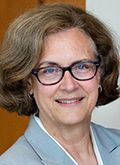 Beth Simmons, the Andrea Mitchell University Professor in Law, Political Science, and Business Ethics in the Penn Carey Law School and the School of Arts & Sciences, has been named president-elect of the American Political Science Association (APSA). She will serve a term as president from September 2026 to 2027, and a year as immediate past president the following year.
Dr. Simmons is only Penn's second APSA president, after Roger Smith, the Christopher H. Browne Emeritus Distinguished Professor of Political Science, in 2018. An active member of APSA for more than thirty years, Dr. Simmons has previously served on the APSA Council and on numerous prize committees.
“The APSA president has an important role in influencing conversations about politics and policy in the United States and, potentially, internationally,” said Dr. Simmons. “With a membership of more than 11,000 individuals located in more than 100 countries around the world, it is an opportunity to further conversations of global importance.”
Founded in 1903, APSA is one of the leading political science associations in the world. The organization connects political scientists from various areas and careers to deepen the understanding of politics, democracy, and citizenship throughout the world.
APSA fosters a diverse and active community of scholars, teachers, students, and practitioners. By releasing major publications, organizing annual meetups, and promoting various programs and services for individuals and institutions, the association enhances the capacity for research and professional development.
As the organization’s main governing body, the APSA Council sets the strategic direction and vision of the association, monitoring its ongoing operation, making policies, approving appointments and budgetary decisions, and providing oversight, guidance, and advice.
In a statement of views via APSA’s 2025 Council nomination process, Dr. Simmons revealed her intention to search for new ways for the organization to help its members communicate more effectively about the “indispensable value of political knowledge in our world.”
“APSA should be a platform to help advance the contributions political scientists have made and will continue to make to a responsible understanding of governance,” she said.
At the Carey Law School and as a Penn Integrates Knowledge University Professor, Dr. Simmons researches and teaches international relations, international law, and the seminar Borders and Boundaries in International Relations. She has also led a Global Research Seminar on international criminal and humanitarian law influences on the Colombian peace process, which included a week of on-site study.
Dr. Simmons is best known for her research on global policy diffusion, her research demonstrating the influence that international law has on human rights outcomes around the world, and most recently, the causes and consequences of global border hardening. She currently leads the Borders and Boundaries Research Project, centered in Penn’s Perry World House.
Two of her books—Who Adjusts? Domestic Sources of Foreign Economic Policy During the Interwar Years (2004) and Mobilizing for Human Rights: International Law in Domestic Politics (2009)—won the American Political Science Association’s Woodrow Wilson Award for the best book published in the United States on government, politics, or international affairs. The latter was also recognized by the American Society of International Law, the International Social Science Council, and the International Studies Association as the best book of the year in 2010. Dr. Simmons has worked at the International Monetary Fund, has directed the Weatherhead Center for International Affairs at Harvard, is a past president of the International Studies Association, and has been elected to the National Academy of Sciences, the American Philosophical Society, and the American Academy of Arts and Sciences.
“As a scholar of international relations, I want to contribute to constructive thinking about the role of the United States, U.S. universities, and American researchers in the world and foreign researcher in the United States,” said Dr. Simmons. “I feel fortunate to be at Penn, where these conversations thrive.”

 The W. P. Carey Foundation, one of the leading philanthropic supporters of educational institutions, has made a $3 million gift to the School of Arts & Sciences to endow the William P. Carey Professorship in Economics. With this gift, the foundation supports and recognizes exemplary faculty and facilitates research at the intersection of economics and political science. The inaugural chair holder will be Enrique Mendoza, who will assume the title of William P. Carey Professor of Economics.
 University of Pennsylvania senior Florence Onyiuke, from Altamonte Springs, Florida, has been awarded a Rhodes Scholarship for graduate study at the University of Oxford in England.