News

From the President: Penn’s Written Response to the Compact for Academic Excellence

October 24, 2025

To the Penn Community,

As I communicated to you on October 16, 2025, we sent a letter to the Department of Education in response to their request for limited, targeted feedback about the proposed Compact for Academic Excellence in Higher Education.

Since then, many of you have requested access to the actual letter and in the spirit of transparency, I share it with you here.

We have not had any further discussions with the government regarding the Compact. However, as emphasized in our letter, we believe there remains opportunity to advance the long-standing relationship between American higher education and the federal government which has greatly benefited our community, nation and world.

I take great pride in Penn as a scholarly community built on the open exchange of ideas, and the ideals that knowledge is a ladder of opportunity, a positive force in the world, and a driver of discovery and innovation. I will continue to work with all of you to ensure this remains our focus and our future.

—J. Larry Jameson, President

Penn Engineering Receives $11 Million Gift from the A. James & Alice B. Clark Foundation to Expand Clark Scholars Program

The University of Pennsylvania School of Engineering and Applied Science has received an $11 million investment from the A. James & Alice B. Clark Foundation to expand the institution’s Clark Scholars Program, a holistic initiative that combines financial aid, mentorship, service, and entrepreneurship to prepare future engineers to lead, innovate and give back.

Of that total, $10 million will bolster the scholarship endowment of the Clark Scholars Program, building on the Clark Foundation’s 2017, $15 million commitment to establish the program, then the largest single investment in undergraduate education in Penn’s history. The other $1 million will launch an annual philanthropy challenge, giving Clark Scholars the opportunity to invest in Philadelphia themselves. The new investment will also establish an entrepreneurship concentration, support summer internships, enhance experiential learning and increase staff support for the program.

“This investment strengthens the Clarks’ vision that engineers should serve, not just build, preparing generations of Clark Scholars to lead with technical excellence and a spirit of service,” said Penn President J. Larry Jameson. “We are deeply grateful to the Clark Foundation for their continued generosity, which is driving meaningful change and creating a lasting impact across many areas of society.”

The philanthropy challenge will give Penn Engineering’s Clark Scholars the opportunity to collectively invest $20,000 annually in local philanthropic organizations as part of a four-year curriculum that teaches scholars about philanthropy, including how to evaluate grant proposals and track the impact of their giving. The new entrepreneurship concentration will combine academic study with internships, preparing students to launch new ventures and bring fresh ideas to established organizations.

“The Clark Scholars Program embodies Penn Engineering’s values of innovation, leadership and service,” said Vijay Kumar, the Nemirovsky Family Dean of Penn Engineering. “This extraordinary new investment equips our students to invent transformative technologies and give back to their communities.”

For Clark Scholars, the program already provides career guidance, financial support, peer mentorship, and service opportunities. “The Clark Scholars Program has pushed me to better myself, not just to improve my life, but to support those around me,” said Andy Huynh, a sophomore in mechanical engineering and applied mechanics.

“My father’s own life was shaped by the chance to study engineering on a scholarship,” said Courtney Clark Pastrick, daughter of A. James and Alice B. Clark and board chair of the Clark Foundation. “Through the Clark Scholars Program, we carry forward his legacy by giving the next generation of engineers the same opportunity.”

The A. James & Alice B. Clark Foundation has partnered with organizations like Penn Engineering to strengthen their ability to meet the needs of the individuals, families, and communities they serve. In keeping with Mr. Clark’s desire to spend down within a decade and maximize the impact of this funding, the Clark Foundation established its current philanthropic model in 2016. The foundation has focused its philanthropy in three strategic areas: educating future engineering leaders, improving the lives of veterans and their families, and providing members of the community the best opportunity to thrive.

Penn Medicine Breaks Ground on $401 Million Princeton Cancer Center

On Monday, October 20, Penn Medicine leaders and regional community representatives broke ground on the Penn Medicine Princeton Cancer Center—a transformative $401 million project that will deliver a full spectrum of cancer services to patients in central New Jersey.

Located on the campus of Penn Medicine Princeton Medical Center, the 200,000-square-foot center is scheduled to open in May 2028.  

“A cancer diagnosis disrupts routines and introduces a level of uncertainty that touches everything in a patient’s life,” said Kevin B. Mahoney, CEO of the University of Pennsylvania Health System. “Across Penn Medicine, we continually work to ease that burden by improving access, convenience, and support throughout every step of treatment. The Penn Medicine Princeton Cancer Center will help us deliver cutting-edge research and clinical innovations to central New Jersey, ensuring care that is close to home, carefully coordinated, and deeply compassionate.” 

The project, which includes a recently completed six-story parking garage and a planned imaging center, is the largest expansion of Princeton Health since the new hospital opened in 2012. The new cancer center will house more than 40 exam rooms, 30 infusion chairs, and two linear accelerators to deliver radiation therapy. 

The center will also feature a breast imaging center and advanced diagnostic technologies including CT, MRI, and SPECT/CT, which provides clearer images at lower radiation doses and enables physicians to both detect cancer earlier and guide treatment with greater precision. 

“This is a significant first step in our efforts to redefine cancer care in central New Jersey,” said Princeton Health CEO James Demetriades. “The Penn Medicine Princeton Cancer Center will offer patients seamless access to clinical trials, personalized therapies, and coordinated care across our entire health system.” 

Staffed by disease-specific physicians and multidisciplinary teams working in concert with experts from the Abramson Cancer Center in Philadelphia, the Princeton Cancer Center will offer comprehensive treatment under one roof.  Patients will also be connected to advanced services available at other Penn Medicine locations, including proton therapy, specialized surgery, and personalized cell therapies. An integrated care model will ensure that the patient’s electronic medical record is available to caregivers throughout Penn Medicine, and that they can receive care—such as pre-and post-operative check-ups—as close to home as possible. 

The center will feature a blend of forward-thinking design with environmental stewardship, targeting prestigious LEED Gold certification and continuing the system’s efforts to become the nation’s most environmentally friendly healthcare organization. Green roofs will be incorporated into all canopies and oncology vaults to minimize the heat island effect, and rain gardens will capture excess water run-off. 

Energy recovery technology will play a key part in the facility, providing 100 percent outside air while exceeding energy efficiency standards, and renewable energy purchasing will supply 50 percent of the project’s annual energy demand. 

The project continues Penn Medicine’s longstanding history of environmental stewardship in construction projects. The Clifton Center for Medical Breakthroughs on the Hospital of the University of Pennsylvania campus became the largest LEED Healthcare Gold-certified building when it opened in 2021, followed by Penn Medicine Radnor, another LEED Gold certified facility, which opened in 2022. Penn Medicine Montgomeryville, currently under construction, is also targeting LEED Gold certification. 

Penn Medicine Princeton Cancer Center represents another substantial step in Penn’s ambitious sustainability road map, directly supporting Penn’s institutional commitments to reduce operational carbon emissions by 50 percent across all campuses by 2030, with full net-zero operational carbon emissions targeted by 2042.

Governance

University Council Meeting Coverage

The University Council met on October 22, 2025, in Houston Hall’s Hall of Flags. Penn President J. Larry Jameson opened the meeting by thanking the Penn community for providing feedback that had informed the Penn administration’s decision to decline to sign the federal government’s proposed Compact for Academic Excellence. He also acknowledged recent incidents of hate speech on campus and called on the entire Penn community to foster inclusion and belonging.

The first focus presentation of the year, Dining With Purpose: Building Campus Community at Penn, was given by Michael Scales,  vice president for business services; Shazad Khan, campus executive chef in Penn Dining; and Ted Morrin, associate director of meal plans in Penn Dining. They discussed Penn Dining’s multifaceted role on campus, uniting cultures and cuisines from across the world, creating a space for community, and maintaining a reliable and consistent presence.

Currently, 6,541 people hold meal plans at Penn and eat 10,000 meals every day. Penn Dining hosts 105 events annually and employs 370 people. Recently, Penn Dining has begun to offer culinary events in  collaboration with students, faculty, and staff, and it works to ensure that waste is composted. Future plans include the renovation of the 1920 Commons dining hall which is currently in the design phase.

Regarding a proposed amendment to Council bylaws to change a committee name, commenters discussed the symbolism of removing the word “diversity.” Faculty Senate past chair Eric Feldman made a motion, which passed, that a vote on the proposed amendment be tabled until the next University Council meeting.

During President Jameson’s State of the University report, senior vice president for facilities and real estate services Anne Papageorge discussed Penn’s Climate and Sustainability Action Plan 4.0 (CSAP). CSAP 4.0 is a five-year climate plan and the four that Penn has adopted since 2009. Since 2009, Penn has significantly reduced its carbon footprint (with the goal of carbon neutrality by 2050). Senior Vice President Papageorge and her co-presenters Julie Ellis, interim faculty director of the Environmental Innovations Initiative, and Nina Morris, director of Penn Sustainability, discussed new initiatives contained in CSAP 4.0, such as civic outreach in West Philadelphia (including greater employment of local vendors); expansion of the action plan to encompass Morris Arboretum, New Bolton Center, and Pennovation Works; and increased landfill diversion (chiefly via composting).

Associate vice president and associate university secretary Lizann Boyle Rode updated the Council on new business topics raised at the September 10 meeting. The Penn administration is working with transfer students, who would like an increased voice on campus as well as international and Latinx students to discuss safety concerns. In the wake of possible SEPTA cuts, Ms. Rode enumerated Penn-operated transportation options and resources. She also announced that the Council would hold an open forum on December 3.

In the new business portion of the meeting, speakers called for part- and full-time lecturers to have a greater voice in Penn governance; advocated for increased transparency from the Penn administration on measures taken to comply with federal government directives; requested a fund to assist students with journal fees for published articles; thanked President Jameson for declining to sign the federal government’s compact and requested the release of Penn’s letter to the government; and urged Penn to take increased action to distribute masks during a period of increased spread of respiratory diseases.

The next University Council meeting will be held on December 3, 2025.

From the Office of the Secretary: University Council Open Forum

Members of the University community are invited to bring topics for consideration to the

University Council Open Forum

Wednesday, December 3, at 4:00 p.m.
Hall of Flags, Houston Hall

A PennCard is required to attend University Council meetings

PennCard holders who want to be assured of speaking at the open forum must submit a request to the Office of the University Secretary (ucouncil@pobox.upenn.edu) by 10 a.m. on Monday, November 10, 2025, briefly indicating the subject of the intended remarks. Speakers’ statements are limited to three minutes and should be framed to present topics of general University interest and be directed to University Council as a body through the moderator, and not to an individual.

Those who have not submitted a timely request to the Office of the University Secretary will be permitted to speak at the discretion of the moderator of University Council if time remains after the registered speakers.

For the meeting format and guidelines for remarks, please consult the University Council website at https://secretary.upenn.edu/univ-council/open-forum.  

The Office of the University Secretary can be contacted at ucouncil@pobox.upenn.edu or (215) 898-7005.

—Office of the University Secretary

Honors

Dohyung Kim: 2025 Packard Fellow for Science and Engineering

caption: Dohyung KimDohyung Kim, an assistant professor of chemical and biomolecular engineering in the School of Engineering & Applied Science, has received a 2025 Packard Fellowship for Science and Engineering from the David and Lucile Packard Foundation. The fellowship, one of the nation’s most prestigious awards for early-career researchers, provides $875,000 over five years to support pioneering work in science and engineering. Established in 1988, the Packard Fellowship encourages bold, high-impact research by providing flexible funding that allows recipients to pursue novel and unconventional ideas.

At Penn Engineering, Dr. Kim leads the Kim Laboratory of Electrochemistry and Interfaces at the Nanoscale (KLEIN), where his team investigates how chemical reactions occur on the surfaces of solid catalysts—materials that drive processes central to energy production, fuel generation, and chemical manufacturing. By developing advanced tools and methods to map reactivity at the atomic level, Dr. Kim seeks to uncover fundamental knowledge that will enable the design of next-generation catalysts for clean energy and sustainable chemical transformations.

“My research focuses on understanding how solid catalysts actually work at their surfaces by studying the tiny reactive sites that drive chemical reactions,” said Dr. Kim. “By learning how these sites interact and shape overall performance, we can design better catalysts that make essential processes, from energy conversion to chemical manufacturing, more efficient and effective.”

Dr. Kim joins a distinguished community of Packard Fellows whose discoveries have transformed science and engineering across disciplines. His selection as a fellow reflects the growing recognition of Penn Engineering’s leadership in advancing fundamental research for a more sustainable future.

“The Packard Fellowship encourages researchers to think boldly and take risks,” said Dr. Kim. “It’s a rare opportunity to explore transformative ideas that could redefine how we produce the energy, fuels, and materials that sustain our daily lives. I’m truly honored to have received this award and to stand amongst this year’s cohort of Packard Fellows.”

Alison Wakoff Loren: Vice President of the American Society of Hematology

caption: Alison Wakoff LorenAlison Wakoff Loren, division chief of hematology-oncology in the Perelman School of Medicine, has been elected the incoming vice president of the American Society of Hematology (ASH). Dr. Loren will serve a one-year term as vice president, starting after the 2025 ASH Annual Meeting, held from December 6-9, 2025 in Orlando, Florida, followed by successive terms as president-elect and then as president.

With more than 18,000 members from nearly 100 countries, ASH is the world’s largest professional society. It serves both clinicians and scientists around the world who are working to conquer blood diseases.

“Hematology impacts every aspect of health, and we have a responsibility as hematologists to honor and advocate for all people with blood diseases,” Dr. Loren said. “I look forward to serving the broad hematology community of clinicians and researchers, especially in advancing ASH’s advocacy work and funding for research and career development during times of uncertainty.”

Since completing her internal medicine residency and hematology-oncology fellowship at Penn Medicine, Dr. Loren has spent her entire professional career at Penn, stepping up to lead the hematology-oncology division in 2022. She is the C. Willard Robinson Professor of Hematology-Oncology in the Perelman School of Medicine and the director of blood and marrow transplantation at the Abramson Cancer Center. Her clinical practice focuses on allogeneic bone marrow transplants, and she is deeply committed to improving access to and outcomes of allogeneic hematopoietic cell transplantation and long-term survivorship, including fertility preservation and reproductive health in cancer survivors.

Dr. Loren has published more than 130 peer-reviewed manuscripts and is the senior author of the American Society of Clinical Oncology’s Fertility Preservation guidelines. She is a member of the editorial board for The Art of Oncology, a subsidiary publication of the Journal of Clinical Oncology, and is active in national and international professional groups related to bone marrow transplantation, including nearly 20 years of service to the ASH on a range of committees.

Dorothy Roberts: 2025 Bioethics Founders’ Award

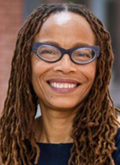
caption: Dorothy RobertsDorothy Roberts, the George A. Weiss University Professor of Law & Sociology in the Penn Carey Law School and the School of Arts & Sciences, the inaugural Raymond Pace and Sadie Tanner Mossell Alexander Professor of Civil Rights in the Penn Carey Law School, and the founding director of the Program on Race, Science & Society, has received the 2025 Bioethics Founders’ Award. The award, given annually by the Hastings Center for Bioethics, recognizes individuals from around the world who have made substantial, sustained contributions to bioethics in ways that have advanced thinking and practice in medicine, the life sciences, and public policy. 

Hastings Center president Vardit Ravitsky presented the award at a ceremony on October 23 at the American Society for Bioethics and Humanities (ASBH) annual conference in Portland, Oregon.

Professor Roberts has joint appointments in Penn’s Africana studies and sociology departments in the School of Arts & Sciences and in the Penn Carey Law School. She is a legal scholar and public policy researcher who works to expose racial inequities embedded within health and social service systems. Her work encompasses reproductive health, bioethics, and child welfare. Her work sheds light on systemic inequities, considers the voices of those directly affected, and calls for a wholesale transformation of existing systems.

Gerd A. Blobel, Enrique Schisterman, and Katalin Susztak: National Academy of Medicine

Gerd A. Blobel, Enrique Schisterman, and Katalin Susztak, researchers from the Perelman School of Medicine and Children’s Hospital of Philadelphia (CHOP), have been elected to the National Academy of Medicine (NAM). Election to NAM, voted on by current NAM members, is one of the nation’s highest honors in the fields of health and medicine.

Dr. Blobel, the Frank E. Weise III Professor of Pediatrics at CHOP and co-director of Penn’s Epigenetics Institute, is recognized for his groundbreaking contributions to understanding the three-dimensional organization of the genome and how genes are controlled during blood cell development. 

Dr. Blobel’s research explores the molecular machinery that governs blood cell differentiation, with a particular focus on genes encoding hemoglobin. His discoveries include the identification of novel factors and mechanisms that control the switch from fetal-to-adult hemoglobin production with translational implications for the treatment of sickle cell disease and b-thalassemia. 

His work has also provided fundamental insights into spatial organization of the genome within the cell nucleus and how this architecture influences gene regulation. Additionally, Dr. Blobel has uncovered epigenetic mechanisms that transmit regulatory information through cell division, advancing scientific understanding of how cells maintain their identity across generations. 

“This recognition by the National Academy of Medicine honors the many wonderful team members I have had over the years,” said Dr. Blobel. 

Dr. Blobel earned his MD from Heidelberg University in Germany, and his PhD from the Rockefeller University in New York City. He has been elected to the American Society for Clinical Investigation and the Association of American Physicians, and regularly lectures at international conferences on hematopoiesis, transcription, and epigenetics. 

Dr. Schisterman, chair of biostatistics, epidemiology, and informatics, and the Perelman Professor in Biostatistics, Epidemiology and Informatics, is recognized for his work in maternal and child health that has uncovered and addressed health inequities and influenced international clinical guidelines, resulting in greater access to reproductive care and reduced maternal and fetal morbidity and mortality in many populations.  

His work is focused on biomarkers that can drive insight into how the different things people are exposed to in life, such as chemicals, affect reproduction. He has also been a champion of low-cost interventions that improve reproductive function and fertility, such as a study that showed low-dose Aspirin use before conception could improve viable pregnancies in women who had previously experienced miscarriages. 

“It is an honor that I receive with enormous gratitude and with the conviction that science must serve equity in health,” Dr. Schisterman said. “From my beginnings in Argentina to my current work in the United States, I have always sought to generate knowledge that impacts people’s real lives, especially in the most vulnerable populations.” 

Dr. Schisterman arrived at Penn to serve as chair of biostatistics, epidemiology, and informatics in 2021. He earned his doctorate from SUNY Buffalo and received his undergraduate degree from Haifa University in Israel. Currently, he serves as the editor-in-chief of the American Journal of Epidemiology.  

Dr. Susztak, a professor of nephrology and genetics and director of the Kidney Innovation Center at Penn and CHOP, was recognized for her insights into the genetic drivers of kidney disease, including the APOL1 variants that explain a major portion of kidney disease health disparities among African Americans.  

Dr. Susztak led the largest study to date on the genetics of kidney function and created the first detailed map nominating kidney disease risk genes and showing how kidney genes work in humans and model systems. Using advanced computational tools, she uncovered how energy deficiencies in kidney cells contribute to chronic kidney disease. Her discoveries have pinpointed genes that are now shaping the development of new treatments.

“Being part of the National Academy of Medicine is a reflection of how we have sought to redefine how kidney disease is understood: by shifting the paradigm from descriptive pathology to molecular precision,” Dr. Susztak said. “I am excited to continue pushing the boundaries of what kidney medicine can become—more precise, more personalized, and more impactful for patients.”

Dr. Susztak joined the Perelman School of Medicine in 2012 as a tenured associate professor and in 2017 became a professor of medicine and a professor of genetics. She earned her MD (1995) and PhD (1997) degrees from the Semmelweis University in Budapest, Hungary.

AT PENN

November AT PENN Calendar 2025

The November AT PENN calendar is available now. Click here to view the calendar on the web, or click here to view a printable PDF of the calendar. 

Events

Update: October AT PENN

Films

29        Mother Joan of the Angels; screening of a 1961 Polish religious horror art film on demonic possession; 7 p.m.; rooftop lounge, Harnwell College House; RSVP: https://tinyurl.com/cims-film-oct-29 (Eastern European Film Series at Harnwell; Cinema & Media Studies).

            A Girl Walks Home Alone at Night; follows a lonely skateboarding vampire who preys on men who disrespect women; 8 p.m.; rooftop lounge, Harnwell College House; register: https://forms.gle/LQPGuiXqm3jC5ZZY9 (Middle East Center).


Fitness & Learning

29        CMU Rales Fellows Program Information Session; learn about the Carnegie Mellon University Rales Fellows Program, which is dedicated to cultivating the next generation of STEM leaders and driving innovation by increasing access to a life-changing graduate education; noon; room G08/09, College Hall (Center for Undergraduate Research & Fellowships).

            Centering Joy and Wonder in the Climate Movement: An Experiential Workshop with Jeff Golden; award-winning author Jeff Golden explores why happiness has been declining for decades—and how reconnecting with presence, purpose, and community can help us heal both ourselves and the planet; 5 p.m.; behind Pottruck Health & Fitness Center; register: https://tinyurl.com/jeffgoldenatpenn (Environmental Innovations Initiative).

30        Sharing Money Stories: Connection and Compassion Across Class Lines; transformative, shame-free conversations about how we all experience wealth, varying levels of social class, and shifting access to money and power at Penn; 6 p.m.; Spiritual & Religious Life Center; register: https://tinyurl.com/sparc-paideia-oct-30 (SNF Paideia Program, SPARC).

31        City & Regional Planning PhD Virtual Open House; will allow prospective applicants the opportunity to find out about our various programs, meet faculty and students, and learn more about the admissions and financial aid processes; 8:30 a.m.; online webinar; register: https://www.design.upenn.edu/events/phd-virtual-open-house (City & Regional Planning).


Penn Libraries

Various locations. Info: https://www.library.upenn.edu/events.

29        Death Café; a judgment-free environment where participants, often strangers, can openly engage in discussion on the topic of death and dying; noon; Mixed Reality Lab, Holman Biotech Commons.

30        Coffee with a Codex: Genealogy; Kislak Center curator Dot Porter will discuss a collection of genealogical and chronicle material in Middle French, including Biblical genealogy from Adam to Jesus and the apostles, the Trojan War, and the Holy Roman Emperors; noon; online webinar.

            Fall in Love with the Libraries Passport Finale; participants who have completed 8 or more stamps and selfies on their Penn Libraries passport can claim their prize; 3:30-5:30 p.m.; Weigle Information Commons, first floor, Van Pelt Libraries.

31        Spooky Fun at Fisher Fine Arts Library; stop by for trick or treating and a photo station with a Polaroid camera; 1-5 p.m.; room 114, Fisher Fine Arts Library.


Music

31        Penn Jazz Presents: Haunted Harmonies; hear the Penn Jazz Big Band Ensemble perform live, featuring some of the best musicians and vocalists the University of Pennsylvania has to offer; 6 p.m.; Bodek Lounge, Houston Hall; tickets: $8-$12 (Platt Performing Arts House).

            Quaker Note and /Pennchants Present: Rest in Pitch; a night of chilling harmonies and spine-tingling suspense as two Penn a cappella groups bring music, mystery, and mayhem to the stage; 8:30 p.m.; Iron Gate Theater; tickets: $9-$14 (Platt Performing Arts House).


On Stage

30        Bloomers Presents: A Root Awakening; Penn’s premier sketch comedy troupe’s fall show; 8 p.m.; Harold Prince Theater, Annenberg Center; tickets: $10-$20 (Platt Performing Arts House). Also October 31, 6 and 9 p.m.

            Strictly Funk Presents: Funk's Great American Road Trip; the car’s packed, the playlist’s ready, and adventure awaits; come along with a popular Penn dance troupe as they across popular states, cities, and attractions on their Great American Road Trip; 7 p.m.; Iron Gate Theater; tickets: $10-$13 (Platt Performing Arts House). Also October 31, 6 p.m.

            Quadramics Presents: "The School for Lies"; a wild farce following a battle of wits between Frank, a cynical misanthrope, and Celimene, a young widow whose sharp tongue gets her in trouble, adapted from Molière’s 1666 classic play Le Misanthrope; 8 p.m.; Class of 1949 Auditorium, Houston Hall; tickets: $10 (Platt Performing Arts House). Also October 31, 6 p.m.


Readings & Signings

28        Learning While Black and Queer: Understanding the Educational Experiences of Black LGBTQ+ Youth; Ed Brockenbrough, GSE; 5:30 p.m.; 2nd floor conference room, Penn Bookstore (Penn Bookstore).

30        Good Girl; Aria Aber, University of Vermont; 3:30 p.m.; room 623, Williams Hall (Middle Eastern Languages and Cultures).


Special Events

30        Dia De Los Muertos Event; honor the rich traditions of Día de los Muertos; stop by to contribute, reflect, and learn about this meaningful celebration of life and memory; light refreshments and cultural activities will be available; 10 a.m.-3 p.m.; ARCH Building (La Casa Latina).


Talks

29        On the Origins of the Genocide Concept: Raphael Lemkin and the Holocaust’s Aftermath;  Douglas Irvin-Erickson, George Mason University; noon; Zoom webinar; register: https://tinyurl.com/irvin-erickson-oct-29 (Katz Center for Advanced Judaic Studies).

“Plots, Combinations, & Conspiracies”: Conspiratorial Thinking and the Politicization of Irish Identity in Philadelphia, 1795-1805; Hannah Nolan, University of Maryland, College Park; noon; room 105, McNeil Center (McNeil Center for Early American Studies).

Power, Speech, and the Constitution: Current Constitutional Debates; Marci Hamilton, political science; noon; register: https://tinyurl.com/power-speech-oct-29 (Penn Law).

            Remnants of Refusal: Feminist Affect, National Trauma; Erin Shevaugn Schlumpf, Ohio University; noon; room 330, Fisher-Bennett Hall (Cinema & Media Studies).

            Discovering Transients and Studying Supermassive Black Holes with Cosmology Telescopes; Adam Hincks, University of Toronto; 3:30 p.m.; room 4E19, DRL (Physics & Astronomy).

            Self-Organized Dynamics in Living Materials; Jorn Dunkel, Massachusetts Institute of Technology; 3:30 p.m.; room A8, DRL (Physics & Astronomy).

30        Hybrid Quantum-Classical Computing – Useful Quantum Devices in the NISQ Era; Burns Healy, Dell Technologies; 10:30 a.m.; Wu & Chen Auditorium, Levine Hall (Materials Science & Engineering).

            City on the Brink: Environmental Movements in Mumbai; Vaishnavi Chandrashekhar, journalist; noon; suite 230, PCPSE (Center for the Advanced Study of India).

            Trans Literatures; Alex Brostoff, Georgetown University; rl Goldberg, Hampshire College; noon; Goodhand Room, LGBT Center (Gender, Sexuality & Women’s Studies).

            The Voice of Lawrence VanDyke; Lawrence VanDyke, U.S. Court of Appeals for the Ninth Circuit; noon; room 100, Golkin Hall; RSVP: https://tinyurl.com/vandyke-talk-oct-30 (Federalist Society).

            Inverse Problems Using Generative Priors; Romit Roy Choudhury, University of Illinois at Urbana Champaign; 3:30 p.m.; Wu & Chen Auditorium, Levine Hall (Computer & Information Science).

            Haunting Houses: Poetry as Evidence for the Unseen in Late Ancient Christianity; Ellen Muehlberger, University of Michigan; 6:30 p.m.; Zoom webinar; join: https://upenn.zoom.us/j/95243713123 (Religious Studies).


Chemistry

Unless noted, in-person events at Carolyn Hoff Lynch Lecture Hall, 1973 Chemistry Building. Info: https://www.chem.upenn.edu/events.

29        Decoding the Molecular Mechanism of Histone Modifications; Cynthia Wolberger, Johns Hopkins University; noon.


Economics

In-person events in various locations. Info: https://economics.sas.upenn.edu/events.

29        Technology Adoption and Workforce Demographics; Ruben Piazzesi, economics; noon; room 101, PCPSE.

            Hospital Quality and Capacity Strain: Equilibrium Effects on Health Outcomes; Gautam Gowrisankaran, Columbia University; 3:30 p.m.; room 100, PCPSE.

            How Unemployment Reshapes Congress; Javier Tasso, economics; 4 p.m.; room 200, PCPSE.


GRASP Lab

Info: https://www.grasp.upenn.edu/events/month/2025-10/.

29        Making Mobile Manipulation Real: New Learning Paradigms for Robots; Roberto Martín-Martín, University of Texas at Austin; 3 p.m.; room 307, Levine Hall.


Mathematics

In-person events. Info: https://www.math.upenn.edu/.

29        Realizable Classes in Grassmannians; Izzet Coskun, University of Illinois, Chicago; 3:30 p.m.; room A4, DRL.


Penn Libraries

Various locations. Info: https://www.library.upenn.edu/events.

29        The Franken-Book-of-Hours: An Experiment in Manuscript Studies; Dot Porter and Christine Kemp, Kislak Center; noon; room 241, Van Pelt Library, and Zoom webinar.

            Nuclear Energy Today: Perspectives on Policy, Practice, and Regulation in the Energy Transition; Allison M. Macfarlane, University of British Columbia; Paul Wilson, University of Wisconsin-Madison; 4:30 p.m.; Class of 1978 Orrery Pavilion, Van Pelt Library.


This is an update to the October AT PENN calendar, which is online now. To submit events for a future AT PENN calendar or weekly update, email almanac@upenn.edu.


Crimes

Weekly Crime Reports

Division of Public Safety
University of Pennsylvania Police Department Crime Report

About the Crime Report: Below are the Crimes Against Persons and/or Crimes Against Property from the campus report for October 13-19, 2025. The Crime Reports are available at: https://almanac.upenn.edu/sections/crimes. Prior weeks’ reports are also online. –Eds.

This summary is prepared by the Division of Public Safety (DPS) and contains all criminal incidents reported and made known to the Penn Police, including those reported to the Philadelphia Police Department (PPD) that occurred within our patrol zone, for the dates of October 13-19, 2025. The Penn Police actively patrol from Market Street to Baltimore Avenue and from 30th Street to 43rd Street in conjunction with the Philadelphia Police.

In this effort to provide you with a thorough and accurate report on public safety concerns, we hope that your increased awareness will lessen the opportunity for crime. For any concerns or suggestions regarding this report, please call DPS at (215) 898-7297. You may view the daily crime log on the DPS website.

Penn Police Patrol Zone
Market Street to Baltimore Avenue and from 30th Street to 43rd Street

Crime Category

Date

Time

Location

Description

Assault

10/14/25

7:14 PM

3900 Spruce St

Complainant was verbally threatened by an unknown offender


10/14/25

2:18 PM

1 S 39th St

Complainant reported a domestic stalking incident

Auto Theft

10/14/25

9:10 AM

200 S 40th St

Theft of a secured scooter taken from bike rack/Arrest


10/14/25

10:19 AM

209 S 33rd St

Theft of a secured electric scooter taken from bike rack


10/16/25

5:25 PM

4039 Chestnut St

Theft of a secured electric bike stolen from inside the lobby of an apartment building


10/17/25

12:15 AM

240 S 40th St

Attempted theft of a UPPD bait scooter by offender/Arrest


10/18/25

1:16 AM

4057 Ludlow St

Theft of a package containing an electric bicycle

Bike Theft

10/14/25

2:59 PM

1 S 40th St

Theft of a secured bicycle from highway

Other Offense

10/18/25

9:43 PM

3400 Walnut St

Domestic incident, verbal only

Retail Theft

10/13/25

2:35 PM

3741 Walnut St

Theft of two cellphones


10/13/25

7:28 PM

3744 Spruce St

Retail theft of consumable goods/Two Arrests


10/15/25

10:00 PM

4233 Chestnut St

Retail theft of alcohol


10/15/25

10:00 PM

4233 Chestnut St

Retail theft of alcohol


10/16/25

9:58 AM

4233 Chestnut St

Retail theft of alcohol; offender fled the area


10/16/25

11:48 AM

3744 Spruce St

Retail theft of consumable goods; offender fled the area


10/18/25

2:39 PM

4233 Chestnut St

Retail theft of alcohol

Robbery

10/17/25

6:27 AM

451 University Ave

Strong-arm robbery

Theft from Building

10/14/25

11:28 AM

3820 Locust Walk

Package theft from inside vestibule of building


10/15/25

8:37 PM

3730 Walnut St

Wallet taken from locker on third floor


10/17/25

4:49 PM

121 S 41st St

Package theft from apartment building lobby


10/18/25

7:11 PM

4014 Ludlow St

Package theft reported by electronic submission


10/19/25

9:16 PM

210 S 40th St

Theft of clothing and a driver’s license from inside a business

Theft from Vehicle

10/15/25

9:50 PM

4200 Sansom St

Stolen PA license plate from a parked vehicle


10/16/25

12:02 PM

100 N 38th St

Theft from automobile

Theft Other

10/19/25

9:25 PM

3939 Chestnut St

Theft left a restaurant without paying/Arrest


Philadelphia Police 18th District
Schuylkill River to 49th Street & Market Street to Woodland Avenue

Below are the Crimes Against Persons from the 18th District: 4 incidents were reported for October 13-19, 2025 by the 18th District, covering the Schuylkill River to 49th Street & Market Street to Woodland Avenue.

Crime Category

Date

Time

Location

Assault

10/13/25

6:27 PM

625 S 42nd St


10/18/25

8:33 PM

4823 Springfield Ave


10/19/25

9:46 AM

4837 Woodland Ave

Robbery

10/17/25

6:22 AM

451 University Ave

The Division of Public Safety offers resources and support to the Penn community. DPS developed a few helpful risk reduction strategies outlined below. Know that it is never the fault of the person impacted (victim/survivor) by crime.

  • See something concerning? Connect with Penn Public Safety 24/7 at (215) -573-3333.
  • Worried about a friend’s or colleague’s mental or physical health? Get 24/7 connection to appropriate resources at (215) 898-HELP (4357).
  • Seeking support after experiencing a crime? Call Special Services - Support and Advocacy resources at (215) 898-4481 or email an advocate at specialservices@publicsafety.upenn.edu
  • Use the Walking Escort and Riding services available to you free of charge.
  • Take a moment to update your cellphone information for the UPennAlert Emergency Notification System
  • Download the Penn Guardian App which can help Police better find your location when you call in an emergency.
  • Access free self-empowerment and defense courses through Penn DPS.
  • Stay alert and reduce distractions; using cellphones, ear buds, etc. may limit your awareness.
  • Orient yourself to your surroundings. (Identify your location, nearby exits, etc.)
  • Keep your valuables out of sight and only carry necessary documents.

Bulletins

November 4 Municipal Election

November 4, 2025 is the Pennsylvania Municipal Election. Here’s what you need to know to successfully cast your ballot:

Completed mail-in or absentee ballots must be received by your county election board by 8 p.m. on Election Day, November 4.

For non-partisan information about the offices and candidates on the ballot, use the Committee of Seventy’s Interactive Voter Guide at ballot.seventy.org.

For information about New Jersey’s November election, please click here. For Delaware, please click here.

To learn more about Election Day at Penn and student-led non-partisan voter engagement efforts, visit vote.upenn.edu.

—Office of Government and Community Affairs

Talk About Teaching & Learning

Why This Will Matter Later: Purpose-Driven Pedagogy in the Quantitative Classroom

Nandita Mitra

When students walk into my statistics classroom for the first time—especially those coming from clinical or public health backgrounds—they often carry a mix of apprehension and polite resignation. Many are convinced they’ll never use what they’re about to learn, that statistical formulas are for someone else’s job, and that their own strengths lie elsewhere. I get it. When material feels disconnected from students’ sense of purpose, even the most elegant concepts can fall flat.

I also believe that being open about our own learning journeys can be powerful. I often tell my students that I didn’t always picture a future in statistics. I started undergrad at Brown as a premed, dutifully enrolled in biology and chemistry, thinking I’d head to medical school. But somewhere along the way—probably somewhere between organic chemistry labs—I realized what I really loved was abstract problem-solving. I switched to pure math, completely enchanted by number theory and the beauty of logical proofs. But it wasn’t until I encountered statistics that everything clicked. Here was a way to take the structure and precision I loved and apply it to messy, urgent, real-world problems in population health. Statistics became the bridge between my love of theory and my growing interest in impact. That shift didn’t just shape my research—it transformed the way I teach. When students hear this, they begin to imagine their own, perhaps nonlinear, pathways, too.

This recognition led me to redesign my courses around case-based learning. When students engage with real-world scenarios early and often, even before they’ve learned the statistical tools, they begin to understand why those tools matter. They see themselves not just as recipients of knowledge, but also as emerging analysts, investigators, and advocates. My goal isn’t just to teach methods. It’s to help students answer questions they care about—and in doing so, to see themselves as agents of change.

Now I open the semester with a unit on soda taxes. We look at sales data from cities that implemented a beverage tax and ask whether it actually reduced sugar consumption. Then we dig into potential unintended consequences: Did low-income residents bear the brunt of the tax? Did local businesses suffer? Students wrestle with this messy, real-world policy question before they’ve even touched a regression model. So by the time we introduce the statistical tools, they already know why they matter.

Later in the semester, I draw on my experience as an expert witness in a racial discrimination case involving jury selection in North Carolina. I present students with simulated data and ask: Is there evidence of systematic bias in peremptory strikes? What are the statistical—and ethical—implications of such an analysis? This case gives us a platform to discuss sampling, causal inference, and the role of statistics in illuminating injustice. Even students who were initially skeptical of the field often leave that class realizing that numbers, when used thoughtfully, can be a powerful form of advocacy.

To further connect content with personal purpose, I ask students to design their own final projects. They choose a topic that matters to them—often something drawn from their work, clinical practice, or community—and apply the tools they’ve learned to investigate it. One student analyzed disparities in breast cancer screening rates across neighborhoods. Another evaluated the effectiveness of a local food access initiative. I provide structure and feedback throughout the process (commenting on their hypothesis of interest, the design of their study, and their statistical analysis plan, giving careful attention to the underlying statistical assumptions) but the ideas and questions are theirs. These student-driven projects become the capstone of the course, allowing them to create their own case studies that reflect both statistical rigor and personal meaning.

Of course, I’m far from the only one trying to make this connection between content and purpose. Faculty across Penn’s twelve schools are grappling with the same challenge: How do we help students see the relevance of foundational knowledge to their own goals? Whether it’s a philosophy course introducing ethics to future biomedical engineers or a history course taken by students heading into law, the tension between “what we teach” and “why it matters” is universal.

Teaching with purpose doesn’t mean every student will walk away loving statistics. But it does mean we invite them to care. When students care, they learn more deeply, ask better questions, and surprise us in the best ways. And for those of us teaching required courses that are often viewed as hurdles, this can feel like an uphill battle. But it’s a battle worth fighting. Because when students understand why they’re learning something, they start to see themselves differently. And in helping them make that connection, we sometimes rediscover our own purpose, too.

Nandita Mitra is a professor of biostatistics in the Perelman School of Medicine and co-director of the Penn Center for Causal Inference. She received the Lindback Award for Distinguished Teaching in 2025. 

--

This essay continues the series that began in the fall of 1994 as the joint creation of the College of Arts and Sciences, the Center for Teaching and Learning and the Lindback Society for Distinguished Teaching. 

See https://almanac.upenn.edu/talk-about-teaching-and-learning-archive for previous essays.

Back to Top