News

Mark Wolff Reappointed Dean of the Penn School of Dental Medicine

caption: Mark WolffMark Wolff has been reappointed dean of the University of Pennsylvania School of Dental Medicine through June 30, 2030, subject to the approval of the Board of Trustees.

The announcement was made by Interim President J. Larry Jameson and Provost John L. Jackson Jr.

The reappointment follows a comprehensive review of the major accomplishments of Dean Wolff’s first term, along with an assessment of the new challenges and strategic opportunities that may face the school during the next five years, especially in support of the objectives articulated in the University’s new strategic framework, In Principle and Practice.

“Provost Jackson and I are delighted that Dean Wolff will continue his exemplary leadership of Penn Dental Medicine,” Interim President Jameson said. “The consultative committee unanimously supported his reappointment and highlighted his many accomplishments that have dramatically advanced the work of the Dental School while also providing recommendations to further strengthen the school going forward. He has been an exceptional advocate for our University and has worked tirelessly with colleagues across campus to increase the stature and impact of Penn.”

The reappointment review committee cited specific accomplishments of Dean Wolff’s first term across a wide range of areas, including:

  • Creating a powerful new mission and vision statement for the school focused on core values of legacy, empowerment, aspiration, discovery, and social consciousness
  • Launching new programs in advanced dental studies, oral health sciences, and advanced education in general dentistry, the last of which trains dental residents to provide care to medically complex patients and persons with disabilities
  • Expanding the scope of clinical education, including state-of-the-art programs in digital and implant dentistry
  • Developing four new interdisciplinary centers that have brought together accessibility, cutting-edge research, community engagement, and global visibility
  • Doubling research funding in the first five years of his tenure and expanding licensing of innovative products based on faculty research, including 24 new patents
  • Increasing both the size and diversity of the faculty while furthering career development pathways for clinical faculty members
  • Improving and expanding clinical facilities, which serve community members across the Philadelphia region, including the Care Center for Persons with Disabilities
  • Completing a highly successful reaccreditation by the Commission on Dental Accreditation, which found no needed areas of improvement in any of the Penn Dental Medicine programs it reviewed
  • Advancing an inclusive environment where, in the words of the school’s new vision statement, “each individual in our diverse community is valued, respected, and empowered,” and confronting important issues of racism, sexual harassment, and Islamophobia; as well as chairing the University Task Force on Antisemitism, which published its recommendations in May

At its next meeting, Penn’s Board of Trustees will receive a resolution to reappoint Dean Wolff.

Annenberg School's Andy Tan Co-leads $9.6 Million FDA and NIH Grant to Study Public Health Messaging About Risks of Tobacco Use

The Annenberg School for Communication at the University of Pennsylvania has announced that a major grant from the FDA Center for Tobacco Products (CTP) and the National Institutes of Health (NIH) has been awarded to a group of researchers at the University of Pennsylvania and Johns Hopkins University to study public health communication messaging about the continuum of risk for tobacco products.

In 2022, an estimated 62.9 million people aged 15 years and older in the United States used tobacco products. This grant, totaling $9.6 million for the next four years, will help the researchers study effective ways to share the relative risks of tobacco products with multiple audiences, especially with youth and adults who use combustible tobacco. 

caption: Andy TanThe research team is led by Meghan Moran, C’03, of the Johns Hopkins Bloomberg School of Public Health, and Andy Tan of the Annenberg School for Communication, and represents multiple disciplines (communication, public health, psychiatry) and areas of expertise (tobacco regulatory science, nicotine dependence, behavioral economics, and health equity).

“This project will be one of the first to conduct a broad evaluation of the impacts that messaging about the varying levels of risks associated with tobacco products may have among various population segments,” said Dr. Tan, director of the Health Communication and Equity Lab at Annenberg. “We have two complementary objectives in this research; the first is to communicate accurate information with adults who use combustible forms of tobacco so they can make informed decisions to use less harmful forms of tobacco, if they are unable to quit. Our second goal is to ensure that such messages do not lead to unintended effects of making tobacco products appealing to youth.”

The current research on this topic lacks evidence from the diverse audience that these messages must reach, differences in message content, the continuum of key outcomes including tobacco use behavior (e.g., cessation, product switching, initiation), and the impact of repeated message exposures in the real world. 

This research will generate a ranking of these messages and assess their effectiveness and comprehension among adult users of combustible tobacco and youth/young adults. The study design will capture a full range of outcomes, from immediate message response and receptivity to longer-term behavior.

Dr. Moran, an associate professor at the Johns Hopkins Bloomberg School of Public Health, outlined the multifaceted study design. “Our team has developed a comprehensive and adaptive strategy that incorporates cutting-edge methodologies like large-scale surveys, eye-tracking, neuroimaging, behavioral economics, and ecological momentary assessment,” she said. “We believe that this is the first research of its kind to integrate these complementary methods to provide a rigorous, full-spectrum assessment of message impact.”

With the successful completion of this project, the researchers hope to provide the FDA with the effects of the messages provided for this study, along with insights about broader message strategies to optimize future public health communication for youth and adults who use tobacco products.

Researchers at Penn include Dr. Tan, Robert Hornik, and Joseph Cappella at the Annenberg School and Andrew Strasser and Janet Audrain-McGovern at the Perelman School of Medicine.

Peter Struck: Vartan Gregorian Professor of Humanities

caption: Peter StruckPeter Struck, the Stephen A. Levin Family Dean of the College of Arts & Sciences and a professor of classical studies in the School of Arts & Sciences, has been named the Vartan Gregorian Professor of Humanities. A leading scholar of Greek and Roman history of ideas, philosophy, and myth, Dr. Struck has published many works, including Birth of the Symbol: Ancient Readers at the Limits of Their Texts, and Divination and Human Nature: A Cognitive History of Intuition in Antiquity. Both works received the prestigious Charles J. Goodwin Award of Merit from the Society for Classical Studies. He and Sophia Rosenfeld, the Walter H. Annenberg Professor of History, co-edited A Cultural History of Ideas: Volumes 1–6, which received the 2023 Prose Award for Best Humanities Reference Work from the American Association of Publishers. 

Dr. Struck has a long history of dedication to service in key departmental and University roles, which include as director of the Benjamin Franklin Scholars, chair of the department of classical studies, chair of the School of Arts & Sciences Curriculum Committee, chair of the School of Arts & Sciences Continuing Education Committee, and a member of both the Provost’s Fellowship Review Committee and the Faculty Senate. He was founder and co-director of the National Forum of Liberal Education, and founder and director of Penn’s Integrated Studies Program.

The chair was established in 2004 by the Annenberg Foundation in honor of Vartan Gregorian, a former provost, dean, and faculty member at Penn. The late Ambassador Walter H. Annenberg and Honorable Leonore Annenberg were both emeritus University Trustees. The Annenbergs endowed many chairs in Penn Arts & Sciences and made several generous contributions to the University. They also founded the Annenberg School for Communication at Penn in 1958.

Michael C. Horowitz Resumes Directorship of Perry World House

caption: Michael HorowitzThe University of Pennsylvania welcomes Michael C. Horowitz, director of Perry World House and Richard Perry Professor in the School of Arts & Sciences’ department of political science, back to campus for fall 2024. Dr. Horowitz most recently served in the Biden administration as the inaugural deputy assistant secretary of defense for force development and emerging capabilities, having first joined the U.S. Department of Defense in 2022 to create the Emerging Capabilities Policy Office.

“It is a great pleasure to welcome Mike Horowitz back to Penn, and to thank him for his outstanding service at the U.S. Department of Defense,” said Provost John L. Jackson Jr. “His deep expertise in foreign policy, defense, and international relations has never been more important to our shared understanding of critical world events. And, as we look to the future, his experience with new and emerging technologies—including AI, robotics, biotechnology, and quantum—will be invaluable as he resumes the directorship of Perry World House.”

Dr. Horowitz resumed the leadership of Perry World House on August 14. In addition to his institutional leadership, he will also drive work on security, defense, and emerging technologies. Security is one of the four global policy pillars at Perry World House; the other three pillars are climate change, democracy, and human rights and global justice.

“Mike Horowitz was instrumental in building and leading Perry World House from its inception in 2016 through his appointment at the Pentagon in 2022,” said Ezekiel Emanuel, Penn’s vice provost for global initiatives. “Mike’s appointment to President Biden’s national security team recognized his expertise in defense and emerging technologies. His return to Penn will allow the community to benefit from his knowledge about defense and learn from his expertise in policy development and implementation at the highest levels of the federal government and with U.S. global partners. It will be great for him to be back enlightening the Penn community.”

“I am so pleased to return to Philadelphia after a two-year hiatus at the Pentagon,” said Dr. Horowitz. “It was a tremendous honor to build and lead a fantastic team at the Pentagon, where we worked on many policy issues related to defense, emerging technologies, and international cooperation that were a focus of my research at Perry World House. I am thrilled to be back on campus, where I will apply the policy knowledge and insights I gained from government service to Perry World House and the Penn community as a whole.”

Lisa Bellini and Sigal Ben-Porath Chair Faculty-led University Task Force on Open Expression

Advancing the recommendation put forth from both the University’s Task Force on Antisemitism and the Presidential Commission on Countering Hate and Building Community, Interim President J. Larry Jameson and Provost John L. Jackson Jr. have set forth the charge for the Open Expression Task Force.

Chaired by Lisa Bellini, senior vice dean for academic affairs in the Perelman School of Medicine and chair of Penn’s Committee on Open Expression, and Sigal Ben-Porath, the MRMJJ Presidential Professor of Education and faculty director of the SNF Paideia Program, the Open Expression Task Force will oversee the process of reviewing the Open Expression guidelines and the Temporary Standards and Procedures for Campus Events and Demonstrations.

“I am grateful to Lisa Bellini and Sigal Ben-Porath for agreeing to chair this important work in support of the University of Pennsylvania’s foundational commitment to freedom of thought, inquiry, speech, and lawful assembly,” said Interim President Jameson. “It is essential in an academic environment with diverse views and voices that, from time to time, the Guidelines on Open Expression are reviewed to ensure they align with best practices nationally, while reflecting our sincere desire to facilitate free expression and mutual respect for everyone in our campus community.”

The task force is charged with these responsibilities:

  • Revising and making recommendations for the current structure, standards, and processes of the Guidelines on Open Expression, including the Temporary Standards and Procedures for Campus Events and Demonstrations;
  • Identifying any procedural and substantive issues that challenge the application of the Open Expression guidelines or that limit their effectiveness;
  • Reviewing the roles and jurisdiction of parties responsible for applying and enacting the Guidelines and related policies; and
  • Reviewing the Open Expression Observer program and making any required updates to its structure and practices which would ensure it meets contemporary needs.

“We look forward to serving with such committed colleagues and students,” said Drs. Bellini and Ben-Porath. “We look forward to considering with them ways to secure a broad space for speaking and listening in our community.”

The task force will present preliminary recommendations to the Committee on Open Expression (COE) for review by the end of the fall 2024 semester. Recommendations will undergo further review and consideration by University Council and the Faculty Senate Executive Committee during the spring 2025 semester. Final recommendations will be presented to the Interim President no later than May 31, 2025.

Task Force Membership

Lisa Bellini, Chair
Senior Vice Dean for Academic Affairs
Perelman School of Medicine

Sigal Ben-Porath, Chair
Faculty director, SNF Paideia Program
MRMJJ Presidential Professor of Education
Graduate School of Education

Ria Ellendula
Undergraduate Assembly President
School of Arts & Sciences

Vivian Gadsden
William T. Carter Professor of Child Development and Education
Graduate School of Education

Josh Kayser
Professor of Clinical Medicine
Professor of Medical Ethics and Health Policy
Perelman School of Medicine

Sanjeev Khanna
Henry Salvatori Professor of Computer and Information Science
School of Engineering and Applied Science

Ken Leichter
Senior Judicial Case Manager
Center for Community Standards and Accountability

Joelle Lingat
GAPSA President
School of Social Policy & Practice

Desmond Patton
Brian and Randi Schwartz University Professor
Penn Integrates Knowledge University Professor
School of Social Policy & Practice and Annenberg School for Communication

Wendell Pritchett
James S. Riepe Presidential Professor of Law and Education
Penn Carey Law School

Amy Sepinwall
Associate professor of legal studies and business ethics
Wharton School

Daniel Singer
Associate professor of philosophy
Associate professor of legal studies and business ethics
School of Arts & Sciences and Wharton School

Ex Officio

Wendy S. White
Senior Vice President and General Counsel

Beth A. Winkelstein to Lead Implementation of Recommendations of University Task Force and Presidential Commission

caption: Beth Winkelstein

The University of Pennsylvania has selected Beth A. Winkelstein, the deputy provost and Eduardo D. Glandt President’s Distinguished Professor, to lead the implementation effort for the Task Force on Antisemitism and the Presidential Commission on Countering Hate and Building Community.

“Implementation efforts for the recommendations contained in the reports of the task force and commission remain a top institutional priority. I know you share my urgency and clarity of purpose in combating antisemitism, stemming hate, and building community,” said Interim President J. Larry Jameson. “Beth is an exemplary University citizen with extensive institutional knowledge and proven ability to deliver on key initiatives. While Beth will guide these efforts, it will also require the energy and investment of the entire Penn community.”

In her role, Deputy Provost Winkelstein works closely with Provost John L. Jackson Jr. on undergraduate and graduate education at Penn, including College Houses & Academic Services, Penn First Plus, Penn Libraries, the Center for Undergraduate Research and Fellowships, the Center for Community Standards and Accountability, and the Center for Excellence in Teaching, Learning, and Innovation. She has served as interim provost, vice provost for education, associate dean for undergraduate education in the School of Engineering and Applied Science, chair of the Graduate Group in Bioengineering, and a Penn Fellow, the cross-University program for select faculty members to develop leadership skills, build alliances across disciplines, and gain deeper knowledge of University governance.

The author of Orthopaedic Biomechanics, Deputy Provost Winkelstein has published more than 175 papers and book chapters. She served as editor of the Journal of Biomechanical Engineering from 2012 to 2020 and currently serves as chair of the Board of Editors of the American Society of Mechanical Engineers and an Executive Committee member of the World Council on Biomechanics. She is a fellow and former member of the Board of Directors of the Biomedical Engineering Society and a fellow of the American Society of Mechanical Engineers, which has recognized her groundbreaking research with its Van C. Mow Medal and Y.C. Fung Early Career Award.

“Interim President Jameson and I are deeply grateful to Beth for her exceptional service in support of this critical work,” Provost Jackson said. “We also want to thank every member of the Penn community who offered their support and guidance throughout the process of developing these recommendations—and who will join us in implementing them as we go forward together.”

“I’ve made it a mission of my work as an educator and administrator to build a campus that is welcoming for all students, faculty, and staff in and out of the classroom,” said Deputy Provost Winkelstein. “I’m honored to be asked and trusted by Interim President Jameson to extend those efforts to help with this important initiative for our campus. I look forward to working with campus partners and beyond in order to help Penn be a leader in this space within higher education.”

Deaths

Mark B. Adams, History and Sociology of Science

caption: Mark AdamsMark B. Adams, an associate professor in the history and sociology of science department of the School of Arts & Sciences, died on May 9. He was 79.

Dr. Adams received his BA, MA, and PhD in the history of science from Harvard University, then he joined Penn’s faculty in 1970 as an assistant professor of history and philosophy. He taught graduate and undergraduate courses in the history of Russian science; the history of biology, science and literature; and the sociology of science. In 1973, he became an assistant professor of history and sociology. He was named the Janice and Julian Bers Professor in the Social Sciences in 1974. He was a resident faculty member of Van Pelt House for many years and as undergraduate chairman of his department.

Dr. Adams introduced and taught an annual course called “The Emergence of Modern Science Fiction.” When it began in 1970, it was one of the first college courses on science fiction in the U.S. At that time, there was very little scholarly literature dedicated to the topic, so Dr. Adams created his own science fiction library to explore the genre and its history. Eventually, this collection grew to include more than 5,000 items, most of which are housed in the Mark B. Adams Science Fiction Collection at the Penn Libraries. 

Dr. Adams received Penn’s Mary F. Lindback Award for Distinguished Teaching in 1984 (Almanac April 24, 1984). He won a Research Foundation Award in 1989 for Genetics and Evolution in Russia and America: The Dobzhansky-Filipchenko Correspondence and another in 1999 for The Soviet Nature-Nurture Debate: Eugenics and Medical Genetics in Russia, 1900-1990. He served on the University Council committee for Student Affairs in 1973 and later served as a University Council representative of constituencies in 1979.

In 1995, Dr. Adams joined the Penn’s 25-Year Club. He retired and took emeritus status in 2014. 

Norman Schatz, PSOM

caption: Norman SchatzNorman Schatz, a professor of neurology  and ophthalmology in the Perelman School of Medicine, died on June 28, 2024, after a short illness. He was 88.

Born and raised in Philadelphia, Dr. Schatz graduated from Central High School. He became a professor of neurology and ophthalmology at Penn in 1978. Dr. Schatz’s career spanned years of teaching and practice at Penn, the University of Miami School of Medicine, Wills Eye Hospital, Bascom Palmer Eye Institute, Thomas Jefferson University Hospital, and elsewhere. He traveled internationally as a visiting professor and guest lecturer. Dr. Schatz joined Penn’s 25-Year Club in 2003.

He is survived by his daughters, Jodi Schatz (Dean Jerrehian), Amy Schatz (Max Rudin), and Jill Pinover (Wayne); former wife, Rhoda Schatz; grandchildren, Annie (Jarred), Matt, Michael, Emma, Livia, Eve, and Noah; great-grandchild, Shai; sister, Judith Cooper; and brother, Gerald Schatz (Linda). 

Donations in his memory can be made to the North American Neuro-Ophthalmology Society at www.nanosweb.org and/or to Library of America at www.loa.org.

Governance

From the Office of the Secretary: University Council Agenda

Wednesday, September 11, 2024
Houston Hall
4–6 p.m.
Hall of Flags

  1. Welcome
  2. Appointment of Moderator
  3. Appointment of Parliamentarian
  4. Approval of the minutes of April 17, 2024
  5. Follow-up comments or questions on Status Reports
  6. Responses to New Business topics raised at the April 17, 2024, University Council meeting
  7. Presentation of Council Committee charges for 2024-2025
  8. Presentation of Focus Issues for 2024-2025
  9. New Business
  10. Adjournment

Honors

The Darkness Manifesto by Johan Eklöf: Penn Libraries Book Prize in Sustainability

caption: Johan EklöfThe Penn Libraries have announced that The Darkness Manifesto: On Light Pollution, Night Ecology, and the Ancient Rhythms that Sustain Life by Johan Eklöf, translated by Elizabeth DeNoma (Scribner, 2024), has been named the inaugural winner of the Penn Libraries Book Prize in Sustainability. The author will receive $8,000 and will be celebrated with a ceremony and a book talk on September 26, 2024.

“The Penn Libraries is deeply committed to furthering initiatives that tackle the key environmental issues of our time, and we’re pleased to offer the Penn Libraries Book Prize in Sustainability as a way to bolster new literature that draws attention to these issues,” said Brigitte Weinsteiger, the H. Carton Rogers III Vice Provost and director of the Penn Libraries. “Our inaugural winner, The Darkness Manifesto, presents compelling reflections on the adverse effects of light pollution and outlines simple steps we can take to address this issue.”

Praised as “rich in revelation and insight” and “lyrical” by The Wall Street Journal, The Darkness Manifesto draws attention to the hidden impact of our constantly illuminated world.

All living organisms have evolved to operate in the natural cycle of day and night. In this book, Swedish conservationist Johan Eklöf describes the widespread effects of artificial light on insects, birds, and even humans, ultimately advocating for the preservation of natural darkness.

“I’m honored to receive the Penn Libraries’ first Book Prize in Sustainability and to use this opportunity to communicate the wide-reaching effects of light pollution,” Dr. Eklöf said. “By taking steps to reduce artificial light and return to darker skies, we can begin to revive struggling ecosystems and ensure a bright future for ourselves and our planet.”

A bat scientist and writer most known for his work on microbat vision and more recently, light pollution, Dr. Eklöf lives in the west of Sweden, where he works as a conservationist and copywriter. He has studied bats for almost 20 years and now has established a consultancy company, which has provided authorities, wind companies, municipalities, city planners, and environmental organizations with expertise on bats, night ecology, and nature-friendly lighting. The Darkness Manifesto is his second book to be translated into English.

Established in 2024, the Penn Libraries Book Prize in Sustainability—a new annual award presented by the Lynn Family—recognizes outstanding contributions to the global discourse on environmental sustainability.

Katalin Karikó and Drew Weissman: American Philosophical Society

caption: Katalin Karikó caption: Drew WeissmanKatalin Karikó and Drew Weissman of the Perelman School of Medicine have been elected to the American Philosophical Society (APS) as part of its 2024 cohort earlier this year.

Established by Benjamin Franklin in 1743 for “promoting useful knowledge,” APS is the oldest scholarly society in the United States. It upholds Mr. Franklin’s spirit of inquiry by offering a platform for the open exchange of ideas. Election to the APS honors exceptional achievements across various disciplines.

Dr. Karikó is an adjunct professor of neurosurgery at the Perelman School of Medicine who is renowned for her groundbreaking work in mRNA technology, which laid the foundation for the COVID-19 vaccines. She was awarded the 2023 Nobel Prize in Medicine for discoveries that enabled the use of modified mRNA in Pfizer-BioNTech and Moderna vaccines. At Penn Medicine, Dr. Karikó helped develop a method to modify mRNA and package it in lipid nanoparticles, making it safe and effective for triggering immune responses.

Dr. Karikó also holds 14 U.S. patents and is a professor at the University of Szeged in Hungary. Her contributions to science have been recognized with the Breakthrough Prize in Life Sciences, the Princess of Asturias Award, the Lasker-DeBakey Clinical Medical Research Award, and the Vilcek Prize for Excellence in Biotechnology.

Dr. Weissman, also a 2023 Nobel Laureate in Medicine, is the Roberts Family Professor in Vaccine Research and director of the Penn Institute for RNA Innovation at the Perelman School of Medicine. As a physician-scientist, Dr. Weissman is a pioneer in immunology, most notably for his discovery of nucleoside-modified mRNA technology that avoids adverse immune responses.

This innovation, the result of decades of research, is the foundation for the COVID-19 mRNA vaccines and holds promise for targeted therapeutics against numerous diseases. Dr. Weissman has published more than 100 papers and holds numerous patents for key mRNA modifications.

His groundbreaking work has earned him numerous accolades, which include the Rosenstiel Award, the Lasker-DeBakey Clinical Medical Research Award, the Princess of Asturias Award, and the Breakthrough Prize in Life Sciences, among many others.

Sarah Tishkoff: Vanderbilt Prize

caption: Sarah TishkoffSarah Tishkoff, the David and Lyn Silfen University Professor in the departments of biology and genetics in the School of Arts & Sciences and the Perelman School of Medicine, has received the 2024 Vanderbilt Prize in Biomedical Science, awarded to researchers who “have made significant contributions to the science of medicine.” She was recognized for her “groundbreaking work in evolutionary genetics and diversity” and its “broad implications for understanding and treating human disease.”

To conduct her research, Dr. Tishkoff combines fieldwork, laboratory work, and computational approaches to address fundamental questions about modern human evolutionary history and the genetic factors influencing traits related to adaptation and disease risk in Africa. With collaborators in Africa, she has created a database of genetic samples derived from more than 9,000 people, representing more than 200 diverse ethnic groups—one of the largest data sets of its kind. She and colleagues are analyzing genomic data from these samples in the hopes of gaining knowledge about genetic structures and identification markers useful in gene-mapping studies; obtaining estimates of demographic parameters; and identifying genomic variants and pathways that play a role in human adaptation, phenotypic variation, and disease risk in African and African diaspora populations.

In addition to this most recent award, Dr. Tishkoff is a member of the National Academy of Sciences, the National Academy of Medicine, and the American Academy of Arts and Sciences, and is president-elect of the American Society of Human Genetics.

Patrick J. Walsh: Arthur C. Cope Scholar Award

caption: Patrick WalshPatrick J. Walsh, a professor of chemistry in the School of Arts & Sciences, has been selected as one of ten annual recipients of a 2025 Arthur C. Cope Scholar Award. The award, administered by the American Chemical Society, recognizes and encourages excellence in organic chemistry.

Research in Dr. Walsh’s laboratory merges the fields of catalysis and organic and inorganic synthesis with the goal of achieving new catalytic and stoichiometric transformations. Dr. Walsh’s research interests include mechanism study for some novel and unusual reactivity.

Features

Convocation 2024

Penn’s 2024 convocation was held on the evening of August 26, 2024 on Franklin Field. 
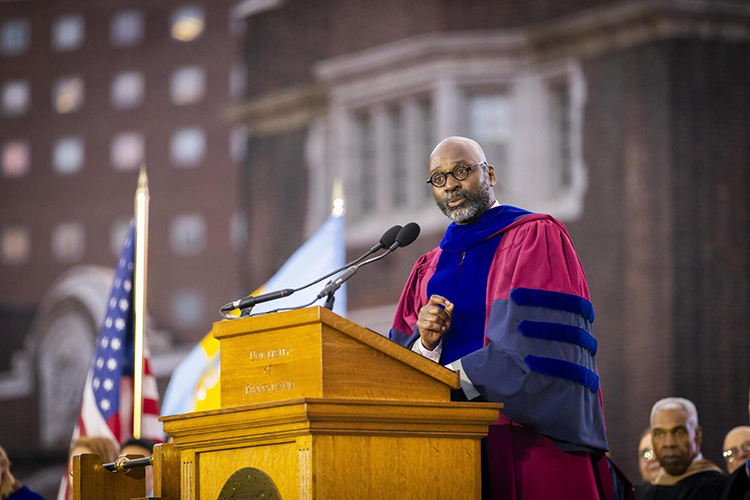
caption: Provost John L. Jackson, Jr. speaks at Convocation on August 26, 2024. Photo by Eric Sucar.

Embrace The New

Provost John L. Jackson, Jr.

As Provost—Penn’s Chief Academic Officer—it is my great pleasure to welcome you this evening. Convocation is a Penn tradition that dates, at least formally, to the 1890s. The word refers to a coming together, or an assembly of people, and is rooted in the Latin vocare, which means “to call.”

As you know, over the last year we—along with many other college and university campuses—have seen our share of assemblies. People came together based on a call to express their closely held beliefs, and their frustrations. I’m not here tonight to tell you how to think or how to feel about the complex issues that give rise to protest—or about the protests themselves.

Instead, I’m going to ask that you take a deep dive into what it means to convene here together, at Penn: as an individual, as a member of this great class, and as an active participant in our community and our democracy. This is a time of strong opinions and deep divisions. I want to challenge you to find a way to be in this world that doesn’t fall victim to the polarizing tendencies that seem to infect every facet of our society.

And where does that journey begin? With a willingness to embrace what is new to you.

Founded nearly 300 years ago, from our inception, Penn was different. Instruction was secular, and delivered primarily in English, not Latin. Our mission, too, was novel: not simply to educate, but to shape good citizens who, in their service to society, would support a fledgling democracy.

“Democratic peoples’ passion for equality is ardent, insatiable, eternal, and invincible.”

Those words were written in 1835, though not by Benjamin Franklin. They belong to the French sociologist and political theorist Alexis de Tocqueville and come from his groundbreaking study Democracy in America. This new nation of difference could achieve equality—in Tocqueville’s view the greatest social and political idea of the age—by two means: civic participation and compromise. Both are just as relevant today.

I am trained as an anthropologist: someone who studies human difference, between our species and others, and among one another. Each of us has distinct ideas and opinions formed by our experiences and backgrounds; our families and friends; and our teachers, schools, and communities. While we should stay true to our values, equality demands that we consider different viewpoints.

At Penn—in your classes, in your college houses, and even on Locust Walk—your firmly held beliefs will be questioned. At least, I hope they will. Take this time not just to champion but to challenge what you take for granted. That means listening, really listening, not just hearing.

Now here you might be thinking: That all sounds great, Provost Jackson, but: I know I’m right!

Well, guess what? The person across the table thinks that too! So, how to deal with this? First, embrace humility, not hubris. You don’t have to change your mind, but you do need to keep it open. Be willing to be wrong. This is a college campus, after all: we are all here to learn what we don’t know—and that includes your professors, who will learn from you even as they teach.  Take classes not because you know the subject matter but precisely because you don’t. Which is actually a great way to be humbled.

As you come together on your Penn journey, you will undoubtedly encounter others dealing with stress, for any number of reasons. When you do, be empathetic. Try to see the world as they do. And if you are the one who needs help, please reach out to friends, faculty, and our amazing student support staff. Everyone here wants you to succeed, but nobody does it without help.

Finally, take time for yourself and make time to have fun! Play a new sport, try a new activity, explore a different culture. Be a part of this community. Penn has hundreds of student and affinity groups. Again, I’d urge you to explore at least some paths that lead you away from what you know and out of your comfort zone. In short: participate.

I’m confident Penn will challenge you in countless ways. My call to you this evening is to challenge yourself. That path won’t be straight, or without obstacles. But it will help you discover not what, but who you want to be.

Transfers, members of the Class of 2028, welcome to Penn.

caption: Interim President J. Larry Jameson speaks at Convocation on August 26, 2024. Photo by Eric Sucar.

What We Share: Anchored, Interwoven, Inventive, Engaged

Interim President J. Larry Jameson

Dean Soule and Reverend Howard, thank you.

To the Class of 2028 and transfer students, a warm welcome to Penn—and by warm, I mean very warm. Be happy you’re not wearing robes out there.

Even in the August heat, we put these robes on with a smile. They are symbols, ushering you into academia and foreshadowing the day when you don robes of your own and graduate from this esteemed institution.

We look forward to this ceremony as one of the most exciting and memorable days of the whole year at Penn. Convocation is when we officially welcome you to your University.

You now join an exceptional community, hundreds of years in the making. As a class, you will come to share many things.

For example, some of you will share a school—and each school claims to have the most school spirit.

Can I hear from the Penn Engineering students? Let’s try that again. How about Nursing? Wharton? The College?

Some of you will share a major or a club, a sport or participation in the arts.

You may share college houses or classes.

Over time, you will share memories and laughs, triumphs and speedbumps, discovery and purpose.

You will share this University’s incredible history. After all, you now join fellow Quakers like our founder, Benjamin Franklin; eight signers of the Declaration of Independence; and nine signers of the U.S. Constitution.

You will also share this University’s calling, to create and spread knowledge to improve the world and create a better future.

But all of that is ahead, and there’s no need to rush.

For now, I want you to look around. Celebrate your hard work and the achievements that have brought you here. Enjoy this moment.

While you’re taking it in, I also want to share with you a few insider tips—four tips, to be exact­—for thinking about your new home.

The opportunities here are almost endless, and adjusting to any new place takes time. Call these stars to steer by. Life hacks for Penn.

Whatever you call them, they are quintessential. They are who we have always been and where we are going. These, we all share.

First, Penn is anchored. In front of College Hall, there is an enormous elm tree. It is rooted deeply in a particular place, inseparable from its surroundings, dynamic, and alive.

Everything at Penn is anchored by our people and our campus. From this origin, we branch out to partner with, and improve life, for our neighbors, our city, and the world. We are anchored in history; anchored in Philadelphia; anchored by our values; and anchored by the legacy of our alumni.

Penn is also interwoven. Here, you will find that teamwork is key. In the classrooms, in research, in your dorms, and on our sports teams, our tight-knit, compact campus is a hallmark of Penn. It takes about 10 minutes to walk to any of Penn’s 12 world-class schools and countless campus resources. Even shorter with a scooter.

A breezy stroll can land you an unexpected partnership, an electrifying interdisciplinary project, or a new friendship. I encourage you to take that stroll often, contribute to the spirit of teamwork and collaboration, and reap all the benefits.

Third, Penn is inventive. Remember when I mentioned Benjamin Franklin? Yes, that kind of inventive. Broad-ranging, crazy curious, pragmatic, and boldly facing great challenges—and finding solutions! We pursue knowledge to understand and create a better world. Penn is in fact repeatedly ranked as one of the most inventive universities, ranking first in licensing and more than twice that of #2—the entire University of California system.

It’s not only Penn’s faculty, staff, and graduate and professional students who drive this pursuit. It’s undergraduates like you. If you haven’t done so yet, check out the President’s Engagement and Innovation Prizes. You’ll see what I mean.

Finally, Penn is engaged. From day one, what set Penn apart from our peers was our founding purpose to be in, of, and for the world. It still is.

We cultivate leaders who serve. We practice constructive dialogue across differences. In adversity, we seek opportunity. Our greatest reward is knowledge used well.

We also take special pride in the civic engagement of our students—especially in election years. Penn’s phenomenal student-led, get-out-the-vote organization is called “Penn Leads the Vote.” I cannot recommend them highly enough. I keep their T-shirt displayed in my office. They are ready to help you get involved.

I know I covered a lot of ground, so let me recap: Penn is Anchored. Interwoven. Inventive. Engaged.

With these helpful hints in hand, you’ll be well on your way to thriving at Penn. Embrace these principles, and you embrace Penn.

There is another thing we all share. I believe it is so critically important to repeat this early and often.

We share a responsibility to look out for each other and this community. To treat everyone, no matter their background or point of view, with the same courtesy and respect that we ourselves expect.

These can be divisive days. No corner of the world is exempt. But here, when you join a community like this, what we share vastly outweighs what may divide us. Never forget that.

 You are the latest in a long, brilliant line of people who have called Penn home. This is a rare opportunity. It is a solemn responsibility. It’s also going to be one of the most fabulous, fun times of your life.

So, remember: Anchored, Interwoven, Inventive, Engaged. Remember the things we share, and I speak for all of us when I say: How excited and proud we are now to share this amazing University with you.

Class of 2028 and transfer students, welcome to Penn!caption: The ceremony marked the start of Penn’s 285th academic year, with about 2,500 new students gathered on Franklin Field. Photo by Eric Sucar.

Research

A Modified Peptide Shows Promise for Fighting Tumors

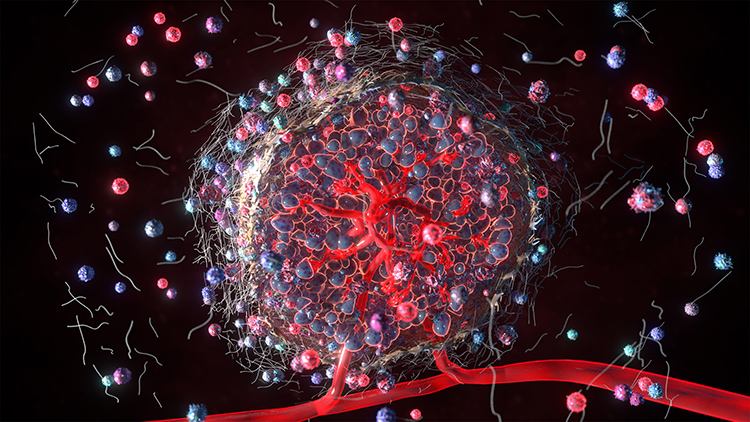
caption: A modified peptide can successfully target the immunosuppressive tumor microenvironment.

The growth of healthy tissues in the body depends on the development of new blood vessels, a process called angiogenesis, that enable proper blood flow, meaning that nutrients and oxygen are delivered while toxic metabolic products are removed. But solid tumors grow faster than healthy tissues, resulting in deficiencies in oxygen and blood flow, which leads to accelerated formation of dysfunctional blood vessels. Malignant cells rapidly grow while antitumor immune cells quickly lose their viability and function.

Cell biologist Serge Fuchs, the Elizabeth and William Whitney Clark Professor of Oncology, a professor of cell biology in the department of biomedical sciences, and director of the Mari Lowe Center for Comparative Oncology at Penn Vet, said these events promote generation of the immunosuppressive tumor microenvironment, which stimulates the spread and growth of tumors and confers resistance to antitumor therapies.

Past research has shown how native C-type natriuretic peptide (CNP), a 22-amino acid peptide produced by endothelial cells and fibroblasts, stimulates growth of normal blood vessels and restores proper blood flow and oxygenation within tissues of rodent limbs that weren’t getting enough blood flow. Given the importance of CNP in angiogenesis, researchers reasoned that CNP would also play a critical role in regulating tumor vasculature. But therapeutic potential of CNP is severely hampered by its short half-life of less than three minutes, said Zhen Lu, professor of oncology and pharmacology at the Institute of Drug Discovery and Development at China Pharmaceutical University and a former senior research investigator in Dr. Fuchs’ lab at Penn Vet.

Drs. Fuchs and Lu are part of an interdisciplinary, collaborative team which found that modifying CNP stimulated the formation of blood vessels, increased blood flow through tissue, reinvigorated antitumor immune responses, and slowed growth of tumors in an animal model. The results, published in the journal Science Translational Medicine, suggest that the treatment could alleviate hypoxia, or insufficient oxygen levels, in tumors. The team includes researchers from Kyushu University, the Higashiosaka City Medical Center, the Case Western Reserve University School of Medicine, and PharmaIN Corp.  

This approach not only elicited responses on its own against solid tumors and metastatic disease but also enhanced the efficacy of multiple therapies. That includes different chemotherapy treatments, radiotherapy, immune checkpoint blockade, and adoptive cell transfer therapies, such as CAR T therapy.

Dr. Lu, first author on the paper, explained that PharmaIN researchers chemically modified part of CNP by adding an extended amino acid tail, forming a derivative of CNP (dCNP). He noted that, compared to native CNP, the derivative showed improved pharmacokinetics and pharmacodynamics in mice, meaning it was better absorbed in the body and had better effects.

The researchers successfully tested dCNP in several mouse solid tumor models, including pancreatic, colon, lung, and mammary adenocarcinomas, along with hepatocellular carcinoma and osteosarcoma.

Dr. Fuchs explains that this research builds on the work of Judah Folkman and Rakesh Jain, which looked at vascular endothelial growth factor (VEGF), a signaling protein that accelerates the formation of dilapidated and leaky blood vessels. They proposed anti-VEGF therapy. But resistance to anti-VEGF agents and difficulties with precise dosing meant obstacles remained to solving the problem of the immunosuppressive tumor microenvironment.

Dr. Lu says the new study demonstrates that, instead of inhibiting dysfunctional tumor angiogenesis by anti-VEGF agents, inducing healthy vasculature by dCNP could reinvigorate anti-tumor immunity and improve solid tumor therapies. Researchers completed preclinical studies and PharmaIN completed toxicity profiles, so the next step is selecting a solid tumor model for clinical trials.

Adapted from an August 21, 2024 Penn Today article by Erica Moser.

Mining the Microbiome: Uncovering New Antibiotics Inside the Human Gut

The average human gut contains roughly 100 trillion microbes, many of which are constantly competing for limited resources. “It’s such a harsh environment,” said César de la Fuente, Presidential Assistant Professor in bioengineering and in chemical and biomolecular engineering in the School of Engineering and Applied Science, in psychiatry and microbiology within the Perelman School of Medicine, and in chemistry in the School of Arts & Sciences. “You have all these bacteria coexisting, but also fighting each other. Such an environment may foster innovation.”

In that conflict, Dr. de la Fuente’s lab sees potential for new antibiotics, which may one day contribute to humanity’s own defensive stockpile against drug-resistant bacteria. After all, if the bacteria in the human gut have to develop new tools in the fight against one another to survive, why not use their own weapons against them?

In a new paper in Cell, the labs of Dr. de la Fuente and Ami S. Bhatt, professor in medicine (hematology) and genetics at Stanford, surveyed the gut microbiomes of nearly 2,000 people, discovering dozens of potential new antibiotics. “We think of biology as an information source,” said Dr. de la Fuente. “Everything is just code. And if we can come up with algorithms that can sort through that code, we can dramatically accelerate antibiotic discovery.”

In recent years, Dr. de la Fuente’s lab has made headlines for finding antibiotic candidates everywhere from the genetic information of extinct creatures like Neanderthals and wooly mammoths to masses of bacteria whose genetic material the lab analyzed using artificial intelligence. “One of our primary goals is to mine the world’s biological information as a source of antibiotics and other useful molecules,” said Dr. de la Fuente. “Rather than relying on traditional, painstaking methods that involve collecting soil or water samples and purifying active compounds, we harness the vast array of biological data found in genomes, metagenomes and proteomes. This allows us to uncover new antibiotics at digital speed.”

Given that bacteria evolve quickly, Dr. de la Fuente and his coauthors hypothesized that an environment that encourages competition—like the human gut—might be home to numerous undiscovered antimicrobial compounds. “When there is a lack of resources,” Dr. de la Fuente pointed out, “that’s when biology really comes up with innovative solutions.”

The group focused on peptides, short chains of amino acids, which have previously shown promise as novel antibiotics. “We computationally mined over 400,000 proteins,” Dr. de la Fuente said, referring to the process whereby AI reads the letters of genetic code and, having been trained on a set of known antibiotics, predicts which genetic sequences might have antimicrobial properties.

“Interestingly, these molecules have a different composition from what has traditionally been considered antimicrobial,” said Marcelo D.T. Torres, a research associate in Dr. de la Fuente’s lab, and the paper’s first author. “The compounds we have discovered constitute a new class, and their unique properties will help us understand and expand the sequence space of antimicrobials.”

Of course, those predictions must then be experimentally validated; after finding a few hundred antibiotic candidates, the researchers selected 78 to test against actual bacteria. After synthesizing these peptides, the researchers exposed bacterial cultures to each peptide and waited 20 hours to see which peptides successfully inhibited bacterial growth. In addition, the team later tested the antibiotic candidates in animal models.

Over half of the peptides tested worked—that is, they inhibited bacterial growth of either friendly or pathogenic bacteria—and the lead candidate, prevotellin-2, demonstrated anti-infective capabilities on par with polymyxin B, an FDA-approved antibiotic used today to treat multidrug-resistant infections, suggesting that the human gut microbiome may contain antibiotics that will someday find clinical application.

“Identifying prevotellin-2, which has activities on par with one of our antibiotics of last resort, polymyxin B, was very surprising to me,” said Dr. Bhatt. “This suggests that mining the human microbiome for new and exciting classes of antimicrobial peptides is a promising path forward for researchers and doctors, and most especially for patients.”

Adapted from an August 19, 2024 Penn Engineering Today article by Ian Scheffler.

Events

Update: September AT PENN

Fitness & Learning

6          School for International Training Study Abroad Information Session; learn about programs including “Indie: Public Health, Gender, and Sexuality,” “IHP Cities in the 21st Century: People, Planning, and Politics,” and “IHP Health & Community: Globalization, Culture, and Care”; noon; Penn Abroad, 3539 Locust Walk (Penn Abroad, Gender Sexuality & Women’s Studies).

9          Lesbian Gay Bisexual Transgender (LGBT) Center Open House; explore the space, meet new people, and learn about LGBT Center programming, including refreshments; 5-7 p.m.; LGBT Center (LGBT Center).

10        The Anti-Racist Writing Workshop: How to Decolonize the Creative Classroom; Felicia Rose Chavez, author, will prompt atendees to interrogate their academic and cultural inheritance with the goal of discovering possibilities beyond traditional teaching models; noon; room 101, Lauder College House; register: https://www.eventbrite.com/e/adapting-our-teaching-habits-tickets-1000264145987 (Paideia Program). Also September 11


On Stage

10        Incantation: The Embodied Aleph-Bet; vocal artist Victoria Hanna brings new life to ancient Hebrew text through sonic interpretations of Jewish mystical and magical traditions; 6 p.m.; Penn Museum; tickets: free; register: https://tinyurl.com/incantation-sept-10 (Penn Museum).


Readings & Signings

4          America's New Racial Battle Lines: Protect Versus Repair; Rogers Smith, political science; Desmond King, University of Oxford; 5 p.m.; 2nd floor conference room, Penn Bookstore (Penn Bookstore).

10        Survival is a Promise: The Eternal Life of Audre Lorde; Alexis Pauline Gumbs, author; 11 a.m.; Zoom webinar; register: https://kwazmanvwa.com/2024/08/23/september-10-2024-a-roundtable-with-alexis-pauline-gumbs/ (French & Francophone Studies).

11        Summoning Our Collective Power; Felicia Rose Chavez, anti-racist educator; 3:30 p.m.; room 111, Lauder College House; register: https://www.eventbrite.com/e/summoning-our-collective-power-a-reading-and-conversation-with-dr-chavez-tickets-1000276432737 (Paideia Program).


Kelly Writers House

In-person events at Arts Café, Kelly Writers House. Info: https://writing.upenn.edu/wh/calendar/0924.php.

4          Dear Penn Freshmen; 7 p.m.


Special Events

4          Penn Nursing Back to School Welcome; food, fun and giveaways; 1-3 p.m.; Claire Fagin Hall (Penn Nursing).


Talks

4          Bridging the Gap Between Learning and Programming; Armando Solar-Lezama, Massachusetts Institute of Technology; noon; room 225, Towne Building, and Zoom webinar; join: https://upenn.zoom.us/j/93017587225 (ASSET Center).

            Pressure-Induced Nanoparticle Assembly; Hongyou Fan, Sandia National Laboratories; 3:30 p.m.; Wu & Chen Auditorium, Levine Hall (Chemical & Biomolecular Engineering).

9          Transcriptional Control of Sex Determination in the Intestinal Parasite Cryptosporidium Parvum; Katelyn Walzer, Penn Vet; noon; room, Hill Pavilion, and Zoom webinar; join: https://upenn.zoom.us/j/91485597704 (Penn Vet).

            Genomic Approaches for Modeling Clonal Evolution in Myeloid Malignancy; Robert L. Bowman, cancer biology; 3 p.m.; Austrian Auditorium, CRB (Pennsylvania Muscle Institute).

10        Elasticity of Fluids in Nanopores: Molecular Modeling and Ultrasonic Experiments; Gennady Gor, New Jersey Institute of Technology; 10:15 a.m.; Wu & Chen Auditorium, Levine Hall (Mechanical Engineering & Applied Mechanics).

            The Architecture of Illness: Hospitals as a Bourgeois Institution, 1860-2020; Fatima Naqvi, Yale University; 5:15 p.m.; room 623, Williams Hall (Germanic Languages & Literatures).

20        Polling at a Crossroads; Michael Bailey, Georgetown University; noon; room 109, Fox-Fels Hall (Paideia Program).

23        How to Talk About Politics Even When You Disagree; Matthew Levendusky, political science; noon; Class of 1978 Orrery Pavilion, Van Pelt Library; register: https://www.eventbrite.com/e/election-series-event-a-conversation-with-matthew-levendusky-tickets-1003201281037 (Paideia Program).


Economics

In-person events. Info: https://economics.sas.upenn.edu/events.

3          Credit Constraints, Market Structure and Welfare: Evidence from SBA Loans; Chinmay Lohani, economics; noon; room 101, PCPSE.

            Matching with Costly Interviews; Akhil Vohra, University of Georgia; 4 p.m.; room 101, PCPSE.

5          Investments and Inequities in Pre-College Human Capital: The Case of the Advanced Placement Program; Cung Truong Hoang, economics; 3:30 p.m.; room 101, PCPSE.

9          Proper Robustness and the Efficiency of Monopoly Screening; Ashwin Kambhampati, United States Naval Academy; noon; room 203, PCPSE.

10        Choosing the Right Pond: Trading off Status and Prestige with Applications to School Choice and Party Formation; Xinyang Wang, Instituto Tecnológico Autónomo de México; 4 p.m.; room 101, PCPSE.


Mathematics

In-person events. Info: https://www.math.upenn.edu/events.

9          Levi Factors of Linear Algebraic Groups; George McNinch, Tufts University; 3:30 p.m.; room 4N30, DRL.

10        Functional Limit Theorems for Local Functionals of Dynamic Point Processes; Efe Onaran, mathematics; 3:30 p.m.; room 4C8, DRL.


Physics & Astronomy

In-person events. Info: https://www.physics.upenn.edu/events/.

4          Examining the CMB Quadrupole Anomaly Using Planck PR3 Data; Jahmour Givans, Princeton University; 3:30 p.m.; room 4E19, DRL.


This is an update to the September AT PENN calendar, which is online now. To submit an event for a future AT PENN calendar or weekly update, email almanac@upenn.edu.

WXPN Meeting: September 12

An open session of the WXPN Policy Board will meet Thursday, September 12 at noon at WXPN. For more information, email abby@xpn.org or call (215) 898-0628 during business hours.

Crimes

Weekly Crime Reports

Division of Public Safety University of Pennsylvania Police Department Crime Report

About the Crime Report: Below are the Crimes Against Persons and/or Crimes Against Property from the campus report for August 19-25, 2024. The Crime Reports are available at: https://almanac.upenn.edu/sections/crimes. Prior weeks’ reports are also online. –Eds.

This summary is prepared by the Division of Public Safety (DPS) and contains all criminal incidents reported and made known to the Penn Police, including those reported to the Philadelphia Police Department (PPD) that occurred within our patrol zone, for the dates of August 19-25, 2024. The Penn Police actively patrol from Market Street to Baltimore Avenue and from 30th Street to 43rd Street in conjunction with the Philadelphia Police.

In this effort to provide you with a thorough and accurate report on public safety concerns, we hope that your increased awareness will lessen the opportunity for crime. For any concerns or suggestions regarding this report, please call DPS at (215) 898-7297. You may view the daily crime log on the DPS website.


Penn Police Patrol Zone

Market Street to Baltimore Avenue and from 30th Street to 43rd Street

Crime Category

Date

Time

Location

Description

Assault

08/20/24

1:56 PM

51 N 39th St

Simple assault


08/22/24

12:23 PM

230 S 40th St

Simple assault


08/24/24

10:34 AM

3701 Chestnut St

Complainant reported that her neighbor assaulted her

Auto Theft

08/21/24

5:45 PM

51 N 39th St

Secured scooter taken from a bench


08/22/24

12:01 PM

233 S 33rd St

Unsecured scooter taken


08/23/24

10:54 AM

4200 Pine St

Theft of a parked motor vehicle from highway


08/25/24

6:02 PM

3701 Walnut St

Secured scooter taken from bike rack

Bike Theft

08/21/24

7:52 PM

3733 Spruce St

Secured bike taken from bike rack


08/23/24

6:20 PM

3335 Woodland Walk

Secured bike taken from bike rack


08/23/24

6:36 PM

4200 Chestnut St

Theft of bicycle from highway

Burglary

08/19/24

10:07 AM

3401 Greys Ferry Ave

Unknown offender entered location without authorization, graffiti found on walls


08/21/24

10:03 AM

3701 Chestnut St

Burglary of residence; theft of gaming console


08/25/24

7:37 PM

235 S 41st St

Complainant reported that unknown offender gained entry into her apartment through a door in the back of the property; multiple items taken

Fraud

08/24/24

1:27 PM

4105 Baltimore Ave

Credit card used without authorization

Harassment

08/25/24

5:48 PM

3820 Locust Walk

Offender pushed complainant during verbal altercation

Retail Theft

08/19/24

11:49 AM

3250 Chestnut St

Retail theft


08/19/24

2:47 PM

3131 Walnut St

Retail theft


08/21/24

7:14 PM

3744 Spruce St

Retail theft of a consumable good


08/23/24

7:32 PM

4233 Chestnut St

Retail theft


08/23/24

9:40 PM

4233 Chestnut St

Retail theft

Robbery-Retail

08/25/24

7:56 PM

4001 Walnut St

Offender assaulted a security guard during a retail theft/Arrest

Theft from Building

08/20/24

11:09 AM

3400 Civic Center Blvd

Artwork taken from exhibit


08/23/24

11:16 AM

125 S 31st St

Computer equipment taken from lab

Theft from Vehicle

08/21/24

2:07 PM

4200 Chestnut St

Catalytic converter theft

Theft Other

08/20/24

7:20 AM

4109 Walnut St

Theft of a cell phone


08/20/24

3:56 PM

4211 Sansom St

Package taken


08/21/24

2:13 PM

212 St Marks Sq

Theft of a PPA parking boot


08/22/24

6:53 AM

3501 Sansom St

Various tools taken from gangbox


08/22/24

9:20 AM

119 S 38th St

Theft

Vandalism

08/22/24

8:26 AM

3101 Walnut St

Unknown offender damaged metal partition of vehicle


Philadelphia Police 18th District

Schuylkill River to 49th Street & Market Street to Woodland Avenue

Below are the Crimes Against Persons from the 18th District: 3 incidents were reported for August 19-25, 2024 by the 18th District, covering the Schuylkill River to 49th Street & Market Street to Woodland Avenue.

Crime Category

Date

Time

Location

Assault

08/23/24

2:50 PM

4301 Walnut St


08/24/24

10:34 AM

3701 Chesnut St

Robbery

08/25/24

8:31 PM

4000 blk Walnut St

The Division of Public Safety offers resources and support to the Penn community. DPS developed a few helpful risk reduction strategies outlined below. Know that it is never the fault of the person impacted (victim/survivor) by crime.

  • See something concerning? Connect with Penn Public Safety 24/7 at (215) -573-3333.
  • Worried about a friend’s or colleague’s mental or physical health? Get 24/7 connection to appropriate resources at (215) 898-HELP (4357).
  • Seeking support after experiencing a crime? Call Special Services - Support and Advocacy resources at (215) 898-4481 or email an advocate at specialservices@publicsafety.upenn.edu
  • Use the Walking Escort and Riding services available to you free of charge.
  • Take a moment to update your cellphone information for the UPennAlert Emergency Notification System
  • Download the Penn Guardian App which can help Police better find your location when you call in an emergency.
  • Access free self-empowerment and defense courses through Penn DPS.
  • Stay alert and reduce distractions; using cellphones, ear buds, etc. may limit your awareness.
  • Orient yourself to your surroundings. (Identify your location, nearby exits, etc.)
  • Keep your valuables out of sight and only carry necessary documents.
Back to Top