$50 Million Gift to Establish the Lurie Autism Institute at Children’s Hospital of Philadelphia and Penn Medicine
A $50 million gift to Children’s Hospital of Philadelphia (CHOP) and Penn Medicine will create an ambitious joint initiative called the Lurie Autism Institute, which will drive discoveries with transformative impact for those living with autism spectrum disorder (ASD). The gift, from the Lurie family, is the largest-ever single donation to U.S. academic medical centers focused on autism research across the lifespan.
Over 75 million people worldwide are living with ASD, including one in 31 children and one in 45 adults in the U.S. The Lurie family’s investment will strategically use CHOP and Penn Medicine’s strengths in autism research and translation to seek answers to the most challenging and important questions around ASD. Rooted in a collaboration between world-renowned centers in pediatric research and academic medicine, the institute has a shared commitment to innovation to turn bold ideas into tangible change. This first-of-its kind institute aims to be a global hub for autism research that connects scientists, clinicians, families, students, and donors.
“We established the Lurie Autism Institute to spark a new era of scientific discovery in autism. CHOP and Penn Medicine bring unmatched expertise and a proven record of innovation, and together, they have the tools to unlock answers that have eluded the field for far too long,” said Jeffrey Lurie, chairman and CEO of the Philadelphia Eagles and founder of the Eagles Autism Foundation. “By investing in cutting-edge science and the infrastructure to move it forward, we’re aiming not just to understand autism more deeply—but to transform what’s possible for individuals and families worldwide.”
Powered by Penn Medicine and CHOP’s long history of partnering on transformative breakthroughs for the care of both children and adults, the Lurie Autism Institute is poised to make fresh discoveries that will reshape how we understand and treat autism.
Together, Penn Medicine and CHOP have joined forces to produce some of the most important scientific breakthroughs of the last 20 years, including lifesaving vaccines, the first FDA-approved CAR T cell therapy for cancers, gene therapy for blindness, hemophilia and neurologic disorders, and the first personalized, CRISPR-based gene-editing therapy for rare metabolic diseases. The two institutions are also home to a host of pediatric-to-adult transition programs, including those for sickle cell anemia, congenital heart disease, digestive diseases and Williams syndrome that help families navigate the path to healthier adulthoods with chronic conditions.
“This gift will harness our longstanding, combined expertise to advance much-needed research to help people with autism spectrum disorder,” said Jonathan A. Epstein, dean of the Perelman School of Medicine and Executive Vice President of the University of Pennsylvania for the Health System. “The Lurie Family’s commitment to this critical area of focus is inspiring, and we greatly appreciate the trust placed in us as we accelerate the next generation of ASD research and treatment.”
“The Lurie Autism Institute will enable us to find quicker and better answers for children and adults living with this complex condition,” said Madeline Bell, CEO of Children’s Hospital of Philadelphia. “We are so grateful to the Lurie Family for their ongoing support of autism research, which will build on the success of established programs like the Center for Autism Research at CHOP and the Autism Spectrum Program of Excellence at Penn by bringing the top experts in the field together to make breakthroughs in autism research and care.”
The institute will lead a bold effort to transform the understanding and care of autism, including efforts to:
- Develop a better understanding of the genetics and complex biological processes underlying autism, including the role of environmental and epigenetic factors in its development
- Uncover how the diverse behaviors among the autism spectrum manifest and evolve across the lifespan
- Develop more advanced lab models to understand how autism impacts brain function across the lifespan
- Explore why some individuals with autism have minimal speaking ability, using insights from brain and language science
- Use AI to analyze large-scale biological and behavioral data to identify new treatment targets and existing drugs that may be repurposed for ASD
- Conduct research to study autism-related genes and their potential as therapeutic targets
- Prepare to launch clinical trials that prioritize both behavioral and pharmacological interventions for ASD
- Launch the Next-Generation Program in Autism Bioscience, a certificate program for PhD trainees and postdocs
- Serve as global conveners for the best ideas in the field by hosting an annual international symposium and awarding the new Lurie Autism Institute Prize for ASD Research
An international search will soon be underway to appoint the institute’s founding director—a visionary leader with clinical and scientific expertise who will help drive its innovative mission forward.
The Lurie Family has a long history of supporting individuals living with ASD. In 1977, Nancy Lurie Marks founded the Nancy Lurie Marks Family Foundation (NLMFF), which had a mission of helping individuals with autism lead fulfilling and rewarding lives. The NLMFF established the Lurie Center for Autism at Massachusetts General Hospital in 2009, and Jeffrey Lurie created the Eagles Autism Foundation in 2018. The Lurie Autism Institute at CHOP and Penn Medicine will complement and build upon the history of success of these other organizations as well as create new opportunities to understand the fundamental science of autism and improve the lives of individuals with ASD.
“We are honored to be part of making the Lurie Autism Institute possible because we know how much remains to be discovered about the nature of autism; the educational, social, and life issues for individuals and families with autism; and for society’s understanding of autism,” said Nancy Lurie Marks. “CHOP and Penn Medicine have an incredible record of successful collaborations that result in real answers for people, and we know they will come together to accelerate discoveries and therapies for individuals living with ASD.”
Penn Nursing 2025 Faculty Award Recipients
Dean’s Award for Exemplary Citizenship
This award is for sustained and significant lifetime contributions, mentorship, and service to the School of Nursing, the University, and the community.
 Heath D. Schmidt is a professor of nursing and an associate professor of psychiatry in the Perelman School of Medicine. Dr. Schmidt, a distinguished neuropharmacologist and director of the Laboratory of Neuropsychopharmacology, is an exemplary teacher, researcher, and mentor whose work bridges scientific discovery and nursing practice. His research is deeply impactful, advancing understanding of addiction and the effects of diet on brain function, shaping care strategies for vulnerable populations. As chair of Penn Nursing’s Faculty Senate in 2024-2025, Dr. Schmidt engaged Penn’s faculty in meaningful dialogue and decision-making, strengthening shared governance. A steadfast advocate for faculty, staff, and students, he is a trusted and integral partner in advancing Penn Nursing’s mission. His leadership in the Faculty Senate and service on the Living Our Values (LOV) task force were instrumental in guiding the school through a critical period of transition, enhancing its reach and impact as part of the LOV framework. Dr. Schmidt is also deeply committed to mentorship, supervising numerous research assistants and students while fostering a respectful and collaborative learning environment. Through his dedication to research, teaching, and institutional service, Dr. Schmidt has made a lasting impact on the School of Nursing and the broader academic community.
Dean’s Award for Strengthening Community
This award is for demonstrated excellence in creating, promoting, and maintaining Penn Nursing’s values by cultivating an environment that recognizes, encourages, and effectively uses each individual’s talents.
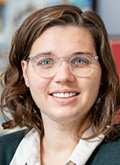 Casey Benchimol, a part-time lecturer, is a dedicated clinician, educator, and advocate whose work has significantly advanced community engagement and healthcare access for LGBTQ+ individuals and other historically marginalized populations. As a women’s health and adult/gerontology primary care nurse practitioner at the Mazzoni Center, they provide comprehensive primary care, ensuring that patients receive culturally responsive, affirming care that respects their identities and lived experiences. They demonstrate a deep commitment to holistic, patient-centered practice. Beyond clinical care, Mx. Benchimol has transformed nursing education at Penn by integrating topics that prepare future healthcare providers to deliver quality care. Their leadership in policy reform has driven meaningful systemic change within healthcare institutions. Through mentorship, scholarship, and advocacy, Mx. Benchimol fosters a more compassionate healthcare environment for all.
Dean’s Award for Exemplary Professional Practice
This award is for demonstrating excellence in clinical or professional practice and the integration of practice to scholarship and teaching. Excellence is defined as evidence of significant and outstanding contributions to professional practice through funded projects, publications/reports, and professional, institutional, and/or national leadership.
 Jessica Strohm Farber is a distinguished clinician, educator, and leader whose exemplary practice has significantly advanced pediatric acute care nursing. As a nurse practitioner in the pediatric intensive care unit at the Children’s Hospital of Philadelphia (CHOP), she delivers compassionate, evidence-based care while spearheading initiatives like the Unplanned Extubation Harm Indicator Project, which improves outcomes for critically ill children. Her leadership across hospital committees further highlights her commitment to patient safety and clinical excellence. Beyond her clinical work, Dr. Strohm Farber is a respected scholar and educator who integrates research and practice in numerous publications, including contributions to premier pediatric nursing resources. As the program director of pediatric acute care and neonatal nurse practitioner programs at Penn Nursing, she mentors students and faculty. Her national leadership and dedication to advancing pediatric nursing extends beyond academia to national pediatric acute care organizations and community health initiatives. Recognized with numerous awards for her clinical, scholarly, and mentoring excellence, she continues to elevate pediatric nursing and inspires the next generation of healthcare leaders.
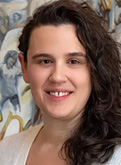 Rebecca Clark, an assistant professor of perinatal nursing, midwifery, and women’s health, is a distinguished nurse scientist whose exemplary practice has profoundly impacted maternal-child health and the engagement of clinical nurses in evidence-based practice at Pennsylvania Hospital. As a leader in nursing research and innovation, she has guided over 50 nurses through evidence-based practice residencies, working with Penn Medicine’s Center for Evidence-Based Practice to drive meaningful clinical improvements. Her commitment to advancing maternal health has been recognized with a Betty Irene Moore Fellowship, wherein Dr. Clark is developing a communication bundle to address racially disparate communication and improve maternal-child outcomes. Dr. Clark’s influence extends beyond the hospital, with leadership roles on the Pennsylvania Maternal Mortality Review Committee and multiple research initiatives addressing health disparities. Her scholarly contributions, including numerous funded projects and peer-reviewed publications, inform practice and policy at both local and national levels. A dedicated educator, Dr. Clark teaches graduate level research methods, equipping nurses with critical appraisal skills to enhance their practice. With numerous data-based publications and national awards, she exemplifies scholarly excellence, having shaped policy and advanced maternal health practices. Through her interdisciplinary collaborations, Dr. Clark continues to drive systemic change in maternity care and promote equitable birth outcomes nationwide.
Dean’s Award for MSN-MPN-MSNS-DNP Scholarly Mentorship
This award recognizes service as an exceptional mentor to students in the introduction and participation in exemplary clinical nursing scholarship that includes engagement in research, publications in professional journals, or presentations at scientific conferences.
 Dawn Bent is a dedicated educator and mentor whose leadership has profoundly shaped the scholarly and professional trajectories of DNP students in Penn Nursing’s nurse anesthetist program. As program director for the past seven years, Dr. Bent has played a pivotal role in steering the program from a master’s to a doctoral curriculum, ensuring students are equipped to design, implement, and evaluate impactful scholarly projects. Her mentorship extends beyond the classroom, guiding students through research that advances clinical practice, with many mentees presenting at prestigious conferences and publishing in peer-reviewed journals. Dr. Bent’s commitment to fostering excellence is evident in her ability to inspire confidence, resilience, and professionalism in her students. She actively creates opportunities for scholarly engagement, encourages leadership development in her students, and provides them unwavering support. Her mentorship has empowered countless students to reach their goals. Dr. Bent is devoted to mentoring students in their scholarly pursuits, fostering scientific curiosity, confidence, and resilience. Through her unwavering support, she empowers future nurse anesthetists to excel academically and professionally, shaping the next generation of leaders in the field.
Dean’s Award for Teaching Excellence—Undergraduate Level; Student Nurses at Penn Undergraduate Award for Teaching
The Dean’s Award is for demonstrating excellence in clinical or professional practice and the integration of practice to scholarship and teaching. Excellence is recognized by evidence of significant and outstanding professional and institutional and/or national leadership. The Undergraduate Award is for excellence in teaching and for the exceptional teaching experiences provided that stimulate, inspire, and challenge our undergraduate students.
 Marissa DeCesaris Siegel, a practice assistant professor, is an exceptional educator whose dedication to undergraduate teaching has profoundly impacted nursing students who are engaging with psychiatry for the first time. As a Penn Nursing faculty member, she creates a safe, engaging, and intellectually stimulating learning environment, ensuring students approach psychiatric nursing with both confidence and compassion. Through personal stories, real-world cases, and interactive activities, she brings psychiatric concepts to life, fostering a deeper understanding that goes beyond textbook knowledge. Dr. Siegel’s commitment to student success extends beyond the classroom. She provides thoughtful, clear answers to complex questions and encourages students to think holistically about patient care. Recognizing that students enter her course with diverse experiences and challenges, she ensures that they feel supported while meeting course requirements. Her sensitivity, clarity, and unwavering dedication to her students set her apart as an outstanding educator.
Dean’s Award for Teaching Excellence—Graduate/Doctoral Level
This award is for demonstrating excellence in clinical or professional practice and the integration of practice to scholarship and teaching. Excellence is defined as evidence of significant and outstanding contributions to professional practice through funded projects, publications/reports, and professional, institutional, and/or national leadership.
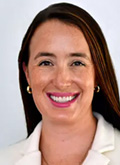 Meghan Fitzpatrick is an advanced senior lecturer and program director of the nursing & healthcare leadership MSN program at Penn Nursing. A dedicated educator and mentor, she has profoundly impacted graduate and doctoral students through her expertise in nursing administration, leadership, and healthcare finance. Drawing from her experience as both a nursing manager and collegiate educator, she makes complex topics accessible and engaging while fostering a structured, supportive learning environment where students feel both challenged and encouraged. Dr. Fitzpatrick is known for her innovative teaching methods, integrating case studies, interactive learning modules, and real-world applications to prepare students for leadership roles in healthcare. Beyond the classroom, she is a committed mentor, offering individualized guidance in students’ scholarly work, career development, and leadership opportunities. Widely praised for her accessibility and dedication, Dr. Fitzpatrick builds lasting connections with students and alumni, going “above and beyond” to ensure their success and growth as future nurse leaders.
Dean’s Award for Undergraduate Scholarly Mentorship
This award is for service as an exceptional mentor to undergraduate students in the introduction of and participation in undergraduate nursing research, demonstrating the ability to assume leadership for building a mutually rewarding relationship; be accessible; provide guidance, advice, and feedback; and foster teamwork.
 Karen B. Lasater, an associate professor of nursing, is an exceptional mentor whose dedication to undergraduate scholarly development has profoundly shaped the academic and professional trajectories of her students. Through her hands-on guidance, she empowers students to engage in meaningful research, fostering critical thinking and methodological rigor. As an advisor and researcher, Dr. Lasater provides individualized mentorship, ensuring that her students not only develop strong research skills, but also gain confidence in their academic pursuits. Beyond research, Dr. Lasater has mentored students who are exploring summer opportunities, graduate studies, and professional pathways. Her accessibility and responsiveness create a supportive environment where students feel encouraged to pursue ambitious goals, with many considering PhD programs. She cultivates an inclusive and intellectually stimulating research community, ensuring that students feel both challenged and supported. Her accessibility, advocacy, and commitment to student success create an inclusive, intellectually stimulating environment that empowers students to pursue ambitious academic and professional goals.
Dean’s Award for Distinguished Teaching—Undergraduate Level
This award is for service as an exceptional mentor to undergraduate students in the introduction of and participation in undergraduate nursing research, demonstrating the ability to assume leadership for building a mutually rewarding relationship; be accessible; provide guidance, advice, and feedback; and foster teamwork.
 Amanda Bettencourt is an assistant professor in the department of family and community health. As director of the course NURS 2250: Pediatric Nursing from 2021 to 2024, she transformed the undergraduate learning experience, fostering an engaging and inclusive classroom where students developed critical thinking skills and compassionate, evidence-based nursing practices. Her expertise in pediatric critical care, burn nursing, and implementation science enriches her teaching, integrating nursing practice with broader healthcare and societal contexts. Beyond the classroom, Dr. Bettencourt is a dedicated mentor, providing invaluable academic and professional guidance to students, faculty, and student organizations. She supports students and colleagues in their research, career development, and leadership, inspiring the next generation of nurses with her inclusive and transformative approach to education. She models compassionate leadership, having served as AACN president and as a peer mentor in Penn Nursing. Through her innovative teaching, mentorship, and commitment to student success, Dr. Bettencourt has profoundly impacted hundreds of aspiring nurses, setting a standard for excellence in undergraduate nursing education.
Dean’s Award for Distinguished Teaching—Graduate Level
This award recognizes demonstrating excellence in graduate-level teaching that includes but is not limited to knowledge of the subject matter; ability to stimulate student interest and foster their professional development; use of innovative methods of teaching; ability to present subject matter clearly; and interest, accessibility, and willingness to work with students.
 Alison Buttenheim is a professor of nursing and health policy. A gifted educator and mentor, Dr. Buttenheim has profoundly shaped the academic and professional trajectories of her students through courses like PUBH 6080/NURS 6130 and Design for Health Behavior Change. Her expertise in behavioral economics and human-centered design is matched by her ability to create an inclusive, dynamic learning environment where students at all levels feel empowered to apply complex theories to real-world health challenges. Dr. Buttenheim’s teaching transcends traditional methods, incorporating interactive discussions, prototype-building exercises, and collaborative problem-solving. Her unwavering commitment to student success extends beyond the classroom, providing invaluable mentorship, research opportunities, and career guidance. Through her innovative teaching and dedication to fostering the next generation of nurse leaders, Dr. Buttenheim exemplifies the highest standards of distinguished graduate level education. Her unwavering dedication to her students’ growth and instills confidence in their ability to reach their goals. Her outstanding and sustained contributions to teaching and mentorship produce exceptional nurse leaders.
Doctoral Student Organization Barbara J. Lowery Faculty Award
 This award is for advancing nursing science through exemplary and unwavering doctoral student mentorship.
Sarah Kagan, a professor of gerontological nursing, has been a fierce advocate for Penn Nursing PhD students, consistently championing their needs and success.
Whether advocating for students in curriculum committee meetings, supporting the expansion of the Journal of Nursing Doctoral Students Scholarship’s (JNDSS), or leading PhD writing initiative workshops, Dr. Kagan has worked tirelessly to provide a solid foundation for doctoral students, helping to guide them on their journey to becoming PhD-prepared nurses.
GSO Outstanding Nurse Educator Award
This award recognizes excellence in teaching at the MS/MSN and DNP levels, including, but not limited to, knowledge of the subject matter; ability to stimulate student interest and professional development; ability to present subject matter clearly; and interest, accessibility and willingness to work with students. Recipients also demonstrate innovative teaching methods and are responsive to students’ ideas and feedback.
 Loretta A. Sernekos, an advanced senior lecturer, is an exceptional and inspiring educator who has profoundly impacted her students’ careers. Teaching one of the most challenging courses in the nursing school is no small feat, yet she does so with grace, dedication, and a deep commitment to student success. She instills in her students the importance of patient-centered care and education, ensuring they never lose sight of what truly matters—the patient. Her memorable advice to avoid getting “stuck in the weeds” continues to guide her students beyond the classroom, shaping them into compassionate and competent nurses. Her unwavering dedication and profound influence on future nurses have set a standard of excellence that will continue to inspire generations of nurses to come.
Penn Dental Medicine Class of 2025 Teaching and Service Awards
Penn Dental Medicine faculty and staff members have been honored for excellence in teaching and service by the Class of 2025. Each academic year, the graduating class recognizes members of the faculty and staff who have had a significant impact on their educational experience; this year’s awards were presented as part of the senior farewell celebration, held on May 13. The awards and honorees included:
Basic Science Award
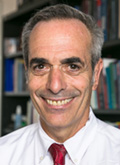 Presented for excellence in teaching within the basic sciences, this year’s recipient is Elliot Hersh, an emeritus professor in the department of oral & maxillofacial surgery/pharmacology. This marks a record 24 times that Dr. Hersh has received this award during his teaching career at Penn Dental Medicine. A highly respected researcher in non-addicting strategies to manage acute postoperative dental pain, Dr. Hersh joined the Penn Dental Medicine faculty in 1988. He has directed and lectured extensively in both the Introduction to Pharmacology and Neuropharmacology courses. Dr. Hersh is a past recipient of Penn’s Lindback Award for Distinguished Teaching and the IADR Distinguished Scientist Award in Pharmacology, Therapeutics and Toxicology, and is a co-recipient of Penn’s One Health Award (with John Farrar and Rosemary Polomano) and an invited speaker at NASEM.

 Robert E. DeRevere Award
Presented for excellence in preclinical teaching by a part-time faculty member, the award is named in honor of Dr. DeRevere, a member of the Penn Dental Medicine Class of 1945, who served on the school’s faculty. This year’s recipient is Frank Smithgall, C’79, D’83, a clinical associate professor of restorative dentistry, who has been a member of the school’s part-time faculty since 1984. Dr. Smithgall lectures in preclinical courses, and for the past nine years, he has been course director of Partial Removable Dental Prosthesis. This is the eleventh time Dr. Smithgall has been honored with this award, having also received it in 1990, 2010, 2011, 2016, 2018, 2020, 2021, 2022, 2023, and 2024.
Joseph L. T. Appleton Award
Presented to a part-time faculty member for excellence in clinical teaching, this year’s honoree is Keith Sharkan, a clinical associate in the division of restorative dentistry. Dr. Sharkan has been a part of the school’s clinical faculty since 2017, teaching students general restorative care within the clinics. He enjoys challenging his students to expand their clinical knowledge and develop their patient communication skills, noting that teaching has added an enjoyable dimension to his dental career.
The Appleton Award is named in honor of Joseph Appleton, a 1914 alumnus of Penn Dental Medicine, who served as dean of the school from 1941 to 1951. The award was founded in 1979 by Abram Cohen, a member of the Class of 1923 and father of dean emeritus D. Walter Cohen.
Earle Bank Hoyt Award
 Presented for excellence in teaching to a faculty member who is a Penn Dental Medicine graduate, the award was established by a grateful patient in honor of Dr. Hoyt, a distinguished clinician and educator and member of the Class of 1918. This year’s recipient is Roopali Kulkarni, D’19, GR’19, GD’21, an assistant professor of oral medicine, who earned her DMD with a master of public health at Penn Dental Medicine and completed postdoctoral training in Oral Medicine here as well. Since joining the faculty in 2021, Dr. Kulkarni has served as the assistant director (2022-present) of Penn Dental Medicine’s postgraduate oral medicine program and is on the medical staff (2021-present) in the division of oral medicine at Penn Medicine. She teaches both postdoctoral and predoctoral students clinically, and she lectures on a wide range of subjects relating to oral medicine and interdisciplinary care. Her scholarly work focuses on both oral medicine and public health. The is the second time Dr. Kulkarni was recognized with the award, having also received it in 2022.
Senior Outstanding Teaching Award
.jpg) Presented to a faculty member who goes beyond the scope of their responsibilities to significantly impact the class’s education at Penn Dental Medicine, this year’s recipient is Artur Kofman, director of laboratory affairs and the office of laboratory affairs supervisor for the clinical labs at the school. This is the ninth year in a row that he has received this award. Mr. Kofman has been sharing his knowledge and expertise in dental lab work with students as a member of the school’s staff for the past 24 years. Among his responsibilities, he coordinates students’ lab work from the school to commercial laboratories and vice versa, guides dental students through lab-related technical issues, and provides hands-on assistance as needed for minor adjustments to dental appliances at a chair-side setting. In addition, he operates the 3D printing lab for fabricating 3D models, occlusal guards, and surgical guides and is involved in the newly designed curriculum for CAD/CAM and printing of digital dentures for the dental students.
Presented to a faculty member who goes beyond the scope of their responsibilities to significantly impact the class’s education at Penn Dental Medicine, this year’s recipient is Artur Kofman, director of laboratory affairs and the office of laboratory affairs supervisor for the clinical labs at the school. This is the ninth year in a row that he has received this award. Mr. Kofman has been sharing his knowledge and expertise in dental lab work with students as a member of the school’s staff for the past 24 years. Among his responsibilities, he coordinates students’ lab work from the school to commercial laboratories and vice versa, guides dental students through lab-related technical issues, and provides hands-on assistance as needed for minor adjustments to dental appliances at a chair-side setting. In addition, he operates the 3D printing lab for fabricating 3D models, occlusal guards, and surgical guides and is involved in the newly designed curriculum for CAD/CAM and printing of digital dentures for the dental students.
Outstanding Service Award
 Presented to a staff member who is highly regarded within the Penn Dental Medicine community for their extraordinary dedication, this award celebrates an individual who, in the estimation of the senior class, has consistently gone beyond their formal responsibilities to significantly enhance the overall experience of the senior class at Penn Dental Medicine. This year’s recipient is Unique Coates, who is part of the instrument management services (IMS) team. Mr. Coates has worked in Penn Dental Medicine’s IMS for three years.

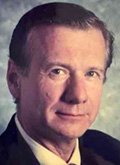 Charles Edward Dwyer, an emeritus associate professor of education in the Graduate School of Education and a faculty member in the Wharton School’s executive education programs, died on January 27. He was 87.
 Jeffrey (Jeff) Miki Ishibashi, a Senior Research Investigator in the Department of Genetics in the Perelman School of Medicine, died in a biking traffic accident on May 8. He was 50.
 Richard J. Weller, an emeritus professor of landscape architecture in the Weitzman School of Architecture, died on May 15 in Perth, Australia. He was 61.
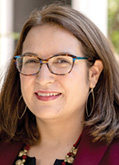 Jasmine E. Harris, a professor of law in Penn Carey Law, was named the recipient of the 2025 John Hope Franklin Prize in the Law & Society Association’s annual awards.
 K. Jane Muir, an assistant professor in Penn Nursing’s department of family and community health, has won the 2025 Nurse Researcher Award from the Emergency Nurses Association (ENA). She will be honored at the ENA annual conference in New Orleans, Louisiana, in September.
