Weitzman School of Design 2025 Perkins Teaching Awards
Weitzman School of Design faculty members Rudy Gerson, Leah Kahler, and Robert Pietrusko have been selected to receive G. Holmes Perkins Distinguished Teaching Awards for academic year 2024-2025. The awards are presented annually to three members of the Weitzman faculty, based on nominations by students, to recognize distinguished teaching and innovation.
 Rudy Gerson (G. Holmes Perkins Distinguished Undergraduate Teaching Award) is a lecturer in fine arts and an artist who works across mediums of print, still and moving image, and performance in a practice, they said, “that intends to complicate expectations of testimony and deploy a devotional approach to desire under conditions of opacity and loss.” Based in New York City and Philadelphia, Mx. Gerson, MFA’23, teaches at Brooklyn College as well as at Penn.
“They encourage us to experiment with our camera and push ourselves outside of our comfort zone,” said one of Mx. Gerson’s students. Another observed, “I’ve seen [them] literally transform college students who took [their] video class just to fulfill a requirement into people with a sensitivity and sensibility for art, as well as all the tools they need to make it.”
 Leah Kahler (G. Holmes Perkins Distinguished Graduate Teaching Award, Non-Standing Faculty) is a landscape designer and researcher who was the 2024-2025 McHarg Fellow. Her research explores the socioecological legacies of the plantation landscape, focusing on sites of labor, extraction, and production in the American south. Before coming to Penn, Ms. Kahler worked at Reed Hilderbrand in Boston and taught landscape architectural representation at Boston Architectural College.
“Leah has been an incredible resource for the students and her presence uplifts so much of our work and the design community,” one of Ms. Kahler’s students wrote. “Leah’s attentiveness to students and dedication to design education is truly inspiring.”
Robert Gerard Pietrusko (G. Holmes Perkins Distinguished Graduate Teaching Award for Standing Faculty) is an associate professor in landscape architecture and a principal at Warning Office. His research focuses on the history and speculative design potential of environmental media.
 He has taught at the Harvard Graduate School of Design and the Strelka Institute for Media, Architecture, and Design; held research positions at Parsons and Columbia; and served as a designer at Diller Scofidio + Renfro in New York. He has exhibited his work at the Museum of Modern Art, Palais de Tokyo, and ZKM Center for Art & Media, among other leading venues, and has had his work featured in the 2025 Venice Architecture Biennale.
Of Mr. Pietrusko’s influence, one student reported, “Not only did I leave his course learning important skills and graphics that I could use in my portfolio, but I also felt more confident in myself as a student of landscape architecture.”
Penn Graduate School of Education 2025 Annual Teaching Awards
Awarded to current students, faculty, and staff, the annual Penn GSE Awards recognize outstanding service and commitment to the Penn GSE community. The 2025 honorees are:
The William E. Arnold Award for Outstanding Contributions by a Student
The Arnold Award reflects GSE’s commitment to preparing outstanding educators and academic leaders.
 Meruyert Bizhanova, GED’25, is originally from Kazakhstan. Throughout her time at Penn, Ms. Bizhanova has exemplified exceptional leadership and a deep commitment to community service. She served as president of GSE’s student government, where she advocated for student rights and spearheaded initiatives that fostered a sense of belonging within the school. Following this role, she was elected president of the University-wide Graduate and Professional Student Assembly (GAPSA), where she led efforts to support and represent 18,000+ graduate students across the university, after her tenure as GAPSA director of international student affairs.
Ms. Bizhanova also worked as a graduate assistant at GSE’s HEARD Hub, where she made significant contributions to research, equity, and access initiatives. Her dedication to service and advocacy has earned her numerous accolades, including the Laurie Wagman Award for Visual and Performing Arts in Education and the Leadership & Advocacy Award from the Pan-Asian American Community House (PAACH), which honors her advocacy work for marginalized communities. Ms. Bizhanova is deeply passionate about education and believes in the transformative power it has to uplift individuals and communities. She is profoundly grateful for the opportunities and experiences that Penn has provided and looks forward to continuing her leadership journey in education and advocacy after graduation.
The Laurie Wagman Award for Visual and Performing Arts in Education
This award is given to a scholar who integrates creativity and the arts into educational practice, research, or expression.
 Mayowa Fageyinbo, SPP’24, GED’25, GM’25, is an MSEd candidate in international educational development at Penn GSE, where she also recently completed an MS in social policy. Within the IED program, Ms. Fageyinbo explores the intersections of education, digital innovation, and cultural preservation within the African diaspora, with a particular focus on Nigeria’s transnational connections and prominent creative economy. Originally from North Carolina, Ms. Fageyinbo’s early engagement with theater, Shakespeare recitation, and speech and debate shaped her creative path. As an undergraduate at Howard University and a UNCF Walt Disney Company Scholar, she wrote for Agbara Magazine on culture and current events in Africa.
At Penn, she connected her creativity to her education in policy and social justice. With the African American Resource Center, she helped to launch Diaspora Dialogues, which exists now as a platform for digital content, in-person critical discussion and creative workshops. Through her internship with DOWA in Lagos, Nigeria, Ms. Fageyinbo supported social media/policy communications and furthered her inquiry into education’s role in creative economies. She has also collaborated on youth-focused initiatives at the United Nations Permanent Forum on People of African Descent. Outside the classroom, Ms. Fageyinbo participates in Philadelphia’s spoken word circles as an emerging poet.
The Penn GSE Excellence in Teaching Award
This award honors a faculty member who demonstrates exceptional dedication to student learning and academic engagement.
 Damani White-Lewis is an assistant professor at GSE. He studies racial inequality in academic careers and contexts, using theories and methods from organizational behavior and social psychology. His research has been funded by the National Institutes of Health (NIH) and National Science Foundation (NSF) and has been published in top education and science journals, like The Journal of Higher Education, The American Educational Research Journal, and Nature Human Behavior. As a public scholar, he has won numerous awards from educational organizations and institutions and has been featured in outlets such as Science, Nature, Inside Higher Ed, and Diverse: Issues in Higher Education. He regularly advises college campuses and external organizations on addressing issues related to the academic profession, racial equity, and institutional transformation and systemic change.
Faculty Recognition of Service Awards
This award celebrates faculty whose service contributions have had a meaningful impact on campus culture and operations.


 A. Brooks Bowden is an associate professor at GSE. She serves as the director of the Center for Benefit-Cost Studies of Education and as director of Penn’s predoctoral training program in interdisciplinary methods for field-based research in education. She is also an editor of AERA’s flagship policy journal, Educational Evaluation and Policy Analysis. Her work is motivated by the goal to improve children’s trajectories by minimizing barriers to learning and engagement in school related to poverty and vulnerability. Dr. Bowden is an expert in program and policy evaluation that incorporates economic analyses. She is a co-author of the primary text on cost-effectiveness, Economic Evaluation in Education: Cost-Effectiveness and Benefit-Cost Analysis (3rd edition). Her work has been published in the Journal of Research on Educational Effectiveness, Education Researcher, AERA Open, and Prevention Science.
Abby Reisman is an associate professor at GSE. She studies the design and implementation of history curriculum materials and teacher learning experiences that support document-based historical analysis and student-centered discourse. Dr. Reisman received her PhD from Stanford University, where she directed the “Reading Like a Historian” project in San Francisco, the first extended history curriculum intervention in urban high schools. Her work has appeared in Cognition and Instruction, Journal of Curriculum Studies, Teachers College Record, Journal of Teacher Education, and Teaching and Teacher Education. Dr. Reisman began her career in education as a classroom teacher in a small, progressive high school in New York City.
Jenny Zapf is a senior fellow and the founding director of Penn’s MSEd and MSEd-MBA in education dntrepreneurship, a partnership between the Graduate School of Education and the Wharton School. Dr. Zapf also is the co-founder and faculty director of Penn GSE’s virtual certificate program in global education entrepreneurship and innovation.
Dr. Zapf is a global leader in education innovation. She has trained thousands of education, business, and industry professionals to build, test, manage, and scale new models—including schools, universities, programs, services, and products. Over the past decade, she has advised business and institutional leaders on entrepreneurial projects in 30+ countries. For three decades, Dr. Zapf has launched education and social ventures in higher education institutions, schools, non-profits, research institutes, and venture labs. Through a range of roles in academic leadership, non-profit management, applied research, and policy, Dr. Zapf has worked to drive equity through design, building learning environments and pathways to transform the global education landscape and marketplace.
Staff Recognition of Service Awards
This award recognizes staff who go above and beyond in supporting students, colleagues, and the broader GSE community.

 Rachel Dozier, GED’24, is a Penn GSE alumna with a background in psychology and learning sciences who focuses on designing meaningful, student-centered experiences. Her work blends creativity, care, and research to help learners build skills that support growth—like executive functions, agency, and reflection. From launching a project-based school in Texas to co-developing new initiatives like the Student Showcase and Writing Commons at Penn GSE, she is passionate about creating systems and supports that meet students where they are and help them move forward with confidence and purpose.
John Gamba currently serves as the entrepreneur in residence and director of innovative programs at Catalyst @ Penn GSE, where he mentors aspiring education entrepreneurs and oversees the Milken-Penn GSE Education Business Plan Competition, now in its 16th year. The Milken competition has awarded $2 million dollars to hundreds of education entrepreneurs from dozens of countries, who are tackling the most pressing issues in world-wide education. Mr. Gamba is an industry speaker on topics related to K12 education and social entrepreneurship and is a founding director of the Gamba Family Foundation, which is committed to closing the achievement gap for under-represented students in the United States. His foundation has contributed close to $2,000,000 in support to a number of education causes nation-wide.
Peter Montesino is a seasoned audio-visual and academic technology specialist at Penn, where he has supported AV operations and event technology for over seven years. He began his Penn career at ISC after relocating to Pennsylvania. After spending five years at ISC, he transitioned to the Graduate School of Education, where he continues to bring a calm, solutions-focused approach to classroom and event support.
A Penn alumnus with a BA in applied arts and sciences, Mr. Montesino also attended the Institute of Audio Research in New York City, earning certification as an audio engineer with a focus on mixing and mastering. He holds additional certifications in ITIL and AVIXA CTS and brings over two decades of hands-on experience in AV, IT, and live event production to his role.
Student Award for Excellence in Strengthening Our Community
This award is given to a student who exemplifies the spirit of community engagement, inclusion, and leadership.
.jpg) Dandan (Sunny) Wu, GED’25, is a lifelong learner, education entrepreneur, and global community builder. At age 42, she came to Penn GSE from Beijing to pursue a dream that was 20 years in the making: studying abroad and reimagining what is possible at mid-life. She founded ChronoHer, a global initiative empowering mid-career Chinese women to reclaim their dreams through international education and career transformation. At Penn, Ms. Wu became a voice for mid-life learners, international students, and women navigating change. She has interviewed professors, entrepreneurs, and women leaders; mentored peers; and built bridges across generations and cultures. Her work is fueled by one belief: that it is never too late to grow, learn, or lead. Ms. Wu is graduating from the education entrepreneurship program and hopes to continue driving impact at the intersection of learning innovation, workforce transformation, and global women’s empowerment.
Dandan (Sunny) Wu, GED’25, is a lifelong learner, education entrepreneur, and global community builder. At age 42, she came to Penn GSE from Beijing to pursue a dream that was 20 years in the making: studying abroad and reimagining what is possible at mid-life. She founded ChronoHer, a global initiative empowering mid-career Chinese women to reclaim their dreams through international education and career transformation. At Penn, Ms. Wu became a voice for mid-life learners, international students, and women navigating change. She has interviewed professors, entrepreneurs, and women leaders; mentored peers; and built bridges across generations and cultures. Her work is fueled by one belief: that it is never too late to grow, learn, or lead. Ms. Wu is graduating from the education entrepreneurship program and hopes to continue driving impact at the intersection of learning innovation, workforce transformation, and global women’s empowerment.
Penn Carey Law School 2025 Teaching Awards
Penn Carey Law has announced the recipients of its teaching awards for the 2024-2025 academic year.
“Exceptional teaching forms the very foundation of our institutional mission,” said Dean and Bernard G. Segal Professor of Law Sophia Z. Lee. “By honoring the awardees below, we recognize and appreciate the hard work and enthusiasm that all our faculty bring to their classrooms.”
The 2024-2025 award recipients are as follows:
Regina Austin Award for Innovation in Teaching
 Tom Baker, the William Maul Measey Professor of Law, has received the Regina Austin Award for Innovation in Teaching for incorporating innovative topics and teaching techniques in his Torts, Insurance Law, and Litigation Finance courses (co-taught with Will Marra, a lecturer in law).
What the students said:
“Professor Baker loves, loves, loves his students and is incredibly helpful and engaged in teaching.”
“I really enjoyed how he focused in on students’ interests by adding an extra day of health insurance and bringing in an ERISA guest lecturer.”
“[V]ery useful insight into a nascent but growing industry; a great source of readings and scholarship that are vetted by experts; interesting discussion throughout the class.”
“Professor Baker did a great job keeping class engaging through his positive, friendly teaching style. He used a random number generator for cold calls, which I thought was going to be very stressful, [but] I found Professor Baker’s cold calls to be the least stressful out of all my professors… I also thought the discussion of policy and insurance throughout the semester made the class a lot more exciting. And finally, I really like how Professor Baker included materials in addition to just cases in our readings (e.g., Damages book, Dark Waters movie, scholarly articles).”
“Great course, highly recommend. Really interesting area that you may not otherwise be exposed to. Baker and Marra are super knowledgeable and lead engaging discussions.”
LLM Teaching Award
 William W. Burke-White, a professor of law, has received the LLM Teaching Award, selected by vote of the LLM class of 2025.
What the students said:
“Professor Burke–White is engaging, approachable, and has a great sense of humor that makes learning enjoyable.”
“Professor Burke–White is an expert in international law, and he is an excellent teacher. He always breaks down complicated theories and cases in a way that is accessible to every student. He’s also very kind and conscientious, making sure to discuss international law with the right framework that’s applicable to today’s current events.”
“The course successfully demonstrates the relevance and resilience of international law in today’s global economy. Professor Burke–White’s teaching effectively balances theoretical understanding with practical applications.”
Adjunct Teaching Award
 Sean Kiley, a lecturer in law, has received the Adjunct Teaching Award for his Public Speaking for Lawyers courses, which teach students how to design and deliver effective presentations by exploring how people absorb information to learn and make decisions.
What the students said:
“This course was incredibly valuable [for teaching us how to deliver accurate, logical and engaging presentations], as it offered practical, hands–on experience. For each presentation, I received not only peer feedback but also thoughtful and detailed comments from Professor Kiley, which made the learning experience truly exceptional.”
“Professor Kiley is extremely friendly, attentive, and respectful. He’s also always accessible and overall a great professor to have.”
“I loved this class a lot! I feel like I learned so much. I really appreciated Kiley’s thoughtful and generous feedback; he clearly cares a lot–I genuinely got so much better at public speaking! One of my favorite classes so far.”
Robert A. Gorman Award for Excellence in Teaching
 Gideon Parchomovsky, the Robert G. Fuller, Jr. Professor of Law, has received the Robert A. Gorman Award for Excellence in Teaching for his exceptional teaching of the course Property and Copyright.
What the students said:
“He is a fantastic professor. Clearly passionate about the subject, he will offer different points of views on matters discussed in class. His lectures always stimulate interesting discussions about copyright law between students, both inside and outside of class. I found myself frequently talking about copyright outside of the classroom with my friends in the course.”
“Professor Parchomovsky is a special professor. He is unbelievably dedicated, and he’s one of the best professors at Penn. I highly recommend that you take any class you can with him.”
“Professor Parchomovsky is an amazing teacher. He is extremely passionate about the subject matter, and I love that he encourages questions and participation. He is also a great lecturer. He explains concepts thoroughly and the class is extremely organized.”
Experiential Teaching Award
 Sarah Paoletti, a practice professor of law, has received the Experiential Teaching Award for her direction of the Transnational Legal Clinic, the law school’s international human rights and immigration clinic.
What the students said:
“Professor Paoletti brings a wealth of immigration experience to clinic. She is extremely detailed in feedback and supervision, as well as in class.”
“Professor Paoletti is great. She has the patience to handle our ‘stupid’ questions and ignorance while challenging us to grow as attorneys, adopting a client–centered lawyering approach. She is highly involved and connected in the legal immigration space. If you’re interested in doing immigration, you should take this clinic. You will learn a lot.”
“She clearly cares deeply about the subject matter and this translated well into her instruction.”
A. Leo Levin Award
 Dorothy E. Roberts, the George A. Weiss University Professor of Law and Sociology and the Raymond Pace and Sadie Tanner Mossell Alexander Professor of Civil Rights, has received the A. Leo Levin Award for Excellence in an Introductory Course for her exceptional Reproductive Rights and Justice first-year elective course.
What the students said:
“Professor Roberts is amazing! She is clearly so knowledgeable and passionate about reproductive rights and justice and brings her experiences to the table in an incredibly helpful way. She was also able to explain complicated legal and sociological concepts extremely effectively to those who may not have the same framework. She does a great job fostering classroom discussion and picking out the best points from students’ contributions.”
“Professor Roberts is not only an expert in her field, but she also always makes sure to discuss the critical issues affecting each case. Whether it be inequities of race, class, or disability, she gives her students the space and the tools to think about inequities in the legal system… She’s one of the best professors I’ve had here at the law school, and her passion in her work is truly inspiring.”
“Professor Roberts is incredibly knowledgeable and engaging. Her class was thought-provoking, and I appreciated the class discussion driving forward the legal ideas we were learning. Professor Roberts also gave a lot of room to tie past cases involving reproductive rights and justice to the topical issues that we are dealing with in courts and beyond today.”
Harvey Levin Memorial Teaching Award
 Catherine Struve, the David E. Kaufman & Leopold C. Glass Professor of Law, has received the Harvey Levin Memorial Teaching Award, which is selected by a vote of the JD class of 2025.
What the students said in 2022, when they took Civil Procedure with Professor Struve:
“Professor Struve was fantastic. She made learning about civil procedure super fun and engaging. I love how kind she was about cold calling and she aways engaged with the students to get us to think on our own and develop our critical thinking skills.”
“If you don’t inherently find civil procedure interesting, Professor Struve makes it as accessible and digestible as it could possibly be. If you do find civil procedure interesting, Professor Struve’s vast knowledge of the intricacies of the rules, their history, the ways in which they change or conflict or cause problems, means she can answer any question and provide a wealth of fascinating detail to keep you occupied forever.”
What the students said regarding her 2023-2025 upper-level courses:
“Professor Struve is an amazing professor––this is my second class with her. She is a highly lucid lecturer and able to clearly explain even the most complex procedural topics. It was a pleasure having class with her again.”
“Professor Struve takes what could otherwise be a dry, abstract topic and identifies and elevates the real–world issues that are actually at stake. I took this class as a way to ‘fulfill’ a requirement that many judges and litigation supervisors would want to see. I come away from it with an understanding of the infrastructure of how abstract rights become (or fail to become) real in the lives of people.”
School of Social Policy & Practice 2025 Excellence in Teaching Awards
Penn’s School of Social Policy & Practice (SP2) Excellence in Teaching Award is presented to members of the standing and non-standing faculty in recognition of excellence in teaching and mentoring.
The 2025 award honorees are as follows:
Full-Time Faculty
 Kate Ledwith is a graduate of both the master of social work and the doctorate in clinical social work programs at SP2. She completed her undergraduate work in sociology at Tulane University, and her area of expertise is social work and mental health. Dr. Ledwith has extensive experience working at Penn Behavioral Health as the employee assistance program psychotherapist, providing psychotherapy and case management services using a brief treatment model. Additionally, she performed duties related to crisis management, quality assurance, and program development. Dr. Ledwith played a key role in integrating the Mental Health Parity Act into the current policies and service provisions at Penn Behavioral Health. She also has community mental health experience in Philadelphia. Currently, Dr. Ledwith is in private practice, where she sees outpatient clients for both brief treatment and ongoing psychotherapy. She is a lecturer in SP2 and teaches the course Advanced Clinical Practice, as well as various clinical electives. Her areas of interest include attachment, termination, and the role of social workers in the therapeutic relationship.
 Kim McKay is a full-time lecturer teaching in both the master of social work and master of science in social policy programs. Dr. McKay has a PhD in social work and an MEd in human sexuality studies from Widener University, as well as an MSW in social work and BS in child and family development from the University of Utah. Dr. McKay has 20+ years of social work experience, including case management, administration, supervision, policy, and clinical work. They have taught undergraduate and graduate students in social work programs for more than a decade. Dr. McKay has taught many courses throughout the social work curriculum, with a particular focus on the integration of gender and sexuality. They love teaching and working with students and have presented their work at national and international conferences for organizations including the Council on Social Work Education (CSWE), the Society for Social Work and Research (SSWR), the American Association of Sexuality Educators, Counselors, and Therapists (AASECT), the American Public Health Association (APHA), and the International Social Work and Sexualities conferences in Montreal, Canada (2018) and Olten, Switzerland (2016).
Part-Time Lecturers
 Jennifer C. Jones co-founded Rising Caps Collective in 2021 with Aisha Mohammed, supporting expansive healing to address traumatic legacies of colonization, slavery, and capitalism. Dr. Jones works with Lykos Technologies (formerly MAPS Public Benefit Corporation) as a JEDI consultant and a MDMA-Assisted Therapy educator. Since 1998, Dr. Jones has practiced trauma psychotherapy using Gestalt Therapy principles, an economic human rights framework and harm reduction lens with individuals identifying as LGBTQ; transgender or non-binary; BIPOC; sex workers; substance users; people experiencing class oppression; and neurodiverse and/or HIV positive people. Before 2021, she served as the chief DEI officer of Philadelphia FIGHT Community Health Centers and as a faculty member and the executive director of the Gestalt Training Institute of Philadelphia (GTIP). Dr. Jones earned her undergraduate degree in comparative literature from Northwestern University College of Arts and Sciences, her MSW in clinical social work from Smith College School for Social Work, and her social work doctorate from Bryn Mawr College Graduate School of Social Work and Social Research. As a parent who believes that a just world is possible, Dr. Jones is committed to the unity of the global poor and dispossessed organizing across color lines to fight for everyone’s economic human rights.
 Walter Palmer is the founder and director of the Palmer Foundation and a lecturer at SP2, where he has taught foundation courses in American Racism and Institutional Racism and Social Change since 1990. Mr. Palmer has won the distinction of “teacher par excellence” throughout his many years of teaching. He created the Black People’s University of Philadelphia (1954-1984) as an early prototype for preschool and adult independent and alternative education for contemporary America. Mr. Palmer is the founder and president of the board of trustees of the Walter D. Palmer Leadership Learning Partners Charter School. He is also the founder of the Black Men at Penn. During the era of the civil rights and Black Power movements, Mr. Palmer was recognized nationally as the premier grassroots organizer for successfully organizing city, state, and national political campaigns, protest campaigns, and grassroots community projects. Mr. Palmer studied cardio-pulmonary care at Penn’s School of Medicine and was a director of cardio-pulmonary care at Children’s Hospital of Philadelphia from 1957 to 1967. He is a current fellow of the Philadelphia College of Physicians. He received his juris doctorate degree from Howard University and his bachelor’s degree in secondary education from Cheyney State University, where he was certified in history and social studies. Mr. Palmer has amassed over 1,000 medals, plaques, trophies, and certificates of acknowledgement and appreciation in community services, academics, athletics, health, law, social justice, and leadership. In 2005, the Walter Palmer Leadership Charter School was named after him, as was the Walter Palmer Library and Museum in 2007.
Amy Durham: Associate Dean for Education at Penn Vet
 Andrew M. Hoffman, the Gilbert S. Kahn Dean of Penn Vet, has announced the appointment of Amy Durham as associate dean for education. Dr. Durham, who held the previous role of assistant dean for education, succeeds Kathryn “Kathy” Michel, who successfully held the associate dean role for more than a decade. Dr. Michel began her terminal sabbatical in March.
As associate dean, Dr. Durham will hold a pivotal leadership role, responsible for shaping, guiding, and advancing Penn Vet’s educational mission. Reporting to Andrew Hoffman, the school’s Gilbert S. Kahn Dean of Veterinary Medicine, Dr. Durham will spearhead the continuous improvement of the integrated competency-based Veterinariae Medicinae Doctoris (VMD) curriculum that was launched in 2022. Working closely with faculty, she will lead development efforts in pedagogy and oversee academic policy development, maintain accreditation standards, and foster an outcomes-driven learning environment. Dr. Durham will also coordinate with Penn Vet’s Office of Admissions and Student Life to support student success and well-being.
“Dr. Durham is a well-respected veterinary pathologist and teacher with a demonstrated commitment to veterinary education and a record of excellence in academic leadership, curriculum design, and faculty engagement,” said Dean Hoffman. “She, along with Dr. Kathy Michel, led our curricular redesign teams years before we launched our new curriculum. They spent countless hours re-engineering our student learning experience. Their focus, guidance, and hard work crafted a curriculum that will not only produce graduates who are highly knowledgeable in veterinary medicine, but well-rounded professionals who excel in communication, problem-solving, and ethical conduct. I am thrilled that Dr. Durham will continue to move our educational program forward and lead the strategic oversight of our curricular initiatives.”
Dr. Durham received her BA from the University of Virginia, her MS in neuroscience from Georgetown University, her VMD from Penn Vet, and her MSEd in medical education from Penn’s Graduate School of Education. Following her three-year residency in veterinary anatomic pathology at Penn Vet and successful board certification, Dr. Durham joined Penn Vet’s faculty as a lecturer in the department of pathobiology in 2008, followed by promotion to assistant professor in 2010. In 2017, Dr. Durham was promoted to associate professor, and in 2022, she was promoted to professor of anatomic pathology. She served as the first chief operations officer of the American College of Veterinary Pathologists (ACVP) from 2018-2024, as well as chair or a member of multiple ACVP committees and the editorial board of Veterinary Pathology. She is the author of over 75 peer-reviewed research papers and recipient of the 2015 Zoetis Distinguished Veterinary Teaching Award, the 2015 and 2023 American College of Veterinary Pathologists Presidential Awards, and the 2021 Lindback Award for Distinguished Teaching.
“I’m honored that I can continue to contribute to Penn Vet’s curricular initiatives at such a pivotal time for veterinary education,” said Dr. Durham. “I am committed to fostering a learning environment that is grounded in real-world relevance—one that supports both our students and our faculty. It is a privilege to work alongside such a dedicated community of academic colleagues, staff, and students as we shape the future of veterinary medicine.”
Janice Rafferty Grady: Vice Dean of Development and Alumni Relations at Penn GSE
 Janice Rafferty Grady is Penn GSE’s new vice dean of development and alumni relations, a critical role in securing financial support for the school, sharing its impact, and engaging the alumni community. She began her new position on May 8.
Ms. Grady comes to Penn GSE after 12 years at Columbia University’s School of Nursing, where she held several progressive leadership roles, culminating in associate dean for development and alumni relations. Before Columbia, she worked in development at three different schools at Penn, including the Perelman School of Medicine, Penn Engineering, and Penn GSE.
“We are thrilled to welcome Janice back to our community,” said GSE Dean Katharine Strunk. “She is a dedicated leader in the field, highly respected by her colleagues, and I know she is the right person to help us realize our ambitious strategic vision.”
In Ms. Grady’s role as vice dean, she is a member of Dean Strunk’s senior leadership team and is responsible for the strategy and implementation of all development and alumni relations programming, including the board of advisors and continued support for the school’s strategic vision, Together for Good.
“I am thrilled to be back at Penn and Penn GSE,” said Ms. Grady. “I am eager to work with Dean Strunk, our board, our alumni and friends to help advance Together for Good. I consider it an honor to be working for such an incredible institution.”
Ms. Grady is a graduate of James Madison University and a member of the Gwynedd Mercy Academy High School Board of Trustees Advancement Committee, 2024–2025. She is a 2024 cohort member of the Leadership in Action Program, a leadership development program for senior managers of development officers in higher education created jointly by Johns Hopkins and Stanford universities.
Laura Brown: Director of Alumni Relations at Penn Vet
 Penn Vet has announced the appointment of Laura Brown as the new director of alumni relations. With a strong background in alumni relations and board development, Ms. Brown will play a pivotal role in deepening the lifelong relationship between Penn Vet and its 6,000 living alumni.
Alumni are vital ambassadors of Penn Vet’s mission, serving as representatives to the transformative impact of its education and training. As the school continues to expand its programmatic reach and academic reputation, fostering meaningful connections with its alumni community is more important than ever. In this role, Ms. Brown will lead the design and implementation of programs that connect alumni with the school and one another, through mentorship opportunities, professional networking, and events. She will also collaborate with academic departments, school units and advancement staff to enhance alumni visibility and engagement across all class years.
“I’m delighted to welcome Laura to Penn Vet,” said Jonathan Evans, Penn Vet’s senior associate dean of development and alumni relations. “Her experience and commitment to fostering connections will enhance the ways our alumni engage with our purpose, and their fellow alumni. This work is foundational to our mission to train the next generation of veterinarians and to foster community in our profession.”
Ms. Brown has 20 years of experience in alumni relations, fundraising, volunteer management, and event planning. She received her BA and MA from Villanova University and holds the Advanced Certified Nonprofit Professional (ACNP) certification from the Nonprofit Leadership Alliance. Before her role at Penn Vet, she served as the director of alumni relations at the Williamson College of the Trades.
“Penn Vet has a powerful story and a deeply committed alumni community,” said Ms. Brown. “I’m honored to help cultivate connections that reflect the school’s values, celebrate its impact, and support its future.”
Ms. Brown’s appointment reflects Penn Vet’s ongoing investment in a vibrant alumni network. As the school continues to prepare students for lives of leadership and service, the engagement and support of its alumni will remain a cornerstone of that vision.
Partnership Provides Tuition Support to Philadelphia Police
The University of Pennsylvania, the Philadelphia Police Department, and the Neubauer Family Foundation have announced a unique new partnership that will provide significant tuition support for Philadelphia commanding police officers to enroll in Penn’s new master of applied criminology and police leadership (MCPL) program.
This first-of-its-kind collaboration, funded by the Neubauer Family Foundation, will cover tuition costs for senior Philadelphia Police Department (PPD) personnel to attain an Ivy League degree. The supported officers will have at least five years with the PPD and will receive their degree in under two years without interfering with full-time professional commitments. The initiative will help advance evidence-based, community-responsive leadership in law enforcement by expanding access to high-quality graduate education for those currently serving in senior-level roles.
“Penn’s trailblazing graduate program in applied criminology and police leadership propels innovative law enforcement locally and nationally,” said Penn President J. Larry Jameson. “The Neubauer Family Foundation’s support of this evidence-based approach will further strengthen relationships between law enforcement and communities in Philadelphia and other major cities.”
Developed by the department of criminology and offered through the College of Liberal and Professional Studies in the School of Arts & Sciences, the MCPL program is the first professional master’s degree of its kind in the United States, created for police professionals across the country. The curriculum will focus on practical, real-world skills and knowledge to immediately enhance the policing profession with exposure to award-winning faculty and police leaders.
“We are grateful to the Neubauer Family Foundation for their generous support and proud to offer Philadelphia police leaders the opportunity to deepen their expertise through this rigorous, innovative program,” said Jeffrey Kallberg, interim Dean of the School of Arts & Sciences and the William R. Kenan, Jr. Professor of Music History. “This partnership creates an important bridge between our faculty’s research excellence and the real-world challenges of public safety leadership.”
The first MCPL cohort will enroll in fall 2025. The program accommodates working professionals through a hybrid model of weekly online classes, periodic in-person instruction, and a capstone project designed to apply learning directly to challenges within participants’ own departments.
Professor of criminology John MacDonald, who collaborated with police and government officials to design the program, said, “Our goal is to combine the use of science and management principles in the field of evidence-based policing to address challenges in recruitment, retention, public trust, and public safety.”
“This investment by the Neubauer Family Foundation marks a new chapter in our department’s history, solidifying our commitment to advanced education and innovation in community policing,” said Kevin J. Bethel, Philadelphia Police Commissioner. “Collaborating with an esteemed Ivy League university underscores our steadfast belief that we are dedicated to being the finest police department in the nation.”
The Neubauer Family Foundation has committed $2.55 million to cover tuition for eligible commanding officers in the Philadelphia Police Department. The foundation’s commitment reflects its ongoing dedication to supporting impactful initiatives grounded in data and evidence. Founded in 1998, the foundation has a strong history of strategic investments in Philadelphia’s education system, community safety, arts and culture, and institutions of higher learning.
“We are delighted to partner with the University of Pennsylvania and the Philadelphia Police Department on this important work,” said Joe Neubauer. “Recognizing the absence of a focused graduate education program for senior policing personnel in the United States, we believe this first-of-its-kind MCPL program will equip executives with the advanced tools needed to address critical challenges in public safety, recruitment, retention, and public trust. This initiative aligns perfectly with our commitment to Philadelphia and to fostering excellence in public service leadership.”
The MCPL program is open to police professionals nationwide. Information about enrollment or institutional partnerships is available at https://www.lps.upenn.edu/degree-programs/mcpl.
American Dental Association and Penn Dental Medicine Announce First Living Guideline Program in Oral Health
Oral healthcare providers and patients will soon receive more frequent, evidence-informed recommendations to advance oral and overall health with the establishment of the ADA Living Guideline Program.
This pioneering collaboration between the American Dental Association (ADA) and the Center for Integrative Global Oral Health at Penn Dental Medicine is the first and only known living guideline program dedicated to oral health.
“Oral disease is estimated to affect almost half the world’s population, and the number of cases is growing faster than the population worldwide,” said Ashraf Fouad, chair of the ADA Council on Scientific Affairs and a professor and chair in the department of endodontics at the University of Alabama at Birmingham School of Dentistry. “The ADA Living Guidelines Program will provide dentists and other healthcare professionals with continually updated, evidence-based information to help improve the oral health of their patients.”
Its first focus will be an update of a 2017 ADA guideline on the evaluation of potentially malignant disorders and oral squamous cell carcinoma in the oral cavity. The first recommendation is expected to be published digitally later this year in The Journal of the American Dental Association and on ADA.org.
Guideline topics are selected and prioritized by an advisory group composed of representatives from the ADA Council on Scientific Affairs and several other governmental and professional dental organizations.
“This initiative builds upon previous foundational work on guideline development at the American Dental Association and leverages artificial intelligence (AI) and other emerging technologies to enable continuous and rapid incorporation of scientific findings from the biomedical literature into new and existing guidelines,” said principal investigator Alonso Carrasco-Labra, an associate professor and director of the Cochrane Oral Health Collaborating Center at Penn Dental Medicine.
The guidelines contain evidence-informed recommendations formulated by independent panels designed to assist patients, oral health providers, and healthcare professionals as a resource when making informed care decisions.
Living guidelines uphold the methodological rigor of traditional guidelines but are updated as soon as new evidence emerges and is carefully reviewed. This enhancement of the traditional guideline process, which usually prescribes updates every 3-5 years, allows patients, the profession, policymakers and others to adopt the information more quickly.
“We are proud to bring this important service to our profession and look forward to improving the oral health of millions of patients through these guidelines,” said Mark S. Wolff, the Morton Amsterdam Dean of Penn Dental Medicine.

 Scott Russell Douglass, who held several administrative roles at Penn and in the Wharton School, including as Penn’s vice president of finance and treasurer and, most recently, as chief financial and operating officer of the Wharton School, died on April 26. He was 76.
  Jonas S. Johansson, an emeritus associate professor of anesthesiology and critical care in the Perelman School of Medicine, died on March 10. He was 64.
  Charles (Charlie) Edmund Mangan, a former associate clinical professor of obstetrics/gynecology in Penn’s School of Medicine and former chief of gynecologic oncology at Pennsylvania Hospital, died on December 25, 2024. He was 88.


 The American Philosophical Society (APS) has announced the election of Penn Nursing’s Julie A. Fairman, the Emerita Nightingale Professor in Nursing, to its membership. She is only the second nurse to be elected to the APS in its long history.
 Stacey Lopez, Penn’s Vice President for Institutional Research & Analysis, has received the Distinguished Service Award from the Association of American Universities Data Exchange (AAUDE). She was the unanimous choice of the awards committee because of her sustained and dedicated efforts in leadership and service on behalf of the members participating in the data exchange.
 Annenberg School doctoral candidate Kate Okker-Edging has been named the recipient of the 2025 James D. Woods Award.
 Eric Tao, C’25, Gr’25, and Suraj Chandran, C’23, have each been awarded a 2025 Hertz Fellowship in applied science, engineering, and mathematics by the Fannie and John Hertz Foundation.
 The Hertz Fellowship provides as much as five years of funding, valued at as much as $250,000, and the research flexibility and independence to pursue “solutions to some of our most vexing challenges.” Mr. Tao and Mr. Chandran are among 19 recipients of this year’s doctoral fellowship in the U.S. In addition to financial support, Hertz Fellows have access to lifelong programming, such as mentoring, events, and networking.
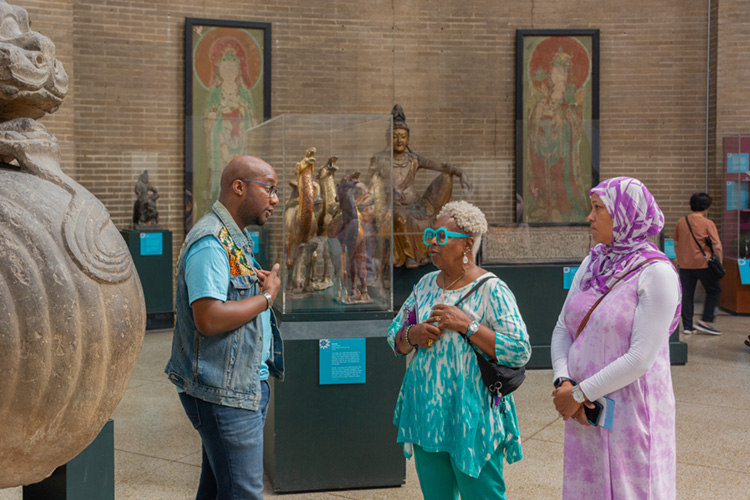
 In advance of the official federal holiday, the Penn Museum will host its annual Juneteenth: A Celebration of Freedom on Saturday, June 14, 2025. Admission is free for everyone. The family-friendly festival commemorates the importance of June 19, 1865, which marks the official emancipation of enslaved people in Texas.