
Penn Researchers Awarded $18 Million NIH/NIA Grant to Study Causes of Cognitive Decline in Lewy Body Diseases
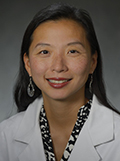 Penn Medicine researchers will advance their understanding of the underlying causes of cognitive decline in individuals with Lewy body diseases, like Parkinson’s, and identify biomarkers that predict which individuals are more likely to develop dementia with a $18 million grant from the National Institutes of Health/National Institute on Aging. The goal of this wide-ranging program is to understand the factors that govern who develops dementia, and how quickly, in order to develop therapies that might slow the progression of disease.
Nearly one million Americans currently live with Parkinson’s Disease (PD), and an estimated 1.4 million have PD or dementia with Lewy bodies. Both are caused by the buildup of an abnormal protein in the brain, called α-synuclein (αSyn). The buildup of αSyn forms clumps called Lewy bodies, leading to issues with movement and cognition. While these diseases share a common underlying cause, individuals express symptoms differently. Some people experience cognitive decline, like impaired memory and judgement, at the outset of their diagnosis, others develop it a few years after, and some never do. Likewise, some individuals struggle with motor functions early, like walking or swallowing, while others develop these symptoms years after diagnosis. There are currently no FDA-approved treatments available that slow the progression of these diseases.
“Regardless of timing, these symptoms appear to share some underlying processes,” said Alice Chen-Plotkin, the Parker Family Professor of Neurology, director of the Molecular Integration in Neurological Diagnosis (MIND) initiative, and overall director of this newly funded program. “We hope that the differences in individuals’ diseases can illuminate the root cause of neurodegeneration and help us develop therapies that delay the onset of cognitive decline. Ideally, instead of Parkinson’s being a disease that eventually may disrupt all aspects of an individual’s life, we could slow its progression so much that it would just be a minor inconvenience.”
The grant supports four different projects across the Perelman School of Medicine and emphasizes collaboration across disciplines. Edward Lee, co-director of Penn’s Institute on Aging and leader of the Penn Medicine Brain Bank, and Sharon Xiangwen Xie, a professor of biostatistics, will ensure that tissue, DNA samples, and data are centralized and shared with all collaborators.
David Irwin, an associate professor of neurology, will lead one project investigating how αSyn buildup interacts with b-amyloid plaques (amyloid) and tau neurofibrillary tangles (tau), which drive other neurodegenerative diseases, most notably Alzheimer’s. His goal is to understand how the interplay between these elements impact loss of cognition.
Virginia Man-Yee Lee, the John H. Ware 3rd Endowed Professor in Alzheimer’s Research in the department of pathology and laboratory medicine, will research how the misfolding and clumping of αSyn affects how it spreads throughout the brain. She hypothesizes that how the αSyn folds and clumps impacts the rate at which it spreads in an individual’s brain.
Dr. Lee first discovered the role of αSyn, as well as amyloid and tau in neurodegenerative diseases, alongside her late partner, John Q. Trojanowski, a professor of geriatric medicine and gerontology in the department of pathology and laboratory medicine.
Dr. Chen-Plotkin will oversee one of two projects examining how different genetic factors in individuals impact the spread of αSyn. Dr. Chen-Plotkin’s project draws upon previous research that identified a genetic marker for PD. She will use tissue from the Brain Bank, which was collected from thousands of individuals with neurodegenerative diseases to search for additional genetic markers that correlate with the development of different Lewy body diseases and then model these genetic changes in neurons.
For the second project, Kelvin C. Luk, an associate professor of pathology and laboratory medicine, will model these genetic variations in mice, and determine if gene-editing techniques can regulate the spread of αSyn, and potentially slow the progression of these neurodegenerative diseases.
The team will validate their findings by identifying patients within the clinic who have a specific biomarker and tracking their progress over time in a clinical cohort led by Daniel Weintraub, a professor of psychiatry. That is, if the researchers believe a genetic marker is tied to early loss of motor function, but late onset cognitive decline, they would identify patients with that marker through genetic testing, and follow their disease over time to see if it they do in fact experience the symptoms they hypothesized.
“While these projects have specific focuses, the multi-project nature of the program allows us to collaborate to learn how these different systems work together to cause individual expressions of disease,” said Dr. Chen-Plotkin. “We hope that the constant feedback from the collaborators will accelerate our research and help us translate our findings into real therapies that improve the lives of individuals and their families.”
 Adults over 65 and their families in eastern Pennsylvania will have greater access to geriatric care thanks to a $5 million Geriatrics Workforce Enhancement Program (GWEP) grant from the Federal Health Resources & Services Administration. The program, led by Lisa M. Walke, chief of the division of geriatric medicine at the Perelman School of Medicine, will train primary care providers in aging-related medicine, and educate older adults and their caregivers on topics relevant to health and aging.
 Francesco Agostinelli, an assistant professor of economics in the School of Arts & Sciences, has been named the Janice and Julian Bers Assistant Professor in the Social Sciences. A leading scholar in labor economics and the economics of education, Dr. Agostinelli is an empirical microeconomist who conducts research on child development, education, family economics and applied econometrics. His recent work focuses on the determinants of children’s skill formation, family choices and educational investments in children, the role of socioeconomic environments, and the development of new methods for identifying the mechanisms driving inequality in economic opportunities.
 Paula Fomby, a professor of sociology in the School of Arts & Sciences, has been named the Edmund J. and Louise W. Kahn Term Professor in the Social Sciences. Dr. Fomby is a sociologist and family demographer whose research focuses on children’s well-being and life chances and the way these are shaped by families and social institutions, with particular attention to economic and racialized inequalities. Her research has been supported by the Eunice Kennedy Shriver National Institute of Child Health and Human Development and the National Science Foundation.
.jpg) Raymond Charles Boston, an emeritus professor of biostatistics and epidemiology at the New Bolton Center at Penn Vet, died on June 29. He was 80.
Raymond Charles Boston, an emeritus professor of biostatistics and epidemiology at the New Bolton Center at Penn Vet, died on June 29. He was 80..jpg) Michael Richard Topp, an emeritus professor of chemistry in the School of Arts & Sciences, died on June 18. He was 79.
Michael Richard Topp, an emeritus professor of chemistry in the School of Arts & Sciences, died on June 18. He was 79.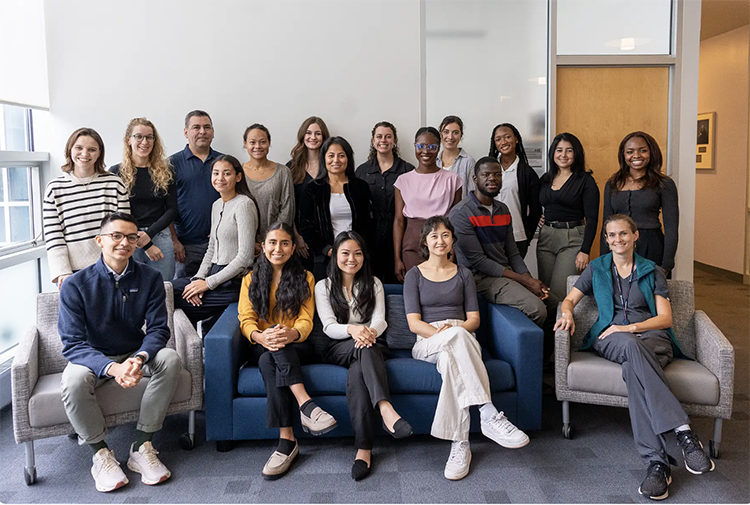 Penn Nursing announces its third cohort of fellows of the Leonard A. Lauder Community Care Nurse Practitioner Program. The group is comprised of nursing professionals from across the country who have begun full-time studies towards becoming a primary care nurse practitioner. The fellows will use this unique opportunity to further their education and clinical experience to help solve the challenges they see in their chosen field.
 Zahra Fakhraai, a professor of chemistry in the School of Arts & Sciences, has been elected as a 2024 fellow of the American Physical Society. The APS fellowship program recognizes members who have made exceptional contributions in physics research, important applications of physics, significant contributions to physics education, or leadership in or service to APS. Each year, no more than one half of one percent of the society membership is recognized by their peers for election to Fellow of the American Physical Society.
  Sally Nijim, the 2024 CDCN and Biomedical Leadership Fellow at the Perelman School of Medicine, has been selected by the American Society of Hematology (ASH) to receive the 2024 Hematology Opportunities for the Next Generation of Research Scientists (HONORS) Award as one of 33 residents and medical students nationally and as the representative from PSOM.