News

Dorothy E. Roberts: 2024 MacArthur Fellow 
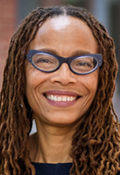
caption: Dorothy RobertsDorothy E. Roberts, the George A. Weiss University Professor of Law & Sociology and the Raymond Pace and Sadie Tanner Mossell Alexander Professor of Civil Rights at the Penn  Carey Law School, has been named a 2024 MacArthur Fellow by the John D. and Catherine T. MacArthur Foundation. The MacArthur Fellowship is a five-year grant to individuals who show exceptional originality in and dedication to their creative pursuits.

“Dorothy Roberts’ groundbreaking work at the intersections of law, race and social justice has profoundly impacted both scholarship, public policy, and political mobilization,” said Penn Carey Law School dean and Bernard G. Segal Professor of Law Sophia Lee. “Her recognition as a 2024 MacArthur Fellow is fitting for a scholar who has reframed debates on critical issues ranging from child welfare to the biological basis of race. We are incredibly proud of her achievements and fortunate to have her as a faculty member at Penn Carey Law.” 

The fellowship is designed to provide recipients with the flexibility to pursue their own artistic, intellectual, and professional activities in the absence of specific obligations or reporting requirements. Fellows are nominated anonymously by leaders in their respective fields and are considered by an anonymous selection committee. 

Professor Roberts is a legal scholar and public policy researcher exposing racial inequities embedded within health and social service systems. Her work encompasses reproductive health, bioethics, and child welfare. She sheds light on systemic inequities, considers the voices of those directly affected, and calls for a wholesale transformation of existing systems. 

“I am extremely honored to receive a MacArthur Foundation Fellowship,” said Professor Roberts. “It is my hope this award will shine a light on Black women’s visions and struggles for reproductive and family justice.” 

“The transformative scholarship of Dorothy Roberts focuses on some of the most pressing issues facing our society, addressing issues of inequality, social justice, and race,” said Penn Interim President J. Larry Jameson. “As a scholar, award-winning author, and now MacArthur Fellow, she exemplifies Penn’s commitment to impactful, interdisciplinary, creative pursuits.” 

Professor Roberts’ major books include Killing the Black Body: Race, Reproduction, and the Meaning of Liberty (Pantheon, 1997); Shattered Bonds: The Color of Child Welfare (Basic Books, 2001); Fatal Invention: How Science, Politics, and Big Business Re-create Race in the Twenty-First Century (The New Press, 2011); and Torn Apart: How the Child Welfare System Destroys Black Families – and How Abolition Can Build a Safer World (Basic Books, 2022), as well as more than 100 scholarly articles and essays in books and journals, including Harvard Law ReviewYale Law JournalStanford Law Review, and The 1619 Project: A New Origin Story.

More information on the MacArthur Fellowship can be found here.

Jeffrey Kallberg: Deputy Dean of the School of Arts & Sciences

caption: Jeffrey KallbergJeffrey Kallberg, the William R. Kenan, Jr. Professor of Music and associate dean of arts and letters in the School of Arts & Sciences, has been named deputy dean of the School of Arts & Sciences, effective October 1 and continuing through December 31.

In this new role, Dr. Kallberg will provide additional management of the daily operations of the dean’s office, particularly faculty affairs, and will represent Dean Steven J. Fluharty, dean of the School of Arts & Sciences and the Thomas S. Gates, Jr. Professor of Psychology, Pharmacology, and Neuroscience, in an official capacity when necessary. Dr. Kallberg’s involvement will allow Dean Fluharty to focus on key initiatives that will require his attention during the next three months. In addition, Dr. Kallberg will assist the entire dean’s office and the school in preparing for the arrival of a new dean. During this period, he will also continue to oversee the humanities departments in the school.

Dr. Kallberg has served as associate dean of arts and letters since 2010. A leading specialist in the music of the 19th and 20th centuries, editorial theory, critical theory, and gender studies, he is considered one of the preeminent authorities on Chopin and is a former vice president of the American Musicological Society. As associate dean, Dr. Kallberg led efforts to create the school’s standing faculty academic leave policy and helped shape the school’s parental leave policies.

Before becoming associate dean, Dr. Kallberg served as chair of the department of music and was a member of the school’s personnel and planning & priorities committees. “With his depth of experience in the Office of the Dean and his invaluable institutional knowledge,” Dean Fluharty said, “Jeff is ideally suited to serve as deputy dean.”

In recent months, the Office of the Dean has completed three important leadership transitions, including the appointments of Corinn Harrell as vice dean for finance and administration, Ellen Furxhi as chief of staff, and Peter Struck as the Stephen A. Levin Family Dean of the College of Arts & Sciences. Dean Fluharty will step down and return to the faculty effective December 31. A search for his successor is underway.

Three New Endowed Chairs in the School of Arts & Sciences

Hannah Feldman: Katherine Stein Sachs, CW’69, and Keith L. Sachs, W’67, Associate Professor of History of Art
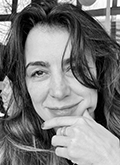
caption: Hannah FeldmanHannah Feldman, an associate professor of history of art in the School of Arts & Sciences, has been named the Katherine Stein Sachs, CW’69, and Keith L. Sachs, W’67, Associate Professor of History of Art. A leading scholar of contemporary art, Dr. Feldman focuses on global modern art, contemporary art, and urban space, with a particular recent focus on the artistic cultures of the Middle East and North Africa. She is the author of From a Nation Torn: Decolonizing Art and Representation in France, 1945-1962 (Duke University Press, 2014) and the editor of a forthcoming exhibition catalog about Huguette Caland. She has also published dozens of peer-reviewed scholarly articles and chapters in books and has three books in progress, as well as a co-edited volume on contemporary arts writing.

Dr. Feldman’s service and affiliations include previous departmental roles such as director of both graduate studies and undergraduate studies in the department of art history at Northwestern University. She also has numerous professional affiliations and roles, including as the curator of an upcoming exhibition at the Arts Club of Chicago, and as the curator of a major retrospective to open at the Museo Nacional Centro de Arte Reina Sofía in Madrid, Spain.

She has received numerous fellowships, research support, and awards, including the Andrew W. Mellon New Directions Fellowship and a Getty Research Institute Fellowship. She served as an invited senior researcher in residence at the French National Institute for Art History (INHA) and a scholar in residence for several years at the Core Residency Program at the Glassell School of Art in Houston. She has received the Weinberg College Award for Excellence in Mentoring Undergraduate Research and was repeatedly nominated for the Weinberg College Award for Excellence in Graduate Mentoring.

Katherine Stein Sachs, CW’69, and the late Keith L. Sachs, W’67, established this professorship in 2005. Katherine Stein Sachs, an adjunct curator at the Philadelphia Museum of Art for many years, is a member of the Penn Live Arts board of advisors and an emeritus member of the Penn Trustees and the ICA board of advisors, which she chaired. They have supported the arts extensively at Penn over the years, including establishing the Sachs Program for Arts Innovation.

Daniel Hopkins: Julie and Martin Franklin Presidential Professor of Political Science

caption: Daniel HopkinsDaniel Hopkins, a professor of political science in the School of Arts & Sciences, has been named the Julie and Martin Franklin Presidential Professor of Political Science. A leading scholar of American politics whose research emphasizes racial and ethnic politics, state and local politics, and political behavior, Dr. Hopkins is the author of two books and numerous scholarly articles, and his research has received support from the National Science Foundation and the Russell Sage Foundation. His book The Increasingly United States: How and Why American Political Behavior Nationalized won two awards, including the American Political Science Association’s 2023 Doris Graber Award for best book on political communication in the past 10 years. Dr. Hopkins holds secondary appointments at the Annenberg School for Communication and School of Engineering and Applied Science. He is co-coordinator of the Philadelphia Behavioral Science Initiative and has written about U.S. politics for the website FiveThirtyEight.com since 2014.

The Julie and Martin Franklin Family Foundation, Inc., established by Julie Hinds Franklin, C’87, and Martin Ellis Franklin, C’86, Penn parents, created this endowed professorship in 2021.

At Penn, Ms. Franklin is a member of the Social Policy & Practice (SP2) Board of Advisors, the Trustees’ Council of Penn Women, and is co-chair of the Center for High Impact Philanthropy advisory board. Mr. Franklin is a former member of the Penn Athletics Board of Advisors, and they both are involved with their class reunions and have served on the Parent Leadership Committee. In addition to endowing the professorship, they have supported undergraduate scholarships, athletics, SP2, and the Basser Center at the Abramson Cancer Center.

Douglas Jerolmack: Edmund J. and Louise W. Kahn Endowed Term Professor of Earth and Environmental Science

caption: Douglas JerolmackDouglas Jerolmack, a professor of Earth and environmental science in the School of Arts & Sciences and of mechanical engineering and applied mechanics in the School of Engineering and Applied Science, has been named the Edmund J. and Louise W. Kahn Endowed Term Professor of Earth and Environmental Science. Dr. Jerolmack is a pioneer in the emerging field of soft Earth geophysics, which centers on advancing scientific understanding of Earth’s dynamic surface through the physics of “squishy” materials. He also works with roboticists and cognitive scientists to improve how we explore our Earth, the moon, and Mars, and with education experts to improve learning and engagement in STEM.

Dr. Jerolmack’s group, the Penn Soft Earth Dynamics Lab, uses laboratory experiments combined with field work and theory to elucidate the minimum number of ingredients required to explain physical phenomena. Particular areas of focus include natural hazards such as mudslides, earthquakes, and flooding; the formation and evolution of land forms, such as rivers, sand dunes, and crack patterns on Earth and other planets; stochastic and nonlinear transport processes; and landscape response to climate change. This research aims to improve sustainable geomaterials, hazard prediction, landscape management practices, and planetary exploration.

The Kahn chairs were established through a bequest by Edmund J. and Louise W. Kahn. Edmund Kahn was a 1925 Wharton graduate who had a highly successful career in the oil and natural gas industry. Louise Kahn, a graduate of Smith College, worked for Newsweek and owned an interior design firm. They supported many programs and projects at Penn, including Van Pelt Library, the Modern Languages College House, and other initiatives in scholarship and the humanities.

Zhongjie (Jeffrey) Lin: Benjamin Z. Lin Presidential Professor

caption: Zhongjie LinZhongjie (Jeffrey) Lin of the Weitzman School of Design has been named the Benjamin Z. Lin Presidential Professor.

Dr. Lin earned a PhD in city and regional planning at the Weitzman School, where he studied with Gary Hack, an emeritus professor of city and regional planning and a former dean of the school. After earning his PhD, Dr. Lin worked as a professor of architecture and urbanism at the University of North Carolina at Charlotte. He returned to the Weitzman School in 2019, and this year was named Benjamin Z. Lin Presidential Professor.

The appointment was made possible by a gift from Benjamin Z. Lin, W’05, a Wharton School alumnus, venture capital investor, and member of the Weitzman School Board of Advisors. The son of Chinese immigrants who grew up in New Jersey, Benjamin Z. Lin now runs the real estate investment platform Coral and splits his time between Tokyo, Boston, and New York.

At Weitzman, Zhongjie Lin directs the urban design concentration in the department of city & regional planning. He also leads the Future Cities Initiative, a research lab focused on sustainable urbanism, urban mobility, city form, public space, and nature-based infrastructure. He is the co-founder of Futurepolis, an international design consultancy. For Dr. Lin, who has studied China’s new town movement as an expression of global image-making and the development of mega-cities in Latin America, urban design research is a tool to harness the potential of new technologies for the benefit of city residents.

Presidential professorships at Penn attract and retain renowned scholars in endowed positions. Benjamin Z. Lin was born in Fujian, then grew up in New Jersey after his parents emigrated to the U.S., and was the first person in his family to attend college. He worked on Wall Street after graduating from the Wharton School and has since invested in a series of tech and real estate companies. He hopes his gift will help the school produce young designers who can bring a knowledge of finance, technology, material sciences, and other fields into their work. Zhongjie Lin said the appointment bestows a degree of “prestige” on his research agenda that he hopes will catalyze more research collaborations on the future of cities.

“It allows me to get all this energy together, and I think international collaboration is something that this appointment will help me pursue,” Dr. Lin said.

Julian Zelizer and Steven Pearlstein Named Inaugural Penn Washington Senior Fellows

Penn Washington, which serves as Penn’s physical and programmatic home in the nation’s capital, has appointed distinguished scholars, New York Times best-selling author Julian Zelizer and Pulitzer Prize-winning business and economics columnist Steven Pearlstein of The Washington Post, as senior fellows. The appointments also mark the launch of two new programs in D.C. set to foster innovative dialogue and research on the pressing issues shaping our world.  

“Penn Washington represents a bold move on behalf of the University to bridge academia and policy,” said Ezekiel Emanuel, inaugural faculty director of Penn Washington. “These two projects are the first of several new initiatives that we are planning in the coming year. 

“The addition of Julian and Steve as the inaugural senior fellows reflects Penn Washington’s dedication to building a vibrant intellectual community that integrates diverse voices to explore nonpartisan policy solutions. Their tenure promises to not only catalyze discussions but also inspire innovative research and action addressing society’s most critical issues.” 

Julian Zelizer, the Malcolm Stevenson Forbes, Class of 1941 Professor of History and Public Affairs at Princeton University, is renowned for his insightful analysis of American politics and history. His research delves into the connections between politics, policy, and media, and he is well-known for his engaging and thought-provoking work. Dr. Zelizer’s research frequently explores the dynamic forces shaping modern politics, influencing academic discussions, and public discourse.  

As a senior fellow at Penn Washington, Dr. Zelizer will spearhead the new Penn Project on Rebuilding Government-Higher Education Relations. Following the 2023-24 academic year, which saw a significant deterioration in relations between higher education institutions and Congress, the need to critically assess this relationship became even more urgent. While previous academic studies have examined discrete aspects, there has been limited focus on asking questions about the fundamental nature of the relationship, the factors leading to its disruption, and how it can be improved moving forward. The Penn Project on Rebuilding Government-Higher Education Relations aims to address these questions by reviewing the historical context and engaging scholars and officials in finding solutions. The new initiative will formally launch in December with a two-day conference. 

“We plan to take a deep dive into the core elements that have shaped this relationship historically and to start putting forward a road map that can rebuild and reenergize this vital alliance,” said Dr. Zelizer. 

Steven Pearlstein was a reporter, editor, and columnist at The Washington Post for 35 years and a professor of public affairs at George Mason University for more than a decade. At Penn Washington, he will lead the new Fixing Congress initiative, drawing on his experience as both a congressional aide and journalist writing about public policy. The initiative aims to shine a spotlight on the degree of partisan gridlock and dysfunction in Congress, propose solutions, and foster a more cooperative and productive political culture at the U.S. Capitol. 

Following the recent success of the inaugural conference at Penn Washington in April, the Fixing Congress initiative will focus on translating discussions into actionable reforms. Over the next two years, the initiative will convene a series of private and public gatherings that will bring together current and former policymakers, academics, media, and reform advocates to explore and support practical strategies to enhance bipartisanship and improve legislative effectiveness. 

“The dysfunction in Congress has reached the point that it now poses a serious threat to our democracy, our economy, and America’s status in the world,” said Mr. Pearlstein. “It is a credit to Penn—and to the legacy of Benjamin Franklin—that the university is taking the lead to address it by launching this initiative.” 
Call for Nominations for Provost/Netter Center Faculty-Community Partnership Award

The Provost/Netter Center Faculty-Community Partnership Award is an annual award that recognizes local, productive, and sustained faculty-community partnership projects. The amount of the award is $10,000 ($5,000 to the faculty member and $5,000 to the community partner) in order to further develop the work. Junior and senior faculty and senior lecturers and associated faculty from any of Penn’s schools are eligible for nomination, along with their community partners. Please see below for the complete description and process of nomination. If you have any questions or concerns regarding this award, please direct them to abcscoordinator@sas.upenn.edu.

Award Nomination Process

The nomination packet deadline is Friday, October 25, 2024. The award recognizes faculty-community partnership projects. One award will be given annually for $5,000 to a faculty member and another $5,000 to the community partner to recognize, develop, and advance an existing partnership.

Criteria for Selection

  1. The community partnership project must be affiliated with the Netter Center for Community Partnerships i.e., engaged with academically-based community service (ABCS), problem-solving learning (PSL) or participatory action research (PAR) style pedagogy and/or research.
  2. The partnership project must demonstrate a record of sustainable engagement.
  3. The faculty member can be an be an assistant, associate, or full professor, senior lecturer, or associated faculty.

Process of Nomination

  1. Nominations may come from members of the University and the wider community, though the strongest nominations should represent both the University and the community. 
  2. Nominators should email a completed packet (see https://www.nettercenter.upenn.edu/about-center/advisory-boards/faculty-advisory-board/provost-netter-center-faculty-community-partnership) to the ABCS coordinator (abcscoordinator@sas.upenn.edu) at the Netter Center, who will submit applications to the review committee, comprised of faculty and community members.
  3. The review committee will submit their recommendations to the Netter Center director and the Provost, who will jointly make the final selection.  The award decision will be announced in December.

Nomination Packet

  1. A cover sheet including: name, title, department, school, and email address of faculty member, and title of organization, physical address, website (if available), and email address of the community partner
  2. A biographical sketch/organizational description that highlights community engagement work of the nominees: faculty member and community partner.
  3. 500-1,000 word document detailing the following items:
    • Description of the project: Include how the project was formulated, who participated, the target audience at Penn, methods of engagement/pedagogy, and what products were created.
    • Impact of the project: Outline the community and academic expectations, successes, failures, and impacts of the project, both for the community and for the university.
    • Sustainability of the project: Describe how long the project has been in place, the adjustments that have been made to increase its sustainability, and any future plans for further engagement with this project or for new related projects.

Letters of Support

  1. In addition to the nomination packet, please submit two letters of support (at least one must be from the community). The letter of support may also be a letter co-signed by both University and community representatives.

Award Winners’ Tax Status

  1. For this award to remain tax-exempt, the award for the faculty member will be deposited in a University of Pennsylvania account to support teaching and research related activity.
  2. As long as the community partner is a non-profit organization, the award remains tax-exempt.

Deaths

Helen Artigues Gindele, Development

Helen Artigues Gindele, CW’51, a former director of donor relations in the School of Arts & Sciences, died on July 20. She was 96.

Ms. Artigues Gindele joined Penn’s development department in 1965 as a writer and editor. In 1973, she became the first woman to head a division in the department, serving as the director of the newly created stewardship office. She then became the director of donor relations in 1976, a role she held until 1987. Ms. Artigues Gindele served on the public relations committee of the University of Pennsylvania Antiques Show and was an active member of the Women’s Committee of the Penn Museum. 

She is survived by two nieces; four stepchildren; and seven step-grandchildren.

Sol Goodgal, Microbiology

caption: Sol GoodgalSol Howard Goodgal, a professor emeritus of microbiology and medicine in the
Perelman School of Medicine, died on September 8. He was 103.

Dr. Goodgal was born in Baltimore, Maryland. After graduating from the University of Baltimore with a BA in biochemistry, he served for two years in the U.S. Armed Forces in Europe during World War II. After the war, Dr. Goodgal completed his PhD in biochemistry from John Hopkins University.

Dr. Goodgal joined Penn’s faculty in 1961 as an associate professor of microbiology in the School of Medicine, where he researched the applications of RNA and DNA on infectious diseases and taught a renowned freshman seminar titled Philosophy Problems in Modern Biology. In 1971, he was promoted to full professor. He received several University Research Foundation grants for projects like “Studies of Genetic Controls of Light Sensory Response of Phycomyces” (1972), “Studies on Transformation in Haemophilus Influenzae” (1974), and “Transformation in Haemophilus” (1990). Throughout his tenure at Penn, Dr. Goodgal also chaired the Faculty Senate Faculty Grievance Committee and served as vice chair of its Committee on Open Expression. He retired in 1991 and took emeritus status; he continued to teach until 2002. 

Dr. Goodgal is survived by his son, Charles (Chuck) Goodgal; his daughter-in-law, Nita Silverman Goodgal; and his grandchildren, Matt Goodgal, Julia Salem, Rachel Goodgal and her husband Stephen Budinsky. 

Donations in his memory can be made to the Penn Ovarian Cancer Research Center Fund (https://giving.apps.upenn.edu/fund?program=MED&fund=603702).

Harold Rutenberg, Cardiology

caption: Harold RutenbergHarold L. Rutenburg, C’56, a former clinical associate professor of medicine in the Perelman School of Medicine and former chief of the cardiology division at Pennsylvania Hospital, died on May 14. He was 89.

Born in Philadelphia, Dr. Rutenberg grew up in Camden, New Jersey, and attended Camden High School. He then earned a bachelor’s degree at Penn in 1956. 

After graduating first in his class from Temple University School of Medicine, he served as a U.S. Army doctor. He then returned to Temple, joining its faculty in 1967 and rising to associate professor in 1973. He also served as director of the cardiac clinic and other cardiology programs at Temple Hospital from 1971 to 1975 before being recruited to Penn.

Dr. Rutenberg joined Penn in 1975, leading the cardiology division at Pennsylvania Hospital and serving as an associate professor of medicine in the School of Medicine. At Penn, Dr. Rutenberg specialized in coronary artery disease, chronic high blood pressure, and cardiomyopathy. “He helped usher our cardiology division into the modern era,” said Howard Haber, director of the hospital’s catheterization laboratory. “He was the consummate physician.” In 1981, Dr. Rutenberg was promoted to clinical associate professor in the School of Medicine. The same year, he launched his own practice near Pennsylvania Hospital, where he ministered to patients as a cardiologist. He continued his teaching at Penn, scaling back his duties in 2013 to serve as an instructor and clinician in cardiovascular medicine. Dr. Rutenberg retired from teaching and from his practice in 2021.

Dr. Rutenberg received academic awards for his mentorship and widely published his research on unstable angina, myocardial infarction, and other cardiac conditions, which was published in the New England Journal of Medicine, Lancet, and other peer-reviewed journals. 

Dr. Rutenberg is survived by his wife, Patrice Raef; his children, Greg Davis, Georgia Getz, Emma Rutenberg; his former wife, Jan Bateman; his four grandchildren; his sister; and other relatives.

Donations in Dr. Rutenberg’s memory may be made to Jazz Bridge Project Inc., 6703 Germantown Ave., Suite 200, Philadelphia, Pa. 19119.

William Schlaepfer, Pathology and Laboratory Medicine

caption: William SchlaepferWilliam W. Schlaepfer, an emeritus professor of pathology and laboratory medicine in the Perelman School of Medicine, died on June 20. He was 92.

Dr. Schlaepfer received his BA in biology from Princeton University in 1954 and then earned his MD from Yale University Medical School in 1958, where he conducted a doctoral thesis on Alzheimer Type 2 astrocytes during experimental ammonium intoxication in rats. He completed his training at the Max Planck Institut für Psychiatrie in Munich, Germany, becoming interested in the ultrastructure of peripheral nerves and the nature of the axonal cytoskeleton. He continued his experimental studies on peripheral nerves as a staff neuropathologist at the medical schools of Cornell and Washington Universities, where he introduced teased fiber analyses of nerve biopsies to differentiate between demyelinating and axonal neuropathies and for semiquantitative assessment of Wallerian degeneration.

After spending a year at the University of Cambridge on a Research Career Development Award and then serving as a member of the Path A and Neuro B National Institutes of Health (NIH) Study Sections, Dr. Schlaepfer joined Penn’s faculty in 1979. Recruited as a professor in the department of pathology and laboratory medicine in the School of Medicine, he held this appointment until retiring in 2014. His research at Penn focused on peripheral nerve disease, and his laboratory specialized in the biochemical and molecular properties of neurofilament (NF) proteins, and explored mechanisms through which the disruption of NF assembly and aggregation of light neurofilament proteins led to motor neuron degeneration and disease.

Dr. Schlaepfer’s research was published in the Journal of Neuroscience and the Journal of Neuropathology & Experimental Neurology, among other peer-reviewed publications. From 1986-1987, Dr. Schlaepfer served as president of the American Association of Neuropathologists. 

“While always attendant to his research laboratory, he shared fully in the teaching, training and service of academic neuropathology,” said his colleagues when he received a lifetime achievement award from the American Association of Neuropathologists in 2011. “He was rewarded by many close and fruitful interactions with scores of very talented residents and fellows whom he trained during the years. Bill serves as a role model for many of us that aspire to follow in his steps, that is, an almost 50-year record of continuous grant funding, running an active laboratory that spawned such major discoveries, and, at the same time, excelling in day-to-day surgical neuropathology and teaching the next generation of academic neuropathologists.” 

--

To Report A Death

Almanac appreciates being informed of the deaths of current and former faculty and staff members, students and other members of the University community. Call (215) 898-5274 or email almanac@upenn.edu.

However, notices of alumni deaths should be directed to the Alumni Records Office at Room 517, Franklin Building, (215) 898-8136 or e-mail record@ben.dev.upenn.edu.

Governance

From the Senate Office: Faculty Senate Executive Committee Agenda

The following agenda is published in accordance with the Faculty Senate Rules. Any member of the standing faculty may attend SEC meetings and observe by contacting Patrick Walsh, executive assistant to the Senate, either by telephone at (215) 898-6943 or by email at senate@pobox.upenn.edu.

Faculty Senate Executive Committee Agenda
Wednesday, October 16, 2024
3–5 p.m. ET

  1. Finalize the Minutes of September 4, 2024 
  2. Tri-Chairs’ Report
  3. Update from the Office of the Provost
    Discussion with Provost John L. Jackson, Jr.
  4. Moderated Internal Discussion
  5. New Business

Events

Penn Museum’s 13th Annual CultureFest! Día de los Muertos October 26

caption: CultureFest! is a daylong celebration that features arts activities, an artisan market, dance and music performances, and a traditional ofrenda (altar) installation by artists José Martín Anguiano Hermosillo and Maria Felix is presented by the Penn Museum, the Mexican Cultural Center, and the Mexican Consulate in Philadelphia on October 26.

In partnership with the Mexican Cultural Center, the Penn Museum will showcase Mexico’s vibrant cultural traditions with the 13th annual CultureFest! Día de los Muertos on Saturday, October 26, 2024 from 11 a.m. until 4 p.m.

Observed in Latino communities around the world, Día de los Muertos can be traced back 3,000 years to pre-Columbian Mesoamerica.

“One of the most significant and colorful traditions in Mexican culture is Día de Los Muertos, the ‘Day of the Dead,’” said Araceli Guenther, president of the board of directors of the Mexican Cultural Center. “The Penn Museum helps to bring that day to life by celebrating the rich cultural heritage that blends Indigenous beliefs with traditions during Spanish colonization. It also fosters a sense of community and national pride, while educating both the Mexican community and residents from different backgrounds about Mexico’s diverse cultural landscape.”

The all-day festival includes an artisan marketplace, activities, and live performances:

11:05-11:30 a.m., “Esmeralda LaCor” (music)
11:40-11:45 a.m., welcoming remarks
11:45 a.m.-12:15 p.m., “Juntas Chicas” (music)
12:35-1:05 p.m., “Payaso Bombin” (clown performance)
1:20-1:50 p.m., “Ballet Folklorico Yaretzi” (dance)
2:00-2:45 p.m., “Juntas Chicas” (music)

Visitors will receive free samples of “Day of the Dead” bread and Mexican hot chocolate at 3 p.m. and organizers will announce the winners of the community altar contest at 3:20 p.m.

“We are grateful for the long-standing partnership with the Mexican Cultural Center and the Mexican Consulate in Philadelphia,” said Jennifer Brehm, director of learning and public engagement at the Penn Museum. “For 13 years, Penn Museum has demonstrated its commitment to preserving and sharing the rich cultural and artistic traditions of the Latine and Hispanic communities through CultureFest! Día de Los Muertos, an important tradition for honoring ancestors. We invite everyone to join us in celebrating this cultural heritage.”

A monumental ofrenda—an elaborate communal altar that honors those who have passed—will serve as the event’s centerpiece. Artists Martín Anguiano and Maria Felix collaborated to create this year’s massive ofrenda installation, which will take more than a week to assemble.

“The Mexican Cultural Center couldn’t ask for a better partner for this event than the Penn Museum,” Ms. Guenther added. “Their dedication, expertise, and passion for our shared vision on culture have significantly enhanced our ability to achieve our goals and make a meaningful impact.”

The Penn Museum’s Mexico and Central America Gallery explores the stories of powerful ancient societies, including the Maya, Aztec, and Zapotec, while welcoming visitors to learn more about the traditions of people living in Mexico and Central America today.

The event is also supported by the Center for Latin American and Latinx Studies at the University of Pennsylvania.

All CultureFest! Día de los Muertos activities are included with Penn Museum admission, and the entire line-up can be found at https://www.penn.museum/calendar/356/culturefest.

Climate Week at Penn: October 14-18

Climate Week at Penn will take place October 14-18. Now in its fifth year, Climate Week is organized by a committed group of faculty, staff, and students, with broad engagement from across the University.

The wide array of events serves to elevate the urgency of addressing climate change and showcase how the Penn community is playing a role in confronting it.

This year, schools, centers, departments, and groups around campus have organized nearly 40 events with a wide range of topics and formats.

Highlights include:

  • October 14 and 16: Faculty and students will deliver 1.5* Minute Climate Lectures to share their perspectives on climate change and its impacts and call for large-scale climate action.
  • October 15: Two youth activists at the forefront of the climate movement in Germany will visit campus to discuss their experiences organizing grassroots campaigns, influencing policy, and mobilizing communities to create a sustainable and just future.
  • October 15: A “Bat Bonanza” will highlight the important role of these pollinators and insect-eaters and provide opportunities to get hands-on in activities to protect them.
  • October 17: Penn’s Climate Solutions Showcase: Faculty and researchers from the School of Engineering & Applied Science and the Weitzman School of Design will share the technologies and designs they are innovating to create a safer, more resilient, and more sustainable future.
  • October 18: A  “fireside chat” between Ramanan Raghavendran, chair of the Penn Board of Trustees, and Michael Weisberg, the Bess W. Heyman President’s Distinguished Professor of Philosophy and deputy director of Perry World House, on the role of universities in addressing climate change.

See the full Climate Week calendar for additional events and the latest details.
--
*1.5 degrees Celsius=The maximum amount the average temperature can rise in order to avoid the worst consequences of global warming. We’re already past 1 degree Celsius.

Penn Libraries Participates in 2024 International Open Access Week: October 21-27

Penn Libraries are proud to participate in the worldwide celebrations for International Open Access Week, an initiative held annually to inspire global momentum toward the open sharing of knowledge to address important social issues, happening October 21-27. This year’s theme, “Community Over Commercialization,” continues the emphasis of Open Access Week 2023 with a call to action to prioritize approaches to open scholarship that serve the best interests of the public and the academic community.

A hallmark value of libraries since their earliest days has been to encourage the free and open circulation of knowledge, information, and ideas. But the ways that it is now possible to create and disseminate ideas—not just in the conventional form of printed books and journals, but in myriad ways on the internet—have grown increasingly complex and costly to consume. Journal articles, data, educational resources, and other published research outputs are commonly distributed by large conglomerate vendors like Elsevier, EBSCO, and ProQuest, whose subscription-based platforms make these outputs searchable, among other services valuable to research libraries. These vendors set their own prices and access conditions for their products. As a result, disparities in access to information have also grown, limited to those with the financial and infrastructural means to acquire access to these platforms.

Open access advocates seek to challenge this state of affairs, arguing that free access to information and unrestricted use of electronic resources is vital to open and equitable scholarship. Recently, research funders, including federal agencies, have joined the call for open access by requiring that research they have funded be made freely accessible to the general public.

Choosing to share research outputs through open access means can have tangible benefits for both researchers and their audiences. Open access means that scholarship—including cutting-edge scientific experiments and impactful research studies—can quickly reach a wider audience who might not otherwise be able to afford to pay for expensive journal or database subscriptions. As a result:

  • Ideas can spread rapidly and stimulate new research, which in turn impacts real world problem-solving in the form of governmental policies, treatments for health problems, and economic investment in promising new technologies, to give just a few examples.
  • Wider access can increase the likelihood of citation and recognition for good quality and impactful research.
  • Knowledge gaps experienced globally by institutions and individuals with fewer material resources can be bridged.
  • Duplication of research effort can be minimized, reducing waste of time and financial resources.

For Open Access Week 2024, Penn Libraries will host several workshops connected to open access and avenues for sharing your scholarship and research outputs. Registration is required for all events.

October 22, 2 p.m.: Manage Your Research Identity with ORCID

October 23, 2 p.m.: FAIR Data in ScholarlyCommons

October 24, noon: Publishing Reimagined

October 24, 2 p.m.: Preparing for Sharing: The Future of Research Under the Nelson Memo

Update: October AT PENN

Conferences

10        South Asia Studies Digital Humanities Workshop; participants will strive for a nuanced and informed understanding of the possibilities and limitations of critical digital humanities tools, particularly computational text analysis (CTA) of content found in manuscripts, inscriptions, maps, and other historical documents; 9:30 a.m.-5 p.m.; Class of 1978 Orrery Pavilion, Van Pelt Library; register: https://tinyurl.com/sas-conference-oct-10 (South Asia Studies, Penn Libraries). Also October 11, 9:30 a.m.-4 p.m.


Exhibits

10        A Dialogue in 4 Acts: Mobile Community Brick Factory & Monument; invites the community to learn about and participate in the process of making a monument as a part of the Mobile Community Brick Factory & Monument exhibit; noon; Meyerson Hall Dean's Alley (Weitzman School of Design).


Fitness & Learning

9          Queer & Transgender Healing and Solidarity Circle; join Restorative Practices @ Penn to connect, and build community among queer and transgender staff and faculty members through circle format; 3:30 p.m.; LGBT Center; register: https://tinyurl.com/gsws-healing-circle-oct-9 (Gender, Sexuality & Women’s Studies).

10        Personal Statement Workshop: Writing About Your Research; learn how to accentuate your research in your personal statement through narrative writing strategies to showcase your experiences, interests, and future aspirations; 1 p.m.; Ben Franklin Room, Houston Hall (Center for Undergraduate Research & Fellowships).

            Exhibiting Your Work; artists Alessandro Facente and Aisha Zia will share information regarding gallery representation, curatorial relationships, self-organized exhibition making, publishing, and online publicity and presence; 5 p.m.; room B4, Meyerson Hall (Fine Arts).


Graduate School of Education

Info: https://www.gse.upenn.edu/news/events-calendar?date=2024-10.

9          Education Entrepreneurship Virtual Information Session; noon.

10        Accelerated Bachelor’s to Master’s Degree Program Information Session; 12:30 p.m.

11        Friday Virtual Chat; 9 a.m.

14        Urban Teaching Residency Virtual Information Session; 7 p.m.

15        Executive Doctorate in Higher Education Management Virtual Information Session; noon.


Readings & Signings

10        Silt Sand Slurry: Dredging, Sediment, and the Worlds We Are Making; Justine Holzman, Sean Burkholder, Gena Wirth, Brett Milligan, and Rob Holmes, Dredge Research Collaborative; 6:30 p.m.; Kleinman Energy Forum, Fisher Fine Arts Library (McHarg Center).

14        Tea With Ms. Tanzania; Fayyaz A. Vellani, critical writing; 6 p.m.; Arthur Ross Gallery; register: https://tinyurl.com/vellani-reading-oct-14 (Arthur Ross Gallery).

15        The Sing Sing Files; Dan Slepian, NBC News; 6 p.m.; room TBA, Carey Law School; register: https://tinyurl.com/slepian-reading-oct-15 (Quattrone Center).


Talks

8          Reflections on Learning About Learning: A Case Study on Where Ideas Come From in (In-)Secure Processor Design; Christopher Fletcher, University of California, Berkeley; 11 a.m.; room 225, Towne Building (Electrical & Systems Engineering).

            Improving Foundation Models Using Human Data; Vijay Krishnan, Turing; 3:30 p.m.; Wu & Chen Auditorium, Levine Hall, and Zoom webinar; info: https://www.cis.upenn.edu/events/ (Computer & Information Science).

9          Conformal Alignment: Knowing When to Trust Foundation Models with Guarantees; Zhimei Ren, statistics and data science; 9 a.m.; room 701, Blockley Hall, and Zoom webinar; join: https://pennmedicine.zoom.us/j/96442998641 (Center for Clinical Epidemiology and Biostatistics).

            Community Circle: Political Expression Across Differences; Raquel Arredondo, Tolulope Olasewere, Lauren Scicluna, Office of Diversity, Equity, Inclusion, and Belonging; noon; room TBA, 3700 Walnut Street (Graduate School of Education).

            Freedom of Expression on Campus After Oct. 7; David M. Rabban, University of Texas; noon; room 357, Stiteler Hall (Graduate School of Education).

            Wood Wide Models; Pradeep Ravikumar, Carnegie Mellon University; noon; room 225, Towne Building, and Zoom webinar; join: https://upenn.zoom.us/j/98029108883 (ASSET Center).

10        Color From Colorless Materials: Harnessing Multi-Reflection Interference in Microstructures; Lauren Zarzar, Penn State University; 10:30 a.m.; Wu & Chen Auditorium, Levine Hall (Materials Science & Engineering).

            Deep Latent Variable Models for Compression and Natural Science; Stephan Mandt, University of California, Irvine; 11 a.m.; room 225, Towne Building (Electrical & Systems Engineering).

            Diversifying the Next Generation of Healers & Health Innovators: Why This Still Matters; John Paul Sánchez, Universidad Central del Caribe School of Medicine; noon; Law Auditorium, 5th floor, Perelman Center for Advanced Medicine (Perelman School of Medicine).

            Interaction Tests for Bivariate Point Processes With Applications to Policing Research; noon; Geroge Mohler, Boston College; noon; room 403, McNeil Building (Criminology).

            Switching Trks: Emergence and Persistence of a Disease-Associated Endothelial Cell State Following Viral Lung Injury; Joseph Planer, pulmonary, allergy & critical care; noon; room 213, Stemmler Hall (Penn-CHOP Lung Biology Institute).

            Neurosymbolic AI for Safety-Critical Agile Control; Yisong Yue, California Institute of Technology; 3:30 p.m.; Wu & Chen Auditorium, Levine Hall, and Zoom webinar; info: https://www.cis.upenn.edu/events/ (Computer & Information Science).

            Brokering Understanding: Deaf Interpreters’ Role and Practice; Kristin Snoddon, Toronto Metropolitan University; 5:30 p.m.; room B1, Meyerson Hall (Linguistics).

            My Side of the River; Elizabeth Camarillo Gutiérrez, author; 6 p.m.; room 208, ARCH (La Casa Latina).

14        Learning from In Vitro Models of Cardiomyopathy; Stuart Campbell, Yale University; 3 p.m.; Austrian Auditorium, CRB (Pennsylvania Muscle Institute).

15        ALD-Driven Design of Hierarchical Hydrogenation Catalysts; Titel Jurca, University of Central Florida; noon; Carolyn Hoff Lynch lecture Hall, 1973 Chemistry Building (Chemistry).

            Financing Resilient Cities for the Future; Nathaniel Echeverria, Resilient Cities Network; Jaime Pumarejo, former mayor of Barranquilla, Colombia; Mauricio Rodas, former mayor of Quito, Ecuador; and Gulnara Roll, United Nations Environment Program; noon; Zoom webinar; register: https://tinyurl.com/iur-panel-oct-15 (Penn Institute for Urban Research).

            Math for Communication: The Inka Khipu; panel of speakers; 4:30 p.m.; Penn Museum; register: https://tinyurl.com/museum-talk-oct-15 (Penn Museum).


Biology

Info and to register: https://www.bio.upenn.edu/events.

8          Contractile Cytoskeletal Networks: The Guiding Role of Friction; Mariya Savinov, New York University; 4 p.m.; room 2C8, DRL, and Zoom webinar.


Economics

In-person events. Info: https://economics.sas.upenn.edu/events.  

9          The Welfare Implications of Climate Change Adaptation; Ji Hwan Kim, economics; noon; room 625, PCPSE.

            The Global Allocative Efficiency of Deforestation; Prakash Mishra, economics; 3:30 p.m.; room 100, PCPSE.

10        People- or Place-Based Policies to Tackle Disadvantage? Evidence from Matched Family-School-Neighborhood Data; Lucienne Disch, economics; 3:30 p.m.; room 101, PCPSE.


Mathematics

In-person events. Info: https://www.math.upenn.edu/events.

10        The Radon-Carleman Problem in Uniformly Rectifiable Domains; Irina Mitrea, Temple University; 3:30 p.m.; room 4C8, DRL.

14        Decidability in Nonassociative Logics; Eben Blaisdell, mathematics and computer & information science; 3:30 p.m.; online webinar.


This is an update to the October AT PENN calendar. To submit events for future AT PENN calendars and weekly updates, email the salient details to almanac@upenn.edu.

Crimes

Weekly Crime Reports

Division of Public Safety
University of Pennsylvania Police Department Crime Report

About the Crime Report: Below are the Crimes Against Persons and/or Crimes Against Property from the campus report for September 23-29, 2024. The Crime Reports are available at: https://almanac.upenn.edu/sections/crimes. Prior weeks’ reports are also online. –Eds.

This summary is prepared by the Division of Public Safety (DPS) and contains all criminal incidents reported and made known to the Penn Police, including those reported to the Philadelphia Police Department (PPD) that occurred within our patrol zone, for the dates of September 23-29, 2024. The Penn Police actively patrol from Market Street to Baltimore Avenue and from 30th Street to 43rd Street in conjunction with the Philadelphia Police.

In this effort to provide you with a thorough and accurate report on public safety concerns, we hope that your increased awareness will lessen the opportunity for crime. For any concerns or suggestions regarding this report, please call DPS at (215) 898-7297. You may view the daily crime log on the DPS website.

Penn Police Patrol Zone
Market Street to Baltimore Avenue and from 30th Street to 43rd Street

Crime Category

Date

Time

Location

Description

Assault

9/23/24

7:22 AM

4200 Spruce St

Offender kicked complainant in the right leg


9/26/24

10:33 AM

3549 Chestnut St

Report of a simple assault (domestic)

Auto Theft

9/23/24

3:15 PM

231 S 34th St

Scooter taken from bike rack/Arrest


9/25/24

4:07 PM

210 S 33rd St

Secured scooter taken from bike rack


9/25/24

5:35 PM

1 Convention Ave

Secured e-bike taken from bike rack


9/26/24

5:00 PM

219 S 33rd St

Secured scooter taken from bike racks

Bike Theft

9/26/24

5:11 PM

3220 Market St

Stolen bicycle


9/27/24

11:47 AM

3620 Hamilton Walk

Theft of a secured bicycle from rack behind building


9/27/24

12:02 PM

4050 Sansom St

Theft of a secured bicycle from a rack in the rear of the building


9/28/24

5:38 PM

380 University Ave

Theft of a secured bicycle from bike rack

Burglary

9/27/24

11:28 AM

4050 Sansom St

Burglary reported at a residence with no signs of forced entry


9/28/24

11:44 AM

103 S 39th St

Burglary of a laptop computer and money from register

Disorderly Conduct

9/29/24

9:06 AM

230 S 40th St

Male causing disturbance; cited

Fraud

9/24/24

10:27 AM

3600 Market St

Unknown offender made several transactions on credit card without authorization


9/27/24

2:08 PM

4016 Pine St

Fraudulent checks cashed

Retail Theft

9/24/24

7:11 PM

3601 Walnut St

Two calculators taken from location/Arrest


9/25/24

6:33 PM

4233 Chestnut St

Retail theft of alcohol


9/29/24

5:06 PM

4233 Chestnut St

Retail theft of alcohol

Retail Robbery

9/28/24

6:26 PM

3621 Walnut St

Retail robbery of clothing; offender threatened to use a firearm, but did not brandish one

Theft from Building

9/23/24

12:13 PM

3400 Civic Center Blvd

Currency taken from secured wallet


9/24/24

7:09 AM

1 Convention Ave

Wallet taken from radiation room/credit card used without authorization


9/25/24

12:35 AM

3744 Spruce St

Unsecured e-bike taken from lobby


9/26/24

10:38 AM

240 S 40th St

Dental equipment taken from workstation


9/27/24

12:24 PM

4046 Chestnut St

Package theft

Theft from Vehicle

9/24/24

5:49 AM

3300 Walnut St

Several items taken from unsecured vehicle

Theft Other

9/25/24

10:14 AM

4021 Pine St

Video doorbell taken from mount by front door


9/29/24

8:10 PM

121 S 41st St

Theft of front wheel from secured bicycle on bike rack


Philadelphia Police 18th District
Schuylkill River to 49th Street & Market Street to Woodland Avenue

Below are the Crimes Against Persons from the 18th District: 5 incidents were reported for September 23-29, 2024 by the 18th District, covering the Schuylkill River to 49th Street & Market Street to Woodland Avenue.

Crime Category

Date

Time

Location

Aggravated Assault

9/28/24

3:31 PM

220 S 47th St

Assault

9/24/24

10:22 AM

1108 S 46th St


9/27/24

7:53 AM

3200 Blk Chestnut St


9/29/24

10:58 PM

4600 Blk Chestnut St

Robbery

9/28/24

6:53 PM

3621 Walnut St

The Division of Public Safety offers resources and support to the Penn community. DPS developed a few helpful risk reduction strategies outlined below. Know that it is never the fault of the person impacted (victim/survivor) by crime.

  • See something concerning? Connect with Penn Public Safety 24/7 at (215) -573-3333.
  • Worried about a friend’s or colleague’s mental or physical health? Get 24/7 connection to appropriate resources at (215) 898-HELP (4357).
  • Seeking support after experiencing a crime? Call Special Services - Support and Advocacy resources at (215) 898-4481 or email an advocate at specialservices@publicsafety.upenn.edu
  • Use the Walking Escort and Riding services available to you free of charge.
  • Take a moment to update your cellphone information for the UPennAlert Emergency Notification System
  • Download the Penn Guardian App which can help Police better find your location when you call in an emergency.
  • Access free self-empowerment and defense courses through Penn DPS.
  • Stay alert and reduce distractions; using cellphones, ear buds, etc. may limit your awareness.
  • Orient yourself to your surroundings. (Identify your location, nearby exits, etc.)
  • Keep your valuables out of sight and only carry necessary documents.
Back to Top