News

Two Information Gathering Streams Offered by University Task Force on Antisemitism

To the Penn community,

The University Task Force on Antisemitism is interested in better understanding how members of the Penn community—students, faculty, staff, and post-docs—view and experience antisemitism, and in hearing their ideas on what steps Penn can take to address concerns and strengthen Penn as a community.

We are launching two information-gathering streams:

  • Small group listening sessions: Penn students, faculty, staff, and post-docs are invited to sign up to participate in a small group listening session. Each session will be led by a trained facilitator and we will create a safe, confidential environment for candid discussion. Participants will be accepted until the groups reach capacity, so sign up soon if you are interested.
  • Questionnaire: Penn students, faculty, staff, and post-docs are invited to share their input through a questionnaire. Questions are similar to those that will be asked during the small group listening sessions. The questionnaire will remain open for three weeks.

We invite and encourage you to share your perspectives, experiences, and ideas with the University Task Force on Antisemitism.

—University Task Force on Antisemitism

Ira Harkavy: Barbara and Edward Netter Director of the Netter Center

The Netter Center for Community Partnerships has received a generous anonymous endowment that establishes a faculty director position that will be known as the Barbara and Edward Netter Director of the Netter Center.

caption: Ira HarkavyIra Harkavy, C’70, GR’79, who has served as founding director of the Netter Center since 1992, will hold the title of the Barbara and Edward Netter Director of the center. The director advances the Netter Center’s mission to develop and help implement democratic, mutually transformative, place-based partnerships between Penn and West Philadelphia. Dr. Harkavy pioneered and advanced the center’s three core strategies: academically-based community service (ABCS), service rooted in and intrinsically connected to research, teaching, and learning; university-assisted community schools (UACS), in which universities serve as the lead partners in developing comprehensive neighborhood centers that improve education K-16+ and the quality of life in the community; and a democratic anchor institution strategy, wherein the university engages its full range of resources (academic, human, economic, cultural) in sustained, mutually transformative partnerships with the local community. These strategies are shared with others across the country and around the world, serving as a model for democratic university-community engagement. Over the past 40 years, Dr. Harkavy has taught undergraduate and graduate courses and seminars in the School of Arts and Sciences, Weitzman School of Design, Graduate School of Education, and Perelman School of Medicine at the University of Pennsylvania.

This transformative new gift – named in honor of Barbara Netter and the late Edward Netter, C’53, who endowed the center in 2007 – will help further secure the Netter Center’s future and take its groundbreaking and widely replicated work to the next level locally, nationally, and globally.

Penn Vet Launches mRNA Research Initiative to Advance Veterinary Vaccine Science

Penn Vet has announced the launch of an mRNA research initiative to fast-track the development of veterinary mRNA-based vaccines and host-directed therapies.

Phillip Scott, vice dean for research and academic resources at Penn Vet, announced the initiative on the 35th anniversary of the American Association for the Advancement of Science’s National Public Science Day. The research initiative will be led by Christopher Hunter, founding director of Penn Vet’s Institute for Infectious and Zoonotic Diseases (IIZD) and the Mindy Halikman Heyer Distinguished Professor of Pathobiology.

Funding for the initiative was provided by the Penn Institute for RNA Innovation through the backing of 2023 Nobel Prize winner Drew Weissman, the Roberts Family Professor of Vaccine Research in Penn’s Perelman School of Medicine.

Operating under the umbrella of Penn Vet’s IIZD, and with support from the Commonwealth of Pennsylvania, the initiative will advance basic vaccine science using the mRNA platform, develop mRNA vaccines that target veterinary species, and accelerate innovation at Penn Vet using mRNA-based vaccines and therapies for a variety of diseases.

While mRNA vaccines are efficient at stimulating antibody responses, they are less able to generate enduring lung, gut, and skin T cells that are critical for barrier immunity to many pathogens. Using Penn Vet’s immunologic expertise, the first phase of the project will investigate how to generate sustained T cell-mediated immunity in the lung, gut, and skin with mRNA vaccines. Scientific findings from these basic studies will inform the project’s goal to develop veterinary vaccines, including a vaccine for avian influenza in poultry, and a vaccine for viral infections in swine.

In addition to basic and translational vaccine projects, the initiative will fund at least one multi-investigator research project annually that expands the scope, furthers progress, or uses existing scholarship to accelerate mRNA research at Penn Vet. An annual symposium will also be held, providing a forum for scientists, scholars, and students to present their work.

Penn Vet: Construction Begins on $2.8 Million Richard Lichter Advanced Dentistry and Oral Surgery Suite at Ryan Hospital

caption: Dean Andrew Hoffman, Richard Lichter, Anson Tsugawa, V’98, Nadine Chien, and Alexander Reiter at the groundbreaking for the Richard Lichter Advanced Dentistry and Oral Surgery Suite.

The University of Pennsylvania School of Veterinary Medicine (Penn Vet) Board of Advisors, administrators, clinicians, and donors gathered on February 7 to officially launch the construction of the Richard Lichter Advanced Dentistry and Oral Surgery Suite at Ryan Hospital, a state-of-the-art clinic for comprehensive oral and restorative small animal patient care, clinical instruction, and clinical research.

“The new suite’s impact will deliver care to more patients and significantly shorten appointment wait times with the increase in the number of dentistry and oral surgery stations,” said Alexander Reiter, a professor of dentistry and oral surgery at Penn Vet and chief of its dentistry and oral surgery (DOS) service. “The addition of the cone-beam computed tomography (CBCT) system will greatly enhance our clinicians’ diagnostic imaging ability to plan for complex surgeries, like cleft palate repair, oral tumor removal, and maxillofacial trauma surgery, and because of its immediate proximity to nine other surgery suites, this advanced imaging modality will provide more efficient care for other surgical patients, such as in neurology and orthopedics.”

Penn Vet was the first veterinary school in North America to offer an organized program in veterinary dentistry and oral surgery in the 1970s; in 1989, it established one of the first veterinary dentistry and oral surgery residency training programs in the U.S.

“As experts in dentistry and complex oral surgery, Penn Vet’s DOS Service is sought by clients from across the nation and attracts the finest residents from around the world,” said Brady Beale, medical director and chief medical officer of Ryan Hospital. “The service has expanded significantly over the past 35 years, and this renovation will now allow us to accommodate our future growth in surgical capacity.”

Penn Vet’s clinical specialists have an extensive history of diagnosing and treating life-threatening medical conditions. Not only will the new dentistry and oral surgery suite deliver care to more patients, but it will also serve as an arena to further clinicians’ understanding of various oral diseases and conditions, including cancers in the head and neck.

“Contributing to Penn Vet is important since I have witnessed first-hand the role their veterinarians play in saving the lives of animals who come to Ryan Hospital in dire circumstances,” said Richard Lichter, vice chairman of Newbury Partners and the namesake for the new suite. “It was natural for me to want the hospital to have the most modern and state-of-the-art dentistry and oral surgery capabilities. Through my charitable foundation, the Richard Lichter Charity for Dogs, I have had the opportunity to provide care for dogs in their time of maximum need, and Penn Vet has been a trusted partner in that endeavor.”

“Our DOS Service represents the epitome of achievement and impact within veterinary oral health,” said Andrew Hoffman, the Gilbert S. Kahn Dean of Penn Vet. “Or, if I may be so bold as to say, the service possesses a ‘greatness;’ a profound influence on the next generation of dentistry and oral surgery specialists. Penn Vet’s DOS service advances wider collective impacts, such as improved patient outcomes, and the public’s appreciation for specialized dental and oral care. It is through the benevolent generosity of Richard Lichter, and our other naming donors Nadine Chien and her late husband Frederick Batzold, and Anson Tsugawa, V’98, that we can build a facility that will leave an enduring mark on the field of veterinary oral medicine.”

Governance

February Council Meeting Coverage

The February 2024 University Council meeting was held on Wednesday, February 21 in the Hall of Flags at Houston Hall.

Interim University President J. Larry Jameson began the meeting by introducing moderator Melissa Wilde, a professor and chair of sociology in the School of Arts & Sciences.

Lizann Boyle Rode, Associate Vice President and Associate University Secretary, addressed topics raised during the new business portion of the January 29 meeting. In response to questions about the transparency of Penn’s presidential search process, Ms. Rode described the process that the Board of Trustees will use to select and elect Penn’s next president. The Penn community will have opportunities for input, including through service on the consultative committee. Ms. Rode indicated that, in response to concerns about graduate student housing availability and funding during the global crisis, Anita Mastroieni, associate vice provost for graduate education, will meet with GAPSA to discuss available resources for affected students. In addition, staff from the offices of Student Intervention Services and Student Registration & Financial Services are available to provide information, support, and assistance to students. Ms. Rode also announced that staff in Penn Alumni will meet with postdoctoral trainees to discuss their request for increased building access privileges. It was also noted that an advisory board, chaired by Provost John L. Jackson, Jr., has been formed to combat Islamophobia on campus.

The fourth and last focus issue presentation of the year, The Arts at Penn, was given by Christopher Woods, the Williams Director of the Penn Museum of Archaeology and Anthropology; Zoë Ryan, the Daniel W. Dietrich, II Director of the Institute of Contemporary Art (ICA); and Christopher Gruits, the executive and artistic director of Penn Live Arts (PLA).

Dr. Woods discussed the Penn Museum’s stewardship of its sensitive assets, particularly the Morton Cranial Collection. On February 3, the museum held an interfaith ceremony for Black Philadelphians in the Morton collection, whose remains were interred at Eden Cemetery in Collingdale, Pennsylvania. Provost Jackson and Vice President for Social Equity & Community and University Chaplain Rev. Charles Howard participated in the ceremony, which exemplifies the museum’s movement toward more dignified treatment of human remains in its collection. Dr. Woods also noted opportunities available to undergraduate and graduate students at the museum, which include internships in the museum’s laboratories, at archaeological sites around the world, and in exhibit curation.

Ms. Ryan described how the ICA has carried out its mission to support underrecognized ideas and artists, beginning in the 1960s with exhibits by now-household names Andy Warhol and Clyfford Still. She related how, through conversation with the West Philadelphia community, the ICA has refined its role to become a “place of possibility,” focusing on collaboration, experimentation, and (especially) learning. As part of the ICA’s mission to make art accessible to the community, ICA holds numerous events targeted toward Philadelphia public school students of all ages, as well as events aimed toward Penn undergraduate and graduate students. She noted that admission to the ICA is free and invited the council to visit.

Mr. Gruits discussed Penn Live Arts, which brings programming to 100,000 patrons every year. He described community outreach projects such as the annual Philadelphia Children’s Festival, a multi-day array of free entertainment for children, and the upcoming Toll the Bell project, in which PLA will partner with community organizations to raise awareness of gun violence in Philadelphia. Mr. Gruits enumerated scholarships and internships for Penn students at PLA and its collaborations with student groups to mount shows and concerts at the Annenberg Center for Performing Arts (ACPA). He also described upcoming building projects that will enrich student performing arts at Penn, such as the Stuart Weitzman Theater and Bruce Montgomery Theater at the ACPA, and the Student Performing Arts Center at 33rd and Chestnut Streets.

During the open forum portion of the meeting, speakers discussed topics that included:

  • An appeal for Penn to acknowledge and fund psychedelic research.
  • Concern regarding alleged inequities in the application of Penn’s Guidelines on Open Expression between pro-Israeli and pro-Palestinian events on campus.
  • Concern whether Penn accords greater weight to the opinions of donors than those of students.
  • The gravity of academic sanctions imposed on students who participate in protests.
  • Penn’s response to attacks on students and faculty members who support Palestine.
  • Alleged inequities between Penn’s responses to antisemitism and Islamophobia on campus, and students’ concerns for their safety.
  • The desired for satire to flourish on campus.

During the new business portion of the meeting, requests were made by members of the council for Penn to grant dining plan waivers to students with religious and dietary needs that prevent them from eating at Penn’s dining halls; for the renaming of the Coach Ted A. Nash Land Rowing Center in the wake of sexual assault allegations against Mr. Nash; for Penn to increase resources and social opportunities available to transfer students; for Penn to institute hiring practices to cultivate a more diverse faculty in the School of Engineering & Applied Science; and that Penn make matching contributions to postdoctoral trainees’ retirement funds.

The next University Council meeting will be held on March 27, 2024.

Honors

Menty Bayleyen: Fulbright International Education Administrators Award

caption: Menty BayleyenMenty Bayleyen, senior associate director of admissions at Penn Dental Medicine, has been selected as a recipient of a Fulbright International Education Administrators (IEA) Award. Ms. Bayleyen is one of just 14 individuals nationwide chosen for this highly selective award. Building on the school’s international relationships, she will participate in the IEA program in Taiwan during March 2024.

The fully-funded Fulbright IEA program provides opportunities for U.S. higher education administrators to participate in intensive two-week seminars abroad to learn about other countries’ higher education systems. According to Fulbright, the program is designed to allow participants to build their institution’s capacity for international education, gain a cross-cultural perspective, and open doors to collaboration with colleagues and students throughout the world.

“Participating in a Fulbright Scholar program has been a long-desired professional goal of mine, and I am honored to be selected for the Fulbright IEA Scholar Award,” said Ms. Bayleyen. “Being a passionate believer in Fulbright’s values of advancing intercultural understanding through international exchange programs, cultural immersion, and free inquiry, I am looking forward to learning from the experience and implementing the newly acquired knowledge upon my return.”

The program will include campus visits to a wide range of universities and colleges;briefings from faculty and administration at public and private higher education institutions, as well as from leading educational experts and government officials; and tours of historical and cultural sites.

Ms. Bayleyen, who co-directs Penn Dental Medicine’s international student exchange program, notes that the visit to Taiwan will also provide an opportunity to reinforce the relationships the school has with five universities there, each of which has a memorandum of understanding (MOU) with Penn Dental Medicine for student and faculty exchange.

“We have robust exchange programs with all of our MOU schools in Taiwan,” said Ms. Bayleyen. “Gaining a holistic understanding of the Taiwanese higher education system will enable us to build a sustainable and a reciprocal exchange program with our partner institutions. With Penn Dental Medicine’s desire to play a larger global role in the international academic, health, and research arenas, there is a growing interest of faculty and students to seek educational experiences in international destinations. International exposure gives our students a cultural context to the way academic and healthcare systems are administered overseas. I am confident that the Fulbright seminar will be instrumental in assisting us in developing this unique aspect of our school.”

“We are so proud to have Menty representing Penn Dental Medicine through this Fulbright award,” said Penn Dental Medicine’s Morton Amsterdam Dean, Mark S. Wolff. “Her selection is a reflection of her leadership and contributions within higher education.”

Andy Ma: Ivy League Coach of the Year

caption: Andy MaAndy Ma, the Young Family Head Fencing Coach, has been selected the Ivy League Women’s Fencing Coach of the Year.

Mr. Ma, who coaches both the women’s fencing team and the men’s fencing team, has led the women’s team this season to a 23-7 record, a number 6 national ranking, and a share of the Ivy League Championship, the team’s first since 2004.

At the conference championships, held on February 10-11 at Columbia’s Levien Gymnasium, Penn finished 5-1 and split the Ivy title with Columbia and Princeton. En route, the Quakers knocked off number 3-ranked Harvard, number 4-ranked Princeton, number 7-ranked Cornell, and number 10-ranked Yale.

Sixteen members of the women’s fencing team competed in the championships. Penn senior Sabrina Cho was named First-Team All-Ivy in the foil; freshmen Grace Hu and Victoria Kuznetsov were named Second-Team All-Ivy in the epee; and junior Katina Proestakis Ortiz was named Second-Team All-Ivy in the foil.

Mr. Ma has directed the women’s and men’s programs since the 2009-10 season. The Coach of the Year honor is his fifth overall—two as women’s coach and three as men’s coach. The Ivy title is his first as women’s coach. He has more than 500 wins coaching both teams.

Ese Ogbevire: Ivy Rookie of the Week Honors

caption: Ese OgbevireSuiting up for her first game against Penn’s arch rival Princeton on Saturday at the Palestra, freshman guard Ese Ogbevire of the women’s basketball team brought her A game.

Although the Quakers lost 67-54, Ms. Ogbevire—off the bench—scored a career-high 16 points and has been awarded Ivy League Rookie of the Week recognition. In 23 minutes, she shot 5-9 from the field, 3-4 from the three-point line, and 3-4 from the foul line. She also grabbed two rebounds.

Hailing from Katy, Texas, Ms. Ogbevire has started five games this season, and has seen action in 20 of 21 games. Her previous scoring high was 12 points in Penn’s 79-66 loss to Columbia on January 6 in New York City.

For the season, Ms. Ogbevire has averaged 4.5 points, 1.6 rebounds, and 0.9 assists per outing. She is shooting .477 from the field, .400 from behind the arc, and .621 from the foul line. She ranks second on the team’s in field goal percentage and first in three-point percentage (among players with more than two attempts).

Penn is 11-10 overall and currently sits at fifth place in the Ivy League with a 3-5 conference record. 

Penn4C Community-Led Partnership Grant Awardees

The Penn Community Collaboratory for Co-Creation (Penn4C), an initiative led jointly by Penn Nursing and the School of Engineering and Applied Science, has awarded funding to five new research projects that address social justice through designing and implementing solutions to improve health, well-being and safety. In addition to the involvement of Penn faculty and students, the projects are required to have active and equitable representation of the community in which the project will be completed.

Penn4C is based on the recognition that technological solutions should be designed with active engagement with marginalized communities with the explicit goal to challenge rather than reproduce or exacerbate structural inequalities, which technology often does. The projects funded this year address a variety of community needs ranging from high temperatures in so-called urban “heat islands” to combining science education with physical exercise in high schools.

“This is a unique opportunity for us to engage communities to actively co-design innovative solutions that truly meet the needs of those who have the lived experience,” said George Demiris, associate dean for research and innovation at Penn Nursing. Dr. Demiris is also the Mary Alice Bennett University Professor and co-director of Penn4C.

“Penn4C gets engineers actively involved in ways that make a real impact as projects are driven by the community,” said Mark Yim, the Asa Whitney Professor of Mechanical Engineering in Penn Engineering, director of the GRASP Lab, and co-director of Penn4C.

The projects funded by Penn4C in 2024 include:

North10 Heat Islands

Principal investigators Sara Jacoby (Penn Nursing) and Paulo Arratia (Penn Engineering); with Dorit Aviv (Weitzman School of Design) and community lead Nikki Bagby (North10 Philadelphia)

This project aims to address the problem of urban heat stress in the Hunting Park/East Tioga area of Philadelphia. The work will include the development and construction of a prototype for a cooling shelter that can be integrated into local bus stops in areas that people use regularly.

Smoothie Bike Project

Principal investigators Monique Dowd (Penn Nursing) and Dustyn Roberts (Penn Engineering); with community lead Daniel Merin (Rebel Ventures)

The Smoothie Bike Project is a collaboration that engages Penn students, local high school students, and Netter Center staff in re-purposing used bikes and used blenders into educational and joyful kid-powered smoothie making machines.

Digital Healing

Principal Investigators Siva Mathiyazhagan (School of Social Policy & Practice), Seul Ki Choi (Penn Nursing), and Sharath Chandra Guntuku (Penn Engineering); with community lead Andrea Ngan (Creative Resilient Youth)

Digital Healing is a web-based platform that will be co-designed and co-developed as an AI-driven culturally responsive youth digital co-creative arts space for community healing in partnership with a youth-led organization called Creative Resilient Youth (CRY) in Philadelphia.

Re-Imagining Childhood Asthma and Electronic Health Records: A Community-Based Approach

Principal Investigators Kenrick Cato (Penn Nursing) and Andrew Head (Penn Engineering); with community lead Sonya Sanders (Philly Thrive)

Asthma is a major non-communicable disease affecting children, especially those from marginalized communities, because of limited access to information. This project will explore how medical information systems can be improved to provide better care for young, marginalized asthma patients.

The Impact of Land Care in North Tioga-East Huntington Neighborhood of Philadelphia

Principal Investigators Sara Jacoby (Penn Nursing) and Devin Carroll (Penn Engineering); with community lead Jamese Newsome-Williams (North10 Philadelphia)

The focus of this project is to create a tool to assist in removing debris to improve the well-being of the community and individuals in the North Tioga neighborhoods.

Celebrating the Patel Scholars at the Perelman School of Medicine

On Monday, March 4, the Abramson Cancer Center at the Perelman School of Medicine (PSOM) will hold its first celebration honoring recipients of the Patel Family Scholars Endowed Award since the COVID-19 pandemic paused in-person events. The Patel Family Scholars Endowed Award was established in 2016 through a generous gift from the late Mukesh Patel, W’79, and his wife Bhavna. The Patel Scholars Endowed Award provides financial support to outstanding PhD and MD/PhD students who have successfully competed for a National Institutes of Health stipend after arriving at the University.

Mr. Patel received financial aid to attend Wharton and his experience motivated him to support financial aid at Penn. Mr. Patel also had a personal connection with cancer—his father passed away at an early age due to complications from colon cancer. With this background in mind, the Patel family made their initial investment in the next generation of medical leaders by creating a scientific research scholarship fund in 2008. They made a second commitment to PSOM in 2013 when they established a new graduate student award. Upon meeting the students touched by their philanthropy, the Patels endowed their support in 2016 with the creation of the Patel Scholars Award. Now in the eighth year, the Patel family’s philanthropy has supported over 20 PhD and MD/PhD students. Many of the students honored as Patel Scholars expressed their sadness and immense gratitude to the Patel family upon learning of Mukesh’s sudden passing in 2017. 

Patel Scholars are members of Penn’s exceptional biomedical research community, which leads Penn Medicine through a remarkable era of scientific discovery. Sydney Campbell, a former PhD student in the cell and molecular biology-cancer biology graduate group, used funds from her award to take experimental risks studying new therapeutic targets in pancreatic cancer. Dr. Campbell said, “the Patel Scholars Award enabled me to attend major conferences all over the country where I discussed my work with scientists from around the world. I was able to learn about unpublished research and discuss strategies with scientists facing similar experimental challenges.” This award not only aids each recipient financially but also brings excitement to what the future holds for discovery medicine and the development of a cure for cancer.

This award, and all the students touched by the Patel family’s generous giving, breathe life into Mukesh Patel’s wish to see young, outstanding scientists pursue high-risk, high-impact research that challenges scientific understanding of the mechanism that drives cancer and fosters the development of novel cancer treatments. This award plays a critical role in nurturing PSOM’s brightest future researchers, empowering them to dive deep into innovative research in cancer biology. Training the next generation of physician-scientists is deeply rooted in PSOM’s legacy as a leading academic medical center, and the relationships being forged between PSOM’s exceptional faculty and their graduate students are of immeasurable value.

Features

Personal Papers of World War II-era Journalist Alexander Kendrick Now Available in the Annenberg School for Communication Library Archives

caption: Identity cards issued by various governments for Alexander Kendrick’s time as a foreign correspondent in the 1940s, now held by the library collection.

From the onset of the Second World War through the events of the Cold War, journalist, author, and foreign correspondent Alexander Kendrick documented and reported numerous conflicts, escalations, and de-escalations of a world at war.

After a lengthy career in journalism, Mr. Kendrick retired in 1975. After he died in 1991, his family donated his personal papers to the Annenberg School for Communication Library Archives, which has a collection devoted to the history of the field of journalism. The collection is comprised of television and radio scripts, handwritten notes, personal and professional correspondence, ephemera, records, and photographs from his days as a foreign correspondent, with The Public Ledger and The Philadelphia Inquirer, to his time with Columbia Broadcasting System (CBS).

From South Philly to Soviet Russia

Born on July 6, 1910, in Philadelphia, Pennsylvania, Mr. Kendrick grew up in South Philly and graduated from Central High School. His career in journalism began with The Public Ledger in Philadelphia.

When the Ledger folded in 1942, Mr. Kendrick moved on to The Philadelphia Inquirer, which sent him overseas at the beginning of World War II to cover the Murmansk Run, an Allied convoy route through which Allies sailed to the Soviet ports of Murmansk and Archangel with supplies.

Mr. Kendrick’s career changed direction after the war when he encountered Edward R. Murrow on a trip to Rome. The encounter led Mr. Kendrick to join CBS News as a radio and television correspondent, becoming a second-generation “Murrow Boy.”

The Murrow Boys, or Murrow’s Boys, were CBS radio broadcast journalists recruited by Edward R. Murrow during his time at the network. The “boys” were his closest professional and personal associates. Mr. Kendrick went on to serve as the CBS bureau chief in London until he was succeeded by Dan Rather in 1965.

Journalism, according to an essay by Mr. Kendrick, “is not just an early shape of history. It functions by different rules, not seeking to understand and explain so much as to stir up, confront, and challenge. The human factor plays a major role in the reporting of news, on both sides of the pencil or camera. Personalities, rather than forces, often define problems.”

A Global Career

As a foreign correspondent, Mr. Kendrick reported on and from numerous cities including Moscow, Vienna, and London. He covered postwar politics and events in the Middle East, Russia, Central and Eastern Europe, and Vietnam. He was the only American reporter to cover the trial of Robert Vogeler, a case that dealt with an American businessman accused by communists in Budapest of espionage and sabotage.

However, not all of Mr. Kendrick’s stories centered on intense global events. A more amusing story Mr. Kendrick reported on World Tonight took place on October 17, 1958: After a truck knocked over a pole in London causing a gas leak, a quick-thinking butcher plugged the leak with three sausages. A public debate ensued about the definition of “sausage.”

“The saga of sausage had another thrilling chapter added to it,” opens Mr. Kendricks script. Later in the script, a line is crossed out, and presumably never made it to air: “The odor of sizzling sausage hangs over the United Kingdom, in such a thick cloud that it is believed partly responsible for the bad weather.”

Return to the U.S.

After leaving London and returning to Washington, Mr. Kendrick focused his time on his writing. In 1969, he published Prime Time: The Life of Edward R. Murrow, a biography chronicling the career and experiences of Mr. Murrow from his childhood to his confrontation with Senator Joseph McCarthy’s red scare during the 1950s.

His second work, The Wound Within: America in the Vietnam Years, 1945-1974, chronicled the American role in the Vietnam War abroad as well as happenings on the home front from the civil rights movement, draft resistance, and collegiate protests of “the system.”

In 1975 Mr. Kendrick retired from CBS and returned to live in Philadelphia. He died on May 17, 1991.

Viewing the Collection

Mr. Kendrick is best known for his reporting of international events in World War II and postwar years. His papers provide insight into global communication, journalism, and reporting during times of war, and document his perspective of the political landscape. Collections in the Annenberg School for Communication Library Archives, which encompass research materials pertinent to the interdisciplinary field of communication and its history, are open for research to anyone, by appointment during normal operating hours. To make an appointment, contact the lead archivist Samantha Dodd at samantha.dodd@asc.upenn.edu.

Adapted from an Annenberg School for Communication press release by Samantha Dodd, February 7, 2024.

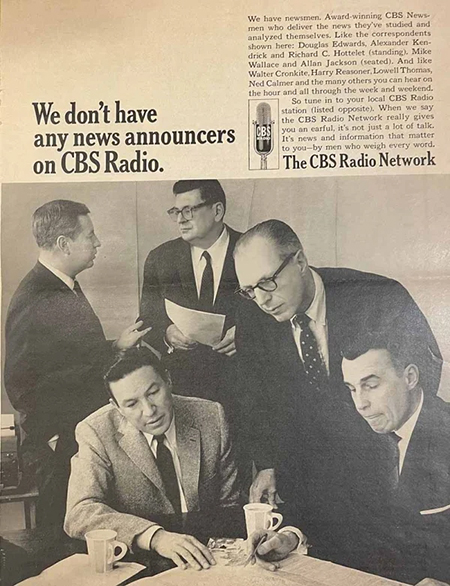
caption: An advertisement for CBS Radio, showing Kendrick (standing, second from left) with other famous names of the time, including Walter Cronkite (seated, left)

AT PENN

March AT PENN 2024

The March AT PENN calendar is now available! Click here to read the calendar online, or click here to download a printable PDF of the calendar.

To submit an event for a future calendar or update, send the relevant details to almanac@upenn.edu.

Events

Celebrating the Patel Scholars at the Perelman School of Medicine

On Monday, March 4, the Abramson Cancer Center at the Perelman School of Medicine (PSOM) will hold its first celebration honoring recipients of the Patel Family Scholars Endowed Award since the COVID-19 pandemic paused in-person events. The Patel Family Scholars Endowed Award was established in 2016 through a generous gift from the late Mukesh Patel, W’79, and his wife Bhavna. The Patel Scholars Endowed Award provides financial support to outstanding PhD and MD/PhD students who have successfully competed for a National Institutes of Health stipend after arriving at the University.

Mr. Patel received financial aid to attend Wharton and his experience motivated him to support financial aid at Penn. Mr. Patel also had a personal connection with cancer—his father passed away at an early age due to complications from colon cancer. With this background in mind, the Patel family made their initial investment in the next generation of medical leaders by creating a scientific research scholarship fund in 2008. They made a second commitment to PSOM in 2013 when they established a new graduate student award. Upon meeting the students touched by their philanthropy, the Patels endowed their support in 2016 with the creation of the Patel Scholars Award. Now in the eighth year, the Patel family’s philanthropy has supported over 20 PhD and MD/PhD students. Many of the students honored as Patel Scholars expressed their sadness and immense gratitude to the Patel family upon learning of Mukesh’s sudden passing in 2017.

Patel Scholars are members of Penn’s exceptional biomedical research community, which leads Penn Medicine through a remarkable era of scientific discovery. Sydney Campbell, a former PhD student in the cell and molecular biology-cancer biology graduate group, used funds from her award to take experimental risks studying new therapeutic targets in pancreatic cancer. Dr. Campbell said, “the Patel Scholars Award enabled me to attend major conferences all over the country where I discussed my work with scientists from around the world. I was able to learn about unpublished research and discuss strategies with scientists facing similar experimental challenges.” This award not only aids each recipient financially but also brings excitement to what the future holds for discovery medicine and the development of a cure for cancer.

This award, and all the students touched by the Patel family’s generous giving, breathe life into Mukesh Patel’s wish to see young, outstanding scientists pursue high-risk, high-impact research that challenges scientific understanding of the mechanism that drives cancer and fosters the development of novel cancer treatments. This award plays a critical role in nurturing PSOM’s brightest future researchers, empowering them to dive deep into innovative research in cancer biology. Training the next generation of physician-scientists is deeply rooted in PSOM’s legacy as a leading academic medical center, and the relationships being forged between PSOM’s exceptional faculty and their graduate students are of immeasurable value.

Update: February AT PENN

Films

29        The First Amendment: New York Times v. Sullivan; includes discussion with Mary Frances Berry, history; Kermit Roosevelt, Carey Law; noon; Zoom screening; register: http://tinyurl.com/africana-film-feb-29 (Africana Studies, Annenberg Public Policy Center, Penn Libraries).  


Fitness & Learning

Graduate School of Education
Online webinars. Info and to register: https://www.gse.upenn.edu/news/events-calendar?date=2024-02.

29        Learning Analytics, MSEd (Online) Virtual Information Session; 8 a.m.


Readings & Signings

28        An Evening of Poetry and Discussion; LaTasha Diggs, poet and sound artist; location TBA; info: https://wolfhumanities.upenn.edu/events/diggs (Philomathean Society).


Kelly Writers House
In-person events at Arts Café, Kelly Writers House. Info and to register: https://writing.upenn.edu/wh/calendar/0224.php/

29        A Talk; Joshua Bennett, Massachusetts Institute of Technology; 5:30 p.m.


Talks

27        Towards Transparent Representation Learning; Yaodong Yu, University of California Berkeley; 11 a.m.; room 225, Towne Building (Electrical and Systems Engineering).

            TECLA on Current Events in Ecuador; Jane Esberg, political science; Andrés Mejía Acosta, University of Notre Dame; 4 p.m.; room 473, McNeil Building, and Zoom webinar; register: https://clals.sas.upenn.edu/events/tecla-current-events-ecuador (Center for Latin American & Latinx Studies).

            Writing the History of Writing the Law: Some Extra-Textual Considerations; Paul Halliday, University of Virginia; 5:15 p.m.; room 209, College Hall (History).

28        Connecting Conversations: Community Care for LGBTQ+ Health; Audrey Davis, Cancer Support Community; Andre Ford, Colours Organization; Luna Gayeski, Plume Health; noon; Zoom webinar; register: http://tinyurl.com/nursing-talk-feb-28 (Eidos LGBTQ+ Health Initiative).

            Non-Reciprocal Pattern Formation; M. Cristina Marchetti, University of California, Santa Barbara; 3:30 p.m.; room A8, DRL (Physics & Astronomy).

            Critical Healthcare Humanities: Social Sciences and Humanities as Interventions in Healthcare Research, Training, and Practice; Britt Dahlberg, Johns Hopkins University; 4 p.m.; Gershwind & Bennett Family Collaborative Classroom, Holman Biotech Commons, and online webinar; register: http://tinyurl.com/dahlberg-talk-feb-28 (Barbara Bates Center for the Study of the History of Nursing).

            When Sunday Comes: Gospel Music in The Soul and Hip Hop Eras; Claudrena Harold, University of Virginia; 5:30 p.m.; room 329A, Max Kade Center; register: http://tinyurl.com/harold-talk-feb-28 (Africana Studies).

29        Special Briefing: State Tax Cuts; Can Chen, Georgia State University; Alex Hathaway, Public Finance Research Cluster; Geoffrey Buswick, S&P Global Ratings; Natalie Cohen, National Municipal Research; 11 a.m.; Zoom webinar; register: http://tinyurl.com/iur-talk-feb-29 (Penn Institute for Urban Research).

            Preservation Futures: Design; David Hollenberg, historic preservation; Nathaniel Rogers, historic preservation; Dominique Hawkins, Preservation Design Partnership; Stephen Kieran, KieranTimberlake; Peter Viteretto, Heritage Landscapes LLC; noon; Zoom webinar; register: http://tinyurl.com/hist-pres-talk-feb-29 (Historic Preservation).

            How Staphylococcus Aureus Infections Initiate and Evolve in the Cystic Fibrosis Airway; Anthony Fischer, University of Iowa; 4 p.m.; room 11-146, Smilow Center (Penn-CHOP Lung Biology Institute).

            Polyglossic Ships: Migration, Oceanic Aspiration, and the Mappilas of Malabar Before the Gulf Diaspora; P.K. Yasser Arafath, University of Delhi; 4:30 p.m.; Dunning Coaches Center (South Asia Center).

            Hybridizing the Colonies: Thomas Hardy's Brazil and the Limits of Informal Empire; Jacob Nielsen, English; 5 p.m.; room 330, Fisher-Bennett Hall (English).

            Newtown Odyssey: An Opera on a Creek; Marie Lorenz, artist; Willis Elkins, Newtown Creek Alliance; 6:30 p.m.; Kleinman Energy Forum, Fisher Fine Arts Library (Landscape Architecture).


Asian American Studies
Various locations. Info: https://asam.sas.upenn.edu/events.

29        Asian American Across the Disciplines; Edwin Desamour, the Lighthouse; Johnny Irizarry, Center for Latin American & Latinx Studies; noon; Zoom webinar.


Biology
In-person events at room 109, Leidy Lab. Info: https://www.bio.upenn.edu/events.

28        Rewired Regulatory Pathways Involving Retrotransposons Impact Reproduction and Early Development; Andrew Modzelewski, Penn Vet; 10:30 a.m.


Economics
In-person events. Info: https://economics.sas.upenn.edu/events.

28        Private Business Dynamics and Search for Outside Equity; Alex Sawyer, economics; noon; room 100, PCPSE.

            Inflation is Conflict; Iván Werning, Massachusetts Institute of Technology; 4 p.m.; room 101, PCPSE.


Korean Studies
In-person events at suite 310, 3600 Market Street. Info: https://korea.sas.upenn.edu/events.

28        Lessons Learned About Identity and Anti-Asian Hate Through the Lens of Television News; Nydia Han, 6abc Action News; 3:30 p.m.


Mathematics
In-person events. Info: https://www.math.upenn.edu/events.

28        Abelian Varieties in Characteristic p; Valentijn Karemaker, Utrecht University; 3:45 p.m.; room A2, DRL.

29        Fourier Restriction and Well-Approximable Numbers; Donggeun Ryou, University of Rochester; 3:30 p.m.; room 4E19, DRL.


This is an update to the February AT PENN calendar. To submit an event for a future calendar or weekly update, email almanac@upenn.edu.

The March AT PENN calendar is available now. The deadline to submit events for the April AT PENN calendar is Monday, March 11, 2024.

Crimes

Weekly Crime Reports

Division of Public Safety

University of Pennsylvania Police Department Crime Report

About the Crime Report: Below are the Crimes Against Persons and/or Crimes Against Property from the campus report for February 12–18, 2024. The Crime Reports are available at: https://almanac.upenn.edu/sections/crimes. Prior weeks’ reports are also online. –Eds.

This summary is prepared by the Division of Public Safety (DPS) and contains all criminal incidents reported and made known to the Penn Police, including those reported to the Philadelphia Police Department (PPD) that occurred within our patrol zone, for the dates of February 12-18, 2024. The Penn Police actively patrol from Market Street to Baltimore Avenue and from 30th Street to 43rd Street in conjunction with the Philadelphia Police.

In this effort to provide you with a thorough and accurate report on public safety concerns, we hope that your increased awareness will lessen the opportunity for crime. For any concerns or suggestions regarding this report, please call DPS at (215) 898-7297. You may view the daily crime log on the DPS website.

Penn Police Patrol Zone

Market Street to Baltimore Avenue and from 30th Street to 43rd Street

Crime Category

Date

Time

Location

Description

Assault

02/12/24

5:12 PM

3800 Spruce St

Offender grabbed complainant by the shoulders during a verbal dispute


02/13/24

8:17 AM

3800 Market St

Complainant assaulted by unknown offender in vehicle


02/15/24

7:32 PM

3700 Market St

Assault


02/15/24

12:21 PM

3925 Walnut St

Complainant struck by known male

Bike Theft

02/12/24

1:24 PM

3904 Spruce St

Theft of cable-secured bicycle from outside of residence

Fraud

02/17/24

10:54 PM

4000 Spruce St

Fraud/theft of services from restaurant

Other Offense

02/17/24

9:26 AM

3800 Locust Walk

Male wanted on warrant/Arrest

Retail Theft

02/12/24

6:04 PM

4233 Chestnut St

Retail theft of alcohol


02/14/24

5:23 AM

3604 Chestnut St

Retail theft


02/18/24

11:38 PM

3604 Chestnut St

Retail theft of consumables

Sex Offense

02/12/24

5:00 PM

3300 Woodland Walk

Confidential

Theft from Building

02/12/24

9:57 AM

3220 Market St

Theft of a desktop computer from locked room


02/12/24

7:02 AM

3260 South St

Copper wire taken from basement


02/12/24

3:55 PM

3600 Sansom St

Theft of a package from common area in building


02/13/24

5:11 PM

4210 Chestnut St

Package taken from lobby


02/16/24

11:09 AM

4258 Chestnut St

Theft of packages taken from lobby


02/17/24

8:04 AM

4109 Locust St

Theft of a wallet during indoor party

Theft from Vehicle

02/15/24

11:15 AM

3300 Walnut St

Theft of tools from secured work truck


02/17/24

12:01 PM

2929 Walnut St

Theft from motor vehicle parked in garage

Theft Other

02/12/24

6:39 PM

210 S 34th St

Theft of secured scooter from bike rack


02/12/24

5:14 PM

220 S 33rd St

Secured scooter taken from bike rack


02/13/24

12:05 PM

3925 Walnut St

Secured scooter taken from bike rack


02/14/24

12:08 PM

3740 Hamilton Walk

Secured scooter taken from bike rack


02/15/24

5:27 PM

3450 Hamilton Walk

Secured scooter taken from bike rack


02/16/24

3:57 PM

3700 Spruce St

Secured scooter stolen from outer gate


02/17/24

3:51 PM

3501 Sansom St

Theft of backpack from highway


02/17/24

3:38 PM

3730 Walnut St

Secured scooter taken from bike rack


02/18/24

11:23 PM

3800 Locust Walk

Secured scooter taken from bike rack


Philadelphia Police 18th District

Schuylkill River to 49th Street & Market Street to Woodland Avenue

Below are the Crimes Against Persons from the 18th District: 5 incidents with 1 arrest were reported for February 12–18, 2024. by the 18th District, covering the Schuylkill River to 49th Street & Market Street to Woodland Avenue.

Crime Category

Date

Time

Location

Aggravated Assault/Arrest

02/13/24

3:14 AM

4828 Walnut St

Aggravated Assault

02/14/24

8:21 PM

4821 Walnut St

Assault

02/12/24

7:54 PM

255 S. 38th St


02/15/24

12:27 PM

3901 Walnut St

Robbery

02/17/24

2:07 AM

1200 S. Markoe St


The Division of Public Safety offers resources and support to the Penn community. DPS developed a few helpful risk reduction strategies outlined below. Know that it is never the fault of the person impacted (victim/survivor) by crime.

  • See something concerning? Connect with Penn Public Safety 24/7 at (215) -573-3333.
  • Worried about a friend’s or colleague’s mental or physical health? Get 24/7 connection to appropriate resources at (215) 898-HELP (4357).
  • Seeking support after experiencing a crime? Call Special Services - Support and Advocacy resources at (215) 898-4481 or email an advocate at specialservices@publicsafety.upenn.edu
  • Use the Walking Escort and Riding services available to you free of charge.
  • Take a moment to update your cellphone information for the UPennAlert Emergency Notification System
  • Download the Penn Guardian App which can help Police better find your location when you call in an emergency.
  • Access free self-empowerment and defense courses through Penn DPS.
  • Stay alert and reduce distractions; using cellphones, ear buds, etc. may limit your awareness.
  • Orient yourself to your surroundings. (Identify your location, nearby exits, etc.)
  • Keep your valuables out of sight and only carry necessary documents.


Bulletins

One Step Ahead: Penn Risk and Resilience Management Conference

One Step Ahead logo

Another tip in a series provided by the Offices of Information Security, Information Systems & Computing and Audit, Compliance & Privacy

In 2020, the world was struck with the challenge of COVID-19. Penn’s transition to remote work and online learning was quick because of two integral programs. The Mission Continuity and Risk Management programs prepared the University to anticipate risk, prepare, respond, adapt to those risks, and continue to offer high-standard learning and research experiences.

Interested in Learning More?

The Penn Office of Information Security (OIS) invites you to the one-day Penn Risk and Resilience Management conference. At the conference, administrators from higher education institutions, insurance companies, and other industries will share their learning experiences in planning for unanticipated risks and discuss the successes and challenges of managing an institution during a disaster. Conference sessions are presented in a hybrid modality-in person and online.

When: Wednesday, March 6, 2024
Time: 9:30 a.m-4 p.m.
Where: Steinberg-Dietrich Hall, Room 1206; 3620 Locust Walk

  • Topics include:
  • Anticipating Risk at Penn
  • Risk and Resilience Outside Penn
  • Risk Management
  • Challenges in Managing Resilience and Risk at Philadelphia Higher Education Institutions

For additional information on the conference topics and speakers, visit https://www.isc.upenn.edu/security/conf-resilience.

To register, please visit https://www.eventbrite.com/e/university-of-pennsylvania-risk-and-resilience-conference-tickets-835348077587?aff=oddtdtcreator

We welcome your questions about the conference at security@isc.upenn.edu.

For additional tips, see the One Step Ahead link on the Information Security website: https://www.isc.upenn.edu/security/news-alerts#One-Step-Ahead

Back to Top