Download Supplement

News

A Message to the Penn Community: Resignation of President Liz Magill

December 9, 2023

Dear Members of the Penn Community,

I write to share that President Liz Magill has voluntarily tendered her resignation as President of the University of Pennsylvania. She will remain a tenured faculty member at Penn Carey Law.

On behalf of the entire Penn community, I want to thank President Magill for her service to the University as president and wish her well.

We will be in touch in the coming days to share plans for interim leadership of Penn. President Magill has agreed to stay on until an interim president is appointed.   

President Magill shared the following statement, which I include here:

“It has been my privilege to serve as president of this remarkable institution. It has been an honor to work with our faculty, students, staff, alumni, and community members to advance Penn’s vital missions.”

—Scott L. Bok, Chair, Board of Trustees

Note: Breaking news of an Interim President of the University of Pennsylvania was announced on December 12, 2023. Read the announcement here and a message from the Interim President here.

Resignation of Board of Trustees Chair Scott Bok

December 9, 2023

Today, following the resignation of the University of Pennsylvania’s president and related Board of Trustee meetings, I submitted my resignation as chair of the University’s Board of Trustees, effective immediately. While I was asked to remain in that role for the remainder of my term in order to help with the presidential transition, I concluded that, for me, now was the right time to depart.

Former President Liz Magill last week made a very unfortunate misstep—consistent with that of two peer university leaders sitting alongside her—after five hours of aggressive questioning before a Congressional committee. Following that, it became clear that her position was no longer tenable, and she and I concurrently decided that it was time for her to exit.

The world should know that Liz Magill is a very good person and a talented leader who was beloved by her team. She is not the slightest bit antisemitic. Working with her was one of the great pleasures of my life. Worn down by months of relentless external attacks, she was not herself last Tuesday. Over-prepared and over-lawyered given the hostile forum and high stakes, she provided a legalistic answer to a moral question, and that was wrong. It made for a dreadful 30-second sound bite in what was more than five hours of testimony.

I wish Liz well in her future endeavors. I believe that in the fullness of time people will come to view the story of her presidency at Penn very differently than they do today. I hope that some fine university will in due course be wise enough to give her a second chance, in a more supportive community, to lead. I equally hope that, after a well-deserved break, she wants that role.

I likewise wish my innumerable friends across the Penn campus well as they forge ahead in this challenging time.

—Scott L. Bok

Julie Platt: Interim Chair of the University of Pennsylvania’s Board of Trustees

December 9, 2023

Dear Members of the Penn Community,

We write to share that Julie Platt, the vice chair of the University of Pennsylvania’s Board of Trustees, has been named interim chair by the Board’s Executive Committee. As current vice chair, Julie was the clear choice, and we are grateful to her for agreeing to serve in this capacity during this time of transition.

Due to her current commitment as board chair of the Jewish Federations of North America, Julie will only serve until a successor is appointed.

The board’s Nominating Committee will immediately undertake an expeditious process, including consultation with the full Board of Trustees, and will make a recommendation for the next chair to the Executive Committee prior to the start of the spring term.

We share your commitment to this extraordinary University, and while this is a challenging time, the Penn community is strong and resilient, and together, we will move forward.

—Executive Committee, Board of Trustees

A Message on House Committee Hearing from President Liz Magill

December 5, 2023

Dear Members of the Penn Community,

As you may be aware, I will testify today at a hearing before the U.S. House Committee on Education & the Workforce on the topic of “Holding Campus Leaders Accountable and Confronting Antisemitism.” I will be joined by Harvard University President Claudine Gay and Massachusetts Institute of Technology President Sally Kornbluth.

This hearing takes place just two days after the Philadelphia community witnessed in horror the hateful words and actions of protestors who marched through Center City and near Penn’s campus. These protestors directly targeted a Center City business that is Jewish and Israeli owned—a disturbing and shameful act of antisemitism.

Philadelphia Police and Penn Public Safety were present as protestors approached our campus, and thankfully, no one was injured. Campus buildings were vandalized with graffiti, and Penn Police are reviewing footage from the protest to identify those responsible for the vandalism and seek appropriate criminal charges. This event has understandably left many in our community upset and afraid. If you need support, please visit our website for information on Penn resources.

Antisemitism—an old, viral, and pernicious evil—is steadily rising in our society and world events have dramatically accelerated that surge. Few places nationally or globally have proven immune, including Philadelphia and campuses like ours. This is absolutely unacceptable, and we are combatting such hate on our campus with immediate and comprehensive action.

Today’s hearing provides an important opportunity to communicate our urgent work guided by Penn’s Action Plan to Combat Antisemitism. Before I speak about Penn’s approach at today’s hearing, I want to share with you the written testimony I submitted to the committee in which I describe our immediate and lasting actions to make Penn an even better institution now and for the future.

Penn has the responsibility to lead by example. As I will tell the committee, we are unyielding in our opposition to antisemitism, Islamophobia, and hate in its many forms. We must stand together to advance our academic mission, which has never been more essential, and to support one another, which is how Penn will move forward and lead.

—M. Elizabeth Magill, President, Trustees University Professor and Professor of Law

President Liz Magill Reiterated Commitment to Combat Antisemitism During Congressional Hearing

At a hearing on December 5 before the U.S. House Committee on Education & the Workforce, Penn President M. Elizabeth Magill testified alongside three other higher education leaders on the topic of “Holding Campus Leaders Accountable and Confronting Antisemitism.”  

In her oral testimony, President Magill said, “antisemitism—an old, viral, and pernicious evil—has been steadily rising in our society and these world events have dramatically accelerated that surge. Few places have proven immune, including Philadelphia and campuses like ours. This is unacceptable. We are combating this hate on our campus with immediate and comprehensive action.”

For more than four hours, the witnesses answered questions from Republican and Democratic lawmakers. President Magill, along with President Claudine Gay of Harvard University and President Sally Kornbluth of the Massachusetts Institute of Technology, were criticized for their respective responses to a particular question, of which President Magill addressed in a video message released on December 6.  

“There was a moment during yesterday’s congressional hearing on antisemitism when I was asked if a call for the genocide of Jewish people on our campus would violate our policies,” President Magill said in the video message. “In that moment, I was focused on our University’s longstanding policies aligned with the U.S. Constitution, which say that speech alone is not punishable. I was not focused on, but I should have been, the irrefutable fact that a call for genocide of Jewish people is a call for some of the most terrible violence human beings can perpetrate. It’s evil—plain and simple.”

She continued to note that a call for genocide of Jewish people is threatening, and deeply so. “It is intentionally meant to terrify a people who have been subjected to pogroms and hatred for centuries and were the victims of mass genocide in the Holocaust,” President Magill said. “In my view, it would be harassment or intimidation.”

President Magill added that with the current signs of hate proliferating Penn’s campus and the world, it is time to reevaluate the University of Pennsylvania’s policies, and noted that she and Provost John L. Jackson Jr. would convene a process to do so.  

“As President, I’m committed to a safe, secure, and supportive environment so all members of our community can thrive,” President Magill said. “We can and we will get this right.”  

In her testimony on December 5, President Magill condemned the “abhorrent and brutal” terror attack by Hamas on Israel on October 7, and addressed the pain, sorrow, and fear that has since extended to Penn’s campus. She also answered questions about free speech and academic freedom, campus safety, and specific actions the University has taken, including the creation of Penn’s Action Plan to Combat Antisemitism, among other topics.

President Magill noted how Penn would not be what it is without its strong Jewish community—past, present, and future.  

“I am proud of this tradition, and deeply troubled when members of our Jewish community share that their sense of belonging has been shaken,” President Magill said. “Under my leadership, we will never, ever shrink from our moral responsibility to combat antisemitism and educate all to recognize and reject hate. We will remain vigilant.”

Adapted from a Penn Today article, December 6, 2023.

Middle States Commission on Higher Education Reaccreditation: Requesting Comments on Penn’s Self-Study by January 12

Penn is currently in the process of undergoing reaccreditation by the Middle States Commission on Higher Education (MSCHE). An essential component of this process is the completion of a self-study. Penn elected to produce a priorities-based self-study with the theme, “Inclusively and Effectively Educating the Whole Person for the 21st Century.”

A penultimate draft of Penn’s self-study is available for review at https://provost.upenn.edu/accreditation. Comments on the draft self-study are welcome and must be received by Friday, January 12, 2024. All comments received by that date will be reviewed before Penn’s self-study is finalized and submitted to MSCHE in early February 2024. An external evaluation team, appointed by MSCHE, will review the self-study and visit the campus in March 2024 to assess Penn’s compliance with all MSCHE Standards and Requirements of Affiliation.

Led by Karen Detlefsen, the steering committee’s working groups have consulted broadly, evaluated Penn’s efforts, and identified strategic opportunities for the future across a wide range of academic and co-curricular areas from course work to research to wellness. Some of the steering committee’s findings key findings as reflected in the self-study include:

  • Penn’s world-class faculty and innovative curricular offerings create a culture of educational excellence.
  • The extensive interdisciplinary opportunities at Penn allow students to express their academic creativity and discover new ways of synthesizing information throughout all 12 schools.
  • Regular and systematic assessment is at the core of data-driven decision-making and ensuring continued educational effectiveness and operational excellence throughout schools and centers.
  • At the heart of Penn’s mission is the relationship between knowledge and the public good. Groundbreaking, interdisciplinary research by students and faculty drives knowledge generation throughout the Penn community.
  • Over the past ten years, Penn has taken numerous steps toward strengthening its inclusive community and improving the student experience.
  • Penn has robust resources to support student development and identity along multiple dimensions and continues to prioritize affirming students’ intersectional identities.
  • Penn continues its strong commitment to all aspects of student health and well-being, as evidenced by the creation of Penn Wellness and the hiring of its Chief Wellness Officer.
  • Penn continues to sustain meaningful relationships locally and globally.

We are grateful to the more than 130 faculty, staff, and students representing all 12 of Penn’s schools, particularly the chairs and vice chairs of the working groups, who have played an essential role in the development of the self-study and who will continue to play an important role in the reaccreditation review process. We welcome comments and suggestions from the Penn community regarding the draft self-study. Please email the steering committee at pennmsche2024@pobox.upenn.edu if you have any questions.

—Liz Magill, President
—John L. Jackson, Jr., Provost
—Karen Detlefsen, Vice Provost for Education and MSCHE Steering Committee Chair

Paul Pfeiffer: Sachs Visiting Professor at the Weitzman School

caption: Paul Pfeiffer

The Weitzman School of Design has appointed Paul Pfeiffer the Keith L. and Katherine S. Sachs Visiting Professor in the department of fine arts for the 2023–2024 Academic Year.

“As we confront the growing influence of AI over the photography and video we consume, Paul Pfeiffer’s scrutiny of media and technology couldn’t be more timely,” said Frederick “Fritz” Steiner, dean of the Weitzman School and Paley Professor. “I’m confident he’ll make an important contribution to the department of fine arts.”

Paul Pfeiffer lives in New York City and has been making work in video, photography, sculpture, and sound since the late 1990s. Best known for his manipulation of appropriated digital media, using sampled footage from YouTube and other sources, Mr. Pfeiffer uses the language of mass media spectacle to examine how images shape our awareness of ourselves and the world.

“Adopting an ingenious multimodal approach to image technology, Paul Pffeifer’s art tackles consciousness as something shaped and predetermined, the opposite of how consciousness is usually thought of, as self-awareness. His work is a dissection of the dominant belief structures of America itself,” said Ken Lum, the Marilyn Jordan Taylor Presidential Professor and chair of fine arts.

At Penn, Mr. Pfeiffer will be engaged with graduate students in the department of fine arts. On February 8, 2024, he will give a public lecture and in the spring semester will lead a research group that culminates in a student-immersive trip.

Mr. Pfeiffer’s work has been shown internationally and is held in many museum collections, including New York’s Museum of Modern Art and Whitney Museum of American Art.

Paul Pfeiffer: Prologue to the Story of the Birth of Freedom, a 25-year retrospective of Mr. Pfeiffer’s work is on view at The Geffen Contemporary at the Museum of Contemporary Art, Los Angeles, through June 16, 2024. The exhibition includes more than 30 works, including a new commission. Mr. Pfeiffer holds a bachelor of fine arts from the San Francisco Art Institute and a master of fine arts from Hunter College in New York. He also attended the Whitney Museum Independent Study Program.

The Sachs Visiting Professorship has been previously held by Every Ocean Hughes, whose exhibition Alive Side was on view at the Whitney Museum of American Art in 2023; social choreographer Ernesto Pujol; video artists Mary Reid Kelley and Patrick Kelley; choreographer, writer, visual artist, and curator Ralph Lemon; sculptor, performance artist, writer, and filmmaker Josiah McElheny; and alum Wael Shawky, MFA ’01, whose work tackles notions of national, religious and artistic identity through film, performance, and storytelling.

Charlotte Jacobs: Co-Director for HEARD: Hub for Equity, Anti-Oppression, Research, and Development

caption: Charlotte JacobsCharlotte Jacobs, director of the Independent School Teaching Residency in the learning, teaching, and literacies division and adjunct assistant professor, has been named the new co-director for HEARD: The Hub for Equity, Anti-Oppression, Research, and Development in the Graduate School of Education. HEARD was launched in 2018 with the aim to draw together members of the Penn GSE community who are committed to equity and anti-oppression scholarship—and to provide opportunities for continuing learning and research.

Dr. Jacobs said her Penn GSE experience is coming full circle. As a doctoral student, Dr. Jacobs frequently attended events at the Center of Race and Equity in Education, including monthly lunches with other graduate students and tenured faculty to network, exchange ideas, and discuss their work and research across topics of race, gender, and class.

“It was formative for me as a scholar,” said Dr. Jacobs, an adjunct assistant professor and co-director for the Independent School Teaching Residency program (ISTR).

Dr. Jacobs and her co-director, Gerald Campano, envision HEARD as a similar hub for research and collaboration.

“The vision is to be a place that promotes conversations and research focused on anti-oppression and equity in education,” she said.

Dr. Jacobs hopes to increase student and faculty engagement, including encouraging graduate students to share research, inviting faculty from Penn GSE and across Penn to share work and ideas, supporting student and faculty research on equity in education and anti-oppression, and organizing events across the Philadelphia area and in local public schools.

HEARD hosts four annual conferences on equity and anti-racism as part of its work. This fall, the center hosted an event on community and advocacy organizing related to Philadelphia schools. Dr. Jacobs hopes to expand ties across Penn and the local area. “We’re continually thinking about how we can ground the organization in community-based work,” she said.

Information Systems and Computing FY25 Rate Changes

Continued changes in technology and the labor market require annual updates to our pricing. These changes allow ISC to continue making important technology investments and delivering services that are effective and efficient. In FY25 ISC plans to adjust rates in alignment with the planning parameters provided by the Office of Budget Planning & Analysis.

Per the most recent edition of the parameter, rates for all billed services will increase by 3.0% and labor rates will increase by 4.0%. Additionally, there is a small subset of services with custom rate changes. More information can be found on the ISC Services website: https://www.isc.upenn.edu/rates-service-list

—Tom Murphy, Senior Vice President for Information Technology and University Chief Information Officer (CIO)

Applications for College House Fellows Requested for 2024-2025 Academic Year by January 31

The Offices of the Provost and the College Houses and Academic Services (CHAS) invite applications for service as a College House fellow in the 2024-2025 academic year. This is a residentially-based service opportunity that carries a renewable two-year term.

Faculty applicants from all 12 of Penn’s schools are welcome to apply. The most important qualification is an enthusiastic interest in mentoring and engaging undergraduate students within the residential setting. Faculty members and full-time administrative staff at the University, involved in academic or student affairs, with a minimum of two years of experience in their current positions, are encouraged to apply.

College house fellows play a key role in connecting the houses to the larger academic community at Penn. Fellows are responsible for working with the faculty director and house director of their college house to develop each house as an educational resource that encourages intellectual inquiry, promotes academic programs in residence, fosters faculty and student interaction, and builds strong, supportive house and CHAS communities. Specific responsibilities and approaches will differ from house to house, but the general time commitment is approximately 10 hours per week.

For these highly sought-after service positions, the selection process can be quite competitive. Applicants are reviewed by the undergraduate deans, vice provost for education, the executive director of CHAS, the college house’s faculty director, deputy provost, and selected college house community members, including faculty, staff and student residents.

Information about each college house, the fellow position, and the application process may be found at www.collegehouses.upenn.edu.  Please explore the “join us” section of the website for position information. If you have any questions, please contact Deven Patel, faculty director of CHAS (devenp@upenn.edu) or chas@collegehouses.upenn.edu. The application deadline is January 31, 2024.


Deaths

Joan DeJean, Romance Languages

caption: Joan DeJeanJoan DeJean, Trustee Professor Emerita of Romance Languages in the School of Arts & Sciences and renowned scholar of 17th and 18th century French literature, died on December 2 from amyotrophic lateral sclerosis. She was 75.

Dr. DeJean was born in Opelousas, Louisiana and grew up in a French-speaking family. She received her BA in 1969 from Tulane University’s Newcomb College and earned her PhD from Yale University in 1974, where she studied with Sterling Professor of French (and later Yale Provost) Georges May.

Dr. DeJean’s first teaching position was at Penn in 1974, where she received a Lindback Award for Distinguished Teaching in 1977 (Almanac April 26, 1977). She then taught French literature at Princeton and Yale before returning in 1988 to Penn as the Trustee Professor of Romance Languages, with affiliations in English and women’s studies. Dr. DeJean remained at Penn from 1988 until her retirement in 2021.

The author of twelve books, Dr. DeJean was recognized with numerous honors and awards for her work on women’s writing, the history of sexuality, the development of the novel, and material culture. The Age of Comfort: When Paris Discovered Casual and the Modern Home Began (Bloomsbury) was named one of 2009’s top art and architecture books by The New York Times. Dr. DeJean received the 2002 Modern Language Association’s Aldo and Jeanne Scaglione Prize for French and Francophone Studies for her book The Reinvention of Obscenity: Sex, Lies, and Tabloids in Early Modern France (The University of Chicago Press). Dr. DeJean was awarded fellowships from the John Simon Guggenheim Memorial Foundation, the National Endowment for the Humanities, and the American Council of Learned Societies for her research. Her work on fashion and style in pre-Revolutionary France gained notice beyond the academy through interviews in venues such as NPR, The New York Times, and Rick Steves’ Europe.

“Joan was a pioneer in the feminist readings of French texts, and in the feminist literary critical movement, a field that was neglected for many years,” said Lance Donaldson-Evans, a former colleague in Penn’s department of French and Francophone studies. “I know very few scholars who were as passionate about their scholarship as Joan.”

In addition to authoring books on 17th-century fiction (Scarron’s Roman Comique, 1977); a history of women’s writing in France (Tender Geographies: Women and the Origins of the Novel in France, 1991); the history of sexuality (Fictions of Sappho, 1546-1937, 1989); the development of the novel (Literary Fortifications, 1984; Libertine Strategies, 1981); and the cultural history of late 17th and early 18th century France (Ancients Against Moderns: Culture Wars and the Making of a Fin de Siècle, 1997; The Essence of Style, 2005), Dr. DeJean published the first uncensored edition of Molière’s Dom Juan, as well as editions of Graffigny’s Lettres d’une Péruvienne and Duras’ Ourika.

In 2020, Dr. DeJean was elected a fellow of the prestigious British Academy for the humanities and social sciences. In 2021, the American Association of Teachers of French (AATF) published a volume of essays edited by Amy S. Wyngaard and Roland Racevskis in Dr. DeJean’s honor: How to Do Things with Style: Essays in Honor of Joan. Dr. DeJean’s 2022 book Mutinous Women: How French Convicts Became Founding Mothers of the Gulf Coast, which investigates the lives of female prisoners deported in 1719 from Paris to the French colony of Louisiana, led to the creation of an interactive digitized map that situates these women’s biographies in New Orleans settlements.

In 1999, Dr. DeJean became a member of Penn’s 25-Year Club (Almanac January 11, 2000).

Dr. DeJean was a committed researcher of French and American archives and libraries. The Kislak Center for Special Collections, Rare Books and Manuscripts at the University of Pennsylvania Libraries has received significant collections, focused primarily on early modern French literature, culture, and women’s writings, donated over the years by Dr. DeJean. She was also an aficionado of opera and a devoted supporter of the arts, especially Philadelphia’s contemporary dance company BalletX and the Curtis Institute of Music.

Jorge Ferrer, Penn Vet

Jorge F. Ferrer, an emeritus professor of microbiology at Penn Vet, died on August 5. He was 91.

Born in Argentina, Dr. Ferrer earned a BA from Colegio Nacional de Monserrat in Cordoba in 1950. He then obtained a medical degree from the Faculty of Medicine at the University of Buenos Aires in Buenos Aires, Argentina, in 1957. From 1957 to 1959, he was a postdoctoral fellow in the Instituto de Cultura Hispanica in Madrid. In 1960, he became the director of curriculum at the School of Medicine in Cordoba, Argentina, and spent 1961-1963 pursuing a research fellowship in the Institute of Hematological Research at the National Academy of Medicine in Buenos Aires before coming to the U.S. in 1964.

In 1964, Dr. Ferrer took a cancer researcher position at the Roswell Park Memorial Institute in Buffalo, New York. A year later, funded by an Eleanor Roosevelt Fellowship, he moved to Stanford University in Palo Alto. He joined Penn’s faculty in 1969 as an associate professor of pathobiology in the New Bolton Center of the School of Veterinary Medicine. In 1972, he became an associate professor of microbiology at Penn Vet’s New Bolton Center, where he became a full professor of clinical studies in 1975.

In 1977, he became the director of Penn’s Comparative Leukemia Studies Unit. Dr. Ferrer’s work during the 1970s and 1980s in the viral oncology section of the leukemia unit provided a number of breakthroughs concerning the etiology and pathogenesis of bovine leukemia and dispelled false notions about the disease that had persisted for decades. His more than 130 peer-reviewed papers from this era were widely read and cited.

During the 1990s, Dr. Ferrer’s research into the effects of virus HTLV-1 on a group of lambs was investigated for failing to meet safety guidelines (Almanac July 17, 1990). Committee findings resulted in sanctions being imposed (Almanac February 19, 1991). Dr. Ferrer filed a lawsuit against the University in 1992. After a verdict (Almanac March 2, 1999) and multiple appeals, Dr. Ferrer was awarded $2.9 million in 2003 after a ruling by the Pennsylvania Supreme Court.

He retired from Penn in 2010 and became an emeritus professor.

Adrienne Ricks, Penn Nursing

caption: Adrienne RicksAdrienne Ricks, LPS’19, a former student information coordinator in Penn Nursing’s Office of Academic Affairs, died on October 24. She was 57.

Following in her mother’s footsteps, Ms. Ricks was active on Penn’s campus for her entire life. In 1989, she joined Penn’s staff as a temporary employee in Student Health; she became a clerk in the same department in 1993. Four years later, she joined Penn Admissions, and in 2000, she moved to the School of Nursing, where she served as a student information coordinator until retiring from Penn in 2021.

In 2019, Ms. Ricks received her BA in sociology through Penn’s College of Liberal & Professional Studies.

“From Admissions to Alumni Verifications, Adrienne put students first, committing herself to making their time special at the School of Nursing and beyond,” said Kathryn Brossa, director of student information at the School of Nursing. “She was a treasured colleague who will be dearly missed.”

To Report A Death

Almanac appreciates being informed of the deaths of current and former faculty and staff members, students and other members of the University community. Call (215) 898-5274 or email almanac@upenn.edu.

However, notices of alumni deaths should be directed to the Alumni Records Office at Suite 300, 2929 Walnut St., (215) 898-8136 or email record@ben.dev.upenn.edu.

Governance

From the Senate Office: Faculty Senate Executive Committee Actions

The following is published in accordance with the Faculty Senate Rules. Among other purposes, the publication of SEC actions is intended to stimulate discussion among the constituencies and their representatives. Please communicate your comments to Patrick Walsh, executive assistant to the Senate Office, either by telephone at (215) 898-6943 or by email at senate@pobox.upenn.edu.

Faculty Senate Executive Committee Actions

Wednesday, December 6, 2023

Report from the Tri-Chairs. Faculty Senate Chair Tulia Falleti offered the following report:

  • Further changes that enhance the Faculty Income Allowance Program (FIAP) have been made by request and recommendation of faculty colleagues. Adjustments to the program are documented at https://faculty.upenn.edu/faculty/retirement/.
  • Penn’s reaccreditation process with the Middle States Commission on Higher Education continues with a self-study, published in this Almanac issue along with a link to Penn’s reaccreditation website. The Middle States external review committee will be on campus from midday Sunday, March 24 to midday Wednesday, March 27. An open meeting for faculty will occur during that period, which the Faculty Senate will promote when the specific timing is confirmed.
  • A newsletter will be issued by email to all standing faculty during the week of December 18, which will include a progress update from the Senate’s standing committees.

Consideration of Draft Resolution on Academic Freedom and Open Expression. Professor Falleti presented a draft Resolution on Academic Freedom and Open Expression, which was developed by a subcommittee of SEC members formed after the most recent SEC meeting. SEC members debated the scope and content of the resolution draft. The resolution will be returned to the subcommittee for further revisions based upon the feedback received. A revised resolution will be sent forward to SEC members for further consideration at its next meeting on January 24, 2024, or for an email vote before that date in accordance with the Senate Rules.

Faculty Senate Seminar: Generative AI in Your Teaching. At 4 p.m. ET, a Faculty Senate seminar, Generative AI in Your Teaching, was opened to all faculty for virtual participation. Panelists included Chris Callison-Burch, associate professor of computer and information science; Bruce Lenthall, co-executive director of the Center for Excellence in Teaching, Learning and Innovation; and Lilach Mollick, director of pedagogy at Wharton Interactive. An archived record is available at  https://provost.upenn.edu/senate/faculty-senate-seminar-series.

Supplements

2023 Holiday Gift Ideas: Books by Penn People

Looking for that perfect holiday gift idea for your literary friend or family member? Penn faculty, staff, students, and alumni have written books in a range of genres that have come out this year. 

Read the 2023 Holiday Gift Ideas: Books by Penn People supplement.

Policies

CCTV Locations: University of Pennsylvania Cameras

The Division of Public Safety is committed to enhancing the quality of life for the campus community by integrating the best practices of public and private policing with state-of-the-art technology. A critical component of a comprehensive security plan using state-of-the-art technology is Closed Circuit Television (CCTV).

As prescribed by the University Policy “Closed Circuit Television Monitoring and Recording of Public Areas for Safety and Security Purposes” (Almanac April 29, 2008), the locations of all outside CCTV cameras monitored by Public Safety are to be published semi-annually in Almanac. The locations and descriptions of these cameras can also be found on the Division of Public Safety website: www.publicsafety.upenn.edu/about/penncomm#cctv.

The following existing cameras meet those criteria:

University of Pennsylvania Cameras

  • 39th St. & Baltimore Ave. (Vet School, Hill Pavilion)
  • 40th St. & Baltimore Ave.
  • 41st St. & Baltimore Ave.
  • 42nd St. & Baltimore Ave.
  • 43rd St. & Baltimore Ave.
  • 31st & Chestnut Sts. (Left Bank)
  • 33rd & Chestnut Sts.
  • 34th & Chestnut Sts.
  • 36th & Chestnut Sts.
  • 38th & Chestnut Sts.
  • 40th & Chestnut Sts.
  • 4040 Chestnut St. (front)
  • 41st & Chestnut Sts.
  • 43rd & Chestnut Sts.
  • 46th & Chestnut Sts.
  • Steve Murray Way & Chestnut St.
  • 38th St. & Hamilton Walk
  • 36th St. & Locust Walk
  • 37th St. & Locust Walk (1&2)
  • 38th St. & Locust Walk
  • 39th St. & Locust Walk
  • 40th St. & Locust Walk
  • 41st & Locust Sts.
  • 42nd & Locust Sts.
  • 43rd & Locust Sts.
  • 39th & Ludlow Sts.
  • 40th & Ludlow Sts.
  • 34th & Market Sts.
  • 36th & Market Sts.
  • 38th & Market Sts.
  • 40th & Market Sts.
  • 40th & Pine Sts.
  • 41st & Pine Sts.
  • 42nd & Pine Sts.
  • 36th & Sansom Sts. (Franklin Bldg.)
  • 38th & Sansom Sts.
  • 39th & Sansom Sts.
  • 4040 Sansom St. (rear)
  • Steve Murray Way & Sansom Sts.
  • 33rd St. & Smith Walk
  • 34th & Spruce Sts.
  • 36th & Spruce Sts.
  • 37th & Spruce Sts.
  • 38th & Spruce Sts.
  • 39th & Spruce Sts.
  • 40th & Spruce Sts.
  • 41st & Spruce Sts.
  • 42nd & Spruce Sts.
  • 43rd & Spruce Sts.
  • 31st & Walnut Sts. (Left Bank)
  • 33rd & Walnut Sts.
  • 34th & Walnut Sts.
  • 36th & Walnut Sts.
  • 37th & Walnut Sts.
  • 38th & Walnut Sts.
  • 39th & Walnut Sts.
  • 40th & Walnut Sts.
  • 41st & Walnut Sts.
  • 43rd & Walnut Sts.
  • 4119 Walnut St.
  • 100 Block of S. 37th St.
  • Blockley Hall (bike racks 1-8)
  • Blockley Hall (roof)
  • Boat House (exterior cameras 1-4)
  • BRB II (loading dock–exterior)
  • BRB II (roof–rear and front)
  • Caster Building (rear entrance)
  • Caster Building (bike racks 1&2)
  • Chemistry Building (bike racks 1-4)
  • CineMark
  • College Green (1&2)
  • College Green (lower)
  • College Hall (exterior basement)
  • CRB (roof)
  • CRB-Stemmler Hall (main entrance)
  • CRB-Stemmler Bridge (interior)
  • CRB-Stemmler Bridge (main entrance hall)
  • English House (Law School bike rack)
  • Fels Center (bike rack)
  • Fels Institute of Government
  • Fisher-Bennett Hall (overseeing Levine Bldg.)
  • Franklin Field
  • Garage 40 (rooftop)
  • Generational Bridge (1&2)
  • Gregory College House (bike rack)
  • GSE on Plaza 1
  • GSE on Plaza 62
  • Harnwell College House
  • Harrison College House (1&2)
  • Hayden Hall (east door & west door)
  • High Bay Garage (entrance)
  • Hilton (Homewood Suites–1&2)
  • Hollenback (lower level rear parking)
  • Hollenback (rooftop)
  • Houston Hall/Penn Commons
  • Irving & Preston Sts.
  • Jerome Fisher (main entrance)
  • John Morgan Building (Hamilton Walk)
  • Jon M. Huntsman Hall (NE corner)
  • Kane Park (Spruce Street Plaza)
  • Law School (Sansom St.)
  • Left Bank (loading dock)
  • Levy Dental (loading dock)
  • Love statue
  • Meyerson Hall (bike racks 1&2)
  • Mod 7 (North)
  • Mod 7 (Southeast)
  • Mod 7 (West)
  • Museum (33rd St.–exterior)
  • Museum (Kress entrance–exterior)
  • Museum (Kress entrance–interior)
  • Museum (loading dock–exterior)
  • Museum (upper loading dock–exterior)
  • Museum (Warden Garden–main entrance)
  • Museum (Stoner Courtyard–lower courtyard)
  • New College House West (Bike Rack)
  • Old Vet Quad (west gate)
  • Osler Circle Courtyard
  • Palestra (1&2)
  • Pennovation Works
  • Pennovation Works (gate)
  • Pottruck (bike racks 1&2)
  • Public Safety Annex Building (2-5)
  • Richards Labs (rear door)
  • Ringe Squash Court Parking
  • Rodin College House (bike rack)
  • Rosenthal (parking lot)
  • Ryan Vet Hospital (main entrance area)
  • Schattner (coffee shop)
  • Schattner (bike rack)
  • SEAS (Courtyard)
  • Shoemaker Green (1-8)
  • Singh Center (courtyard)
  • Singh Center (east loading dock)
  • Singh Center (Nano roof terrace north)
  • Singh Center (nitrogen loading dock)
  • Singh Center (roof terrace south)
  • Singh Center (west loading dock)
  • St. Leonard’s Court (roof, rear)
  • Solomon Labs (1-4)
  • Steinberg Conference Center
  • Steinberg Hall-Dietrich Hall (Joe’s Café)
  • Steinberg Hall-Dietrich Hall (trolley)
  • Stellar-Chance Labs (loading dock)
  • Stellar-Chance Labs (main entrance)
  • Stellar-Chance Labs (roof–rear)
  • Stellar-Chance Labs (roof–front)
  • Tandem Accelerator Laboratory
  • Translational Research Labs, 30th St. (lower level South)
  • Translational Research Labs, 30th St. (lower level North)
  • Translational Research Labs, 31st St.
  • Translational Research Labs, 31st St. (upper level)
  • University Meeting & Guesthouse Courtyard
  • University Meeting & Guesthouse Parking Lot
  • Van Pelt-Dietrich Library (Button)
  • Van Pelt-Dietrich Library (Ben Statue)
  • Van Pelt-Dietrich Library (Mark’s Café 1&2)
  • Van Pelt Manor (bike rack)
  • VHUP (bike rack)
  • VHUP (dog walk 1&2)
  • Weiss Info Commons (front door)
  • Weiss Info Commons (rear door)
  • Wharton Academic Research Building Bike Racks
  • Wharton EMBA (loading dock)
  • Williams Hall (bike racks 1-3)
  • WXPN/World Café Live
  • WXPN/World Café Live (SW side–lower level)
  • 1920 Commons (38th & Spruce roof)

Penn Park

  • Field 1
  • Field 1 (bike rack)
  • Field 2
  • Field 2 (bike rack)
  • Field 2 (NE corner)
  • Field 2 (SW corner)
  • Field 2 (north bike rack)
  • Field 4 (South Street Bridge)
  • Lower 30th & Walnut Sts. (1&2)
  • Paley Bridge (1&2)
  • Paley Bridge (entrance walkway)
  • Paley Bridge (walkway to Penn Park)
  • Parking Lot (SW corner)
  • Parking Lot (NE corner)
  • Penn Park (NE corner)
  • Penn Park (North)
  • Penn Park (Plaza)
  • Penn Park Drive (entrance)
  • River Field
  • Ropes Course
  • Ropes Course Maintenance Bldgs.
  • Softball Stadium (bike racks 1&2)
  • Softball Stadium (men’s restroom)
  • Softball Stadium (women’s restroom)
  • Tennis Center
  • Tennis Center (Field 4)
  • Tennis Center (Field 4 walkway)
  • Tennis Center (Transit Stop)
  • Utility shed
  • Walnut St. Bridge (Pedestrian Walkway)
  • Walnut St. Bridge (Upper)
  • Weave Bridge (Bower Field)
  • Weave Bridge (East)
  • Weave Bridge (Hollenback)
  • Weave Bridge (Penn Park ramp)

Penn Medicine Cameras

Hospital of the University of Pennsylvania

  • 33rd Street (facing South St.)
  • 33rd Street (facing Civic Center Blvd.)
  • 34th St. Pedestrian Bridge
  • Alley between Pavilion and Penn Museum (facing South St.)
  • Convention Ave. (facing Health Sciences Dr.)
  • Convention Ave. (facing SEPTA station)
  • Convention Ave. (SEPTA station stairs)
  • Convention Ave. (stairs to Pavilion walkway)
  • Convention Ave. and Civic Center Blvd.
  • Convention Ave. and Health Sciences Dr.
  • Driveway between Penn Museum and Lot 7
  • Dulles Bldg. (bike racks-Spruce St.)
  • Emergency Department (driveway 1-4)
  • Emergency Department (ambulance entrance/exit)
  • Emergency Department (driveway)
  • Emergency Department (entrance/exit)
  • Gates Bldg. (fire exit door-Spruce St.)
  • Lot 7 Parking Garage (driveway entry/exit)
  • Lot 7 Parking Garage (entrance from Pavilion walkway)
  • Maloney Bldg. (entrance–36th & Spruce Sts.)
  • Miller Plaza (adjacent to Stemmler)
  • Pavilion (employee entrance)
  • Pavilion (main entrance/exit)
  • Pavilion (outdoor seating area, corner of Convention Ave.)
  • Pavilion (valet driveway/patient & visitor drop-off entrance/exit)
  • Pavilion (walkway between Pavilion and Penn Museum)
  • Penn Tower/HUP Bridge/Civic Center
  • Penn Tower Bridge (Hospital side)
  • Ravdin Bldg. (Driveway–Civic Center Blvd.)
  • Rhoads Bldg. (1st floor–Hamilton  Walk)
  • Rhoads Bldg. (1st floor–patio)
  • Rhoads Bldg. (basement–dock ramp)
  • Rhoads Bldg. (loading docks 1&2)
  • Rhoads Bldg. (loading dock ramp)
  • Rhoads/Stemmler bike rack
  • Security Booth (top of loading dock ramp)
  • SEPTA walkway
  • Spruce St. between 34th & 36th Sts. (facing east)
  • Spruce St. between 34th & 36th Sts. (facing west)
  • Spruce St. (Maloney entrance & morgue driveway)
  • Spruce St. (Morgue, Maloney Ground –36th St.)
  • Spruce St. (west fire tower door)
  • Stair Tower between Penn Museum and Lot 7 from Pavilion walkway
  • Stair Tower to loading dock
  • White Bldg. courtyard
  • White Bldg. (entrance–Spruce St.)

Perelman and Smilow

  • 3600 CCB-Ll01 (NW Corner E/W)
  • 3600 CCB-Ll01 (NW Side E/W)
  • 3600 CCB-Ll01 (SW Corner E/W; entrance to Lot 51)
  • 3600 CCB-Ll01 (SW Side E/W; loading Dock)
  • 3600 CCB-L1 (NE Entrance)
  • Civic Center Blvd. at East Service Dr.
  • Convention Ave & Health Science Dr.
  • Discovery Walk (between Museum and Pavilion)
  • East Service Dr. & Health Sciences Dr.
  • East Side of Pavilion
  • Emergency Department Driveway
  • Health Sciences Dr. (outside loading dock–1& 2)
  • Main Entrance Driveway along Convention Center
  • Perelman (front door)
  • Perelman (loading dock)
  • Perelman Parking garage entrance (Health Sciences Dr.)
  • PCAM staff entrance (Convention Ave.)
  • West Side of Pavilion

Penn Presbyterian Medical Center

  • Advanced Care Canopy (bench)
  • Advanced Care Canopy (ED 1&2)
  • Advanced Care Canopy (Trauma 1-4)
  • Cupp Lobby (entrance)
  • Garage (front & side)
  • Heart and Vascular Pavilion (front entrance)
  • Heart and Vascular Pavilion (rear entrance)
  • Heart & Vascular Pavilion (rooftop)
  • Helipad
  • Mutch Bldg. (roof)
  • Powelton Ave.
  • Powelton Ave. (dock)
  • Powelton Lot
  • Power Plant North & South
  • Scheie Eye Institute (north door)
  • Wright/Saunders Bldg. (main entrance)
  • Wright/Saunders Bldg. (Powelton Ave. entrance)
  • 38th St. (Healing Garden)
  • 38th St. (Advanced Care Building)

3930 Chestnut Street

  • 39th & Chestnut Streets (Intersection)
  • Front Main Entrance 
  • Loading Dock Entrance
  • Patio Seating Area
  • Parking Lot Bike Rack
  • Parking Lot (Front)
  • Parking Lot (Rear)
  • Substation #4

Honors

Daeyeon Lee, Oren Friedman, and Sergei Vinogradov: NEMO Prize

Each year, the Nemirovsky Engineering and Medicine Opportunity (NEMO) Prize, funded by Penn Health-Tech, awards $80,000 to a collaborative team of researchers from the University of Pennsylvania’s Perelman School of Medicine and the School of Engineering and Applied Science for early-stage, interdisciplinary ideas.

This year, the NEMO Prize has been awarded to Penn Engineering’s Daeyeon Lee, the Russel Pearce and Elizabeth Crimian Heuer Professor in Chemical and Biomolecular Engineering; Oren Friedman, an associate professor of clinical otorhinolaryngology in the Perelman School of Medicine; and Sergei Vinogradov, a professor in the department of biochemistry and biophysics in the Perelman School of Medicine and the department of chemistry in the School of Arts & Sciences. Together, they are developing a new therapy that improves the survival and success of soft-tissue grafts used in reconstructive surgery.

More than one million people receive soft-tissue reconstructive surgery for reasons such as tissue trauma, cancer, or birth defects. Autologous tissue transplants are those where cells and tissue such as fat, skin, or cartilage are moved from one part of a patient’s body to another. As the tissue comes from the patient, there is little risk of transplant rejection. However, nearly one in four autologous transplants fail due to tissue hypoxia, or lack of oxygen. When transplants fail, the only corrective option is more surgery. Many techniques have been proposed and even carried out to help oxygenate soft tissue before it is transplanted to avoid failures, but current solutions are time consuming and expensive. Some even have negative side effects. A new therapy to help oxygenate tissue quickly, safely and cost-effectively would not only increase successful outcomes of reconstructive surgery, but could be widely applied to other medical challenges.

The therapy proposed by this year’s NEMO Prize recipients is a conglomerate or polymer of microparticles that can encapsulate oxygen and disperse it in sustainable and controlled doses to specific locations over periods of time up to 72 hours. This gradual release of oxygen into the tissue from the time it is transplanted to the time it functionally reconnects to the body’s vascular system is essential to keeping the tissue alive.

“The microparticle design consists of an oxygenated core encapsulated in a polymer shell that enables the sustained release of oxygen from the particle,” said Dr. Lee. “The polymer composition and thickness can be controlled to optimize the release rate, making it adaptable to the needs of the hypoxic tissue.”

These life-saving particles are designed to be integrated into the tissue before transplantation. However, because they exist on the microscale, they can also be applied as a topical cream or injected into tissue after transplantation.

“Because the microparticles are applied directly into tissues topically or by interstitial injection (rather than being administered intravenously), they surpass the need for vascular channels to reach the hypoxic tissue,” said Dr. Friedman. “Their micron-scale size combined with their interstitial administration, minimizes the probability of diffusion away from the injury site or uptake into the circulatory system. The polymers we plan to use are FDA approved for sustained-release drug delivery, biocompatible and biodegrade within weeks in the body, presenting minimal risk of side effects.”

The research team is currently testing their technology in fat cells. Fat is an ideal first application because it is minimally invasive as an injectable filler, making it versatile in remodeling scars and healing injury sites. It is also the soft tissue type most prone to hypoxia during transplant surgeries, increasing the urgency for oxygenation therapy in this particular tissue type.

“Facial plastic surgeons are always seeking ways to improve wound healing, optimize scars and promote tissue growth,” said Dr. Friedman. “Since oxygen is the most basic nutrient required for soft tissues to survive and heal after injury induced by trauma or surgery, we are hoping to promote better wound healing by maximizing oxygen delivery to the soft tissue during the very early stages of healing.”

The technology itself has the potential to treat tissue hypoxia in many other medical conditions outside of soft tissue transplantation.

“Our technology could be applied to improve tissue healing, replacement, integration and ablation,” said Dr. Vinogradov. “When applied to organ transplantation, our technology can reduce ischemia-reperfusion injury, cell death that occurs when previously hypoxic tissue receives blood flow again. For oncology, increasing tumor oxygenation would significantly improve the effects of radiation and photodynamic therapy. Tumor oxygenation also has the potential to downregulate processes that drive metastasis.”

Other applications include the healing of bone fractures and burns as well as preserving cardiac tissue after a heart attack.

Dr. Lee’s expertise in designing and generating soft biomaterials such as microcapsules, emulsions and nanoparticles, Dr. Friedman’s background in clinical applications of autologous tissues and Dr. Vinogradov’s experience testing the functionality and success of nanoparticles in vitro and in vivo will come together to turn the proposed project into a real technology.  

“I feel very lucky to have found colleagues who share my enthusiasm for advancing patient care through novel applications of basic science breakthroughs,” said Dr. Friedman, “and grateful to have received the NEMO Prize to make this collaboration possible.”

Rare Earth Elements Project: Royal Society of Chemistry Education Prize

Three scientists from Penn Arts & Sciences are members of a team that won the prestigious Royal Society of Chemistry Horizon Prize for Education. Eric J. Schelter, the Hirschmann-Makineni Professor of Chemistry; Marta Guron, managing director of the Center for Sustainable Separation of Metals in the department of chemistry; and Ranadeb Ball, a doctoral candidate in chemistry, are part of the Rare Earth Elements Project, created to engage and educate diverse audiences about these critical metals and the impact of current production methods.

Based at the Science History Institute, the Rare Earth Elements Project brings together scientists, historians, and artists to produce materials with objective, accurate information for various audiences. Combining historical perspective with contemporary scientific research, the project explains the context behind headlines about the 17 rare earth elements and their value for current and future technology. It includes museum exhibits, podcast episodes, articles for magazines and news sites, and a high school curriculum module where students learn about science and society by role-playing groups interested in the international rare earth trade.

“The energy transition, shifting to renewable, will touch all aspects of human life,” said Dr. Schelter. “It’s great to help uncover and help others understand the many facets of this shift, namely as they pertain to obtaining energy-critical materials.”

Helen Pain, chief executive of the Royal Society of Chemistry, said, “The Rare Earth Elements Project’s work demonstrates an outstanding commitment to chemistry education, and it is our honor to celebrate their considerable contribution.”

The Royal Society of Chemistry is an international organization connecting chemical scientists with each other, with other scientists, and with society as a whole. Founded in 1841 and based in London, it has an international membership of over 50,000. The Excellence in Education Prizes celebrate inspirational, innovative, and dedicated people working in primary, secondary, further education and higher.

Kantapon (Tony) Rattanaprukskul: American Academy of Periodontology Award

caption: Tony RattanaprukskulPenn Dental Medicine periodontics resident Kantapon (Tony) Rattanaprukskul, GD’23, took top honors for his research as the first place winner of the Balint Orban Memorial Competition, held as part of the recent 109th Annual Meeting of the American Academy of Periodontology in Austin, Texas. Named in honor of Balint Orban, a member of the academy who was influential in developing the scientific foundations of contemporary periodontics, this competition is open to students currently enrolled in accredited periodontal programs in the U.S. and Canada or those who graduated less than 18 months ago. Eight finalists, selected on the basis of written abstracts, are invited to present oral presentations at each annual meeting.



Dr. Rattanaprukskul won first place in the basic science category for his project titled, “Cellular Senescence in Periodontitis: From Pathogenesis to Therapeutics.” He received a $1,250 prize and a plaque of recognition. His research project focused on understanding the aging-related biological events in the oral mucosa and translational studies. The World Health Organization projects that by 2030, one out of every six individuals will reach the age of 60 or above. As a result, more than 1.4 billion elderly worldwide potentially experience myriad chronic conditions related to aging. The prevalence of periodontal diseases significantly increases in the elderly and reaches more than 70% among those 65 years and older.

“This is the first time that a Penn Dental Medicine student has won the Balint Orban Memorial award,” said Esra Sahingur, associate dean of graduate studies and student research. “We are so proud to see the next generation of clinician-scientists represent our school on the national stage, demonstrating their knowledge and scientific advancements.”

Dr. Rattanaprukskul is currently in the combined DScD/Perio program under the mentorship of Esra Sahingur. Dr. Rattanaprukskul has been investigating the role of senescence, one of the hallmarks of aging, in periodontal health and already co-authored two original articles – one in the Journal of Dental Research titled “TLR9 Mediates Periodontal Aging by Fostering Senescence and Inflammaging” and the other in the Journal Molecular Oral Microbiology titled “Fusobacterium Nucleatum Triggers Senescence Phenotype in Gingival Epithelial Cells.”

Dr. Rattanaprukskul is slated to defend his DScD dissertation at the end of this year. After graduation, he will return to Thailand, where he will resume his role as a faculty member at Chulalongkorn University.

“I am honored to receive this prestigious award and I owe a special acknowledgment to all of my mentors, especially Dr. Esra Sahingur, whose guidance has played a pivotal role in shaping me into a strong clinical researcher,” said Dr. Rattanaprukskul. “Attending the meeting which showcased the newest trends and innovations in periodontal research was truly inspiring, and I look forward to future collaborations with my colleagues across the world.”

Amanda Howard and Zhouyi (Joey) Yang: Schwarzman Scholarships

caption: Amanda Howard caption: Joey Yang

Penn seniors Amanda Howard and Zhouyi (Joey) Yang have received Schwarzman Scholarships, which fund a one-year master’s degree in global affairs at Tsinghua University in Beijing, China. They are part of the ninth class of Schwarzman Scholars and will enroll at Tsinghua in August.

Their selection brings the number of Penn students and alumni who have accepted places as Schwarzman Scholars since the program’s launch in 2016 to 25. This year, 150 scholars, from 43 countries and 114 universities, were selected from more than 4,000 applicants worldwide.

The Schwarzman program core curriculum focuses on leadership, China, and global affairs. The coursework, cultural immersion, and personal and professional development opportunities are designed to prepare students with an understanding of China’s changing role in the world.

Ms. Howard, from Boca Raton, Florida, is in the dual-degree Huntsman Program for International Studies and Business, pursing a bachelor of arts in international relations in the College of Arts and Sciences and a bachelor of science in economics in the Wharton School. At Penn, she has been a vice president on the executive boards of Joseph Wharton Scholars and the Wharton Asia Exchange. She was an intern as an investment banking analyst with Lazard last summer. Interested in the intersections of international relations, the Chinese language, and finance, Ms. Howard plans a career in cross-border mergers and acquisitions, with a goal to advise on international economic policy.

Mr. Yang, from Beijing, is a philosophy, politics, and economics major in the College of Arts and Sciences with a concentration in choice and behavior. He currently is an investment intern for the Hillhouse Capital global buyout team and a student venture partner for Picus Capital. He is the co-founder of the Penn Quakers Venture Club, merging the theoretical and practical aspects of finance and entrepreneurship. His previous experience includes internships with Morgan Stanley technology investment banking, BAI Capital, and Tencent Investment mergers and acquisitions group. With an interest in technology and health care investment, Mr. Yang plans to explore and develop more globalized and sustainable investment strategies while in the Schwarzman Scholars program.

Warren Seider: 2023 Founders Award From AIChE

caption: Warren SeiderWarren Seider, a professor of chemical and biomedical engineering in the School of Engineering and Applied Science, received the Founders Award for Outstanding Contributions to the Field of Chemical Engineering—the American Institute of Chemical Engineers (AIChE)’s highest honor.

In November, AIChE presented awards to 14 leaders and innovators in chemical engineering. Dr. Seider was recognized for his pioneering, breakthrough contributions in chemical engineering research and education spanning six decades—encompassing process modeling, simulation, synthesis, optimization, and control. He is also cited for his authorship of landmark textbooks.

Dr. Seider is known for his research contributions to the fields of process analysis, simulation, design, and control. In process design, he is the co-author of books including FLOWTRAN Simulation: An Introduction, Introduction to Chemical Engineering and Computer Calculations, and Product and Process Design Principles: Synthesis, Analysis, and Evaluation. In addition to seven books, Dr. Seider has documented his research in 175 journal articles. An early adopter of computing technologies in engineering research and education, in 1969 Dr. Seider helped to organize the Computer Aids for Chemical Engineering Education (CACHE) Corporation.

A fellow and former director of AIChE, Dr. Seider’s past honors include AIChE’s Warren K. Lewis Award for Chemical Engineering Education and the Computing in Chemical Engineering Award. He was selected by AIChE as one of “Thirty Authors of Groundbreaking Chemical Engineering Books.” Dr. Seider is also a Fellow of the American Association for the Advancement of Science.

AIChE is a professional society of more than 60,000 members in more than 110 countries. Its members work in corporations, universities and government using their knowledge of chemical processes to develop safe and useful products for the benefit of society.

Robin Wood: 2024 Carol Emmott Foundation Fellowship

caption: Robin WoodRobin Wood, senior clinical director at the Hospital of the University of Pennsylvania (HUP) Capacity Management Center and the Penn Medicine Transfer Center in the University of Pennsylvania Health System (UPHS), has been selected for the 2024 Carol Emmott Fellowship class by the Carol Emmott Foundation, a national nonprofit organization dedicated to achieving gender equity in healthcare leadership and governance.
The foundation selects fellows for a 14-month program and supports them in designing and completing an impact project in their health communities. Fellows are also paired with mentors who are nationally recognized senior executives. Dr. Wood is among 24 fellows in the 2024 class, their largest class to date, with a range of disciplines within healthcare, including clinical care, financial analysis, data science, operations, and strategy.

For her fellowship project, Dr. Wood will explore the recent implementation of a practice at HUP through patients with similar medical conditions are treated in the same unit, under the same group of providers, called “geographic population cohorting.” There is limited research on this strategy, but existing research suggests benefits for both patients and providers.

While some patients at HUP, like those receiving care for cardiac or cancer diagnoses, are already treated with this method, patients admitted under the umbrella of Advanced Medicine: the hospitalist medicine service and subspecialty medical services (infectious disease, gastroenterology, or pulmonary) were scattered throughout HUP main. Dr. Wood’s team, in collaboration with numerous stakeholders, implemented geographic cohorting in the spring of 2023. Early post-implementation data has suggested a decrease in inpatient length of stay, decreased Emergency Department boarding, and a positive impact on team cohesion. With an eye for improving hospital operations, Dr. Wood will evaluate whether this strategy improves patient outcomes and experience, decreases length of stay, and enhances provider and nurse communication and teamwork. She will further explore methods to translate her research into practice and the potential for replication throughout the system.

Her work in the Capacity Management Center has been focused on improvements in patient access, capacity management efficiency, and the prioritization of acute specialized populations in Philadelphia. These efforts have translated into decreases in length of stay and emergency department boarding, among other metrics.

Features

Medical Miracles at Penn Medicine: Kidney Donation Bonds Two Veterans Forever

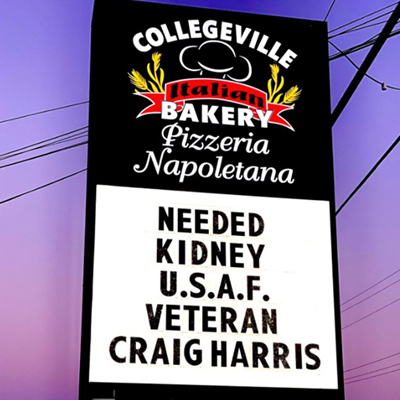
caption: Donation sign for Craig HarrisHow did a kidney donation from one veteran to another originate? Morgan Slaughter saw a sign—literally. 

While scrolling Facebook looking for a new restaurant to try, the Air Force veteran noticed a post by Collegeville Bakery in Collegeville, Pennsylvania, with a picture of a sign outside. 

“On social media, I am always looking up restaurants and food pages. I saw the bakery had posted a photo of its sign around Veterans Day,” Ms. Slaughter recalled. “It said something about a U.S. Air Force veteran needing a kidney.” That single post on social media led Ms. Slaughter on a nearly one-year journey that ultimately ended with her donating her kidney to a fellow veteran, 52-year-old Craig Harris. 

The Alabama-born Mr. Harris has lived in Audobon, Pennsylvania, since he settled down in the Philadelphia area by way of his Air Force service. “For the majority of my career, I was a C5 flight engineer out of Dover, Delaware. I used to fly around the world delivering troops and cargo,” he said. “It was the best job I ever had in my life.” Mr. Harris retired from the Air Force in 2012 and went back to college to earn a bachelor’s degree, which he used in the information technology field. 

An Alarming Diagnosis 

Mr. Harris’ life hit a sudden and scary speed bump, however, in 2021, when his primary care doctor told him his creatinine levels were high, meaning his kidneys were having issues filtering blood, and suggested he see a nephrologist. Days later, Mr. Harris received the alarming news: he had stage four kidney disease. According to the National Kidney Foundation, a stage four diagnosis means severe damage has already happened to the kidney, and efforts focused on developing a treatment plan to slow the loss of kidney function and from entering stage five, which is kidney failure.

“I had heard amazing things about Penn when it comes to organ transplant, so I wound up here,” Mr. Harris said, adding that his doctors and transplant specialists recommended he add his name to the National Kidney Exchange list, and find a living donor. 

“Kidneys from living donors last longer, have fewer complications, and provide earlier access to transplant,” said Mary Cate Wilhelm, a physician assistant on Penn’s Living Kidney Donor team. “Rather than waiting five or more years for a kidney from a cadaver, an approved living donor allows the patient in need the ability to step out of line and start planning for their transplant. If the donor and recipient are both ready for transplant, we start planning for the surgeries.”

With the help of his wife, who worked for several decades in media and communications, Mr. Harris’ journey began to find a living donor. They began an all-out blitz sharing his story wherever they could: local radio stations, handing out flyers, and even requesting a local bakery share his story on their outside marquee, which caught Morgan Slaughter’s attention.

A Veteran Helps a Fellow Veteran in Need 

“When I saw the sign, something in me said, ‘I need to do this,’” recalled Ms. Slaughter. “So I did a little research, and I actually found Craig on Facebook. I sent him a message just to ask how his journey was. I wanted to gauge a little bit about who I was about to potentially donate an organ to.” After a brief exchange with Mr. Harris, Ms. Slaughter made an appointment with Penn the next day to see if she could donate. 

“The Penn team walked me through the process, I did a day full of lab testing, and although I wasn’t a match for Craig, I was able to donate for him through what’s called paired kidney donation,” said Ms. Slaughter.

Paired kidney exchange, through the National Kidney Registry (NKR), helps incompatible donors and recipients find their best match. The NKR is a registry or pool of potential living kidney donors and their intended recipients. 

“Sometimes a donor is not a suitable match for a recipient—whether that be because of blood type, antibodies, age, or kidney anatomy— so we will find a match for their kidney and their recipient through the NKR’s paired exchange program,” explained Ms. Wilhelm. “Through the NKR, kidneys travel throughout the continental U.S. to be transplanted into a well-matched recipient. This program also allows a patient like Morgan to donate a kidney on her own timeline, which then provides a voucher for someone like Craig to be transplanted with his ideal kidney at a later date.”

caption: Craig Harris and Morgan Slaughter

A Secret Surgery 

Although Ms. Slaughter had been approved to donate a kidney through paired exchange for Mr. Harris, she kept it a secret from him. In fact, she only let her own family know about 10 days before the surgery, and in May 2023, Ms. Slaughter successfully had one of her kidneys removed at Penn. 

“The surgery went as planned and I was recovering in my room, Craig just happened to be active on Facebook,” Ms. Slaughter said. “So, I asked, ‘hey, how are you?’ I didn’t know when he would be notified that someone had donated for him for a voucher. I asked if he had any updates about someone being able to donate. He said that there were a couple of people who said they were getting tested, but he hadn’t heard of anyone being a match yet. So, I sent him a selfie of me in my hospital and wrote ‘well it’s already been done.’” 

“I was out shopping buying supplies for my daughter’s college graduation party when I got that message from Morgan,” recalled Mr. Harris. “I just started to cry.” 

In late August of 2023, Mr. Harris successfully received a new kidney. Two days later, Ms. Slaughter made a trip to the Pavilion at the Hospital of the University of Pennsylvania to meet Mr. Harris face-to-face for the first time as he recovered. In the emotional moment the two embraced each other, tears rolled down each of their faces. Once strangers, these two Air Force veterans were now bonded forever through living organ donation. 

“Thank you,” Mr. Harris said as he wrapped his arms around Ms. Slaughter. 

“We have to help each other,” Ms. Slaughter said wiping away tears. “Not even just one veteran to another, but people in general need to help each other out.”

Mr. Harris, who had once thought the possibility of a complete stranger stepping forward to save his life seemed farfetched, now sat in a hospital room with a new lease on life. “It’s great when a fellow Air Force veteran steps up to help another,” he said. “We selflessly donate a lot of our adult life to serve our country. And for somebody to come up and selflessly give you a body organ? I’m speechless.”

“I’m honored and grateful I was healthy and capable enough to give this gift to another human so he can live a happy life,” said Ms. Slaughter.

How You Can Donate 

Penn’s Center for Living Donation participates in the National Kidney Registry’s (NKR) Kidney For Life Initiative. Every person who donates a kidney at Penn receives the NKR’s Donor Shield protections, which include lost wage reimbursement, travel cost reimbursement, coverage of complications, and prioritization for a living donor kidney in the event they ever need one in the future. Penn Medicine provides these and other supports for living donors through its Center for Living Donation. “More than four thousand patients die each year waiting for kidney transplant,” said Ms. Wilhelm. “You only need one kidney, and there’s a dedicated team to walk donors through the process.” 

If you are interested in donating a kidney, visit Penn Medicine’s Living Donor Kidney Transplant site.

Adapted from an article by Matt Toal for Penn Medicine News.

Medical Miracles at the School of Veterinary Medicine: Wry Not’s Triumph Over a Twisted Fate

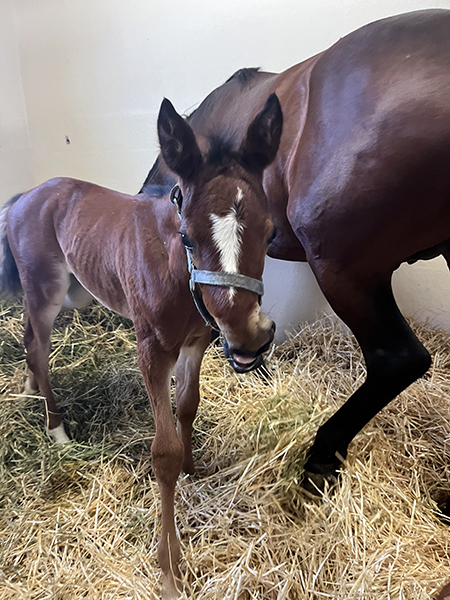
capton: Wry Not at New Bolton Center

From the very beginning, there was something special about Coco Chanel 23. And it wasn’t just that the filly, a young female horse, was born with a 45-degree twist to her muzzle.

Foaled in May, the Standardbred newborn had a vibrant energy—a sweetness and a strength. While her facial deviation—clinically known as wry nose—made it difficult for her to nurse no matter how many times she tried, she kept trying. With one nostril completely closed, she struggled to breathe but still found it within herself to nuzzle her mother, Coco, and to cheerfully greet the humans who’d assisted in her birth.

It was clear the filly could not live a comfortable life without major medical intervention. And even if that went well, it was extremely unlikely that she would be able live up to her potential as an equine athlete. But that didn’t matter to her owner, Matt Morrison of Morrison Racing. 

Shortly after her arrival into the world, the veterinarian who assisted in Coco Chanel 23’s foaling contacted Mr. Morrison to alert him to the filly’s extreme deformity. Even with possible surgical intervention, it was unclear if she’d ever live a comfortable life. The foal’s future was in Mr. Morrison’s hands, and he knew what the general response was for this type of condition in such a young horse.

“’They’d say, ‘The best thing is to put ‘em down,’” Mr. Morrison said. 

But Mr. Morrison didn’t want to euthanize the filly. His teenage daughter agreed, saying they had to at least give the foal a chance. 

“There was a fight in her. She didn’t know she was abnormal. She just knew she needed to feed and was persistent,” he said. “Without that fighting spirit, she probably wouldn’t have survived that first weekend.” 

Fittingly, the Morrisons gave the filly a different nickname: Wry Not. 

A Severe Case

Armed with her steely tenacity, Wry Not was sent to the large animal hospital at the University of Pennsylvania’s School of Veterinary Medicine’s (Penn Vet) New Bolton Center, where a multidisciplinary team of clinical specialists was prepping to give her a shot at a long, healthy life. 

Wry nose, especially cases as severe as Wry Not’s, is not common. The filly’s surgical team, Kyla Ortved and Jose Garcia-Lopez, associate professors of large animal surgery at Penn Vet, said they have each seen at most three cases.

“It was a severe deviation, the most extreme that I’d ever seen,” Dr. Garcia-Lopez said. “Where it was bent also made (surgery) more complicated.” 

Before undergoing the complex and technically demanding reconstructive procedure, the filly was first stabilized by an internal medicine team led by Michelle Abraham, an assistant professor of clinical critical care medicine.

“In order to be considered a good surgical candidate, it was important to ensure [Wry Not] was in excellent systemic health,” Dr. Abraham said. 

Because the filly struggled to nurse, one of the biggest concerns was the transfer of passive immunity: Foals must consume colostrum from their mare, beginning within two hours after birth. Another problem: An ultrasound of Wry Not’s lungs showed mild changes consistent with aspiration pneumonia. 

Dr. Abraham’s team installed a feeding tube that provided Wry Not supplemental colostrum and hyperimmunized plasma. They also started the foal on antibiotics. 

 “Any local infection could have disastrous effects on the outcome,” Dr. Abraham said. “Antibiotic therapy and continued nutritional support were important for [Wry Not] to overcome her initial challenges.”

A Nose Job—And a New Lease on Life

Before the surgeons could plot the best ways forward, doctors took a scan of the filly’s muzzle using New Bolton Center’s OmniTom, a mobile CT scanner that delivers high-quality, point-of-care imaging. They also collected some blood from Coco for a transfusion that Wry Not would eventually need to make it through the procedure successfully. 

“There wasn’t a lot of room for error,” Dr. Garcia-Lopez said. “There was a lot of measuring and careful cutting.”

Three hours would pass before the filly’s life-changing and life-saving operation was finally completed. Post-surgery, Wry Not’s care team was delighted to find the filly “bright,” and able to nurse normally from Coco as well as nibble hay. 

“A case like [Wry Not’s] is very much a team effort,” Dr. Ortved noted. “There’s everyone from the NICU that admitted her and kept her alive, the anesthesiologist who handled this difficult case, the radiologist, the equine dentist, and many other specialists. When there’s an intense case like this, there’s a huge care team, including nurses, staff, residents, interns and vet students.”

While the filly will now have an otherwise happy and healthy life, her nose will never be perfectly straight. 

Dr. Ortved said the team fondly jokes that because of Wry Not’s one-of-a-kind look, she’s “a foal only a mother could love.”

“And a surgeon,” Dr. Garcia-Lopez added.

“And me and my daughter,” said Mr. Morrison. 

caption: Wry Not with her mother, Coco.

Adapted from an article by Natalie Pompilio, Penn Vet Contributing Writer, for the Miracle Minute newsletter.

AT PENN

January AT PENN Calendar 2024

The January 2024 calendar is now available. Click here to read online or here to download a PDF version.

Events

2024 Dr. Martin Luther King, Jr. Commemorative Symposium on Social Change: Penn’s Commitment to the Legacy

Please visit https://aarc.upenn.edu for current information. Events are sponsored by the African American Resource Center and the MLK Executive Planning Committee with additional sponsors listed in parentheses.

          Penn Reads Book Donation Project; the service activity supports Philadelphia preschools/daycare centers/local bookstores; help a young child develop a love of reading by purchasing books from a curated list of short multicultural, anti-bias children’s books; list available at https://tinyurl.com/PennReadsBookList2024; your donation supports a local bookstore; ship books to African American Resource Center, 3643 Locust Walk, Philadelphia, PA 19104. Through February 3.

15      MLK Day of Service Kick-Off Breakfast; guest speaker Charisse Burden-Stelly, assistant professor of Africana studies and political science at Carleton College; entertainment provided; 8:30 a.m.; doors open at 8 a.m.; Hall of Flags, Houston Hall; registration link TBA; info: aarc@upenn.edu

          Free Dog and Cat Wellness and Vaccination Clinic; clinic that will be run by appointment only; appointment calls will be accepted between 8-10 a.m. weekday mornings starting on January 2; call the Penn Ryan Veterinary Hospital’s appointment desk at (215) 898-4680 to schedule a visit; clinic is limited to two pets per household; clients should wear masks when interacting with the volunteers; 9 a.m.-4 p.m.; 3900 Spruce St.

          Beautification Project; volunteers will clean designated areas and tile at Henry C. Lea Elementary School at 4700 Locust Street; daycare will be provided for youth 4 and over; dress appropriately; light refreshments and water will be provided; 10 a.m.-1:30 p.m.; meet at 9:45 a.m. at Houston Hall for transportation to the school.

          A Pocketbook Full of Toiletries Project; volunteers will fill pre-constructed bags with personal items that will be donated to area shelters for women; 10:30-11:30 a.m.; Bodek Lounge, Houston Hall; info: (215) 898-0104; no registration needed.

          Sock Stuffing Project; volunteers will assemble and stuff “wearable” crew socks and fill them with personal items; these items will be donated to area shelters; 10:30-11:30 a.m.; Bodek Lounge, Houston Hall; info: (215) 898-0104; no registration needed.

          Penn Reads Literacy & Children’s Art Project-“Imagine A World…!”; Dr. Martin Luther King, Jr. imagined a world where his four children would “not be judged by the color of their skin, but by the content of their character”; children, ages 3 to 8, are invited to come imagine with us while we create and learn more about Dr. King’s vision; young readers will be able to participate in a theatrical storytime experience (beginning at 11:15 a.m.), explore the uniqueness of a university library, and create a book to take home; storytellers, librarians, teachers, and library staff will guide in this creation; pizza and snacks will fuel the imagination; note: all adults entering the library must present identification; 11 a.m.-2 p.m.; Class of 1978 Orrery Pavilion, 6th floor, Van Pelt Library; register: bit.ly/PennReads2024Registration (Penn Libraries).

          So You Want To Go To College? A Virtual Workshop; the college admissions and financial aid application process can be overwhelming, time consuming and confusing, but this workshop will help parents and students better understand and navigate the college and  admissions process; 1 p.m.; info: aarc@upenn.edu.

          MLK 101: A Reintroduction to Dr. Martin Luther King, Jr.; a talk by Anthony Monteiro; info: aarc@upenn.edu or toliverd@upenn.edu

16      King the Preacher Series; Dr. Martin Luther King, Jr. was a pastor and preacher; his work for justice was grounded in his faith, yet we hear less about his sermons than we do about his speeches; hear a sermon online or attend in person; noon; Christian Association, 118 S. 37th St.; info: lecluyse@upenn.edu. Also January 23.

22      Dr. Martin Luther King, Jr. Day Candlelight Vigil; walkers will join the Alpha Phi Alpha Fraternity, Inc. Mighty Psi Chapter for the Annual Candlelight Vigil; the vigil will begin outside Du Bois College House and proceed with songs and quotations from Dr. King during the walk through the campus that will end at College Green; registration link TBA; info: mcgruder@sas.upenn.edu

23      Diaspora Dialogue Inaugural: Cultural Appropriation; the first program in this series will explore the boundaries between appreciation and appropriation between members of the African diaspora; 5-7 p.m.; location TBD; info: aarc@upenn.edu.

24      Dr. Martin Luther King, Jr. Lecture and Award Ceremony; Dorothy Roberts, the George A. Weiss University Professor of Law and Sociology and the Raymond Pace and Sadie Tanner Mossell Alexander Professor of Civil Rights, will reflect on the Civil Rights Act of 1964 with Marcia Chatelain, the Presidential Penn Compact Professor of Africana Studies; 5:30 p.m.; Zellerbach Theater, Annenberg Center; register: https://tinyurl.com/MLKSocialJusticeLecture (PRSS, Penn Carey Law, Annenberg, Department of Africana Studies).

25      The Rev. Dr. Martin Luther King, Jr.: An Interfaith Commemoration and Conversation in Social Justice; will honor and celebrate the life and legacy of Dr. King; the Dr. Martin Luther King, Jr. Community Involvement Awards will be presented along with musical entertainment; this event will feature a conversation with Rabbi David Wolpe and Jonah Platt; 6 p.m.; Bodek Lounge, Houston Hall; info: pburch@upenn.edu (Office of the Chaplain, Office of the President, Center for Africana Studies).

29      MLK Hallmark Program: SCOTUS Ruling on Affirmative Action: Implications for Higher Education and Beyond; 5-7 p.m.; Terrace Room, Cohen Hall (Barbara and Edward Netter Center, Philadelphia Higher Education Network for Neighborhood Development).

31      Jazz for King; enjoy the sweet sounds of Genn Bryan & Friends and MC Diane Leslie; 6-10 p.m.; location TBD. 

2/3      MLK Sports & Wellness Event; YoungQuakers Community Athletics’ (YQCA) invite families from Penn and West Philadelphia to engage in virtual sports and wellness activities under the guidance and encouragement of Penn students and staff; families may participate in yoga, bodyweight fitness exercises, and sports performance activities; participants will also hear from speakers about how they’ve embraced Dr. King’s principles in their own lives; 11 a.m.-3 p.m.; Pottruck Health and Fitness Center; registration link TBA (Division of Recreation and Intercollegiate Athletics, Netter Center for Community Partnerships).

Update: December AT PENN

Fitness & Learning

14        Taxes for Artists Workshop; artist Maria Möller will offer general advice about such topics as navigating the world of IRS (including state and local tax agencies) and financial literacy for self-employed artists; 5 p.m.; Zoom webinar; info: kmeeks@upenn.edu (Fine Arts).


Graduate School of Education

Online webinars. Info and to register: https://www.gse.upenn.edu/news/events-calendar?date=2023-12.

13        Learning Analytics (Online) Information Session; 9 a.m.

19        Executive Doctorate in Higher Education Management Virtual Information Session; noon.

            Mid-Career Doctoral Program in Educational Leadership Virtual Information Session; 8 p.m.


Morris Arboretum & Gardens

In-person events at Morris Arboretum & Gardens. Info and to register: https://www.morrisarboretum.org/see-do/events-calendar.

18        Make a Pinecone Ornament; 11 a.m.; “spruce” up your tree and make an ornament with pinecones collected on the grounds of the Morris Arboretum & Gardens.


Special Events

16        ICA Gather: Love in Motion; an afternoon in celebration of ICA’s fall exhibitions Moveables & David Antonio Cruz: When the Children Come Home, which close on Sunday, December 17; participate in drop-in activities inspired by the exhibitions on view and enjoy delicious food and a family photo booth; noon-6 p.m.; ICA; register: https://tinyurl.com/ica-gather-dec-16; register for family photo booth: https://forms.gle/vqbSJ59sen8afS4r9 (Institute for Contemporary Art). Also December 17.


Talks

12        Predicting and Reconstructing Everyday Human Interactions; Yufei Ye, Carnegie Mellon University; 1:15 p.m.; room 512, Levine Hall, and Zoom webinar; register: https://upenn.zoom.us/j/99048464404 (GRASP Lab).

            Magnetic Technologies for Battery-Free Bioelectronics and Neuromodulation; Jacob Robinson, Rice University; 3 p.m.; room 337, Towne Building (Electrical & Systems Engineering).

13        Connecting Boundaries: Merging Administrative & Geographic Data Using SHRUG; Paul Novosad, Dartmouth College; 9 a.m.; Zoom webinar; register: https://tinyurl.com/novosad-talk-dec-13 (Center for the Advanced Study of India).

            Bayesian Imaging Genetics Modeling for Brain Structural Connectivity; Yize Zhao, Yale University; 2 p.m.; room 1311, Blockley Hall (Biostatistics, Epidemiology and Informatics).

            The Electron-Ion Collider; Bernd Surrow, Temple University; 3:30 p.m.; room 2C8, DRL (Physics & Astronomy).

            The Ruins of a Steel Mill: A Microhistory of Planetary Urbanization in Amazonia; Adrián Lerner Patrón, Princeton University; 3:30 p.m.; room 392, Cohen Hall (History & Sociology of Science).

14        Broader Geopolitical Aspects of the Israel-Hamas War: Iran and Other Global Powers; James Cartwright, U.S. Marine Corps; noon; online webinar; register: https://tinyurl.com/cartwright-talk-dec-14 (Center for Ethics & the Rule of Law).

            The Stories Behind the Sentence: Sentencing Reforms for a More Just Future; Hillary Blout, Free the People; John Choi, Ramsey County (MN) Attorney's Office; Stephanie M. Sawyer, Philadelphia County Court of Common Pleas; Ronald Simpson-Bey, JustLeadership USA; 2 p.m.; Zoom webinar; register: https://tinyurl.com/quattrone-talk-dec-14 (Quattrone Center for the Fair Administration of Justice).

16        Asian America Across the Disciplines; Lingxiao Chen and Xueqia Zhang, Emory University; 5:15 p.m.; room 473, McNeil Building, and Zoom webinar; register: https://tinyurl.com/chen-zhang-dec-16 (Asian American Studies).

18        A Morse-Bott Approach to the Equivariant Homotopy Type; Yusuf Baris Kartal, University of Edinburgh; 3:30 p.m.; room 4C8, DRL (Mathematics).


This is an update to the December AT PENN calendar, which is online now. To submit an event for a future AT PENN calendar or update, email almanac@upenn.edu.

Crimes

Weekly Crime Reports

Division of Public Safety University of Pennsylvania Police Department Crime Report

About the Crime Report: Below are the Crimes Against Persons and/or Crimes Against Property from the campus report for November 27-December 3, 2023. The Crime Reports are available at: https://almanac.upenn.edu/sections/crimes. Prior weeks’ reports are also online. –Eds.

This summary is prepared by the Division of Public Safety (DPS) and contains all criminal incidents reported and made known to the Penn Police, including those reported to the Philadelphia Police Department (PPD) that occurred within our patrol zone, for the dates of November 27-December 3, 2023. The Penn Police actively patrol from Market Street to Baltimore Avenue and from 30th Street to 43rd Street in conjunction with the Philadelphia Police.

In this effort to provide you with a thorough and accurate report on public safety concerns, we hope that your increased awareness will lessen the opportunity for crime. For any concerns or suggestions regarding this report, please call DPS at (215) 898-7297. You may view the daily crime log on the DPS website.

Penn Police Patrol Zone
Market Street to Baltimore Avenue and from 30th Street to 43rd Street

Aggravated Assault

11/29/23

12:30 PM

3700 Blk Walnut St

Aggravated assault on a PPA employee

Assault

11/27/23

9:36 AM

3700 Blk Market St

Complainant struck in the right cheek with a closed fist by unknown offender


11/28/23

7:45 PM

4000 Spruce St

Known offender threw a glass at complainant

Auto Theft

11/29/23

11:36 AM

4100 Blk Baltimore Ave

Parked motor vehicle taken from highway

Bike Theft

11/27/23

11:55 PM

216 S 41st St

Theft of a secured bicycle from outside of residence


11/29/23

11:57 AM

219 S 33rd St

Unsecured bike taken from location


11/30/23

8:25 PM

3800 Blk Filbert St

Rear wheel taken from secured bike

Burglary

11/29/23

8:15 PM

3990 Market St

Burglary of multiple units

Disorderly Conduct

11/30/23

1:07 AM

4000 Blk Locust St

Offender takes worker’s tips, causes a scene when confronted/Arrest

Harassment

11/27/23

12:33 PM

3675 Market St

Unknown offender followed complainant after aggressively walking into her


11/29/23

2:46 PM

3340 Walnut St

Known offender took and posted pictures of complainant on social media


11/30/23

3:07 PM

100 Blk S 40th St

Unknown offender struck complainant in the back with an open hand


11/30/23

9:51 PM

3730 Walnut St

Confidential report


11/30/23

2:29 AM

3820 Locust Waln

Complainant received unwanted messages


12/01/23

2:23 PM

3723 Chestnut St

Complainant received harassing phone calls from unknown offender

Other Assault

12/03/23

2:11 PM

3600 Blk Chestnut St

Unknown offender threatened to assault PPA officer

Other Offense

11/29/23

3:13 PM

215 S 33rd St

Known offender inside building without authorization

Retail Theft

12/01/23

11:30 PM

4233 Chestnut St

Retail theft of alcohol


12/02/23

5:46 PM

3441A Chestnut St

Retail theft of an iPhone by an unknown offender


12/02/23

7:10 PM

4233 Chestnut St

Retail theft of alcohol

Robbery

11/29/23

7:10 PM

3942 Spruce St

Offender demanded food and took complainant’s wallet/Arrest


11/30/23

3:30 PM

4201 Walnut St

Unknown offender forced employee to open cash register and fled the area


12/01/23

5:10 AM

3400 Market St

Offender simulated a weapon an attempted to remove cash drawer from register


12/02/23

9:37 PM

4100 Blk Spruce St

Strongarm robbery of cellphone from two offenders/Arrest


Philadelphia Police 18th District
Schuylkill River to 49th Street & Market Street to Woodland Avenue

Below are the Crimes Against Persons from the 18th District: 10 incidents with 2 arrests were reported for November 27-December 3, 2023 by the 18th District, covering the Schuylkill River to 49th Street & Market Street to Woodland Avenue.

Aggravated Assault

11/29/23

12:29 PM

3700 Blk Walnut St


11/29/23

10:26 PM

4949 Walton Ave

Assault

11/27/23

9:44 AM

3700 Blk Market St


11/28/23

12:35 PM

4700 Blk Locust St


11/28/23

2:41 PM

4714 Hazel Ave


11/28/23

8:22 PM

4000 Blk Spruce St


11/29/23

9:32 AM

4837 Woodland Ave


11/29/23

9:42 AM

3340 Walnut St


11/30/23

10:26 AM

4719 Hazel Ave


11/30/23

4:26 PM

912 S 49th St


12/02/23

9:17 PM

4942 Chestnut St

Indecent Assault

11/29/23

2:40 PM

4400 Blk Walnut St

Robbery

11/29/23

7:23 PM

3942 Spruce St


11/30/23

4:52 PM

4201 Walnut St


12/01/23

4:53 AM

3400 Market St

The Division of Public Safety offers resources and support to the Penn community. DPS developed a few helpful risk reduction strategies outlined below. Know that it is never the fault of the person impacted (victim/survivor) by crime.

  • See something concerning? Connect with Penn Public Safety 24/7 at (215) 573-3333.
  • Worried about a friend’s or colleague’s mental or physical health? Get 24/7 connection to appropriate resources at (215) 898-HELP (4357).
  • Seeking support after experiencing a crime? Call Special Services (support and advocacy resources) at (215) 898-4481 or email an advocate at specialservices@publicsafety.upenn.edu.
  • Use the Walking Escort and Riding services available to you free of charge.
  • Take a moment to update your cellphone information for the UPennAlert Emergency Notification System.
  • Download the Penn Guardian App which can help Police better find your location when you call in an emergency.
  • Access free self-empowerment and defense courses through Penn DPS.
  • Stay alert and reduce distractions. (Using cellphones, ear buds, etc. may limit your awareness.)
  • Orient yourself to your surroundings. (Identify your location, nearby exits, etc.)
  • Keep your valuables out of sight and only carry necessary documents.

Bulletins

Special Winter Vacation Reminder

Each year, the President, Provost, and Senior Executive Vice President assess the feasibility of observing Penn’s traditional Special Winter Vacation. Thus, the Special Winter Vacation granted to faculty and staff will be on December 26, 27, 28, and 29, 2023. If an employee is required to work to continue departmental operations for part or all of this period, the Special Winter Vacation can be rescheduled for some other time.

Staff members who are absent from work the workday before a holiday, the workday after a holiday, or both days will receive holiday pay if that absence is charged to pre-approved paid time off or to sick time substantiated by a written note from the staff member’s healthcare provider.

Vacations and holidays for hospital employees and staff members in collective bargaining units are governed by the terms of hospital policies or their respective collective bargaining agreements.

The complete list of recognized holidays for this fiscal year is available on the Holidays policy page.

—Division of Human Resources

Division of Public Safety: Winter Safety Resources and Tips

Wishing you a happy holiday season and a restful and restorative winter break!

The Division of Public Safety is committed to the safety and well-being of the Penn and West Philadelphia communities which we serve. Know that DPS maintains the same staffing level of police and security officers throughout the winter break. If you should have any concerns or see someone exhibiting suspicious behavior, call the PennComm Emergency Communications Center at (215) 573-3333.

We are here for you 24 hours a day, seven days a week, call anytime.

Special Property Checks: We offer our Special Property Checks for residents in our patrol zone during the winter break. Under the special checks program, DPS officers check the exterior of registered properties for signs of safety or security breaches. This free program is available to all residents in the Penn patrol zone, the area from 30th Street to 43rd Street and from Baltimore Avenue to Market Street.

Walking Escort Program: Walking escorts are an excellent resource for Penn and the local community. Uniformed Allied Universal public safety officers provide free walking escorts, available 24 hours a day, 365 days a year.

Escort services also extend west to 50th Street and north/south from Spring Garden Street to Woodland Avenue between 10 am and 3 am via the University’s partnership with the University City District Ambassador Program. Again, anyone in the community regardless of whether they have a PennCard, can use these services.

Request a Walking Escort:

  • Ask any Public Safety Officer on patrol or inside a building.
  • Call (215) 898-WALK (9255) or 511 from any campus phone.
  • Use building and blue-light emergency phones located on and off Penn’s campus.

Also, we offer special walk backs during reading days and finals at Van Pelt Library. A Public Safety Officer will be posted at the “Split Button” on Woodland Walk from 10 p.m. until 3 a.m. from December 12-December 21, 2023. Approximately every half hour, the officer will enter Van Pelt-Dietrich Library to offer walking escorts to anyone in the building. The officer will then perform the escort and return to repeat the process.

While it is never the fault of the victim/survivor of a crime, there are specific patterns of criminal activity that we are mindful of during the winter holiday season. Consider these steps you can take to empower and protect yourself as you travel near and far:

Package TheftAvoid package theft – Have a plan! Arrange to be home for delivery or have your packages delivered to a secure location.

Theft of Occupied Vehicle: Also known as carjacking, these thefts are often crimes of opportunity. Be mindful in situations including when entering and exiting your vehicle, parking (look for well-lit areas), double-parked vehicles or faked car accidents (fender-benders).

Pedestrian Safety: There have been some reported instances throughout University City and other areas of the city in which groups of unsupervised juveniles have committed harassment or robberies against passersby. Stay alert to your surroundings and avoid walking alone. Call Penn Police should you witness suspicious behavior or unusual congregation of adolescents.

Phone and Email Fraud: Fraud attempts may spike during the holiday season. As you filter your email and phone calls, remember that legitimate businesses and government agencies would never solicit/initiate account administration activities or ask you to provide confidential information or money via phone or e-mail. As a reminder, malicious and misleading emails, also called “phishing” emails, are the number one way that cyber-criminals begin their attacks. Even if unsure, please call us immediately at (215) 573-3333 if you think you may have experienced such an encounter.

Awareness

  • Stay alert and be aware of individuals who may be shadowing you as you travel.
  • Stay off your cell phone when shopping and keep it out of view.
  • Familiarize yourself with your surroundings (location, garages, parking lots, etc.)
  • If you encounter someone aggressively asking for money, do not engage with them; walk away – go into a business or other safe place.
  • If you feel that you are being followed walk towards a well-lit, populated area.

Shopping

  • Limit the amount of cash you carry during your shopping.
  • Carry purses close to your body and place wallets in an inside pocket.
  • Take a family member or friend with you as you conduct your holiday shopping.

Vehicles

  • Have keys ready as you approach your vehicle.
  • Place all packages out of view and secure them in the trunk.
  • Lock the doors as soon as you get into your vehicle.

Have a wonderful winter break, stay safe and be well!

—Division of Public Safety

Winter Break Hours of Operation for Penn Facilities and Services 2023-2024

Arthur Ross Gallery: Closed December 8–February 15. New exhibition, Barbara Earl Thomas: The Illuminated Body, opens February 16.

Hospitality Services: Closed December 25-January 1. Re-opens with regular hours January 2 a.m. Info: www.upenn.edu/hospitalityservices.

Hilton Inn at Penn: Open and operating on a regular schedule. Info: www.theinnatpenn.com.

Houston Hall: Open 8 a.m.-10 p.m. December 21, open 8 a.m.-5 p.m. December 22, closed December 23-January 1. From January 2-13, open Monday-Friday, 8 a.m.-6 p.m. and Saturday-Sunday, 10 a.m.-6 p.m. On January 14, open 10 a.m.-midnight. Normal hours resume January 15.

Irvine Auditorium: Open for scheduled events only.

LUCY (SEPTA Loop Through University City): Closed Saturdays and Sundays as well as December 25 and January 1.

Morris Arboretum: Open to the public daily 10 a.m.–4 p.m.; last entry is 3 p.m. Closed December 24-25 and December 31-January 1. Info: www.morrisaboretum.org.

Off Campus Services: Closed December 25-January 1. Re-opens with regular hours on January 2. Info: www.upenn.edu/offcampusservices.

Penn Admissions: Closed December 22-January 1, but staff will be reachable via email at info@admissions.upenn.edu.

Penn Admissions Visitor Center: Closed December 14-January 15. Re-opens with regular hours on January 16.

Penn Bookstore: Closed December 25 and January 1. Open December 24 and 26-31, 10 a.m.-5 p.m. Re-opens with regular hours on January 2. Info: www.upenn.edu/bookstore.

PennCard Center: Closed December 25-January 1. Re-opens with regular hours on January 2. To report a lost or stolen PennCard when the PennCard Center is closed, please call Penn Public Safety at (215) 573-3333. Info: www.upenn.edu/penncard.

Penn Children’s Center: Closed December 25-January 1. Re-opens with regular hours on January 2.

Penn Dining: Dining cafés closed December 22-January 1. Cafés will begin to re-open with limited hours/locations on January 2. All-you-care-to-eat cafés will begin to re-open with limited hours/locations on January 8. A complete list of winter break hours for all residential and retail dining facilities will be posted here once they are available: https://dining.business-services.upenn.edu/locations-hours-menus/locations#winter-break-hours.

Penn Homeownership Services: Closed December 25-January 1. Re-opens with normal hours on January 2.

Penn Ice Rink at the Class of 1923 Arena: Closed December 24-25 and January 1. Info: www.upenn.edu/icerink.

Penn Live Arts Box Office: Closed December 21-January 2. The Box Office will be available via email/phone on January 3 and fully reopens January 4.

Penn Mail Services: Closed December 25 and January 1 with regular scheduling resuming January 2, 2024.  Important information regarding delivery times, services, and limitations over special winter break, including a required form for requesting departmental mail delivered during that time, is available by clicking on Special Winter Break Mail Form. The form is required to receive delivery and must be received no later than December 15, 2023 at 5 p.m.

Penn Museum: Closed December 24-25 and December 31-January 1. Info: www.penn.museum/visit/plan-your-visit.

Penn Parking Services: Closed December 23-January 1. Re-opens with regular hours on January 2. Permit holders will have access to their garage during the winter break. Contact the Operations Office at (215) 898-6933 should you require operational assistance to access your parking garage during this period. The Penn Museum and Walnut 40 Garages will be open for visitor parking from 8 a.m.-10 p.m. on December 23-24 and 26-31. Regular parking garage hours resume on January 2.

Penn Transit Services: Closes December 24 at 3 a.m. Re-opens with regular hours on January 2 at 3 a.m. Limited transportation service is available December 25 to January 2, 6 p.m.-7 a.m., excluding December 31; request service on PennTransit Mobile or call (215) 898-RIDE (7433). Info: www.upenn.edu/PennTransit.

Procurement and Travel Services: Closed December 25 and January 1. Limited service is available during the weekdays December 26-29 from 9:30 a.m.–1:30 p.m. Re-opens with regular hours on January 2.

Residential Services Offices: Closed December 25-January 1. Re-opens with regular hours on January 2. PennCard access will be restricted to residents of the open buildings and authorized staff. Access to Gutmann, Radian, Harnwell, Harrison, and Rodin College Houses will be restricted to only those residents who have registered with Residential Services to stay in the building during the break. Sansom West will be restricted to residents of that building only (typically approved and temporarily relocated Closed Building residents and Sansom Place Guest Accommodations (SPGA) residents). PennCard access for live-in faculty or staff will not change. Residential Services, College Houses, Public Safety and Facilities Services staff, and any University office tenants such as those in Sansom Place, will also have PennCard access. Allied Universal security staff will visually check PennCards at the building entrances as they monitor swipe access.

Information Center and residential mail and package operations will be available in these buildings on a limited basis; hours are posted at https://residential-services.business-services.upenn.edu/. Facilities issues in a residence hall during the break should be called in directly to Facilities Services at (215) 898-7208. During the break, the front desks of open buildings will be staffed around the clock. Additionally, a housing manager on duty may be reached in an emergency by calling the Sansom Place West Information Center at (215) 898-6873. Complete information can be found at https://residential-services.business-services.upenn.edu/.

Sheraton Philadelphia University City Hotel: Open and operating on a regular schedule. Info: http://www.philadelphiasheraton.com/.

Student Registration and Financial Services (Student Financial Services and Office of the University Registrar): Closed December 23-January 3. Re-opens with regular hours on January 4. Info: (215) 898-1988.

Student Health Services: Info on scheduling an appointment: https://shs.wellness.upenn.edu/. After hours, call (215) 746-3535 (Press Option 3).

World Travel: Agents available 24 hours per day, every day; book travel online through Concur or call World Travel directly at (888) 641-9112.

Van Pelt-Dietrich Library: Info: https://www.library.upenn.edu/about/hours/vp.

One Step Ahead: Website Spoofing

One Step Ahead logo

Another tip in a series provided by the Offices of Information Security, Information Systems & Computing and Audit, Compliance & Privacy

The Office of Information Security (OIS) has warned about phishing scams in the past, with phishing messages transporting you to fake webpages that are designed to trick you into sharing your login credentials, banking access, or other sensitive information.

Website “spoofing” occurs when hackers copy elements of a legitimate website, such as logos, portions of the URL or domain, language, images, fields, etc., to lure you into:

  1. Clicking on links of products or tracking an order. Such links may carry malware.
  2. Entering your username and password.
  3. Sharing sensitive information like social security numbers, home addresses, etc.
  4. Providing credit card or banking information, including full name, and billing address.

Last month, an email phishing attack targeted members of the Penn community. The email  embedded a link to a spoofed web site which specifically mimicked elements of Penn’s identity in its fake webpages.

How can you protect yourself from these scams?

  • Pay attention to the URL. Hover over the URL in the email message or notification to examine whether it includes a legitimate domain like upenn.edu. When directed to a spoofed Penn web login or webpage, check whether the URL starts with www.upenn.edu or https://upenn.edu. A very similar spoofed URL may look legitimate, for example, upen.edu instead of upenn.edu.
  • Read the message carefully. Before reacting to an email message, examine the From address. Is this an appropriate message for the sender to send? Is it out of character for the person?  Please refrain from clicking on the Send button.
  • Avoid clicking on embedded links in text messages. Most legitimate entities will also include the full URL in a text message.
  • Report suspicious websites, emails, or text messages to your school or center information technology support staff, or contact the Office of Information Security (OIS) at security@isc.upenn.edu.

For additional tips, see the One Step Ahead link on the Information Security website: https://www.isc.upenn.edu/security/news-alerts#One-Step-Ahead.

Conversations for Community and Dinners Across Differences

Two new programs—Conversations for Community and Dinners Across Differences—strive to encourage dialogue and bring people together in informal conversations over shared meals.

Conversations for Community will fund small gatherings to discuss topics of interest over a meal. The program is open to all members of the Penn community, in groups of four to eight people, for meals at campus-area eateries. It aims to expand the mission of the existing Campaign for Community, founded in 2015, to “encourage dialogue and discussion among members of the community about issues with the potential for difference and disagreement.” Members of the Penn community can sign up to participate on the Conversations for Community webpage.

Dinners Across Difference will extend this same concept to dinners organized within one school to discuss issues of importance and interest to that school’s community. More information will be forthcoming about this initiative. Along with these new programs, individual faculty members also will have the opportunity to host small dinners with Penn students.

Adapted from a Penn Today article by Kristen de Groot, December 1, 2023.

Call for Information on Penn Summer Camps and Programs

Almanac publishes a supplement early each year featuring the camps and programs taking place at Penn over the summer. Offerings listed are camps for children, teens, and young adults for an array of activities from academic enrichment—including anthropology, business, law, veterinary medicine, and music—to numerous recreation and sports camps. To submit information about a camp, email almanac@upenn.edu with the following information:

  • Name of camp
  • Dates held (if multiple sessions, indicate dates for each)
  • Age range for participants
  • Short summary of the program
  • Cost (note any scholarships, financial aid, or discounts)
  • URL for enrollment/application forms
  • Deadline to apply/enroll (if applicable)
  • An email, link, and/or phone number to obtain more information.

If possible, please submit information by Monday, January 22, 2024. If additional time is needed to gather submission details, please email almanac@upenn.edu.

Back to Top