Human Resources: Upcoming May Programs
To register for these and other programs, visit https://www.hr.upenn.edu/PennHR/learn-grow/trainings-courses-and-webinars/onsite-programs.
Professional and Personal Development Programs
Creating and Maintaining Your LinkedIn Profile; 5/5; 12:30 p.m.–1:30 p.m.; online. This session will review tips on creating a robust LinkedIn profile that will get you noticed by recruiters and industry professionals.
Health Advocate Presents: Mental Health and Me; 5/9; 12:30 p.m.-1:30 p.m.; 5/18; 10:15 a.m.-11:15 a.m. and 4:15-5:15 p.m.; online. May is Mental Health Awareness Month, an opportunity to take time to reflect, understand, and explore how to care for your own mental and emotional well-being. Join us for this webinar to explore strategies to manage our mental/emotional health as well as use available resources to help. We will also take a look at early warning signs to seek help and techniques to maintain positive mental health and wellness.
Virtual Restorative Practices at Penn 101; 5/10; noon–1 p.m.; online. What does living restoratively mean? Join Pablo Cerdera, associate director of restorative practices at Penn, for an introductory session on what restorative practices are and how we use them–in our personal relationships, parenting, friend circles, community groups, with students, and in the workplace.
Mindfulness and Anxiety: Turn Your Anxiety Into Your Superpower; 5/11; noon–1 p.m.; online. Learn three simple ways to turn anxiety into courage. We will practice mindfulness meditation, journal, and set intentions for focus, and create a growth mindset.
Finding Balance in Busy Lives; 5/23; 12:30–1:30 p.m.; online. Finding balance between our personal and professional lives is something many people strive for. However, consistently striving to achieve total balance can lead to feelings of guilt. By setting and working towards attainable goals at work and home, we can find ways to reduce guilt and feel more balanced. This webinar offers daily tips and long-term strategies to find the work/life balance that works for you, minimizing stress in the process.
Virtual Workshop: Investing 201 with MetLife; 5/24; noon–1 p.m.; online. Build upon your investment knowledge and experience; and go beyond the basics. In this workshop, you will learn about tax implications of equity and fixed income investing performance metrics, what they mean to your investment choices, and identifying and managing different types of investments and their risks.
Self-Kindness for Resilience; 5/25; noon–12:45 p.m.; online. May is Mental Health Awareness Month, so there’s no better time to attend this workshop. There are three practices in mindfulness meditation: single-pointed concentration, open attention, and loving-kindness. Learn and experience loving-kindness and learn how self-kindness can be the stepping stone towards loving kindness of others. You will learn a technique that you can practice daily.
Time and Energy Management: Ideas for Sustainable Life Balance; 5/31; 12:30–1:30 p.m.; online. As part of our Ideas for Sustainable Life Balance series, this interactive workshop defines energy management in terms of its relationship to work-life balance, asserting that time is finite but energy is not. Several traditional tools are presented, but the focus is largely on the need for sustainable practices of working and living in the midst of a pandemic. Individuals will complete a personal energy assessment and to consider a new habit that will help energize them.
Self-Defense and Self-Empowerment Workshop; 5/31; 5:30–7:30 p.m.; Pottruck Health and Fitness Center. We’re excited to host a special workshop in collaboration with the Division of Public Safety (DPS). Tracey Cardella, a victim advocate with Special Services, has been teaching self-defense and self-empowering classes with Penn for 14 years. She is also the founder and lead instructor of Fight4U, LLC. Build your confidence with situational awareness while you learn a few basic self-defense moves. The goal is to raise awareness in vulnerable situations, utilizing realistic scenarios. No weapon defense is taught in this class. Please join us for a session that will raise awareness and empowerment–a reminder of how strong you are! If there are no spots left and you’d like to join the waitlist, please email ericah@upenn.edu.
Work-Life Workshops
Bright Horizons Care Benefit–A Marketplace for Discounted Family Supports; 5/10; noon–12:30 p.m.; online. Through the Bright Horizons Marketplace, you have access to resources and discounts for ongoing family needs. Join our webinar to learn more about your options for primary childcare, family care and household support, elder care planning, tutoring and test prep, enrichments, camps, and more.
Bright Horizons Care Benefit-Quality Care for Your Family; 5/16; noon–12:30 pm; online. When caregivers cancel, school goes on break, mom or dad need an extra hand, or you’re in between care arrangements, do you have a plan for family care? Your Bright Horizons Back-Up Care benefit can help. Join our webinar to learn about the support available to you.
Bright Horizons Care Benefit-Tutoring for All Ages; 5/17; noon–12:30 p.m.; online. Whether you’re trying to figure out your kids’ homework, helping them study for a test, supporting your college student with their classes, managing your own schoolwork, or all of the above, your tutoring benefit through Bright Horizons Back-Up Care can make life easier. Join us to learn more about your available options and how to access affordable tutoring.
Bright Horizons Care Benefit-Quality Care for Adult and Elder Loved Ones; 5/18; 2– 2:40 pm; online. Whether you’re caring for an elderly parent or adult relative or preparing for when that need might arise, you have support through your Bright Horizons Elder Care and Bright Horizons Back-Up Care benefits. Plus, you have additional discounted options through our Bright Horizons Marketplace with Sittercity. Join our webinar to learn more about how your benefits can support you and your adult or elder relatives throughout the caregiving journey. You don’t have to tackle it alone.
Your Career At Penn; 5/19; 12:30–1:30 p.m.; online. This webinar has been developed to assist staff in building their careers at Penn by helping to connect your skills and abilities with career opportunities. The session will be facilitated by Penn HR. Topics include increasing your marketability at Penn and internal job strategies.
Penn Healthy You Workshops
Virtual 30-Minute Chair Yoga Plus Core; 5/1, 5/8 and 5/22; noon–12:30 pm; online. The Chair Yoga + Core program consists of moves you can do to tone your abdominals, lengthen your spine, and strengthen your entire torso region. Many activities depend on a strong core, from the simple act of bending to put on shoes to the most athletic endeavors. Chair yoga for the core helps you learn to engage your abdominals correctly. With the abdominals engaged, you’ll find a natural lift and length without having to force anything. In just 30 minutes, beginners and those who regularly exercise can learn what to do without leaving their desks.
Virtual Chair Yoga; 5/3 and 5/17; noon–1 p.m.; online. Plenty of people turn to yoga for exercise, but striking a pose isn’t for everyone. If you’ve been tempted to try it but don’t know where to start, it’s time to try chair yoga. Chair yoga is a more moderate form of yoga that’s done while sitting in a chair or using a chair for support. You get the same benefits of a regular yoga workout (like increased strength, flexibility, and balance) but don’t have to master complex poses. Chair yoga can even better your breathing and teach you how to relax your mind and improve your well-being. Ready to give it a try? Join us for a free chair yoga workshop. And don’t worry about your experience or flexibility–chair yoga can be modified for all levels.
Deskercise; 5/4; noon–12:30 p.m.; online. This class will take you through a variety of movements that you can do right at your desk.Be prepared to work through a 30-minute low impact strength and flexibility workout.
Virtual 30-Minute Guided Meditation; 5/5, 5/12 and 5/19; noon–12:30 p.m.; online. Meditation, quite simply, is training your attention. In an age of distraction, this becomes a very important skill if we are to maintain focus and mental acuity and develop emotional intelligence and fitness. This meditation is guided to encourage spaciousness and stability in your life. It may be the most worthwhile 30 minutes of your day
Monthly Wellness Walk: Mental Health Awareness Month; 5/17; meet at noon; College Hall. Meet the team at noon on Woodland Walk, by College Hall and the Ben Franklin statue. The Penn Public Health team will lead you on a two-mile walk on/near campus to help you increase physical activity and steps, plus build community with participating Penn staff and faculty. Be sure to wear sneakers or comfortable shoes, bring water, and invite a colleague to join the celebration! For May, please join us in supporting Mental Health Awareness Month by wearing green.
Virtual Guided Mindful Meditation; 5/18; noon–1 p.m.; online. This workshop is for participants to practice present moment awareness with kindness and compassion. Our practice will include guided meditation focusing on the breath, body awareness, mindful movement, and other practices to cultivate well-being for self and others. The workshop is appropriate for people new to mindfulness practice as well as more experienced practitioners. No experience is necessary. All are warmly welcome.
Spin Class; 5/25; noon–12:45 p.m.; Pottruck. Free HR-sponsored spin class, in partnership with Campus Recreation: Pedal your way to a fantastic workout indoors. With the use of stationary cycles, each class is led on a virtual outdoor road, complete with a variety of exercises. This class will give you an energizing, calorie-burning, fun workout and it is great for all fitness levels because you can always ride at a self-directed pace.
—Division of Human Resources
Open Hearing for Proposed Interpretative Guidelines on Open Expression
An open hearing for the proposed Interpretative Guidelines on Open Expression is scheduled for Wednesday, April 26, 2023 from 3 to 4:30 p.m. The Committee on Open Expression was established as a standing committee of the University Council to ensure openness and effectiveness of channels of communication among members of the University community on questions of common interest. Among its responsibilities is the interpretation of the Guidelines on Open Expression.
The committee has been deeply engaged in interpreting the current guidelines in a manner that provides an operational framework for the University community. A draft of that interpretation is linked here: https://upenn.box.com/s/we501s4lzpiuediwnjjlh798ohgckv5s.
As per the Guidelines on Open Expression (IV.B.1), an open hearing must be held on any proposed interpretation of the existing language to receive views of individuals or groups. The committee plans to hold an open hearing on Wednesday, April 26 from 3 to 4:30 p.m. to create a forum for listening prior to finalizing the interpretation of the Guidelines on Open Expression.
Persons requesting to speak will be limited to five minutes. Comments in writing, limited to 500 words, will also be accepted by email to senate@pobox.upenn.edu through Wednesday, April 26, at 4:30 p.m.
How to join:
In-Person: Williams Hall, Room 205
Via Zoom: https://upenn.zoom.us/j/93654162555?pwd=b2xnMFpVYXRUQnlRYnZaWEF2WDlnUT09
Via Phone: (646) 558 8656, Meeting ID: 936 5416 2555, Passcode: 979722
Conferences
26 Living Law in Jewish Studies; will explore the many ways that Jews live and have lived law in the modern era, asking how Jewish actors have experienced legal pluralism, actively shaped different legal regimes, and understood the role of law in constructing state and non-state forms of sovereignty; 9 a.m.-5 p.m.; Benjamin Franklin Room, Houston Hall; register: dajana@upenn.edu (Katz Center for Advanced Judaic Studies). Also April 27, 9 am.-5 p.m.
27 Abstraction in Language and Systems: A Symposium in Honor of Barbara Liskov; laureate symposium honoring Barbara Liskov, recipient of the 2023 Benjamin Franklin Medal in Computer and Cognitive Science; 9:30 a.m.-12:30 p.m.; Berger Auditorium, Skirkanich Hall; info: mitch@cis.upenn.edu (Computer & Information Science; Franklin Institute).
Nuclear Issues in the Middle East and North Africa; will examine nuclear energy alongside nuclear weapons, and investigates the conceptual and material processes that enforce this divide; 1:15-7:15 p.m.; room 150, McNeil Building and PCPSE; register: https://mec.sas.upenn.edu/node/19733 (Middle East Center). Also April 28, 9 a.m.-5 p.m.; April 29, 9 a.m.-4 p.m.
28 Nature, Technology, and Things: New Materialism in Korean Studies; first annual Humanities Korea Conference; 8:30 a.m.-6 p.m.; room G16, Irvine Auditorium (Korean Studies).
Fitness & Learning
Center for Undergraduate Research & Fellowships
Unless noted, Zoom webinars. Info and to register: https://curf.upenn.edu/events.
28 Introduction to the Fulbright U.S. Student Program; 2 p.m.
On Stage
26 An Evening of Pantomime; a 70-minute presentation of skits from CIMS/ENGL 0596, inspired by Charlie Chaplin's pantomime, followed by a reception with food and drinks; 6:30 p.m.; Orrery Pavilion, Van Pelt Library (English).
Penn Live Arts
In-person events. Info and tickets: https://pennlivearts.org/events/.
27 UArts School of Dance: Spring Dance Series; two distinct programs of choreographic works created by an incredible roster of guest artists and faculty members; 7 p.m.; Zellerbach Theater, Annenberg Center. Also April 28, 7 p.m.; April 29, 1 and 5 p.m.
Readings & Signings
Kelly Writers House
Unless noted, hybrid events at Arts Café, Kelly Writers House, and YouTube livestream. Info: https://writing.upenn.edu/wh/calendar/0423.php.
26 KWH Zine Fest; 11:30 a.m.-1:30 p.m.
Special Events
27 Memorial Service for Barbara E. Grandstaff; share fond memories of Dr. Grandstaff, an esteemed member of the Penn Vet family and organizer of the Gross Anatomy course for more than 20 years; service: 4 p.m., room 130, Hill Pavilion; reception: 5-6 p.m., lobby, Hill Pavilion; RSVP: shivani2@vet.upenn.edu (Penn Vet).
Talks
25 Biomechanical & Energetic Factors Associated with Physical Activity Limitations in Osteoarthritis; Kharma Foucher, University of Illinois at Chicago; 1:30 p.m.; Austrian Auditorium, CRB (Penn Center for Musculoskeletal Disorders).
Points and Distances - What Do We Really Know About Them? Malabika Pramanik, University of British Columbia; 3:45 p.m.; room 218, Fagin Hall (Mathematics).
Statistical Learning of Biophysical Factors Controlling Signaling Molecule Localization in Primary Cilium; Sohyeon Park, University of California Irvine; 4 p.m.; room 3C8, DRL, and Zoom webinar; join: https://upenn.zoom.us/j/99792332298 (Mathematics).
Lineages of Indian Environmentalism; Ramachandra Guha, Krea University; 4:30 p.m.; world forum, Perry World House; register: https://tinyurl.com/guha-talk-apr-25 (Center for the Advanced Study of India).
Artifacts Without Context: Islamic Gravestones of Ottoman Crete; Antonis Anastasopoulos, University of Crete; 6:30 p.m.; room 203, PCPSE (Middle East Center).
26 Big Data and Policing; Greg Ridgeway, criminology; noon; Benjamin Franklin statue in front of College Hall (60 Second Lectures).
Points in the Projective Plane; Izzet Coskun, University of Illinois at Chicago; 3:45 p.m.; room A2, DRL (Mathematics).
Grad Students and LGBTQ+ Innovation; Ed Brockenbrough, GSE; Dalmacio Dennis Flores, Nursing; Dovie Watson, PSOM; 4:30 p.m.; Quorum, Science Center, 3675 Market Street; RSVP: https://tinyurl.com/nursing-talk-apr-26 (Nursing).
27 Special Briefing: America’s Hottest States & Cities: Managing Growth; panel of speakers; 11 a.m.; Zoom webinar; register: https://tinyurl.com/iur-briefing-apr-27 (Penn Institute for Urban Research).
Using the Nuclear Piston to Power 3D Cell Migration; Ryan Petrie, Drexel University; noon; Zoom webinar; info: https://www.dental.upenn.edu/news-events/events/ (Penn Dental).
Development of a Multivalent mRNA Influenza Vaccine to Replace Original Antigenic Sin With Initial Blessings of Induced Immunity; Scott Hensley, Penn Institute for Immunology; 3 p.m.; Law Auditorium, Jordan Medical Education Center (Perelman School of Medicine).
Tropical Medicine Catalyzing Equity in the Vaccine Sciences; Maria Elena Bottazzi, Baylor College of Medicine; 5 p.m.; Zoom webinar; register: https://tinyurl.com/bottazzi-talk-april-27 (Wistar Institute).
28 Barbed End Depolymerization and Pointed End Polymerization: Turning Treadmilling on its Head; Shashank Shekhar, Emory University; 10 a.m.; room 252, BRB (Pennsylvania Muscle Institute).
Multivariate Distribution-Free Testing Using Optimal Transport; Bodhisattva Sen, Columbia University; 1:45 p.m.; room A4, DRL (Mathematics).
Economics
In-person events. Info: https://economics.sas.upenn.edu/events.
25 Policy Diffusion: A Broader View; Javiera Garcia, economics; 12:30 p.m.; room 101, PCPSE.
26 The Macroeconomic Consequences of Exchange Rate Depreciations; Emi Nakamura, University of California, Berkeley; 4 p.m.; room 101, PCPSE.
27 Safety Reviews on Airbnb: An Information Tale; Ginger Zhe Jin, University of Maryland, College Park; 3:30 p.m.; room 101, PCPSE.
This is an update to the April AT PENN calendar, which is online now. To submit an event for a future AT PENN calendar or weekly update, email almanac@upenn.edu.


 This year’s recipients of SAS’s highest teaching honor are Coren Apicella, associate professor of psychology, and Timothy Rommen, Davidson Kennedy Professor in the College and professor of music and Africana Studies. The Ira H. Abrams Award was established in 1983 and recognizes teaching that is intellectually challenging and exceptionally coherent. The award honors faculty who embody high standards of integrity and fairness, have a strong commitment to learning, and are open to new ideas.
 Tobias Baumgart, professor of chemistry, is the 2023 recipient of the Dennis M. DeTurck Award for Innovation in Teaching. This award, which is named after Robert A. Fox Leadership Professor and former College of Arts and Sciences dean Dennis DeTurck, recognizes exceptional creativity and innovation in instruction.
 Maria Alley, senior lecturer in Russian and East European Studies, and Anthony Cirri, lecturer in chemistry, are the recipients of this award, which recognizes contributions to undergraduate education made by the school’s non-standing faculty.
 This year SAS honors Rebecca Waller, assistant professor of psychology, with the Dean’s Award for Mentorship of Undergraduate Research. The award is given in recognition of faculty members who have excelled in nurturing undergraduate students’ desires and abilities to conduct meaningful research. Dr. Waller teaches the mentored research course and supervises the independent studies for the psychology honors program. With a focus on socioemotional development and child psychopathology, her lab is described as a “home base” where she strongly encourages students to develop their own research ideas. Her “rigorous and innovative research practice” has helped her students win the department’s Morris Vitales Award for Excellence in Psychological Research award for three consecutive years. Many of her students have gone on to attain research associate positions at outstanding universities.

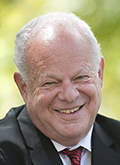 This award recognizes a member of the junior faculty who demonstrates unusual promise as an educator. This year SAS honors Sarah Gronningsater, assistant professor of history. Her renowned course, history of American law to 1877, is routinely over-enrolled and many students describe it as their favorite class offered by the department. “Professor G,” as she is affectionately called by her undergraduates, makes her students feel “seen and acknowledged,” even in a class of 80.
 Mirjam Cvetič is the Fay R. and Eugene L. Langberg Professor of Physics and Mathematics in the School of Arts and Sciences. She is part of the high energy theory group at Penn, which studies the fundamental forces of nature, early universe cosmology and mathematical physics. Dr. Cvetič is an expert on issues relating to string theory and its consequences for particle physics. Her research spans broad thrusts in fundamental theory, ranging from gravitational physics and work at the interface with differential and algebraic geometry to leading efforts in constructions of string theory solutions and the study of their physics implications. She won the University of Maryland Physics Distinguished Alumni Award in 2007, and is received the Friedrich von Siemens Research Award of the Alexander von Humboldt Foundation in 2020.
 Nader Engheta is the H. Nedwill Ramsey Professor, with affiliations in the departments of electrical and systems engineering (primary appointment), bioengineering (secondary appointment) and materials science and engineering (secondary appointment) in the School of Engineering and Applied Science; and physics and astronomy (secondary appointment) in the School of Arts and Sciences. His current research activities span a broad range of areas including optics, photonics, metamaterials, electrodynamics, microwaves, nano-optics, graphene photonics, imaging and sensing inspired by eyes of animal species, microwave and optical antennas, and physics and engineering of fields and waves. He has received numerous awards for his research, including the 2023 Benjamin Franklin Medal in Electrical Engineering, the 2020 Isaac Newton Medal and Prize from the Institute of Physics (U.K.), the 2020 Max Born Award from OPTICA (formerly OSA), induction to the Canadian Academy of Engineering as an International Fellow (2019), induction to the U.S. National Academy of Inventors (2015), and the Ellis Island Medal of Honor from the Ellis Island Honors Society (2019).
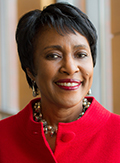 Vivian L. Gadsden is the William T. Carter Professor of Child Development and professor of education in the Graduate School of Education; a faculty member in Africana studies and in gender, sexuality, and women’s studies in the School of Arts and Sciences; and the faculty director of the Penn Child Research Center. Her research and interests focus on learning and literacies across the life-course and addresses issues of culture, equity, and access for young children and families in historically marginalized communities. Her collaborative research projects examine early childhood development, parenting, and families; father engagement in urban settings; social factors affecting health and education; children of incarcerated parents; and intergenerational learning. Dr. Gadsden serves or has served on numerous foundation boards, congressionally mandated committees, and White House initiatives. A past president of the American Educational Research Association, she has held leadership roles in the Society for Research in Child Development and editorship of several publications, including Educational Researcher and the Review of Research in Education.
 Petra Todd is the Edmund J. and Louise W. Kahn Term Professor of Economics in the School of Arts and Sciences. She is also a research associate at Penn’s Population Studies Center. Her main fields of research are social program evaluation, labor economics, and microeconometrics. She is on the editorial board of the International Economic Review and the Econometrics Journal. She is a fellow of the Econometrics Society and of the Society of Labor Economists. She has published papers on econometric methods for evaluating the effects of program/policy interventions, the determinants of cognitive achievement, testing for discrimination in motor vehicle searches, sources of racial and gender labor market disparities, pension program design, and on conditional cash transfer programs. She is currently working on projects analyzing the effects of personality traits on gender labor market disparities, evaluating the effects of grade retention in Portugal, analyzing the effects of local minimum wage policies in the United States, and analyzing the effects of a nationwide preschool reform in Mexico.
 E. John Wherry is the Barbara and Richard Schiffrin President’s Distinguished Professor and chair of the department of systems pharmacology and translational therapeutics in the Perelman School of Medicine and director of the Penn Institute for Immunology. Dr. Wherry has received numerous honors, including the Distinguished Alumni award from Thomas Jefferson University and the Cancer Research Institute’s Frederick W. Alt Award for New Discoveries in Immunology. Dr. Wherry helped pioneer the field of T cell exhaustion, the mechanisms by which T cell responses are attenuated during chronic infections and cancer. He helped identify the role of the “checkpoint” molecule PD-1 and others for reinvigoration of exhausted T cells in cancer. Dr. Wherry’s work has defined the underlying molecular and epigenetic mechanisms of exhausted T cells. In 2020-21, his laboratory focused on the immunology of COVID-19 and SARS-CoV-2 vaccination including establishing a new immune health project to interrogate and use immune features to identify novel treatment opportunities.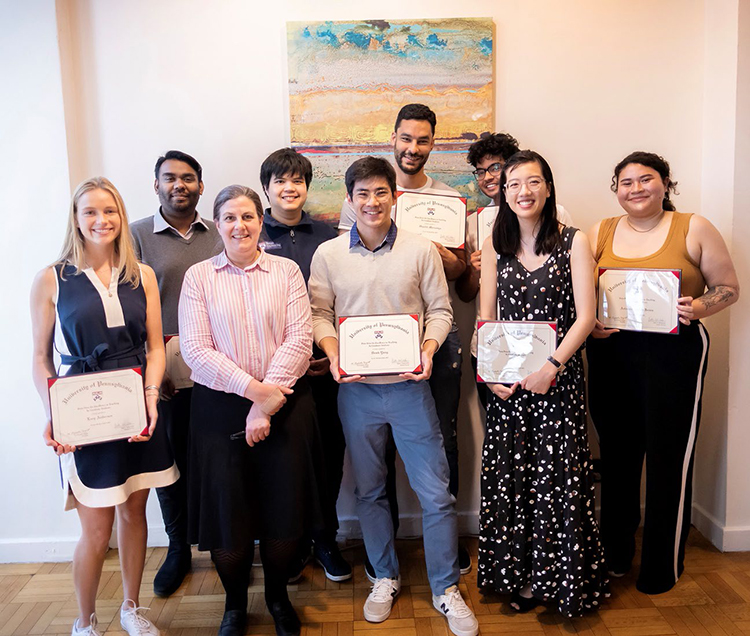
 The AACR Award for Lifetime Achievement in Cancer Research was established in 2004 to honor individuals who have made significant fundamental contributions to cancer research, had a lasting impact on the field, and demonstrated a lifetime commitment to progress against cancer. Dr. June is a CAR T cell therapy pioneer, whose groundbreaking work to create the first gene-edited cell therapy for cancer led to the first approved CAR T cell therapy in 2017, bringing hope and an effective new treatment to many patients who had run out of options. His team demonstrated that T cell therapy can induce long-lasting remissions, and even cures, with some of the earliest patients treated surviving 10 years or more. A total of six CAR T cell therapies are now approved to treat five different blood cancers, and research in the field has grown exponentially, with hundreds of CART T cell clinical trials in progress worldwide. As the director of the Center for Cellular Immunotherapies (CCI) and the Parker Institute for Cancer Immunotherapy at Penn Medicine’s Abramson Cancer Center, Dr. June continues to drive innovation in personalized cell- and gene-based therapies for patients with cancer and other life-threatening diseases.
 The AACR-G.H.A. Clowes Award for Outstanding Basic Cancer Research was established in 1961 to honor George H. A. Clowes, a founding member of the AACR. This award recognizes an individual who has made outstanding recent accomplishments in basic cancer research. Dr. Simon is honored for her groundbreaking work and recent discoveries on oxygen biology and cancer metabolism. Her research focuses on cancer hypoxia, or how cells sense and respond to the lack of oxygen and nutrients, caused by a tumor rapidly outgrowing its blood supply. Her recent research includes a novel approach to treat liver cancer by targeting “senescent” cells that no longer divide in the tumor microenvironment, finding new renal cancer targets based on tumor metabolism, and discovering a method to turn on key metabolic processes in soft-tissue sarcomas that could leave them susceptible to treatment. Dr. Simon’s work also contributed to the scientific rationale for what would become the HIF-2alpha inhibitor belzutifan, which was approved in 2021 for certain types von Hippel Lindau (VHL) disease-associated tumors. She is the scientific director of the Abramson Family Cancer Research Institute and associate director of shared resources for the ACC.
 The AACR Award for Outstanding Achievement in Basic Cancer Research honors an early-career investigator for meritorious achievements in basic cancer research. A member of the ACC Cancer Therapeutics research program, Dr. Wellen is recognized for establishing new approaches to the understanding of cancer cell metabolism. The chemical reactions that change food into energy function very differently in cancer cells compared to healthy cells, and these metabolic processes are a driving force behind cancer growth. Dr. Wellen’s work has shed light on how cancer cell metabolism works at a molecular level and has shown how cellular metabolism is connected to gene regulation. Many of her discoveries have opened new fields of study involving the mechanisms of crosstalk between metabolic pathways, signaling networks, and the epigenome. Building on recent findings, Dr. Wellen’s lab is also investigating how diet and nutrition impact tumor growth.