$26 Million Grant from NSF to Penn Engineering
The National Science Foundation, through a five-year, $26 million grant, has established the NSF Engineering Research Center for the Internet of Things for Precision Agriculture (IoT4Ag), headquartered at the University of Pennsylvania’s School of Engineering and Applied Science.
Engineering Research Centers (ERCs) are NSF’s flagship engineering program for convergent research to address large-scale societal challenges. The IoT4Ag Center aims to address food, energy, and water security through advanced agricultural technologies.
Starting in the soil and reaching into the digital cloud, these technologies will collect, share, and analyze data in order to improve farming practices, maximizing a farm’s productivity while minimizing its waste and ecological impact.
Researchers in Penn Engineering’s GRASP Lab have long been developing swarms of flying robots, which could be equipped to autonomously fly through orchards, counting fruit and assessing tree health, among other applications.
Center researchers will create miniature soil-based sensors and swarms of aerial and ground-based robots, as well as new ways of networking them together in communication-constrained environments. The researchers will also develop high-level data science techniques that will allow data from different sensors in the field to be integrated with data from weather reports and commodity markets, synthesizing it into actionable information.
Part of the ERC mandate is to converge a wide range of academic disciplines in tackling these challenges; another is to develop a diverse and inclusive workforce from across the United States. By partnering with industry and a broad community of students, faculty and professionals, the IoT4Ag Center will create an innovation ecosystem to continue these efforts into the coming decades.
 Cherie Kagan, Stephen J. Angello Professor in Penn Engineering’s departments of electrical and systems engineering and materials science and engineering, is the IoT4Ag Center’s director and principal investigator. She will lead a team of more than two dozen researchers across Penn Engineering, Purdue University, University of California Merced, and the University of Florida.
“We need new technology to meet the challenges of a world with a growing population and changing climate,” Dr. Kagan said. “We simply need to produce more crops for every drop of water or Joule of energy we’re currently using to realize a food, energy and water-secure future.”
The IoT4Ag Center is divided into three integrated thrusts, with teams of researchers working on sensing, communication/energy, and response technologies.
Members of the Agricultural Sensor Systems team will develop miniature sensors designed to be planted alongside crops or placed on top of the soil. These sensors will be considerably less expensive than current systems for monitoring micronutrients and other soil conditions but be sowed like seeds and even provide data on the scale of an individual plant. They will also develop fleets of robots that will gather data from the air or ground; autonomously monitoring the health of plants with a suite of data-rich sensors, predicting crop yield and quality of produce.
Forming a network out of this diverse suite of sensors presents its own challenges, especially in the unique environment of a farm. Signals will need to travel from below the soil surface, to farm equipment, and from there to the cloud, and do so over long distances in remote locations with no pre-existing cellular networks to rely upon. Members of the Communication and Energy Systems team will develop methods for establishing and maintaining these lines of communication, along with energy technologies to keep sensors and robots running with minimal human interaction.
Finally, members of the Agricultural Response Systems team will develop models that will integrate data from a farm’s network of sensors with that from the wider world. By providing situational awareness informed by plant physiology, weather patterns, socioeconomic trends and evolving agricultural techniques, farmers will be able to implement measures targeted at the performance of individual crops.
Collectively, the IoT4Ag Center will also create a diverse talent pipeline consisting of K-12 and university students, engineers, agriculture professionals and other members of farming communities through audience-specific lessons and hands-on classroom, laboratory and field activities. Bringing together academic, government and industry partners with the farming community, the Center will create an innovation ecosystem that ensures the rapid translation of IoT4Ag practices and technologies into commercial products, and will also ensure that such a transformation is built with sustainable positive economic and social impact in mind.
“For the last 35 years, engineering research centers have helped shape science and technology in the United States by fostering innovation and collaboration among industry, universities and government agencies,“ said NSF Director Sethuraman Panchanathan. “As we kick off a new generation of centers, NSF will continue to work with its partners to ensure the success of these collaborative enterprises and the transformative, convergent research impact they produce.”
Amy Stornaiuolo: $2.4 Million McDonnell Foundation Grant
 Amy Stornaiuolo, associate professor in the literacy, culture, and international education division of Penn GSE, has been awarded $2.49 million from the McDonnell Foundation for her project, “Facilitating Digital Discourse: Teachers as Learners in a Digital Age.” In the project, Dr. Stornaiuolo and her team will examine how secondary English teachers learn to facilitate digital discourse in their classrooms, specifically focusing on online discussions.
Dr. Stornaiuolo will work with Penn GSE’s Ebony Elizabeth Thomas as well as colleagues at the National Writing Project, the Philadelphia Writing Project, the Denver Writing Project, the Institute of Cognitive Science, and Stanford University to execute the research.
André Dombrowski: Shapiro-Weitzenhoffer Associate Professor of 19th Century European Art
 André Dombrowski, associate professor of the history of art, has been appointed Frances Shapiro-Weitzenhoffer Associate Professor of 19th Century European Art. Dr. Dombrowski is a highly esteemed scholar of art and material culture in late 19th-century France and Germany. In addition to his first book, Cézanne, Murder, and Modern Life, which won the Phillips Collection Book Prize from the University of Maryland, he has edited and co-edited a number of important volumes, including Is Paris Still the Capital of the Nineteenth Century? Essays on Art and Modernity, 1850-1900, and the forthcoming Wiley-Blackwell Companion to Impressionism. His second book, Monet’s Minutes: Impressionism and the Industrialization of Time, is in progress. At Penn, he has served as undergraduate chair of his department, as a member of the School’s Diversity Council and the University’s Graduate Council of the Faculties, as convener of the LGBTQ faculty diversity working group, and as a 2018-2020 Penn Fellow.
The Frances Shapiro-Weitzenhoffer Professorship of 19th Century European Art was established in 1992 by the late David Shapiro (GM’47) in memory of his daughter, Frances Shapiro-Weitzenhoffer (C’65). Mr. Shapiro-Weitzenhoffer was a distinguished art historian, editor, and specialist in Impressionist painting.
Justin McDaniel: Edmund J. and Louise W. Kahn Term Professor
 Justin McDaniel, professor of religious studies, has been named Edmund J. and Louise W. Kahn Term Professor of Religious Studies. Dr. McDaniel studies Southeast Asian religion and history, with particular emphases on Lao, Thai, Pali, and Sanskrit literature, art and architecture, and manuscript studies. He is the author of three books: Gathering Leaves and Lifting Words, which won the Harry J. Benda Prize of the Association for Asian Studies (AAS); The Lovelorn Ghost and the Magic Monk, which won the AAS Kahin Prize, and The Architects of Buddhist Leisure. His research has received support from the National Endowment for the Humanities; the Mellon, Rockefeller, Fulbright, and Luce foundations; PACRIM; the Social Science Research Council; and others. He has won teaching and advising awards at Harvard, Ohio University, and the University of California, and is a recipient of the Ludwig Prize for Teaching at Penn. Dr. McDaniel’s forthcoming work includes two books to be published next year, Embodied Manuscripts: Treasures from the Fogg Collections, and the first volume of Ornaments and Texts: Studies in Thai Buddhism.
The Edmund J. and Louise W. Kahn Endowed Term Chairs were established through a bequest by Edmund J. and Louise W. Kahn. Edmund Kahn was a 1925 Wharton graduate who had a highly successful career in the oil and natural gas industry. Louise Kahn, a graduate of Smith College, worked for Newsweek and owned an interior design firm. They supported many programs and projects at Penn, including Van Pelt Library, the Modern Languages College House, and other initiatives in scholarship and the humanities.
Penn Association of Senior and Emeritus Faculty: PASEF 2019–2020 Annual Report
Overview
Founded in 2004, the Penn Association of Senior and Emeritus Faculty (PASEF) organizes programs and activities for its members and encourages them to be active in the intellectual and social life of the University, and to provide service to the University and the community. PASEF members are senior (age 55 and above) and retired standing faculty at Penn. Current membership numbers 1,116 senior faculty and 585 emeritus faculty. PASEF provides information and assistance to aid faculty in transitioning to retirement and organizes intellectual and social events such as lectures, excursions to cultural attractions, and attendance at theater, opera, and orchestra presentations. It is a member organization of AROHE, the Association of Retirement Organizations in Higher Education. The Association of Senior and Emeritus Faculty (ASEF–PSOM) is an analogous organization at the Perelman School of Medicine; its senior and emeritus faculty are also PASEF members. The two organizations regularly cooperate in planning joint programs and activities. The redesigned PASEF website, launched in July 2019, is provost.upenn.edu/pasef/
Administration
Governance and administration. PASEF operates under a set of bylaws and is governed by a Council which meets monthly during the academic year. The President, President-Elect, and Past President form the Steering Committee. Council members for 2019–2020 are listed in the Appendix. PASEF receives an annual budget from the Provost and reports to the Vice Provost for Faculty. Anita Allen was Vice Provost for Faculty during 2013–2020 and Laura Perna assumed the position in July.
Facilities and support. PASEF has an office and an adjacent room used as a lounge on the first floor of Duhring Wing, next to the office of the Faculty Senate. Both the office and the adjacent lounge can accommodate meetings of small groups. Staff support is provided by Sarah Barr, PASEF’s full-time Coordinator. During the past year able assistance has also been given by members of the Provost’s staff, including Jillian Powell, Kathy Swartz, Jessie Burns, and Lynne Hunter.
Retirement
PASEF provides resources and gives presentations to aid senior faculty in planning the transition to retirement.
Road to Retirement programs. Panel discussions with PASEF members addressing retirement were held in November and early March. The topics were Exploring Living Options in Retirement and Negotiating the Retirement Transitions—What’s Next? Both presentations are available at the PASEF website. The annual presentation by Hilary Lopez and Vicki Mulhern, University staff experts on retirement options and retiree benefits, scheduled for April, had to be cancelled due to the COVID-19 pandemic.
Retirement planning. The 13th edition of PASEF’s publication Hitchhiker’s Guide to Faculty Retirement, under the editorship of Martin Pring and Janet Deatrick, was published in January. Sections on financial planning for retirement, transition to emeritus status, and retiree relations with the University are included, and the publication is available on the PASEF and ASEF–PSOM websites (the latter is www.med.upenn.edu/asef/). Both websites also house a guide to continuing care retirement communities (CCRCs) in the Philadelphia area. Sixteen such communities are featured, each with detailed information about cost, types of housing, medical support, and amenities. The guide also provides details about the different types of CCRCs, and links to information about them from the Pennsylvania and New Jersey state governments, the Centers for Medicare and Medicaid, and CARF International, the sole accreditor of CCRCs. In addition, PASEF regularly alerts members about new developments concerning retirement, suspension of required minimum distributions from retirement accounts during 2020, as specified by the CARES Act, being a recent example.
Reception for newly emeritus faculty. Recently between 50 and 60 standing faculty have taken emeritus status each year, and PASEF and ASEF–PSOM have co-sponsored an annual reception to honor the retirees. The in-person reception planned for May 2020 had to be cancelled. It has been rescheduled as a virtual reception in September, to honor the 72 faculty who are 2019–2020 retirees.
Activities and Events
Lectures. PASEF sponsors lectures throughout the academic year. These are open to all members of the University community and span a wide range of topics which are of general interest. Normally, there are monthly luncheon lectures at the University Club and featured Fall and Spring lectures. During the Fall semester luncheon lectures were presented by Professor of Sociology Jerry Jacobs and author Julien Suaudeau. The Fall Lecture, given each year in October in conjunction with the 25-Year Club Dinner, was presented by Professor of Political Science Avery Goldstein on U.S.–China Relations in the Current Era. A link to the presentations is on the PASEF website. Lectures planned for the Spring semester had to be cancelled due to the COVID-19 pandemic. Looking ahead, PASEF will be presenting virtual lectures for the foreseeable future. This will have the advantage of allowing participation by persons who are unable to attend, including those who are located outside the Philadelphia area. Presentation of in-person lectures has been greatly facilitated by the purchase of new equipment funded by the Office of the Provost.
Fall outing. Each year PASEF and ASEF–PSOM jointly plan Fall and Spring outings to locations of cultural or historical interest in the Philadelphia area. In November members went to the Ruth Bader Ginsburg exhibit at the National Museum of American Jewish History.
Theater and orchestra attendance. The Membership Committee, chaired by Anita Summers, has during the past two years arranged attendance at open rehearsals of the Philadelphia Orchestra. The Committee has also arranged theater outings. In October members attended a performance of Ragtime at the Arden Theater. Two more theater outings scheduled for March and April had to be cancelled due to the COVID-19 pandemic. In addition, PASEF is working with Opera Philadelphia for the presentation of virtual events for the membership, and plans to initiate outings to attend live opera performances when they resume.
Speakers Bureau. With encouragement and funding from Vice Provost Allen, PASEF launched its Speakers Bureau in the spring of 2016. This work was spearheaded by Jack Nagel as chair of the Speakers Bureau Committee. The Bureau enables community groups, including retirement communities, civic, social, and religious organizations, and high schools, to identify and invite PASEF members to speak to audiences in the Philadelphia area. The current roster of speakers numbers 31 and includes both senior and retired Penn faculty from Schools across the University. Information about the Bureau and the speakers and their topics is on the PASEF website.
Task Force Planning
With support from then-Vice Provost Anita Allen, PASEF convened a retreat at the end of AY2019 for the PASEF Council to review current operations. The discussion was facilitated by Fernando Chang-Muy from the Law School. Stemming from the retreat, task forces were subsequently formed to study the issues raised and to make recommendations to the Council. By the close of AY2020, three of the four task forces had completed their work and reported to Council, which voted acceptance of the recommendations. Work of the task force on programs and approval of its recommendations by Council has established guidelines for monthly lectures, including videotaping; affirmed continuation of non-lecture programs, such as theater attendance, outings to cultural attractions, and negotiation with the Philadelphia Orchestra to allow attendance at open rehearsals; and continuation of the sessions on retirement PASEF currently offers. Recommendations of the communications task force have led to enhanced communication with the PASEF membership, substantial redesign of the PASEF website, and continuation of the writing of detailed minutes of Council meetings. The task force on membership affirmed continuation of cooperation between PASEF and ASEF–PSOM on several programs and events. It recommended that future lectures and retirement sessions, including those which will be in-person, be live-streamed. Further, a proposal from the task force to expand the PASEF membership to include Research Faculty, full-time Academic Clinicians, and full-time Practice Professors is currently under consideration.
Archives Project
Lois Evans and Sarah Barr have worked to collect PASEF archival materials, both in hard copy and electronic forms. They have met with Acting University Archivist Jim Duffin. Oral histories are being compiled from living former Presidents, and all collected materials will be transferred to the University Archives. Further, a policy and procedures document to guide future maintenance of the archives has been drafted.
Faculty Senate and University Council
PASEF sends non-voting representatives to the Senate Executive Committee, four Senate committees, and the University Council Committee on Personnel Benefits. The Senate committees are the Senate Committee on Faculty and the Administration, the Senate Committee on Faculty and the Academic Mission, the Senate Committee on Students and Educational Policy, and the Senate Committee on Faculty Development, Diversity, and Equity.
PASEF Annual Election
Janet Deatrick chaired this past year’s Nominating Committee, and the Committee’s proposed slate was approved by email voting. Janet Deatrick is the President-Elect, John Keene Secretary, and Martin Pring the SEC Representative. Newly-elected at-large Council members who will serve three-year terms are David Balamuth, Peter Conn, and Marilyn Stringer. Ann Mayer will serve a two-year at-large term to fill a vacancy.
—Paul Shaman, President (2019–2020)
Appendix: PASEF Council Members, 2019–2020
- Roger M.A. Allen, Near Eastern Languages and Civilizations (SAS), Representative to the Faculty Senate Committee on Faculty and the Academic Mission
- David Balamuth, Physics and Astronomy (SAS), Representative to the University Council Committee on Personnel Benefits
- Janet Deatrick, Family and Community Health (Nursing), at-large member of Council; chair, Nominating Committee; co-editor, Hitchhiker’s Guide to Faculty Retirement
- Marc A. Dichter, Neurology (PSOM), at-large member of Council
- Lois K. Evans, Family and Community Health (Nursing), Past President
- Howard I. Hurtig, Neurology (PSOM), at-large member of Council
- Barbara Kahn, Marketing (Wharton), at-large member of Council
- John C. Keene, City and Regional Planning (Design), at-large member of Council, Representative to the Faculty Senate Committee on Faculty Development, Diversity, and Equity
- Janice Madden, Sociology (SAS), President-Elect
- Carolyn Marvin, Annenberg, at-large member of Council
- Ann Mayer, Legal Studies and Business Ethics (Wharton), Secretary
- Marshall W. Meyer, Management (Wharton), Representative to the Faculty
- Senate Committee on Faculty and the Administration
- Martin Pring, Physiology (PSOM), Representative to the Faculty Senate Executive Committee; co-editor, Hitchhiker’s Guide to Faculty Retirement
- Howard M. Rosenberg, Dental Medicine, at-large member of Council
- Brian M. Salzberg, Neuroscience (PSOM), at-large member of Council; co-chair, Community Involvement Committee
- Jorge J. Santiago-Aviles, Electrical and Systems Engineering (SEAS), at-large member of Council; co-chair, Community Involvement Committee
- Paul Shaman, Statistics (Wharton), President
- Anita A. Summers, Business Economics and Public Policy (Wharton), chair, Membership Committee; Representative to Faculty Senate Committee on Students and Educational Policy
- Peter Wilding, Pathology and Laboratory Medicine (PSOM), ASEF–PSOM President
Former PASEF Presidents:
- Benjamin S. P. Shen
- Gerald J. Porter
- Neville E. Strumpf
- Vivian C. Seltzer
- Roger M. A. Allen
- Ross A. Webber
- Rob Roy MacGregor
- Jack H. Nagel
- Anita A. Summers
- Paul Shaman
Institute of Museum and Library Services: Grants Funding for Digital Scriptorium 2.0

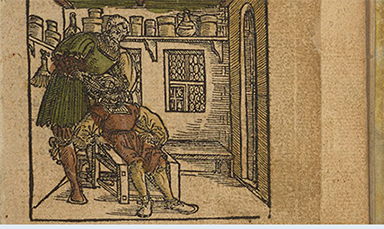
The University of Pennsylvania Libraries’ Schoenberg Institute for Manuscript Studies (SIMS) recently announced receiving $100,000 planning grant from National Leadership Grants for Libraries, a program of the Institute of Museum and Library Services (IMLS).
The IMLS grant has been awarded to the Penn Libraries on behalf of Digital Scriptorium, a consortium of 34 institutional members representing American libraries and museums across the country. The grant will provide funding to plan the redevelopment of Digital Scriptorium’s online platform.
Since 1997, Digital Scriptorium has been committed to providing free online access to its members’ collections of pre-modern manuscripts. Digital Scriptorium’s ultimate objective is to create a novel platform—using linked data technologies—to integrate all of its member institutions’ collections into an inclusive, open access, online catalog of pre-modern manuscripts housed in U.S. institutions.
“Penn Libraries has been a proud member of Digital Scriptorium since the very beginning,” said Constantia Constantinou, H. Carton Rogers III Vice Provost and Director of the Penn Libraries. “We are thrilled to be collaborating with peer institutions on the creation of a state-of-the-art, open-access database for pre-modern materials.”
“This is an exciting opportunity,” agreed Lynn Ransom, curator of programs at SIMS and project director for the grant. “SIMS will play a significant role in a national manuscript studies project of unprecedented magnitude.”
At its inception, Digital Scriptorium premiered an online platform to address the immediate needs for access and discoverability of pre-modern manuscripts. Its online database has grown to serve an international community of scholars, librarians, teachers, and students. Online technologies have changed dramatically in the 23 years since Digital Scriptorium was launched, however, and the original platform requires renovation.
“Thoughtful and strategic steps taken over the past several years have prepared us for our next great challenge,” explained Debra Taylor Cashion, president and executive director of Digital Scriptorium since 2015.
In 2017, the Digital Scriptorium Board of Directors polled its database users about improvements that might be of benefit to their research. Digital Scriptorium 2.0 (DS 2.0) will incorporate this feedback in the next stage of development of a national catalog, which will moreover provide a center of authority control and standardization for manuscript cataloging practices.
In 2018, SIMS invited Digital Scriptorium to present on the future development of DS 2.0, which ultimately resulted in Penn Libraries’ becoming the administrative sponsor of the IMLS grant.
“With a firm base of support from Penn Libraries and the rest of our participating institutions, the Digital Scriptorium consortium is both confident and enthusiastic to begin the development of DS 2.0,” said Dr. Cashion.
The year-long IMLS grant will support the planning phase of redeveloping Digital Scriptorium’s existing digital platform. Planning will entail refining the purpose and scope of DS 2.0, developing the DS 2.0 data model, and creating a plan for both technological and financial sustainability.
Even in the planning phase, DS 2.0 will serve as a cross-disciplinary model for incorporating stakeholder and community input to rebuild a legacy digital project into a viable and sustainable online resource.

 Amy Kaplan, the Edward W. Kane Professor of English at the University of Pennsylvania, died peacefully at home in Philadelphia on July 30 of glioblastoma. She was 66.
 Jerry Sun, a class of 2023 Wharton undergraduate student and TA for Wharton summer programs, was killed in a car accident west of Cañon City, Colorado, on July 25 while he was on a hiking trip. The crash is under investigation, and alcohol and speed are not factors in the accident. He was 19.
 Andrea Leah Wiest-Weidman, a graduate student at Penn Nursing, died unexpectedly on July 30. She was 38.
 In a recently published study analyzing the characteristics of the 100 most cited articles in prosthodontic journals between 1951 and 2019, one by Penn Dental Medicine’s Markus Blatz, professor and chair of the department of preventive and restorative sciences, was among the top 10. The study appeared in the May issue of The Journal of Prosthetic Dentistry with Dr. Blatz’s “Resin-Ceramic Bonding: A Review of the Literature” ranking sixth for the most citations. At the time of the study, Dr. Blatz’s article, which appeared in The Journal of Prosthetic Dentistry in 2003, had been cited 1,052 times.
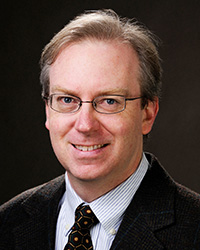 Charles Kane, Christopher H. Browne Distinguished Professor of Physics in the department of physics and astronomy, is among the six recently announced honorary degree recipients for next year’s convocation ceremony at the University of Chicago.
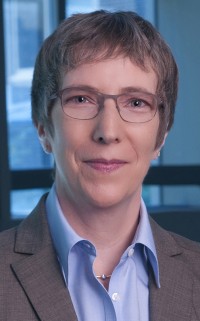 Karen I. Winey, TowerBrook Foundation Faculty Fellow, professor and chair of the department of materials science and engineering and professor in the School of Engineering’s department of chemical and biomolecular engineering, has been awarded the 2020 Herman F. Mark Senior Scholar Award from the American Chemical Society (ACS) and the 2020 Braskem Award for Excellence in Materials Engineering & Science from The American Institute of Chemical Engineers (AIChE).