News

$5 Million Mellon Grant for Work on Dispossessions in the Americas

caption: Tulia FalletiThe Andrew W. Mellon Foundation awarded the University of Pennsylvania a grant to support Dispossessions in the Americas: The Extraction of Bodies, Land, and Heritage from La Conquista to the Present, a project directed by Tulia Falleti, Class of 1965 Endowed Term Professor of Political Science. The $5 million grant is part of Mellon’s Just Futures Initiative.

Dispossessions in the Americas is an interdisciplinary project that aims to document territorial, embodied, and cultural heritage dispossessions in the Americas from 1492 to the present, and to outline how the restoration of land, embodiments, and cultural values can recover histories and promote restorative justice.

The grant will allow Dr. Falleti and collaborators to create a multilingual website, an art catalog, and two coedited volumes; host conferences; publish journal articles; develop arts and performance events; and participate in the design of cultural heritage museums in Mexico and Belize.

Dispossessions in the Americas exemplifies the important cross-disciplinary research that Penn is distinctively positioned to advance,” said Penn President Amy Gutmann. “By examining disparate perspectives from history, anthropology, medicine, and Latin American and Latinx studies, this project will provide new ways to assess our cultural heritage, in order to help us better understand and address the enormous challenges of social injustice. We thank the Mellon Foundation for their support and dedication to shaping a better future for our society.”

Dr. Falleti, also director of the Latin American and Latinx Studies program, said that the project is particularly urgent.

“The killing of George Floyd and the pandemic revealed entrenched issues of systemic racism and inequalities like never before,” said Dr. Falleti. “It’s very important to highlight the historic nature of many of these structural inequities and to put forward proposals that can restore hope and justice. Dispossessions in the Americas is not only about documenting what was lost, but also about decolonizing the way we research and working with communities to propose measures for healing.”

Steven J. Fluharty, Dean of SAS and Thomas S. Gates, Jr. Professor of Psychology, Pharmacology, and Neuroscience, said, “The Mellon grant provides a tremendous opportunity to create research and community partnerships that shift the way we understand our world. This is the power of the liberal arts in action. Tulia and the team she has assembled have an ambitious plan and I am looking forward to seeing the results of this vital work.”

Dispossessions in the Americas will partner with over 40 institutions and community groups across the Americas, including local collaborations with the Barnes Foundation, the African American Museum in Philadelphia, and the Latinx community of the Center for Culture, Art, Training, and Education (CCATE) of Norristown.

At Penn, collaborators include faculty, curators, undergraduate and graduate students, and postdoctoral fellows from the department of Africana studies, the Latin American and Latinx studies program, the Native American and Indigenous studies program, the gender, sexuality, and women’s studies program, the Penn Cultural Heritage Center of the Penn Museum, and the department of biostatistics, epidemiology, and informatics in the Perelman School of Medicine.Co-investigators include Margaret Bruchac, associate professor of anthropology; Ricardo Castillo-Neyra, assistant professor of biostatistics and epidemiology; Ann Farnsworth-Alvear, associate professor of history; Michael Hanchard, chair and Gustave C. Kuemmerle Professor of Africana Studies; Jonathan D. Katz, associate professor of practice of history of art and gender, sexuality, and women’s studies; Richard M. Leventhal, professor of anthropology; and Michael Z. Levy, associate professor of epidemiology.

Roderick Gilbert: Chief Diversity, Equity and Inclusion Officer, Penn Vet

caption: Rod GilbertRoderick J. Gilbert has been appointed Penn’s School of Veterinary Medicine’s first Chief Diversity, Equity and Inclusion Officer. In this new role, Mr. Gilbert will be responsible for shaping Penn Vet’s diversity, equity and inclusion strategy for students and staff; establishing relationships with diversity leaders from across the University and within the veterinary profession to build awareness of Penn Vet’s inclusion activities; and building upon the School’s foundation of allyship. The appointment of Mr. Gilbert will accelerate Penn Vet’s efforts to embed diversity, equity and inclusion across the School’s teaching, healthcare, and research missions.

Mr. Gilbert will serve on the School’s leadership council, reporting to Andrew Hoffman, the Gilbert S. Kahn Dean of Veterinary Medicine. He will also work with Associate Dean of Faculty Affairs Olena Jacenko to implement Penn Vet’s Plan for Faculty Excellence Through Diversity.

“Establishing the Chief Diversity, Equity and Inclusion Officer role is a vital step in our efforts to strengthen and advance Penn Vet’s vision for diversity representation and to cultivate a distinct sense of belonging and community,” said Dean Hoffman. “Adding this position to the School’s leadership team reflects our commitment to a culture that reflects our values of diversity, inclusion, and opportunity. His role­—connecting our students and staff to resources at Penn, to our alumni, and to organized medicine—will bolster these goals. Roderick is an extraordinary and accomplished leader in organizational diversity and I am thrilled to have him on our team.”

Prior to assuming the role of Chief Diversity, Equity and Inclusion Officer, Mr. Gilbert served as director of Diversity Pipeline Programs and Outreach for the College of Medicine at the Pennsylvania State University (PSU), where he established a series of academic pathway programs for students underrepresented in academic medical sciences. Before joining PSU in 2017, Mr. Gilbert served as the director for Inclusion and Diversity Strategy for the University of Mississippi Medical Center (UMMC), where he led the development and implementation of the institution’s first comprehensive institutional strategic diversity plan while also increasing the representation of minority medical residents. He was co-chair of UMMC’s Healthcare Disparities Council and chair of the education subcommittee. Prior to that, Mr. Gilbert was the Minority Physician Program Director at Boston University Medical Center, where he more than doubled the number of minority residents and had marked success recruiting minority faculty over the course of four years. 

“I am very excited to join the University of Pennsylvania’s School of Veterinary Medicine as Chief Diversity, Equity and Inclusion Officer,” said Mr. Gilbert. “It is clear to me that Penn Vet’s students, staff and faculty have an unwavering passion for each other, and for the communities they serve. I look forward to harnessing the School’s collective energy to support our next generation of veterinarians and to build an equitable and sustainable world.”

Herman Beavers: Julie Beren Platt and Marc E. Platt President’s Distinguished Professor of English and Africana Studies

caption: Herman BeaversHerman Beavers, professor of English and Africana studies, has been appointed the Julie Beren Platt and Marc E. Platt President’s Distinguished Professor of English and Africana Studies. Dr. Beavers is a distinguished poet and a widely published scholar of 20th-century American and African American literature, especially the novels of Toni Morrison, the traditions of jazz and jazz writing, and the work of 20th-century southern writers. His chapbook, Obsidian Blues, was published in 2017 and a second chapbook, The Vernell Poems, was published in 2019. His latest monograph, Geography and the Political Imaginary in the Novels of Toni Morrison, was published in 2018 by Palgrave Macmillan.

Dr. Beavers received the School of Arts & Sciences Dean’s Award for Mentoring Undergraduate Research in 2017, and he has served in many roles at Penn, including graduate and undergraduate chair of Africana studies and director of the English Department Honors Program. He was recently appointed faculty director of Civic House and the Civic Scholars Program (Almanac June 2, 2020).

Julie Beren Platt, C’79 and Marc E. Platt, C’79, parents, established the Julie Beren Platt and Marc E. Platt President’s Distinguished Professorship in 2019. Julie Beren Platt is a University of Pennsylvania Trustee and past president of the Penn Alumni Board of Directors. She is also a member of the Board of Advisors of the Annenberg Center for the Performing Arts and the Trustees’ Council of Penn Women. Her husband, Marc, is a film, theatre, and tv producer. At Penn, Marc served on the Board of Advisors at the Katz Center, and both Marc and Julie serve on the Parent Leadership Committee. Three of their five children are Penn graduates (Samantha C’05, Jonah C’08, and Hannah C’12). Their son, Henry, is a member of the College Class of 2021. They generously support initiatives at Penn, including establishing the Platt Student Performing Arts House and the Julie Beren Platt and Marc Platt Rehearsal Room in Houston Hall, along with endowed undergraduate scholarships, professorships, and the Katz Center.

Marc Henschel: Director, Penn Dental Medicine Advanced Education in General Dentistry Program

caption: Marc HenschelPenn Dental Medicine has named Marc Henschel to lead its new Advanced Education in General Dentistry (AEGD) program. Dr. Henschel’s appointment as AEGD Program Director and Associate Professor of Clinical Community Oral Health took effect on January 1, 2021.

“Dr. Henschel brings a passion for working with students as an experienced educator and devoted mentor and also has a strong commitment to serving patients as a compassionate clinician,” said Morton Amsterdam Dean Mark Wolff. “We are pleased to welcome him to Penn Dental Medicine.”

Dr. Henschel comes to Penn Dental Medicine from the New York University (NYU) College of Dentistry, where he has been part of the full-time faculty since 2015, serving as clinical assistant professor in the department of oral maxillofacial pathology, radiology, and medicine. During this time, he led the NYU Oral Health Center for People with Disabilities as director and was course director for Clinical Management of Patients with Special Needs and the honors program in Clinical Management of Patients with Special Needs. Dr. Henschel started teaching at NYU in 1987. Dr. Henschel earned his DDS from the State University of New York at Buffalo and completed a General Practice Residency at Buffalo Veterans Administration Center. 

Penn Dental Medicine’s new AEGD program will be designed to educate AEGD residents in the care of vulnerable and underserved patients. Dental residents will complete clinical dental care within the Personalized Care Suite of the recently opened Care Center for Persons with Disabilities, in the School’s clinical care program for Survivors of Torture in partnership with Philadelphia’s Nationalities Service Center, and in several of the School’s community-based care centers.

In 2020, Penn Dental was awarded a $2.1 million grant over five years from the Health Resources and Services Administration in support of the new AEGD program (Almanac November 10, 2020). Over the next year, the school will develop the program and apply for approval from the Commission on Dental Accreditation. It is anticipated that the inaugural class of residents will begin their studies in July 2022.

Penn Dental Medicine LGBTQ+ Fund

With a major gift from a Penn Dental Medicine alumnus, the school has established the LGBTQ+ Fund with the goal of identifying anti-LGBTQ+ biases in the dental profession and ways to dispel them. The $50,000 leadership gift launches the Fund with the goal of eventually endowing it to support research and programs in perpetuity.

“A central tenet of Penn Dental Medicine’s mission statement is a commitment to fostering a humanistic environment where all individuals and their integrity are valued, respected, and empowered,” said Penn Dental Medicine’s Morton Amsterdam Dean Mark Wolff. “As an academic community, understanding the root of homophobia, transphobia, and bias related to actual or perceived sexual orientation and/or gender identity requires intentional study.”

A top priority of the fund will be to explore research and programming that can lead to best-practice models and suggest policy recommendations that can have profession-wide impact through scholarly publications. Types of activities may include internal climate surveys of the Penn Dental Medicine community; data collection, analysis, and dissemination of results of attitudinal surveys about comfort levels and concerns; development of enduring resources to support current and future students; research opportunities to work collaboratively with other offices at the University to explore LGBTQ+ issues more broadly; training programs exploring sexual orientation and gender identity bias and offering guidance for managing difficult conversations; invited speakers and conferences/symposia focusing on topics related to the LGBTQ+ community; and providing resources for education and advocacy so all Penn Dental Medicine community members, regardless of gender identity and sexual orientation, are supported to live authentically.

2021 CDKL5 Program of Excellence Pilot Grant Request for Applications

The Orphan Disease Center (ODC) at the University of Pennsylvania in collaboration with the Loulou Foundation, is pleased to announce the 2021 CDKL5 Program of Excellence Pilot Grant Program. CDKL5 Deficiency Disorder (CDD) is a monogenic, neurodevelopmental disorder characterized by treatment-resistant epilepsy and severe neurodevelopmental delay. The disease is driven by the loss of a kinase called CDKL5 which is responsible for normal neuronal development, synapse formation and signal transmission. The mechanisms by which loss of CDKL5 expression leads to this CNS disorder remain unclear. The gene encoding this protein is located on the X chromosome, with heterozygous females primarily affected. The disease does not exhibit neurodegeneration, and animal models strongly suggest the potential for reversibility. There are no approved therapies and the current standard of care is not effective at managing seizures or improving neurodevelopmental or motor deficits. 

ODC and the Loulou Foundation are seeking grant applications that catalyze the discovery or development of treatments and/or a cure for CDKL5 Deficiency Disorder. ODC recognizes, however, that many gaps exist in the basic understanding of CDKL5 and its role in neurological development. Therefore, basic science projects that address these gaps are welcome, provided that they are tethered to the development of a potential therapy. While the RFA is broad in scope, priority will be given to grants that cover the following areas:

  1. Novel therapeutic approaches for CDD
  2. Validation of phenotypes in CDKL5 function or disease pathophysiology
  3. Systems biology and computational modeling approaches
  4. Novel application of imaging and functional techniques
  5. Discovery and validation of CDKL5 biomarkers

Letters of interest are due no later than Friday, February 26, 2021, by 5 p.m. EST. Grant criteria, the entire RFA, and additional program details can be found here.

Governance

University of Pennsylvania Trustees Meetings: February 25-26, 2021

On Thursday, February 25 and Friday, February 26, there will be virtual meetings of the Trustees committees via BlueJeans Events.

The Open Meetings are:

Thursday, February 25

Local, National, & Global Engagement Committee, 10-11 a.m.

Facilities & Campus Planning Committee, 11:15 a.m.-12:15 p.m.

Ad Hoc Committee on Diversity and Academic Policy Committee, 11:15 a.m.-12:15 p.m.

Student Life Committee, 1:45-2:45 p.m.

Budget & Finance Committee, 3:15-4:30 p.m.

Friday, February 26

Stated Meeting of the Trustees, 12:30-1:30 p.m.

Anyone wishing to attend an open public committee meeting can find the attendee link on the Secretary’s website, https://secretary.upenn.edu/trustees-governance/open-trustee-meeting, on the day of the meeting.

Agenda and call-in information will be posted at https://secretary.upenn.edu/trustees-governance/open-trustee-meeting. Please contact the Office of the University Secretary at (215) 898-7005 or ofcsec@pobox.upenn.edu with questions regarding Trustee meetings or your attendance plans.

From the Senate Office: SEC Actions

The following is published in accordance with the Faculty Senate Rules. Among other purposes, the publication of SEC actions is intended to stimulate discussion among the constituencies and their representatives. Please communicate your comments to Patrick Walsh, executive assistant to the Senate Office, either by telephone at (215) 898-6943 or by email at senate@pobox.upenn.edu.

Faculty Senate Executive Committee Actions
Wednesday, February 10, 2021

Chair’s Report. Faculty Senate Chair Kathleen Hall Jamieson reported on several matters:

  • The Senate Committee on Faculty and the Academic Mission (SCOF) will soon distribute a questionnaire on voting and hiring practices in departments to department chairs and will report its findings in May 2021.
  • The Senate Committee on the Economic Status of the Faculty (SCESF) will soon be charged with examining salary compression and inversion issues, whether departments or schools face those issues, and how, if any exist, they might be addressed. SEC members were encouraged to query the relevant individuals in their departments and divisions about whether compression and inversion are issues of concern in them and to share any resulting information that they feel would be helpful to the tasked SEC committees with the Senate Office. Over time, market forces result in higher compensation for newer hires than faculty who have been at Penn for a longer term. In addition, persons who seek competing offers from other institutions will more often end up with greater compensation at Penn compared to those who do not do so. Gender-related issues will also be examined in this context.
  • On March 17, 2021, at 3 p.m., the Standing Faculty will vote on proposed amendments to the Rules of the Faculty Senate. The proposed amendments do not include expanding the Senate membership but rather focus on reforming the committee structures and faculty appointments processes to allow for greater flexibility. They also include several clarifying and logistical changes. Separately, a “practices and procedures” document, which is in development, will be shared in draft form. Since the quorum for this meeting is 100 Standing Faculty, SEC members were asked to encourage their Standing Faculty colleagues to attend the meeting with them.  The vote will occur during the first 15 minutes of the meeting. The draft revisions appear in this issue of Almanac.

Past Chair’s Report. Past Chair Steve Kimbrough reviewed the proposed amendments to the Rules of the Faculty Senate and engaged SEC members in a discussion of them. He then yielded the floor to Chair-Elect Bill Braham, who reviewed key sections of the work-in-progress Practices and Procedures document. A newly proposed article to the Rules, Article 18, would formalize the document’s role in guiding the work of the Faculty Senate without prejudice to the Rules themselves.

In addition, at the March 17 full Faculty Senate meeting, deans of the four schools with the largest physical footprints have been invited to discuss school-level greening initiatives to be moderated by the leaders of the Senate Select Committee on the Institutional Response to the Climate Emergency (CIRCE).

Update from the Office of the President. President Amy Gutmann applauded the creativity of Penn faculty in addressing obstacles created by responses to the pandemic, and she expressed her admiration for the ways in which Penn faculty transformed the teaching and learning experience at Penn through use of online environments under extenuating circumstances. Penn continues to be guided by the best available public health data and expertise and national, state, and local guidelines. The Penn Cares program is keeping campus positivity rates below regional and national levels but is not without its challenges. It is still too early to decide on the status of upcoming major campus events, such as 2021 Commencement ceremonies, and several contingencies are included in those plans. 

Discussion of Course Evaluations, Engaged Scholarship, and Support for Junior Faculty. A discussion began on the status of requests made of departments or schools to address the Resolution on Engaged Scholarship, endorsed by SEC on October 14, 2020. The intent of the resolution is to encourage schools and departments to engage in deliberation designed to determine and memorialize the unit’s determination of whether engaged scholarship is an activity that should be considered in the hiring, tenure, promotion, and merit increase processes in that unit and, if so, how it is defined in that unit and what kinds of activities fall into and outside the bounds of that definition. In addition, departments and schools were asked to memorialize their understandings about increased demands placed on faculty during the pandemic, including any involving the changed nature of teaching, and to document their understanding of any ways in which the demands of dealing with the pandemic should be taken into account in tenure and promotion decisions. (SEC has not taken any formal position on how these terms are defined or counted but rather requests that each department provides clarity in its expectations.)

The final part of the meeting was reserved for discussion designed to begin SEC deliberations about the adequacy of the existing course evaluation structure. As part of the discussion, it was noted that the University Council Committee on Academic and Related Affairs also addressed course evaluations at length in its 2018-2019 report.

From the Senate Chair: Notice of Special Meeting of Faculty Senate to Consider Changes to Rules of the Faculty Senate

Under Section 15 of the Rules of the Faculty Senate, notification or distribution to members of the Faculty Senate may be accomplished by publication in Almanac. The following is published pursuant to that rule.

To: Members of the Faculty Senate
From: Kathleen Hall Jamieson, Chair
Subject: Notice of Special Meeting of Faculty Senate to Consider Changes to Rules of the Faculty Senate 

Background information 

These revisions of the Rules of the Faculty Senate are recommendations developed by a committee of current and former Chairs of the Faculty Senate that have been reviewed by the Faculty Senate Executive Committee prior to submission to the Faculty Senate.  The revisions propose to reform the Senate’s processes for making committee nominations and appointments, to restructure the Senate Committees, and to make other clarifying and logistical adjustments.  

In all cases, the proposed amendments serve to provide greater flexibility for the Faculty Senate in responding to both enduring concerns of the faculty and changing circumstances that require prioritization of certain needs in some years over others.

The supplement, included here as a separate PDF file, summarizes the proposed amendments and tracks the specific additions and deletions throughout the Rules.

  1. Notice of Meeting. A special, virtual meeting of the Faculty Senate will be held on Wednesday, March 17, 2021, at 3 p.m. All Standing Faculty members (including Standing Faculty Clinician-Educator) may register to participate in this meeting by visiting https://facultysenate.upenn.edu/.
  2. Agenda. The agenda for the special meeting follows: 
      a) (3 p.m.) Call to order.
      b) Discussion on proposal to amend the Rules of the Faculty Senate.
          i)   A “red-lined” version illustrating how the amendments would be applied, may be viewed here.
          ii)  A “clean” version of the amended Rules as they would read if approved may be reviewed here.
      c) (3:15 p.m.) Discussion of school-level sustainability and climate action initiatives: invited school deans will engage in a discussion with the leaders of the Faculty Senate’s Select Committee on the Institutional Response to the Climate Emergency (CIRCE). Questions and comments will be invited from the all-faculty audience.
     d) (4:30 p.m.) Adjournment 

Questions and comments should be addressed to the Senate Office by email to senate@pobox.upenn.edu or by phone to (215) 898-6943.

Open Forum Topics at University Council Meeting: February 17, 2021

  1. The University’s Election Day policy. (Eli Moraru, C’22)
  2. Spring semester adjustments requested by the Underrepresented Student Advisory Board in Engineering (USABE). (Niko Simpkins, ME’22, USABE President)
  3. Differences between schools with regard to undergraduate advising. (Joseph Pineda, W’23)
  4. The financial needs of Penn’s graduate FGLI, BIPOC, and international students. (Erica Jaffe Redner, G’20, Gr’24 or Pam Gallo, Gr’25, GAPSA Equity and Access Committee)
  5. Penn’s stewardship to Philadelphia schools (Jamie Song, C’19, GM’21)
  6. A universal one-year funding extension for all current doctoral students. (Sam Samore, Gr’29)
  7. Mitigating the impact of the COVID-19 pandemic on low-income and undocumented Philadelphians. (Som-Mai Nguyen, L’22)
  8. Parallels between COVID-19 and climate change and how Penn can address these issues. (Ryan Lam, EAS’22)
  9. Policies to support Penn’s international students through climate action. (Camila Irabien, C’23)
  10. Divesting from fossil fuels and reinvesting in other solutions. (Sarah Sterinbach, C’24, Fossil Free Penn)
  11. Climate injustice and how Penn can be a leader in climate mitigation. (Kristen Ukeomah, C’21)
  12. How Penn can be a leader in climate change. (Nancy Rosenberg, C’21)
  13. How Penn can show support for issues of race and the environment. (Toluwalase Akinwunmi, C’23)
  14. How Penn can implement ambitious climate mitigation strategies. (Maya Patel, EAS’22)
  15. Public health policy and prioritizing climate change action. (Dana Lane, C’21)

Supplements

2021 Penn Summer Camps and Programs

Penn has a variety of activities available for young children and students of every age this summer.
Due to the rapidly changing nature of the COVID-19 pandemic, the organizers of many camps have not yet made a  determination whether to hold them virtually or in-person. Check the URLs provided in each listing for updated information. 
Information about additional camps and programs will be provided as it becomes available.

Enrichment & Education

Morris Arboretum Summer Camps: Awaken the mind, nurture the spirit, and energize the body of your child by registering online for Morris Arboretum’s Summer Adventure Camp. The goal is to inspire new generations of citizen scientists by tapping in to their natural curiosity about the world around them. Little Lightning Bugs is open to children ages 4-5. Bloomfield Buddies is open to children ages 6-11. Fees and to apply: https://experience.morrisarboretum.org/Info.aspx?EventID=20.

Little Lightning Bugs 2021

Buzz and Flutter: July 5-9. Nature explorers will use their observation skills to hunt for insects and arachnids that call the arboretum home. Our mini-entomologists will learn about insect lifecycles, learn the differences between insects and arachnids, and create fun “buggy” crafts.

Super Sprouts!: July 12-16. Have fun among the flowers and trees and all things green. Learn all about flowers, pollinators, and what it takes to go from seed to sprout.

Sensing Nature: July 19-23. We will use our senses (touch, smell, sight, and hearing) to explore everything that the arboretum has to offer. Our week will include sensory games, scavenger hunts, nature play, and nature inspired art.

Wild About Wings: July 26-30. Butterflies, birds, bees, bats…. Learn all about things with wings, and what makes them similar and different. Experiment with making things that fly, and search for signs of flying creatures all around the arboretum.

Animal Olympics: August 2-6. How do different animals move? Can you jump higher than a grasshopper? Wiggle like a worm? We’ll learn about different animals and insects at the arboretum and do our best to impersonate them.

Budding Artists: August 9-13. Between morning walks and splashing in sprinklers, art and creativity will abound. Little lightning bugs will draw inspiration from nature and create works of art all week.

Bloomfield Buddies 2021

Backyard Bugs: July 5-9. From butterflies to beetles, junior explorers will search for the arboretum’s smallest and most numerous inhabitants. Campers will hike, make crafts, and play games, all while learning about the incredible world of insects.

Pollinator Power: July 12-16. Did you know that about 1/3 of what we eat and drink is delivered via a pollinator? Campers will hop, skip, and jump their way through fields and flowers, while also learning about pollinator diversity and monarch migrations, and meeting a bee keeper.

Garden Science: July 19-23. Did you know that one teaspoon of soil can hold one billion organisms? Dig, experiment, and explore in this exciting week of STEM in the garden. Get ready to test your critical thinking skills!

Bird Bonanza: July 26-30. From hummingbirds to hawks, campers will become honorary ornithologists. We’ll go on bird walks and flap our way around the arboretum while playing games and learning about our feathered friends.

Nature Ninjas: August 2-6. Nature Ninjas are back again! Jump like a rabbit, slither like a snake, flutter like a butterfly… This week will be filled with games, races, and nature explorations.

Art at the Arboretum: August 9-13. Art and nature go hand in hand. During this creative and colorful week, campers will draw inspiration from nature and create beautiful works of art. Time for hiking, exploration, and nature games will be included.

Penn Museum Anthropology Camp: Penn Museum’s summer camp programs have a new look for the 2021 season. Celebrate summer fun and learning through Penn Museum’s world-renowned collections. Each week features an exciting theme with hands-on workshops, expert talks, and gallery exploration. Open to children entering 1st-8th grade. Fees and to apply: https://www.penn.museum/events/kids-family/summer-camp.

On Your Mark, Get Set, Go!: June 21-25, July 26-30. Would you walk 200 miles from Athens to Olympia to watch the Olympic Games? Or to play ball in the Maya ballcourt? Games have been a major form of entertainment throughout history. Search for ancient game pieces in the Museum’s galleries, learn how to play senet or mancala, and participate in a challenging outdoor obstacle course. Design and build your own game to share with family and friends!

Navigating the Stars: June 28-July 2, August 2-6. Do you love to stare up at the night sky? In the past, people navigated the seas, created calendars, and planted their crops by observing the movement of the sun, moon, and stars. Learn about the contributions of ancient Greek, Egyptian, Babylonian, and American civilizations to the field of astronomy. Listen to important myths based on the stars, draw your own constellation in the sky, and create a story about its origin.

Kings and Queens of Africa: July 5-9, August 9-13. Africa has been home to many great kingdoms, each with its own political structure, culture, and traditions. Take an expedition across this vast continent as you explore the pyramids and temples of ancient Egypt, the bronze-work of Benin, and the musical traditions from across the entire continent. Learn about the importance of textiles, sculpt your own Egyptian shabti, and create and play your own mbira—a musical instrument from southern Africa.

Mythical Creatures and Legendary Tales: July 12-16, August 16-20. Did you know that myths and legends can help us learn about the common and extraordinary parts of our everyday lives? Explore cultures around the world and listen to stories about important animals, heroes, gods, monsters, and giants. Create your own mythical creature, design a votive, and write and illustrate your own epic tale.

Engineering Marvels of the Ancient World: July 19-23, August 23-27. Examining buildings and living structures can shed light on the daily lives of people, their governing systems, and religious beliefs. Learn about architectural feats created long ago and make a model of your favorite of the “Seven Wonders of the World.” Experiment with building Roman arches and domes, Greek temple facades, and Native American dwellings. Participate in building challenges and see how you compare to some of the great engineers of the ancient past.

Penn Laboratory Experiences in Natural Sciences (Penn LENS): June 21-August 5. Students interested in STEM careers shadow research groups through individualized placements in the School of Arts and Sciences’ laboratories. Emphasis is on computer-based data collection and analysis, as well as reading and communications skills. For rising 11th and 12th grade URM and/or FGLI students from School District of Philadelphia public and public charter schools only. Participants receive a $500 financial award plus a full scholarship to attend a Penn Summer Research Academy (offered through LPS) during this time period. To apply: https://apply.interfolio.com/83750; more information: https://web.sas.upenn.edu/penn-lens/welcome-to-penn-lens/. Application deadline: May 31.

Academics

Carey Law School Pre-College Academy: Residential session June 30-July 23; commuter session July 1-July 22. Looking for a focused summer experience at one of America’s oldest and most selective law schools? Sign up for a Pre-College Law Academy at #7 ranked Penn Law School at the University of Pennsylvania. Connect with internationally renowned faculty through full-day intensives. Experience an accelerated version of the first-year law school curriculum at an Ivy League university. Students learn from renowned faculty and thought leaders about cutting-edge legal issues. Open to students entering 10th-12th grade. Fees and to apply: https://www.summerdiscovery.com/penn-law. Deadline: April 1. 

Children’s Hospital Summer Program in Pediatric Medicine: June 28-July 2. Experience a one-week virtual deep dive into pediatrics at the Children’s Hospital of Philadelphia summer program. Designed for rising high school juniors and seniors, this program is ideal for students interested in careers in the healthcare field, including medicine, nursing, respiratory therapy, physical therapy and occupational therapy. This program offers a mix of lecture-based and skill-based learning to provide a broad exposure to the various professions that specialize in the care of babies, children and young adults. Cost: $985. To apply: https://www.boldsummers.com/summer-programs/chop-pediatric-medicine/. Rolling admissions.

Penn Medicine Summer Program: July 12-23. Spend two virtual (online) weeks experiencing the University of Pennsylvania’s Perelman School of Medicine’s intensive program designed for high school juniors and seniors interested in medical careers. Modeled after actual Penn Medicine classes, you’ll gain exposure to the basics of medical training including practical experiences and online demonstrations. Cost: $2,195. To apply: https://www.boldsummers.com/summer-programs/penn-medicine-summer-program/ Rolling admissions.

Penn Summer Global Institute: June 29-August 7. Comprehensive for-credit academic experience from the School for Arts and Sciences for top undergraduates from around the world with high English language proficiency. Open to international undergraduates. Fees and to apply: https://summer.sas.upenn.edu/programs/international-students/psgi. Deadline: April 1

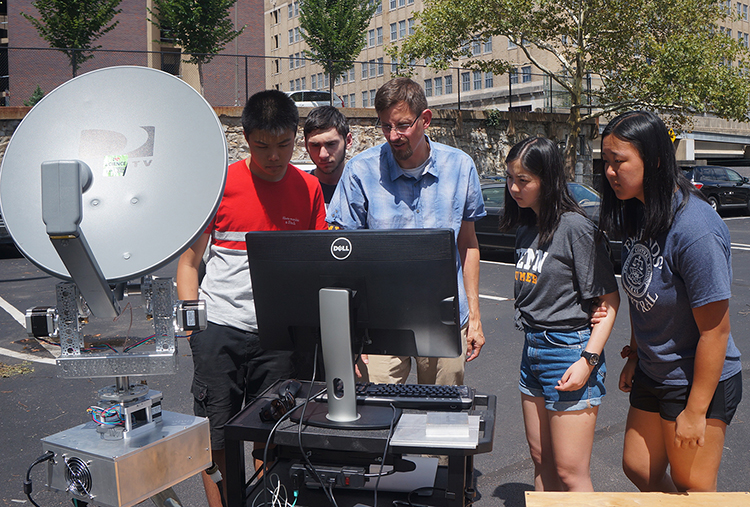
caption: Penn Summer High School Programs give high school students the opportunity to perform real-world scentific studies with faculty leaders in their field.

Penn Summer High School Programs: Penn delivers the challenge of an Ivy League curriculum to academically talented high school students seeking a pre-collegiate experience. Explore Penn’s historic campus, engage with leading faculty, and build intellectual connections within accelerated two-, three-, or six-week Penn Summer High School Programs. Financial aid available. Fees and to apply: https://summer.sas.upenn.edu/programs/high-school. Deadlines vary by program. 

Penn Summer Prep Program: Session A July 6-16; Session B July 20-30; Session C August 3-13. This two-week program offers non-credit, immersive study in disciplines across the sciences, arts, and humanities. Students choose two modules to focus their studies as they experience college life on Penn’s historic campus and explore the vibrant city of Philadelphia. Open to students entering 10th-12th grade. 

Penn Summer Academies: July 1-23. Subject-intensive programs fusing scientific or social theory with relevant application. Select from American Sign Language, biomedical research, chemistry research, experimental physics research, mathematics, neuroscience research, and social justice research. Open to students entering 10th-12th grade. 

Penn Summer Coding Camp: Session 1 June 14-July 2; Session 2 July 19-August 6. For three weeks, this non-credit program formally introduces students to the knowledge, skills, and abilities needed to explore the field of computer programming. Open to students entering 10th-12th grade. 

Penn Summer Data Analytics Camp: Session 1 June 14-July 2; Session 2 July 19-August 6. For three weeks, this non-credit program formally introduces students to Tableau and Python and reviews the knowledge, skills, and abilities needed to explore the field of data analysis and visualization. Open to students entering 10th-12th grade and graduated seniors. 

Young Scholars Program: Session I May 24-June 30; Session II July 1-August 6. The Young Scholars Program is an opportunity for academically exceptional local high school students to take college courses with Penn undergraduate students and earn full college credit. Open to students entering 11th-12th grade.

Pre-College Program: July 1-August 6. For the full undergraduate residential experience, the Pre-College Program allows high school students to live, eat, and study on campus as they take six-week, for-credit courses alongside Penn undergraduates. Open to students entering 11th-12th grade.

Penn Summer Science Initiative 2021: July 12-August 6. A free four-week summer program for local high school students interested in materials science and engineering. Students will participate in lectures on materials, a computer lab, experimental labs, and field trips to both industrial and Penn facilities. Open to students entering 11th-12th grade. Info and to apply: https://www.lrsm.upenn.edu/outreach/pssi/. Deadline: March 1. 

Penn Summer Sessions: 11-Week Session May 24-August 6; Session I May 24-June 30; Session II July 1-August 6. Offers undergraduate classes in the School of Arts and Sciences, the School of Engineering and Applied Science, the Weitzman School of Design, Penn Law, and the Wharton School—daytime, evening, and online. Open to all Penn undergraduates. Fees (program-specific) and to apply: https://summer.sas.upenn.edu/programs/penn-summer-sessions. Deadlines: May 1 for 11-Week Session and Summer Session I; June 1 for Summer Session II.

Penn Vet Canine Handler Academy: dates TBA. Students will gain hands-on training experience, learn from guest presentations, and enjoy various working dog demonstrations. Open to students entering 7th-9th grade. Info: https://www.vet.upenn.edu/research/centers-laboratories/center/penn-vet-working-dog-center/learn-about-working-dogs/canine-handler-academy

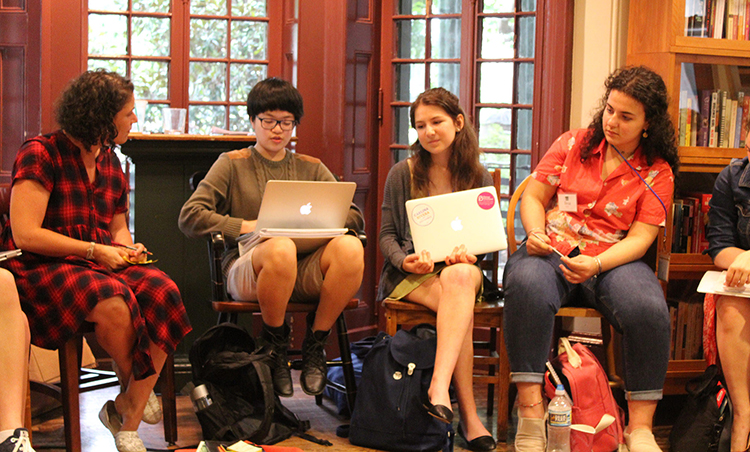
caption: Learn from other highly motivated writers and from faculty experts in the Kelly Writers House’s Summer Workshop for Young Writers.

Summer Workshop for Young Writers at the Kelly Writers House: July 5-15. An intensive workshop for students who show promise in and passion for writing. Instruction is at the undergraduate level, emphasis on creative nonfiction writing, supplemented by sessions in poetry, fiction, and other genres. Open to students entering 11th-12th grade. Financial aid available. Fees and to apply: http://writing.upenn.edu/wh/summer. Deadline: mid-March. 

Teen Research and Education in Environmental Science (TREES): June 28-August 6. A unique summer research and mentorship program offering hands-on environmental research opportunities to motivated high school students. Students receive hands-on instruction in basic laboratory skills for the first two weeks. The remainder of the program is an independent research project. Open to students entering 10th-12th grade. Fees and to apply: https://ceet.upenn.edu/training-career-development/summer-programs/teen-research-and-education-in-environmental-science/. Deadline: March 2. 

Wharton Summer High School Programs: Immersive experiences for high school students. Led by Wharton faculty and instructional staff, programs explore topics that align with Wharton research and teaching. Pre-collegiate students engage with our rigorous business education before making a post-secondary choice and get the chance to study and network with global peers. Open to students entering 10th-12th grade. Fees and to register: https://globalyouth.wharton.upenn.edu/summer-high-school-programs/

Future of the Business World: Session 1 June 7-June 18; Session 2 June 21-July 2; Session 3 July 12-July 23; Session 4 July 26-August 6. Led by Wharton faculty, this program provides an early foundation for Wharton courses. Students explore real-time business themes and engage with big questions about the evolving world through group work, mini-lectures, project-based learning, and business simulations. 

Moneyball Academy: Training Camp: Session 1 June 28-July 2; Session 2 July 26-30; residential July 11-July 31. A program broadly introducing students to statistics through a sports lens. This program welcomes talented high school students intrigued by statistics. Students applying to this program should have strong math skills and an interest in sports. Available in virtual and residential iterations. 

Wharton Pre-Baccalaureate Program: Session 1 May 24-June 30; Session 2 July 1-August 6. An academically-intensive opportunity for exceptional high school students to enroll in Wharton online courses. Participants will learn from Wharton instructors, earn a Wharton transcript, and accrue college credit for each course completed. Open to students entering 11th-12th grade.

Wharton Essentials of Entrepreneurship: Session 1 June 6-June 19; Session 2 June 20-July 3; Session 3 July 11-July 24; Session 4 July 25-August 7. An intensive two-week residential summer program that challenges students to engage with peers, use innovative thinking, and learn the basics of what it takes to be an entrepreneur. 

Wharton Essentials of Finance: Session 1 June 6-June 19; Session 2 June 20-July 3; Session 3 July 11-July 24; Session 4 July 25-August 7. An intensive two-week residential summer opportunity that provides a brief introduction to the fundamentals of finance, including the time value of money, stocks and bonds, investment strategies, risk and return, and fundamental financial analysis. 

Leadership in the Business World: Session 1 May 30-June 19; Session 2 June 20-July 10; Session 3 July 18-August 7. A three-week residential program that gives students an introduction to a top-notch undergraduate business education and the opportunity to hone their leadership, teamwork, and communication skills. 

Wharton Data Science Academy: July 11-July 31. Brings state-of-the-art machine learning and data science tools to high school students. Stimulate curiosity in the fast-moving field of machine learning through this rigorous yet approachable residential program. 

Sports Business Academy: July 11-July 31. Residential program that provides an opportunity for talented students to study sports business leadership at the Wharton School. Teaches students about ownership, sports agents, marketing, media, and labor as they meet and learn from leaders in the sports business world.

Management & Technology Summer Institute: July 11-31. A rigorous and rewarding for-credit residential summer program for students interested in exploring the integration of technological concepts and management principles. 

Download the 2021 Penn Summer Camps and Program supplement PDF.
Features

New Maya Lin Sculpture for Penn Medicine Pavilion

caption: A rendering of the new installation by Maya Lin, to be installed in the lobby of Penn Medicine’s new Pavilion. It embodies Penn’s goal of creating a calming, healing environment for patients. Courtesy Maya Lin Studio.

Penn Medicine’s Pavilion, one of the largest hospital projects underway in the United States and the largest capital project in the University of Pennsylvania’s history, will feature an art installation by renowned artist and designer Maya Lin. The artwork, tentatively titled “DNA Tree of Life,” will be on display in the atrium of the new state-of-the-art facility, set to open later in 2021 on the West Philadelphia campus of the Hospital of the University of Pennsylvania (HUP).

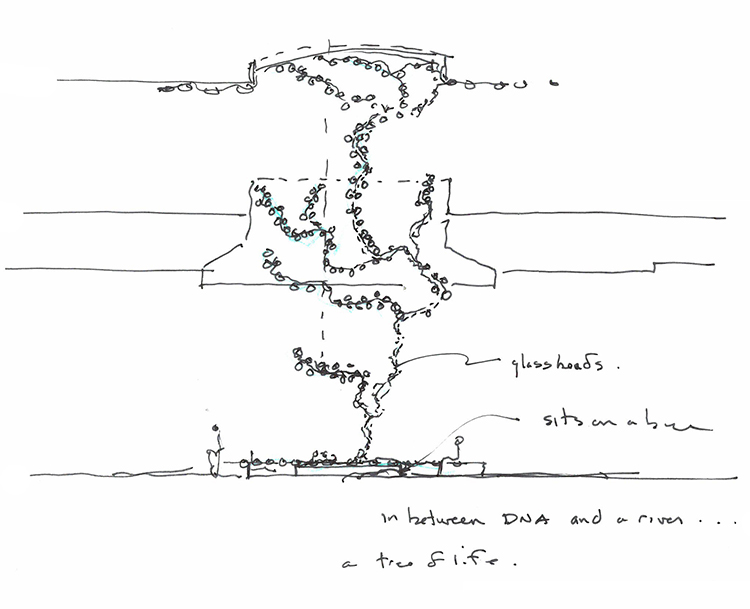
Ms. Lin’s acclaimed work has been featured at museums and galleries around the world. Since her very first highly acclaimed work, the Vietnam Veterans Memorial in Washington, D.C. completed in 1982, Ms. Lin has gone on to a remarkable career in both art and architecture. Ms. Lin’s architecture has consistently focused on sustainable design solutions and sensitivity to site and adaptive reuse; her artworks have asked the viewer to pay closer attention to the natural world. Now, she will work with Penn Medicine to bring hope and inspiration to patients. Drawing inspiration from the shape of DNA, the extending branches of a tree, and a map of the Philadelphia-area landmark, the Schuylkill River, “DNA Tree of Life” connects nature and medical science, representing life within the hospital, and within the city.

“My approach to this piece is to create something that is uplifting, that has a sense of wonder and beauty,” Ms. Lin said. “I want to make you aware of your surroundings in the Pavilion, in this beacon of scientific advancement, connecting you to the physical and natural world around you while symbolizing the very essence of life—DNA.”

As patients enter the Pavilion, also known as HUP East, they will be greeted with Ms. Lin’s intricate art piece, displaying a hidden steel “tree structure.” The structure will be concealed with hundreds of glass beads that will reflect the sunlight that streams through the windows. In the 17-story building, the sculpture will be suspended from the ceiling, between the Connector Level—where patients and visitors navigate the HUP campus with bridges between HUP East, HUP West, and the Perelman Center for Advanced Medicine—and the ground floor of the hospital.

Art is a priority element of the Pavilion’s design. Art consultant Ivorypress, a collective comprised of experts and art advocates across the University of Pennsylvania, the Penn arts community, and Penn Medicine, have been providing their expertise and recommendations on the artistic and architecture features to enhance an environment designed to promote healing. Additionally, the committee is prioritizing artwork that is reflective of not only the Philadelphia community, but of Penn Medicine’s global reach.

“Art and design can be a transformational element of a patient’s experience,” said Regina Cunningham, Chief Executive Officer of the Hospital of the University of Pennsylvania. “It was important to select pieces for HUP East that will convey a sense of peace and healing in this new landmark for exemplary care, as well as a welcoming, vibrant atmosphere for our patients, families, and staff. Maya Lin thoughtfully designed a sculpture that connects the fundamental elements of life and science to our health system and the Philadelphia community, and we look forward to its installation as we prepare to open the doors of our new patient Pavilion.”

Ms. Lin’s “DNA Tree of Life” will be installed before the Pavilion opens in October 2021.

caption: A sketch of the new installation, inspired by the shape of DNA, by artist Maya Lin that will be in Penn Medicine’s new Pavilion. Courtesy Maya Lin Studio.

Events

Virtual Penn Mindfulness and Resilience Courses

In the age of COVID-19, sustaining your emotional well-being is as important as safeguarding your physical well-being. To help faculty and staff maintain and improve total health as we navigate our professional and personal lives, Penn’s Division of Human Resources has several mindfulness and resilience resources and programs to fit different schedules and goals.

Practicing mindfulness—learning to pay full attention to the moment—is just one way to feel more focused, calmer, empowered, and productive. Building resilience—the ability to adapt under stress and bounce back from adversity—is also critical to engagement during these challenging times.

We invite you to share these free online programs with your staff, division, or colleagues to introduce and reinforce fundamental skills and research-driven techniques that foster well-being and connection to the Penn community.

In the Virtual Classroom

At Your Own Pace

For more information about Penn’s emotional well-being and behavioral health support, visit www.hr.upenn.edu/mindwellatpenn or email worklife@hr.upenn.edu.

—Division of Human Resources

NGSS Release 1 Information Session

The Next Generation Student Systems (NGSS) project is a large-scale effort to deploy modernized student information technology to better support the University’s student records and financial aid systems. On Friday, March 5, 2021, the project will host a virtual Information Session about the systems that will be available starting in fall 2021. For those who would like to learn more or are interested in attending the session, please visit the Information Session page on the NGSS website.

Update: February AT PENN

Conferences

19      Symposium Humanizing Asylum for All: Gender-Based Violence in Central America and the Effects of U.S. Policy; will focus on gender-based violence in Central America and gender-based asylum in the United States; 2-5 p.m.; online event; register: https://tinyurl.com/lals-conference-feb-19 (LALS). 

20      Penn Law Lambda Symposium 2021: LGBTQ Health and the Law: Advocacy and Action; discussion on LGBTQ access to and discrimination within healthcare and how lawyers are currently working to expand rights and support clients faced with healthcare challenges; 1-7 p.m.; Zoom meeting; register: https://tinyurl.com/law-lambda-2021 (Penn Law). 

Exhibits

19     A Conversation with Dana Rice and Alli Davis on Artist Dox Thrash and The Dox Thrash House Project; noon; Zoom meeting; join: https://upenn.zoom.us/j/92688494278#success (Arthur Ross Gallery). 

         Virtual Global Guide Tour: Mexico & Central America Gallery; 2:30 p.m.; online event; register: https://tinyurl.com/global-guide-feb-19 (Penn Museum). 

Fitness & Learning

17      The Masc We Live In – Cultural Implications of Masculinity; open discussion on masculinity in different cultural contexts; 5 p.m.; Zoom meeting; join: https://tinyurl.com/masculinity-feb-17 (VPUL; Penn Violence Prevention). 

18       CE Series: Advanced Urinary Care; learn about fundamentals of veterinary care from Penn Vet experts; 6 p.m.; online event; register: www.alumni.upenn.edu/AUCFeb182021 (Penn Vet). 

           Career Conversations: Industry Perseverance—Real Estate & Law; dynamic conversation with Penn alumni discussing how COVID has affected careers in the real estate industry; 6 p.m.; online event; register: https://tinyurl.com/career-conversations-feb-18 (SAS, Penn Alumni). 

19       It’s the Journey that Matters: Applying for Fellowships; panel of experts discuss scholarships like Fulbright and Marshall; 3 p.m.; Zoom meeting; join: https://tinyurl.com/curf-seminar-feb-19 (CURF). 

          Penn & Slavery Project’s Augmented Reality Campus Tour App; webinar launching a product of Penn & Slavery Project’s research; 3 p.m.; online event; register: https://bit.ly/PSProjectAR (Penn & Slavery Project).

Graduate School of Education (GSE)
Online events. Info and to register: https://www.gse.upenn.edu/news/events-calendar

16       Making Tax Returns Less Taxing; open to GSE and SP2 staff and faculty; noon.

           Leadership Awareness Training; 12:30 p.m.

           Innovation for Equity: Meeting the Moment; 2 p.m.

           Food for Thought: Mardi Gras!; 6 p.m.

          Admissions: Virtual Financial Aid Session; 6 p.m.

17      Perfecting Your No-Guilt No; noon.

18      Breakroom with the Community-Building Committee; 12:30 p.m.

          Admissions: Web Chat with Current Students; 7 p.m.

19      Guided Mindful Meditation with Liz Mackenzie; 12:30 p.m.

Morris Arboretum
Online classes. Info and to register: https://experience.morrisarboretum.org/Info.aspx?EventID=31

18       Water Management Solutions for Your Landscape; Valerie Solitrin, landscape designer; 6:30-9 p.m.

Readings & Signings

18       Defending Frenemies: Alliances, Politics, and Nuclear Nonproliferation in U.S. Foreign Policy; Jeffrey W. Taliaferro; 4 p.m.; online event; info: https://www.law.upenn.edu/institutes/cerl/events.php (CERL). 

22       A Revolution in Rhyme; Fatemeh Shams; 2 p.m.; online event; register: https://tinyurl.com/shams-reading-feb-22 (Middle East Center). 

Talks

16        China and Southeast Asia: A Contemporary History; Prasenjit Duara, Duke; noon; online event; register: https://tinyurl.com/duara-talk-feb-16 (CEAS).

Community Engagement and SEAMACC; Thoai Nguyen, SEAMACC; noon; Zoom meeting; info: anabelb@sas.upenn.edu (ASAM).

            Past and Future Limits on Human Gene Editing in Bioethical Debate: A Social Explanation; John Evans, UC San Diego; noon; Zoom meeting; join: https://zoom.us/j/91537426186 (MEHP).

            Science, Technology, and Modern War: The Rational Fog; Susan Lindee, HSS; noon; online event; register: https://tinyurl.com/lindee-talk-feb-16 (Perry World House).

            Structural Foundations of Efficient Reinforcement Learning; Alekh Agarwal, Microsoft; 3 p.m.; online event; info: cis-info@cis.upenn.edu (CIS).

            Building Better Government: Priorities and Challenges for the New Administration; Philip Howard, Covington & Burling; Elaine Kamarck, Brookings Institution; Peter Schuck, Yale; 4 p.m.; Zoom meeting; register: https://tinyurl.com/building-better-feb-16 (Penn Law).

            Mechanisms Underlying Spatiotemporal Patterning in Microbial Collectives: A Model's Perspective; Bhargav Karamched, Florida State; 4 p.m.; Zoom meeting; join: https://tinyurl.com/karamched-talk-feb-16 (Mathematics).

17        Booming Economies and the Ethno-Racial Divide in Violent Crime Change (1999 – 2013); Maria Velez, UMD; noon; Zoom meeting; ID: Zoom Meeting ID: 965 9082 5437; password: CRIM558 (Criminology).

            “MRS Degrees” for Whom? Racial Disparities in Women's Household Economic Returns to College Quality; Jordan Conwell, University of Wisconsin-Madison; noon; online event; info: https://sociology.sas.upenn.edu/events/ (Sociology).

            The Moral Triangle: Germans, Israelis, Palestinians; Sa’ed Atshan, Swarthmore College; Katharina Galor, Joukowsky Institute for Archaeology; noon; online event; register: https://tinyurl.com/atshan-galor-feb-17 (Middle East Center).

Insights into Active Site Structures for Bimetallic Heterogeneous Catalysts; Madelyn Ball, Georgia Tech; 3 p.m.; Zoom meeting; info: chebiom@seas.upenn.edu (CBE).

            Pursuing Cosmic Puzzles with Galaxy Surveys; Bhuvnesh Jain, physics & astronomy; 3 p.m.; Zoom meeting; join: https://tinyurl.com/jain-talk-feb-17 (Physics & Astronomy).

The Apartheid Psychiatrist: Individual Guilt and Collective Responsibility in South Africa; Jacob Dlamini, Princeton; 4:30 p.m.; Zoom meeting, register: https://tinyurl.com/dlamini-talk-feb-17 (Africana Studies).

            “Undisciplined”: Early Modern Women’s Writing and the Urgency of Scholarly Activism; Kimberly Anne Coles, UMD; 4:30 p.m.; Zoom meeting; info: https://www.english.upenn.edu/events/ (English).

18        Using Observational Data to Emulate Target Trials in Pregnancy: Findings from a Nationwide Birth Outcomes Surveillance Study in Botswana; Ellen Caniglia, NYU; 9 a.m.; BlueJeans meeting; join: https://bluejeans.com/368827150 (CCEB).

Fieldwork, Research Strategies: Census, Asian Americans in Pennsylvania; Stephanie Sun, GACAPAA; noon; Zoom meeting; info: anabelb@sas.upenn.edu (ASAM).

            Calculating Bully: Explaining China’s Coercion; Ketian Vivian Zhang, George Mason University; noon; Zoom meeting; join: https://tinyurl.com/zhang-talk-feb-18 (CSCC).

            Third Thursday; Ricardo Bracho, GSWS artist-in-residence; noon; online event; register: https://tinyurl.com/bracho-talk-feb-18 (GSWS).

            Disrupting Contract Law; Sandeep Vaheesan, Open Markets Institute; 12:30 p.m.; Zoom meeting; join: https://upenn.zoom.us/j/94564179162 (Penn Law).

            Engineering Synthetic Biomaterials for Islet Transplantation; María Coronel, Georgia Tech; 3 p.m.; online event; info: be@seas.upenn.edu (Bioengineering).

            Why Read Homer in 2021? Emily Wilson, classical studies; 4:30 p.m.; Zoom meeting; register: https://tinyurl.com/wilson-talk-feb-18 (Classical Studies).

            Free Speech Battles—The Secret History of the First Amendment; Fara Dabhoiwala, Princeton; 5 p.m.; online event; register: https://tinyurl.com/dabhoiwala-talk-feb-18 (Andrea Mitchell Center).

            Kahn at 120; panel of speakers; 6 p.m.; Zoom meeting; register: https://tinyurl.com/kahn-120-feb-18 (Weitzman School).

19        The Party System in India; Eswaran Sridharan, UPIASI; Tariq Thachil, CASI; Ramanan Raghavendran, Amasia; 11 a.m.; online event; register: https://tinyurl.com/penn-india-feb-19 (CASI, Penn Alumni).

(Re)building Human Dexterity: Inferring Musculoskeletal Dynamics for Next-Generation Assistive Devices & Diagnostics; Laura Hallock, UC Berkeley; noon; Zoom meeting; info: jbatter@seas.upenn.edu (ESE).

            Recent Advances in Modeling Subduction and Viscoelastic Flow in Geodynamic Computations; Elbridge Gerry Puckett, UC Davis; 2 p.m.; Zoom meeting; info: kathom@seas.upenn.edu (PICS).

22        Re-membering WWII Paris; Mélanie Peron, French & Francophone studies; 5:15 p.m.; Zoom meeting; info: https://pennmaterialtexts.org/ (Penn Libraries).

Annenberg School for Communication
Online events. Info and to register: https://www.asc.upenn.edu/news-events/events

17        Too Much and Too Little: Race, Photography, and the Limits of Legal Seeing; LaCharles Ward, ASC; noon.

18        Community-Centered Journalism: Engaging People, Exploring Solutions, and Building Trust; Andrea Wenzel, Temple; 3 p.m.

Economics
Online events. Info and to register: https://economics.sas.upenn.edu/events

22        Forecasting Euro-Area Inflation with Time-Varying Parameter Quantile Regressions; Dimitris Korobilis, University of Glasgow; 4:30 p.m.

--
AT PENN Deadlines

The February AT PENN calendar is online and will be updated throughout the month. The March AT PENN calendar will be published next week, Tuesday, February 23

Crimes

Weekly Crime Reports

University of Pennsylvania Police Department Crime Report

Below are the Crimes Against Persons, Crimes Against Society and Crimes Against Property from the campus report for February 1-7, 2021. View prior weeks' reports. —Ed.

This summary is prepared by the Division of Public Safety and includes all criminal incidents reported and made known to the University Police Department for the dates of February 1-7, 2021. The University Police actively patrol from Market St to Baltimore and from the Schuylkill River to 43rd St in conjunction with the Philadelphia Police. In this effort to provide you with a thorough and accurate report on public safety concerns, we hope that your increased awareness will lessen the opportunity for crime. For any concerns or suggestions regarding this report, please call the Division of Public Safety at (215) 898-4482.

02/01/21

2:00 AM

2900 Chestnut St

Vehicle stolen during delivery

02/01/21

6:33 PM

3400 Spruce St

U-lock secured bike stolen

02/02/21

4:14 AM

3400 Spruce St

Security person struck in the face/Arrest

02/02/21

3:46 PM

4045 Baltimore Ave

Money fraudulently obtained from complainant

02/03/21

8:47 AM

3925 Walnut St

Merchandise taken without payment

02/04/21

12:52 PM

3800 Spruce St

Complainant assaulted by known offenders

02/04/21

5:19 PM

3549 Chestnut St

Rental vehicle stolen from Sheraton parking garage

02/04/21

5:30 PM

3817 Spruce St

Unknown offender attempted to extort money

02/04/21

6:41 PM

3800 Spruce St

Known offender took complainant’s wallet during fight

02/04/21

11:24 PM

3411 Chestnut St

Complainant assaulted by unknown offender

02/05/21

12:36 PM

51 N 39th St

Unsecured currency taken

02/05/21

1:47 PM

4001 Walnut St

Offender removed merchandise without payment/Arrest

02/06/21

3:47 PM

3600 blk Sansom St

Confidential sex offense

02/07/21

3:18 PM

3900 Spruce St

Confidential sex offense

18th District

Below are the Crimes Against Persons from the 18th District: 11 crimes against persons (4 assaults, 3 rapes, 2 aggravated assaults, and 2 robberies) were reported for February 1-7, 2021 by the 18th District, covering the Schuylkill River to 49th St & Market St to Woodland Avenue.

02/02/21

4:27 AM

3400 Spruce St

Assault

02/03/21

6:15 PM

4234 Chestnut St

Assault

02/04/21

10:25 AM

3401 Civic Center Blvd

Assault

02/04/21

3:10 PM

3800 blk Spruce St

Aggravated Assault

02/04/21

6:41 PM

3800 blk Spruce St

Robbery

02/04/21

11:33 PM

3411 Chestnut St

Assault

02/05/21

4:49 PM

4600 blk Chester Ave

Rape

02/06/21

4:18 AM

S 47th St & Woodland Ave

Aggravated Assault

02/06/21

3:47 PM

3600 blk Sansom St

Rape

02/07/21

3:18 PM

3900 blk Spruce St

Rape

02/07/21

6:29 PM

4200 blk Chester Ave

Robbery

Bulletins

Franklin Field Track Open

Dear Penn Community,

The track at Franklin Field has opened for recreational use, in a limited capacity, as of Monday, February 1, 2021. Recreational activities are limited to use of assigned track lanes. Use of the track is free for Penn students, faculty, and staff and reservations are required.

Students, faculty, and staff must participate in the appropriate University COVID-19 testing approach in order to access the track. Visit the Wellness at Penn COVID-19 page for specific information and FAQs. All patrons must enroll in PennOpen Pass and complete the symptom check prior to arrival. Patrons are expected to show their Green Pass to gain entry into the facility. Students, faculty and staff must be participating in University surveillance testing/screening program to participate in open recreation.

All policies and procedures will be strictly enforced. If you have any questions, please email Penn Campus Recreation Membership Services at DRIA-pennrec@pobox.upenn.edu.

Franklin Field Track Open Recreation Information:

Location:
233 South 33rd Street, Philadelphia, PA 19104
The entrance is located through the Fox Fitness Center, near Gate 2 on the north side of the stadium. At the conclusion of the session, patrons should exit through the George Munger Locker Room, located off the east concourse.

Hours of Operation
By reservation only. No walk ups will be accepted.

  • Monday-Friday: 7-9 a.m., 11 a.m.-2 p.m. (45 minute sessions on the hour with 15 minutes between sessions to clear the track and stadium)
  • Saturday and Sunday: Closed

Policies and Procedures

  • Patrons must follow facility flow patterns and signage at all times within the facility.
  • In order to gain entry patrons must present:
    • A reservation confirmation
    • A valid PennCard
    • A green PennOpen Pass
  • Facial coverings are required at all times within the facility.
  • Patrons must maintain appropriate physical distancing.
  • Restroom access will be available in the North Concourse.
  • Lockers will not be available.
  • No personal fitness equipment or sport specific equipment will be permitted or available for use.

Online Reservations
Reservations are required. Patrons can register for one session per day and up to four sessions per week. Prior to making reservations, patrons must register for the Open Recreation Membership on the Member Portal prior to making your first reservation. Membership and reservations are free of charge.

To register:

  • Visit the Campus Recreation Member Portal and log into your account
  • Select Memberships
  • Select Open Recreation Membership
  • Select Duration
  • Select Spring Semester
  • Select Add to Cart
  • Review User Agreement/Waiver and click Accept Now
  • Click Checkout to complete registration

To make a reservation:

  • Visit the Reservation Portal
  • Select Franklin Field Track
  • Choose your preferred reservation date and time
  • Click Book Now
  • An email with confirmation and check-in instructions will be sent for your records

If you have any questions, please e-mail Penn Campus Recreation Membership Services.

—Penn Athletics

Penn Labs Freezer Challenge

Join the inaugural Penn Labs Freezer Challenge. The challenge promotes best practices in cold storage management. Participating labs will submit an online score sheet. Sign-ups are being accepted now and the deadline to complete the challenge is April 15. First-, second- and third-place winners will receive a swag basket of reusable items including Nalgene water bottles, canvas bags, metal straws, and more. This challenge coincides with the International Freezer Challenge.

To sign up, visit bit.ly/pennfreezer21. For more information on Green Labs, including the Green Labs Guide & Commitment, information on Green Labs Working Group meetings, and other resources, visit sustainability.upenn.edu/penn-community/green-labs.

Almanac Publication Schedule

Almanac will release an issue on Tuesday, February 23 (which will contain the March AT PENN calendar) and Tuesday, March 2. There will be no issue on Tuesday, March 9.

For the full publication schedule and corresponding deadlines, visit https://almanac.upenn.edu/publication-schedule-deadlines.

Back to Top