From the President: Statement on the Death of George Floyd
Once again our nation mourns. The tragic and senseless death of George Floyd is a vivid reminder of the inequalities and unacceptable indignities that so many of our citizens constantly endure. The events in Minneapolis this week should lead everyone to recognize how much more work our society must do to realize liberty and justice for all. As a nation we have much work to do.
While the entire Penn community weeps, and our hearts are filled with sadness for this senseless loss of life, we should remember the importance of Penn’s commitment to doing our part to create a more inclusive and mutually respectful environment and society free from discrimination and deprivation.
I especially want Penn’s African American students, faculty and staff to know how much they and their contributions to our community are treasured. It is particularly important at this difficult time that Penn’s students of color know their University supports them, which we unequivocally do. While we may be apart physically at this point in time, we are truly together in spirit.
We all long for the day when we never again bear witness to such a needless death. Our prayers are for the Floyd family, and for a healing of our nation’s soul. Let all of us in the Penn community use this moment to recommit, from the deepest corners of our hearts, to creating a living and learning environment that is truly safe and welcoming for all.
—Amy Gutmann, President
Thirteen Undergraduates: MindCORE Lila R. Gleitman Undergraduate Summer 2020 Fellowships
 With support from a $1 million gift from an anonymous donor, MindCORE summer fellowships will now be named the Lila R. Gleitman Undergraduate Summer Fellowships. The endowed fellowships program supports up to 10 Penn undergraduate students with summer research experiences in the labs of MindCORE faculty.
Dr. Gleitman is an emerita professor of psychology in the School of Arts & Sciences. Her work has helped define the field of language learning. Always interdisciplinary in her approach, Dr. Gleitman forged ties across linguistics and psychology through her empirically elegant investigations documenting how the inherent endowments that children bring to language learning interact with the input they receive to create language. She earned her master’s in linguistics from Penn in 1965 and her PhD in 1967. After three years on the faculty at Swarthmore, she came to Penn, where she has remained for the rest of her career. From 1980 to 2000, she served as co-director of Penn’s Institute for Research in Cognitive Science, the predecessor to MindCORE. She has won numerous awards, including Penn’s Provost’s Award for Distinguished PhD Teaching and Mentoring (Almanac April 26, 2005), the John McGovern Award for the Behavioral and Social Sciences Area from the American Association for Advancement of Science, and the American Psychological Association’s Distinguished Scientific Contribution Award for significant impact on the science of psychology, both in research and in training of graduate students. She is a former president of both the Linguistic Society of America and the Language Development Society and is a fellow of the Cognitive Science Society, the American Association for the Advancement of Science, the Society of Experimental Psychologists, the American Academy of Arts and Sciences, and the National Academy of Sciences.
With help from additional funds, a total of 13 Penn undergraduates have been selected for summer 2020 fellowships. Participants receive a $4,500 stipend for their research work with a faculty mentor, a one-week programming boot camp and workshop series in interdisciplinary topics of mind and brain, weekly seminar lectures, professional development training, and one-on-one workplace advising from a
research trainee.
Changes to the Penn Computer Connection
The Division of Business Services wishes to inform the Penn Community that as of June 30, 2020, the Computer Connection’s retail store, located on the second floor of the Penn Bookstore, will permanently close.
The store has adapted to the many changes in the technology-retail market since it opened 35 years ago, but the combined impact of narrower margins, fewer new product releases, and extraordinary mass-market discounting strategies from large retailers, has had a pronounced impact on the store’s ability to sustain its operation.
Going forward, the University remains committed to providing resources and value-added services that align with the technology needs of the Penn community. The Office of Software Licensing will remain and most likely expand its offerings. Also, the Penn Bookstore will expand its in-store inventory of computer supplies, accessories and peripherals to enable the Penn Community to have easy access to such items.
Penn will also continue to leverage its significant purchasing power and maintain its strong vendor relationships to support Penn’s Schools and Centers. In partnership with Penn Purchasing, institutional priorities such as collaborative purchasing, bulk orders and post-sale issue resolution will be preserved. Student-focused services, including the distribution of computers to Penn’s highly aided student population and support for educational discount programs that promote school-based standards, will also be maintained.
Although the retail store and associated warehouse operations will be discontinued, the fulfillment of existing orders will be honored, and information will be forthcoming and communicated to members of the IT community regarding the availability of inventory and the process for placing new orders
—Marie Witt, Vice President for Business Services
2020 Models of Excellence Commemorative Video
Since 1999, Penn’s Models of Excellence Awards program has recognized the outstanding accomplishments of the University’s staff members. This year is no exception. Although the traditional Models of Excellence ceremony could not take place this spring, University invites the entire Penn community to take a moment to celebrate the 2020 honorees by viewing a commemorative video.
Watch the 2020 Models of Excellence Video at https://vimeo.com/409907040 The video features staff member interviews, as well as portraits of the 16 Models of Excellence, Pillars of Excellence, and Model Supervisor honorees. (See Almanac March 3, 2020 for the list of winners.)
Learn more about the contributions of the 2020 Models of Excellence program honorees by downloading an electronic copy of the special 2020 Models of Excellence keepsake book at https://indd.adobe.com/view/1beaab32-f0fc-43a0-8d1c-54c52cd6fac7
Please join the Models of Excellence team in congratulating this year’s honorees. Near and far, the Penn community is grateful for your service to the University’s mission in education, research and public service.
—Division of Human Resources
Herman Beavers: Faculty Director of Civic House and the Civic Scholars Program
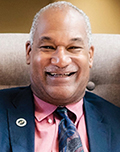 Provost Wendell Pritchett and Vice Provost for Education Beth Winkelstein announce the appointment of Herman Beavers as faculty director of Civic House and the Civic Scholars Program.
Dr. Beavers has taught at Penn since 1989 and is one of the University’s most renowned mentors, writers and teachers. He is professor of English and Africana Studies, a distinguished poet and a widely published scholar of 20th century American and African-American literature, especially the novels of Toni Morrison, the traditions of jazz and jazz writing, and the work of 20th-century Southern writers. He received the 2017 SAS Dean’s Award for Mentorship of Undergraduate Research in recognition of his well-known attention to advising Penn students, and he was elected that same year as a Commissioner of the Middle States Commission on Higher Education.
Most notably, Dr. Beavers has been a leader in extending scholarship and teaching into the Penn community. His legendary ABCS (Academically-Based Community Service) course on August Wilson, which was awarded the first Community Engagement Award from the Netter Center for Community Partnerships, brings together Penn undergraduates with West Philadelphia residents, Veterans Upward Bound participants and Sayre High School students to read Wilson’s plays and write performance pieces, based on interviews with local community members, which are then performed by local Philadelphia actors.
“Herman Beavers,” said Provost Pritchett, “is the ideal faculty leader to advance Penn’s vital civic engagement programs in the years ahead. His wide range of experience exemplifies our highest ideals for engaging Penn students and scholarship with our community, creating a richer experience for everyone involved. We are indebted to the pioneering work of Professor Walter Licht—founder of the Civic Scholars program in 2006 and faculty director of Civic House since 2002—who will step down from his responsibilities at Civic House at the end of this academic year, while continuing his landmark scholarship as Walter H. Annenberg Professor of History.”
Dr. Beavers earned a PhD and MA from Yale University, an MA from Brown University and a BA from Oberlin College.
Civic House is Penn’s hub for civic engagement, promoting mutually beneficial collaborations between Penn and Philadelphia community nonprofit organizations. Through social justice education, trainings and workshops, Civic House prepares students for responsible community engagement and empowers them to become advocates for social change. The Civic Scholars Program at Civic House provides undergraduate students with a sustained four-year experience in civic engagement and scholarship, including dedicated proseminars, summer internships and a capstone senior research project.
Tariq Thachil: Director of CASI
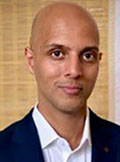 Steven J. Fluharty, Dean and Thomas S. Gates, Jr. Professor of Psychology, Pharmacology, and Neuroscience, has announced that Tariq Thachil has been named director of the Center for Penn’s Advanced Study of India (CASI) and associate professor of political science. As director of CASI, he will also hold the Madan Lal Sobti Chair for the Study of Contemporary India. The appointment is effective July 1.
Dr. Thachil comes to Penn from Vanderbilt, where he is currently an associate professor of political science. He studies political parties and political behavior, social movements, ethnic politics and urban migration, with a regional focus on South Asia. His current research examines the political consequences of rapid urbanization and internal migration in India.
Dr. Thachil’s first book, Elite Parties, Poor Voters: How Social Services Win Votes in India, in 2014 and received several awards, including the Gregory Luebbert Book Award for best book in comparative politics from the American Political Science Organization. His articles have appeared in the American Journal of Political Science, Contemporary South Asia, Journal of Politics and World Politics. He has written for the Indian Express and The Washington Post. In 2019, he received the Heinz I. Eulau Award for Best Article in the American Political Science Review. He holds a PhD in government from Cornell and a BA in economics from Stanford.
Since its founding in 1992, CASI has advanced understanding of contemporary India by engaging in policy-relevant research focused on present-day challenges; serving as a forum for seminars, workshops and conferences; producing scholarly publications; and providing undergraduate and graduate students with unparalleled internship and research opportunities in India.
“CASI was the first research institution in the US dedicated exclusively to the study of contemporary India, and it is an expression of our commitment to scholarship on India and South Asia,” said Dr. Fluharty. “It is a vital part of our drive to not only expand global understanding, but to discover global solutions to issues like sustainability, poverty, and justice. Tariq Thachil will be an outstanding partner in this mission.”
“I am extremely pleased Professor Tariq Thachil has agreed to be CASI’s next director,” said Marshall M. Bouton (G’68), acting director and visiting scholar at CASI, and former chairman and current member of its International Advisory Board. “He will bring to the task not only the depth of his superb scholarship on contemporary Indian politics and society, but also a personal and professional commitment to greater understanding of India and its many challenges.”
The Madan Lal Sobti Chair for the Study of Contemporary India was established through the generosity of alumni, parents and friends of Penn, including P.C. Chatterjee; Raman Kapur (PAR’07); Sreedhar Menon; Sunil Mittal; Dalip Pathak (WG’78, PAR’10); Rajiv Sobti (GR’84, PAR’08, PAR’12); and Sanjiv Sobti (WG’85, GR’86, PAR’10, PAR’20). The chair is named in honor of the Sobtis’ late father, Madan Lal Sobti, and supports in perpetuity a professorship held by the director of CASI.
Kirsten Becker: Gymnastics Head Coach
 Kirsten Becker (C’13), a graduate of Penn’s College of Arts & Sciences with a degree in communications, an Ivy Classic champion as a student-athlete and assistant coach at Penn, has been promoted to head women’s gymnastics coach, the T. Gibbs Kane, Jr. W’69 Director of Athletics and Recreation M. Grace Calhoun announced on May 19. Ms. Becker has served as the program’s assistant coach for the past five years, helping lead the Quakers to the 2020 Ivy Classic title and their highest team score in program history in 2019.
“We are excited to promote one of our most accomplished gymnasts and our current assistant coach, Kirsten Becker, to head coach,” Dr. Calhoun said. “Kirsten is a strong leader who is composed, organized and passionate about the program. She has proven her ability to recruit high-level scholars and athletes and build strong relationships, and her technical ability has led to record-breaking scores and Ivy Classic titles. We look forward to the bright future of Penn women’s gymnastics.”
Penn recorded its second-best score in the program’s history to win the Ivy Classic title this winter. As the program’s beam and floor exercise coach, Ms. Becker led the Quakers to their best beam score in school history at the event.
“I am extremely honored to accept this position and excited to continue the success and growth of the Penn gymnastics program,” Ms. Becker said. “I will strive to create a positive experience for every student-athlete. I know how special the current student-athletes are and look forward to picking up right where we left off last season. Thank you to Dr. Calhoun and the Penn Athletics administration for entrusting me with this responsibility. Penn has been a part of many of my most cherished memories over the last 10 years, and I’m excited to continue this journey.”
In 2019, Penn compiled its best National Qualifying Score ever and its score at Maryland was the best in program history, breaking a 15-year-old record. The year before, Ms. Becker coached the first NCAA Regional qualifier in five years, Alex Hartke.
As an assistant coach, she mentored 20 all-ECAC gymnasts, six ECAC Scholar-Athletes, four ECAC individual champions and three Ivy Classic champions. This past year, Penn freshmen were named ECAC Co-Specialist of the Year (McCaleigh Marr) and ECAC Co-Rookie of the Year (Rebekah Lashley). Both are firsts for the program.
A decorated collegiate gymnast for Penn, Ms. Becker was a two-time team captain and the 2013 ECAC Gymnast of the Year. A two-time NCAA regional qualifier, she helped the Quakers to two ECAC Championships and two Ivy Classic titles. Ms. Becker was the 2013 USA Gymnastics Collegiate Nationals Uneven Bars champion and was Penn’s nominee for the prestigious NCAA Woman of the Year award.
She is currently pursuing a master’s degree in organizational dynamics from the University.
Change to Work Addresses in Workday Due to Remote Working
The University of Pennsylvania continues remote working to address the health and well-being of its employees during the coronavirus (COVID-19) pandemic. As remote work progresses toward 90 days and more, we are now moving forward with making a change in Workday to update work addresses to home to ensure compliance with state and local tax withholding requirements. The good news is that the University has identified a method to make a systemic change to update work address. This systemic change will take the burden off the schools and centers to manually make these changes, as we previously thought.
For employees residing outside of Philadelphia who are working remotely, their work address in Workday will be updated to be the same as their primary home address effective June 1, 2020. Work addresses will not be changed for identified groups of individuals in functional areas who cannot perform their job functions remotely, as follows:
- FRES, Business Services, and Public Safety union staff;
- Penn Child Care Center employees;
- Certain ULAR and EHRS employees (identified by the Provost’s Office);
- Certain Ryan Hospital employees (identified by the Vet School); and
- Individuals identified as essential employees to HR
No change in work location will be made for students; temporary employees; postdocs; faculty in early retirement; individuals on STD, LTD or scholarly academic leave; or for individuals with a primary home address outside of the US. Note that this change will affect pay dates after June 1, 2020. The change will not be retroactive to March 13, 2020.
Impact to Employees
- Employees residing in Pennsylvania:
Non-Philadelphia residents—will no longer have Philadelphia City Wage tax withheld from their pay but instead will have any local taxes withheld for the tax jurisdiction in which they reside.
Philadelphia residents—will not have their work location changed as there would be no change to their tax withholding.
- Employees residing outside of Pennsylvania:
Employees who live in reciprocal states (New Jersey, Ohio, Maryland, Virginia, West Virginia and Indiana) who have elected to be taxed in their state of residence instead of the state in which they work (PA)—will no longer have Philadelphia City Wage Tax withheld from their pay and will instead have any local taxes withheld for the tax jurisdiction in which they reside. Additionally, any credit received against state tax withholding for Philadelphia City Wage Tax withheld will be adjusted for the change in local tax withholding.
Employees who live in reciprocal states (New Jersey, Ohio, Maryland, Virginia, West Virginia and Indiana) who have NOT elected to be taxed in their state of residence, but are instead taxed in the state in which they work (PA)—will no longer have Philadelphia City Wage Tax or Pennsylvania state tax withheld, but will instead have state and local tax withheld based on the state and locality of where they reside.
Employees who live in non-reciprocal states—will no longer have Philadelphia City Wage Tax or Pennsylvania state tax withheld and will instead have state and local tax withheld based on the state and locality of where they reside.
Workday Tasks to be Completed by Employees
For individuals residing outside of Pennsylvania—To ensure they are properly taxed, workers should access Workday on June 1 to review and update their tax information. Individuals whose work address has been changed will receive a notice in Workday of a To-Do task “Address Change: Possible Updates Needed to Tax Elections.” Workers should click on the “BSI Tax Withholding Form Employee” link and review and complete the appropriate state or local tax forms displayed. Individuals should also click on the “Pick Other Forms” button to determine if additional forms are available to be completed. For additional information, refer to the Self Service-Access Tax Withholding Forms tip sheet at www.workday.upenn.edu/docs/default-source/tip-sheets/self-service-access-tax-withholding-forms.pdf?sfvrsn=2acb8f56_30
City Wage Tax Refunds
Non-residents of Philadelphia may make a claim directly with the City at the end of the year for Philadelphia City Wage Tax withheld from their pay while they worked outside the City for the period March 13 through May 31, the remote work period prior to the effective date of the work location change. The completed petition form must include the following:
- W-2 showing Federal, State, Medicare and Local wages
- Statement of dates worked outside the City of Philadelphia signed by both the employee and the employer
- Signatures from both the employee and the employer
Any refund claim must be filed within three (3) years from the date the tax was paid or due, whichever date is later.
For any days worked outside Philadelphia, the employee may be liable for taxes in other jurisdictions within Pennsylvania or in another state. It is the employee’s responsibility to determine whether they have any such liability, to file the appropriate tax forms, and to make any payments due to such other jurisdictions.
If you have any questions, please contact the Penn Employee Solution Center at hcmsolutioncenter@upenn.edu
—Department of Human Resources

-resized.jpg) Isaiah (Josh) Fidler, former associate professor of pathology in the School of Dental Medicine and the School of Veterinary Medicine at the University of Pennsylvania, died May 8 at his home in Houston following a long illness. He was 83.
Isaiah (Josh) Fidler, former associate professor of pathology in the School of Dental Medicine and the School of Veterinary Medicine at the University of Pennsylvania, died May 8 at his home in Houston following a long illness. He was 83.-resized.jpg) Barry Stupine, former associate dean the University of Pennsylvania’s School of Veterinary Medicine, died May 6 at his home in Rydal of amyloidosis. He was 78.
Barry Stupine, former associate dean the University of Pennsylvania’s School of Veterinary Medicine, died May 6 at his home in Rydal of amyloidosis. He was 78. Urs Giger, the Charlotte Newton Sheppard Professor of Medicine in the School of Veterinary Medicine at the University of Pennsylvania, has won the 2020 International Canine Health Lifetime Achievement Award.
 Penn’s Sarah J. Jackson, Presidential Associate Professor in the Annenberg School for Communication, and Duncan Watts, Penn Integrates Knowledge professor with appointments in the School of Engineering and Applied Science, the Annenberg School for Communication, and the Wharton School, have been named 2020 Andrew Carnegie Fellows by the Carnegie Corporation of New York. Each fellowship carries a grant of $200,000.
 Ed Brockenbrough, associate professor and Calvin Bland Fellow, received a Body of Work Award from the American Educational Research Association’s Queer Studies Special Interest Group. This group periodically awards a scholar who has contributed a significant body of work that produces important scholarship in the area of LGBTQ studies and/or Queer Theory in education and has shaped the field of LGBTQ studies in education and/or Queer Studies in education.
 Michelle Neuman, lecturer in the International Educational Development program, was a guest co-editor of Early Years: An International Research Journal, Volume 39, Issue 3, a special issue about early childhood policy in low- and middle-income countries.
 Marsha Richardson, senior lecturer, was selected by the Substance Abuse and Mental Health Services Administration (SAMHSA), in collaboration with Bloomsburg University’s McDowell Institute, to become trained as a Youth Mental Health First Aid Trainer. The organization is aiming to certify early career educators and pre-service students in YMHFA, in response to the Pennsylvania Department of Education’s mandates to include trauma-informed pedagogy in training curricula.
 Sharon Wolf, assistant professor, is the recipient of the Journal of Research on Educational Effectiveness outstanding article award for her article, “Experimental Impacts of the ‘Quality Preschool for Ghana’ Interventions on Teacher Professional Well-Being, Classroom Quality, and Children’s School Readiness.” The paper reports on the results of a randomized controlled trial of a teacher professional development program for public and private kindergartens in Ghana, examining impacts on teacher professional well-being, classroom quality and children’s readiness during one school year.