News

$10 Million Gift to Accelerate Neuroscience at Wharton

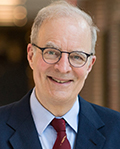
caption: Michael Plattcaption: Elizabeth (Zab) JohnsonWharton Dean Geoffrey Garrett recently announced an anonymous $10 million gift to amplify opportunities and outcomes of the cutting-edge Wharton Neuroscience Initiative (WiN). This commitment will propel faculty research and teaching, student learning, and corporate engagement through WiN.

“WiN isn’t narrowly about brain science. It’s all about making connections—across industries and disciplines and throughout Wharton and Penn,” said Dean Garrett. “Exploring links among tech, analytics, business and how we think, work and make decisions couldn’t be more important in today’s global climate. This incredible gift acknowledges the significance of the research and outcomes produced by WiN and will turbocharge its discoveries even further.”

Under the leadership of James S. Riepe University Professor of Marketing, Neuroscience and Psychology Michael Platt and Executive Director and Senior Fellow Elizabeth (Zab) Johnson, WiN works at the nexus of brain science and business. The Initiative strives to reframe how companies approach a variety of challenges—including brand strategy and customer experience; talent assessment and development; team dynamics and trust; negotiation and communication; and business decision-making.

WiN connects a diverse community of faculty, undergraduate and graduate students, executive-education clients, and staff, alongside individuals and external partners outside of the University. Rooted in Wharton and spanning the entire University, WiN engages the students, faculty and resources of the Perelman School of Medicine, the Annenberg School for Communication, Penn Engineering, Penn Arts & Sciences and other schools, centers and institutes at Penn. WiN’s bold, ambitious and comprehensive vision is to improve business, drive new discoveries and applications, and enhance the education of future leaders through the synthesis of neuroscience, psychology, business, technology and analytics.

This new gift provides a blend of immediate and ongoing financial support for programmatic activities at WiN. Among the components supported by the funding are:

Collaborative Research Teams: Students, postdoctoral fellows and faculty will team up to tackle complex challenges in which neuroscience is positioned to develop innovative business solutions. Wharton teams will collaborate on applied research projects that can offer opportunities to engage with partners outside the University, including companies, government agencies, and nonprofit organizations. Funding will
provide research support to increase the number of projects, areas of inquiry and impact and people working in project teams, and offer competitive funding for postdoctoral fellows, who will help lead projects, mentor student researchers and support the development of neuroscience technologies.

Summer Research Experiences: Undergraduates can obtain in-depth, full-time research experience, and MBA and other graduate students can seize the opportunity to lead research teams in conjunction with faculty and external partners. Funding will provide competitive summer internship support for on- or off-campus activities.

Innovative Curriculum: The growth of faculty research in neuroscience will infuse Wharton’s teaching and learning. New courses can serve as gateways into research experiences or serve as capstone experiences, bringing together knowledge, techniques and applications to students at all levels.

Infrastructure: As WiN scales this crucial work, dedicated operating resources will enable managing and expanding WiN’s collaborative research teams and external partners, in addition to providing communications on the applications of WiN’s findings.

“We’re thrilled and grateful beyond words for this transformative gift, which will allow us to achieve our vision of rethinking and remaking business through the lens of neuroscience, psychology, and analytics,” said Dr. Platt. “Our diverse and collaborative community will use this support to create value for companies, for consumers, and for society through neuroscience. This is the promise and potential of Wharton and Penn that originally moved me to join the team.”

The Marks Family Center for Excellence in Writing

caption: Howard MarksThe University of Pennsylvania is pleased to announce a new gift from Howard S. Marks (W’67), and Nancy Marks to endow and name the Marks Family Center for Excellence in Writing at Penn Arts & Sciences. This is their second gift in support of writing education at Penn.

“Howard and Nancy’s endowment of the Marks Family Writing Center exemplifies their longstanding, visionary commitment to intellectual life at Penn,” said Penn President Amy Gutmann. “Excellent writing has the power to inform, enlighten, entertain and inspire. As our students utilize resources to strengthen their ability to communicate effectively and residents in West Philadelphia benefit from initiatives to increase literacy in the community, the Marks Family Writing Center will stand as a transformative investment in the advancement of knowledge, with multigenerational impact.”

Steven J. Fluharty, dean and Thomas S. Gates, Jr. Professor of Psychology, Pharmacology, and Neuroscience, said, “All the disciplines of the arts and sciences rely on the clear communication of ideas. Howard and Nancy’s gift will expand access to writing support and education for all Penn students and create resources for our innovative writing faculty. I’m grateful for their generosity and eager to see the impact that the Marks Family Center for Excellence in Writing will have on our students and all members of our community.”

The Marks Family Center for Excellence in Writing will provide expanded writing opportunities for students across the University and grow on- and off-campus outreach, providing writing workshops and support to the Penn community and to local high school students and adult literacy learners through community service projects. 

Mr. Marks has long been a supporter and advocate for writing at Penn.

Valerie Ross, Critical Writing Program director, said, “Howard Marks is an extraordinary model for young writers. Howard’s career exemplifies the value of skillful writing and his investment memos are prized for their engaging, accessible style as well as their insight and wisdom. It’s tough to find a better example of the value of such clarity of thought and expression.”

“I’ve always been passionate about the power of writing,” said Mr. Marks. “My involvement with and support of the writing center gives me great joy. Whenever I visit and meet with Val and her staff, I come away walking on air.”

Mr. Marks is a 1967 graduate of the Wharton School at Penn and has spent his career in finance and is the co-founder and co-chair of Oaktree Capital Management, LLC. As Chair of the University Trustee’s Investment Board from 2000 to 2010—a decade bookended by major financial crises—he avoided the market’s excesses and grew the University’s endowment from $3.2 billion to $5.9 billion, receiving national recognition for his management. He is the author of two books: The Most Important Thing: Uncommon Sense for the Thoughtful Investor, published in 2011, and Mastering the Market Cycle: Getting the Odds on Your Side, published in 2018. Mr. Marks is also widely admired in the investment community for his memos, which detail his investment strategies and insight into the economy.

Mr. and Mrs. Marks’ other Penn philanthropy includes the Howard Marks Professorship in Economic History, the Howard Marks University Professorship, the Howard Marks Investor Speaker Series at Wharton, and endowed scholarship support for undergraduates. He’s a frequent guest lecturer on campus. Mr. Marks is an emeritus trustee of the University of Pennsylvania.

Law School 2020 Teaching Awards

Six members of the University of Pennsylvania Carey Law School have received teaching awards for the 2019–2020 academic year. 

Harvey Levin Memorial Award for Teaching Excellence

caption: Jean GalbraithBy democratic vote, the 2020 graduating class selected Professor of Law Jean Galbraith to receive the Harvey Levin Memorial Award for Teaching Excellence.

Ms. Galbraith teaches and writes about public international law and US foreign relations law. Her research focuses on the structure of international legal institutions, especially treaty regimes, and the connections between these institutions and US domestic law. This year she taught Contracts and in the Appellate Advocacy Clinic.

What the students said: “[Prof. Galbraith] is brilliant, very precise, and exposes weak points artfully. Her Socratic method is perfect and everything I wanted law school to be.“ “[Prof. Galbraith] encouraged each of us to learn the material, but to do more than learn the black letter law—and as such to think for ourselves, and question our own assumptions and world views.” “I have never had a professor that has inspired me to want to learn as much as she has.”

LLM Teaching Award

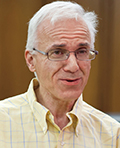
caption: William EwaldVoted on by the LLM class of 2020, William Ewald, professor of law and philosophy, received the LLM Teaching Award.

Dr. Ewald is an internationally recognized scholar in legal philosophy and comparative law. His research examines, from a comparative perspective, the distinctive character of American law. This work has led him to write on the legal philosophy of James Wilson, the first professor of law at the University of Pennsylvania. This year, he taught US Law from a Comparative Perspective and Political Philosophy of the Founders.

What the students said: “Professor Ewald is a true gentleman. He takes great pains to ensure that everyone is up to speed and welcomes questions. ... His enthusiasm is infectious and he has made a convert to American constitutional law out of me!” “[He] motivated students to think [about] problems from different perspectives and made us more interested in the US legal system.”

A. Leo Levin Award for Excellence in an Introductory Course

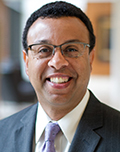
caption: Wendell PritchettProvost and Presidential Professor of Law and Education Wendell Pritchett received the A. Leo Levin Award for Excellence in an Introductory Course for the Land Use course he taught this spring.

Provost Pritchett is an award-winning urban historian. His research examines the development of post-war urban policy, in particular urban renewal, housing finance, and housing discrimination. Provost Pritchett has specialized in real estate and housing law, representing nonprofit organizations involved in the development of affordable housing. 

What the students said: “Provost Pritchett went above and beyond to be accessible to students; his invitation to small-group student lunches early in the semester demonstrated his interest in each of us as people beyond our identities as students in his class.” “He’s led an incredibly interesting and varied career, and my favorite part of the class was just getting to hear and engage with his points of view on various topics, along with the class discussions. His passion for teaching is very clear.”

Robert A. Gorman Award for Excellence in Teaching

caption: Leo KatzLeo Katz, the Frank Carano Professor of Law, received the Robert A. Gorman Award for Excellence in Teaching for his remarkable and innovative work in adapting his Criminal Law class to the online environment.

Mr. Katz focuses his scholarship criminal law and legal theory. By connecting criminal law, moral philosophy, and the theory of social choice, he tries to shed light on some of the most basic building block notions of the law—coercion, deception, consent and the use and abuse of legal stratagems. 

What the students said: “Professor Katz’s self-[S]ocratic method on Canvas [was] the highlight of my day. He did an incredible job and approached the pre-recorded lecture with creativity and humor.” “I’m confident the past six weeks have provided what will be my favorite Socratic method stories from all of law school, and I’m excited to later in my career tell new graduates about my law school experience where the professor called on himself (and asked for repetition when needed, obviously).”

Adjunct Teaching Award

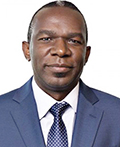
caption: Sozi TulanteSozi Tulante received the Adjunct Teaching Award for his outstanding work teaching State Constitutional Litigation, supervising externships and mentoring students.

Mr. Tulante is a partner at Dechert LLP, where his practice focuses on white-collar criminal defense, trial work, government investigations and compliance, and products liability.

A former Philadelphia city solicitor, Mr. Tulante draws on his extensive experience working in multiple areas of government to represent clients in high-profile litigation matters involving sensitive white-collar litigation and investigations. 

What the students said: “Professor Tulante was great, so stimulating and always engaging with students and encouraging them to participate. You can tell how much he enjoys teaching.” “Professor Tulante … was very accessible (especially for a partner at a law firm!) and always seemed happy to help his students with anything from the job search to understanding course materials.”

Experiential Teaching Award

caption: Sarah PierceLegal Practice Skills Senior Lecturer Sarah Pierce received the Experiential Teaching Award for developing and teaching three new, experiential Boot Camp courses for the JD/MBA Capstone requirement that tracked a company through several transactions: start-up structuring/initial capital raise, exit/M&A, and restructuring, while also continuing to excel in teaching and mentoring students in Legal Practice Skills.

Ms. Pierce brings more than a decade of transactional and courtroom experience to the Legal Practice Skills program. Prior to joining the Law School faculty, Ms. Pierce was counsel at Skadden, Arps, Slate, Meagher & Flom LLP where she practiced for 13 years focusing on corporate and financial restructurings and reorganizations, representing companies, secured lenders, investors and buyers. 

What the students said: “Professor Pierce is a gift to us all. She makes it seem like we really can be successful lawyers and like she is always proud of us. She is the embodiment of tough but fair and wants to make sure that we all truly improve.” “Professor Pierce did a singularly excellent job reimagining the Capstone class to make it much more practically applicable and interesting to the students.”

$1.05 Million Grant from Chan Zuckerberg Initiative for Penn Researchers

Two teams of researchers, one from the Perelman School of Medicine at the University of Pennsylvania, and the other from Penn and Children’s Hospital of Philadelphia (CHOP), were each awarded $525,000 in funding to explore emerging ideas regarding the role of inflammation in disease.

The number of overweight or obese infants and young children, from birth to five years, increased from 32 million globally in 1990 to 41 million in 2016. A similar prevalence is observed in older children and adolescents. The vast majority of overweight or obese children live in developing countries or belong to underprivileged communities.

One team of researchers, led by Jorge Henao-Mejia, an assistant professor of pathology and laboratory medicine, Sarah Henrickson, an assistant professor of pediatrics, and Golnaz Vahedi, an assistant professor of genetics, plans to use the award to investigate the impacts of childhood obesity on immune function. Dr. Henao-Mejia is also affiliated with the department of pathology at CHOP, and Dr. Henrickson is an attending physician of allergy and immunology at CHOP.

“This award will allow us to map the impact of obesity in the immune system in children and the long-term immunological consequences of this disorder,” Dr. Henao-Mejia said. “As inflammation plays a critical role in the majority of obesity associated diseases, our research will be the first step to elucidate alterations in the immune system that contribute to disease progression in obese children.”

Another team, led by Kellie Ann Jurado, Presidential Assistant Professor of Microbiology, Monica Mainigi, William Shippen, Jr. Assistant Professor of Human Reproduction, and Donegeun (Dan) Huh, associate professor of bioengineering at the School of Engineering and Applied Science, plans to explore how maternal and fetal cells respond to specific inflammatory signals and analyze the network of placental cells and immune cells that impact pregnancy outcomes in chronic inflammatory diseases.

The grant partners three investigators with diverse expertise—an experimental immunobiologist, a reproductive and infertility clinician-scientist, and a bioengineer who specializes in biometric technology to investigate the role of the maternal inflammation on early pregnancy establishment. 

“We know that communication between the mother and the fetus’s immune system is critical in pregnancy,” Dr. Mainigi said. “Results from this study will provide insight into immunological mechanisms that govern pregnancy, an understanding essential for proper diagnosis, prevention and treatment of infertility and pregnancy complications.”

The Chan Zuckerberg Initiative has awarded grants to 29 teams of researchers around the world to study how inflammation influences disease.

Thanks to Penn Staff for the Past Semester and Thoughts on Planning for the Fall

With the spring semester and Commencement now behind us, we wanted to reach out to every member of the Penn staff to offer our profound thanks for the extraordinary job that all of you have done in helping the University navigate the enormous challenges brought about by the COVID-19 pandemic.

We are blessed at Penn to have the finest, most resourceful and dedicated staff of any university in the country. Every day our hearts swell with pride when we see firsthand the work that staff have done to keep the University operating in the midst of this pandemic. In just a matter of days you were able to depopulate the campus, assist students in returning home and care for those who couldn’t, help establish classes online, quickly adapt to telecommuting, continue serving our patients and carry on all of the functions of the University. It was a Herculean effort, made possible only by your commitment to do the best for those we serve. You were able to do this while simultaneously handling the many personal and family challenges brought about by the pandemic, often serving as tutors for children and caregivers for loved-ones, while also being mindful of your own personal safety. That you have done this all with such grace and selflessness is a testimonial to the character of the people we work with every day at Penn. As we now look ahead, we have formed a Recovery Planning Group that is examining the different scenarios for how we might offer education in the fall and restart our research enterprise. Their work is driven by our strong commitment to ensure the safety of everyone in the Penn community. We all want to return to normal campus operations as soon as possible, but government directives allied with health considerations may necessitate delaying various features of normalcy for some period of time. We are confident we can begin a phased process for reopening labs that can begin soon.  In planning for the fall for our students, we are considering a range of scenarios.  Whatever decision is ultimately made, it is clear that even if students return to campus, the needs for social distancing will necessitate many changes, including remote instruction for some of our courses. The challenge that Penn faces in the coming year is unique in its nearly 300-year history. Despite the significant financial impact this pandemic has had on the University, please know that we are deeply committed to doing everything possible to support our faculty, staff, students, patients and all who are part of the Penn community. Navigating the year ahead will require all of us to be creative, flexible and resolute. With the best staff and faculty in the country, we are confident that Penn will lead the way forward.

Our thanks to all of you who are part of our Penn staff for everything you do and for what we know will be exceptional achievements in the year ahead.

—Amy Gutmann, President

—Wendell Pritchett, Provost

—Craig Carnaroli, Executive Vice President

—J. Larry Jameson, Dean, Perelman School of Medicine and Executive Vice President, University of Pennsylvania for the Health System

Ed Note: See another message to the Penn Community concerning planning for the fall—A Message to the Penn Community: An Update on Planning and Preparations for the Fall

A Message to the Penn Community: An Update on Planning and Preparations for the Fall

With the semester’s end and our moving, bittersweet virtual Commencement for the Class of 2020 only days behind us, we are writing to update you on our planning and preparations for the fall.  At this time, predictions for the fall of the pandemic’s progression and our society’s capacities for testing, contact tracing and treatment are sufficiently uncertain that we cannot say with perfect clarity what the fall semester will look like. What we can say is that until a vaccine is widely available, and the threat of spreading the novel coronavirus remains real, even the best scenarios foresee a fall semester and a school year that requires new community-wide protocols and practices, unlike any other in Penn’s long history.  We can assure you that Penn’s tradition of uncompromising excellence in education will continue. 

We fervently hope to welcome our students back to campus in the fall and are working aggressively to prepare for that to occur, but we also know that the public health situation will dictate what is ultimately possible.

As we work through the unpredictable terrain of the next several months, our primary goal, clearly and unequivocally, is to minimize person-to-person transmission and protect the more vulnerable within our community while providing the atmosphere for an outstanding educational experience. To that end, the University convened a Recovery Planning Group comprised of Penn leaders in public health, academic engagement, clinical research, safety, and administrative operations. This group has been charged with navigating a path forward for the University to meet its critically important missions of education, research, patient care, and service while coexisting with COVID-19. While a daunting task, this is not an impossible one, and we remain confident that our University and Health System will move forward together to effectively and safely provide the best possible education to our students in the fall and the coming academic year.

We start from the fundamental premise that no emergency, no matter how dire, will prevent us from being Penn. We affirm, embrace, and recommit to the values that have sustained our institution for nearly 300 years. We are inspired and motivated by the many advances in technology that have enabled Penn scholars and students to continue the tradition of educational excellence, even at a distance required for health and safety. The speed and success with which our faculty, students, and staff embraced these changes illustrate why Penn is one of the most eminent research universities in the world. This reinforces our confidence in our capacity to carry on the vital work we do at Penn, even in the face of great uncertainty and constantly changing challenges.

In the interests of transparency in our decision-making, we take this opportunity to provide a summary of our current thinking, with many important things yet to be determined. All of us—in higher education and beyond—are navigating without a map. To find our way successfully in the year ahead requires us to adapt to changes quickly, adopt creative new approaches, and act always with the safety of our wonderfully diverse community foremost in mind.

To get this right, cooperation and communication are necessary, now more than ever. Where the old paths have ended, we must create new ones to lead us forward. The decisions we make as a university will need to be embraced and resolutely implemented by every member of our community. While there is no road map for our future, there is a deep and abiding legacy of trust, imagination, and innovation that makes Penn so special. Confident in our ability to meet any challenge and to thrive regardless of circumstances, we offer this candid summary of our current thinking of what lies before us as we look ahead to the fall semester and beyond.

Scenario Planning

In order to lay the groundwork for returning to normal campus operations as soon and safely as possible, we must plan for alternative campus scenarios and develop contingencies that are shaped by both government directives and public health considerations. Some of our activities are likely to commence before others; for example, we are confident that we can soon begin a phased process for resuming our research activities. Other activities—particularly our instructional, co-curricular, and student life activities—will likely continue to be impacted by the pandemic. For students to return, for instance, we need to be sure that we have better and more readily available testing, contact tracing, and isolation space for those who may test positive; capacity to provide appropriate distancing in housing and dining settings; and workable policies and practices for social gatherings, to name just a few considerations. 

In light of the challenges before us, we want to share four major scenarios currently under consideration. Some of these could be productively combined.  The four scenarios are:  

  • A hybrid experience with some in-person instruction. In a mostly online learning environment, classroom instruction would be offered for small seminars, research group meetings, experiential clinics, studios, and other courses enrolling no more than 25 students. These classes could be offered in lecture halls and other large venues that accommodate physical distancing and facial coverings and could even include newly installed Plexiglas barriers for separating lecturers from the audience. All larger classes of more than 25 students would be delivered online, even for those living on campus.
  • An in-person experience ending at Thanksgiving break. In this scenario—compatible with the hybrid experience described above—the fall semester would begin and end on schedule, but all on-campus activities would conclude as Penn breaks for Thanksgiving. After Thanksgiving, the remainder of the fall semester would be conducted online. In some cases, in order to ensure the required hours of instruction, some classes might schedule additional meetings in the early evening and/or on Saturdays. 
  • More robust summer course offerings in 2021. To maintain flexibility for our students, we could offer expanded class options, in addition to our current strong summer programming, during the summer of 2021, providing greater opportunities for earned academic credits and cohort-based experiential learning. This scenario is also compatible with the first two scenarios above and would enable us to accommodate an even wider range of educational needs and preferences.
  • An entirely online experience for the fall semester. In the event that the pandemic precludes us from bringing students back to campus in the fall, we would then conduct all fall semester instruction, mentoring, and advising at a safe distance via technology. In this scenario, we would make every effort to bring students back to campus as soon as possible and to preserve class traditions, including for our entering Class of 2024. This scenario is distinct from the first two scenarios above but compatible with the third.

Undergraduate and graduate/professional scenarios will likely differ, given the variability of degree requirements and timelines, as well as the importance of clinics, labs, studios, practicums and other aspects of graduate/professional academic experiences. 

Campus Life

If we are to convene on campus while the threat of a COVID-19 outbreak is still active, the ways in which we live, teach, study, research, and work will be different from what we have previously known. Every member of our community will need to commit to a collective effort to protect the overall safety of our campus, and we should all be fully aware and prepared to contribute to the health, safety, and well-being of our Penn community. To this end, we are evaluating the following:   

  • A “Public Health Social Compact.” This would require that all members of our Penn community agree to: wear facial coverings in public; practice physical distancing of at least six feet in public and in classrooms, and when possible in labs, libraries, and common spaces; avoid large gatherings of 25 or more people, including all co-curricular and extracurricular activities; be regularly tested for COVID-19 (and, if tested positive, agree to self-isolate and quarantine); self-report any COVID-19 symptoms; and, when possible, agree to teach, learn, work, and engage remotely.
  • The Importance of Regular Testing. In an environment in which the prevalence of COVID-19 is low enough to allow some or all students to return to campus, it will be important to have testing capability to detect new cases, based upon the best scientific recommendations in the coming months.
  • New Policies Limiting Travel. Travel from and returning to greater Philadelphia would be discouraged and, in those instances when travel is necessary, the person traveling would need to agree to self-isolate upon returning to campus. Our evolving guidelines for safe travel—in study abroad, travel on Penn-related business for faculty and staff, and travel to our campus by students and families and for meetings, talks, conferences, faculty recruitment, and other professional contexts—will need to rely on a wider global perspective, including guidance from the US Department of State and the Centers for Disease Control and Prevention.
  • Fewer Students in the College House System. While our College House system is a traditional and vibrant aspect of student life at Penn, it thrives on undergraduates and faculty living and learning together in close quarters with programs that encourage interaction. We are evaluating various scenarios that would temporarily reduce the population in our College Houses and other student residences, as fewer students residing in dense proximity reduce the risk of exposure and spread of COVID-19. As we plan to keep residents safe, we also must consider managing the ratio of student residents to bathrooms and bathroom fixtures to best ensure a safe living environment.
  • Dining Halls with Reservations and Take-Out. New approaches to dining may include a reservation system, which would limit the number of diners at any given time for purposes of physical distancing, or a take-out system of timed pickups locally in each College House.
  • Being Book Smart and Healthy. We must consider how to keep safe the many faculty, staff, students, and alumni who pass through our libraries. These high traffic areas contribute significantly to the Penn experience and require the best practices in public health, which may include limiting the number of patrons inside the libraries at a given time. Patrons should expect that the experience may be interrupted for deep cleaning of stacks, counters, computers, desks, and common spaces.
  • Fitness and Recreation. Highly utilized spaces such as the Pottruck Fitness Center would need to be operated with strict adherence to public health practices. Our community should expect that we may need to close or restrict access for deep cleaning, operate under restricted hours, or limit the number of those exercising at one time. 
  • Student Life. A vast array of extracurricular and co-curricular activities on a college campus entail very close personal contact among many individuals. As our public health situation evolves, each of these must be evaluated to ascertain if some could be safely offered in smaller group settings, others possibly take place online. Our campus is also home to a thriving arts community that would not be able to mount exhibitions or present live performances for large audiences, and we are thinking through new ways in which we could bring these activities to the community through different approaches, including online platforms.
  • University City. We should expect changes to our surrounding retail district, operating mostly for take-out and pick up and/or with limited numbers of patrons allowed inside.

In all activities, the University will continue to be guided by the expert medical and public health advice of the Perelman School of Medicine and the University of Pennsylvania Health System. Actions such as those outlined above may seem onerous and even limiting, but they are proven practices for preventing, or reducing, the spread of the virus. Staff who need to be on campus to perform their duties will continue on our current course. Staff who are able to perform their duties remotely will be asked to continue to work remotely as their jobs allow. This mandate will be re-evaluated as circumstances evolve, including scenarios that would enable us to bring staff back to campus in stages.

A Phased Return to Research

Research is integral to our mission as a university and vitally important to our local, national, and global communities. In March, we discontinued all non-essential research for the health and safety of our campus, with narrowly defined exemptions including research that could have an immediate impact on the COVID-19 pandemic. We are now planning to resume research activities in three phases:

  • Phase 1: Increase priority research, enforcing restrictions on population density and continuing remote work.
  • Phase 2: Expand research operations, increasing the population with physical distancing and continuing remote work.
  • Phase 3: Return to full research operations, benefitting from new hygiene practices and using remote work where possible.

In assessing the timing of these stages, we will be guided by our progress in minimizing risks to researchers, research subjects, patients, and the Penn community, while also mitigating adverse impacts on our world-leading research, especially promising research in its early stages and research in all areas related to COVID-19, which will continue to be our highest priority. 

In conclusion, please be assured that, working together, we can sustain our highest traditions of excellence in teaching, learning, research, service, and patient care at Penn.  We are deeply proud of the ways in which the Penn community has risen to the challenge of this pandemic. In the history of our great University, there has never been a challenge of the nature and magnitude that we face today. Navigating the year ahead will require us all to be creative, flexible, and resolute. 

Despite the significant financial impact this crisis has had on the University, please know that we are deeply committed to doing everything possible to support our students, faculty, staff, patients, and all who are part of the Penn community.  

We hope that we have been able to give you a clear sense of the questions that need to be resolved and the scenarios under consideration. Our goal is to notify you of more specific plans no later than the end of June. In the meantime, we wish you safety and good health and look forward to seeing all of you in person, as soon as that is possible.

—Amy Gutmann, President

—Wendell Pritchett, Provost

—Craig Carnaroli, Executive Vice President

—J. Larry Jameson, Dean, Perelman School of Medicine and Executive Vice President, University of Pennsylvania for the Health System

Ed Note: See another message to the Penn Community concerning planning for the fall: Thanks to Penn Staff for the Past Semester and Thoughts on Planning for the Fall

Deaths

David Auten, Trustee

caption: David AutenDavid Charles Auten (C’60, L’63), University of Pennsylvania Trustee, died peacefully at his Society Hill residence on May 9 from complications due to Parkinson’s Disease. He was 82.

Born in the Frankford section of the city, Mr. Auten attended Frankford High School and earned his undergraduate degree in 1960 and law degree in 1963 from Penn, during which time he served as editor of the Law Review.

He went on to spend 50 years in the legal field, including serving as the managing partner of the Philadelphia office of Reed Smith LLP for 16 years. His practice was devoted to real estate, banking, health care and international law. He was listed in Best Lawyers in America, Who’s Who in the World, and Philadelphia Leaders, and he was a member of the American College of Real Estate Lawyers.

Mr. Auten served on Penn’s Board of Trustees from 1977 to 1988, as a member of the Board for UPHS (now Penn Medicine), as an overseer of SAS, President of the General Alumni Society, Chair of Annual Giving and president of the Interfraternity Alumni Council. In 1981, he received the Penn Alumni Award of Merit. Board of Trustees Chair David L. Cohen and President Amy Gutmann noted his extraordinary service and his great generosity, which included the establishment of two funds to support research, patient care and education related to Parkinson’s disease, as well as his support of reunion giving and the Sweeten Alumni House.

Mr. Auten was a longtime trustee and chair of the Board of Penn Presbyterian Medical Center. President Gutmann and Mr. Cohen noted that his sensitivity to Penn’s and Presbyterian’s interests was invaluable when Presbyterian became part of the UPHS in 1995. He also served as the chair of the board of both the Presbyterian Foundation for Philadelphia and its related NewCourtland Elder Services. He was also a director of the Philadelphia chapter of the French-American Chamber of Commerce, which he helped found in 1989; a president of Philadelphia’s Union League and a director and chair of its Abraham Lincoln Foundation to maintain historic collections; and a board member of Philadelphia’s Committee of Seventy, the Greater Philadelphia International Network, St. Peter’s School, Springside School, the Philadelphia City Institute of the Free Library of Philadelphia and the Theta Xi National Fraternity and Foundation. He was also a Trustee Emeritus and former Rector’s Warden of historic Christ Church in Philadelphia.

NewCourtland Elder Services dedicated the auditorium in its newly opened Education Center as Auten Hall in 2004 and awarded him the Ephraim D. Saunders Award. He also received the inaugural Hospital Hero Award of Penn Presbyterian Medical Center in 2011, and honorary membership in the Friars Senior Society, in 1977 for his outstanding work, enthusiasm and commitment to Penn as president of the General Alumni Society.

Mr. Auten is survived by his wife, Suzanne Crozier Plowman; daughters, Anne Crozier Auten, (C’92, James Wyman) and Meredith Smedley Auten (C’96, L’99); grandchildren James Auten Wyman, Bridget McKee Wyman and Katherine Crozier Wyman; and brother Donald. (Judith).

Burial will be private. The family will hold a Celebration of Life in the fall.

Walter Allyn Rickett, SAS

Walter Allyn Rickett (“Rick”), emeritus professor of Chinese and Asian and Middle Eastern Studies in the University of Pennsylvania’s School of Arts & Sciences, died peacefully in his Medford, New Jersey, home on April 18. He was 98.

Dr. Rickett served in the Navy and Marines during World War II and studied at the US Navy Japanese Language School in Boulder, Colorado from 1943 to 1944. He used his Japanese language skills during the engagement at Iwo Jima. 

After receiving his A.B. degree from Penn in 1948, he was awarded a Fulbright Grant for study in China. From 1948-50, he studied Classical Chinese language and history and was a part-time lecturer in English at National Tsinghua University in Beijing.

During 1950-51, he held a Social Science Research Council Traveling Fellowship to study modern Chinese history at Yenching University in Beijing. In July 1951, he and his first wife, Adele (G’48, Gr’67) were arrested by authorities of the new People’s Republic of China on charges of espionage and imprisoned there until 1955, when he returned home to continue his studies at the University of Pennsylvania. He received his PhD degree in 1960.

He would later write a book called Prisoners of Liberation about the experience, which he co-authored with Adele, who was also at Penn and the first M. Mark and Esther K. Watkins Chair in the Humanities. She passed away in 1994 (Almanac February 22, 1994).

In 1959, Dr. Rickett joined the faculty at Penn as a lecturer in the department of Oriental studies (now the Center for East Asian Studies). He became an assistant and then full professor before retiring in 1987, earning emeritus status at that time. During his time at Penn, he also held a secondary appoint first as a professional consultant legal research in the law department, then becoming a research assistant and then academician in FAS Special Programs. He served as chair of the University Relations Committee and on the Steering Committee for the University Council and on the Faculty Senate Advisory Committee, was a Guggenheim Fellow in 1969 and Fulbright Fellow as well as the author of several books on Chinese history. He served on the executive board of Penn’s chapter of the American Association of University Professors.

He is survived by son, Jonathan Chen; adopted daughter, Rebecca Lai Long; and four grandchildren.

The family requests that all contributions be sent to The W. Allyn Rickett Endowed Fund Administered by the Department of East Asian Languages and Civilization, University of Pennsylvania, room 847 Williams Hall, 255 South 36th Street, Philadelphia, PA 19104-6305.

--

To Report A Death

Almanac appreciates being informed of the deaths of current and former faculty and staff members, students and other members of the University community. Call (215) 898-5274 or email almanac@upenn.edu

However, notices of alumni deaths should be directed to the Alumni Records Office at Suite 300, 2929 Walnut St., (215) 898-8136 or email record@ben.dev.upenn.edu

Governance

Supplements

Penn Commencement 2020

Penn’s traditional commencement on campus was not possible this year due to the Coronavirus pandemic but that didn’t stop the University from celebrating its graduating students. There was an online celebration for the Class of 2020 with interactive elements to allow viewers to chat and post selfies prior to the start of the webcast. Graduates shared memories and recollections about their years at the University of Pennsylvania. Thanks to the 21st century technology and Penn students’ ability to come together even when physically apart, the Penn Band played as the event began on Monday, May 18. The University’s  Chaplain gave an invocation and President Amy Gutmann welcomed the class. The Commencement speaker greeted the Class of 2020 and Provost Wendell Pritchett announced the many academic honors and awards. Commencement would not be complete without the conferral of degrees, which President Gutmann did before the conclusion of the ceremony.

To view the virtual commencement, visit: https://www.youtube.com/watch?v=Qa-BJDCY-q0

Click here to read the Penn Commencement 2020 supplement as a pdf.

An Invocation for the Graduating Class of 2020
Twelve Schools. One University

Fifty States and more than one-hundred countries represented, but still One University. Dispersed all around the world, socially distant from one another, yet, still One University.

The University of Pennsylvania is more than Market, Chestnut, Walnut, Locust and Spruce, more than buildings, more than a place.

Even when in many different places—We are finding that we can still come together as One University.

Thus, I invite you, wherever you are, to pause and join me in the spirit of prayer for our invocation...

So many of our prayers and meditations, hopes, and wishes of the last several months have been for healing, for protection, for provision and for and end to this most painful chapter of our generation.

One of the gifts of our humanity is the ability to hold multiple emotions at the same time. Thus, even while grieving we can feel pride. While missing each other we can feel joy. While nervous, we can be full of gratitude.

And so during this commencement unlike any other, we celebrate a class unlike any other.

May these graduates see challenges not just as moments to survive, but as moments to serve.

May they see interruptions as opportunities.

May they—even through tears—see catastrophes as callings.

May what has been an unpredictable, uncomfortable, and in many ways disappointing ending to their collegiate journeys, somehow be redeemed.

What an auspicious time for them to graduate—indeed a season of tragedy and loss, yet also a new heroic age.

We will long tell stories of the unrelenting courage from healthcare professionals, researchers, grocery store employees, delivery drivers, trash collectors, custodial workers, educators, therapists, clergy, public safety officials, political leaders and every single individual who’s done their part in stemming the spread of the virus.

May these graduates always be counted among this heroic number who responds to the difficulties of life by seeking to serve and love others wherever their paths may lead them. Amen.


—Charles L. Howard, Chaplain

A Welcome from the President
A Common Bond

Hello Class of 2020: Congratulations! Not only for your academic accomplishments, which are amazing. But as Chaz’s stirring invocation and Duval’s beautiful singing remind us, you also have acted as one university to save lives—to serve the common good. Each and every one of you has summoned deep reserves of compassion, courage and creativity to fight this pandemic.
At the same time, you have united with the entire Penn community to complete your world-class education. You did it!

Right now, I want you to take a mental snapshot of what you have overcome, of where you are and—yes—of how you feel.

Your Class has shared a world-changing experience. Years from now, after your on-campus Commencement, whenever you get together—for Penn reunions, weddings or just reminiscing with a Penn friend—you will talk of these times not only as a challenge, but as a common bond. This will always be a touchstone for your Class.

I know it may not feel that way now. What we all had fervently hoped for this morning is for you to be marching down Locust Walk side by side by side with friends, waving to family, getting those selfies.

But we will reunite. You will have the unforgettable Commencement you and your families have earned.

In the meantime, campus holds a powerful message for you about the unique experiences shared by the Class of 2020. You have walked by a few special sites many times, but perhaps haven’t truly noticed.

Let’s visit them. Walk with me now.

Beside Houston Hall, an ornate gate bears the message, “We will find a way or we will make one.”

In great adversity, it can be all too easy to turn back. But your Class has marched forward. Joining with countless others at Penn and beyond, you have both found and made a way.

Penn has graduated hundreds of extraordinary Classes.

But yours now joins a very small group that have made a way through times of enormous challenge.

Looking south from the Gate, the Quad and the hospital fill your view.

When the 1918 Flu Pandemic hit Philadelphia, it was here at HUP that so many of the ill were treated.

Pandemics have tested Penn before. You have proven equal to the test.

Around the corner from the Gate, on the north wall of Houston Hall, there is a particular Ivy Stone.

Laid by the Class of 1944, this Stone transports us to another profoundly difficult time.

Even during the most intense period of World War II, Penn students and the Penn community showed their mettle.

Moving east past Fisher Fine Arts and through the Engineering Quad, it’s a path you could walk blindfolded.

Our path takes us near the All Wars Memorial by Shoemaker Green.

It offers testament to the service and sacrifices of generations of Penn students.

We especially remember when Penn mobilized for World War I.

The first time the world went to war, Penn students transformed their home into a mustering place.

Our walk ends where Commencement traditionally begins: At Franklin Field.

In the Great Depression, President Franklin Delano Roosevelt came here to deliver one of his most enduring speeches in those dark times.

I believe his words hold special meaning for your Class.

FDR sound clip plays: “To some generations, much is given. Of other generations, much is expected.”

Etched in stone, forged in iron, written on our hearts: the Penn story echoes across campus. It speaks of resilience, courage, and common cause, of dark storms chased by brighter days.

The story of the Class of 2020 speaks the same.

It is clear that of your generation, much is expected.

I am proud to say that, so far, you have done beautifully.

There is no monument on campus to this defining moment of yours…yet.

But to mark this occasion, as the Great Class of 2020 not only finds a way but makes a way, here is my special gift to you, with love.

Congratulations and enjoy!

—Amy Gutmann, Preident

Honorary Degree Recipients

No celebration of the Class of 2020 would be complete without naming this year’s Penn honorary degree recipients. Alongside our amazing graduates, we salute:

A transformational force in American jurisprudence, U.S. Supreme Court Justice Anthony Kennedy

Pulitzer-prize winning author and translator, Dr. Jhumpa Lahiri

American Academy of Arts and Sciences Fellow and celebrated historian, Dr. Jill Lepore

Penn Emeritus professor and renowned vaccine pioneer, Dr. Stanley Plotkin

Co-founder of Philadelphia’s Project HOME and champion for social justice, Sister Mary Scullion

Nobel Prize-winning physician and Penn alum, Dr. Gregg Semenza

Legendary jazz composer, Henry Threadgill

And last—but in no way least—is our Class of 2020 Commencement Speaker. An internationally acclaimed novelist and short story writer, her TED talks have inspired millions of viewers and her awards and accolades are voluminous. Writing on themes ranging from politics to religion to enduring mysteries of the heart, her words enrich our world. And she has a few words to share with you now.

I am very pleased and proud to introduce Chimamanda Ngozi Adichie.

Chimamanda Ngozi Adichie’s Address

Thank you, President Gutmann.

UPenn Class of 2020, congratulations. It’s such an honor for me to be your commencement speaker this year. It’s such a strange time to be graduating; it’s a strange time to be alive! And I can imagine that it must also be a difficult time, a confusing time, a disorienting time. But if there’s anything to be said for this strange time in which we find ourselves, it is this: That for you, graduating at this time is, among other things, an opportunity: An opportunity to start to think about the kind of world that we want to remake.

I’m looking forward very much to addressing you on Franklin Field sometime in the future. I’m looking forward very much to meeting you. I’ve learned quite a bit about your class, about all of your achievements. And there’s so much that’s impressive, of course. But I do have to say that I’m most moved by the sacrifices that you’ve made: the sacrifices that you’ve had to make. I think even that is an achievement.

Congratulations. And these may be strange times—they certainly are for me! But I want to urge you to remember that there’s so much to celebrate. You’ve done it! You’ve graduated!

Congratulations!

Senior Honors and Awards

Good morning. As Provost, it’s my pleasure to recognize the members of the Class of 2020 who have distinguished themselves in their academic studies, and in their service to the University.

Penn’s leadership awards—many of which date to the 19th Century—have been given in years of celebration, and in periods of great sacrifice. Today, as we celebrate the Class of 2020, we also recognize that leadership and service shine brightest when challenges are greatest. I know you join me in saluting these outstanding young people for all they have accomplished, and what they—and their classmates—will achieve in the years ahead.

The Senior Class Honor Awards are:

The Spoon: The tradition of awarding the “wooden spoon,” as it was known in the 19th century, is so old that its origins predate all student publications, including the class yearbook and Daily Pennsylvanian. The spoon’s significance has always been the same: it is symbolic of the first honor awarded to senior men.

The Bowl: This award dates to a 19th century class rivalry at Penn, a ritual called the “Bowl Fight” between freshmen and sophomores. If the sophomore class prevailed, the bowl was preserved by class officers and later awarded to an outstanding student.

The Cane: The use of a walking cane in the 19th century was a cultural symbol of high status. So-called cane fights were attempts by the sophomores to prevent any freshman from carrying a cane on campus. Once utilized as weapons, the canes were wisely converted by the senior class to a student award in 1891.

The Spade: This award is derived from the tradition of Ivy Day, which dates to 1872. On that day, departing seniors plant a sprig of ivy to signify the growth and spreading of the senior class. The spade was first awarded in 1896.

The Althea K. Hottel Shield Award: Established in 1959, the first women’s award is named for Penn’s first Dean of Women. Represented by the Shield, the University’s most recognizable physical symbol, this award honors intellectual competence, commitment to ideals, and loyalty to the University.

The Gaylord P. Harnwell Flag Award: The Harnwell Flag award, which dates to 1969, celebrates the University’s tremendous campus growth and diversification during the tenure of President Harnwell, who led Penn from 1953 to 1970. His commitment and selfless service to the University and the community would benefit generations to come.

The David R. Goddard Loving Cup Award: In 1908, when Class Day and Ivy Day were combined, a silver Loving Cup was presented to the Provost, etched with the names of class presidents. Today, the Loving Cup award recognizes one senior’s exemplary service to the University and to their class, and honors former Provost Goddard. The cup is etched with the iconic words of Penn’s most popular song—but not our official alma mater—“The Red and Blue.”

The R. Jean Brownlee Skimmer Hat Award: Since 1977, the Skimmer Hat Award has commemorated one of Penn’s most historic traditions, Hey Day. The award is named for Dean Brownlee, who oversaw the historic merger of the College and the College for Women into the School of Arts and Sciences—as well as the combining of the men’s and women’s Hey Day strolls into a unified class celebration.

The President’s Engagement and Innovation Prizes exemplify Penn’s highest mission: empowering ideas that truly transform lives and make a difference in the world. The proposals of our 2020 Prize Winners answer some of the most pressing and eminently worthwhile challenges, and they demonstrated immense creativity and leadership.

Other special honors and leadership awards for the class of 2020 include:

  • Asian Alumni Network Student Leadership Award
  • Association of Alumnae Fathers’ Trophy
  • Association of Alumnae Robert J. Alig Senior Award
  • Association of Latino Alumni Student Leadership Award
  • Association of Native Alumni Student Leadership Award
  • Black Alumni Society Student Leadership Award
  • James Brister Society Student Leadership Award
  • The James Howard Weiss Memorial Award
  • James Brister Society Graduate Student Leadership Award
  • Class of 1915 Award
  • Lesbian Gay Bisexual Transgender Alumni Association Student Leadership Award
  • William A. Levi Kite and Key Society Award for Service and Scholarship
  • Penn Alumni Student Award of Merit
  • Penn First Plus Alumni Student Leadership Award
  • Penn Student Agencies Award
  • The Trustees’ Council of Penn Women-Michele Huber and
  • Bryan D. Giles Award
  • The Trustees’ Council of Penn Women Student Leadership Award

The University honors these exceptional students, and is honored by their leadership and service. We salute them, and look forward to following their future success.

All students who have been elected to the principal undergraduate and graduate honor societies; all other prizes and awards granted by Penn Schools and Departments; and those who have earned scholarships for advanced study are listed in today’s virtual program on the Commencement web site.

Congratulations Class of 2020!

—Wendell Pritchett, Provost

Conferral of Degrees


Deans and Beth Winkelstein video recordings played. Then President Gutmann conferred the degrees.

Graduates: With the authority vested in me by the Trustees, I confer upon you the degrees recommended by your faculty, admitting you to all the rights, privileges and responsibilities pertaining to those degrees.

Congratulations and well done!

I speak for everyone when I say that we can’t wait to celebrate your achievements in person.

Please join me in applauding and thanking your parents, families, partners! Let us salute the amazing Penn faculty and staff! Let us cheer our remarkable global alumni family!

And let us honor our many heroes, Penn’s courageous doctors, nurses, first responders, researchers and all the essential staff members who keep Penn open and have made this event possible.

This celebration of the great Class of 2020 deserves a blockbuster finale. I want everybody, no matter where you are, to join me and some of Penn’s finest performers in singing “The Red and Blue”! Really put your hearts into it!

Special video played of many Penn student singers and a special surprise appearance by John Legend. Program concludedwith closing credits.
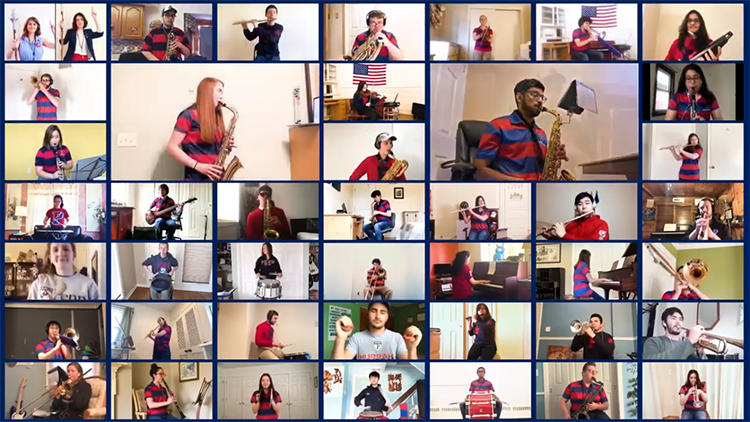
 

Above: The many musical moments during the virtual commencement included the Penn Band, and many students from Penn’s a cappella groups as well as a special appearance by a surprise guest: a former Commencement Speaker and Penn alumnus, John Legend (C’99, H’14).


Above: A video tribute to the class of 2020 included several memorable images and clips from this year’s graduating seniors’ time on campus.


Above: President Amy Gutmann drew comparisons between the current pandemic and other challenges, such as world wars, which also crucially affected Penn’s campus.

AT PENN

Events

Update: May AT PENN

Children’s Activities

27   At-Home Anthro Live: Painting Like the Ancients; to dig deeper into world cultures, archaeology, or anthropology with demonstrations of hands-on projects you can try at home; 11 a.m.; info: www.penn.museum/calendar/429/at-home-anthro-live (Museum).

Exhibits

      Communities to Come: A Toolkit; a 12-week program of archival projects and recordings for living together in this unprecedented global health crisis; https://slought.org/resources/communities_to_come_a_toolkit (Slought).

Fitness & Learning

29   Growing Vegetables in Containers; covers selecting proper containers and re-purposing free containers, choosing your plants, timing when to plant, and basic maintenance; 2 p.m.; $8/members, $10/non-members; register: morrisarbor.org/learn (Morris Arboretum).

Special Events

      Kids Count 2020; World Café Live fundraiser supporting free music education programs for Philly kids with a goal of $60,000 by May 29; to donate: https://www.mightycause.com/story/Kidscount20 (World Café Live).

Talks

27  Hollywood, COVID-19, and the Future of Media; online interview series; 5 p.m.; info: https://decherney.org/hollywood-covid-19-and-the-future-of-media/ (Cinema Studies). Wednesdays through August 5.

--

AT PENN Deadlines 

The Summer AT PENN calendar is now online. The deadline to submit virtual events to be featured in an Update in the weekly issues in June, is the Monday of the prior week.

Crimes

Weekly Crime Reports

University of Pennsylvania Police Department Crime Report

Below are the Crimes Against Persons, Crimes Against Society and Crimes Against Property from the campus report for May 11-17, 2020. View prior weeks' reports. —Ed.

This summary is prepared by the Division of Public Safety and includes all criminal incidents reported and made known to the University Police Department for the dates of May 11-17, 2020. The University Police actively patrol from Market St to Baltimore and from the Schuylkill River to 43rd St in conjunction with the Philadelphia Police. In this effort to provide you with a thorough and accurate report on public safety concerns, we hope that your increased awareness will lessen the opportunity for crime. For any concerns or suggestions regarding this report, please call the Division of Public Safety at (215) 898-4482.

05/13/20

4:56 PM

311 S 41st St

Unsecured package taken from porch

05/13/20

5:45 PM

3604 Chestnut St

Merchandise taken without payment

05/14/20

3:22 AM

4017 Ludlow St

Offenders were trying to take catalytic converter from vehicle/Arrest

05/14/20

9:35 AM

3400 Civic Center Blvd

Secured PPE’s taken from storage room

05/15/20

9:39 AM

3400 Civic Center Blvd

Security guard assaulted by offender

05/15/20

12:07 PM

3300 Walnut St

Tools taken from vehicle

05/15/20

2:09 PM

3930 Spruce St

Unsecured package taken from front porch

05/15/20

4:50 PM

231 S 34th St

Unsecured bike taken

05/16/20

2:05 AM

51 N 39th St

Male fled from police custody

05/16/20

8:35 AM

4045 Baltimore Ave

Unsecured bike stolen

05/17/20

1:35 AM

3800 Filbert St

Complainant struck in the head with unknown object and cell phone stolen


18th District

Below are the Crimes Against Persons from the 18th District: 4 incidents (1 assault, 1 domestic assault, 1 aggravated assault, and 1 robbery) with 1 arrest were reported for May 11-17, 2020 by the 18th District covering the Schuylkill River to 49th Street & Market Street to Woodland Avenue.

05/12/20

3:48 PM

4003 Baltimore Ave

Robbery

05/12/20

11:50 PM

4300 Baltimore Ave

Domestic Assault

05/14/20

8:31 PM

4504 Walnut St

Aggravated Assault/Arrest

05/15/20

11:30 AM

3400 Civic Center Blvd

Assault

Bulletins

Penn Museum At-Home Anthropology: Hands-On Projects for Families

Looking for engaging activities that kids (and their adults!) can do at home? Penn Museum’s At-Home Anthropology offers a selection of simple projects for learners of different ages to explore their home environments in meaningful ways. Look for new activities to be added to www.penn.museum/athome/anthropology/ every week. Penn Museum will announce them on social media.

Some featured activities include:

  • I Am Poem. Be inspired to write poetry by studying everyday objects in your house.
  • Build It! Challenge. Try to create an ancient structure using only materials found around where you live.
  • I Spy…An Artifact. Use clues to find the mystery artifacts in your own home, in Penn Museum’s online collections, and on its virtual tours.
  • Make and Play: Mancala. Mancala is an ancient game from Africa. Originally played by digging shallow holes in the ground, today it is played around the world using wooden boards.
  • Create a Legendary Creature. The Chinese dragon is a legendary mythological creature, made from parts of animals we know from the real world. Identify what animals make up the dragon and then create your own legendary creature using parts of animals you choose.
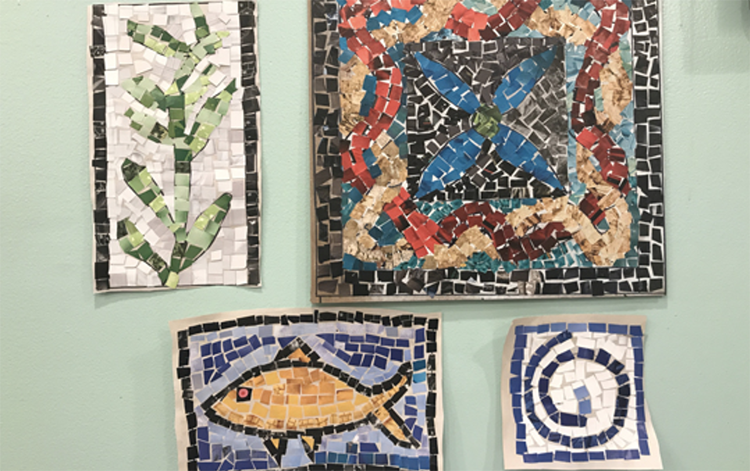
  • Make a Roman-Style Mosaic. A mosaic is a picture or pattern produced by arranging together small colored pieces. The ancient Romans used tesserae, which were uniformly cut cubs of colored stone. You can make your own Roman-style mosaic at home!
  • My Chimera. Many ancient cultures use animals in their mythologies, sometimes combining different animal features into one powerful being. Make your own “chimera” animal using the features of three animals of your choosing!
  • Weaving. The project was inspired by the Chancay Weaver daily dig. Follow the instructions to create your own loom using found materials and make your own woven masterpiece.
  • Create a Model House. Observe your house and the homes in your neighborhood to understand their unique features. Then, build your own house using cardboard and paper, using the Han house in the Museum’s collection as inspiration.
  • Make Your Own Cuneiform Tablet. Use simple kitchen materials and a chopstick to learn how to make cuneiform tablets and practice one of the earliest written languages.

Share your family’s completed projects by tagging @PennMuseum on Facebook or Instagram! And find even more activity ideas, recipes, and crafts on Pinterest at www.pinterest.com/pennmuseum/

Lockdown Letters

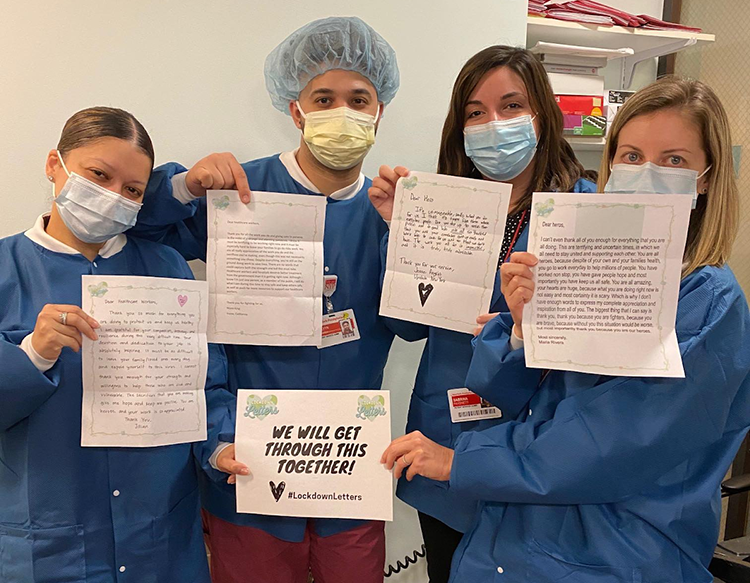
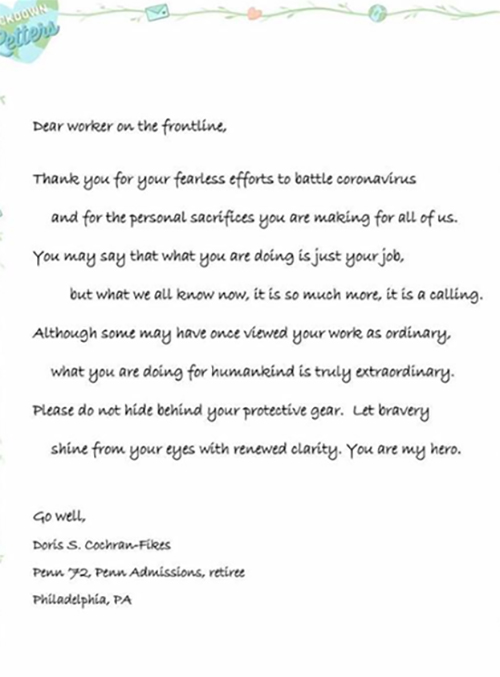
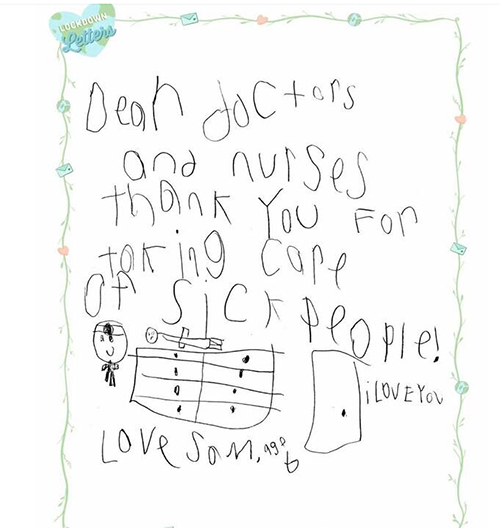
Lockdown Letters is a student-run initiative which sends letters of appreciation to frontline workers around the country who are dedicating their time and energy to support our communities during the COVID-19 pandemic. Our project has partnered with more than 25 frontline establishments around the United States so far—primarily hospital systems, thus far—and is looking for as many people to write letters as possible. We have received submissions from participants aged 3 to 73, and have already seen the impact that these heartfelt messages can have on the hard-working individuals who are sacrificing so much for our country right now. It only takes 10 minutes to write a message that will go a long way. All submissions are through our website: www.lockdownletters.org Instructions for submission are on the site. We are taking both typed and scanned handwritten messages.

Lockdown Letters Founders
Joey Lohmann (Penn ’22)
Youvin Chung (Penn ’21)
Heta Patel (Penn ‘21)
Rupa Palanki (Penn ‘21)
Samira Mehta (Penn ‘21)
Preethi Kumaran (Penn ‘21)
Lillian Hong (Cornell ‘22)

caption: One of the pictures the students received back from New York Presbyterian—Lawrence Hospital in NYC.

caption: A letter submitted for distribution.

caption: A letter submitted for distribution.

Please Share Almanac

Like the last two months’ issues, this edition of Almanac is digital-only. Please distribute to your colleagues and encourage them to subscribe to receive the E-Almanac by visiting https://almanac.upenn.edu/express-almanac The email will include links to the newly posted material. 

No issues were printed to distribute across campus because of COVID-19. Almanac is distributed electronically each Tuesday.

Back to Top