Celebrating the Naming of Lauder College House

Last Thursday, the University of Pennsylvania announced the naming of Lauder College House. It was formerly known as New College House and is located at 34th and Chestnut streets (Almanac August 30, 2016). The new name was revealed at a ceremony celebrating the house’s first cohort of fourth-year residents, along with incoming Class of 2023 and second- and third-year residents.
Lauder College House (LCH) officially opened its doors on August 24, 2016, and is the first Penn residential building specifically designed as a college house. The University’s residential system brings together undergraduates, faculty, staff and graduate students to form shared communities within the larger context of Penn’s campus.
“The University of Pennsylvania gratefully acknowledges the generosity of the Lauder family for their extraordinary contributions to create Penn’s first student residence designed as a College House community,” said Penn President Amy Gutmann. “For over half a century, the Lauders, starting with our Trustee Emeritus Leonard Lauder, have made Penn an integral part of their family.
“Three generations of the Lauder family have come to live and learn at Penn,” said President Gutmann. “Lauder College House is named in their honor,” she said adding, “I only wish that I could live here. It is just a spectacular home.”
Joining President Gutmann at the podium were Campbell Grey, LCH faculty director and associate professor of classical studies; Ronald Lauder, Lauder Institute Board of Governors chairman; and William Lauder, Penn term trustee.
The Lauder Family released a statement for the occasion saying, “the Lauder College House is a love letter from our family to the students of Penn. The University of Pennsylvania has been pivotal in helping to shape the ideas and experiences of each of the Lauder family members that have attended. We are honored to be part of creating memories for students at Penn for generations to come.”
Other members of the Lauder family attending the ceremony included Gary and his wife, Laura; Aerin Lauder Zinterhofer; and May 2019 graduate Josh, who was a resident of the house his junior year. “I am overwhelmed with gratitude for the generosity I’ve experienced throughout my four years at Penn,” said Josh Lauder. “Its exceptional environment for intellectual exploration cultivated my drive for lifelong learning, and it turns out I’m not the only one in my family who loves Penn ... I couldn’t be more proud of my family for giving back to the University that has given us so much. I was lucky to be among the first students to stay in the eponymous Lauder College House, before it was called that. To its future tenants, I can attest to its magnificence as a living space, and I sincerely hope that it can enrich student’s lives and leave a purely positive mark on Penn’s campus for generations to come.”
Designed by the Philadelphia-based design firm of Bohlin Cywinski Jackson, the seven-story, 198,000-square-foot, $121 million project houses undergraduate students, in three-, four-, five-, and six- bedroom suites with a dining venue and many public and programmatic spaces built around a private central courtyard (Almanac September 13, 2016).
As a four-year house, Lauder College House is a microcosm of Penn. This year, among the 351 undergraduate residents, roughly 29% are from the Class of 2023, 31% are sophomores, 25% are juniors and 15% are seniors. Within the College House system, each of the 12 houses has a distinct character and mission. The LCH community is centered around a global sustainability theme, a founding principle of the house’s design.
The celebration took place in the Heyman Courtyard, which was named for other major donors to the project, emeritus trustee Stephen Heyman and his wife, Barbara Heyman.
$3 Million Breakthrough Prize in Life Sciences for Virginia Lee
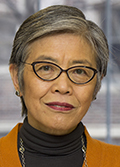 Virginia M.Y. Lee, the John H. Ware 3rd Endowed Professor in Alzheimer’s Research in the department of pathology and laboratory medicine and director of the Center for Neurodegenerative Disease Research at the University of Pennsylvania, will receive the Breakthrough Prize in Life Sciences. The award recognizes Dr. Lee’s work in understanding how different forms of misfolded proteins can move from cell to cell and lead to disease progression in Alzheimer’s disease, Parkinson’s disease, and other dementias and movement disorders.
“It is an honor to receive such a prestigious award, and this funding will help us as we continue to push for a greater understanding of these diseases that can ultimately help us find ways to help millions of these patients,” Dr. Lee said.
Dr. Lee’s research focuses on proteins that form pathological inclusions in Alzheimer’s disease, Parkinson’s disease and related neurodegenerative disorders. She discovered tau, alpha-synuclein, and TDP-43 as the critical proteins, and further clarified the role they play in each disease. She demonstrated that cell-to-cell transmission of these pathological proteins explains how each disease progresses. This research has opened up new avenues of research to identify targets for drug discovery to develop better treatments for patients with these disorders.
Now in its eighth year, the Breakthrough Prize recognizes the world’s top scientists. Each prize is $3 million and presented in the fields of Life Sciences (up to four per year), Fundamental Physics (one per year) and Mathematics (one per year). In addition, up to three New Horizons in Physics and up to three New Horizons in Mathematics Prizes are given out to early career researchers each year. The new laureates will be recognized at the eighth annual Breakthrough Prize gala awards ceremony Sunday, November 3, at NASA Ames Research Center in Mountain View, California, and broadcast live on National Geographic.
The Breakthrough Prizes are sponsored by Sergey Brin, Priscilla Chan and Mark Zuckerberg, Ma Huateng, Yuri and Julia Milner, and Anne Wojcicki. Selection Committees composed of previous Breakthrough Prize laureates in each field choose the winners.
Information on Breakthrough Prize is available at breakthroughprize.org
From the President and Provost: Reappointment of Steven J. Fluharty as Dean of SAS
We have received the report of the Consultative Review Committee on the Reappointment of Steven J. Fluharty as Dean of the School of Arts & Sciences and are delighted to recommend to the Trustees the reappointment of Dean Fluharty for a second term, to run through June 30, 2025.
The Committee was unanimous that Dean Fluharty has the vision, energy, skills and broad support needed to thrive and succeed in a second term as Dean. We enthusiastically agree. Dean Fluharty’s first term was one of significant accomplishment. The Committee found especially notable the comprehensive, inclusive and far-reaching strategic plan—titled Our Foundations and Frontiers—that guided the Dean’s first term. The strategic plan has grown the faculty, galvanized exciting new cross-disciplinary initiatives and positioned Penn Arts & Sciences as a leader in 21st century liberal arts education.
The Review Committee also commended Dean Fluharty for two especially striking accomplishments: his effective stewardship of the School’s myriad disciplines and departments and his many contributions to driving SAS and Penn forward by virtue of his University leadership. The Committee was struck by the Dean’s genuine and deeply held commitment to both the School and the University, qualities that are consistently borne out in the Dean’s day-to-day work.
We are especially grateful to the members of the Review Committee for their time and effort throughout this important process. After receiving its charge from us in March 2019, the Committee—both in formal meetings and through its chair, J. Larry Jameson, Executive Vice President for the Health System and Dean of the Perelman School of Medicine—interviewed Dean Fluharty; conducted informational interviews and conversations with various members of the faculty, staff, student body and alumni community; convened discussions with department chairs, major School committees and student assemblies; and held open meetings for faculty and staff within the School. The Committee also examined a comprehensive selection of data and documents concerning the School, including detailed budget, enrollment and employment data. The Committee met seven times over a period of 11 weeks.
The Committee’s final report to us assessed and analyzed the accomplishments of the Dean and the School over the past five years in a wide array of domains, including: strategic vision and planning; faculty recruitment, retention, and diversity; academic programs and student quality; research and scholarly programs; School administration and staff; finances and fundraising; facilities and infrastructure; and engagement with alumni, the professional community and the general public.
This is an important inflection point for the liberal arts and sciences, and we believe that Dean Fluharty is exceptionally well-positioned to lead Penn Arts & Sciences through a period characterized by great opportunity and change. A thoughtful, principled, proven leader with an infectious enthusiasm for the liberal arts and sciences, Dean Fluharty is a model University citizen.
We wholeheartedly agree with the members of this Review Committee and will enthusiastically recommend to the Trustees that Steven J. Fluharty be reappointed as Dean of the School of Arts & Sciences.
—Amy Gutmann, President
—Wendell Pritchett, Provost
From the President and Provost: Consultative Committee for the Selection of a Dean of the Wharton School
We are pleased to announce the formation of an ad hoc Consultative Committee to advise us on the selection of the next Dean for The Wharton School. The members of the Consultative Committees are listed below. The Committee welcomes—and will keep in the strictest confidence—nominations and input from all members of the University community. For fullest consideration, communications should be received, preferably in electronic form, no later than September 30, 2019, and may be sent to Adam Michaels at adampm@upenn.edu
—Amy Gutmann, President
—Wendell Pritchett, Provost
Consultative Committee for the Selection of a Dean of the Wharton School
Chair
J. Larry Jameson, Executive Vice President of the University for the Health System, Dean of the Perelman School of Medicine, and Robert G. Dunlop Professor of Medicine (PSOM)
Faculty
Gérard Cachon, Fred R. Sullivan Professor; Professor of Operations, Information and Decisions; Professor of Marketing; Vice Dean of Teaching and Strategic Initiatives (Wharton)
Risa Lavizzo-Mourey, Robert Wood Johnson Foundation Professor of Population Health and Health Equity (PSOM, Nursing and Wharton)
Daniel A. Levinthal, Reginald H. Jones Professor of Corporate Strategy, Professor of Management (Wharton)
Michael R. Roberts, William H. Lawrence Professor, Professor of Finance (Wharton)
Nancy Rothbard, David Pottruck Professor, Professor of Management, and Chair, Management Department (Wharton)
Lisa Servon, Kevin and Erica Penn Presidential Professor, Professor of City and Regional Planning, and Chair, City and Regional Planning Department (Design)
Philip E. Tetlock, Leonore Annenberg University Professor in Democracy and Citizenship, Professor of Management, Professor of Psychology (SAS and Wharton)
Students
Maggie Browdy (W’21)
Anisha Mocherla (WG’20)
Alumni
Bonnie Bandeen (C’80, WG’85), University Trustee and Wharton Overseer
Marc Rowan (W’84, WG’85), University Trustee and Chair of the Wharton Board of Overseers
Ex Officio
Joann Mitchell, Senior Vice President for Institutional Affairs and Chief Diversity Officer
Staff to the Committee
Adam P. Michaels, Assistant Vice President and Deputy Chief of Staff, Office of the President
Seth Zweifler, Assistant to the Senior Vice President and Chief of Staff, Office of the President
Consultants to the Committee
Kenneth L. Kring, Korn Ferry
Vickie Antolini, Korn Ferry
Mary C. Francis: Director of Penn Press
.jpg) Effective September 23, 2019, Mary C. Francis will become the thirteenth director of the University of Pennsylvania Press.
Effective September 23, 2019, Mary C. Francis will become the thirteenth director of the University of Pennsylvania Press.
Ms. Francis is a national leader in the university press community. She has been editorial director at the University of Michigan Press/Michigan Publishing since 2015 and was previously executive editor and team leader for the humanities at the University of California Press, where she started in 1999 as an editorial assistant. Ms. Francis also worked in the editorial and production departments at Oxford University Press, Yale University Press and Mayfield Publishing. She is on the board of directors of the Association of University Presses, and has served AUPresses in various capacities, including chair of the 2019 Annual Meeting Program Committee, and chair of the Acquisitions Committee. She has conducted numerous presentations and workshops on scholarly communication for the Society for Scholarly Publishing, the Social Science Research Council, the American Historical Association, Society for Cinema and Media Studies, the American Musicological Society, as well as various library and campus groups. She has spoken on a variety of topics, including peer review, digital publishing, Open Access, and diversity, equity, inclusion and access (DEIA) issues. Ms. Francis holds a BA in music from Brandeis University and completed graduate work in musicology at Yale University.
“It is truly an honor to be selected to join the Penn community as director of Penn’s excellent Press,” Ms. Francis said of her new role. “I am excited to come to Philadelphia to work and learn with Press staff to move the Press forward.”
Ms. Francis has been a leader in developing new forms of Open Access, including Michigan Publishing’s pioneering community-based, open-source platform, Fulcrum. Launched with support from the Mellon Foundation, Fulcrum is now being used by many presses across the country. At the same time, she has been an award-winning acquiring editor of books within her areas of expertise in media/film studies, digital culture, literary studies and music.
“I am confident that Mary will be a spectacular leader, working closely and collaboratively across the Penn community to chart the future of Penn Press,” said University Provost Wendell Pritchett.
Outgoing director Eric Halpern has devoted 39 years to the dissemination of scholarly knowledge. He took the helm of Penn Press in 1995, bringing with him more than 14 years of experience in academic publishing, coming to Penn from Johns Hopkins University Press and Cornell University Press.
“We are deeply in Eric’s debt for the vision and integrity with which he has guided Penn Press for more than two decades,” Provost Pritchett said. “Eric has been, through many unpredictable changes in both the publishing and academic markets, a powerful steward of the Press’ highest scholarly traditions.”
Penn Dental Medicine to Name Pediatric Care Center for Alumnus Tony Saito
A major gift from a Penn Dental Medicine alumnus is helping to advance pediatric dentistry education and patient care. With this contribution from Tony Saito, a 1995 DMD graduate, the School will name its pediatric clinic the Saito Pediatric Care Center.
“Dr. Saito’s commitment to our School, our students, and the patients we serve is tremendous,” said Morton Amsterdam Dean Mark Wolff. “His support and engagement are invaluable.”
A pediatric dentist, Dr. Saito owns a private practice based in West Boylston, Massachussetts, which he opened in 2001. After earning his DMD from Penn Dental Medicine in 1995, Dr. Saito completed a general practice residency at Mount Sinai Medical Center and went on to a pediatric residency at Columbia University Medical Center.
“I chose to make this gift to support the future of our rapidly evolving profession. Our students under the guidance of our outstanding Penn faculty need the most advanced technology in order to provide the best care for the children in the Philadelphia community,” said Dr. Saito. “It is my hope to have the students that I have mentored, return to Penn Dental and give back their time and energy as I have given to them.”
Since 2017, Dr. Saito has been an active member of the Dean’s Council at Penn Dental Medicine, an external advisory group to the Dean. In addition, he lectures annually to both the DMD students and the postdoctoral students in the pediatric program at Penn Dental Medicine.
“Our students benefit greatly from Dr. Saito’s perspective as a practicing pediatric dentist,” noted Betty Hajishengallis, chief of Penn Dental Medicine’s division of pediatric dentistry and director of the postdoctoral pediatric program. “His willingness to come back to the School on a regular basis to share his experiences and serve as a mentor can have a great impact as students look to enter the specialty,” said Dr. Hajishengallis.
The space, to be named the Saito Pediatric Care Center, is the 16-chair teaching clinic for the School’s pediatric program, where postdoctoral students as well as DMD students provide care to children of all ages. The care center includes 10 private operatories and an open bay area with six treatment areas.
The section with the private operatories and the waiting area underwent a renovation in early 2019 to enhance the clinical care and patient experience. All 10 operatories have been outfitted with new equipment, including new dental chairs with rear-delivery instruments, new radiology units and new cabinetry. One of the most significant changes was the creation of an operatory designed to accommodate patients who use a wheelchair—now outfitted with a lift, patients can be easily treated without having to leave their wheelchairs.
“This generous support from Dr. Saito will allow us to continue to strengthen our clinical care resources, and in turn, our service to the community,” added Dean Wolff. “We couldn’t be more appreciative of his shared commitment to our mission.”
A celebration of the official naming of the Saito Pediatric Care Center will take place as part of the School’s Alumni Weekend 2020, May 15-16, when Dr. Saito will be marking his 25th reunion from Penn Dental Medicine
Amy Sadao: Stepping Down as ICA Director
After more than seven years, Amy Sadao, Daniel W. Dietrich II Director of the Institute of Contemporary Art at the University of Pennsylvania, announces that she is stepping down to pursue new opportunities and personal projects. Under Ms. Sadao’s leadership, ICA broadened its critically acclaimed exhibition and publications program, increased attendance and public engagement, and expanded the museum’s digital impact and reach.
“It has been a privilege to work alongside ICA’s Board of Overseers and a spectacularly talented staff. Together we extended ICA’s bold history as a place to explore the unknown and the poetic, and to present contemporary artists’ affective and political contributions in an admission-free kunsthalle.”
Ms. Sadao continued, “I created and exceeded a strategic plan focused on curatorial excellence, community partnerships, and visitors’ and artists’ experience. I was guided by questions of what a feminist, anti-racist, queer- and trans-embracing contemporary museum would look, feel and act like. It’s only right that a new director creates the next strategic plan. I am excited to experience the next iteration of ICA. My goals now include a book project on art and community and the efforts to redefine the evolving roles and responsibilities of museums across the country.”
Penn’s Provost Wendell Pritchett has named John McInerney as interim director at the ICA. Mr. McInerney is currently executive director of Penn’s Sachs Program for Arts Innovation (Almanac May 23, 2017) and will continue in that role as he also serves as the ICA’s interim director.
Under Ms. Sadao’s leadership, ICA presented 51 critically acclaimed exhibitions of underrepresented and overlooked artists. Ms. Sadao shepherded 35 publications, among them the award-winning titles Barbara Kasten: Stages and Rodney McMillian. Under her tenure, ICA developed a new department of public engagement and expanded its digital impact and reach. “We wish her the best in her next steps,” said Vice Provost for Faculty Anita Allen, who will chair the Provost’s Advisory Committee for the Selection of the ICA Director. Due to start work next month, the committee will be composed of faculty scholars and artists, staff, alumni and representation from the ICA Board of Overseers. “Penn is fortunate to have retained Russell Reynolds to assist with the search, guided by Laurie Nash and Michael Singleton,” said vice provost Allen.
The Advisory Selection Committee will include David Hartt, assistant professor of fine arts, Weitzman School; Sharon Hayes, associate professor of fine arts, Weitzman School; Michael Leja, James and Nan Wagner Farquhar Professor of History of Art and department chair, SAS; Aaron Levy, senior lecturer, English and history of art, SAS, and executive director and senior curator, Slought Foundation; Kenneth Lum, Marilyn Jordan Taylor Presidential Professor of Fine Arts and department chair, Weitzman School; Lynn Marsden-Atlass, University curator and executive director, Arthur Ross Gallery; Katherine Sachs, emerita ICA Board of Overseers and emerita Penn trustee; David Simon, managing director and partner at Littlejohn & Co, and chair, ICA Board of Overseers; Julian Siggers, Williams Director, Penn Museum; and Bryan Verona, Board of Overseers, founder, president, and co-portfolio manager, Vanadium Capital Management, LLC.

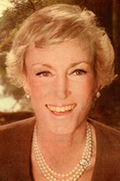 Ann Louise Strong, emeritus professor of city and regional planning, former department chair and former associate dean at the Graduate School of Fine Arts (now Weitzman School of Design) at the University of Pennsylvania, died peacefully in her home in Bryn Mawr on August 25. She was 89.
 Two large-scale sculptures on loan for 99 years from the Association for Public Art (aPA) moved from the Philadelphia Museum of Art (PMA) to Penn’s campus this summer.