$4.5 Million for New Autoimmunity Center of Excellence at Penn


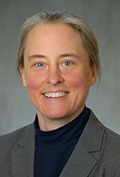 Aimee S. Payne, the Albert M. Kligman Associate Professor of Dermatology, and Amit Bar-Or, a professor of neurology and director of the Center for Neuroinflammation and Experimental Therapeutics (CNET), will lead a new NIAID-funded Autoimmunity Center of Excellence at Penn. This makes Penn one of five clinical ACEs across the country.
The grant of $4.5 million provides funding for five years to perform cutting-edge clinical and translational research to advance the understanding of human autoimmunity. The Penn ACE program will focus on B cells as drivers of autoimmunity for three debilitating and potentially life-threatening autoimmune diseases—pemphigus vulgaris, multiple sclerosis, and type 1 diabetes. Dr. Payne is co-PI and administrative director, Dr. Bar-Or is co-PI and clinical project leader, and Nina T. Luning Prak, an associate professor of pathology and laboratory medicine, serves as the collaborative project leader.
Beth Wenger: Associate Dean for Graduate Studies
 Beth S. Wenger, Moritz and Josephine Berg Professor and Chair of History, has been named associate dean for graduate studies in the School of Arts & Sciences, effective July 1. In this role, she will oversee the School’s doctoral programs, which take place in 31 graduate groups and enroll approximately 1,350 students.
“I am delighted to announce Beth’s appointment,” said Steven J. Fluharty, Dean and Thomas S. Gates, Jr. Professor of Psychology, Pharmacology, and Neuroscience. “An eminent historian and educator, she has a strong record as an academic leader who is committed to student excellence and well-being.”
A scholar of modern and American Jewish history, Dr. Wenger is the author of History Lessons: The Creation of American Jewish Heritage; New York Jews and the Great Depression: Uncertain Promise (which was awarded the Salo Baron Prize in Jewish History); and The Jewish Americans: Three Centuries of Jewish Voices in America (a National Jewish Book award finalist). She has co-edited several anthologies and authored dozens of scholarly articles.
Dr. Wenger is an elected fellow of the American Academy for Jewish Research and the recipient of the history department’s Richard S. Dunn Award for Distinguished Teaching. She is also deeply engaged in public history; she was one of four founding historians who helped to create the core exhibition at the National Museum of American Jewish History in Philadelphia and served as a consulting historian to the 2008 PBS series The Jewish Americans. She has also served as a distinguished lecturer of the Organization of American Historians.
Dr. Wenger has served as chair of the department of history since 2012. She was director of the Jewish Studies Program from 2005 to 2013. Among her many Penn affiliations, she is a resident senior fellow in the Program for Research on Religion and Urban Civil Society and Robert A. Fox Leadership Program, a member of the religious studies graduate group, and a member of the Faculty Advisory Board of the Herbert D. Katz Center for Advanced Judaic Studies. She also serves as chair of the Academic Advisory Council of the Center for Jewish History in New York.
She will succeed Ralph Rosen, Vartan Gregorian Professor of the Humanities in the department of classical studies, who has been serving as interim associate dean since last August.
“I know the Arts & Sciences community joins me in expressing gratitude to Ralph for his extraordinary citizenship and dedication to our graduate education mission,” said Dean Fluharty.
Rachel Werner: Penn LDI Executive Director
 Provost Wendell Pritchett and Dean J. Larry Jameson are pleased to announce the appointment of Rachel Werner as executive director of the Leonard Davis Institute of Health Economics (LDI).
“Rachel Werner is the ideal leader to chart the future of the LDI,” said Provost Pritchett. “She is one of the world’s foremost scholars working at the intersection of health and economics, and her research is making a vital impact on health policy and patient care across the world. A longtime member of our Penn community, she understands that the most vital solutions in our contemporary world must be innovative and multi-disciplinary.”
“Dr. Werner brings a unique combination of experience as a clinician as well as a highly accomplished economist and health-care policy researcher to this important role leading the LDI,” said Dr. Jameson. “Her pioneering research has helped shape health-care policy in the US and across the globe and sets an example for the type of creative inquiry and scholarship needed to solve the most pressing issues in health care.”
Rachel Werner is currently a professor of medicine, director of Health Policy and Outcomes Research in the department of medicine, associate chief of research in the Division of General Internal Medicine and co-director of the MS in health policy at the Perelman School of Medicine, with a secondary appointment as professor of health care management in the Wharton School. A global expert on health-care policies and their impact on the quality and equity of health care, she holds both an MD from the Perelman School of Medicine, where she also did her residency in internal medicine, and a PhD in health economics from the Wharton School.
Dr. Werner’s research examines the effects of health-care policies on health-care organization and delivery, focusing on the role of financial incentives, especially in changing provider behavior, improving racial disparities and triggering potential unintended consequences. For example, her research was among the first to demonstrate that public reporting of quality information may in fact worsen racial disparities. This work has been supported by the National Institutes of Health and the Veterans Administration, among others, and published in such leading journals as the Journal of the American Medical Association, Health Services Research Journal and Health Affairs. Dr. Werner has received numerous awards, including the Presidential Early Career Award for Scientists and Engineers, the Outstanding Investigator Award from the American Federation for Medical Research and the Alice Hersh New Investigator Award from AcademyHealth. She is an elected member of the National Academy of Medicine.
“With her scholarship at the intersection of medicine and policy and her demonstrated leadership, Rachel Werner is poised to expand the impact of LDI in the Penn community and the evolving landscape of health care economics,” said Vice Provost for Research Dawn Bonnell.
The Penn LDI, established in 1967 with a gift from Leonard and Sophie Davis, serves as the University’s primary locus for research, policy analysis, and education in health systems. More than 300 LDI Senior Fellows work to improve the health of the public through studies on the medical, economic, and social issues that influence how health care is organized, financed, managed, and delivered, guiding health policies at all levels of government and the private sector.
Martine Haas: Lauder Institute Director
 Provost Wendell Pritchett recently announced the appointment of Martine Haas as the Anthony L. Davis Director of the Joseph H. Lauder Institute for Management and International Studies.
“Martine Haas is one of the most exciting and innovative thinkers about the future of global business,” said Provost Pritchett. “I am confident that she will be a great leader in advancing the vital mission of the Lauder Institute. This mission is more essential than ever in our increasingly globalized society, whose complex challenges require multi-faceted, interdisciplinary solutions.”
Dr. Haas, an associate professor of management, is a tenured faculty member at the Wharton School and has taught at Penn since 2007. A native of South Africa and a US/UK citizen, she is a leading expert on global business, including collaboration in multinational firms, global teamwork, and the sociology and social psychology of organizations. She has published academic and managerial articles in leading journals, served on numerous editorial boards and in senior editorial roles, and received scholarly awards from Wharton’s Academy of Management and Academy of International Business, as well as awards for teaching excellence in both the Wharton MBA core and Wharton undergraduate programs.
The Joseph H. Lauder Institute for Management & International Studies was founded by brothers Leonard and Ronald Lauder in 1983 in honor of their father, Joseph H. Lauder. It provides a fully integrated business education for a new generation of leaders, preparing them to speak the language of global business, culture, and politics in a world of specialization, change, and uncertainty. Its rigorous academic program, in which students earn a master of arts in international studies, as well as an MBA from the Wharton School or a JD from the Law School, integrates teaching in tailored arts and sciences courses with advanced language study and cultural immersion experiences.
Weitzman School of Design 2019 Teaching Awards
Named in honor of the architect and longtime faculty member who served as dean of the School from 1951 to 1971, the G. Holmes Perkins Teaching Award recipients are presented annually based on the input of students at the School to recognize distinguished teaching and innovation in the classroom, seminar or studio.
Perkins Distinguished Graduate Teaching Award for Standing Faculty
 Francesca Russello Ammon, associate professor of historic preservation and city and regional planning, is a cultural historian of the post-World War II American city, with an emphasis on the built environment and landscape change. Her work is deeply important to our understanding of how cities evolve through design, planning, engineering and technology. Dr. Ammon teaches courses in both the department of city and regional planning and the graduate program in historic preservation, including Topics in Historic Preservation: Photography and the City. “She is an innovative teacher,” said one student in the nomination. “She provides a new perspective and approach in teaching planning history. She brings primary materials to the classroom, which help to keep students engaged and excited about learning history.”
Perkins Distinguished Graduate Teaching Award, Non-Standing Faculty
 Matt Freedman, lecturer in fine arts, is a sculptor, graphic artist, performer, writer and curator with a background in cartooning and anthropology. His current work explores the consequences when DIY versions of modern spectacles revive half-remembered cultural myths. This spring Mr. Freedman taught Critical Issues in Art: Praxis & Poiesis. “He’s helpful to all of us across the board no matter what we’re using materially or our subject matter,” one student said, in nominating Mr. Freedman. “He pushes his students to think in non-conventional ways and has absolutely made me a better student and artist since being at Penn.”
Perkins Distinguished Undergraduate Teaching Award
 Jacob Rivkin, lecturer in fine arts, is an interdisciplinary artist who creates animations and sculptures that focus on how we experience landscape through memory, desire, and autobiography. Mr. Rivkin teaches hand-drawn digital animation and the course Foundations of Art, Design, and Digital Culture. Of Rivkin’s impact in the classroom, one student said, “He has ignited my creativity and inspired me to do things I never thought were possible. His class is my favorite at Penn so far, and I’ve learned so much and have had fun doing it.”
School of Dental Medicine 2019 Teaching Awards
Penn Dental Medicine faculty members were honored by students for excellence in teaching at the School’s Senior Farewell, held May 14 at The Hyatt at the Bellevue in Center City Philadelphia. Each academic year, the graduating class recognizes members of the faculty with teaching awards, presented at this annual event that celebrates the passage of students to professional dentistry and welcomes them into the Penn Dental Medicine Alumni Society. The awards and recipients included the following:
The Basic Science Award
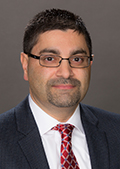 This award is presented for excellence in teaching within the basic sciences. This year’s recipient is Faizan Alawi, associate professor of pathology and associate dean for academic affairs. A member of the Penn Dental Medicine faculty since 2001, Dr. Alawi teaches oral and maxillofacial pathology to students in the School’s predoctoral and postdoctoral programs, as well as to Penn medical students and residents. Dr. Alawi also serves as director of Penn Oral Pathology Services. He was previously recognized with the Basic Science Award in 2010 and 2016. He was a 2018 recipient of the Lindback Award for Distinguished Teaching.
The Robert E. DeRevere Award
This award is presented for excellence in preclinical teaching by a part-time faculty member. The award is named in honor of Dr. DeRevere, a member of the Penn Dental Medicine Class of 1945, who served on the School’s faculty.
 This year’s recipient is Joy Bockstein Abt (D’94), clinical assistant professor of restorative dentistry and director of fixed prosthodontics. From 2001 to 2004, Dr. Abt was assistant professor of restorative dentistry and director of operative dentistry. She returned to the faculty in 2007 as clinical assistant professor and was appointed director of Fixed Prosthodontics in 2008. In addition to fixed prosthodontics, Dr. Abt also teaches in the first-year operative dentistry course and second-year complete dentures and removable partial dentures courses. Dr. Abt is a member of the Matthew Cryer Honor Society and Omicron Kappa Upsilon. In 2012, Dr. Abt was the recipient of Penn Dental Medicine’s Award for Outstanding Service to Students; she also received the Robert E. DeRevere Award in 2013, 2014 and 2017.
The Joseph L. T. Appleton Award
 This award, presented to a part-time faculty member for excellence in clinical teaching, went to Patrice Ierardi (MT’80, D’84), clinical assistant professor of restorative dentistry and assistant director of comprehensive care clinics. Dr. Ierardi joined the faculty in 2014, teaching clinical restorative dentistry on the clinic floor. Since taking on the role of assistant director of comprehensive care clinics last year, she has added to her teaching responsibilities with all DMD students throughout the predoctoral clinics. The Appleton Award is named in honor of Dr. Joseph Appleton, a 1914 alumnus of Penn Dental Medicine, who served as dean of the School from 1941 to 1951. The award was founded in 1979 by Dr. Abram Cohen, a member of the Class of 1923 and father of Dean Emeritus D. Walter Cohen, Class of 1950. This is the second year in row that Dr. Ierardi received this award.
The Earle Bank Hoyt Award
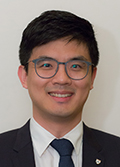 This award is presented for excellence in teaching to a faculty member who is a Penn Dental Medicine graduate. The award was established by a grateful patient in honor of Dr. Hoyt, a distinguished clinician and educator and member of the Class of 1918. This year’s recipient was Yu-Cheng Chang (GD’15, GD’16, D’18), predoctoral director of periodontics. A member for the full-time faculty since 2016, Dr. Chang, directs all the periodontics didactic courses for first-, second- and third-year students, teaching students fundamental periodontology from basic science to non-surgical and surgical treatment. He also directs the clinical periodontics courses for third- and fourth-year DMD students, which help to integrate their knowledge of periodontology into clinical practice. In addition, Dr. Chang is an instructor in both the predoctoral and postdoctoral clinics and directs a didactic course for the postdoctoral program as well.
The Senior Outstanding Teaching Award
 This award is presented to a faculty member who has gone beyond the scope of his/her responsibilities to significantly impact the class’s education at Penn Dental Medicine. This year’s recipient is Artur Kofman, CDT director of laboratory affairs and the Office of Laboratory Affairs supervisor for the clinical labs at the School; this is the third year in a row that he was recognized with this award. Mr. Kofman has been sharing his knowledge and expertise in dental lab work with students as a member of the School’s staff for the past 18 years. Among his responsibilities, he coordinates students’ lab work from the School to commercial laboratories and vice versa, guides dental students in lab-related technical issues, and provides hands-on assistance as needed for minor adjustments to dental appliances at a chair-side setting.
Penn Law 2019 Teaching Awards

Harvey Levin Memorial Teaching Award
Mitch Berman is awarded the Harvey Levin Memorial Teaching Award, voted on by the JD class of 2019. Mr. Berman is the Leon Meltzer Professor of Law and Professor of Philosophy. He writes and teaches in American constitutional law, constitutional theory, philosophy of criminal law, general jurisprudence and philosophy of sport. This year, he taught Constitutional Law, Sport and Law in Comparative Perspective, and Constitutional Interpretation.
Said his students: “Professor Berman has really taught me a lot more than just constitutional law – he has truly instructed me on how to think and be more precise with my language.” “He really cares about making sure that the students understand the complex material, in part because he is approachable and receptive to questions.” “This has been the best learning experience in my academic career. Prof. Berman is a gifted teacher.”
 A. Leo Levin Award for Excellence in an Introductory Course
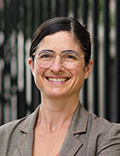
This year’s recipient, Sophia Lee, is professor of law and history. She is a legal historian whose scholarship synthesizes constitutional and administrative law. She has written about administrative agencies’ role in shaping constitutional law; civil rights and labor advocates’ challenges to workplace discrimination during the early Cold War; and conservative legal movements in the post-New Deal era. This year, she taught Administrative Law and Black Lives Matter in Historical Perspective.
Said her students: “Professor Lee did an AMAZING job of bringing this material to life and driving home the importance of the shifting doctrine governing the reach and power of the administrative state.” “Professor Lee is extremely kind, approachable, and a great resource. She clearly enjoys working with students and I loved learning with her this semester.”
 Robert A. Gorman Award for Excellence in Teaching
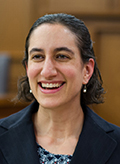
This recipient of this award is Serena Mayeri, a professor of law and history. Dr. Mayeri’s scholarship focuses on the historical impact of progressive and conservative social movements on legal and constitutional change. This year, she taught Family Law, Employment Discrimination, and Feminist Legal Advocacy in the 20th Century.
Said her students: “Prof. Mayeri is a fantastic professor!” “Her Family Law class was my favorite course in law school, and I'm so glad I took this class before graduating. I highly recommend this course to all students, whether or not they have an interest in family law. The topics that are studied are universally important, constantly changing, and touch on some of the most important questions that an individual faces.”
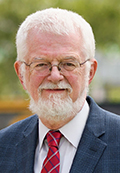 LLM Teaching Award Herb Hovenkamp receives this award, voted on by the LLM class of 2019
Dr. Hovenkamp is the James G. Dinan University Professor and a PIK University Professor. He is a recognized expert and prolific author in the areas of Antitrust law and American Legal History. He holds a joint appointment between Penn Law and Wharton Business School. This year, he taught Antitrust, Antitrust: Mergers, IP, & Vertical Restraints, and Law and Commerce in American History.
Said his students: “Prof. Hovenkamp is a great professor, he knows almost everything in Antitrust, and he is good in analyzing cases in both economic and legal terms.” “We are very lucky to have Prof. Hovenkamp at Penn.” “Couldn't imagine a better antitrust professor than Professor Hovenkamp.”
 Adjunct Teaching Award
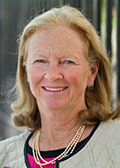
Sharon Lorenzo is awarded the Adjunct Teaching Award for her excellent work teaching and mentoring students in her Cultural Heritage and the Law course.
Said her students: “Professor Lorenzo is an absolute gem and is so incredibly knowledgeable that it blew my mind each week!” “Professor Lorenzo is so fantastic, so understanding, and so kind towards her students. She's also very funny which helps make law school fun when you're sitting through dense classes all week!” “This course was perfect. It was my favorite of all the classes I've taken at the law school!”
 Experiential Teaching Award
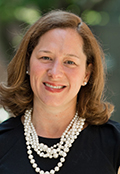
Eleanor Barrett is receiving the inaugural Experiential Teaching Award for her tremendous work this year in her Legal Practice Skills and Writing for Practice courses.
Ms. Barrett (L’05) is the Denise A. Rotko Associate Dean for Legal Practice Skills. In that capacity, she administers and teaches the first-year Legal Practice Skills course; works to design and implement new skills, writing, and communications courses and programs across the Law School; and oversees the Law School’s moot court program.
Said her students: “Prof Barrett was fantastic at meeting with students and providing feedback. She has a rare ability to deliver constructive criticism in a manner that is actually constructive.” “Professor Barrett was amazing. She clearly is a phenomenal writer, and was very effective at conveying what exactly it is that makes good writing.” “I feel more comfortable talking to Professor Barrett than to any other professor. Her door is literally always open, and she has never been too busy to talk.”
Penn IUR, Weitzman School of Design: Launching Lab on Urban Informality and Sustainable Development

 The Penn Institute for Urban Research (Penn IUR) and Penn’s Weitzman School of Design are pleased to announce the formal launch of the Lab on Urban Informality and Sustainable Urban Development, a project that consolidates and supports efforts throughout the University of Pennsylvania that explore the way informality is shaping sustainable urban development.
Today’s metropolises are expanding rapidly—cities of the Global South are experiencing annual growth rates sometimes exceeding three or four percent—and this growth is coinciding with the proliferation of informality in all aspects of life.
The Lab, led by Penn IUR co-director Eugenie Birch and Penn IUR Faculty Fellow Erick Guerra, both faculty of the School of Design, aims to generate research and knowledge about informality in all of its many forms. The Lab considers multiple interpretations of informality: a form of marginalization from formal society, a semi-integration into formal society, or a rational form of survival within state-sanctioned institutional arrangements. As such, the Lab looks at the systematic forces that drive informality, and how these forces manifest themselves in various sectors, including housing, employment, transport, energy and service delivery.
Dr. Birch and Dr. Guerra have already been working to drive research and projects in this area. Projects already underway or completed include: several publications, including Slums, How Informal Real Estate Markets Work (University of Pennsylvania Press, 2016) and Beyond Mobility: Planning Cities for People and Projects (Island Press, 2017); convenings such as “Why Cities? Informality as a Way of Life: Challenges to Sustainable Urban Development,” an April 2019 roundtable aimed to align current research and initiatives on informality; support of doctoral research; and an April 2019 photo contest on the theme of urban informality.
The new Lab on Urban Informality and Sustainable Urban Development will formally integrate, consolidate and promote the University’s recent and future data collection and research to develop new knowledge in this area.
Michael Weisberg: Perry World House Inaugural Penn Faculty Fellow
 Perry World House has chosen Michael Weisberg, professor and chair of philosophy at the University of Pennsylvania, to serve as the inaugural Perry World House Penn Faculty Fellow for the 2019-2020 academic year. Dr. Weisberg, who is also the co-director of the Penn Laboratory for Understanding Science and the Galápagos Education and Research Alliance, will be in residence at Perry World House for the year exploring policy-relevant questions about the nature of science.
“We’re thrilled to have Michael in residence next year: he’s a cutting-edge scholar, global thinker, and committed Penn community member,” said William Burke-White, Richard Perry Professor and Inaugural Director of Perry World House. “The goal of this new fellowship is to give Penn faculty members greater access to Perry World House’s policy networks and platforms to have meaningful impact on pressing world affairs. We look forward to working with Michael in the year ahead.
Through a competitive selection process, the Penn Faculty Fellow receives a Perry World House Residency and Project Completion Grant. This new initiative is designed for standing Penn faculty to complete a significant research project that has the potential to influence not only academic scholarship but also policymaking. Additionally, throughout the academic year, the Faculty Fellow is expected to become a part of the Perry World House community, collaborating with fellow scholars, visitors, policymakers, practitioners and students.
During his time at Perry World House, Dr. Weisberg will complete his book, Philosophy of Natural Science, which will explore science’s ability to shape the policy world. He plans to highlight, and seek to reduce, the disparity between the expectations and realities of the role science can have in making governmental decisions. In addition, Dr. Weisberg will help collaborate with Penn scholars interested in exploring the opportunities of the Green New Deal and draw greater attention to the Galápagos Education and Research Alliance, which directly engages the Galapagueño community in science and conservation efforts.
Prior to joining Penn in 2003, Dr. Weisberg earned his BS in chemistry and BA in philosophy from the University of California, San Diego in 1999 before receiving his PhD in philosophy from Stanford University in 2003. He is currently the editor-in-chief of Biology and Philosophy. His books include Simulation and Similarity: Using Models to Understand the World and Galápagos: Life in Motion.
2019 Sachs Program Grants
The Sachs Program for Arts Innovation has awarded 26 grants through its adjudicated grants process, for a total of $220,000 in funding.
Extended Artist Engagement Grant
Penn Center for Neuroaesthetics/Anjan Chatterjee: Penn Center for Neuroaesthetics Artist-in-Residence: Lucas Kelly
Visiting Artists Grants
Center for Hispanic Excellence: La Casa Latina, VPUL: 20 Years of La Casa Latina
Institute of Contemporary Art: Christina Long: Punk Festival and Zine Fair
Eugene Lew, SAS: MUSICA PRACTICA/ELETTRONICA VIVA
Penn Museum: Breanna Moore: A Commission for the New Africa Galleries
Arts Course Development Grants
Mauro Calcagno, SAS: Re-envisioning Penn’s Opera Curriculum
Sophie Hochhäusl, Weitzman School of Design: From Kitchen to Counter-Space: A Feminist Approach to Architecture and the Built Environment
Heather Love and Brooke O’Harra, SAS: Queer Archives, Aesthetics and Performance
William Udell, Weitzman School of Design: Fabrication Workshop Series: Hands-on Making Through the Lens of Sculpture
Arts Integration Grants
Jasmine Blanks Jones, Master of Public Health Program, SAS, and GSE: Health Messaging in Africa: Public Performance and Community Health Education
Independent Creative Production Grants
M. Asli Dukan, Weitzman School of Design: The Healing Box
Gabriel Martinez, Weitzman School of Design: Queer Eclipse
Student Arts Innovation Grants
Graduate/PhD Students
CAMRA (Collective for Advancing Multimodal Research Arts), Annenberg School, GSE, SAS, and SP2: 2020 Screening Scholarship Media Festival
Joshua Franklin, PSOM and SAS: Photovoice Project: Working with Young Trans Women to Create New Strategies for HIV Prevention
Nora Gross, GSE and SAS: Our America (working title)
Joshua Hey, SAS: derendered
Glenn (Sonnie) Wooden, Jr., Weitzman School of Design: Between you and I (working title)
Undergraduate Students
Anab Aidid and Christina Piasecki, SAS: Plain Sight (working title)
David Hong, SAS: Poetic Memory Program
Student Engagement Grants
Center for Experimental Ethnography, SAS: Grounds that Shout! (And Others Merely Shaking)
Common Press, Penn Libraries, Weitzman School of Design, Kelly Writers House: Activist Prints
SAS and Weitzman School of Design: Incubation Series 2019-2020
Provosts Interdisciplinary Grants
Weitzman School of Design and SAS: Performance Intensive
Alice Paul Center for Research on Gender, Sexuality, and Women, SAS: Alice Paul Center Visiting Artist: Arielle Brown
The Quechua Language Program and Kelly Writers House, SAS and Office of the Provost: Indigenous Languages Week (working title)
Michelle Lopez, Weitzman School of Design: The Joplin Project
Recognized Holidays for Fiscal Year 2020
The following holidays will be observed by the University in the upcoming fiscal year (July 1, 2019 through June 30, 2020) on the dates listed below:
Independence Day, Thursday, July 4, 2019
Labor Day, Monday, September 2, 2019
Thanksgiving, Thursday and Friday, November 28 & 29, 2019
Christmas Day, Wednesday, December 25, 2019
New Year’s Day, Wednesday, January 1, 2020
Martin Luther King, Jr. Day, Monday, January 20, 2020
Memorial Day, Monday, May 25, 2020
To the University Community:
Each year, the President, Provost, and EVP assess the feasibility of observing Penn’s traditional Special Winter Vacation. Thus, the Special Winter Vacation granted to faculty and staff will be December 26, 27, 30, and 31, 2019. If an employee is required to work to continue departmental operations for part or all of this period, the special winter vacation can be rescheduled for some other time.
Staff members who are absent from work either the work day before a holiday, the work day after a holiday, or both days, will receive holiday pay if that absence is charged to pre-approved paid time off or to sick days substantiated by a written note from the staff member’s health care provider.
Vacations and holidays for hospital employees or those staff members in collective bargaining units are governed by the terms of hospital policies or their respective collective bargaining agreements.
—Division of Human Resources
| |
Fiscal Year 2020 |
Fiscal Year 2021 |
Fiscal Year 2022 |
| Independence Day |
Thurs., 7/4/19 |
Fri., 7/3/20 |
Mon., 7/5/21 |
| Labor Day |
Mon., 9/2/19 |
Mon., 9/7/20 |
Mon., 9/6/21 |
| Thanksgiving |
Thurs. & Fri., 11/28 & 11/29/19 |
Thurs. & Fri., 11/26 & 11/27/20 |
Thurs. & Fri., 11/25 & 11/26/21 |
| Christmas Day |
Wed., 12/25/19 |
Fri., 12/25/20 |
Fri., 12/24/21 |
| New Year's Day |
Wed., 1/1/20 |
Fri., 1/1/21 |
Fri., 12/31/21 |
| Dr. Martin Luther King, Jr. Day |
Mon., 1/20/20 |
Mon., 1/18/21 |
Mon., 1/17/22 |
| Memorial Day |
Mon., 5/25/20 |
Mon., 5/31/21 |
Mon., 5/30/22 |
Penn Children’s Center: FY2020 Rates
Beginning Monday, July 1, 2019, new rates at the Penn Children’s Center become effective. The rate structure for the 2019-2020 school year reflects the Center’s commitment to continue to provide high-quality care and programming in the most cost-effective manner possible. The Penn Children’s Center is open to all members of the University and surrounding communities with preference given to faculty, staff and students of the University.
For more information, please visit www.upenn.edu/childcare
FY2020 Rate Schedule (per week)
| |
Penn Rate |
Regular Rate |
Assisted A |
Assisted B |
|
Infants
5 Days
|
$468
|
$538
|
$281
|
$351
|
|
4 Days
|
$418 |
$480 |
$251 |
$313 |
| 3 Days |
$351 |
$403 |
$210 |
$263 |
| 2 Days |
$246 |
$283 |
$147 |
$184 |
|
Toddlers
5 Days
|
$435
|
$500
|
$261
|
$326
|
| 4 Days |
$382 |
$439 |
$229 |
$287 |
| 3 Days |
$317 |
$365 |
$190 |
$238 |
| 2 Days |
$221 |
$254 |
$132 |
$166 |
|
Preschool
5 Days
|
$344
|
$404
|
$207
|
$258
|
| 4 Days |
$301 |
$353 |
$181 |
$226 |
| 3 Days |
$262 |
$307 |
$157 |
$196 |
| 2 Days |
$189 |
$222 |
$114 |
$142 |
|
Drop In
Infants
|
$100
|
|
|
|
| Toddlers |
$100 |
|
|
|
| Preschool |
$80 |
|
|
|
Penn Rate is available to Penn faculty, staff, students and UPHS employees. Assisted Rates are for the University of Pennsylvania faculty and staff meeting eligibility requirements. Subject to space and funding. Assisted A rates apply to University faculty and staff only with combined family income below $63,000. Assisted B rates are for University faculty and staff only with combined family income below $76,000.
Important Tax Information: Under current applicable Internal Revenue Service (IRS) regulations, any subsidies for dependent care provided by the University of Pennsylvania must be reflected on your Form W-2 as employer-provided dependent care assistance. These subsidies are taken into account in determining the maximum annual exclusion for tax-free employer-provided dependent care assistance (currently $5,000 annually). This includes both the University discounted tuition rate and any direct fee reduction approved for eligible families. You will, therefore, want to take into consideration any University-provided subsidy for the Penn Children’s Center in determining your salary reduction election if you participated in the University’s Dependent Care Pre-Tax Expense Account Plan. The total amount of any subsidies and the total amount of your contributions to the Dependent Care Pre-Tax Expense Account cannot go over the annual limit of $5,000. Any amount over the IRS limit would have to be reflected on your W-2 as imputed income. If you have any questions concerning your spending account, you may contact the Penn Benefits Center at 1(888)
PENNBEN (1-888-736-6236).

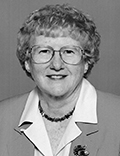 Carol P. Hanley Germain, associate professor emerita in Penn’s School of Nursing and pioneer in the development of qualitative research in nursing, died May 10. She was 86.
 Ralph W. Hamilton, emeritus professor of surgery in Penn’s Perelman School of Medicine, died April 23 after a long illness. He was 85.
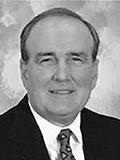 David P. Montgomery (C’68, WG’70) former University of Pennsylvania Trustee and Phillies chairman, died May 8 of cancer. He was 72.
 Paul David Sehnert, director of real estate development in FRES, passed away on May 19, at home with family and friends. He had bravely battled cancer since 2017. He was 63.
 The Ivy League presented its 2018-2019 Women’s Tennis Player of the Year award to Iuliia Bryzgalova, a freshman at the University of Pennsylvania. A native of Moscow, Russia, Ms. Bryzgalova was chosen unanimously. She was also named Ivy League Rookie of the Year and First-Team All-Ivy. She is only the fifth player in conference history to earn Player of the Year and Rookie of the Year honors in the same season. She was also named Second-Team All-Ivy in doubles competition with teammate OJ Singh.
 Penn Dental Medicine’s Joan Gluch, division chief of community oral health and professor of clinical community oral health, was recognized by the Penn Community Scholars Program with its Community Connector Award, presented for exemplary leadership in community-academic partnerships. The award was presented April 26 as part of the annual Penn Community Scholars Program Symposium.
 The Schizophrenia International Research Society has named Raquel Gur and Ruben Gur, both in Penn’s Perelman’s School of Medicine, as its 2019 Outstanding Translational Research Awardees. The two received the award at the 2019 International Congress of the Schizophrenia International Research Society in Orlando, Florida, in April.