From the President: On Racial Justice and Social Equity
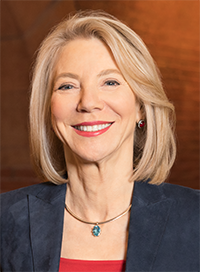 Words cannot adequately convey the anger, grief and frustration that we are all experiencing during this difficult time for our city and country. The horrific killings of George Floyd, Breonna Taylor, Ahmaud Arbery, and so many others have shocked and saddened us all. These are grim manifestations of ongoing racism, repression, and inflammation of hatred in our society.
Yet out of our despair, we can also perceive hope. Those who are peacefully protesting have given voice to change that is long overdue. Our nation needs to reaffirm, in a unifying voice, that we all share a common bond, first as human beings, and as citizens, governed by the same laws and constitutional rights, deserving of equal protection and opportunity. We speak up in solidarity with our Black sisters and brothers, for the indignities and violence they have experienced simply because of the color of their skin. We speak up for every person who is subjected to cruelty, discrimination, and injustice.
We must, as a country and community, resolve to find better ways forward to understand and address systemic racism and closely related economic, educational, political and social inequities. We must work together to build more hope for the future.
That work begins at home, in our beloved University. For every great stride Penn has made in addressing educational inequities—more than doubling our proportion of first-generation and low-income students, tripling financial aid, substituting grants for loans, creating our Penn First Plus programs, and partnering with our city to help over 250 local public schools and hundreds of social service organizations—we recognize how much more remains to be done to better address systemic racism and educational disparities.
Our work radiates out, in partnership with our beloved city, and further still, to help heal the wounds and overcome the injustices of our deeply polarized society and world.
We are social beings whose lives and psyches are strained by the distancing that we must practice to protect everyone around us from the novel coronavirus. The ravages of that virus—the death toll and the economic toll—exacerbate pre-existing health disparities and health care inequities of our society. Here, too, our work radiates out into our city, country and beyond. Penn is home to a world-class academic medical system with top-ranked nursing, dental and veterinary schools whose faculty, students, staff, and alumni have been toiling tirelessly to care for vulnerable individuals and communities. Yet we must pledge to do more to address health care disparities and inequities in the months and years ahead.
We thrive when we join together, when we care for one another, when we speak and act with empathy for and in solidarity with one another. Today is not the first time—and it will not be the last time—that we speak up and stand up with our students, faculty, staff, alumni, and entire community of caring, loving, hurting human beings.
As events unfolded this week, my thoughts have constantly returned to how grateful I am to be a part of the University of Pennsylvania. To the pride I feel at working with such extraordinary students and colleagues. To the hope I have for our great city.
We know that we are all in this together. And we will get through it, helping each other, working for a better community and country.
Today [June 3] Provost Wendell Pritchett and I announce Penn’s support for a set of collaborative and innovative projects—to be created by our students, faculty and staff brainstorming together—that will propel progress in our University, city and society toward a more inclusive and impactful university and community. We speak for everyone at Penn in resolving to do our part to help heal wounds, strengthen community, and create hope in our world. These projects include:
Penn Projects for Progress
As an institution dedicated to addressing society’s most intractable problems, Penn will establish a new fund, intended to encourage students, faculty and staff to design and implement pilot projects based on innovative research that will advance our aim of a more inclusive university and community. We seek to seed impactful projects, grounded in outstanding Penn research, that will offer new ideas to enhance the quality of life for members of our community now and in the future. Proposals for projects from individuals will be considered, but those from diverse teams—broadly conceived—will receive priority consideration. Initially, project proposals are to be related to one or more of the following challenges:
- Eradicating or reducing systemic racism
- Achieving educational equity
- Reducing health disparities based on race, gender, sexual orientation, and/or social determinants of health
A selection committee will make recommendations to the President and Provost based on their judgement of a project’s potential to make an immediate and sustainable impact. The initial fund will be $2 million—with the possibility of raising additional resources—to support compelling projects and promising proposals. A follow-up communication to our community will provide details, including how to apply for funding.
A Year of Civic Engagement
Civic engagement, in the year ahead, will be more essential than ever. We made a commitment, as we wrote last month, to begin our fall semester as scheduled. We must now make an equal commitment to sustaining our community. As a first step in this direction, we are announcing a Year of Civic Engagement for our University. The 2020-2021 academic year will include programs, workshops, student-led dialogues, and opportunities to engage with the communities outside our campus, from our immediate West Philadelphia neighborhood, to our surrounding city as it recovers from the pandemic, to the wider circle of our nation and our world. These activities will acquire particular potency in our US election year, in which we know many of you will be involved, which will span from the campaign and election in the fall semester to the inauguration and its aftermath in the spring semester.
At the same time, the year will draw on Penn’s historic tradition of civic engagement. We were founded by Benjamin Franklin with a vision of a non-sectarian school to educate the leaders of a growing city, with a focus on practical impact on contemporary life. We continue this mission in the Penn Compact 2022, which articulates impact as one of the three core goals that guide our campus. And it is embodied in a group of dynamic ongoing programs at Penn that will drive the Year of Civic Engagement: Civic House and its pioneering Civic Scholars Program, the Netter Center for Community Partnerships, the Fox Leadership Program, and the exciting new Paideia Program, which creates a hub for civic dialogue on campus, integrating service, wellness, and citizenship to educate the civic and community leaders of the future.
We welcome suggestions from every member of the Penn community as we develop activities for the year ahead. For our incoming Class of 2024, the Year of Civic Engagement will begin in New Student Orientation, with a Penn Reading Project that includes texts from Benjamin Franklin and Martin Luther King Jr., along with small-group discussions and larger presentations. For all of us, we can expect to learn from, engage with, and enrich each other as we together navigate the months to come. We will continue to share more information as plans for next year move forward.
The Campaign for Community
The Campaign for Community was launched in 2015 to strengthen our Penn community by finding ways to discuss and understand the vital social issues that may appear to be the most difficult or intractable. In the past five years, it has sponsored hundreds of campus events devoted to its three core goals:
- To promote understanding of and respect for multiple points of view on important topics related to the University community
- To encourage dialogue and discussion among members of the community about issues with the potential for difference and disagreement
- To create opportunities for all members of the University’s community to participate in conversations about important topics
As issues of racial justice and social equity become ever more important—and yet ever more polarizing—we want to encourage all members of the Penn community to use Campaign funding and sponsorship for events in the coming year. We especially encourage small-group events, with consideration for physical distancing, that help us discuss the vital issues that we share and try to heal the divisions plaguing our world. We will circulate more specific information about Campaign grants and proposals in the upcoming week.
—Amy Gutmann, President
Ed Note: Click here to read other statements made by Penn entities.
From the Provost: On Racial Justice and Social Equity
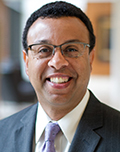 Last week, President Gutmann called on our community to join in grieving the deaths of George Floyd and too many others and to commit to being part of a positive change. I am writing today to reaffirm her call to duty and follow up with additional next steps.
Over the last week, I’ve looked at the Philadelphia streets where I grew up and have lived all my life and found a city that had changed. People have done the same in many other places across the country. What comes next, none of us know. But I hope it will be a fairer and more just country—a place where a person of color does not have to live each day in fear (a fear that I share, as I have been unjustifiably detained by police many times in my life) and where everyone can enjoy the resources and opportunities which are a basic human right.
I have researched and written about the uprisings of the 1960s, but I was not old enough then to fully feel them. I do fully understand today’s uprisings. They are an appropriate and understandable response to our country’s continuing systemic racism, violence, and repression—to a culture in which many leaders divide and inflame hatred—and they express a frustration with a society, the wealthiest in the human history, where poverty and economic inequality are ever-present. Like you, I’ve been shocked and saddened. Yet—probably also like you—unsurprised. The bill for injustice and inequality has come due. The shock was, perhaps, how suddenly it arrived. Yet amid all that: rays of hope. Across the country, peaceful marches erupted this weekend; and they represent the broadest possible cross section of America.
As members of the Penn community, and members of many other communities, it is our responsibility to make the change people are demanding happen. Like all institutions, Penn is a flawed place. And like all historic institutions, Penn has a troubled history of racial discrimination. We need to recognize that, acknowledge it, and work every day to atone for those flaws. Yet at the same time, because of our amazing students, faculty and staff, Penn is a place that strives to get better, to work to alleviate our society’s and our world’s many ills.
Now more than ever, our tremendous stores of knowledge and creativity can, and will, help us create a more just, more equitable society. Here on our campus, I am proud to say that we have numerous ongoing programs that offer resources, information, discussion, and support on these critical issues, some of which are listed below. Going forward, as President Gutmann indicated, we also want to encourage all members of the Penn community to use funding and support from the Campaign for Community. The Campaign began five years ago to create ways to talk together about the deepest and potentially most controversial and intractable issues that divide us. Its goals are explicitly:
- To promote understanding of and respect for multiple points of view on important topics related to the University community
- To encourage dialogue and discussion among members of the community about issues with the potential for difference and disagreement
- To create opportunities for all members of the University’s community to participate in conversations about important topics
The Campaign for Community is available immediately for proposals—for projects over this summer or in the academic year ahead – in three primary areas:
- Projects and conversations about racial justice within the Penn community
- Projects and conversations about racial justice between members of the Penn community and members of our Philadelphia community
- Projects and conversations about racial justice by members of the Penn community in their own home communities, including students at home over the summer
We also encourage you to make use of and participate in some of our vibrant campus programs:
African-American Resource Center
Makuu Black Cultural Center
Men of Color at Penn
Women of Color at Penn
Center for Africana Studies
La Casa Latina
Pan-Asian American Community House
Greenfield Intercultural Center
LGBT Center
Penn Women’s Center
Graduate Student Center
Family Resource Center
Restorative Practices Program
Spiritual and Religious Life Center
We are all living through a moment in our history that is turbulent and unpredictable across multiple dimensions. Yet from great disruption can come great change. President Gutmann and I look forward to working with all of you, across this summer and the year ahead, as we begin to shape the future of our University and our wider human community.
Let us be the change we seek.
—Wendell Pritchett
Provost, University of Pennsylvania
Presidential Professor of Law and Education
Racial Justice and Social Equity Messages
In addition to the message from Penn President Amy Gutmann, there have been many other statements made by Penn entities. Following are a few of them:
A Message from Public Safety
On May 25th the world witnessed the horrible and cruel death of Mr. George Floyd at the hands of four Minneapolis Police Officers. I say four officers, because three officers stood by and watched their colleague take Mr. Floyd’s life over a very painful eight minutes, forty-six seconds, while Mr. Floyd begged for his life and called upon his deceased mother to help him. Every time I watch that video I feel both rage at the actions of these ex-police officers and a deep sadness that this man died such a public, painful and illegal death. This incident triggered a call to action across America.
The delay in charging ex-police officer Derek Chauvin with murder escalated the intensity we are witnessing across the country. The State’s delay in charging the other three officers with related offense until today [June 3, 2020] also contributed to the pain and anger felt across the nation.
We will continue to support those exercising their First Amendment protected right to protest the injustice they see and feel. We have assisted in providing safe passage for these civically engaged individuals and will continue to do so.
Actions of bad actors in police departments disgrace ALL police officers and police departments across our country. This is why we in the UPPD ensure that our hiring, retention, discipline and ultimately dismissal processes are fair and swift.
Our officers attend many trainings to better understand, relate to, communicate with and support our community. For many years we have sent Police Officers and PennComm personnel to the Washington, DC Holocaust Museum to an education program for Law Enforcement officers developed and delivered by the Anti-Defamation League (ADL). This training is important because it teaches us how dangerous it is for people in authority, who have power over other people, to misuse that power. This training must be internalized and practiced every day by every police officer in our agency. Police Officers have the ultimate power over people’s lives, and when not used appropriately and lawfully, it can result in the death of a human being.
We have two mottos for our agency. “It’s all About Relationships” and “Make Emotional Deposits in the Bank”. We often talk about why it’s important to make emotional deposits in the bank—because someday, somewhere across the country, one or more police officers will do something so outrageous that it puts a blemish on our department, our badge. I am proud of the way everyone in DPS makes Emotional Deposits every day. Because of them, we are a highly respected and loved Police Department and Division of Public Safety.
We urge everyone to keep your hearts open, as we pledge to as well. Keep the faith during this very difficult time.
—Maureen S. Rush, Vice President of Public Safety, Superintendent of Penn Police, Division of Public Safety, University of Pennsylvania
A Message from Penn Program on Regulation
Civil rights organizations in the United States have declared today [June 4, 2020] a day of national mourning over the brutal killing of George Floyd by a Minneapolis police officer 10 days ago. Mr. Floyd’s horrific death shakes the entire nation and reveals—yet again—a deep, historic and systemic racism that, unfortunately, continues to pervade US society.
Each senseless taking of a black man or woman’s life—and George Floyd, Breonna Taylor, Ahmaud Arbery, Trayvon Martin, Michael Brown, Eric Garner, and Tamir Rice are only a few of the many victims—represents not merely an individual tragedy but an urgent call for investigation into institutional failures in larger systems, especially those comprising rules and rule enforcers.
Scholars and practitioners of regulation have much more to learn about how systems of rules can both reinforce and resist institutionalized racism. Now is the time to listen and learn from black experiences to understand better how to improve the management of regulatory and law enforcement organizations to break historic patterns of oppression.
Black Lives Matter. In light of how black Americans are adversely impacted by governmental action, improving regulatory systems and the behavior of regulatory personnel remains an essential avenue for delivering on the promise of equal justice for black Americans, as well as for Indigenous and other minority communities who face oppression and discrimination in this country and around the world.
Projects already underway at the Penn Program on Regulation include the first book-length study systematically to investigate the relationship between regulation and inequality in the United States. The editors of The Regulatory Review are also at work on a forthcoming series on race and regulation. But I also want to hear from you. I invite you to reach out if you have ideas for other projects or initiatives that the program could undertake to help counteract racism by improving regulations and regulatory institutions.
—Cary Coglianese, Edward B. Shils Professor of Law Director, Penn Program on Regulation
A Message from the Spiritual & Religious Life Center at Penn
All of us at SPARC are grieving this week [May 29], grieving with all of you who are hurting as we witness yet more of the impact and pain caused by individual and institutional racism in our country.
We know that it's especially hard to be grieving in this way in a time when we are all apart.
We lament with all of you who are angry, exhausted and overwhelmed.
We are in solidarity together with you for change and justice and we are here to support you as always.
If you need space to talk our Chaplains are here for you and our prayers and love are with you.
—The SPARC Team
A Message from the Netter Center
The senseless, brutal killings of George Floyd, Ahmaud Arbery, Breonna Taylor, and so many other Black Americans, as well as the disproportionate impact of COVID-19 on people of color, starkly and undeniably reveal the pernicious prevalence of racism in all its forms—from racist attitudes and behaviors to institutional and structural racism embedded in 400 years of American history. Working with our community partners, the Netter Center is committed to contributing to the significant reduction and eventual eradication of racial injustice and inequality, helping to build an inclusive, equitable, “beloved community” (as called for by Dr. Martin Luther King, Jr.) in West Philadelphia, Philadelphia and beyond. At this deeply troubling time, we pursue this commitment with relentless dedication and unshakeable resolve.
—Ira Harkavy, Founding Director, Netter Center for Community Partnerships, and its Staff and Community Advisory Board
A Message from Penn Athletics
Community matters.
It is not just a core value for Penn Athletics. It is the most important one.
We acknowledge the pain and suffering our division, our University, our city, and our nation are feeling. Recent events highlight the systemic oppression faced by Black Americans. It is unacceptable and it will only end if we all demand change together.
We are firmly committed to do more.
To listen. To speak up. To educate. To empathize.
We will be better because we have to be better.
Community matters. We stand with you.
—University of Pennsylvania Athletics
A Message from the Annenberg Center
As a center for the arts, we reaffirm our continued commitment to presenting artists of color on our stages, supporting artistic work that addresses the important issues of our time, and we join President Gutmann in pledging to work toward creating an environment that is inclusive and free from discrimination, for our patrons and supporters of diverse cultural backgrounds, our staff, board and all persons of color across the Penn campus.
While we grapple daily with anger, pain and sorrow, I hope it gives you solace to remember that the performing arts are a powerful influence in helping us work through the large issues that may be hard to process individually. The performing arts regularly bring us together in all of our diversities, in a shared experience of fellowship. During such troubled times, they play a greater role in our lives. Even experienced in the digital realm, the arts help us make sense of tragedy and challenge, bringing us meaning, comfort and spiritual affirmation, all of which are essential in our lives right now.
The arts also comment on and help bring about social change, and artists themselves are reacting to this exceptionally difficult time with a great outpouring of creativity. I encourage you to read an excellent article, “Jazz as a Medium for Social and Political Change,” (https://newyorkjazzworkshop.com/jazz-as-a-medium-for-social-and-political-change/) which traces the history of jazz as a catalyst for change.
And I recommend to you two profoundly moving performances by artists of color specifically in response to current events. Please take a moment to view Alvin Ailey American Dance Theater’s WE. DANCE. video (https://tinyurl.com/AlvinAileyWeDance) and listen to this performance of “America the Beautiful” by Anthony McGill, Principal Clarinet of the New York Philharmonic (https://tinyurl.com/AnthonyMcGillATB). With best wishes for your continued health and safety,
—Christopher Gruits, Executive & Artistic Director, Annenberg Center
A Message from the ICA
As the Interim Director of ICA, I have been in constant internal dialogue with our staff and leadership over the last two days as we have prepared this statement. That dialog has taken significant time but it was critical to me to have those conversations. We are actively discussing our action steps for moving forward and we will be sharing those in the coming days.
The devastating events of the past week have been a reminder to all of us that ICA as an institution has an obligation to acknowledge the traumatic experiences of black communities. We unequivocally condemn racist actions and violence. We honor the lives of\ George Floyd, Breonna Taylor, Ahmaud Arbery, Tony McDade and other victims, their families, and the countless lives of far too many others before them.
Moments like this make us painfully aware of both the limits of our reach and the greatness of the needs in our communities. These needs include justice and support. Despite our limits, ICA can advocate for access to opportunity and for the lack of fear that should be everyone’s right and has been due black people for too long.
As an art institution, ICA is committed to justice and equality. We are proud to showcase and support the work of black artists and makers and we have benefited immeasurably from black cultural production.
ICA is also committed to making art and culture free and accessible to all. Our efforts must align with equality and justice for the many communities of which we are a part, not only to artists, but to the many publics with whom we are in solidarity against anti-black racism and discrimination. We pledge to use the platforms we have available to us to listen and we welcome your suggestions on how to build a better, more equitable institution and a more just society.
—John McInerney, Interim Daniel Dietrich, ll Director Institute of Contemporary Art, University of Pennsylvania
A Message from the Penn Museum
The recent killing of George Floyd and previous deaths of Ahmaud Arbery, Breonna Taylor, and too many other Black individuals are beyond tragic: they are deeply unjust. We cannot remain silent about discrimination and systemic violence against Black communities.
We recognize that this museum was built on colonialism and racist narratives. We are working to change these narratives and the institutional biases that accompany them. Racism has no place in our Museum. We must do more. This is one of our highest priorities.
We can and will do better to fight against systems of oppression and for racial equality, to celebrate and amplify Black voices, and to be responsive to the needs of the community we serve.
We commit to listening; to providing a forum for difficult and important conversations; to nurturing and learning alongside this and the next generations in our shared humanity.
To our Black staff, students, members, visitors, and Philadelphia neighbors: we stand with you, we are listening, and we are working to be the Penn Museum our community needs. Black Lives Matter.
—Penn Museum
University of Pennsylvania: Test-Optional for 2020-2021
The University of Pennsylvania frequently examines the role of standardized testing in college admissions, including the SAT and ACT. We see these tests as one piece of a more comprehensive evaluation process that considers individual students in the context of their academic and personal experiences.
The College Board recently announced that an at-home version of the SAT will not be offered as planned. Meanwhile, the capacity for in-person examinations has been severely limited due to COVID-19 considerations. These combined factors will prevent thousands of students from taking the SAT exam. The scale of these challenges is unprecedented. With this in mind, Penn Admissions will not require the SAT or ACT for the 2020-2021 first-year and transfer admissions cycles. Applicants who do not submit SAT or ACT scores will not be at a disadvantage in the admissions process. For international students attending schools where English is not the language of instruction, we continue to require either the TOEFL or IELTS exam. Students who are able to take the SAT or ACT and wish to report them may continue with that plan.
Penn Admissions acknowledges the benefits and limitations built into standardized tests. Beyond the admissions process, test results help institutions guide and support enrolling students. We also know that a single examination does not capture the ability, preparation and potential of all students in an equal way. For this reason, standardized testing has always been only one part of a larger review process that considers many factors, including the rigor of coursework and performance in these courses. Penn Admissions will continue to review students, on an individual basis, consistent with our belief in a comprehensive whole-person review process.
The University of Pennsylvania will follow the rules and regulations of the Ivy League in the recruitment of student-athletes to the institution.
—Eric J. Furda, Dean of Admissions at the University of Pennsylvania
Consultative Committee for Penn Museum Director
Provost Wendell Pritchett recently announced an ad hoc consultative committee to advise him on the appointment of a new Williams Director of the University of Pennsylvania Museum of Archaeology and Anthropology. Julian Siggers, who was appointed Williams Director in 2012, has been named President and CEO of the Field Museum of Natural History in Chicago, beginning in September 2020.
The members of the committee are:
- Wendell E. Pritchett, Provost, Presidential Professor of Law and Education (Chair)
- Steven Fluharty, Dean, School of Arts and Sciences; Thomas S. Gates, Jr. Professor of Psychology, Pharmacology and Neuroscience
- Peter Gould, Vice Chair, Board of Overseers, Penn Museum
- Christopher Gruits, Executive and Artistic Director, Annenberg Center for the Performing Arts
- Michael Kowalski, Chair, Board of Overseers, Penn Museum
- Trevor Lewis, Vice President for Budget and Management Analysis
- Amanda Mitchell-Boyask, Executive Director of Development, Penn Museum
- Kathleen Morrison, Sally and Alvin V. Shoemaker Professor and Chair, Department of Anthropology, School of Arts and Sciences; Curator, Asian Section, Penn Museum
- Deborah Thomas, R. Jean Brownlee Professor of Anthropology, School of Arts and Sciences
- Lucy Fowler Williams, Associate Curator and Sabloff Keeper of Collections, American Section, Penn Museum
The work of the committee will be supported by Mark Dingfield, Associate Provost for Finance and Planning; Lynne A. Hunter, Associate Provost for Administration; and Ufuoma Pela, Senior Director of Human Resources, Provost Administrative Affairs, working with Mary Gorman of the executive search firm Spencer Stuart.
Nominations and applications can be sent to PennMuseum@SpencerStuart.com

 Julia Moore Converse, founding director of Penn’s Architectural Archives and former assistant dean at what was then the Graduate School of Fine Arts, died at her Chestnut Hill home on May 22 of Alzheimer’s disease. She was 74.
 John D. Gearhart, James W. Effron University Professor in the department of cell and developmental biology at University of Pennsylvania’s Perelman School of Medicine and former director of the Institute for Regenerative Medicine (IRM), died May 27 following a long battle with gastric cancer. He was 77.
  Oliver Eaton (Olly) Williamson, former Charles and William L. Day Professor of Economics, Law and Public Policy at the University of Pennsylvania whose framework for analyzing the structure of organizations won him a Nobel Prize in Economic Sciences, died May 21 in Berkeley, California, after a period of failing health. He was 87.