News

Karen Tani: Penn Integrates Knowledge University Professor

caption: Karen TaniPresident Amy Gutmann and Provost Wendell Pritchett are pleased to announce the appointment of Karen Tani as the University of Pennsylvania’s 24th Penn Integrates Knowledge University Professor, effective July 1, 2020.   

Dr. Tani, a renowned legal historian, will be the Seaman Family University Professor, with faculty appointments in the University of Pennylania Carey Law School and in the department of history in the School of Arts and Sciences. 

“From the modern welfare rights movement to the implications of Title IX in the American legal landscape, Karen Tani is an exceptionally influential scholar who brings wide-ranging expertise at the intersection of law and history to Penn,” said President Gutmann. “Her work exemplifies the rigorous cross-disciplinary research and teaching that is so essential to understanding society’s most pressing issues, prominent among them the fairness and integrity of our justice system. We are delighted to welcome home this truly remarkable scholar and educator.”  

Dr. Tani, the inaugural graduate of Penn’s JD/PhD Program in American Legal History, is currently professor of law at the University of California at Berkeley, where she has taught since 2011. Her landmark book, States of Dependency: Welfare, Rights, and American Governance, 1935-1972 (Cambridge University Press, 2016), which was awarded the 2017 Cromwell Book Prize from the American Society for Legal History, examines the evolution of welfare programs, across four decades beginning from the New Deal, as central to the logic of modern American governance. 

Her award-winning scholarship also assesses such critical aspects of the American legal landscape as federalism, constitutional equal protection and Title IX enforcement. Most recently, she has focused on the dramatic transformations in legal approaches to disability in the late-20th century. She has been a visiting professor at Yale and Columbia Law Schools and clerked for Judge Guido Calabresi of the US Court of Appeals for the Second Circuit from 2007 to 2008. 

She earned a PhD in history (2011) and JD magna cum laude (2007) from Penn and a BA summa cum laude in history from Dartmouth College (2002), with high honors as a Presidential Scholar. 

“Karen Tani’s pioneering work,” said Provost Pritchett, “exemplifies Penn’s defining commitment: to advance the innovative interdisciplinary scholarship that changes how we understand our world. Her fusion of law and 20th century American history continues to offer new insights that illuminate some of our country’s most significant ongoing challenges. I am proud that she is my former student in the JD/PhD Program, and I am equally proud to welcome her back to Penn as an outstanding new colleague.”

The Penn Integrates Knowledge program was launched by President Gutmann in 2005 as a University-wide initiative to recruit exceptional faculty members whose research and teaching exemplify the integration of knowledge across disciplines and who have appointments in at least two Schools at Penn.

The Seaman Family University Professorship is a gift of Julie Breier Seaman, a 1986 graduate of the College of Arts and Sciences, and Jeffrey Seaman, a 1983 graduate of the Wharton School. Ms. Seaman, associate professor and associate dean for academic affairs at the Emory University School of Law, is a University of Pennsylvania Trustee and a member of the School of Arts and Sciences Board of Overseers. Mr. Seaman is the founder and CEO of Rooms To Go, Inc.

David Amponsah: Presidential Assistant Professor of Africana Studies

caption: David AmponsahDavid Amponsah, assistant professor of Africana studies, has been named Presidential Assistant Professor of Africana Studies. Dr. Amponsah came to Penn in 2018 from the University of Missouri, Columbia, where he was assistant professor of religious studies. An accomplished scholar of religion and society in Africa and its diaspora, his first monograph, Fetish State: British Rule Shrine Priests, and Indigenous Religion in the Making of Colonial Ghana, is under contract with Cambridge University Press. His work has appeared in the Journal of Africana Religions and is forthcoming from the International Journal of African Historical Studies. He is currently working on a second book project titled Enchanted Geography: India in the West African Popular Imagination, which is a social and cultural history of how and why Ghanaians and Nigerians came to construct India as a reservoir of potent supernatural powers beginning in the early part of the 20th century.

The Presidential Professorships are five-year term chairs, awarded by University of Pennsylvania President Amy Gutmann to outstanding scholars, whose appointments to the standing faculty are approved by the Provost and who demonstrably contribute excellence and diversity to Penn’s inclusive community. 

Michael Delli Carpini: Oscar Gandy Chair

caption: Michael Delli CarpiniAfter serving as Walter H. Annenberg Dean of the Annenberg School for Communication 2003-2018, Michael X. Delli Carpini rejoined Penn’s faculty as a full professor and has also been named the inaugural faculty director of the new Stavros Niarchos Foundation Paideia Program for Penn undergraduates (Almamac November 5, 2019). In keeping with Annenberg tradition, he has named his endowed faculty position after someone he admires: Professor Emeritus Oscar H. Gandy, Jr., who taught at Penn’s Annenberg School from 1987 until his retirement in 2006.

Dr. Delli Carpini, now the Oscar H. Gandy Professor of Communication & Democracy, became acquainted with Dr. Gandy during his early years as dean.

“I have always admired Oscar’s scholarship and the way he integrated theory and practice into his research and teaching,” said Dr. Delli Carpini. “I also valued his insights about Annenberg, the discipline of communication and the mission of higher education during my time as dean. I am honored to hold a chair named after him.”

Even after Dr. Gandy retired and moved to Arizona, Dr. Delli Carpini describes him as remaining interested in and supportive of the Annenberg community. The pair continued to correspond over the years about the latest happenings at the Annenberg School as well as their respective research pursuits.

Dr. Delli Carpini’s research explores the role of the citizen in democratic politics, with particular emphasis on the impact of mass media and information and communication technologies on public opinion, public deliberation, political knowledge and political participation. He is the author of five books and numerous articles, book chapters and essays, editor of four books and he was elected a Fellow of the International Communication Association in 2018.

Dr. Gandy’s research focuses on political economy, communication and race, privacy and surveillance, strategic communication and media effects. In addition to receiving his master’s degree from Annenberg School in 1970, he was a postdoctoral fellow here before becoming an assistant professor at Howard University in 1977. When Dr. Gandy joined the Annenberg School as an associate professor 10 years later, he was the first African American member of the standing faculty. Despite moving to emeritus status nearly 14 years ago, he remains an active scholar, regularly presenting and publishing.

“I was genuinely touched when Michael asked me if I would allow him to use my name as the title for his much deserved faculty chair,” Dr. Gandy said. “And I was even more pleased to learn that he would associate the chair with communication and democracy, something about which we both share some concerns. I am deeply honored.”

Perelman School of Medicine’s McCabe Fund Awards for FY2021 Call for Applications: May 13

The McCabe Fund Advisory Committee is calling for applications from junior faculty in the Perelman School of Medicine (PSOM) and the School of Veterinary Medicine (SVM) for the annual Thomas B. and Jeannette E. Laws McCabe Fund Fellow and Pilot awards. The McCabe awards were established in 1969 by a generous gift from Thomas B. and Jeannette E. Laws McCabe to the Perelman School of Medicine. The purpose of this gift is to support junior faculty who initiate fresh and innovative biomedical, clinical and surgical research projects. Applications from clinical track physicians are encouraged and will receive special consideration. Eligible faculty are those who have received either limited or no external research funding while in their first through third years on the faculty at PSOM or SVM at Penn. Junior faculty in these schools should contact their department chair for information and application forms. The guidelines and instructions to determine eligibility are also available on the PSOM website: 

http://www.med.upenn.edu/evdresearch/mccabefundawardprogram.html

The deadline for submission is Wednesday, May 13, 2020. The McCabe Fund Advisory Committee will select the winners at its annual meeting in June.  

Governance

University Council February 19 Meeting Coverage

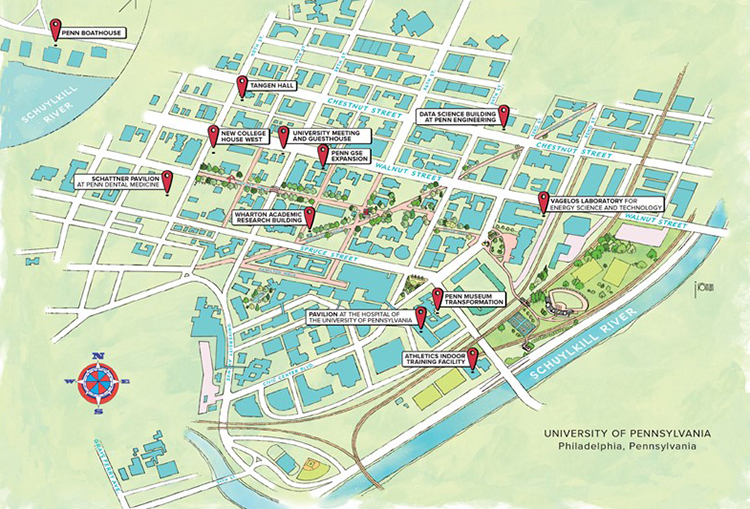
caption: Strategic capital projects across the campus.At the February 19 Council meeting, Council secretary Lizann Rode provided a follow-up to concerns raised in the New Business portion of the January meeting for space allocated to students’ cultural groups. She said that meetings have been held with student leaders and representatives from the office of the provost, FRES and VPUL and they continue to have substantive conversations about options within the ARCH and Locust Walk.

Senior Vice President of Development John Zeller gave a presentation on The Power of Penn campaign, which has a $4.1 billion goal. The University established strategic priorities before the campaign launched in 2018. The campaign is scheduled to conclude on June 30, 2021. Penn has a donor-centered fundraising approach with a focus on increased engagement of alumni and the external community. 

There are myriad strategic capital projects included across the campus (see map) for which there is a goal of more than $600 million earmarked. Undergraduate student financial aid and support had a goal of $334 million. That has been reached already; the new target is $425 million. Mr. Zeller urged everyone to engage with the campaign at www.powerofpenn.upenn.edu or subscribe to the Knowledge for Good email, https://powerofpenn.upenn.edu/newsletter-sign-up/

The Open Forum portion of the meeting followed his presentation. There were nine students who presented concerns on topics such as voter turnout, sexual violence reporting, invitations to controversial speakers, but most of the time was spent on issues related to climate change and divesting from fossil fuels (Almanac February 18, 2020). Afterwards, Emily Steiner, Council’s moderator, thanked all the speakers for their eloquent and well prepared remarks.

Let Your Voice at Penn Be Heard: Volunteer to Join a University Council Committee: March 20

Calling all faculty and staff:  Please consider nominating yourself to join a University Council committee for the 2020-2021 academic year.  The time commitment is minimal, and the work of the committees directly contributes to the improvement of life at Penn. Nominations are due by March 20, 2020.

To: Members of the University Faculty, Penn Professional Staff Assembly and Weekly-Paid Professional Staff Assembly

From: 2019-2020 University Council Committee on Committees

RE: Volunteers Needed for Committee Service

The University Council’s 2019-2020 Committee on Committees invites you to nominate yourself or others for service on one of the University Council’s standing committees. Council committees serve as advisory bodies in shaping academic/administrative policy. Please consider this unique opportunity to have input into the University’s decision-making processes.

Membership on these committees is open to all faculty and staff, including those who have not previously served. We invite individuals who have previously served to volunteer again in order to achieve a mix of new ideas and committee experience. Most committees are also open to students; their participation is already being solicited through other channels.

Please submit your nominations by March 20, 2020, using the form below.

Council committees typically meet for 1-2 hours per month during the academic year. To support staff participation, offices are strongly encouraged to provide flexibility and release time to the greatest extent possible so that staff members may fully participate. We encourage staff and supervisors to work together to arrange release time in recognition of the operational needs of their school/center, and we encourage staff members to provide as much notice as possible in scheduling time for attendance at these meetings.

Please review committees’ recent annual reports for more information on the specific nature of its work. These reports, which provide summaries of the committees’ recent work as well as topics under current deliberation, are published in Almanac and can also be accessed via the University Council website: https://secretary.upenn.edu/univ-council/committees

The University Council seeks nominations of faculty and staff to serve on the following committees:

  • Committee on Academic and Related Affairs
  • Committee on Campus and Community Life
  • Committee on Diversity and Equity
  • Committee on Facilities
  • Committee on Honorary Degrees
  • Committee on Open Expression
  • Committee on Personnel Benefits

Committees and Their Work 

Academic and Related Affairs has cognizance over matters of undergraduate recruiting, admissions and financial aid that concern the University as a whole or those that are not the specific responsibility of individual faculties; of all programs in recreation, intramural and club sports and intercollegiate athletics; and of all matters of policy relating to research and the general environment for research at the University, including the assignment and distribution of indirect costs and the assignment of those research funds distributed by the University. The Committee considers the purposes of a university bookstore. It advises the administration on policies, developments and operations of the bookstores and libraries; in such areas as international student services, foreign fellowships and studies abroad, exchange programs and cooperative undertakings with foreign universities; on athletic operations and recommends changes in policy when appropriate; and on those proposals for sponsored research referred to it because of potential conflict with University policy. 

Campus and Community Life has cognizance over the University’s electronic and physical communications and public relations activities; advises on the relationship of the University to the surrounding community; has cognizance of the conditions and rules of undergraduate and graduate student life on campus; and considers and recommends the means to improve safety and security on the campus. 

Diversity and Equity aids Penn in fostering and taking full advantage of its diversity as well as in strengthening ties across all boundaries to enrich and enliven the campus community. The Committee shall advise the offices of the president, provost and the executive vice presidents on ways to develop and maintain a supportive atmosphere on campus for the inclusion and appreciation of diversity among all members of the University community. The Committee will review and provide advice regarding the University’s equal opportunity and affirmative action programs and policies. The areas in which the Committee shall report to the Council include diversity within the educational and work settings, integration of staff and faculty into the larger campus community and ways to foster a campus environment that is inclusive and supportive of difference. 

Facilities keeps under review the planning and operation of the University’s physical plans and all services associated therewith, including transportation and parking. 

Honorary Degrees is charged with soliciting recommendations for honorary degrees from faculty, staff and students and submits nominations to the Trustee Committee on Honorary Degrees. 

Open Expression has competence to act in issues and controversies involving the Guidelines on Open Expression. It monitors communication processes to prevent conflicts that might emerge from failure of communication by recommending policies and procedures for improvement of all levels of communication, investigating alleged infringements of the right of open expression of any member or members of the University community, advising administrative officers where appropriate and participating in evaluation and resolution of conflicts that may arise from incidents or disturbances on campus.

Personnel Benefits has cognizance over the benefits programs for all University personnel. Special expertise in personnel, insurance, taxes or law is often helpful. 

Please respond by March 20, 2020. 

For Faculty volunteers, mail the form to: Patrick Walsh, Faculty Senate Office, Box 9 College Hall/6303, tel. (215) 898-6943; fax 898-0974 or email at senate@pobox.upenn.edu

For Penn Professional Staff Assembly volunteers, mail the form to Nadir Sharif, Stouffer College House Dean, 142-D Stouffer/6026, tel. (215) 573-3741; or email at nsharif@upenn.edu

For Weekly-Paid Professional Staff Assembly volunteers, mail the form to Loretta Hauber, Weingarten Learning Resources Center, Ste. 300, 3702 Spruce St./6027, tel. (215) 573-9235; or email at lhauber@upenn.edu

Honors

Christopher Marcinkoski: Emerging Voices Award

PORT, the firm of Christopher Marcinkoski, associate professor of landscape architecture at Penn’s Weitzman School, has received an Emerging Voices award from The Architectural League of New York.

The Architectural League’s annual Emerging Voices award spotlights North American individuals and firms with distinct design voices that have the potential to influence the disciplines of architecture, landscape architecture and urban design. The jury reviews significant bodies of realized work and considers accomplishments within design and academia. The work of each Emerging Voice represents the best of its kind and addresses larger issues within architecture, landscape and the built environment.

Sandra Ryeom: $3 Million Stand Up to Cancer Grant

caption: Sandra RyeomSandra Ryeom, an associate professor of cancer biology at Penn’s Perelman School of Medicine, is the co-leader of a team that received a $3 million Stand Up to Cancer (SU2C) grant to improve early detection in stomach cancer. Dr. Ryeom and the international team will receive the money over three years as they conduct intensive studies to identify biomarkers, such as particular bits of DNA and cells that are shed from the tumor that circulate in the blood system and indicate the presence of gastric cancer. The group will explore innovative techniques, including a tiny, pill-size camera that can be swallowed by a patient and can provide detailed images of the lining of the stomach to identify abnormal areas that might be precancerous. If and when validated in clinical trials, the refined techniques will help doctors detect precancers in populations at high risk. The funding is supported by grants from the Cless Family Foundation and Sara & Jeff Schottenstein Family Charitable Fund.

Lyle Ungar: AAAS Leshner Fellow

caption: Lyle UngarLyle Ungar, professor in the department of computer and information science in Penn’s School of Engineering, is a member of the newest class of Leshner Fellows selected by the American Association for the Advancement of Science. He is being recognized for his work using machine learning and text mining on social media messages to study physical and mental health.

Leshner Fellows are chosen for having demonstrated leadership and excellence in their research careers and an interest in promoting meaningful dialogue between science and society. Each cohort is focused on a different pressing social issue; previous classes have covered climate change, human augmentation and infectious disease. The fellows of the 2020–2021 class work in a range of fields, but each is focused on developing and studying machines and algorithms that augment or mimic human abilities, learn from and adjust to new situations and perform tasks.

Dr. Ungar is a member of the Penn Research in Machine Learning Group and a principal investor in the World Well Being Project, which seeks to develop “new techniques for psychological well-being and physical health based on language in social media.” His 2015 TedxPenn talk, “Using Twitter to Predict Heart Disease,” showcases his research and explains how text from Twitter and Facebook posts can be used as qualitative insight into the health of a community.

McCabe Awards Fiscal Year 2020

The McCabe awards were established in 1969 by a generous gift from Thomas B. and Jeannette E. Laws McCabe to the Perelman School of Medicine to support junior faculty who initiate fresh and innovative biomedical, clinical and surgical research projects. 

Last year there were three winners of Fellow awards of $50,000 each: 

  • Sanjeev Chawla, radiology, PSOM 
  • Tori N. Sutherland, anesthesiology &critical care, PSOM 
  • Andrzej P. Wojcieszynski, radiation oncology, PSOM

There were eleven Pilot Award winners who received $39,463 each: 

  • Anish K. Agarwal, emergency medicine, PSOM
  • Paco E. Bravo, radiology, PSOM 
  • Paula Chatterjee, medicine, PSOM 
  • Colin Ellis, neurology, PSOM 
  • Christopher G. Favilla, neurology, PSOM 
  • Thomas B. Karasic, medicine, PSOM
  • Shannon R. McCurdy, medicine, PSOM 
  • Laurel E. Redding, epidemiology, SVM
  • Jae W. Song, radiology, PSOM
  • Neil Kanth Taunk, radiation oncology, PSOM
  • Sony Tuteja, medicine, PSOM

Bill Wagner: Special Recognition Award

caption: Bill WagnerWilliam R. Wagner, the recently retired head coach of the University of Pennsylvania Sprint Football program, will receive a Special Recognition Award from the Maxwell Football Club. The club will present Coach Wagner with his award during the 83rd Annual Maxwell Football Club Awards Gala, which will take place at the Tropicana Casino & Resort on March 6 in Atlantic City.


The face of Penn Sprint Football, Mr. Wagner completed his 50th and final season as head coach of the Quakers in the fall of 2019. Mr. Wagner is a five-time champion of the Collegiate Sprint Football League (CSFL) since taking over the team in 1970. During his time at Penn, he also spent 35 years as an assistant coach on Penn’s baseball team.

“Bill Wagner is a coaching icon at the University of Pennsylvania,” said M. Grace Calhoun, the T. Gibbs Kane, Jr. W’69 Director of Athletics and Recreation at Penn. “Our sprint football program is truly his program—he has coached nearly every living member, and he has been the driving force behind everything that makes it one of the top programs in our division.”

Liang Feng, Erica Korb, Weijie Su: Sloan Fellowships

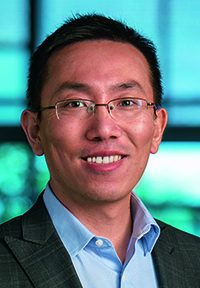
caption: Liang Fengcaption: Erica Korbcaption: Weijie SuLiang Feng of the School of Engineering and Applied Science, Erica Korb of the Perelman School of Medicine and Weijie Su of the Wharton School are among the 126 recipients of the 2020 Sloan Research Fellowship. The award recognizes early-career researchers and scholars in the United States and Canada, and each recipient will receive a two-year, $70,000 fellowship for their research.
Dr. Feng is an assistant professor in the department of materials science and engineering and holds a secondary appointment in the department of electrical and systems engineering. His expertise is at the intersection of nanomaterials and photonics, with an eye toward applications in computer and communication systems. 

Dr. Korb is an assistant professor in the department of genetics. Her lab works at the intersection of neuroscience and epigenetics, studying how the environment can influence gene expression in neurons in ways that enable humans to learn and adapt. 

Dr. Su is an assistant professor in the department of statistics and co-director of the Penn Research in Machine Learning forum. He works with high-dimensional statistics, deep-learning theory, machine-learning optimization and privacy protection.  

Since the first Sloan Research Fellowships were awarded in 1955, 120 faculty from Penn have received Sloan Research Fellowships.

2020 Thouron Award Winners

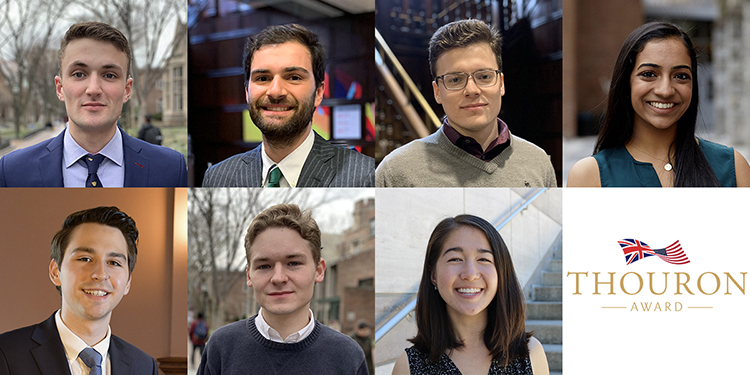
caption: (Left to right, top to bottom): Daniel Brennan, Braden Cordivari, Gregory Forkin, Natasha Menon, Robert Subtirelu, Zachary Whitlock and Maia Yoshida.

Four University of Pennsylvania seniors and three recent alumni have won a Thouron Award to pursue graduate studies in the United Kingdom. Each scholarship winner receives tuition for as long as two years, as well as travel and living stipends, to earn a graduate degree there. 

Established in 1960 and supported with gifts by the late John Thouron and his wife, the late Esther du Pont Thouron, the Thouron Award is a graduate exchange program between Penn and UK universities that aims to improve understanding and relations between the two countries.

Penn’s seven 2020 Thouron Scholars are: 

Senior Daniel Brennan, of Miami, is a varsity oarsman for Penn’s lightweight crew team majoring in history and political science in the School of Arts and Sciences. As a US Marine and past moderator of the University’s Philomathean Society, he is an advocate for greater civil-military awareness. Mr. Brennan works on national security policy as a Student Fellow at the Perry World House. He is a Benjamin Franklin Scholar and has worked on anti-hunger issues. He plans to pursue a master’s degree in military history.

Braden Cordivari, of Elverson, Pennsylvania, is a 2018 graduate of the School of Arts and Sciences. He received his bachelor’s degree in classical studies and anthropology with a minor in archaeological science. He has continued to work at Penn’s excavations at the ancient Iron Age city of Gordion in Turkey. He spent the 2018-2019 academic year as a John Williams White Fellow at the American School of Classical Studies at Athens. Mr. Cordivari plans to pursue a master’s degree in archaeological science.

Gregory Forkin, of Philadelphia, is a 2019 graduate with a bachelor’s degree in mathematics, physics and biology and a minor in chemistry. He was a University Scholar and a member of Phi Beta Kappa. Currently, he is conducting research in neuroscience under Vijay Balasubramanian and is a teaching assistant in the math department in the School of Arts and Sciences. Mr. Forkin plans to pursue a master’s degree in pure mathematics.

Senior Natasha Menon, of Scottsdale, Arizona, is pursuing a major in philosophy, politics and economics and a minor in legal studies and history in the School of Arts and Sciences. Ms. Menon serves as president of the Undergraduate Assembly. She is also a Civic Scholar and has volunteered at Moder Patshala, a Bangladeshi immigrant services center in Philadelphia. Ms. Menon plans to pursue a master’s degree in international migration and public policy. Upon returning to the US, she hopes to pursue a law degree and engage in public service in Arizona.

Senior Robert Subtirelu, from Ronkonkoma, New York, is majoring in the biological basis of behavior and minoring in chemistry in the School of Arts and Sciences. A recipient of the 2019 Clinical and Translational Research Award, he has conducted research with PSOM’s department of neurosurgery to investigate post-traumatic epilepsy. He works as a teaching assistant, volunteers with Wissahickon Hospice and is a member of Penn’s Medical Emergency Response Team. He founded and coordinated the activities of a non-profit called PACE-Project for Children’s Education that has established international educational and nutritional programs. Mr. Subtirelu plans to pursue a master’s degree in clinical and therapeutic neuroscience.

Senior Zachary Whitlock, of Washington, DC, is in the Vagelos Integrated Program in Energy Research joint-degree program, majoring in materials science and engineering in the School of Engineering and Applied Science and in earth science in the School of Arts and Sciences. He has worked on biomimetic functional materials with the Shu Yang Laboratory and internationally at the French Alternative Energies and Atomic Energy Commission. He has also worked at the intersection of industrial materials and environmental impact on a Kleinman Center for Energy Policy–funded project. He is a 2020 Kleinman Undergraduate Fellow and Supported Student at the Water Center at Penn. He is planning to pursue a master’s degree in environmental systems engineering. 

Maia Yoshida, of Madison, New Jersey, received her bachelor’s degree in 2018 in molecular and cell biology with a minor in fine arts. She is now a researcher in a bioengineering lab at University of California, San Francisco, engineering immune cells to better fight cancers. At Penn, she researched the molecular mechanisms involved in neurodegenerative diseases, was a TA for a fine arts course on biological design and taught elementary school science at the Penn Alexander School. As the president of Global Brigades at Penn, she led fundraising efforts for sustainable development projects in Honduras. Ms. Yoshida plans to pursue a master’s degree in STEM Education.

The Center for Undergraduate Research and Fellowships serves as Penn’s primary information hub and support office for students and alumni applying for major grants and fellowships, including the Thouron Award.

Features

15 Years of WXPN Musicians On Call

caption: Local musician and Musicians On Call volunteer David Falcone performs for a patient at the Hospital of the University of Pennsylvania.WXPN Musicians On Call, a program that brings live music and performing musicians to the bedsides of patients in eight area hospitals, recently celebrated its 15th anniversary. In that time, musicians have played for more than 100,000 patients in the Delaware Valley, including CHOP, HUP, Our Lady of Lourdes Medical Center, Philadelphia VA Medical Center and St. Christopher’s Hospital for Children. 
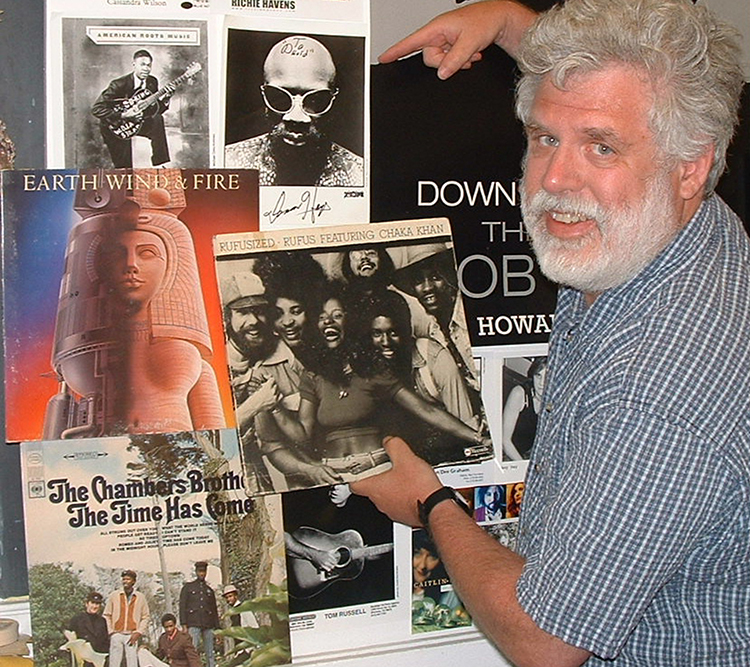
Musicians On Call (MOC) is a New York–based national program that believes that all patients, families and caregivers should have access to and benefit from the healing power of live music. It has been demonstrated that music can improve blood pressure, manage stress, alleviate pain, improve pain tolerance and improve outlook and overall mood. It was co-founded by Vivek Tiwary (C’96 W’96), a Penn alumnus, and Michael Solomon, who had both lost loved ones and were friends working in the music industry. They piloted the program by having musicians play in the lobby of Memorial Sloan Kettering Hospital in New York City. They later moved it to patient rooms to accommodate people who couldn’t physically leave their spaces.

When WXPN launched its local program in 2004, it was the first expansion outside of New York, making it the longest-running partner program today. Musicians, usually soloists or duos, are vetted and trained by MOC to perform for hospital patients and their families in private rooms, waiting areas and recreation rooms. Bedside performances are provided each week by volunteer local musicians who go room-to-room at participating health-care facilities and perform for patients and their families. Musicians are escorted during their visits by volunteer guides who are selected and trained to meet the requirements of both the WXPN Musicians On Call program and the participating health-care facility. The songs played are typically more spontaneous and request-based than pre-selected. 

WXPN Musicians On Call also has a unique program called Project Playback. WXPN Musicians On Call pairs up a professional musician with long-term residents at a health-care facility for six to eight weekly sessions in order to create original music. A CD Release Party is then held for the patients and their families. 

Helen Leicht, WXPN spokesperson for the Philadelphia program and host of XPN Middays with Helen Leicht, first encountered MOC in 2004 when it still was in its infancy, in a New York City hospital alongside WXPN General Manager Roger LaMay and Marketing Director Kim Winnick. They were, she said, “blown away” by what they experienced. According to Ms. Leicht, both patients and musicians benefit. 

“We were fortunate with XPN that they had a couple things that really helped us get off the ground,” says MOC President and CEO Pete Griffin, reflecting on 15 years of the partnership. “For one thing, they had a radio platform and could talk about Musicians On Call and get listeners interested in what the program was about. We saw they had a lot of people wanting to support us, to volunteer, to donate money to fund the programs, and as they continued to do that, we started to see community support for our programs, which is what allowed us to grow from one hospital to nine.”

Mr. Griffin noted that there’s a low-turnover rate of volunteers because so many “walk out feeling like they got so much more in return.”

AT PENN

Events

Gambling on Visibility at Slought

A conversation about the challenges of representing precarious life, Gambling on Visibility, will take place Thursday, February 27 from  6:30-8 p.m. at Slought. Organized in conjunction with the installation The Zama Zama Project, this event will feature a conversation with Ilisa Barbash and Rosalind Morris about the ethics and politics of representing vulnerable communities.

PPSA Workshop: Self-Care Through Altered Book Art

An altered book is a mixed-media artwork that is intended to change the book from its original form to a creative outlet for self-expression. It is designed to embody transformation of the explicit use of a book by means of implementing one’s own narrative into an existing story that suits the creator. This can be done by means of collaging, painting, coloring, cutting or highlighting certain aspects of the book.

On Friday, February 28 from noon to 1 p.m. in Class of ’49 Auditorium, Houston Hall, bring a book that you are willing to transform. This may be a book that you have revered for years or literature that you have found meaning in. Maybe it’s a book you found for free and have never read! Either way, make sure it is a piece you are willing to transform, starting your creative reflection about what it means to care for yourself.

During this workshop, led by Leanna Brisson, a pre-doctoral intern at Counseling and Psychological Services, participants will create an altered book that demonstrates their own definition of self-care. While we will only be modifying the cover of your altered book, it is a piece of work that can symbolize your intentional steps toward self-care. It can also be used as a tool to continue developing your self-care practice after the workshop has ended.

For more information and to register for this event, visit https://ppsa.upenn.edu/events/ppsa-presents-self-care-through-altered-book-art/

WXPN’s David Dye’s Final Funky Friday

caption: David DyeAfter 25 years of bringing the funk to WXPN’s airwaves every week, David Dye announced he’s stepping down as the host of Funky Friday this month. His final show airs Friday, February 28, from 4 to 7 p.m.; Funky Friday will continue each week with Dan Reed and other hosts, while Mr. Dye will continue hosting Dave’s World on WXPN every Sunday from 11 a.m. to 1 p.m.


Funk has been a longtime musical passion for Mr. Dye. Before he came to WXPN, he hosted the Friday Flashback on Philly radio station WIOQ, where he showcased equal parts ’70s soul, ’60s pop and party music from the ’50s. That show started in the early ’80s, and grew into a weekly live broadcast and dance party from West Philadelphia’s Chestnut Cabaret nightclub.

After launching WXPN’s World Cafe in 1991, Mr. Dye took the wheel on Funky Friday in 1995; the program had been going for a couple years since Elise Brown started it in the summer of 1993. In the time since, Mr. Dye has hosted close to 20 Funky Friday dance parties all around the greater Philadelphia community and joined funk favorites like Dr. John and Trombone Shorty in conversation on the World Cafe.

“Considering I have been ‘Mr. Friday Night’ since the early ’80s with The Friday Flashback on the old WIOQ and for the last 25 years here on WXPN, it’s time to hang up the headphones and give someone else a chance to mix it up!” Mr. Dye said. “I thank fans of the show for your support over the years and I will certainly miss being live in the studio Fridays.”  

When Funky Friday celebrated its 25th year on WXPN in 2018, Mr. Dye compiled a playlist of funk essentials—join the party for his final time hosting the funk on WXPN February 28 from 4 to 7 p.m.

Spit Spreads Death: The Influenza Pandemic of 1918-1919 in Philadelphia Illustrated Great Lecture at Penn Museum: March 4

What happens when disease strikes a city of two million people, sickening half a million and killing more than 12,000 in just six weeks and 16,000 in two months? During fall 1918, in the last months of World War I, Philadelphia hosted the largest parade in its history. Within days, influenza casualties overwhelmed hospitals. 

In this illustrated presentation on Wednesday, March 4 from 6 to 8 p.m., Robert D. Hicks, senior consulting scholar at the Mütter Museum, discusses the pandemic as a social catastrophe and considers its memorialization today. He will share highlights of the Mütter Museum’s most ambitious exhibition to date, Spit Spreads Death: The Influenza Pandemic of 1918-1919 in Philadelphia. Several relevant artifacts from the Mütter Museum will be on display at the lecture. The talk, part of the Great Lectures series, will take place in the Penn Museum’s Harrison Auditorium.

Come early to join a PhD candidate or collections expert for a pre-lecture Daily Dig object talk at 4:30 p.m. that will highlight the lecture topic, with no registration required. Before the Great Lecture, the Museum Café will serve daily-prepared hot entrees, soup and sandwiches. 

General admission is $10, and $5 for museum members. 

To buy tickets, visit www.penn.museum/calendar/37/spit-spreads-death

Crimes

Weekly Crime Reports

Below are the Crimes Against Persons, Crimes Against Society and Crimes Against Property from the campus report for February 10-16, 2020. View prior weeks' reports—Ed.

This summary is prepared by the Division of Public Safety and includes all criminal incidents reported and made known to the University Police Department for the dates of February 10-16, 2020. The University Police actively patrol from Market St to Baltimore and from the Schuylkill River to 43rd St in conjunction with the Philadelphia Police. In this effort to provide you with a thorough and accurate report on public safety concerns, we hope that your increased awareness will lessen the opportunity for crime. For any concerns or suggestions regarding this report, please call the Division of Public Safety at (215) 898-4482.

02/11/20

4:38 PM

3400 Market St

Wallet taken

02/11/20

6:55 PM

233 S 33rd St

Coat taken from storage locker

02/11/20

8:18 PM

3900 Chestnut St

Cash taken from register by unknown males

02/12/20

11:51 AM

3604 Chestnut St

Merchandise taken without payment

02/12/20

1:41 PM

3400 Civic Center Blvd

Unsecured wallet taken from handbag

02/12/20

2:48 PM

4000 Walnut St

Unsecured wallet taken from handbag

02/12/20

9:26 PM

3701 Walnut St

Jacket taken from locker

02/13/20

10:26 AM

3925 Walnut St

Merchandise taken without payment

02/13/20

12:11 PM

4053 Sansom St

Unauthorized charges on debit card

02/13/20

3:20 PM

4200 Walnut St

Copper AC lines taken

02/13/20

3:50 PM

4056 Irving St

Property taken from room

02/13/20

7:12 PM

209 S 33rd St

Unsecured Macbook taken

02/15/20

4:00 PM

107 S 41st St

Package taken from front step

02/15/20

4:11 PM

3601 Walnut St

Backpacks stolen

02/15/20

9:16 PM

4109 Walnut St

Male vandalized room/Arrest

02/16/20

5:29 PM

4000 Sansom St

Offender assasulted officer/Arrest

18th District

Below are the Crimes Against Persons from the 18th District: 9 incidents (2 aggravated assaults, 2 robberies, and 5 assaults) with 2 arrests were reported for February 10-16, 2020 by the 18th District covering the Schuylkill River to 49th Street & Market Street to Woodland Avenue.

02/10/20

4:14 PM

3131 Walnut St

Assault

02/11/20

6:42 AM

4682 Woodland Ave

Assault

02/11/20

8:12 PM

4618 Chester Ave

Assault

02/11/20

8:17 PM

3900 Chestnut St

Robbery

02/11/20

10:40 PM

4800 Market St

Aggravated Assault/Arrest

02/13/20

5:18 PM

3900 Woodland Ave

Robbery

02/14/20

1:45 AM

3401 Civic Center Blvd

Assault

02/15/20

5:02 PM

4631 Spruce St

Aggravated Assault

02/16/20

6:08 PM

4000 Sansom St

Assault/Arrest

Bulletins

One Step Ahead: Data Segmentation: What Is It and How Can You Use It?

Another tip in a series provided by the Offices of Information Systems & Computing and Audit, Compliance & Privacy

Data Segmentation: What Is It and How Can You Use It?

Data segmentation is a term used by companies to group customer data into categories based on specific criteria. You can apply this concept to data that you control or handle:

  1. Electronic communication—including email, chat, collaboration applications, social media, text messages, etc. Avoid sending sensitive data via email, chat, social media and text messages. Instead, utilize University-approved services when sending sensitive data within Penn. If you receive an email or text with sensitive information, save the data to a secure location before deleting the communication. 
  2. Financial—The University classifies its financial account numbers and credit card data as high in the Data Risk Classification; it is essential to keep such information in a secure, approved location and access should be by authorized users only.
  3. Health—Health data and HIPAA-regulated data are high in the Data Risk Classification. Both should be saved in a secure, approved location accessed by authorized individuals only. You can sub-group the information into type, year and data owner. HIPAA data should only be stored in HITECH-compliant ways. 
  4. Business—lease agreements or contracts may be grouped under a business segment, and sub-grouped by year, business type and entity. 

Always back up or store data in a password-protected secure digital location or in a locked cabinet. When you are purging information, shred physical copies and securely delete the information from your computer and other devices in accordance with the University Archive’s Record Retention Schedule. 

Refer to Penn Data Risk Classifications when handling University Data: https://www.isc.upenn.edu/security/data-classification 

Penn Privacy HIPPA information: http://www.upenn.edu/oacp/privacy/penndata/hipaa.html

For additional tips, see the One Step Ahead link on the Information Security website: https://www.isc.upenn.edu/security/news-alerts#One-Step-Ahead

Novel Coronavirus: Checking the Facts

FactCheck.org’s SciCheck focuses exclusively on false and misleading scientific claims that are made by partisans to influence public policy. Recently the site has been checking facts around news of the novel coronavirus outbreak. Here are a few samples of their reports. Go to https://www.factcheck.org/scicheck/ for the full stories. 

Will the New Coronavirus ‘Go Away’ in April?

February 13, 2020

President Donald Trump suggested that the new coronavirus would “go away” in April, as temperatures warm. While some viruses are seasonal, it’s not yet clear if the new virus will follow the same pattern—and experts caution against banking on the weather to resolve the outbreak. 

Baseless Conspiracy Theories Claim New Coronavirus Was Bioengineered

February 7, 2020

Several online stories inaccurately claim that the new coronavirus contains HIV “insertions” and shows signs of being created in a lab. But there is no evidence that the new virus was bioengineered, and every indication it came from an animal.

No, Clorox and Lysol Didn’t Already ‘Know’ About New Coronavirus

January 31, 2020

Numerous social media posts falsely suggest that because Clorox and Lysol products list “Human Coronavirus” on their bottles, the new coronavirus driving the outbreak in China was already known. It wasn’t. There are many human coronaviruses, and these products were tested against a strain that causes the common cold.

Q&A on the Wuhan Coronavirus

January 30, 2020

An outbreak of viral pneumonia that began in the central Chinese city of Wuhan at the end of 2019 has now sickened thousands, and led to more than 100 deaths. In this report, we answer some key questions about what is known so far about the outbreak and the virus.

Social Media Posts Spread Bogus Coronavirus Conspiracy Theory

January 24, 2020

Multiple social media posts are spreading a bogus conspiracy theory about the deadly Wuhan virus. The posts falsely claim that the virus has been patented and a vaccine is already available. That’s not true; the patents the posts refer to pertain to different viruses.

Talk About Teaching & Learning

Leveraging Digital Games in the Diversified Classroom

Marcus T. Wright

Digital games can be an instrumental tool for class engagement and intellectual discovery. Games in general bring out a sense of excitement and play; but what may be less discrete about games in their various formats—be they video games on home consoles, digital games on computers, or mobile games on smartphones—is that they are complex mechanisms for learning due to their emphasis on problem solving. To progress through a game, the player must learn how to navigate the world of that game, utilize the abilities at their disposal and recognize patterns in order to overcome obstacles. This heavy emphasis on problem solving means that digital games can catalyze critical thinking as players progress from one challenge to the next. 

I recently had the opportunity to leverage the problem-solving dynamics of digital games while teaching in the Penn College Achievement Program (PennCAP) Pre-Freshman Program (PFP). PennCAP PFP enrolls primarily students from underrepresented backgrounds (such as first-generation, students of color and low-income), making for a diverse and driven gathering of talented students who engage in classes and activities before starting their first semester at Penn. In my “College, Media and Society” course, I wanted to teach my students in a way that tapped into the creative and intellectual energy that they all brought to the classroom. While traditional methods of teaching—for example, the lecture and the seminar—are extremely valuable, novel methods that energize the learning environment and further capture the imagination and passion of students from all backgrounds have the potential to enhance the level of reflection, conversation and perspective produced within the class (if implemented carefully and strategically). I felt that digital games, because they catalyze critical thinking, would allow my students to leverage the vast array of life experiences they possessed. Accordingly, my students could lean into their experiences as sources of strength, empathize with the experiences of others and transcend what they learned toward their preparation for full-time matriculation at Penn. 

I anticipated enthusiastic engagement from my students as they used these games for learning because digital games forge a connection between the player and the game itself. A digital game cannot come to full form without a player, meaning that players are as important to creating gaming experiences as the games themselves. Further, digital games tap into many other attributes of the player, such as their propensity to keep trying despite setbacks, and their ability to realize and imagine themselves in unique environments and situations. These attributes propel students of all backgrounds to Penn and could foster personal investment that would help the class explore complex issues under the umbrellas of race, class and social belonging.

Below are my primary takeaways from the experiences:

1. Scaffolding is key. The first game we played was an interactive, text-based fiction game that focused on imposter syndrome. The students controlled a self-doubting character who was preparing to give a talk at a conference. The students had to select from various links (embedded in the text) to decide what the character would do next. My initial thought was that this game would help students understand that imposter syndrome affects many people in a variety of situations. I showed a screenshot of the game on the projector screen, asked everyone to go to the game’s website on their laptops or phones, and basically said, “Go!” 

During gameplay, several students expressed their confusion about how to navigate the game. After gameplay, our discussion focused more on the eccentricity of the options the player could choose from instead of the widespread effect of imposter syndrome. I was disappointed in this outcome and reconsidered ever using games again! 

I realized that I was mistaken to think that if I put my students in front of the game, they would automatically know how to play it and learn from it. I had failed to scaffold my students’ understanding of the purpose and function of this new tool (the digital game). I also had not played the game enough times beforehand to gauge how my students might perceive it. Once I recognized these limitations, I decided to try again.

The next game gave players the chance to manage their finances, stress and happiness while getting through college. I not only showed a screenshot of the game before my students played, but I also played through the first few screens of the game so that my students could watch and learn. I discussed the choices I made and used a few minutes before the students began to discuss why the game fit into the context of our course and our lesson (which was for students to gain “experience” balancing various stressors and financial decisions while navigating college). 

Finally, I encouraged my students to play in pairs or groups if they desired, to foster connection amongst themselves. As they started playing, I checked in with my students and then left them alone when I saw that they were fully engaged in the game and excited about playing. The post-game discussion on navigating college and financial decision-making allowed students to reflect on the difficulty of maintaining balance and the benefits of getting practice in the format of a game. We also discussed how a plethora of choices await them in college, and I stressed the importance of connecting with advisors and mentors to help guide them as they make some of these choices.

2. The educator is the glue. Ultimately the game is merely a mechanism to facilitate the educator’s vision. Games serve as an exciting piece to a puzzle that can energize and invigorate students—as long as the educator plays their role. While digital games need players, lessons need educators or else those lessons are nothing more than collections of information. Educators turn the implicit into the explicit; they make the experience something tangible for students to apply to their own lives. 

I felt this the most when my class played a third game, which challenged players to last a month with $1,000 (starting off without a job). We tied this game to our class lesson on meritocracy versus social inequality. Students put themselves into the shoes of a person living in poverty to test  their ability to make daily choices while trying to eat, pay bills, take care of a child and better their lives. This game is known for helping players understand social inequality, but connecting the theme of the game to the idea of meritocracy required intentional planning on my part (as well as playing through the game a few times on my own to understand what my students would experience). The connection to meritocracy was implicit in the game; I had to make sure that my students saw the connection explicitly. As a result of this preparation, our post-game discussion built on their experiences and allowed them to see more clearly the challenge of social inequality. Most notably, one student who came into class believing that we live in a meritocracy changed their mind after playing this game. That was not my goal, but the game and the way that I organized the lesson facilitated an openness to opposing ideas.

While I focused on using digital games, there are many ways to create invigorating learning environments that supplement traditional approaches, energize the classroom and help students of varying backgrounds flourish. This process reminded me of the necessity of intentional lesson planning and the importance of an educator even when letting students learn on their own. My students valued learning through this nontraditional approach, and developed new types of critical thinking, including tolerance for different perspectives and comprehension of the complexity of Penn.  Games also allowed us to connect to one another on a human level as we discussed urgent topics. As I move forward as an educator, and as we as an institution rightfully extend greater educational opportunity to underrepresented students, I aim to continue to push the boundaries of my teaching in order to keep up with the dynamic possibilities of my students’ learning.


Marcus T. Wright is the undergraduate program and communications manager in the sociology department. He is also a doctoral student in higher education at Penn GSE.

This essay continues the series that began in the fall of 1994 as the joint creation of the College of Arts and Sciences, the Center for Teaching and Learning and the Lindback Society for Distinguished Teaching. 

See https://almanac.upenn.edu/talk-about-teaching-and-learning-archive for previous essays.

Back to Top