News

Penn’s 2020 Commencement Speaker and Honorary Degree Recipients

Chimamanda Ngozi Adichie, the widely-acclaimed Nigerian author of several award-winning novels and collections of short stories, will be Penn’s Commencement Speaker at the 2020 Commencement on Monday, May 18. She and seven other individuals will each receive an honorary degree from Penn. 

Penn’s Vice President and University Secretary Medha Narvekar has announced the 2020 honorary degree recipients and the Commencement Speaker for the University of Pennsylvania. The Office of the University Secretary manages the honorary degree selection process and University Commencement. 

The 264th Commencement begins at 10:15 a.m. on May 18 and will be preceded by student and academic processions through campus. The ceremony will feature the conferral of degrees, the awarding of honorary degrees, greetings by University officials and remarks by the Commencement Speaker. It will be streamed live on the Penn website. For University of Pennsylvania Commencement information, including historical information about the ceremony, academic regalia, and prior speakers and honorary degree recipients, see www.upenn.edu/commencement

Commencement Speaker

Chimamanda Ngozi Adichie 

caption: Chimamanda Ngozi AdichieChimamanda Ngozi Adichie is the widely-acclaimed author of several award-winning novels and one collection of short stories. A native of Anambra, Nigeria, she grew up on the campus of the University of Nigeria, Nsukka, where her father taught and her mother was the first female registrar. She studied medicine for a year at Nsukka, and then left for the United States at 19 to follow a different path. Earning a scholarship to study at Drexel University in Philadelphia, Ms. Adichie went on to complete her undergraduate studies at Eastern Connecticut State University. She then earned a master’s in creative writing from Johns Hopkins University and a master of arts in African history from Yale University. The recipient of fellowships at Princeton University and the Radcliffe Institute of Harvard University, Ms. Adichie received a MacArthur Foundation Fellowship in 2008. 

She began her first novel, Purple Hibiscus, during her senior year in college. The work won the Commonwealth Writers’ Prize. Her second novel, Half of a Yellow Sun, won the Orange Prize. In 2013, Americanah won the US National Book Critics Circle Award and was named one of The New York Times Top Ten Best Books. 

Ms. Adichie is recognized for landmark TED talks, including 2009’s The Danger of a Single Story. Her 2012 talk, We Should All Be Feminists, fostered a worldwide conversation about feminism, and was published as a book in 2014. Ms. Adichie’s most recent work, Dear Ijeawele, or a Feminist Manifesto in Fifteen Suggestions, was published in 2017. Her work, often taking on themes of politics, religion and love, has been translated into over 30 languages. 

In 2017, Ms. Adichie received the Le Grand Prix de l’Héroïne Madame Figaro and the PEN Pinter Prize in 2018. Fortune named her one of the World’s 50 Greatest Leaders in 2017. She is a member of the American Academy of Arts and Letters and the American Academy of Arts and Sciences. Ms. Adichie divides her time between the United States and Nigeria, where she leads an annual creative writing workshop. 

Ms. Adichie will be receiving an Honorary Doctor of Humane Letters. 

Honorary Degree Recipients

Anthony M. Kennedy 
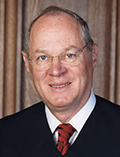
caption: Anthony KennedyAssociate Justice of the United States Supreme Court Anthony M. Kennedy served for 30 years, from his nomination by President Ronald Reagan and unanimous confirmation by the US Senate in 1988 until his retirement in 2018. Justice Kennedy authored many opinions for the Court on some of the most significant legal issues of our time, including the Court’s decision striking down the death penalty for juvenile offenders and 2015’s Obergefell v. Hodges that cleared the way for same-sex marriage nationwide. Throughout his years on the bench, he established himself as a strong proponent of individual rights. 

A native of Sacramento, California, Justice Kennedy was educated at Stanford University and the London School of Economics, receiving his bachelor of laws from Harvard Law School. Following law practices in San Francisco and Sacramento, Justice Kennedy was appointed to the US Court of Appeals for the Ninth Circuit by President Gerald Ford in 1975, at that time making him the youngest federal appellate judge in the United States and the third youngest in history to be thus appointed. 

In California, during his practice and years on the bench, he taught Constitutional Law at the University of the Pacific McGeorge School of Law and for years was the school’s longest-serving active faculty member. Justice Kennedy has lectured at law schools and universities worldwide, teaching in China and offering a course at the University of Salzburg entitled Fundamental Rights in Europe and the United States. He represented the United States on the United Nations Commission on Legal Empowerment of the Poor. 

Justice Kennedy has received a great many awards from bar associations, law schools and other entities in recognition of his service to the law and to the judiciary. In his honor, endowed chairs have been established in his name at the Law School of the University of Virginia and at the University of the Pacific McGeorge School of Law. 

Justice Kennedy will be receiving an Honorary Doctor of Laws. 

Jhumpa Lahiri 

caption: Jhumpa LahiriLondon-born author and translator Jhumpa Lahiri moved to the United States as a young child with her Bengali parents. Dr. Lahiri has observed that she grew up with “conflicting expectations … to be Indian by Indians and American by Americans.” Her insightful debut story collection, Interpreter of Maladies, explores issues of identity among immigrants and cultural transplants and was recognized with the Pulitzer Prize for Fiction in 2000. 

A graduate of Barnard College, Dr. Lahiri also earned several degrees, including her PhD, from Boston University. Since 2015, she has been at the Lewis Center for the Arts’ Program in Creative Writing at Princeton University as a professor of creative writing and was named director of the program in 2019. 

The author of three novels and numerous short fiction and nonfiction works, Dr. Lahiri’s short story collection, Unaccustomed Earth, received the 2008 Frank O’Connor International Short Story Award and debuted at the top of The New York Times best seller list. The Lowland won the DSC Prize for South Asian Literature, and was a finalist for the Man Booker Prize and the National Book Award in fiction. 2016’s autobiographical In Other Words, written in Italian, considers the often-fraught links between identity and language. Dr. Lahiri has also published the Italian The Clothing of Books and the novel Dove Mi Trovo, with its English translation as Whereabouts in production. In 2019, she compiled and translated the work of 40 Italian writers in the Penguin Book of Italian Short Stories

In 2015, Dr. Lahiri was awarded the National Humanities Medal. She has won the PEN/Hemingway Award and the O. Henry Prize for Interpreter of Maladies, the American Academy of Arts and Letters’ Addison Metcalf Award, the Vallombrosa Von Rezzori Prize, the Asian American Literary Award, and the 2017 PEN/Malamud Award for Excellence in the Short Story. She has also been granted Guggenheim and National Endowment for the Arts fellowships. 

Dr. Lahiri will be receiving an Honorary Doctor of Humane Letters. 

Jill Lepore 

caption: Jill LeporeAmerican historian and author Jill Lepore is the David Woods Kemper ’41 Professor of American History at Harvard University. The author of over a dozen books as well as an acclaimed staff writer at The New Yorker, Dr. Lepore’s work explores themes of American history, law, literature and politics. Dr. Lepore’s essays and reviews have also appeared widely, including in The New York Times, the Times Literary Supplement, the Journal of American History and the American Quarterly

Her most recent book is 2019’s This America: The Case for the Nation. Her 2018 work, These Truths: A History of the United States, has been translated and published around the world. Her national bestseller The Secret History of Wonder Woman received the New York Historical Society’s 2015 American History Book Prize. 

Dr. Lepore completed her undergraduate work at Tufts University, received her MA in American culture from the University of Michigan, and a PhD in American Studies from Yale University. Following teaching at the University of California-San Diego and Boston University, she joined Harvard’s history department in 2003 and was several years chair of the history and literature program. In 2012, she was named a Harvard College Professor. Dr. Lepore teaches classes in evidence, historical methods, the humanities and American political history. 

Dr. Lepore’s works include a trilogy that constitutes a political history of early America: The Name of War: King Philip’s War and the Origins of American Identity (1998), winner of the Bancroft Prize and the Ralph Waldo Emerson Award; New York Burning: Liberty, Slavery and Conspiracy in Eighteenth-Century Manhattan (2005), winner of the Anisfield-Wolf Award for best nonfiction book on race; and Book of Ages: The Life and Opinions of Jane Franklin (2013), Time’s Best Nonfiction Book of the Year and winner of the Mark Lynton History Prize. 

Dr. Lepore has been elected to the American Academy of Arts and Sciences and to the American Philosophical Society. She is a past president of the Society of American Historians and a former Commissioner of the Smithsonian’s National Portrait Gallery. 

Dr. Lepore will be receiving an Honorary Doctor of Humane Letters. 

Stanley A. Plotkin 

caption: Stanley PlotkinPhysician Stanley A. Plotkin, emeritus professor of the University of Pennsylvania and adjunct professor of the Johns Hopkins University, developed the lifesaving rubella vaccine now in standard use worldwide and co-developed the pentavalent rotavirus vaccine. A world leader in his field, Dr. Plotkin has worked extensively on development and application of vaccines including rabies, varicella, pertussis, Lyme disease and cytomegalovirus through the years. 

A New York University graduate, Dr. Plotkin earned his MD from the State University of New York Medical School, Brooklyn. During his years at the Epidemic Intelligence Service of the Centers for Disease Control, he worked on development of the oral polio vaccine and on efficacy of a vaccine against anthrax. 

From 1965 until 1991, Dr. Plotkin served as professor of pediatrics and microbiology at Penn, professor of virology at the Wistar Institute and director of infectious diseases and senior physician at Children’s Hospital of Philadelphia. He then joined vaccine manufacturer Pasteur-Mérieux- Connaught (now Sanofi Pasteur) as medical and scientific director for seven years. Today, he continues to teach at Penn and provide consult to vaccine manufacturers, biotechnology companies and non-profit research organizations. 

Dr. Plotkin’s numerous awards include the Distinguished Physician Award of the Pediatric Infectious Diseases Society and the French Legion of Honor Medal, the Sabin Gold Medal, and the Research Award of the Association of American Medical Colleges. Children’s Hospital of Philadelphia established a professorship in his name. He has chaired both the Infectious Diseases Committee and the American Academy of Pediatrics AIDS Task Force and Microbiology and Infectious Diseases Research Committees at NIH. 

Elected to the National Academy of Medicine of the National Academy of Sciences and the French Academies of Medicine and Pharmacy, Dr. Plotkin is founder and a fellow of the Pediatric Infectious Diseases Society, and a Fellow of the Infectious Diseases Society of America, the International Society of Vaccines, the American Academy of Pediatrics and the College of Physicians of Philadelphia. 

Dr. Plotkin will be receiving an Honorary Doctor of Sciences. 

Sister Mary Scullion 

caption: Sister Mary ScullionFor over four decades, Sister Mary Scullion has deeply engaged in service and advocacy for the homeless and mentally ill. She is co-founder of Philadelphia’s Project HOME, nationally recognized for providing supportive housing, employment, education and health care to enable chronically homeless and low-income persons to break the cycle of homelessness and poverty. Since 1989, Project HOME has grown from an emergency winter shelter to over 900 housing units and several businesses providing employment to formerly homeless persons. 

Sister Mary’s work began in 1976, having joined the Congregation of the Sisters of Mercy in 1972 when entering college. In 1985, she co-founded Woman of Hope to provide permanent residences and support for homeless mentally ill women. Three years later, she established the Outreach Coordination Center, the nation’s first program to more systemically assist homeless persons with special needs in finding housing and shelter. Project HOME’s Stephen Klein Wellness Center, opened in 2015, is a model for integrated health, behavioral and wellness services. A state-of-the-art technology center now offers after-school enrichment, a college access program, and adult educational and occupational programming. 

Sister Mary is also a powerful voice on political issues affecting the homeless and mentally ill. Her advocacy has resulted in the right of homeless persons to vote as well as a landmark federal court decision that affects the fair housing rights of persons with disabilities. 

A graduate of Saint Joseph’s University, Sister Mary earned her master of social work from Temple University. Philadelphia Inquirer selected her as its 2011 Citizen of the Year. In 2009, Time named her one of the World’s Most Influential People. Sister Mary has received the Philadelphia Award, the University of Notre Dame’s Laetare Medal and the Eisenhower Fellowship’s Distinguished Alumnus Award. She serves on the Board of The Jon Bon Jovi Soul Foundation and as a Saint Joseph’s University Trustee, and she was a member of the City of Philadelphia’s Board of Ethics. 

Sister Mary will be receiving an Honorary Doctor of Humane Letters. 

Gregg L. Semenza 

caption: Gregg SemenzaRecipient of the 2019 Nobel Prize in Physiology or Medicine, Gregg L. Semenza’s laboratory discovered, cloned and characterized hypoxia-inducible factor 1 (HIF- 1), the founding member of a family of master regulators that direct responses to decreased oxygen availability in virtually all metazoan species. Dr. Semenza’s laboratory has shown that HIFs play important roles in cardiovascular disorders, cancer, COPD, diabetes, sleep apnea, transplant rejection, ocular neovascularization and hematologic disorders. The evolutionary selection of genetic variants at loci that encode HIF pathway components have been identified in Tibetan populations living at high altitude with decreased oxygen availability. HIF stabilizers and HIF inhibitors are currently in clinical trials for the treatment of anemia and cancer, respectively. 

Dr. Semenza completed his undergraduate studies at Harvard College, and his MD and PhD (in genetics) degrees in the University of Pennsylvania’s Medical Scientist Training Program; his pediatrics residency training at Duke University; and postdoctoral training in medical genetics at the Johns Hopkins University School of Medicine, where he has spent his entire faculty career. 

Dr. Semenza is an American Cancer Society Research Professor and the C. Michael Armstrong Professor of Genetic Medicine at Johns Hopkins with appointments in pediatrics, medicine, oncology, radiation oncology and biological chemistry. Since 2003, he has served as founding director of the Vascular Biology Program in the Johns Hopkins Institute for Cell Engineering. 

Dr. Semenza has received the Canada-Gairdner International Award, Lefoulon-Delalande Grand Prix from the Institut de France, Wiley Prize in Biomedical Sciences, Albert Lasker Basic Medical Research Award and the Massry Prize. He has published more than 400 papers, which have been cited over 140,000 times. Dr. Semenza is an elected member of the Society for Pediatric Research, American Society for Clinical Investigation, Association of American Physicians, National Academy of Medicine, and the National Academy of Sciences. 

Dr. Semenza will be receiving an Honorary Doctor of Sciences. 

Henry Threadgill 

caption: Henry ThreadgillHailed by The New York Times as “perhaps the most important jazz composer of his generation,” for over 40 years Henry Threadgill has been celebrated as one of the most original, forward-thinking composers and multi-instrumentalists in American music. His four-movement work, In for a Penny, In for a Pound, received the Pulitzer Prize for Music in 2016, one of only three jazz compositions to ever be so honored. 

A Chicago native, Mr. Threadgill studied at the city’s American Conservatory of Music, majoring in composition, piano and flute. A Vietnam veteran, he performed with the US Army Concert Band. Mr. Threadgill is a founding member of the Association for the Advancement of Creative Musicians (AACM), dedicated to the performance of its members’ original music. Mr. Threadgill has also received a Guggenheim Fellowship, the Aaron Copland Award, the Doris Duke Impact Award and the Doris Duke Artist Award. Down Beat magazine’s International Jazz Critics Poll has five times distinguished him with its Best Composer Award. The Jazz Journalists Association honored him with its 2002 Composer of the Year Award and its Lifetime Achievement Award. Mr. Threadgill has released over 30 critically acclaimed albums. 

Mr. Threadgill’s orchestral pieces, 1987’s “Run Silent, Run Deep, Run Loud, Run” and 1993’s “Mix for Orchestra” premiered at the Brooklyn Academy of Music. His many commissions include Mordine & Co. Dance Theater, Carnegie Hall, the New York Shakespeare Festival, Talujon Percussion Ensemble, Junge Philharmonie Salzburg Orchestra, the Biennale di Venezia and the American Composers Orchestra. He has been composer in residence at University of California-Berkeley and the Atlantic Center for the Arts. Through the years, Mr. Threadgill has led, performed and recorded with numerous groups, most recently Zooid and the Ensemble Double Up. In 2015, a two-day festival at New York’s Harlem Stage celebrated works spanning Mr. Threadgill’s career performed and reinterpreted by an all-star collection of musicians. 

Mr. Threadgill will be receiving an Honorary Doctor of Music. 

University City Station to Become Penn Medicine Station

SEPTA and Penn Medicine have announced a partnership following a multimillion-dollar naming rights contract that will result in the regional rail station known as University City Station becoming Penn Medicine Station. The 6,400 passengers that use the station every day will see new signage, maps and interactive screens, with full implementation coming in two months. The station is served by SEPTA’s Airport, Warminster, Wilmington/Newark, West Trenton and Media/Elwyn Lines. 

Penn Medicine will pay $3.3 million over the five-year contract to keep the naming rights. This is the fourth significant rebrand of a SEPTA station since 2010. Pattison Station became AT&T Station for $5.44 million in 2010 before changing to NRG Station in 2018 for $5.25 million. The former Market East Station was renamed Jefferson Station in 2014 for $4 million. 

“This agreement with Penn Medicine will deliver major benefits to our customers and other taxpayers who help fund the Authority’s operations,” said SEPTA Board Chairman Pasquale T. Deon. “The revenue this generates will go directly toward the everyday costs of running the transit system.” 

The station updates and renaming will arrive just in time for the home stretch of construction on Penn Medicine’s newest hospital, The Pavilion. The facility, which will house inpatient care for the Abramson Cancer Center, heart and vascular medicine and surgery, neurology and neurosurgery and a new emergency department, is expected to be completed in 2021. 

“As the gateway to the Pavilion and our West Philadelphia medical campus, thousands of people each day pass through this SEPTA station en route to work, visit and receive care in our facilities, and we’re so thrilled for the opportunity for the station to bear the Penn Medicine name,” said Kevin Mahoney, CEO of the University of Pennsylvania Health System. “We are proud to partner with SEPTA to enhance the rider experience for our public transit system, which is a crucial part of what keeps our great city running each day.” 

This partnership is consistent with SEPTA’s mandate to seek alternative sources of revenue. Act 44, a measure passed by state lawmakers in 2007 to provide funding for transportation in Pennsylvania, called on SEPTA and other transit agencies to bolster efforts to generate non-fare box revenues. 

SEPTA has worked closely with its advertising agency, Intersection, a smart cities technology and media company, on an innovative campaign to bring in additional advertising dollars. “We are thrilled to join Penn Medicine and SEPTA to improve the experience of everyone who passes through Penn Medicine Station,” said Jon Roche, Intersection’s vice president and general manager for the Philadelphia region. “Intersection’s digital upgrades at Penn Medicine Station will give riders important, real-time transit information and provide Penn Medicine with new ways to reach customers as they pass through the station.” 

An official ribbon-cutting ceremony is expected to be held Tuesday, February 25.

Provost-Netter Center Faculty-Community Partnership Award: April 1

Provost-Netter Center Faculty-Community Partnership Award 

We are pleased to announce the Provost- Netter Center Faculty-Community Partnership Award. This annual award recognizes Faculty- Community Partnership projects. The amount of the award is $10,000 ($5,000 to the faculty member and $5,000 to the community partner). The purpose of the award is to recognize sustained and productive University/Community partnerships and to develop or enhance ongoing work. Junior and senior faculty along with senior lecturers and associated faculty from any of Penn’s 12 schools are eligible for nomination, together with their community partners. Please see below for the complete description and process of nomination. If you have any questions or concerns regarding this award, please direct them to the ABCS coordinator, Faustine Sun, at abcscoordinator@sas.upenn.edu

Award Nomination Process 

Deadline: April 1 

The award recognizes Faculty-Community Partnership Projects. One award will be made annually for $5,000 to a faculty member and another $5,000 to the community partner to recognize, develop and advance an existing partnership. 

Criteria for Selection 

(1) The community partnership project must be affiliated with the Netter Center for Community Partnerships i.e., engaged with Academically Based Community Service (ABCS), Problem Solving Learning (PSL) or Participatory Action Research (PAR) style pedagogy and/or research. 

(2) The partnership project must demonstrate record of sustainable engagement. 

(3) The faculty member can be an assistant, associate, or full professor, senior lecturer,or associated faculty. 

Process of Nomination 

(1) Nominations may come from members of the University and the wider community, though the strongest nominations will be those that represent both the University and the community. 

(2) Nominators should submit a completed packet (see https://www.nettercenter.upenn.edu/about-center/advisory-boards/faculty-advisory-board/provost-netter-center-faculty-community-partnership) by April 1 of the given academic year to the ABCS coordinator at the Netter Center, who will submit applications to the review committee, comprised of faculty and community members.

(3) The faculty committee will submit their recommendations by April 15 to the Netter Center Director and the Provost, who will jointly make the final selection. The award decision will be announced on May 1. 

—Terri H. Lipman, Assistant Dean for Community Engagement; Miriam Stirl Endowed Term Professor of Nutrition; Professor of Nursing of Children, SON; Netter Center Faculty Advisory Board Co-Chair; Chair of the Provost-Netter Center Faculty-Community Partnership Award Nomination Process

—Dennis DeTurck, Robert A. Fox Leadership Professor; Professor and Undergraduate Chair of Mathematics, SAS; Netter Center Faculty Advisory Board Co-Chair; Provost's Senior Faculty Fellow at the Netter Center

—John Gearhart, James W. Effron University Professor and Emeritus Director, Institute for Regenerative Medicine; Professor of Cell and Developmental Biology and Biomedical Sciences, PSOM and School of Veterinary Medicine; Netter Center Faculty Advisory Board Co-Chair

—John Jackson Jr., Walter H. Annenberg Dean of the Annenberg School for Communication; Richard Perry University Professor; Netter Center Faculty Advisory Board Co-Chair

—Loretta Flanagan-Cato, Associate Professor of Psychology, SAS; Co-director, Biological Basis of Behavior Program; 
Provost's Faculty Fellow at the Netter Center

—Vernoca Michael, Director, Paul Robeson House and Museum, West Philadelphia Cultural Alliance; Member, Netter Center Community Advisory Board

—Ira Harkavy, Associate Vice President; Founding Director, Barbara and Edward Netter Center for Community Partnerships

Patricia Guardiola: Fine Arts Library Director

caption: Patricia GuardiolaPatricia Guardiola has been named the new director of the Fisher Fine Arts Library at the University of Pennsylvania. Ms. Guardiola came to Penn in 2015 as assistant director of the library and has distinguished herself in her reference and instruction services and her management of the operations of the Fisher Fine Arts Library. Before coming to Penn, she was a Kress Fellow in Art Librarianship and then Reference and Instruction Librarian in the Haas Family Arts Library at Yale University. 

In her new role, Ms. Guardiola will be responsible for planning and oversight of the services, facilities and collections of the Fisher Fine Arts Library, which serves the Weitzman School of Design and the SAS department of the history of art. She will also be responsible for the Materials Library and the Common Press, a collaborative program funded by the Penn Libraries, the Weitzman School of Design and Kelly Writers House. 

Ravi Radhakrishnan: Chair of SEAS Department of Bioengineering

caption: Ravi RadhakrishnanRavi Radhakrishnan, who holds joint appointments in the departments of bioengineering and chemical and biomolecular engineering, has been named chair of the SEAS department of bioengineering. He is a founding member and the current director of the Penn Institute for Computational Science, as well as a member of the Penn Physical Sciences Oncology Center, Institute for Translational Medicine and Therapeutics and several graduate groups, including Materials Science and Engineering, Genomics and Computational Biology and Biochemistry and Molecular Biophysics. 
In addition to these roles at Penn, Dr. Radhakrishnan holds many editorial board positions in the research community, including Nature Publishing’s Scientific Reports

Beyond being a passionate teacher and advocate for his students, Dr. Radhakrishnan’s research interests lie at the interface of chemical physics and molecular biology. His lab’s goal is to provide molecular level and mechanistic characterization of biomolecular and cellular systems and formulate quantitatively accurate microscopic models for predicting the interactions of various therapeutic agents with innate biochemical signaling mechanisms. 

University Research Foundation: March 20

The University Research Foundation (URF) is now accepting applications for grants until the 5 p.m. March 20, deadline. The URF is an intramural program that provides three funding mechanisms: Research Grants and Conference Support, Impact Seminar Grants and Research Opportunity Development Grants. 

University Research Foundation: March 20

URF Research Grants and Conference Support provides up to $50,000 in project support and up to $3,000 for conference support. Its objectives are to:

  • help junior faculty undertake pilot projects that will enable them to successfully apply for extramural sources of funding and aid in establishing their careers as independent investigators; 
  • help established faculty perform novel, pioneering research to determine project feasibility and develop preliminary data to support extramural grant applications; 
  • provide support in disciplines where extramural support is difficult to obtain and where significant research can be facilitated with internal funding; and 
  • provide limited institutional matching funds that are required as part of a successful external peer-reviewed application.

URF Impact Seminar Grants will make awards up to $20,000 for support for a cross-school, cross-disciplinary large scale event to be held on Penn’s campus within a year of the award. Funding for this award can be used to augment an already-scheduled University event. The event—which can be a symposium, forum or conference—should occur over one to two days and be open to the entire Penn community. It should highlight the scholarship of Penn faculty and bring distinguished scholars to Penn’s campus, with a particular focus on the University’s distinguishing strength in integrating knowledge. Documented School and/or department matching dollar-for-dollar funds are required.

URF Research Opportunity Development Grants (RODG)

The Research Opportunity Grant program (Phase 1 and Phase 2) was designed to facilitate the intersection of the forward trajectory of Penn’s research frontiers with the trajectory of the national and global research priorities. RODG applications should map on to emerging research areas with new opportunities for support. Awards from these programs should be used to develop preliminary information and data for new applications in these emerging research areas. The two programs are described below.

Research Opportunity Development Planning Grants: Phase 1 (RODG1)

With an identified new research area in mind, Phase 1 Planning Grants enable a team to articulate the research focus, map Penn’s intellectual assets in the new area, coalesce the appropriate group of scholars, identify Penn’s potential contributions in the area in the context of national and international research initiatives and identify a funding target. Typically a Phase 1 proposal would lead to a Phase 2 application. In addition, special attention will be paid to project proposals that include mentorship of Penn undergraduates. Applications up to $10,000 will be considered. 

Research Opportunity Development Grants: Phase 2 (RODG2)

Offers extensive support ($50,000-$200,000) over 2 years. The program is designed to help investigators gather data and prepare a multi-investigator proposal in an emerging research topic in the context of national or international research initiatives or grand challenges from external sponsors, including federal and private foundations, in which Penn can stake out a leadership position.

RODG2 applications must include faculty from at least two Schools and should explicitly consider emerging research areas with new opportunities for support. In addition, applications must identify their future funding opportunity targets. Future funding opportunities should have estimated budgets of no less than $1 million for STEM fields and no less than $250,000 for social science and humanities.  

Some examples are NIH P30, NSF ERC, MacArthur 100&Change, etc. Note that RODG Phase II grants are not intended to support the development of proposals that respond to regular solicitations such as those for NIH RO1 grants or NSF Division programs. Such applications will not be reviewed.

Applications should identify their future funding opportunity targets in both the abstract and research proposal.

Disciplines for all award programs: Biomedical Sciences, Humanities, Natural Sciences and Engineering, Social Science and Management.

Undergraduate Participation: As part of the University’s commitment to providing research opportunities to scholars across our campus community, URF applicants are encouraged to include undergraduate student participants within the framework of their proposals.

Budget: Each URF program has separate budget requirements.

Eligibility for all award programs: Eligibility is limited to Penn assistant, associate and full professors, in any track. Instructors and research associates must provide a letter from their department chair establishing that the applicant will receive an appointment as an assistant professor by the time of the award. Adjunct and emeritus faculty are not eligible to apply. Only one application per PI per cycle. Awards must be expended on University of Pennsylvania facilities, equipment and/or associated University technical staff and undergraduate students. 

Detailed information including application materials can be found at https://research.upenn.edu/funding/university-research-foundation/grant-guidelines/

An Update on Penn’s Response to the Novel Coronavirus Outbreak

To the Penn Community:

We are writing with an update on Penn’s response to the novel coronavirus outbreak that originated in Wuhan, China. We are continuing to monitor the situation with our partners on campus, including Penn Medicine, and remain in constant communication with public health officials at the local, state and federal levels. There continue to be no cases of the virus on our campus or in Philadelphia, and the risk to our community remains low.

 However, in light of new guidance issued February 4 by the Pennsylvania Department of Health, we are recommending that all Penn students, faculty and staff returning from mainland China self-isolate for 14 days upon their return to the United States. They should refrain from class, work and normal activities; self-monitor their temperature; and, if they develop fever, cough or lower respiratory symptoms, seek care either with their health-care provider or, in the case of students, with the Student Health Service. Information about self-isolation can be found on the Centers for Disease Control and Prevention website, https://www.cdc.gov/coronavirus/2019-ncov/hcp/guidance-prevent-spread.html

Over the past few weeks, Campus Health, Penn Global, and International Students and Scholar Services have been in touch with individuals who have recently returned from China. We will continue our outreach efforts and inform those impacted by these new guidelines about next steps. Anyone needing more information can consult our Campus Health website, https://campushealth.wellness.upenn.edu/coronavirus/ or reach our Public Health office at (215) 746-0806.

If you have traveled in China and returned to the US on or before January 21, 2020, and do not show any symptoms of disease, no further action is needed. The US Department of State “Do Not Travel” advisory remains in effect for China.

Influenza-like illnesses are common at this time of year, and we advise everyone to take steps to stay healthy and well. These include frequent handwashing, covering coughs and sneezes with a tissue or your sleeve and staying home if you are not feeling well.

For members of the Penn community who have family and friends in the impacted regions, this can be a troubling time, and we remain committed to providing support and guidance. We urge all members of our community to continue to treat each other with kindness and respect, especially as we together face a situation with the potential for discrimination. Student Health and Campus Health are updating their websites regularly, as is Penn Global, and we encourage you to go to any of those sources for updated information as this situation develops.

—Wendell E. Pritchett, Provost

—Craig R. Carnaroli, Executive Vice President

—Ezekiel J. Emanuel, Vice Provost for Global Initiatives

—Benoit Dubé, Associate Provost and Chief Wellness Officer

Governance

From the Office of the Secretary: February 19 University Council Meeting Agenda

University Council 

Meeting Agenda 

Wednesday, February 19, 2020 

4 p.m. 

Hall of Flags, Houston Hall 

I. Approval of the minutes of the January 29, 2020 University Council meeting. (1 minute) 

II. Follow-up comments or questions on Status Reports. (5 minutes) 

III. Presentation: The Power of Penn campaign. (30 minutes) 

IV. Open Forum. (70 minutes) 

V. New Business. (5 minutes) 

VI. Adjournment. 

January 29 Council Meeting Coverage

At the January 29 Council meeting, President Amy Gutmann urged everyone to read the University’s response to Climate Change, which outlines the latest steps that Penn is taking on this “very high priority.” She said that these new initiatives and ongoing actions are consistent with the University’s mission. They involve investments, renewable purchase power, air travel offsets and an environmental innovations initiative (Almanac February 4, 2020). 

There was also an update by Benoit Dubé, associate provost and chief wellness officer, on the coronavirus, which originated in China. 

Lizann Rode, secretary of University Council, described the disposition of the topics raised at the last Open Forum. 

Beth A. Winkelstein, vice provost for education, and Dawn Bonnell, vice provost for research, spoke about how Penn supports student research through the University Research Foundation (URF) and Penn’s Center for Undergraduate Research and Fellowships (CURF). They stressed that the fellowships are not just for undergraduates. Three students spoke about their experiences involving various research projects. 

Honors

2020 Dr. Martin Luther King, Jr. Community Involvement Recognition Awardees

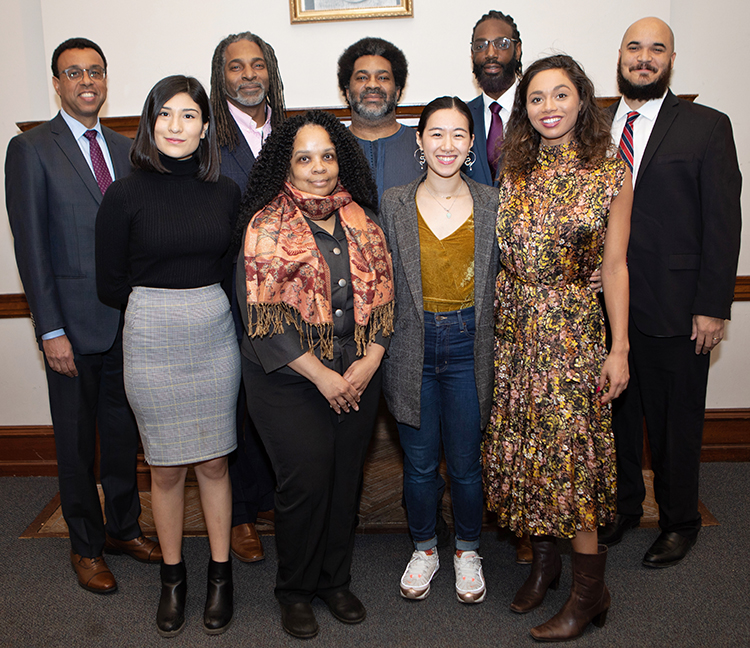
caption: Front: Alejandra Cabrales, Francoise Eberhardt, Selena Yip, Haley Pilgrim; Back: Joel Austin, Sharif El-Mekki, Chase Lamar Smith

In honor of the late Rev. Dr. Martin Luther King, Jr.’s recognition that local engagement is essential to the struggle for equality, the Dr. Martin Luther King, Jr. Commemorative Symposium on Social Change Executive Planning Committee of the University of Pennsylvania recently announced the 2020 Community Involvement Recognition Awardees. The awards honor members of the Philadelphia community whose active service to others best exemplifies the ideals Dr. King espoused. The following individuals were honored at the annual MLK Interfaith Program and Awards Commemoration on January 23: 

Undergraduate Student Award 

Alejandra Cabrales—A junior in the College, Ms. Cabrales has worked in various community spaces, including La Casa Latina, Greenfield Intercultural Center, Civic House and the Penn Women’s Center. She has taken the initiative to respond to the political and campus climate and foster collaboration with her peers, faculty and staff. She supports all intersections of immigrant communities, communities of color, and communities of those who identify as first generation and low income. During the 2016 presidential election, Ms. Cabrales worked with RedMexicana to motivate young Latinos to vote for candidates that best represented the interests of their communities. She is a civic scholar at Penn’s Civic House and has served as a tutor/mentor at Puentes de Salud. She has worked with doctoral students on youth participatory action research to help to develop a college access program and drew on her own testimonials as a first-generation Latinx scholar who has grappled with immigration issues and navigated the hierarchies in higher education. 

Graduate Student Award 

Haley Pilgrim—A doctoral student in sociology at Penn, Ms. Pilgrim has served in many leadership roles, including president of the Graduate and Professional Student Assembly (GAPSA), finance chair of Black Graduate Women’s Association, co-president of the Black Graduate and Professional Student Assembly (BGAPSA), and chair of GAPSA’s Inclusion, Diversity, Equity, Access and Leadership Council. She has received the Fontaine Fellowship and a Fontaine research grant, the Student and Community Engagement Award, Penn Prize for Excellence in Teaching by Graduate Students and the Benjamin Franklin Fellowship. As co-president of BGAPSA, she fundraised its budget to five times the amount given by the University as well as increased active membership to half of the Black graduate population. She has successfully advocated and worked with the University administration for an Incident Bias Reporting Form. Ms. Pilgrim has led protests and mentored undergrads in effective activism. 

Faculty/Staff Award 

Chase Lamar Smith—An administrative assistant in Penn’s Student Health Services. Mr. Lamar founded No Dreams Deferred in 2015 with a mission of providing inner-city youth opportunities and exposure to the arts, crafts, music and tutorial programs. He also founded Men Raising Men, a mentoring program for male teens that also provides an outlet for the development of creative and healthy expression. Mr. Smith provides motivational speeches at schools, youth enrichment programs and organizations. He uses his influence as a stand-up comedian as a platform for promoting positive messages and to build up the community. 

Francoise Eberhardt—A member of Penn Presbyterian Medical Center’s (PPMC) Community Outreach Council since 2016 and currently immediate past chair, Ms. Eberhardt has organized community events, partnered with program coordinators and volunteered her expertise to several helping organizations, including the Susan G. Komen Foundation Race for the Cure and the Philabundance Fresh for All program. She volunteers with Penn’s Mobile CPR Project and is a member of the planning committee for the Annual Health Fair at PPMC. Ms. Eberhardt volunteered at the United Community Clinic and spearheaded a partnership with PPMC and a local church congregation, which held its own health fair by building a connection with the Penn’s School of Nursing. She has partnered with the West Philadelphia Alliance for Children and organized a hospital-wide clothing drive for Prevention Point. 

Community Member Award 

Joel Austin—Co-chair for the Mayor’s Commission on African American Males, a position appointed by the Mayor of Philadelphia; founder and president of Daddy University Inc.; executive director of The School of Parent Education; and chief facilitator and program developer for the Fathers Club, a free weekly fatherhood training group in its sixth year servicing fathers from all backgrounds and of all ages. Daddy University Inc. has grown into a recognized authority on fatherhood information, support and training. Mr. Austin has helped over 5,000 dads. Fueled by his role as a father of four, he is personally and professionally committed to educating and re-educating people about the importance of fatherhood. Mr. Austin is the founder of the annual National Fatherhood Conference, a free, low-cost male parenting education program. The conference includes more than a dozen workshops, 60 volunteers, 135 exhibitors and service agencies, and over 600 male participants across eight states. He is also founder of the Daddy Daughter Dance, an annual event in its 10th year. He is recognized by his peers as a trailblazer in the field of fatherhood. 

Selena Yip—Director of communications and community outreach coordinator for Philadelphia Asian American Film and Filmmakers. Mx. Yip was born in the Philadelphia area and raised with strong ties to Philadelphia’s Chinatown. After graduating from college, they returned home to become an active member of the Chinatown, Asian American, people of color and LGBTQ+ communities. Mx. Yip has played a significant role on Philadelphia’s social justice scene and is passionate about enlivening and promoting culture and fighting against gentrification. Mx. Yip produced Chinatown’s production of Hua Mulan at the Kimmel Center, currently serves as a representative on Philadelphia Chinatown Development Corporation and produced the documentary Staying Put: Stories of Chinatown’s Resistance in collaboration with Scribe Video Center as part of a history project, which documented the history of the community’s development in the face of urban development and gentrification. Mx. Yip has also served as a lead on Asian Diaspora Film Festival Organizers, a member of the Programmers of Colour Collective and the president of the Philadelphia chapter of the Asian Creative Network. 

Dr. Judith Rodin Community Education Award 

Sharif El-Mekki—Founder and CEO of the Center for Black Educator Development and an advocate for social justice and equity with a strong track record of activism and positive impacts on the children and communities he serves, Mr. El-Mekki partnered with the Netter Center to bring University-assisted community school programs to Turner, Shaw and Mastery Shoemaker schools. He taught for almost nine years and served as a principal at Mastery Charter School–Shoemaker Campus for 11 years. His leadership there led to the Effective Practice Incentive Community (EPIC) award for three consecutive years as being amongst the top three schools in the country for accelerating students’ achievement levels. It was also recognized as one of the top 10 middle schools and top 10 high schools in the state for accelerating the achievement levels of African-American students. Mr. El-Mekki was one of three principal ambassador fellows working on issues of education policy and practice with US Department of Education under Secretary Duncan and President Obama; he served on the Philadelphia Commission on African American Males; he is a fellow with America Achieves and a founding board member and secretary of the David P. Richardson Jr. Institute for Leadership and Civic Participation. Mr. El-Mekki received the 2019 Muslim American Community Award from Stanford’s Muslim Student Union. 

Features

GLASSFEST: February 21-March 14

caption: The Crossing performs on February 21-22.

caption: Jenny Lin makes her Annenberg Center Presents debut on March 5.

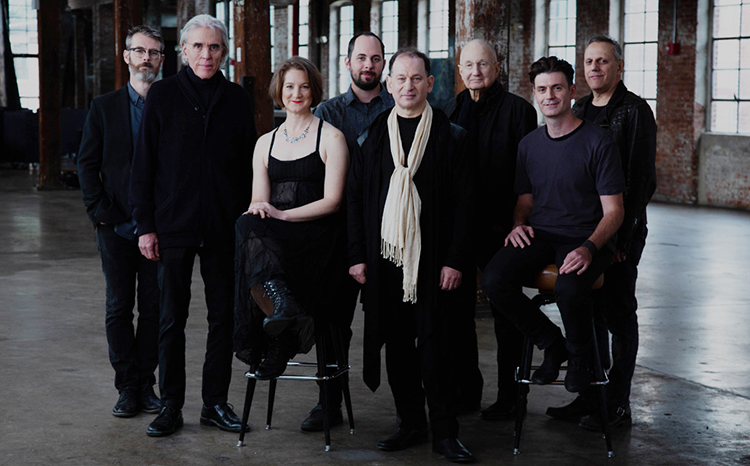
The Annenberg Center first presented composer Philip Glass with The Philip Glass Ensemble in the 1990s. Through frequent appearances and a long-term commitment to showcasing new music, the Annenberg Center championed Mr. Glass and familiarized him to Philadelphia audiences. The three-week GLASSFEST includes The Crossing choir performing Knee Plays, works by Philip Glass and David Byrne (February 21-22); the Philadelphia premiere of the five-hour entirety of Glass’ groundbreaking Music in Twelve Parts, performed by The Philip Glass Ensemble (February 29); Glass Reflections performed by pianist Jenny Lin in the Egypt Upper Gallery at the Penn Museum (March 5); and the world premiere of theatrical work, The White Lama: The Improbable Legacy of Theos Bernard (March 13-14) by multi-disciplinary theatre artist and filmmaker Nikki Appino, featuring a score that will be performed by Mr. Glass himself and co-composer Tenzin Choegyal. 

The Crossing: Knee Plays; February 21-22; 8 p.m. With “unerring performers, the superb Philadelphia choir The Crossing” (The New Yorker) offers a special programmatic pairing. Donald Nally conducts a rare performance of Philip Glass’ Knee Plays, which served as interludes in his first opera, Einstein on the Beach, in one connected program. 

The Philip Glass Ensemble; February 29; 6 p.m. The Philip Glass Ensemble returns to Philadelphia for the first time in 21 years to give a rare complete performance of Mr. Glass’ groundbreaking Music in Twelve Parts. Composed between 1971 and 1974, Music in Twelve Parts is both a massive theoretical exercise and a deeply engrossing work of art. Music in Twelve Parts runs five hours, with two intermissions and a dinner break. Please note that Glass himself will not be performing as part of this concert. 

Jenny Lin: Glass Reflections; March 5; 7:30 p.m. Jenny Lin, “one of the most interesting pianists in America right now” (The Washington Post), makes her Annenberg Center Presents debut in the stunning Egypt Upper Gallery at the Penn Museum. Ms. Lin brings a technical brilliance and virtuosic facility to Glass’ lyrical and rhythmically demanding music, as well as works by Debussy, Liszt, Schubert and more. 

The White Lama: The Improbable Legacy of Theos Bernard; March 13-14; 7:30 p.m. In 1947, Theos Bernard set out to study at a monastery in Tibet and was never seen or heard from again. Nikki Appino’s The White Lama explores Mr. Bernard’s quest for the sacred. Part biography, part invocation, this experimental work blends music, projected imagery and prose by Kevin Joyce, with a score played live by Tenzin Choegyal and Philip Glass. 

For tickets, call (215) 898- 3900 or visit https://tinyurl.com/GLASSFEST

caption: The Philip Glass Ensemble performs on February 29.

caption: Kevin Joyce and Philip Glass in rehearsal for the world premiere of Nikki Appino’s The White Lama: The Improbable Legacy of Theos Bernard.

Events

Update: February at Penn

Exhibits

13    Design and Science; an examination of the overlap between the processes used by designers and scientists; Esther Klein Gallery; panel discussion 5 p.m. and opening reception 6 p.m. Through March 28. 

Fitness and Learning

13    Coffee With a Keeper; morning coffee and discussion with Lynn Makowsky, keeper, Mediterranean Section; 9:30 a.m.; Cafe, Penn Museum; tickets: $5, members free (Museum). 

AT PENN Deadlines 

The February AT PENN calendar is now online. The deadline for the March AT PENN is today. The deadline for the weekly Update is the Monday prior to the week of the issue’s publication.

African Cultures Celebration: February 15

The African and Diasporic Cultures Celebration at Penn Museum will occur Saturday, February 15, 10 a.m.-5 p.m. This festival provides an opportunity for reunion of both contemporary and traditional cultural practices across Africa and the African Diaspora. The festival is a celebration of traditions from places throughout the African continent and passed along through the African Diaspora. Visitors can explore cultural connections and continuities through art making, mask making, live performances, drumming and other musical demonstrations, film screenings, a storytelling circle, an African-inspired marketplace and workshops for all ages. 

The event is included with admission. For tickets, https://tinyurl.com/ADCelebration

Crimes

Weekly Crime Reports

The University of Pennsylvania Police Department Community Crime Report

Below are the Crimes Against Persons, Crimes Against Society and Crimes Against Property from the campus report for January 27-February 2, 2020. View prior weeks' reports—Ed.

This summary is prepared by the Division of Public Safety and includes all criminal incidents reported and made known to the University Police Department for the dates of January 27-February 2, 2020. The University Police actively patrol from Market St to Baltimore and from the Schuylkill River to 43rd St in conjunction with the Philadelphia Police. In this effort to provide you with a thorough and accurate report on public safety concerns, we hope that your increased awareness will lessen the opportunity for crime. For any concerns or suggestions regarding this report, please call the Division of Public Safety at (215) 898-4482.

01/28/20

2:08 PM

3925 Walnut St

Merchandise taken without payment/Arrest

01/28/20

3:26 PM

4034 Walnut St

Speaker taken from residence

01/28/20

3:57 PM

3744 Spruce St

Merchandise taken without payment

01/28/20

4:54 PM

3925 Walnut St

Merchandise taken without payment/Arrest

01/28/20

6:13 PM

125 S 39th St

Package taken

01/28/20

7:23 PM

3400 Civic Center Blvd

Change purse taken from lunch room

01/28/20

7:36 PM

3604 Chestnut St

Merchandise taken without payment

01/29/20

10:06 AM

3925 Walnut St

Suspect wanted on warrant/Arrest

01/29/20

12:11 PM

2930 Chestnut St

Offender arrested for being inside building

01/29/20

5:29 PM

4000 Ludlow St

Social Security number obtained by unknown caller

01/29/20

6:45 PM

4039 Walnut St

Unauthorized withdraw from bank account

01/29/20

7:42 PM

3401 Spruce St

Unsecure items taken from auditorium area

01/29/20

7:59 PM

3400 Spruce St

Complainant threatened by former co-worker

01/30/20

11:51 AM

3737 Chestnut St

Unauthorized charges made on credit card

01/30/20

3:00 PM

3939 Chestnut St

Complainant scammed out of rental deposit

01/30/20

4:14 PM

110 S 36th St

Package taken

01/31/20

11:13 AM

3900 Locust Walk

Confidential sex offense

01/31/20

11:54 AM

3939 Chestnut St

Complainant victim of online rental scam

01/31/20

2:10 PM

3450 Woodland Walk

Threats received via email

02/01/20

2:49 PM

3600 Chestnut St

Unauthorized charges on account

02/01/20

3:48 PM

4060 Chestnut St

Complainant stuck in head with tape measure

02/01/20

4:02 PM

2929 Walnut St

Paychecks cashed by unauthorized person

02/02/20

7:30 PM

51 N. 39th St

Male arrested for assault on officer and security

02/02/20

7:35 PM

51 N. 39th St

Male arrested for assault on security guard

02/02/20

9:13 PM

3925 Walnut St

Merchandise taken without payment

18th District

Below are the Crimes Against Persons from the 18th District: 12 incidents (4 assaults, 3 aggravated assaults, 2 domestic assaults, 2 robberies and 1 rape) with 2 arrests were reported for January 27-February 2, 2020 by the 18th District covering the Schuylkill River to 49th Street & Market Street to Woodland Avenue.

01/27/20

3:05 AM

4600 Kingsessing Ave

Aggravated Assault

01/27/20

9:01 AM

4700 Locust St

Assault

01/28/20

11:56 AM

4724 Chestnut St

Aggravated Assault/Arrest

01/29/20

12:08 AM

3935 Walnut St

Assault

01/29/20

8:53 PM

419 S 44th St

Robbery

01/30/20

1:37 AM

4800 Locust St

Assault

01/31/20

11:13 AM

3900 Blk Locust Walk

Rape

01/31/20

4:32 PM

4537 Spruce St

Domestic Assault

02/01/20

1:19 PM

239 Buckingham Place

Robbery

02/01/20

3:49 PM

4060 Chestnut St

Assault

02/01/20

8:09 PM

503 S 48th St

Aggravated Assault

02/02/20

1:47 PM

27 S 44th St

Domestic Assault/Arrest

Bulletins

One Step Ahead: Gift Card Scams Hitting Hard (Still)

Another tip in a series provided by the Offices of Information Systems & Computing and Audit, Compliance & Privacy

On February 12, 2019 (Almanac Volume 65 Issue 23), the University of Pennsylvania’s Office of Information Security (OIS) informed the Penn community about gift card scams and provided steps on protecting yourself and Penn.  Regrettably, these scams continue to attract trusting employees rushing to accommodate an alleged senior administrator’s call for urgent assistance. These victims are losing hundreds of dollars to these gift card scams.  

OIS urges you to be vigilant and pause before you purchase a gift card for an administrator or a faculty member. Before you act, contact your local computing support provider to verify if the message is genuine. As a reminder:

  • Read the sender’s email address carefully. Usually, Penn employees use a Penn email address for work communication, e.g., username@upenn.edu
  • If in doubt about the email address, hit Reply, but don’t send: pay attention if the email address changes in the Reply To field to a non-Penn email.
  • This is not how Penn does business. Penn personnel will NOT ask you to purchase gift cards for University business or personal purposes.
  • If you have fallen victim to this scam, report the incident to your IT support staff. If you are unaware who provides your computing support, please see: https://www.isc.upenn.edu/my-it-local-support-provider
  • You may want to contact the company that issued the gift card to inform them about the scam. There is a slight chance they may be able to get your money back.
  • Contact the Federal Trade Commission to report the gift card scam at ftc.gov/complaint or call 1(877) FTC-HELP.

For more information, visit:

For additional tips, see the One Step Ahead link on the Information Security website: https://www.isc.upenn.edu/security/news-alerts#One-Step-Ahead

Kelly Writers House Summer Workshop for Young Writers

In addition to the many 2020 summer programs and camps listed in the January 28 Almanac supplement, here is one more.

Kelly Writers House Summer Workshop for Young Writers: July 5-15. A residential program for rising high school juniors and seniors, this is an opportunity for promising writers from diverse backgrounds to learn from KWH faculty and staff and fellow participants. Participants will live in one of Penn’s College Houses and will have opportunities to explore Penn and Philadelphia when they’re not writing and reading. Full- and half-tuition grants available. Cost: $2,750. Apply: http://writing.upenn.edu/wh/summer/ Deadline: March 8. 

Back to Top