$15 Million Anonymous Gift for Analytics at Wharton
The Wharton School of the University of Pennsylvania announced the establishment of Analytics at Wharton, uniting the School’s teaching, research and industry engagement initiatives that use big data to improve decision-making and generate actionable business insights. This change is made possible by a new anonymous $15 million gift, creating the Data Science and Business Analytics Fund, which will accelerate Wharton’s innovations in applying sophisticated analytical tools to solve challenges and leverage the opportunities for business and society generated by the data and technology revolution. This gift is an instrumental investment in analytics, a core area of focus of Wharton’s More Than Ever campaign.
“In the 21st century, leaders will increasingly use data and analytics to develop insights that will help them make better decisions and become better leaders. The creation of Analytics at Wharton demonstrates our commitment to using big data to transform how business is done,” said Wharton Dean Geoffrey Garrett. “This gives us the opportunity to expand our analytics research, curriculum, and industry engagement to respond to the enormous interest from our students, our faculty and business at large in championing the responsible use of data to benefit society.”
 Analytics at Wharton will be supported by the creation of a new senior leadership position at Wharton, the Vice Dean for Analytics. The inaugural vice dean will be Eric T. Bradlow, the K.P. Chao Professor and professor of marketing, economics, education and statistics and the chair of Wharton’s marketing department. Dr. Bradlow is also the co-founder of the Wharton Customer Analytics Initiative.
The Data Science and Business Analytics Fund will support new opportunities to expand the impact of big data analytics on areas as diverse as sports and entertainment, healthcare and medicine, and network science and the media, drawing on the Wharton faculty’s diverse research excellence in areas that are being transformed by the opportunities created by unprecedented volumes of digital, numerical and text-based data.
“At Wharton, our teaching and research define the cutting edge in using data analysis to inform decision-making,” said Dr. Bradlow. “Our students and faculty are applying these methods in real time to real problems, meeting the growing needs of organizations seeking talented people who can turn raw data into actionable business intelligence.”
Analytics at Wharton will also bring together five existing programs at the School:
Customer Analytics, which focuses on analytical methods to further business intelligence for companies centered around granular customer-level data.
Penn Wharton Budget Model, a nonpartisan, research-based initiative that provides accurate, accessible and transparent economic analysis of public policy’s fiscal impact.
People Analytics, which uses data to help organizations make smarter decisions about people by understanding the character, culture, collaboration and careers at their organizations.
Wharton Neuroscience Initiative, which develops new technologies that can collect and analyze novel forms of behavioral data at the nexus of business and brain science.
Wharton Research Data Services, an award-winning research platform and business intelligence tool used by corporate, academic, governmental and non-profit clients at 400+ organizations worldwide.
Wharton’s outstanding reputation for analytics drives students’ high demand for courses and co-curricular activities in this area. For example, at Wharton:
- 47 analytics-based courses are offered in undergraduate and graduate degree programs.
- 14% of MBA students major in Business Analytics.
- More than 1,100 students participate in undergraduate and MBA Analytics Clubs.
- 18 analytics-related conferences and public events take place each year.
- Tens of thousands of learners worldwide have enrolled in analytics programs and courses through Wharton Executive Education and Wharton Online.
Faculty Senate Leadership 2019-2020

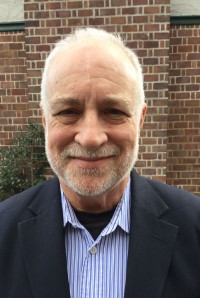
The Faculty Senate has announced its new leadership for the upcoming year: Past Chair: Jennifer Pinto-Martin (Nursing); Chair: Steven Kimbrough (Wharton); Chair-Elect: Kathleen Hall Jamieson (Annenberg). See the 2018-2019 Annual Reports of the Faculty Senate in this week’s supplement.
Graduate School of Education 2019 Excellence in Teaching Award
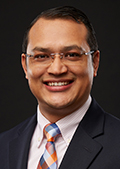 Amrit Thapa, a lecturer in Penn GSE’s International Educational Development Program and instructor in the Education Entrepreneurship Program, is the recipient of the GSE Excellence in Teaching Award. Students describe Dr. Thapa’s class as a place where quantitative and qualitative methods of analysis are demystified. He challenges students to critically examine research in the field, including his own work, because he wants them to be partners in learning. In addition to his teaching, Dr. Thapa creates a positive classroom environment that prioritizes his students’ wellness. Thanks to his mentorship, students said Dr. Thapa has opened up career possibilities they wouldn’t have otherwise considered.
Kellie Ann Jurado: Presidential Assistant Professor
 Kellie Ann Jurado has joined the Perelman School of Medicine at the University of Pennsylvania as a Presidential Assistant Professor of Microbiology. Dr. Jurado’s research examines how the immune system interacts with viral infections. Her current work investigates the abnormal immune response during Zika virus infection, including how the immune system reacts to Zika in the brain.
As a new Penn faculty member, Dr. Jurado will continue her research on Zika virus pathogenesis and how antigen-presenting cells shape T cell responses in the central nervous system. She will also start on a new line of inquiry exploring the enterovirus D68, an emerging and important viral infection that causes a polio-like disease in children. The research is expected to provide clues about how this virus attacks the body.
Dr. Jurado is the recipient of several major grants and fellowships, including the L’Oréal Women in Science Fellowship, the Charles H. Revson Senior Fellowship in Biomedical Science and a Burroughs Wellcome Fund Postdoctoral Fellowship. She was named a 2018 “Wunderkind” by the life sciences publication STAT. She received her PhD in virology from Harvard University and served as a postdoctoral fellow at Yale University.
Dr. Jurado grew up in a small town in New Mexico where her family engages in chili pepper farming and business. Guided by her own experiences as a first-generation doctoral student who did not meet a scientist until college, Dr. Jurado has given back to the community by mentoring students at Harvard and Yale and within underserved middle and high schools in the New Haven/Bridgeport area. She has also engaged in community outreach by educating communities there about the HPV vaccine. The Hartford Courant named her a Hometown Hero for these activities.
The Presidential Professorships are five-year term chairs, awarded by President Amy Gutmann to outstanding scholars, whose appointments to the standing faculty are approved by the Provost, and who demonstrably contribute excellence and diversity to Penn’s inclusive community.
School of Veterinary Medicine 2019 Teaching Awards
The Zoetis Distinguished Teacher Award
 This year’s Zoetis Distinguished Teacher Award was presented to Joseph Bender. The Zoetis Distinguished Teacher Award is the most prestigious teaching award in veterinary medicine. It is presented annually to a faculty member at each college of veterinary medicine in the United States. Its purpose is “to improve veterinary medicine
education by recognizing outstanding instructors who, through their ability, dedication, character and leadership, contribute significantly to the advancement of the profession.” The entire Penn Vet student body votes on the recipient.
Dr. Bender is currently assistant professor of clinical dairy production medicine in dairy field investigation for the Center for Animal Health and Productivity at Penn Vet’s New Bolton Center. He received his undergraduate degree in biology from the University of Findlay, and his veterinary and master of science degrees from Iowa State University.
Dr. Bender’s main area of work involves providing on-farm consultation to dairy farmers throughout Pennsylvania to improve production, profitability and well-being for both dairy cattle and producers. Primary interests and teaching include dairy farm management, nutrition, reproduction and on-farm interactions to help the sustainability of the Pennsylvania dairy industry.
Dr. Bender’s research projects focus on global food security and the role of animal agriculture; antibiotic resistance; and the Penn Wharton China Center’s sustainability project through the Penn China Research and Engagement Fund. His family dairy farm, located nearby, is where he spends most of his time away from Penn Vet.
Noted one student: “Dr. Bender is truly an inspiration to those he meets and teaches. I can attest to his enthusiasm that students in his classes exude after interactions with him. Dr. Bender is an enthusiastic educator, encouraging students to think logically about problems and to constantly scrutinize their preconceptions. He empowers students to think independently—when posed a question his retort is often advice on how to approach the problem rather than the answer. Despite his fondness of debate, he treats students, clients and colleagues with sincere respect. He spends countless hours outside of the classroom helping students with their own projects and providing invaluable mentorship.”
The William B. Boucher Award
 The Boucher Award honors a house officer at New Bolton Center for excellent teaching, as was exemplified by William Boucher over four decades at Penn Vet.
This year’s winner is Caitlin Moore. Dr. Moore graduated from Penn Vet (V’16) where she is currently a resident in Internal Medicine at Penn Vet’s New Bolton Center.
“When working with the students, Dr. Moore has a high level of empathy for them,” wrote a student. “She understands what it’s like be a student, and how scary and overwhelming it is, and how work just piles up and sometimes you just don’t know the answer. When she talks to students she really gets that and I’m so happy that the students recognize it too.”
Class of 2019 Philadelphia Campus Teaching Award
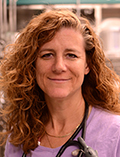 Deborah Mandell graduated from Penn Vet (V’93) where she also completed an internship and a residency in emergency and critical care medicine. After becoming board certified and moving to Maryland, she was a criticalist at VCA/Veterinary Referral Associates in Gaithersburg. In 2001, Dr. Mandell returned to Penn Vet, where she is currently a professor in emergency and critical care medicine and works in Ryan Hospital’s emergency room. Her clinical interests include ophthalmological emergencies and respiratory distress in cats.
As a pet safety advisor for the American Red Cross, she has provided expert review for Red Cross Dog First Aid and Cat First Aid guides, the Pet First Aid app, and the Cat and Dog First Aid online course. She has participated in multiple print interviews and live segments on Animal Radio. Dr. Mandell is also a member of the American Red Cross Scientific Advisory Council.
According to one student, “Few people are more invested in student learning than Dr. Mandell. Between her legendary CPR lab, her extraordinary teaching rounds and her willingness to provide hands-on experience, Dr. Mandell continues to go above and beyond for her students. On top of all that, she is also fun, brilliant and calm under pressure—a true role model.”
Class of 2019 New Bolton Center Teaching Award
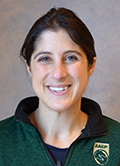 Nikki Scherrer currently serves as an assistant professor of ophthalmology at Penn Vet’s New Bolton Center. She received a bachelor’s degree in biochemistry and graduated summa cum laude from DePauw University in Greencastle, Indiana. She earned her veterinary degree from the Purdue University College of Veterinary Medicine. After graduation Dr. Sherrer interned at Rood and Riddle Equine Hospital. Following this, she started a second rotating internship at New Bolton Center and a subsequent ophthalmology residency.
“As a student, it is impossible to work on a case with Dr. Scherrer and not be blown away by her incredible knowledge. But with this knowledge comes a great talent for translating the information to her students. I had the opportunity to work with Dr. Scherrer on multiple cases while out on rotation at New Bolton Center and they were some of the most rewarding cases I have been involved with at New Bolton. Not only did I learn a great deal about ophthalmology, but her mastery of client communication and the way she advocates for her patients was a joy to behold.”
Class of 2020 Philadelphia Campus Teaching Award
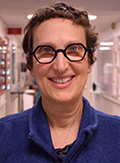 Rebecka Hess received her DVM degree in 1992 from the Hebrew University of Jerusalem in Israel. She completed an internship in small animal medicine in 1994 and a residency in small animal internal medicine in 1996, both at Penn Vet, where she is currently professor and chief of internal medicine. Dr. Hess was a 2019 winner of a Lindback Award for Distinguished Teaching (Almanac March 26, 2019). Her research and publications focus on diabetes and other endocrinopathies in dogs and cats, topics she is invited to speak on nationally and internationally. She is board certified by the American College of Veterinary Internal Medicine.
Said one student: “While there are some truly great lecturers, there are some that go beyond what is required, Dr. Rebecka Hess took time in class to check in with the students, summarized each major topic, signposted her lectures, and most of all, showed us empathy when it came to learning the challenging material that is small animal endocrine disease.”
Class of 2020 New Bolton Center Teaching Award
 Michael Pesato received his undergraduate degree from the University of Findlay and his veterinary degree from Mississippi State University College of Veterinary Medicine. After completing an internship and subsequent Field Service residency at New Bolton Center, he accepted a position of lecturer in food animal field service. Dr. Pesato’s clinical focus is on overall health and productivity of cattle and small ruminants. He is especially interested in working with small ruminant farms and small bovine herds to develop herd management strategies and preventative healthcare plans. He also enjoys community outreach activities and educating the public on food animal topics. Dr. Pesato received The William B. Boucher Award in 2017 (Almanac May 23, 2017).
According to one student, “Dr. Pesato spends countless hours in and out of the classroom to teach small- and large-animal students alike. He volunteers his weekends to wet labs, teaches the basics of rectal palpation in Large Animal block, and comforts and guides students when they must remediate their pre-clinical assessment.”
Class of 2021 Laboratory Teaching Award
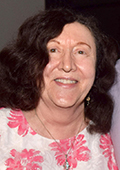 Deborah Gillette attended Purdue University as an undergraduate and veterinary school at Cornell University. After completing a pathology residency at Penn Vet, she earned a PhD in comparative pathology at University of California, Davis, and became board certified. Dr. Gillette joined the faculty at the University of Wisconsin for one year before joining the pathology faculty at New Bolton Center. During this time she received a master’s degree in health professions education from Penn’s Graduate School of Education. Dr. Gillette left Penn Vet to become a pathologist in the toxicology department of Rohm and Haas Company (now part of Dow Chemical). After retiring from industry, she returned to Penn Vet in 2018, working for the pathology department at the Philadelphia campus. Dr. Gillette also serves as photo editor for the journal Veterinary Pathology.
“Dr. Gillette always has a smile for us during our pathology wet labs,” noted a student. “She is one of the most friendly and helpful teachers we have. She really encourages us to make diagnoses like actual doctors.”
Class of 2021 Lecture Teaching Award
 Julie Engiles graduated from Penn Vet in 2002 and completed a surgical internship at the New Jersey Equine Clinic 2003, followed by an anatomic pathology residency at Penn Vet. She is board-certified by the American College of Veterinary Pathologists. She was hired in 2007 as an assistant professor of pathology at New Bolton Center, which provides autopsy and biopsy services for the Pennsylvania Animal Diagnostic Lab Services (PADLS). Dr. Engiles’ research and teaching interests include orthopedic pathology, equine laminitis and gastrointestinal pathology.
“When we hear ‘soggy nachos’ we now think of osteochondritis dissecans,” noted a student. “Dr. Engiles’ enthusiasm and positive energy made her lectures engaging and easy to follow. She went out of her way to provide us with practice cases to apply the information we were learning in class.”
Class of 2022 Laboratory Teaching Award
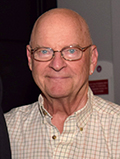 Peter Hand received his undergraduate degree from Cornell University, then graduated from Penn Vet in 1961. He earned his PhD from the University of Pennsylvania in 1964. Dr. Hand is currently an emeritus professor of anatomy after a 35-year career at Penn Vet, and he continues to help out during anatomy labs.
One student wrote that “Dr. Hand always has something nice or encouraging to say, especially during histology point and shoot, or when handing you a clipboard as you’re walking into your anatomy practical. He is humble, polite and extremely knowledgeable in his field.”
Class of 2022 Lecture Teaching Award
 Elizabeth Woodward joined the department of biomedical sciences in 2016 as a clinical assistant professor. Prior to her faculty appointment, she held postdoctoral research appointments in the Reference Andrology Laboratory at New Bolton Center and at the University of Kentucky’s Gluck Equine Research Center, where she also earned her doctorate studying equine reproductive physiology. As faculty, she is course organizer for physiology, teaches anatomy, serves on several College committees, and is a faculty adviser for the Wine Club. Her research interests are in the field of reproductive physiology, specifically in the areas of sperm physiology and equine endometritis.
“Dr. Woodward goes above and beyond to answer our questions in a way that benefits the entire class, and even consults new research to do so,” said a student. “If you email a question, she will make an additional PowerPoint slide to answer it, and incorporate that slide into the next lecture so everyone is on the same page. You might find her in the courtyard, shouting through a megaphone, choreographing students into a complex dance that roughly resembles a functional beating heart. We’re really lucky to have someone who cares as much as she does, and we’re certainly grateful for her.”
A.T. Charlie Johnson: Rebecca W. Bushnell Professor
 A.T. Charlie Johnson, professor of physics and astronomy in Penn’s School of Arts & Sciences, has been ap pointed the Rebecca W. Bushnell Professor of Physics and Astronomy. A condensed matter experimentalist, Dr. Johnson focuses on the physics of nanoscale materials such as graphene and carbon nanotubes. He is a leading expert on transport phenomena (energy, charge and spin) in such systems.
Dr. Johnson has served as director of Penn’s Nano/Bio Interface Center, a National Science Foundation-funded Nanoscale Science and Engineering Center, and was recently named as a member of the Defense Science Study Group. He is an elected Fellow of the American Association for the Advancement of Science and of the American Physical Society, and he has been recognized for excellence in teaching and mentorship with the Provost’s Lindback Foundation Award for Distinguished Teaching and the Penn Arts & Sciences Dean’s Award for Mentorship of Undergraduate Research.
The Penn Arts & Sciences Board of Overseers created this professorship in 2012 in recognition of Rebecca W. Bushnell, who was dean of the School 2005-2013. It was originally known as the School of Arts & Sciences Board of Overseers Professorship and was held by Dr. Bushnell from 2013 until her retirement in 2018, when it was renamed the Rebecca W. Bushnell Professorship and designated for the sciences to reflect her commitment to all academic disciplines. Dr. Bushnell joined the Penn Arts & Sciences faculty in the department of English in 1982.
Cynthia M. Otto: First Professor of Working Dog Sciences and Sports Medicine
 The School of Veterinary Medicine at the University of Pennsylvania has named Cynthia M. Otto professor of working dog sciences and sports medicine in the department of clinical sciences and advanced medicine.
“Dr. Otto espouses the highest standards of collegiality, clinical service, teaching and research on working and athletic dogs,” said Oliver A. Garden, Corinne R. and Henry Bower Professor of Medicine and chairman of the department of clinical sciences and advanced medicine. “She has carved an amazing career to date, with much still to come. Her caliber is impressive and showcases with incisive clarity, the impact and global reach of the Working Dog Center at Penn Vet. As far as we are aware, we have the very first professor of working dog sciences and sports medicine in the world.”
Dr. Otto joined Penn Vet in 1991 as associate professor of critical care. Inspired by her work with the 9/11 search-and-rescue canines, she became the founding director in 2012 of the School’s Working Dog Center, a national research and development facility for detection dogs (Almanac September 4, 2012). Dr. Otto oversees the fitness and medical care of detection dogs in the program, as well as physical rehabilitation for local law enforcement canines. Her research focuses on all aspects of detection dog health and performance with an emphasis on canine olfactory function. Her studies include using dogs to help identify odors associated with difficult-to-diagnose conditions such as ovarian cancer, and evaluating how medications might alter a dog’s sense of smell.
In response to the concerns of drug detection dog exposure to opioids, she has investigated the effects of intramuscular and intranasal applications of Naloxone. She has helped develop effective hydration strategies to enhance canine thermoregulation and reduce the risk of heat stroke through collaborations with the Department of Defense, Customs and Border Protection, and industry.
Dr. Otto is frequently quoted in the national and international press about medical detection, the behavior of search and rescue dogs, as well as the health and occupational hazards of working dogs. She was named the American Veterinary Medical Association’s Bustad Companion Animal Veterinarian of the Year in 2018.
Dr. Otto, who is dually boarded in Veterinary Emergency and Critical Care, and Veterinary Sports Medicine and Rehabilitation, earned her veterinary degree at Ohio State University, and her PhD in veterinary physiology from the University of Georgia.
“The mission of the Penn Vet Working Dog Center is to transform global health and safety through working dogs,” said Dr. Otto. “Our Center has become so much more than I ever imagined. I want to thank Penn Vet, as well as my peers and colleagues who share my commitment to working dogs, who have been such a pivotal addition to human lives.”
Penn Parking Services would like to thank its valued permit holders for their patronage of the University’s parking facilities. Over the last year, Parking Services’ ongoing commitment to enhance the experience of its patrons included multimillion-dollar investments in safety and security, facility repairs and renovations, and aesthetic features throughout our lots and garages.
In addition, recently implemented federal legislation (The Tax Cuts and Jobs Act of 2017) contains provisions that pertain specifically to parking programs and, in turn, results in a substantial impact on the overall cost structure of Penn’s Parking operations. Parking Services has worked diligently to minimize permit rates to the extent possible and remains committed to investing resources to sustain Penn’s comprehensive parking and transportation infrastructure in support of the campus community.
Effective July 1, 2019, the following FY20 rates, which reflect a 5% increase, apply to all permit holders. These new permit rates remain favorable to comparable parking facilities in University City and the vast majority reflect a daily parking rate of $9.09, which represents an approximate 20% discount off of other local permit rates and almost 30% less than area transient rates.
| Location |
Annual |
Monthly1 |
University
Weekly1 |
HUP Bi-weekly1 |
| Curie Boulevard and Penn Museum |
$2,516.17 |
$209.68 |
$52.42 |
$104.84 |
| Chancellor 32, Chestnut 34, Domus, Eisenlohr, Graduate Education, Health Sciences 51,Law, Lower Walnut, Ludlow 34, Medical School Courtyard, Nursing, Palestra, Penn Museum-Kress, Richards, Sansom 38, Sports Medicine, Spruce 38, Walnut 32, Walnut 38, and Walnut 40 |
$2,397.99 |
$199.83 |
$49.96 |
$99.92 |
| Hollenback |
$2,352.00 |
$196.00 |
$49.00 |
$98.00 |
| River Fields |
$1,529.44 |
$127.45 |
$31.86 |
$63.73 |
| 24 Hour |
$2,969.38 |
$247.45 |
$61.86 |
$123.72 |
| Weekday Evenings (after 4 p.m.)/Weekends |
$1,197.85 |
$99.82 |
$24.96 |
$49.91 |
| Motorcycle |
$797.42 |
$66.45 |
$16.61 |
$33.23 |
1 Rates reflect the permit holder’s payroll deduction
—Penn Parking Services
Sustainable Commuting at Penn
As part of Penn’s integrated transit solution, the University offers a wide array of options for commuting to campus. They are designed to accommodate a variety of circumstances and include discounted, pre-tax purchases of passes that can be used for the robust network of transit systems that serve Penn’s campus to the Occasional Parking Program that serves as an alternative to the monthly parking permit. Currently, up to $265 of your monthly commuter fare costs can be paid for through pre-tax payroll deductions, and utilizing these commuting methods contributes to the goals of Penn’s Climate Action Plan. Visit the Penn Transportation and Parking website at www.upenn.edu/transportation for further information or contact the staff in the Transportation and Parking office by emailing parking@upenn.edu
Penn’s Occasional Parking Program—For those instances when Penn faculty and staff have a need to drive and park on campus, sustainable transit program participants who receive monthly payroll deductions can receive 10 daily parking permits per year at a significant discount.
Local and Regional Public Transit—Commuters can travel to and from campus by bus, trolley, subway or railway via local and regional transit authorities such as SEPTA, PATCO, NJ Transit, DART and Amtrak. Discounts of up to 10% are available, depending on the commuter fare, along with options for monthly payroll deduction. For those who are interested in commuting by SEPTA, specific questions about travel options and schedules can be addressed in person by SEPTA staff at the SEPTA Travel Center @Penn, located on the first floor of the Penn Bookstore (Monday-Friday, 11 a.m.-6 p.m.).
WageWorks Commuter Cards—Commuter Cards are accepted at transit agencies, fare vending machines and designated transit retail centers that sell transit passes, tickets, fare cards, and accept the VISA Card for payment. The monthly amount placed on commuter credit cards is discounted by 5%.
Vanpools—Penn Transportation and Parking has joined with Enterprise Rideshare, a national leader in vanpooling and sustainable transportation, to offer vanpooling options that are available throughout the region, including New Jersey and Delaware. The average cost of participating in a vanpool is between $100 and $150 monthly (depending on location and the number of riders).
Carpools—Parking permit patrons can take advantage of discounts by teaming up with fellow employees to form a carpool. Discounts are based on the number of participants in the carpool.
—Penn Parking Services
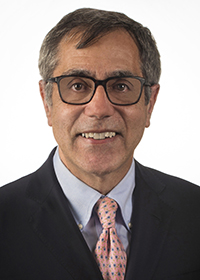
 Eugene Mele and Nancy Speck of the University of Pennsylvania have been elected to the National Academy of Sciences (NAS) “in recognition of their distinguished and continuing achievements in original research.”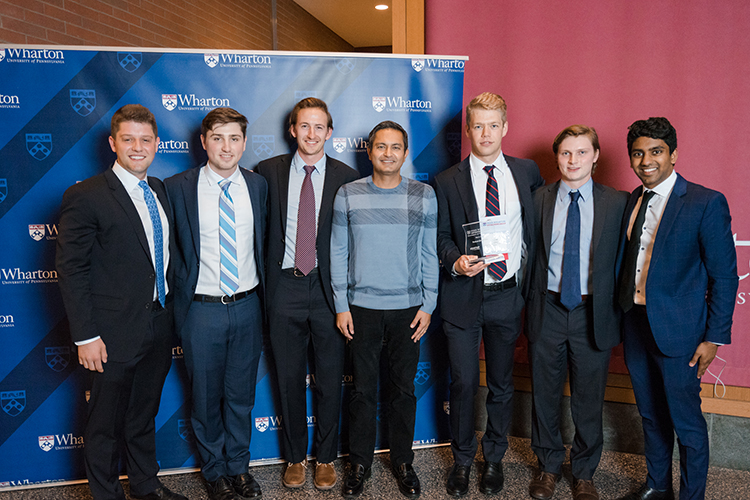


 Paul Wolff Mitchell, an anthropology PhD student, and Michael Vazquez, a philosophy PhD student, both in the School of Arts & Sciences, have been awarded the inaugural Provost’s Graduate Academic Engagement Fellowships at the Netter Center for Community Partnerships for 2019-2021.
 The University of Pennsylvania has released architectural renderings of the design for the transformative Tangen Hall. The new building, made possible through a $25 million gift from the AKO Foundation on the recommendation of Wharton School alumnus Nicolai Tangen and his wife, Katja (