Penn Vet’s Ryan Hospital: New $2.7 Million Richard Lichter Emergency Room

A ribbon-cutting ceremony on April 16 celebrated the opening of Ryan Hospital’s Richard Lichter Emergency Room at the University of Pennsylvania’s School of Veterinary Medicine (Penn Vet). The project was generously funded by Richard Lichter, a member of Penn Vet’s Board of Overseers and co-chair of The Power of Penn Vet campaign. His gift was made in memory of his beloved golden retriever, Cosette.
The Richard Lichter Emergency Room at Ryan Hospital more than doubles the amount of clinical space of the former emergency room, which opened in the early 1980s. The 2,000-square-foot, state-of-the-art expansion includes designated areas for canine and feline patients, including species-specific oxygen cages. The Richard Lichter Emergency Room gives Penn Vet the opportunity to elevate animal care in a significant way; the previous number of patient care areas doubles, increasing from 13 to 27. The facility also includes four additional large dog runs that provide comfort and security to patients who are being treated for the most complex cases.
“The emergency room expansion represents the first phase of a $14 million investment in our commitment to cutting-edge emergency and critical care for our patients and their families,” said Michael Mison, Ryan Hospital’s chief medical officer. “Mr. Lichter has a long history of saving animal lives and supporting the welfare of companion animals throughout the Philadelphia region. On behalf of the faculty, clinical staff, nurses and all of the Penn Vet family, we are incredibly thankful to Richard for his transformational gift.”
The need for life-saving, veterinary emergency services is growing. According to the American Pet Products Association, 86.4 million households had pets in 2018, up from 72.9 million households in 2012. As the number of companion animals grows, so does the need for progressive emergency and critical care.
Constructed 38 years ago, Ryan Hospital was built to accommodate 19,000 animal patients annually, with 6,000 of those cases originating in the emergency service. Today, the hospital now treats more than 36,000 patients each year, with 10,000 of those cases admitted through the emergency service. To accommodate this growing demand, the hospital is undergoing a modernization plan to transform its facility into a novel veterinary health system for the Philadelphia region. Future phases of the multi-phased project include enhancements to Cardiology, Radiology, as well as a state-of-the-art Emergency and Critical Care Center.
“Contributing to Penn Vet’s Ryan Hospital was important since I have witnessed first-hand the role their veterinarians play in saving the lives of animals who come to Ryan in dire circumstances,” said Mr. Lichter. “It was natural for me to want the hospital to have the most modern and state-of-the-art emergency care facility. Through my charitable foundation, I have had the opportunity to provide care, comfort and protection for dogs in their time of maximum need.”
With one of the largest emergency caseloads in the field, Ryan Hospital is home to world-class medical and critical-care specialists, with extensive experience in trauma, shock and other emergency conditions. In 2013, Ryan Hospital was the first university-based hospital designated a Level 1 Facility by the Veterinary Emergency and Critical Care Society (VECCS). The designation reflects the highest level of patient care, based on specialist and technician staffing, emergency capabilities, and diagnostic capability. That same year, the American College of Veterinary Emergency and Critical Care (ACVECC) designated Ryan Hospital a Veterinary Trauma Center, reflecting the comprehensive depth of resources available to small animal patients suffering traumatic injuries.
“We are absolutely committed to helping pets and pet parents, and to building a world-leading, state-of-the-art facility for emergency and critical care,” said Oliver Garden, chair of clinical sciences and advanced medicine at Penn Vet. “We have a bold and innovative vision to expand Ryan Hospital. It is through the wonderful generosity of Mr. Lichter, and our other donors, that we are seeing our dreams come to fruition. These are exceptionally exciting times for Penn Vet!”
Katherine L. Nathanson: Inaugural Pearl Basser Professor for BRCA-Related Research
 A new gift to support the Basser Center for BRCA at the University of Pennsylvania’s Abramson Cancer Center (ACC) established and endowed the Pearl Basser Professorship for BRCA-Related Research. Katherine L. Nathanson, deputy director of the Abramson Cancer Center and director of genetics at the Basser Center, has been appointed the inaugural chair holder. The gift comes from Shari Basser Potter (C’87) and Len Potter. The new chair will further strengthen the research efforts of the Center, helping to quicken the pace of new discoveries for individuals and families with a BRCA mutation.
“The Basser Center has already begun to transform the lives of people who face inherited BRCA-related cancer. The Pearl Basser Professorship for BRCA-Related Research will enable us to continue to ask and answer big, challenging questions,” said Robert H. Vonderheide, director of the Abramson Cancer Center. “We’ll be able to explore new ideas and build on what we already know, to provide our patients with tomorrow’s therapies, today.”
Mr. and Mrs. Potter are longtime champions of the Basser Center and Penn. In 2013, the Potters established and endowed the annual Basser Global Prize, which honors a visionary scientist in the field who has advanced BRCA1/2-related research that has led to improvements in clinical care. They are also generous supporters of undergraduate scholarships at the University, having established the Pearl and Philip Basser Endowed Scholarship.
This gift continues a family legacy of philanthropy inspired, in part, by Mrs. Potter’s mother, the late Pearl Basser, who passed away in 2017, and her husband Philip Basser, who instilled in their children the importance of giving back. In 2012, Mrs. Potter’s sister and brother-in-law, Mindy Gray (C’92) and Jon Gray (C’92 W’92), established the Basser Center for BRCA, named in honor of their sister Faith, who died of BRCA-related ovarian cancer at age 44.
“Len and I are dedicated to the mission of the Basser Center and know that its work to increase awareness and conduct groundbreaking research in hereditary cancer thatwill lead to innovative new approaches to cancer treatment and care,” Mrs. Potter said. “We are thrilled to be able to honor my mother, Pearl, and help the Basser Center provide better options and hope to individuals and families with BRCA mutations. Pearl would be proud knowing that someone of Dr. Nathanson’s exceptional caliber will hold a professorship in her name.”
The Basser Center for BRCA is the first comprehensive center for the research, treatment and prevention of BRCA-related cancers. Led by executive director Susan Domchek, the Center funds innovate research at Penn and around the world. A place where families can turn for education and genetic counseling, the Basser Center is a leader in raising awareness, which is currently the most effective way to save lives, and providing options to those affected by a BRCA mutation. The Basser Center continues to establish a far-reaching network of scientists, geneticists and physicians dedicated to successfully treating BRCA-related cancers, with the goal of preventing them altogether.
“It is truly an honor to be the inaugural Pearl Basser Professor, and to be a part of this family’s incredible legacy of connecting and uniting people in the fight to end hereditary cancers,” Dr. Nathanson said. “Shari and Len’s generosity ensures that Pearl’s legacy will provide hope for generations to come.”
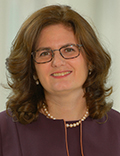 Dr. Nathanson is an eminent scientist, mentor, educator and administrator who has distinguished herself as one of the foremost international leaders in cancer genetics and genomics, recognized for her clinical and research expertise in several cancer types, including hereditary breast and ovarian cancers, testicular germ cell tumors, melanoma and neuroendocrine tumors.
Dr. Nathanson received her BA from Haverford College and MD from the University of Pennsylvania School of Medicine. She completed residencies in both internal medicine and clinical genetics, along with a post-doctoral fellowship in cancer genetics. Her dual training has given her a unique and well-rounded perspective that helps move research from the lab to patients as quickly as possible. Dr. Nathanson has published more than 280 peer-reviewed articles in journals such as Nature, JAMA, New England Journal of Medicine and Cancer Cell. She has an extensive record of service on a national level, serving on committees for multiple organizations, several editorial boards and scientific review committees, most recently as chair of the Cancer Genetics study section for the National Institutes of Health. She has received multiple awards, among which are the William Osler Patient Oriented Research Award and Frohlich Visiting Professorship, and she has been elected to the American Society for Clinical Investigation and the Association of American Physicians.
Mrs. Potter serves as a member of both the Basser Center Leadership Council and the ACC Director’s Leader Council, providing key guidance and support for both groups. Mr. Potter is a member of the ACC Innovation Advisory Board, a newly formed group created to engage business leaders in the region with the breakthrough science taking place at the cancer center.
This appointment and professorship establishment will be celebrated by Penn Medicine in the fall.
Gary Althouse: Penn Vet’s Associate Dean of Sustainable Agriculture and Veterinary Practices
 The University of Pennsylvania’s School of Veterinary Medicine (Penn Vet) announced the appointment of Gary Althouse to associate dean of sustainable agricultural and veterinary practices. The appointment was effective April 1.
In this newly created role, Dr. Althouse will leverage Penn Vet’s and the University’s distinctive resources to address the complex interplay between agriculture and the environment. He will seek interdisciplinary approaches to improve agricultural productivity, reduce environmental impact of livestock and poultry production, and enhance the broader practice of veterinary medicine. Dr. Althouse will also serve as a leading advocate for agriculture within Pennsylvania.
“The vision of this new leadership at Penn Vet is to address the major challenge of true agricultural sustainability in the 21st century. It is our responsibility as an institution to address the increasing demand for protein among a burgeoning human population, and in parallel, to foster farms of the future that are not only highly productive and profitable, but that embrace best practices in animal health and welfare,” said Andrew Hoffman, Gilbert S. Kahn Dean of Veterinary Medicine. “At the same time, we must evaluate viable solutions and approaches to agricultural production that generate little or no ecological impact. I’m delighted that Dr. Althouse will play a key part in elevating veterinary medicine’s role in developing a sustainable future for both small and large scale farming.”
Dr. Althouse served as chairman of the department of clinical studies at Penn Vet’s New Bolton Center from 2007 to 2017. In 2011, he was named to the Marion Dilley and David George Jones Endowed Chair in Animal Reproduction. A professor of reproduction and swine herd health, his primary areas of research include comparative theriogenology; swine production medicine; andrology; and spermatology. He specializes in the diagnosis and treatment of disorders which have an effect on individual and herd reproductive performance. Dr. Althouse is also the founder and director of the Reference Andrology Laboratory, which provides critical and quality control semen analysis services for swine, cattle and equine. A diplomate in the American College of Theriogenologists, Dr. Althouse earned his PhD and veterinary degree from Iowa State University.
“As Pennsylvania’s only veterinary school, Penn Vet does much more than produce future veterinarians,” said Dr. Althouse. “We serve as a key partner in supporting the agriculture sector through our many clinical, diagnostic and educational outreach services, and with timely research that addresses critical challenges facing the industry. It is a tremendous honor to serve both Penn Vet and our external partners in this new role of associate dean.”
PPSA Presents: Panel Discussion on Diversity Issues at Penn
Earlier this year, PPSA surveyed its membership to identify questions and concerns about diversity and inclusion, as experienced by staff at Penn. On Thursday, May 2, noon-1 p.m. PPSA is hosting a panel discussion to address some themes identified in this survey. Panelists will be Joann Mitchell, Senior Vice President for Institutional Affairs and Chief Diversity Officer and Lisa Lewis, Assistant Dean for Diversity and Inclusivity, School of Nursing.
The discussion will take place at Cafe 58, Irvine Auditorium (light lunch will be served). Register: https://ppsa.upenn.edu/events/ppsa-presents-panel-discussion-on-diversity-issues-at-penn/

 Mr. Lin is a double major in political science and health and societies in SAS and is pursuing minors in Asian American studies, education policy and environmental studies. Mr. Lin is also in the BA/Master of Public Health program. He plans to pursue a law degree, focusing on health law, and a master’s degree in education policy, with the hope of creating a career addressing disparities in children’s health and education in the United States. The son of immigrant parents from China, he is focused on health and education policy, specifically equity, access and quality for low-income immigrant communities. He is a fellow on the board of the student organization Penn First and the chair of the Theatre Arts Council. In 2017, he was elected to a four-year term as a judge of elections on his precinct’s Election Board in Philadelphia, and in 2018 to a four-year term as committeeperson on the 27th Ward Democratic Executive Committee. Mr. Lin also works as a management and program analyst for the Office of the Chief Counsel at the Federal Aviation Administration.
 Mr. Ortiz-Siberón is majoring in sociology in SAS. He is a Mellon Mays Fellow, and his current research aims to create a socioeconomic profile of Puerto Ricans on the US mainland, with a focus on poverty, homelessness and social mobility. With an interest in increasing access to education and empowering low-income Puerto Rican communities, Mr. Ortiz-Siberón intends to pursue a PhD in sociology and social policy with the goal of becoming a professor and public servant. Mr. Ortiz-Siberón is a member of the Puerto Rican Institute of Music in Philadelphia and has tutored and mentored low-income Latinx students. He has been an active participant in local relief efforts for those affected by hurricanes Irma and María in Puerto Rico. He was a loan director for the Bentley University Microfinance Group in Waltham, Massachusetts, working to increase access to financing for small-business owners.
 Maureen G. Maguire, the Carolyn F. Jones Professor of Ophthalmology in the Perelman School of Medicine, is the recipient of this year’s Lawrence J. Singerman Medal, awarded by the Macula Society. This award is given annually to recognize outstanding Macula Society members for their contributions to the advancement of science through retinal clinical trials. Dr. Maguire is the principal investigator of the coordinating center for several multi-site clinical trials for the prevention and treatment of age-related macular degeneration.
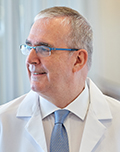 The Division of Chemical Toxicology of the American Chemical Society (ACS) has given Trevor Penning, the Thelma Brown and Henry Charles Molinoff Professor of Pharmacology and the director of the Center of Excellence in Environmental Toxicology, the 2019 Founders’ Award. Dr. Penning will be honored at the ACS annual meeting in San Diego in August with a symposium in his honor.
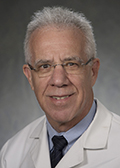 The American Society of Clinical Oncology (ASCO) and ASCO’s Conquer Cancer Foundation have announced that two of their top prizes will honor two members of the Abramson Cancer Center at the University of Pennsylvania. Lynn M. Schuchter, chief of hematology-oncology, will receive the Hologic, Inc. Endowed Women Who Conquer Cancer Mentorship Award, and Lawrence N. Shulman, professor of medicine, deputy director for clinical services and director of the Center for Global Cancer Medicine, will receive the Humanitarian Award.
 Penn junior Christina Steele has been awarded a Beinecke Scholarship to pursue her graduate education. She is the 12th Beinecke Scholar from Penn since the award was first given in 1975.
 The Foundation for Advancement of Research in Financial Economics (FARFE) has awarded its sixth $100,000 Stephen A. Ross Prize in Financial Economics to the paper “Risks for the Long Run: A Potential Resolution of Asset Pricing Puzzles,” written by Amir Yaron, professor of finance at the Wharton School of the University of Pennsylvania, and Ravi Bansal, J.B. Fuqua Professor of Finance and Economics at Duke University. The paper was published in the Journal of Finance in 2004. The paper and subsequent literature show the key role of changes in long-run consumption growth rates and volatility in determining asset prices.
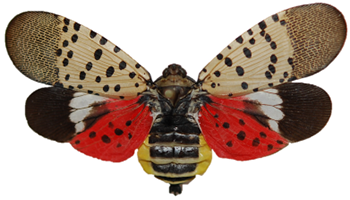 On Sunday, April 28, 10:30 and 11:30 a.m., Morris Arboretum hosts a program of music and dance to raise awareness of an invasive pest that is a threat to trees. The Relâche Ensemble, dedicated to the creation and performance of new music in Philadelphia, in partnership with Almanac Dance Circus Theatre, present a multimedia program of music and dance celebrating the natural world and raising awareness about environmental issues impacting southeastern Pennsylvania.