Kutan Ayata, Thom Mayne and Paul Preissner: P/A Awards
Three PennDesign faculty members have been selected for 2019 Progressive Architecture (P/A) Awards from the American Institute of Architects.
Senior Lecturer Kutan Ayata received an award for the DL 1310 Apartments in Mexico City. A collaboration between his firm Young & Ayata and Michan Architecture, it was one of only two award recipients. The DL 1310 Apartments were described by jury critic J. Frano Violich as, “provid[ing] a sense of thickness and depth that is very skillful and super effective.” The design is the product of extensive research into the technical capabilities of and local traditions in concrete, recalling the geometries of Félix Candela and Miguel Fisac to solve challenges.
Cret Chair Professor of Practice Thom Mayne’s firm Morphosis received an honorable mention for the Orange County Museum of Art in Costa Mesa, California.
Lecturer Paul Preissner received an honorable mention for Ring of Hope in Chicago. It was submitted by his firm Paul Preissner Architects.
The awards recognize unbuilt projects demonstrating overall design excellence and innovation. Their work was published in the February issue of ARCHITECT. They will be honored at a celebration in New York in February. The jury selected ten projects from nearly 200 submissions.
M. Grace Calhoun: NCAA Division I Council Chair, Board of Directors
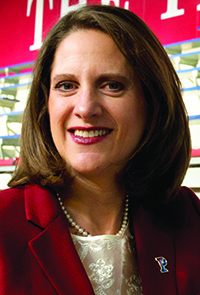 M. Grace Calhoun, director of athletics and recreation at Penn, has been named the incoming chair of the NCAA Division I Council, a high-level group responsible for the day-to-day decision-making for Division I. Dr. Calhoun will also represent the Council with a seat on the NCAA Division I Board of Directors, a group comprised predominantly of college presidents with ultimate decision-making responsibility for Division I.
The Council is comprised of one representative from each of the 32 Division I conferences, plus several at-large representatives, and is the chief legislative body of the Division. She is the first chair from a non-Power Five university, following Jim Phillips (Northwestern) and Blake James (Miami), and will begin her two-year appointment following the Council’s June meeting.
Dr. Calhoun was recently appointed chair of the NCAA’s Strategic Vision and Planning Committee. She has previously served as chair of the NCAA Division I Awards, Benefits and Financial Aid Cabinet; chair of the NCAA Research Committee; and vice chair of the NCAA Olympic Sports Liaison Committee. She has served as a member of the NCAA Committee on Academic Performance, the NCAA Competitive Safeguards and Medical Aspects of Sport Committee, and the NCAA Division I Track and Field Committee. Dr. Calhoun also served on the board of Women Leaders in College Sports (formerly NACWAA).
Cyberwar: R.R. Hawkins Award and Award of Excellence
Cyberwar: How Russian Hackers and Trolls Helped Elect a President, authored by Kathleen Hall Jamieson, director of the Annenberg Public Policy Center and the Elizabeth Ware Packard Professor of Communication at Penn’s Annenberg School for Communication, was recently awarded the R.R. Hawkins Award, making the book the “ultimate winner” of the 2019 PROSE Awards competition held by the Association of American Publishers (AAP).
Cyberwar also won the 2019 PROSE Award of Excellence in the Social Sciences, one of four books named excellence award winners. The excellence award winners were chosen from 48 subject category winners, and those were selected from 165 finalists. The AAP previously named Cyberwar a subject category winner in Government, Policy and Politics.
The PROSE Awards honor scholarly works and recognize publishers “who produce books, journals, and digital products of extraordinary merit that make a significant contribution to a field of study in the humanities, biological and physical sciences, reference and social sciences.”
Mitchell Lazar: 2019 Rolf Luft Award
 Mitchell Lazar, the Willard and Rhoda Ware Professor in Diabetes and Metabolic Diseases in the department of medicine at Penn’s Perelman School of Medicine and founding director of the Penn Institute for Diabetes, Obesity and Metabolism (IDOM), will receive the 2019 Rolf Luft Award from the Karolinska Institute. This global distinction recognizes Dr. Lazar’s outstanding scientific contribution in endocrinology and diabetes. Dr. Lazar will present the Luft Prize Lecture, entitled, “Nuclear Receptors, Circadian Rhythms, and Metabolism,” on May 8 at the Nobel Forum in Stockholm, Sweden.
Dr. Lazar is receiving the award for his groundbreaking work in transcriptional regulation of metabolism, including discoveries that revealed how the environment interacts with the genome to regulate circadian rhythms and metabolism and how these mechanisms impact obesity and diabetes.
His research, focused mostly on gene and metabolic regulation and mechanisms of hormone action, has led to discoveries that span molecular biology, physiology, endocrinology and metabolism. Dr. Lazar’s work has led to discoveries of the hormone resistin, which plays an integral role in insulin resistance, and the role of the nuclear receptor PPARg in the development and function of fat cells, including its link to insulin resistance and type 2 diabetes. He also discovered the circadian nuclear receptor Rev-erba and identified mechanisms by which it represses gene transcription as a core circadian clock component and controller of metabolic rhythms.
Kate Kinney Grossman: SDP Partnership Grant
 Kate Kinney Grossman, director of the Urban Teaching Apprenticeship Program (UTAP) Collaboratory for Teacher Education in the Teaching, Learning and Leadership Division of Penn GSE, has been granted $85,000 as a partner of the School District of Philadelphia (SDP) Teacher Residency Program. Through this partnership, UTAP collaborates with SDP schools to prepare high school or middle school STEM teachers who commit to teaching in the SDP for a minimum of three years following program completion. The grant will allow UTAP to provide mentorship to each resident-apprentice and additional scholarships.
Ms. Kinney Grossman is an expert in teacher training and professional development. She is currently building new models for pre-service teacher preparation in partnership with K-12 schools. A former high school teacher, Ms. Kinney Grossman can discuss the challenges new teachers face, what it means to teach for social justice, practices for middle and high school content teachers that support language diverse students and trauma informed approaches to education. As part of the Penn Futures Project, Ms. Kinney Grossman seeks new ways for teachers, counselors, social workers and health workers to partner to better support students and meet their needs.
Christopher Murray: NAE Membership
 Christopher Murray, the Richard Perry University Professor and professor in the department of materials science and engineering, has been elected to the National Academy of Engineering (NAE) “for invention and development of solvothermal synthesis of monodisperse nanocrystal quantum dots for displays, photovoltaics and memory.”
Election to the NAE is among the highest professional distinctions accorded an engineer. Academy membership honors those who have made outstanding contributions to “engineering research, practice or education, including, where appropriate, significant contributions to the engineering literature,” and to the “pioneering of new and developing fields of technology, making major advancements in traditional fields of engineering, or developing/implementing innovative approaches to engineering education.”
As a Penn Integrates Knowledge Professor with appointments in Penn Arts & Sciences’ department of chemistry and Penn Engineering’s materials science and engineering, Dr. Murray bridges boundaries between the two disciplines.
Mecky Pohlschröder: AAM Fellow
 Mechthild (Mecky) Pohlschröder, professor and undergraduate chair of biology in the School of Arts and Sciences at Penn, has been named a 2019 Fellow of the American Academy of Microbiology. The AAM is an honorific leadership group within the American Society of Microbiology, one of the world’s oldest and largest life sciences professional organizations. Dr. Pohlschröder joins 108 colleagues from around the world in this year’s class of AAM Fellows.
The peer-reviewed election process considers the candidates’ scientific achievements and original contributions to the field of microbiology. Dr. Pohlschröder’s research focuses on the biosynthesis and function of prokaryotic cell envelopes and surface structures, especially archaeal cell surface biology.
The mission of the Society is to “advance microbiological sciences through the pursuit of scientific knowledge and dissemination of the results of fundamental and applied research.” This goal is achieved through the help of the AAM fellows who give colloquia and provide oversight of the Society’s awards programs.
Abby Reisman: Spencer Foundation Grant
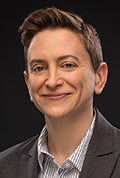 Abby Reisman, assistant professor in the Teaching, Learning and Leadership Division of Penn GSE, has received a $49,942 grant from the Spencer Foundation for the project “Using Online Professional Development Modules to Support Practice-Based Coaching for Document-Based History Instruction: A Design Experiment.” The grant will support a two-year design-based study in which Dr. Reisman works with a team of instructional leaders to first design online professional development modules that target instructional practices in history and then embed the modules in a coaching intervention. The project envisions the modules, replete with articulated specifications of practice and video representations of those practices, as providing a common vocabulary upon which to build a shared vision of good instruction.
Dr. Reisman studies how to engage struggling adolescent readers in text-based historical inquiry. Her interests in this area include curriculum design, teacher education, pedagogy and high-leverage instructional practices. Dr. Reisman is studying how to support middle-school teachers as they facilitate discussions around historical texts. Through her involvement in the Core Practice Consortium, she is also engaged in a yearlong comparative study examining pre-
service social studies methods courses that
emphasize practice-based teacher preparation.
Peter Quinn: Annual Lectureship Fund
 Peter D. Quinn, senior vice president for CPUP, UPHS, and vice dean for professional services at the Perelman School of Medicine, was recently honored with the creation of the Peter D. Quinn Lectureship Fund. The fund will be a catalyst to enhance all levels of training within the department of oral and maxillofacial surgery with a special emphasis on building on its strengths in the areas of digital technology, custom prostheses and regenerative medicine therapies. Proceeds from this Fund will be used to bring expert speakers to the department for an annual lecture in honor of Dr. Quinn.
Prior to his current appointments, Dr. Quinn served as chair of Oral and Maxillofacial Surgery at the Hospital of the University of Pennsylvania, and at Penn’s School of Dental Medicine, for 22 years. He is the Schoenleber endowed Professor of Oral and Maxillofacial Surgery and is an internationally recognized expert in the field of temporomandibular joint surgery and surgical management of high-flow maxillofacial arterio-venous malformations. He pioneered the development of the only FDA-approved stock temporomandibular joint implant that is now the most widely used jaw joint replacement device both within the United States and internationally.
MIC: Ecosystem Collaboration Grant
The Media, Inequality and Change (MIC) Center at Penn’s Annenberg School for Communication and Rutgers’ School of Communication and Information has received a Philadelphia News Ecosystem Collaboration Grant from the Lenfest Institute for Journalism. Penn’s co-director of the MIC is Victor Pickard, an associate professor of communication at Annenberg.
The Institute announced six projects for its inaugural Philadelphia Ecosystem Collaboration Grants. The grant program collaboration is designed to encourage partnership on a broad array of journalism projects serving the public interest of the diverse communities of the greater Philadelphia region.
Together with its partner groups, Media Mobilizing Project and The Philadelphia Inquirer Opinion section, MIC will use its grant to create the Community Journalist Exchange, a series of dialogues between a diverse group of Philadelphia’s leading journalists and Philadelphia’s leading public advocates from across the political spectrum, in the run-up to the municipal elections on May 21.
Given that local elections are a moment when people from across the city engage with the most pressing local issues, MIC and its partners will bring together community activists with journalists who cover these beats for Philadelphia’s media. Issues they hope to explore include public education, housing, poverty/work, criminal justice, climate change and environmental justice, and health and harm reduction.
Ishir Seth, Tanvi Kapur, Beatriz Go, WenTao Zhang: Y-Prize
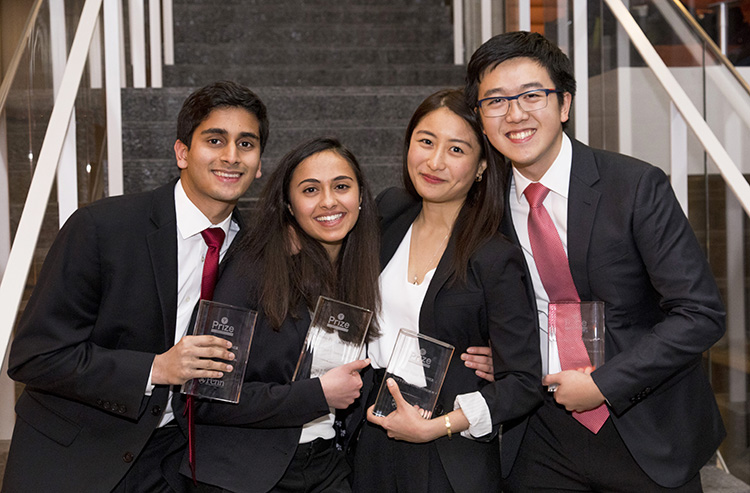 Ishir Seth (C’20,W’20), Tanvi Kapur (W’19), Beatriz Go (W’19) and WenTao Zhang (C’19,W’19) make up the winning team, Nosoco Technologies, of this year’s Y-Prize. They will receive $10,000 for their plans for a new, improved catheter designed to stop infections at the source. They will also be entered into the semi-final round of the Penn Startup Challenge. The idea was inspired by Mr. Zhang’s grandfather, who died from complications due to a catheter-related infection.
Their plan is to incorporate micro-size crevices into the catheter wall to prevent or disrupt the formation of biofilms, a super-thin slime of bacteria that clings to a surface. Many biofilms are harmless, but when “bad” bacteria band together, it can cause infection. For hospital patients who need a catheter, such infections are a serious problem that costs insurers and hospitals $3.5 billion a year in the United States alone.
The group has worked with researchers at the Perelman School of Medicine and CHOP on their idea, and now with the Y-Prize money, Nosoco will move toward testing the viability of the product. In vivo testing and clinical trials would come next.
The Y-Prize is a collaboration between Penn Engineering, Wharton’s William and Phyllis Mack Institute for Innovation Management, Penn Wharton Entrepreneurship and the Penn Center for Innovation. Applicants submit a video pitch explaining their idea, why it’s needed and how they plan to make it happen.

 The Wharton School of the University of Pennsylvania announced a $10 million gift from 1986 undergraduate alumnus Josh Harris and his wife Marjorie Harris to establish the Joshua J. Harris Alternative Investments Program. This innovative new program will expand co-curricular opportunities for Wharton students in the field and bring together alumni and industry experts through events and dynamic programming. Mr. Harris is a co-founder, senior managing director and director of Apollo Global Management, LLC, an alternative investment manager serving institutional investors worldwide.
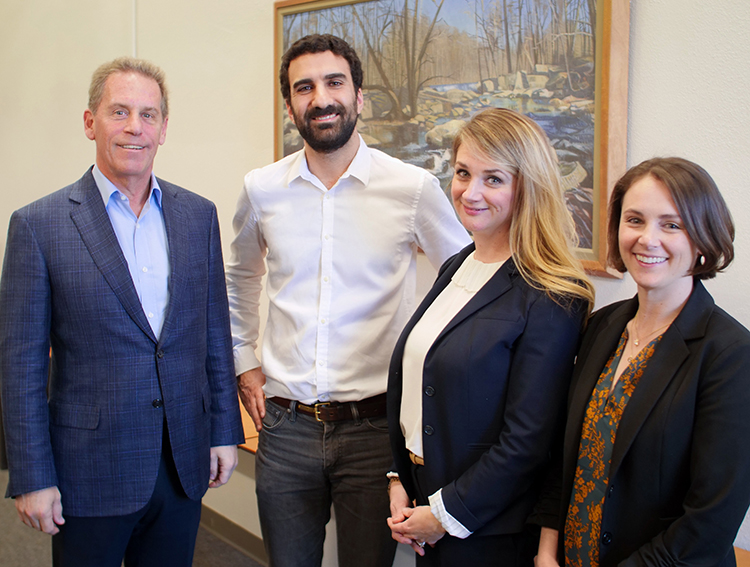 Richard A. Axilrod (WG’85) and Nancy M. Axilrod, Penn parents, have made a $2 million gift to establish the Axilrod Term Fund in Health and Inequality. The fund has enabled Penn Arts and Sciences to recruit three new faculty members who will help establish Penn as a worldwide center for the analysis of inequality and health, with a specific focus on the distribution of health outcomes and how this distribution is shaped by social policies.
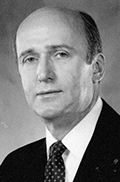 Donald (“Don”) Newton Langenberg, former physics professor, LRSM director, vice provost and Penn trustee, died January 25 of an aortic aneurysm at his Dickeyville, Maryland, home. He was 86.

 At Morris Arboretum on Saturdays, March 2 & 9 at 2 p.m., knowledgeable guides will lead visitors on tours throughout the garden, searching for brilliant witchhazels. With more than 70 varieties growing in the garden, the Arboretum’s witchhazel collection is unparalleled in the area. These colorful and fragrant flowers are the perfect eye and nose candy for a winter day of outdoor fun.