Andrew Hoffman: New Dean of Penn's School of Veterinary Medicine
 Andrew Hoffman will be the next Gilbert S. Kahn Dean at Penn Veterinary Medicine, effective August 1, 2018. The announcement was made by Penn President Amy Gutmann and Provost Wendell Pritchett. The selection follows a global search. Dr. Hoffman, who has served as director of the Regenerative Medicine Laboratory and Professor of Large Animal Internal Medicine at the Tufts University Cummings School of Veterinary Medicine since 2012, is an acclaimed researcher, clinician, teacher and mentor. His career exemplifies the enormous potential of an integrated One Health approach to biomedicine: uniting clinicians and scientists from multiple professions and perspectives to increase knowledge and drive improvements in global public health, human and animal well-being, and environmental sustainability and resilience.
At Tufts, Dr. Hoffman contributed to all areas of veterinary research, teaching and clinical care. His leadership of regenerative medicine and stem cell research programs resulted in important contributions to both animal and human health, demonstrating the profoundly positive impact of veterinary research. He helped build and lead the first outpatient pulmonary function testing laboratory for equine and canine patients in the world, which provided world-class care for animal patients while also making important contributions in developing animal models of human pulmonary disease. The ongoing revolution in the treatment of severe human emphysema—increasing length and quality of life for patients and decreasing the morbidity and mortality of lung volume reduction treatment—traces in part to the work of Dr. Hoffman and his colleagues. Dr. Hoffman has regularly mentored faculty with an interest in clinical translational research and helped colleagues fully appreciate the career options available to them thanks to the versatile skills provided by a veterinary education.
From 2005 to 2012, Dr. Hoffman served as director of the Stem Cell Laboratory at Tufts. He has led the Tufts Lung Function Laboratory for more than 20 years and also served for five years as director of the Tufts Equine Sports Medicine Program. He has significant clinical experience in large animal (dairy-equine) practice and caring for and investigating animals as diverse as dogs, cats, horses, sheep, camelids, rodents, dolphins and wildlife. He has led and served on numerous school- and university-wide committees, including chairing the Cummings School’s Admissions Committee and the Tufts Retiree Health Benefits Committee of the Faculty Senate.
A Diplomate of the American College of Veterinary Internal Medicine, past president of the Veterinary Comparative Research Society and a member of the International Society of Stem Cell Research, Dr. Hoffman has received continuous funding from the NIH for nearly 20 years. He has authored more than 100 publications, including many in leading scientific and clinical journals. He earned his undergraduate degree with honors in biology from the University of Delaware, received his veterinary degree from Cornell and holds a Doctor of Veterinary Science from the University of Guelph (Canada).
Dr. Hoffman will be the successor to Joan Hendricks, who is stepping down after serving as dean since 2006. She is extending her term one month–until July 31–to help ensure a smooth decanal transition. “We profoundly appreciate Joan’s superb service to Penn Vet and to Penn. Joan was one of the first women to become dean of a veterinary school in the U.S. and has served on the Penn faculty for more than 30 years, where she garnered international acclaim for her work,” said President Gutmann.
Michael Jones-Correa: President's Distinguished Professor
 Michael Jones-Correa has been named the President’s Distinguished Professor of Political Science. Dr. Jones-Correa came to Penn in 2016 from Cornell University, where he was Robert J. Katz Chair of the Department of Government. As a political scientist studying Latino politics and immigration to the United States, his research is focused on the political integration of new immigrant communities and their relations with the U.S.-born. He is director of Penn’s new Center for the Study of Ethnicity, Race and Immigration.
Dr. Jones-Correa is the author or editor of five widely-acclaimed books, among them Between Two Nations: The Political Predicament of Latinos in New York City and Governing American Cities: Inter-Ethnic Coalitions, Competition, and Conflict, in addition to many other publications. He is a lead researcher on the 2006 Latino National Survey, the 2016 and 2012 Latino Immigrant National Election Study, and the ongoing Philadelphia-Atlanta Project. His research has received support from the Carnegie, Ford, MacArthur, Robert Wood Johnson, Russell Sage and National Science foundations.
The chair, which is designated to support a faculty member in Penn Arts and Sciences whose teaching and research is interdisciplinary in nature, was established anonymously in 2016.
Penn's 2018-2019 Financial Aid Budget and Tuition
The University of Pennsylvania Board of Trustees approved a record $237 million financial aid budget, an increase of 5.25 percent and the largest financial aid budget in Penn’s history, along with a 3.8 percent tuition increase, the lowest in nine years.
Since Amy Gutmann became Penn’s president in 2004, raising the financial aid budget has been a top priority, with the University awarding more than $2 billion in undergraduate aid to nearly 18,000 students.
“My college experience forever changed my life and as the first in my family to attend college I understand the tremendous value and transformative impact that affordable access to high-quality higher education can have,” said President Gutmann. “It is the founding principle of Penn’s grant-based financial aid program for undergraduates established ten years ago.
“Today Penn is the largest U.S. university with need-blind admission and grant-based financial aid for undergraduates. One in eight Penn students from the Class of 2021 represent the first generation in their family to attend college, and students who are first-gen or high-financial-need are now more than a quarter of the class. We are committed to doing all we can to make Penn’s Ivy League education more accessible and affordable to students with the greatest promise from all backgrounds,” she said.
Penn bridges the gap between the cost of attendance and a family’s financial need by providing its students a financial aid package based on grants and work-study funding. These grants do not require repayment and are comprised of Penn’s own funds, endowments, federal and state grants, and work-study funding. This program is designed to ensure that a family’s financial circumstance does not prevent qualified students from attending. Currently, 46 percent of Penn’s undergraduate students receive grant-based financial aid packages, with an average grant of $47,275 and $50,348 when including work-study.
To maintain Penn’s world-class academic programs, campus and student services, undergraduate student charges for 2018-2019 will increase by 3.8 percent and include $49,220 for tuition, $6,364 for fees, $10,200 for housing and $5,416 for dining.
“This announcement reaffirms Penn’s commitment to educational accessibility and affordability through our need-blind admission policy and grant-based financial aid program,” said MaryFrances McCourt, treasurer and vice president for finance “Penn’s financial aid program treats each student as an individual, taking into account personal and family finances, as well as any special circumstances. Penn continues to meet a student’s demonstrated financial need each year, increasing aid to reflect any increasing costs to the eligible student.”
Since establishing a grant-based financial aid program ten years ago, Penn has increased its financial aid budget by 134 percent, averaging an eight percent growth annually. Students whose combined family income and assets are less than $65,500 do not pay tuition, room or board because Penn’s combination of grants and work-study funding covers those costs.
Penn’s grant-based financial aid program is aligned with the inclusion goals outlined in the Penn Compact 2020 Presidential Initiatives, which include a comprehensive effort to raise additional funding for the endowment to support undergraduate financial aid as well as graduate and professional student aid.
Barbara and Edward Netter Center for Community Partnerships: Faculty Awards and Grants
Netter Center Faculty-Community Partnership Award: April 12
We are pleased to announce the Netter Center Faculty-Community Partnership Award. The annual award recognizes Faculty-Community Partnership Projects. One award of $2,500 is given to a faculty member and another $2,500 is given to the community partner who has worked with the faculty member to develop and advance an existing partnership.
The purpose is to develop or enhance work with an existing community partner. Junior and senior faculty along with senior lecturers and associated faculty from any of Penn’s 12 schools are eligible for nomination. Please see below for the complete description and process of nomination. If you have any questions or concerns regarding this award, please direct them to Tia Yang, ABCS coordinator, at tiayang@sas.upenn.edu
Criteria for Selection
(1) Must be a faculty member whose work is affiliated with the Netter Center for Community Partnerships i.e., engaged with Academically Based Community Service (ABCS), Problem Solving Learning (PSL) or Participatory Action Research (PAR) style pedagogy and/or research.
(2) Can be assistant, associate or full professor, senior lecturer or associated faculty.
(3) Must demonstrate record of sustainable engagement.
Process of Nomination
(1) Nominators should submit a completed packet (see https://www.nettercenter.upenn.edu/about-center/advisory-boards/faculty-advisory-board/netter-center-faculty-community-partnership) by April 12 of the given academic year to the ABCS coordinator, who will submit applications to the faculty awards committee.
(2) The faculty committee will submit their recommendations by April 20 to Netter Center Director Ira Harkavy, who will make the final selection by April 27.
—Dennis DeTurck, Robert A. Fox; Leadership Professor; Professor of Mathematics, SAS; Faculty Fellow of Riepe College House; Netter Center Faculty Advisory Board Co-Chair
—John Gearhart, James W. Effron University Professor and Emeritus Director, Institute for Regenerative Medicine; Professor of Cell and Developmental Biology and Animal Biology, PSOM and School of Veterinary Medicine; Netter Center Faculty Advisory Board Co-Chair
—John Jackson Jr., Dean of the School of Social Policy and Practice; Richard Perry University Professor of Communication, Africana Studies, and Anthropology; Netter Center Faculty Advisory Board Co-Chair
—Terri H. Lipman, Assistant Dean for Community Engagement; Miriam Stirl Endowed Term Professor of Nutrition; Professor of Nursing of Children, SON; Netter Center Faculty Advisory Board Co-Chair
—Loretta Flanagan-Cato, Associate Professor of Psychology, SAS; Co-director, Biological Basis of Behavior Program; Netter Center Faculty Fellow
—Carol Muller, Professor of Music, SAS; Faculty Director, Urban Arts, Culture, Humanities, and Community Engagement; Chair of the Netter Center Faculty Community Partnership Award Nomination Process
—Ira Harkavy, Associate Vice President; Founding Director, Barbara and Edward Netter Center for Community Partnerships
ABCS Course Development Grants: April 12
The Barbara and Edward Netter Center for Community Partnerships announces course development grants for Fall 2018 and Spring 2019 to promote Academically Based Community Service (ABCS) courses that integrate research, teaching, learning and service. More than 150 courses from a wide range of disciplines and Penn schools have linked Penn undergraduate and graduate students to work in the community. The grants support University faculty to develop new courses or adapt existing courses that combine research with school and community projects.
To see a list of the ABCS courses, visit https://www.nettercenter.upenn.edu/what-we-do/courses
Grants will be for no more than $5,000 per project. These funds can be used to provide graduate and undergraduate support, course support and/or summer salary ($5,000 is inclusive of employee benefits if taken as salary).
Funded by the Netter Center, course development grants facilitate faculty in developing new and substantially restructured undergraduate and graduate level courses that engage students in real-world problem-solving projects in conjunction with schools and community organizations located in West Philadelphia.
The following criteria will be used to evaluate proposals:
1. Academic excellence
2. Integration of research, teaching and service
3. Partnership with schools, community groups, service agencies, etc.
4. Focus on Philadelphia, especially West Philadelphia
5. Evidence as to how the course activity will involve participation or interaction with the community as well as contribute to improving the community
6. Evidence as to how the course activity will engage undergraduate and/or graduate students in real-world problem-solving research opportunities
7. Potential for sustainability
Please format proposals as follows:
1. Cover page
1.1 Name, title, department, school, mailing address
1.2 Title of the proposal
1.3 Total amount of funding you would like
1.4 100-word abstract of the proposal (include a description of how the course will involve interaction with the community and benefit the community)
2. A one-page biographical sketch of applicant
3. A two- to-four-page mini-proposal
4. Budget detailing how you intend to use the requested funding
Proposals for Fall 2018 and Spring 2019 courses should be submitted to the Netter Center for Community Partnerships by April 12.
Please contact Tia Yang, ABCS coordinator, at tiayang@sas.upenn.edu for more information or to submit proposals.
—Dennis DeTurck, Robert A. Fox Leadership Professor; Professor of Mathematics, SAS; Faculty Fellow of Riepe College House; Netter Center Faculty Advisory Board Co-Chair
—John Gearhart, James W. Effron University Professor and Emeritus Director, Institute for Regenerative Medicine; Professor of Cell and Developmental Biology and Animal Biology, PSOM and School of Veterinary Medicine; Netter Center Faculty Advisory Board Co-Chair
—John Jackson Jr., Dean of the School of Social Policy and Practice; Richard Perry University Professor of Communication, Africana Studies, and Anthropology; Netter Center Faculty Advisory Board Co-Chair
—Terri H. Lipman, Assistant Dean for Community Engagement; Miriam Stirl Endowed Term Professor of Nutrition; Professor of Nursing of Children, SON; Netter Center Faculty Advisory Board Co-Chair
—Loretta Flanagan-Cato, Associate Professor of Psychology, SAS; Co-director, Biological Basis of Behavior Program; Netter Center Faculty Fellow
—Ira Harkavy, Associate Vice President; Founding Director, Barbara and Edward Netter Center for Community Partnerships
 Keith L. Sachs, W’67, an emeritus member and former chair of PennDesign’s Board of Overseers and Penn benefactor, died March 5. He was 72.
 Dr. Luis Schut, emeritus professor of pediatrics and neurosurgery at the University of Pennsylvania’s School of Medicine, died in Laguna Woods, California, on January 31 from chronic ischemic heart disease. He was 85.
 Eduardo Azevedo, Wharton assistant professor of business economics and public policy, is one of the 126 recipients of a 2018 Sloan Research Fellowship from The Alfred P. Sloan Foundation.
 Two faculty from Penn’s School of Nursing (SON), Patricia D’Antonio, the Carol E. Ware Professor in Mental Health Nursing; and Connie M. Ulrich, the Lillian S. Brunner Chair in Medical and Surgical Nursing, will both be honored by Sigma Theta Tau International (STTI) for their contributions to the nursing profession.
 Dr. Ulrich is a professor of nursing at Penn Nursing and a professor of bioethics at Penn’s Perelman School of Medicine. She was the first ever nurse accepted into the postdoctoral training program in the National Institutes of Health’s department of bioethics, and was the first nurse bioethicist at Penn.
 Paul W. Meyer, the F. Otto Haas Executive Director of Morris Arboretum, is the 2018 recipient of the Scott Medal and Award. The Scott Medal and Award, established in 1929, recognizes individuals who have made outstanding national contributions to the science and art of gardening. The 2018 award of the Scott Medal, together with $14,000, is given as an acknowledgement of “…achievement of great merit, recognition of work in creating and developing a wider interest in gardening.”
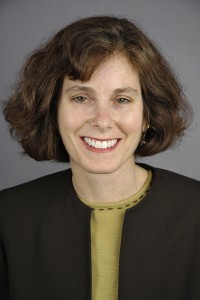 Janine Remillard, associate professor in the Graduate School of Education, and her collaborators from Sweden, Flanders (Belgium), the U.S. and Finland, received an award of $970,000 by the Swedish Research Council (led by Malardalen University) for the project Teachers’ Use of Mathematics Curriculum Resources in the 21st Century: A Cross-Cultural Project. The study examines elementary teachers’ use of mathematics curriculum resources from a cross-cultural, 21st-century perspective. Using interviews, a survey, and a teacher log, the study will gather and analyze data on elementary mathematics teachers’ interpretations and use of print and digital curriculum resources in Sweden, Flanders (Belgium), the United States and Finland. The Penn portion of the project is $415,502.
 Jamie Shuda, director of life science outreach for the Institute for Regenerative Medicine (IRM) at Penn, has been named co-recipient of the 2018 Elizabeth W. Jones Award for Excellence by the Genetics Society of America (GSA) for “extraordinary contributions to genetics education.” The prize will be presented to Dr. Shuda and her co-recipient, Dr. Steven Farber, a principal investigator at the Carnegie Institution for Science in Baltimore, at the 59th Annual Drosophila Research Conference (a GSA-affiliated meeting), which will take place next month in Philadelphia.
