News

Penn Social Policy & Practice’s Voices for Votes: Real Talk on the Key Social Justice Issues

On Saturday, September 19 from 11 a.m. to 2 p.m., the University of Pennsylvania School of Social Policy & Practice (SP2) will host Voices for Votes: Real Talk on the Key Social Justice Issues for the 2016 Presidential Election.

The event, which will be moderated by 900AM-WURD’s president and general manager Sara Lomax-Reese, will be a nonpartisan discussion focused on what a diverse community of voters and voters-to-be feel are the most pressing social justice issues facing the world today that must be addressed in the 2016 election.

This forum will feature a panel of experts, including:

• Byron Cotter, director of alternative sentencing at the Defender Association of Philadelphia;

• Nikki Adeli, TEDx speaker and youth commissioner to Philadelphia Mayor Michael Nutter;

• Amy Castro Baker, SP2 assistant professor, founder of Parents as Lenders, and former social work fellow for the Homeless Health Initiative at the Children’s Hospital of Philadelphia, whose research explores how economic and social policies contribute to existing gender, race and health disparities;

• Charles Ellison, political strategist, Washington correspondent for the Philadelphia Tribune, author of the critically-acclaimed political thriller Tantrum and host of “The New School” on Sirius/XM Satellite Radio.

Via conversations generated in Voices for Votes, SP2 hopes to provide a medium in which people from diverse communities—regardless of race, creed, political affiliation, economic status or age—have a safe and structured outlet where they can voice their opinions and gain practical knowledge to make a difference at the polls, as well as in their communities.

The event will cast a wide net to include Penn faculty, staff and students, community organizations, policymakers, affinity groups and other individuals throughout the region.

Voices for Votes comes as a prelude to SP2’s anticipated release of the SP2’s Penn Top Ten Social Justice Issues for the 2016 Presidential Election, a publication and multimedia package in which SP2 faculty members address ten social justice issues the country faces today. Both the event and book strive to educate, enlighten and empower current and future voters from all walks of life.

Voices for Votes is part of SP2’s ongoing efforts to advance social justice and societal transformation through education, research and civic engagement—locally, nationally and globally.

The event will take place on Saturday, September 19 from 11 a.m. to 2 p.m. at the Fitts Auditorium in Golkin Hall at the University of Pennsylvania Law School located at 3501 Sansom Street, Philadelphia, PA. Participants are asked to register for the free event at https://voicesforvotes.eventbrite.com

ISC Partners with DAR and Others to Enhance PennKey Services

Over the summer, a cross-ISC team, working closely with Penn’s IT community and with Development and Alumni Relations, developed enhanced features that make it easier to create a PennKey and to select a strong password that is easy to remember.

Highlights include:

New password rules that make it easier to select a secure password. Users can “combine four or more unrelated words” to create a strong password that’s easy to remember, or construct a shorter strong password using a mixture of character types.

A password strength meter that gives real-time feedback as users type candidate passwords, indicating when the rules have been satisfied.

New features that enable users to test whether their new PennKey is working, along with links to support resources if it is not.

Additional features include improved assistance with forgotten usernames and passwords, an easier and clearer process for creating your PennKey username and password, and improved notifications when changes are made to the account.

Questions about the enhancements or about PennKey services in general can be directed to ISC Client Care at help@isc.upenn.edu

—Thomas H. Murphy,

Vice President, Information Systems and Computing and University CIO

Incoming Students, Faculty & Staff: Treaty Exemptions

As the new semester begins and new students/scholars begin their educational journeys or appointments, please advise any foreign students/scholars they may be eligible for exemption from US Federal taxes under tax agreements between the US and some foreign countries. Tax Treaty exemptions are granted on a calendar year basis for certain types of payments such as scholarship/fellowships and employment income.

Please advise all monthly paid individuals who believe they are entitled to an exemption from Federal taxes to report to the Tax Office, 308 Franklin Building, 3451 Walnut Street. These individuals must bring their Penn ID to confirm their eligibility and sign the appropriate Tax Treaty documents for the 2015 tax year.

They should also bring their most current immigration document with them. Please note, individuals must have a valid US tax identification number to be eligible for the exemption. The University is unable to provide treaty benefits to weekly paid individuals.

In order to meet the deadline for the September 2015 payroll, employees must visit the Tax Office, 3451 Walnut St, Room 308, by Tuesday, September 22, 2015. If they do not meet the September deadline they may still apply for the exemption; however, the treaty benefits will not take effect until October.

Please note that Payroll will not refund the Federal Withholding Tax for individuals who missed the September 2015 deadline. The individual can claim the exemption when filing their 2015 tax return. Please call the Tax Office at (215) 898-6291 or email tax@exchange.upenn.edu with any questions or concerns.

—Victor Adams,

Tax & International Operations

The Porch at 30th Street: Major Enhancement with Custom Swings

caption:

Since its introduction in 2011, the University City District (UCD)’s Porch at 30th Street Station (Almanac November 15, 2011) has become one of Philadelphia’s most vibrant public spaces, with amenities such as flexible seating, seasonal horticulture and art performances and installations. On the heels of a major site enhancement comes the next signature upgrade to The Porch in the form of unique, vibrant and custom-made swings.

The swings are a result of UCD’s mission to be a leader in innovative social seating. UCD established a collaboration with the San Francisco-based Gehl Studio to create the swings designed exclusively for the revamped Porch at 30th Street Station. In designing the swings, UCD challenged the team to think about a variety of critical components, such as ergonomics, materials, the user base, the constraints of the space and the recent updates. The result includes 14 slatted, brightly-painted wooden swings (above) that will populate the space year-round and add to user enjoyment.

“The Porch swings add a strong element of play to the space, which is important for giving people reasons to stay longer and feel spiritually nourished in their busy lives,” said Blaine Merker of Gehl Studios. “Swings are such an accessible experience, and Gehl worked hard to create ones that are comfortable for everyone.”

There are three versions: the Porch Swing, which provides the universal pleasure of rocking among the cityscape; the Lounger, offering a sense of urban romance and a place for pausing; and the Play Swing, designed for children and adults who cannot resist the feeling of wind in their hair. The swings, though designed in San Francisco, were manufactured locally by Bill Curran Design (BCD) in Philadelphia’s East Falls. Mr. Merker continued, “The design is unique to the Porch, fabricated locally, and should be a long-lasting asset that UCD can continue to experiment with—which is something they do so well.”

The Porch swings were made possible in large part due to an ArtPlace grant from the National Grants Program. ArtPlace grants seek to support creative placemaking strategies across the United States that strengthen the social, physical and economic fabric of a community through arts and culture. “University City District has shown great initiative by developing these new pieces of functional art around observed visitor behavior,” said Jamie Bennet, ArtPlace’s executive director. “The fact that the public significantly informed the design of this new amenity make it a clear example of the type of creative placemaking work we at ArtPlace endorse.”

Deaths

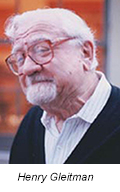
Henry Gleitman, Psychology

caption:

Henry Gleitman, professor emeritus of psychology at Penn, died on September 2. He was 90 years old.

Dr. Gleitman was born in Leipzig, Germany. He received his bachelor’s degree from the City College of New York and his PhD in psychology from the University of California, Berkeley. He taught at Cornell University, Swarthmore College and the New School for Social Research before joining Penn’s faculty as professor and department chair in 1964 (Almanac September 1964).

Dr. Gleitman received Penn’s Lindback Award for Distinguished Teaching in 1977, the American Psychological Foundation’s (APA) Distinguished Teaching in Psychology Award in 1982 and the School of Arts & Sciences’ Ira Abrams Memorial Award for Distinguished Teaching in 1988 (Almanac April 19, 1988).

He was the author of a widely used introductory textbook, Psychology, first published in 1981 and now in its eighth edition. He also published widely in scientific journals in psychology on topics including animal learning (notably, during his graduate student days and with his characteristic panache, he studied whether rats could learn a maze by passively watching from an aerial tramcar as their brethren ran through it). He was influential in the understanding of the nature of forgetting. In later years, often collaboratively with his wife, Lila Gleitman, professor emerita of psychology and linguistics at Penn, he studied language and its acquisition.

Judith Rodin, president emerita at Penn, considered Dr. Gleitman her mentor. In her 1999 Commencement address, she credited him with turning her sights toward psychology (Almanac May 18, 1999).

Professionally, Dr. Gleitman was best known by the generations of undergraduates who filled his Psychology I classes, often 300-400 at a time. As a teacher of generations of graduate students, he had a profound and widely acknowledged influence on how they thought about human (and rat) nature, and about how psychology connected with the history of Western philosophy and science. He devoted himself to students at every level, graduate and undergraduate, specialist and novice; indeed, he liked to say that “God must have loved the C student, because he made so many of them.”

Dr. Gleitman was a polymath whose interests and accomplishments ranged also into the theatre, where he acted and, most especially, directed both at the University of Pennsylvania and in various semi-professional venues in Philadelphia, Berkeley and New York City. Here, too, he worked with actors at all levels, including young children, college students and professionals. As he often said, he was a bigamist because he had two loves, psychology and theatre, and divided his heart and life’s work between them.

Dr. Gleitman retired from Penn and became professor emeritus in 2005 (Almanac September 6, 2005).

He is survived by his wife, Lila; his children, Ellen Luchette and Claire Gleitman; his sons-in law, Marck Luchette and David DeVries; his brother, George Gleitman; and his grandchildren, Philip and Lucas DeVries and Zachary and Zoe Luchette.

Contributions in his memory may be made to Doctors Without Borders (www.doctorswithoutborders.org).

Governance

PPSA: Penn Professional Staff Assembly 2015-2016 Executive Committee

Chair: Lucia DiNapoli,

    Staff Assistant to Dean, School of Nursing

Chair-Elect: Kuan Evans,

    Staff Assistant, Office of Affirmative Action and Equal Opportunity Programs

Past Chair: Emma Grigore,

    Human Resources Coordinator,

    Wharton Human Resources

Members at Large (2-year terms)

2014-2016 Term:

Margaret Heer,

    Associate Treasurer, Investment Services,

Division of Finance

Therese Marmion,

    Major Gifts Officer,

    Museum of Archaeology and Anthropology

Evangelyn Diaz,

    Recruitment Manager,

College of Liberal and Professional Studies
Roberto Mansfield,

    Senior IT Project Leader, SAS Computing

Members at Large (2-year terms)

2015-2017 Term:

Aman Goyal,

    Program Coordinator, VPUL

Teri Scott,

    Director of Marketing and Communications, Museum of Archaeology and Anthropology

Stephanie Yee,

    Laboratory Manager, Perelman School

    of Medicine
Heather Kelley,

    Deputy Director, School of Nursing

WPPSA: Penn Weekly-paid Professional Staff Assembly 2015-2016

Chair: Rosa Vargas,

    School of Arts & Sciences

Co-Chair: Irene Tan,

    School of Engineering & Applied Science

Secretary: Peter Rockett,

    School of Engineering & Applied Science

Treasurer: Joyce Woodward-Jones,

    University Laboratory Animal Resources
Board Members

Marcia Dotson, Past Chair,

    School of Arts & Sciences

Sarah Gish-Kraus, School of Arts & Sciences

Donna Gladstone, Penn Women’s Center

Loretta Hauber, Penn Libraries

Simcha Katsnelson, Student Financial Services

Leon Malloy, Career Services

Joe Mellon, Jr., Morris Arboretum

Suzanne Oh, Graduate School of Education

Elly Porter Webb, Civic House

Linda Satchell,

    Penn Program For Public Service

Honors

Five Grants from Kaufman Foundation for Cutting-Edge Research

University of Pennsylvania researchers will receive five of the ten grants being awarded this year by the Charles E. Kaufman Foundation, part of the Pittsburgh Foundation, which supports cutting-edge scientific research in chemistry, biology and physics at institutions across Pennsylvania.

Hailing from Penn’s School of Arts & Sciences, School of Engineering & Applied Science and Perelman School of Medicine, the researchers won awards in two categories. New Investigator Research grants entail $150,000 for two years, while New Initiative Research grants are $300,000 for two years.

Awardees in the New Investigator category include:

caption:

Maya Capelson, an assistant professor in the department of cell and developmental biology, for research on “The Nuclear pore as a novel scaffold for spatial genome organization.” Dr. Capelson and her colleagues will investigate the basic mechanisms of how the genome is organized by nuclear scaffolds, such as nuclear pores, and how this organization contributes to turning genes on and off.


caption:

Matthew Good, also an assistant professor in the department of cell and developmental biology, for research on “Building synthetic cell-like compartments to investigate the impacts of cell size and shape on intracellular function.” The Good Lab will study the role cell size plays in specifying biological function. Researchers there will develop a synthetic cell system to uncover how cellular dimensions regulate intracellular assembly and gene expression in both healthy and diseased cells.


caption:

Amish Patel, assistant professor in the department of chemical and biomolecular engineering, for research on “Uncovering the molecular basis for ice recognition by thermal hysteresis proteins.” Fish, insects and other organisms survive in frigid polar environments with the help of specialized proteins that keep their cells from freezing. These proteins bind to nascent ice crystals and prevent them from growing, but how these proteins are able to distinguish between liquid and solid water remains an open question. Dr. Patel’s group will address this using specialized molecular simulations, with implications ranging from increasing the freeze tolerance of crop plants to the preservation of transplant organs and frozen foods.

Awardees in the New Initiative Research category include: 

caption:       caption:

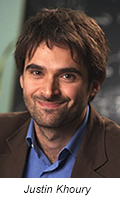
Justin Khoury, associate professor, and Tom Lubensky, the Christopher H. Brown Distinguished Professor of Physics, both in the department of physics and astronomy, for research on “New approach to dark matter.” Dr. Khoury and Dr. Lubensky will develop a novel cosmological framework in which dark matter is a superfluid. If this framework is correct, the sound waves associated with the superfluid would affect the orbital motion of stars and gas in galaxies, thereby explaining a number of observational puzzles that have emerged in recent years.


caption:      caption:      caption:

Andrea Liu, the Hepburn Professor of Physics; Benjamin Prosser, assistant professor in medicine’s department of physiology and Dennis Discher, the Robert D. Bent Professor of Chemical and Biomolecular Engineering, for research on “Mechanical signaling in early hearts: theory and experiment.” The research team will test their theoretical idea that in the embryonic heart, cells use mechanical, not electrical, signals to coordinate their contraction in order to pump blood. One prediction is that the embryonic heart starts beating once the tissue, which stiffens as it matures, becomes just stiff enough to support mechanical signaling. Dr. Liu and Dr. Discher are examining similar stiffening mechanisms and their impact on cancer development in the new NIH-supported Physical Sciences Oncology Center at Penn.

Peter Adamson: National Cancer Advisory Board

caption:

Peter C. Adamson, a pediatric oncologist and leading scientist at the Children’s Hospital of Philadelphia (CHOP) and a professor of pediatrics and pharmacology at the Perelman School of Medicine at the University of Pennsylvania, has been appointed by President Obama to the National Cancer Advisory Board (NCAB). Dr. Adamson is the only pediatric oncologist to currently serve on the NCAB, and will work to ensure that the voices of the pediatric cancer community are heard by decision makers in the federal government.

In this role, Dr. Adamson will advise the US Secretary of Health and Human Services, the Director of the National Cancer Institute (NCI) and the President on a wide range of issues relating to the national cancer program, including NCI operations. Notably, the NCAB and the President’s Cancer Panel are the only advisory bodies at either the National Institutes of Health or the Department of Health and Human Services whose members are appointed by the President.

ASGE Crystal Awards

Two physicians in the division of gastroenterology at the Perelman School of Medicine at the University of Pennsylvania received Crystal Awards from the American Society for Gastrointestinal Endoscopy (ASGE) in May.

caption:

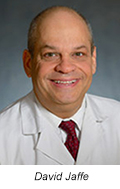
David Jaffe, a professor of clinical medicine, director of gastroenterology and medical director of endoscopy at Penn Medicine Radnor, received the ASGE’s Distinguished Educator Award for excellence in teaching students, trainees and practicing physicians. Dr. Jaffe has given lengthy service to the ASGE’s educational mission, planning courses and clinical symposia and most recently serving as chair of the society’s continuing medical education (CME) committee. At the Perelman School of Medicine, he has been recognized by medical students and fellows for his outstanding teaching in gastroenterology. 


caption:

Michael Kochman, the Wilmott Family Professor of Medicine and vice chair of clinical affairs in the department of medicine, received the Master Endoscopist Award, given annually to a clinician who has spent most of his or her time in patient care and who has made significant contributions to the field of gastrointestinal endoscopy. Dr. Kochman previously received the Mastrioanni Clinical Innovator Award from Penn in recognition of his contributions to clinical medicine. He developed the Wilmott Center for Endoscopic Innovation, Research and Training at Penn and is serving as its inaugural director. The facility enables doctors to develop new endoscopic techniques and practice them in a laboratory setting before applying them to patients.

Benjamin Garcia: Ken Standing Award

caption:

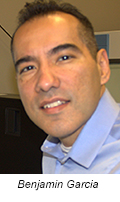
Benjamin Garcia, the Presidential Professor and director of quantitative proteomics in the epigenetics program, department of biochemistry and biophysics, Smilow Center for Translational Research at the Perelman School of Medicine, is the recipient of the 2015 Ken Standing Award. The award will be presented in December at the 8th International Symposium on Enabling Technologies (ETP) in Lake Louise, Alberta, Canada.

This award is presented by the sponsors of the ETP Symposium biennially to honor a scientist who has made a significant contribution to technology development in support of research in the life sciences, and who is 45 years or younger at the time of the nomination. Dr. Garcia will receive a $5000 cash prize and a commemorative sculpture and will be a featured speaker at the symposium.

Afaf I. Meleis: Three Honors

caption:

Afaf I. Meleis professor of nursing and sociology and former dean of Penn’s School of Nursing, is the recipient of three prestigious honors. In July, she was inducted as an Honorary Fellow in the National League for Nursing’s (NLN) 2015 Academy of Nursing Education for her significant contributions to nursing education.

She will receive the American Academy of Nursing’s Living Legend award on October 15 at the Academy’s annual conference in Washington, DC. Recipients of this award are recognized for their influential and lasting impact on nursing, health and health care over the course of their careers. Dr. Meleis was selected for her scholarly contributions and mentorship that has informed nurses around the world.

She will also receive the Sigma Theta Tau International (STTI) 2015 Nell J. Watts Lifetime Achievement in Nursing Award on November 9 at STTI’s 43rd Biennial Convention in Las Vegas, Nevada. She will be honored for her contributions to nursing over the course of more than five decades, during which time she pushed the boundaries of nursing science, fostered the next generation of healthcare leaders, worked to improve the lives of women around the globe and demonstrated her leadership through her role as a dean and in many other roles throughout her career.

Mary Naylor: Doris Schwartz Award

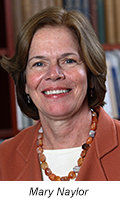
caption:Mary Naylor the Marian S. Ware Professor in Gerontology, has been named the Gerontological Society of America’s (GSA) 2015 Doris Schwartz Gerontological Nursing Research Award recipient. The distinguished honor, presented by GSA’s Health Sciences Section and sponsored with the Hartford Institute for Geriatric Nursing, recognizes Dr. Naylor’s outstanding and sustained contribution to geriatric nursing research. She will receive the award at the GSA’s Annual Scientific Meeting in November, at which time she will present a special lecture on gerontological nursing research.

Dr. Naylor, along with a multidisciplinary team of Penn colleagues, developed the Transitional Care Model as a solution to make the federal health insurance program for the elderly and disabled more efficient and cost effective. The model assigns an advanced practice nurse to support patients and their families through critical transitions, such as hospital-to-home. An individual nurse can manage as many as 20 patients at a time over a 60-day period. The model has been proven in multiple NIH-funded randomized clinical trials to significantly improve patients’ experience with care and health, while reducing avoidable re-hospitalizations.

Alan Ruby: Order of Australia

caption:Alan Ruby senior fellow at Penn’s Graduate School of Education (GSE), was invested in the Order of Australia, that country’s award for achievement and merit in service to country and humanity, earlier this summer. Mr. Ruby recently worked with Kim Beazley, Australia’s minister of employment, education, training and youth affairs, to lead the country’s first significant steps towards a national curriculum framework, expanding the scope of Australia’s system of vocational and higher education, prioritizing the teaching of east-Asian languages and opening universities and colleges to more foreign students.

At Penn GSE, Mr. Ruby works to improve higher education programs around the world. He was instrumental in establishing a relationship with education leaders in Kazakhstan, where he and his colleagues have consulted with the government in trying to modernize its university system. He advised on founding Nazarbayev University, an English-language university with a goal of preparing graduates for master’s and PhD programs at world-class institutions around the world. He is now looking at what the makers of massive open online courses can learn from social media about building and retaining users and continues teaching about the many ways education can give all young people more choices in life.

Eric Schelter: Harry Gray Award

caption:Eric Schelter associate professor of chemistry at Penn, is the recipient of the 2016 Harry Gray Award for Creative Work in Inorganic Chemistry by a Young Investigator by the American Chemical Society (ACS). The award was created to recognize creative and impactful work by a young investigator in a forefront area of inorganic chemistry, broadly defined. Dr. Schelter will be honored at the ACS National Meeting in San Diego in March of 2016.

Larry Silver: Phi Beta Kappa Scholar

caption:Larry Silver, the Farquhar Professor of Art History at Penn, has been named a 2015 Phi Beta Kappa Scholar. As part of the award, he will visit eight campuses during the academic year, presenting public lectures and visiting classes.

Dr. Silver will visit McDaniel College in Westminster, Maryland; the University of Maine in Orono, Maine; Colorado College in Colorado Springs, Colorado; Beloit College in Beloit, Wisconsin; the University of Illinois at Urbana—Champaign; Wake Forest University in Winston-Salem, North Carolina; and Grinnell College in Grinnell, Iowa. His lectures will include “India Ink: Europe’s Earliest Views of the Subcontinent;” “Dutch Global Horizons;” “New Jerusalem: Rembrandt, Amsterdam and Religion;” “Marked and Modern: 20th-Century Jewish Artists” and “Formation of the Habsburg Empire.”

Nancy Speck: Henry M. Stratton Medal

caption:The American Society of Hematology (ASH) awarded Nancy Speck, professor of cell and developmental biology in the Perelman School of Medicine at the University of Pennsylvania, the 2015 Henry M. Stratton Medal for Basic Science for her “seminal contributions in the area of hematology research.” Dr. Speck is  associate director of Penn’s Institute for Regenerative Medicine, co-leads the hematologic malignancies program at Penn’s Abramson Cancer Center and is an investigator at the Abramson Family Cancer Research Institute. She will accept her award on December 8 during the ASH Annual Meeting and Exposition in Orlando, Florida.

Dr. Speck is recognized for her key contributions to the understanding of developmental hematopoiesis (the production of blood cells) as well as the translation of these findings into leukemogenesis (the development of leukemia).

Research

Research Roundup

University Research & Development Affects Spatial Development of Neighborhoods

A white paper released in August by the Penn Institute for Urban Research (Penn IUR) finds that university-based research and development (R&D) affects the spatial development of universities, as well as their surrounding urban areas. The paper, “From Science Parks to Innovation Districts Research: Facility Development in Legacy Cities on the Northeast Corridor,” explores the spatial aspects of university-led R&D in older, industrial Northeast cities that have experienced significant population and job loss in recent decades.

“We still have a lot to learn about how university-based R&D affects the ways in which university campuses and their neighborhoods change, transform and grow,” says the paper’s author, Penn IUR co-director, Genie Birch. “But one thing is clear: there is an important link between R&D and spatial development, and in order to better understand how universities can anchor and support their surrounding environments, we need to monitor and explore this phenomenon.”

One challenge in understanding this link is that university-led urban revitalization is very often a slow process. A second challenge, according to the report, is that research universities tend to accommodate the demand for research space in ways that meet their specific contexts and needs, often in partnership with their localities. This leads university-driven development to manifest itself in diverse, varied and distinct ways.

The paper finds that university-based R&D is often funded by structured, federal grants, which pay researchers’ and doctoral students’ salaries and also pay for laboratories and other facilities in which the researchers work. This leaves physical imprints in the nation’s cities and suburbs in four major ways: campus expansion (including technology parks), corridor/highway developments, downtown redevelopments and scattered-site projects.

Chronic Insomnia Sufferers May Find Relief with Half of Standard Sleeping Pill Dosing Regimen

The roughly nine million Americans who rely on prescription sleeping pills to treat chronic insomnia may be able to get relief from as little as half of the drugs, and may even be helped by taking placebos in the treatment plan, according to new research published on August 3 in the journal Sleep Medicine by researchers from the Perelman School of Medicine at the University of Pennsylvania. Their findings starkly contrast with the standard prescribing practices for chronic insomnia treatment.

The findings, which advocate for a dosing strategy of smaller and fewer doses of sleep drugs and use of placebos, would decrease the amount of medication needed to maintain medication effects over time, allowing the individual to maximize their clinical gains with respect to falling and staying asleep while reducing side effects and cutting prescription drug costs.

“The clinical effects of sleeping pills cannot be relied on to last forever, and long-term use increases risk of psychological dependence and side effects including daytime drowsiness, nausea and muscle pain,” said the study’s senior author, Michael Perlis, an associate professor in Penn’s department of psychiatry and director of the Penn Behavioral Sleep Medicine Program. “Our research found that changing the industry standard for maintenance therapy can maintain treatment responses and lower the incidence of side effects.”

The study treated 74 adults experiencing chronic insomnia with 10 mg of the sleeping pill zolpidem (Ambien) for four weeks. Those responding to the treatment were randomized into three dosing groups for 12 weeks: nightly dosing with 10 mg or 5 mg, “intermittent dosing” of 10 mg 3 to 5 days a week, or “partial reinforcement” through nightly pills in which half were 10 mg capsules and half were placebo capsules.

All three strategies the team tested were effective in maintaining people’s ability to fall and stay asleep, but those in the intermittent dosing group slept worse and reported more medical symptoms and greater symptom severity than those in the other dosing groups.

“When it comes to day-to-day quality of therapeutic outcomes, the strategy we use most frequently, the intermittent dosing strategy performed worst,” Dr. Perlis said. “Our findings also go against the standard practice of ‘start low and go slow,’ in favor of a ‘start high and go low’ dosing strategy in which a patient starts with 10 mg nightly and then when the desired result is reached, switch to either a lower nightly dose or intermittent dosing with placebos on non-medication nights.”

The authors see the findings as a path diverting from the tendency to increase dose over time, thus making use of these medications potentially safer in the long run with the added benefit (in the case of nightly dosing with 5 mg or 10 mg doses interspersed with placebos) of being up to 50 percent less expensive. These savings could cut costs drastically for both consumers and pharmaceutical companies (as consumers take a higher percentage of placebos, the profit margin would be higher on placebos than it is on the drug).

“The full dose may or may not be required to get the initial effect,” said Dr. Perlis, “but certainly maintaining the effect can be done with less medication.” The Penn study also offers the first data confirming that 5 mg can be effective as a maintenance strategy. This supports a 2013 decision of the FDA that required lowering the recommended dose of the sleep medication zolpidem in non-elderly women, citing a risk of next-morning impairment, including problems with alertness while driving.

“What is particularly novel about the present study is the use of placebos on non-medication nights and that such a practice appears to extend a level of therapeutic benefit that is not seen with intermittent dosing,” Dr. Perlis said. “This effect is thought to occur owing not only to the enhancement of patient expectancy but to the conditioning of medication effects, i.e., the medication induced effects may be elicited, with conditioning, by the medication capsule itself and that this can be sustained over time with occasional use of full dose medication (partial reinforcement).”

Dr. Perlis notes that if sufficient data can be gathered to show that such conditioning is possible, in the future, this may influence how medications are prescribed for maintenance therapy.

The research team includes Penn authors Michael Grandner, Jarcy Zee, Erin Bremer, Julia Whinnery, Holly Barilla, Priscilla Andalia, Phil Gehrman, Knashawn Morales and Michael Thase. The work builds on earlier work by late researchers Richard Bootzin of the University of Arizona and Robert Ader of the University of Rochester. The study was supported by a NIH National Center for Complementary and Integrative Health grant.

Processing Arrested Juveniles as Adults Has Small Effect on Criminal Recidivism

Penn researchers have found a 3-5% reduction in the probability of criminal recidivism among a sample of juveniles arrested for felony drug offenses, some of whom were processed as adults due to their age at the time of their arrests. In a study published in the Journal of Research in Crime and Delinquency, Charles Loeffler, an assistant professor of criminology in the School of Arts & Sciences, and Ben Grunwald, a doctoral candidate in the criminology department, analyzed the effect of processing juveniles as adults using a regression discontinuity design.

The study, “Processed as an Adult: A Regression Discontinuity Estimate of the Crime Effects of Charging Nontransfer Juveniles as Adults,” estimated the effect of the juvenile and adult justice systems on recidivism for non-transfer-eligible juvenile offenders by comparing the four-year re-offending rates of juveniles arrested for drug distribution just a few weeks before and after they reached adulthood.

The results suggested that processing these juveniles as adults slightly reduced the probability of recidivism. Based on the rapid onset and limited change in size of the effects over a four-year follow-up and based on the concentration of the effects within a sub-group having the lowest risk of incarceration, the researchers attributed this finding to a combination of enhanced deterrence and incapacitation in the adult justice system.

“These results suggest that processing juveniles in the adult system may not uniformly increase offending, as many scholars have thought, and may actually reduce offending in some circumstances,” Dr. Loeffler said.

The study examined the recidivism of felony drug offenders arrested a few weeks before their 17th birthday who were processed in the juvenile justice system and those arrested a few weeks after their 17th birthday who were processed in the adult criminal justice system.

Past studies have found that serious juvenile offenders transferred into the adult system as part of automatic, presumptive or discretionary transfer mechanisms re-offend much more often than similar juvenile offenders retained in the juvenile system. Such findings have led scholars and policymakers to conclude that exposing youth to the adult justice system exacerbates criminal offending.

However, Dr. Loeffler said that the existing empirical literature is primarily focused on the most serious or frequent juvenile offenders. There is relatively little information on the effects of processing more typical juveniles in the adult system. Similarly, the existing literature has used research designs that make it difficult to separate the effects of processing juveniles as adults from pre-existing differences in the risk of recidivism between juveniles who are processed in the two different legal systems.

The results of Dr. Loeffler and Mr. Grunwald’s study, which differed from some of the early empirical literature examining the effects of processing juveniles as adults, adds to a growing number of studies observing that offending among older juveniles is relatively insensitive to the exact legal system in which they are prosecuted. The researchers attributed this divergence between earlier and newer studies to both the samples of offenders examined and the estimation strategies employed.


Events

27th Annual Academic Career Conference for PhD Students and Postdoctoral Fellows—Fall 2015

Speaker Programs

Going on the Academic Job Market: Get Advice from Faculty Members in Humanities and Social Sciences; Thursday, September 24, noon-1:30 p.m., Room 108, The ARCH.

Program will include faculty speakers from Penn and other area institutions.

Going on the Academic Job Market: Get Advice from Faculty Members in Science, Math and Engineering; Tuesday, October 6, 5-6:30 p.m., Benjamin Franklin Room, Houston Hall.

• Casey Londergan, assistant professor of chemistry, Haverford College

• M. Ani Hsieh, associate professor of mechanical engineering & mechanics, Drexel University

Putting Together a Strong Job Talk: Science, Math and Engineering; Tuesday, November 3, 5-6:30 p.m., Room 108, The ARCH.

Program will include faculty speakers from Penn and other area institutions.

Putting Together a Strong Job Talk: Humanities and Social Sciences; Wednesday, November 4, 5-6:30 p.m., Benjamin Franklin Room, Houston Hall.

Program will include faculty speakers from Penn and other area institutions.

Additional Sessions—Led by Career Services staff

Write a Compelling CV and Cover Letter for Faculty Positions in Research or Teaching; a workshop for PhD students and postdocs in the humanities and social sciences; Wednesday, September 16, noon-1:30 p.m., Room 108, The ARCH.

Write a Compelling CV and Cover Letter for Faculty Positions in Research or Teaching; a workshop for PhD students and postdocs in science, math and engineering; Thursday, September 17, noon-1:30 p.m., Room B4, Meyerson Hall.

Talking About Your Teaching—Sessions led by Penn’s Center for Teaching and Learning staff

—in Application Materials, Wednesday, October 7, noon-1:30 p.m., Room 108, The ARCH.

—in Interviews, Thursday, October 8, noon-1:30 p.m., Room 108, The ARCH.  

Finding the Right Postdoc for your Career Goals: Get Advice from Current Postdoctoral Fellows; Thursday, November 5, noon-1:30 p.m., Room TBD.

How to Talk About Your Research Effectively; Tuesday, November 17, 12-1:30 p.m., Room 108, The ARCH.

For PhD students in the first and second year of their program: The Insider’s Guide to Graduate Education at Penn—A Program for Doctoral Students in the Early Stages of their Programs; Wednesday, October 14, 5-6:30 p.m., Terrace Room, Claudia Cohen Hall (refreshments at 5 p.m.; panel at 5:15 p.m.)

• Beth Winkelstein, Penn’s vice provost for education, and a panel of advanced doctoral students discuss getting off to a good start, understanding a career in research, managing coursework and engaging with faculty.

The Academic Career Conference is co-sponsored by Career Services and the Vice Provost for Education. Preregistration is requested for speaker/panel programs. Please check Career Services’ calendar for the latest updates to Academic Career Conference program information: www.vpul.upenn.edu/careerservices/gradstud/calendar.php

PASEF Lectures for Fall 2015

The Penn Association of Senior and Emeritus Faculty (PASEF) has a lecture series, held in the Hourglass Room of the University Club at the Inn at Penn. Senior faculty, emeritus faculty and standing faculty present topics within their area of expertise. We are very fortunate to have a great many distinguished faculty who are willing to present an aspect of their intellectual interests in these lectures.

These are lectures currently planned:

• Thursday, September 10, Joseph Turow; The Transformation of Retailing in the Digital Age. Dr. Turow is the Robert Lewis Shayon Professor and Associate Dean for Graduate Studies in the Annenberg School for Communication. A 2005 New York Times Magazine article referred to him as “probably the reigning academic expert on media fragmentation.” He has authored nine books, edited five and written more than 150 articles on mass media industries.

• Tuesday, October 13, Charles L. Nelson; Future Prospects of Hip and Knee Surgery. Dr. Nelson is chief of the Joint Replacement Service and associate professor of orthopaedic surgery at the Hospital of the University of Pennsylvania (HUP). He was recognized by Best Doctors in America in 2013-2014. Both his clinical practice at Penn and his research interests center on hip and knee surgery. He has published extensively in this field.

• Wednesday, November 11, Guthrie P. Ramsey; Title To Be Announced. Dr. Ramsey is the Edmund J. and Louise W. Kahn Term Professor of Music at Penn. He is a pianist and a composer, and has published extensively. A forthcoming book is Who Hears Here?: Essays on Black Music History and Society. He is also an arranger for his Philadelphia-based band, Dr. Guy’s MusiQology.

• Tuesday, December 8, Annette Lareau; Unequal Childhoods and Unequal Adulthoods: A Longitudinal Study of Social Class Differences in Family Life. Dr. Lareau is a sociologist and the Stanley I. Sheerr Term Professor in the Social Sciences. Her book, Unequal Childhoods, is based on research and interviews with 88 children and their parents. She discovered differences in parenting style that relate to class distinctions and asks how social stratification impacts life chances.

Collectively, these presentations cover a wide range of intellectual activity. The topics reflect responses to society’s current state, but they also reflect a university’s mission to be  a critic—to test and explore new alternatives shaped by the values and skills of the scholar.

All are welcome to attend. Attendees pick up their lunches in the Dining Room, bring their meal into the Hourglass Room, listen to the lecture and participate, if they wish, in the discussion. The lectures start promptly at noon and end at 1:30 p.m.

Please contact our PASEF coordinator, Jocelyne Waller, at (215) 746-5972 or by email at emeritus@pobox.upenn.edu if you plan to attend.

Anita Summers, PASEF Chair, 2015-2016

Fun, Football and More at Penn Family Day: Saturday, October 10

Mark your calendar—Penn Family Day 2015 is Saturday, October 10.

A celebration of Penn’s family of faculty, staff and postdoctoral scholars, the special day is full of fun, food, athletic events and other festivities. Make plans to meet up with your Penn colleagues and celebrate what makes Penn a great place to work: the people.

Order tickets online today at www.hr.upenn.edu/familyday Tickets may also be picked up with your PennCard at the Penn Athletic Ticket Office in Weightman Hall, 235 S. 33rd Street.

Faculty, staff and postdocs can order up to four free tickets. Additional tickets are available for $8 each. The last day to order tickets online is October 6. Tickets are required for the Tailgate Party and football game, so order yours soon!

The 23rd annual event features activities to engage any member of your family:

10 a.m.-5 p.m.—Penn Museum. Explore the fascinating collections and exhibitions of the Penn Museum. Admission is free with your PennCard.

11:30 a.m.-1 p.m.–Tailgate Party. Enjoy lunch, carnival games and other activities on Shoemaker Green prior to the football game versus Fordham.

1 p.m.–Penn vs. Fordham Football Game. Cheer on the Quakers as they face off against the Fordham Rams at historic Franklin Field.

5 p.m. – Penn vs. Columbia Women’s Volleyball. Catch the dynamic Women’s Volleyball team as they take on Columbia at The Palestra. Admission is free.

5-6:30 p.m. – Penn Ice Rink. Take a spin around the Penn Ice Rink with half-priced admission and $3 skate rentals (with PennCard).

Parking for Family Day is also free with your PennCard at the Walnut 38 and Chestnut 34 lots.

Visit www.hr.upenn.edu/familyday for more information.

Contact Human Resources at worklife@hr.upenn.edu or (215) 898-1012 if you have questions.

Division of Human Resources

Culture Connection: Exploring Korean Heritage at the Arboretum: September 19

 caption:

(above) Klass, a rap group who focus on a song’s melody and message for a sound more K pop than hip hop. In the fall of 2014, Wharton senior James An started Klass, a group that performs mostly in Korean but also in English. For members, expressing themselves through their music empowers them to learn new skills and inspires them to pursue their passions. It’s a chance for the performers to present a persona that’s more ostentatious than even their closest friends have seen. 

On Saturday, September 19 from 11 a.m.-3 p.m. the Morris Arboretum will celebrate traditional and modern Korean culture with music and dance performances, food tastings and hands-on activities.

The group Klass will be one of three Penn student groups to perform as well as PennDure, a traditional drum ensemble and Penn Sori, an a capella group.

Visitors may make an origami hanbok—a traditional Korean costume, with help from the University of Pennsylvania’s Korean Student Association.

At noon, 12:30 p.m., 1 p.m. and 1:30 p.m. guides will lead an exploration of the Korean plants in the Arboretum’s 92-acre botanical collection. This event is made possible by a grant from the University of Pennsylvania’s Provost Interdisciplinary Arts Fund. It is free with admission.

Update: September at Penn: Talks

TALKS

17 The Winter Guest. Love, Death and Beauty in Dante’s Rime Petrose; Francesco Bausi, Universitá della Calabria; 6 p.m.; Cherpack Seminar Room, 5th floor, Williams Hall (Center for Italian Studies).

Crimes

Weekly Crime Reports

The University of Pennsylvania Police Department Community Crime Report

About the Crime Report: Below are the Crimes Against Persons, Crimes Against Society and Crimes Against Property from the campus report for August 24-30, 2015Prior weeks’ reports are also online. —Eds.

This summary is prepared by the Division of Public Safety and includes all criminal incidents reported and made known to the University Police Department between the dates of August 24-30, 2015. The University Police actively patrol from Market Street to Baltimore Avenue and from the Schuylkill River to 43rd Street in conjunction with the Philadelphia Police. In this effort to provide you with a thorough and accurate report on public safety concerns, we hope that your increased awareness will lessen the opportunity for crime. For any concerns or suggestions regarding this report, please call the Division of Public Safety at (215) 898-4482.

08/25/15          7:12 AM         3409 Walnut St             Theft                   Merchandise taken without payment/Arrest

08/25/15          11:55 AM       3735 Walnut St             Fraud                  Offender attempted to cash fraudulent check

08/25/15          12:38 PM        100 S 40th St               Vandalism          Male smashed vehicle window

08/25/15          3:49 PM          3700 Spruce St            Theft                 USB taken from secured tote bag

08/25/15          4:47 PM          3330 Walnut St             Theft                 Secured bike taken

08/25/15          11:46 PM        3420 Moravian St          Fraud               Persons left restaurant without paying bill

08/26/15          9:57 AM         51 N 39th St                   Theft                iPhone taken from desk

08/26/15          8:38 AM         3020 Market St               Theft                iPad and other items taken from office

08/26/15          1:37 PM          3001 Walnut St              Theft                Ladders taken from truck

08/26/15          2:23 PM          100 S 40th St                 Other Offense Male wanted on warrant/Arrest

08/26/15          7:57 PM          4039 Chestnut St           Theft                Secured bike taken from lobby

08/27/15          11:27 AM       2930 Chestnut St            Theft                Cell phone taken during delivery

08/27/15          11:38 AM       3400 Spruce St               Theft                 Phone taken from desk

08/27/15          2:57 PM          13-19 S 38th St              Theft                Items removed from desk

08/27/15          4:51 PM          2930 Chestnut St           Burglary            Property taken from residence/Arrest

08/27/15          5:45 PM          2930 Chestnut St           Burglary            Property taken from residence/Arrest

08/28/15          1:33 AM         4000 Walnut St                Drunkenness   Male arrested for underage drinking

08/28/15          7:40 AM         3900 Baltimore Ave          Vandalism       Window to auto broken out

08/28/15          9:23 AM         3400 Spruce St                Other Assault  Threatening statements made by patient’s husband

08/28/15          1:03 PM          3400 Spruce St               Theft                Phone taken from vehicle

08/28/15          1:29 PM          51 N 39th St                    Theft                Wallet taken from desk

08/28/15          2:03 PM          3900 Woodland Ave        DUI                  Intoxicated driver arrested

08/29/15          4:38 AM         300 S 38th St                   Other Offense Citation issued for vending violation

08/29/15          9:20 AM         3744 Spruce St                Other Offense Female wanted on warrant/Arrest

08/29/15          11:51 PM        3000 Walnut St                Drunkenness   Intoxicated male entered construction site/Arrest

08/29/15          4:24 PM          4009 Pine St                    Burglary          Computer taken from residence

08/29/15          6:01 PM          3900 Walnut St                Traffic              Female wanted on scofflaw/Arrest

08/29/15          6:02 PM          3501 Sansom St              Theft               Glasses taken while unattended

08/30/15          3:29 AM         3000 Walnut St                 Drunkenness   Intoxicated male in construction site/Arrest

08/30/15          10:45 AM       3900 Delancey St             Other Offense Male wanted on warrant/Arrest

08/30/15          4:18 PM          4010 Spruce St               Theft                Secured bike taken from porch

18th District Report

Below are the Crimes Against Persons from the 18th District: 5 incidents with 0 arrests (2 assaults, 2 robberies and 1 rape) were reported between August 24-30, 2015 by the 18th District covering the Schuylkill River to 49th Street & Market Street to Woodland Avenue.

08/24/15    1:27 PM    40th & Walnut St          Assault

08/26/15    10:25 PM    4800 Beaumont St     Robbery

08/27/15    1:22 PM    4822 Warrington Ave    Robbery

08/27/15    3:49 PM    3900 Woodland Ave      Assault

08/28/15    8:21 AM    4500 Baltimore Ave       Rape

Bulletins

Becoming Part of the Penn I CARE Network of Certified Trained Responders

I  -> inquire

C -> connect

A -> acknowledge

R -> respond

E -> explore

Penn I CARE Faculty and Staff Training is available to those who wish to become a part of the Penn I CARE network of certified trained responders.

I CARE: Intensive, 3-hour training to learn the signs of distress and mental health crises that can affect college students. Experienced CAPS clinicians will teach their Penn colleagues “I CARE” skills essential for suicide prevention and supportive intervention.

    • September 24, 5-8 p.m., CAPS Community Room, 3624 Market Street, First Floor West
    • November 19, 5-8 p.m., CAPS Community Room, 3624 Walnut Street, First Floor West

    (registration opens 10/29/15)

I CARE: Intensive, 7-hour training to learn the signs of distress and mental health crises that can affect college students. Experienced CAPS clinicians will teach their Penn colleagues “I CARE” skills essential for suicide prevention and supportive intervention.

    • October 16, 9 a.m.-4 p.m., Golkin Room, Houston Hall, 3417 Spruce Street

    (registration opens 9/25/15)
    • December 11, 9 a.m.-4 p.m., Ben Franklin Room, Houston Hall, 3417 Spruce Street

    (registration opens 11/20/15)

For more information, please contact Meeta Kumar at meeta@upenn.edu

Begin the “Year of Discovery” by Knowing the Rules for Protecting Student Record Information

As you embark on your road to discovery, it’s important to know about FERPA, the Family Educational Rights and Privacy Act. FERPA is a federal law that provides certain rights to students and imposes certain obligations on University faculty and staff regarding the privacy of “education records,” or student record information.

At Penn, FERPA’s requirements are incorporated in our Policy on the Confidentiality of Student Records: http://www.upenn.edu/almanac/volumes/v56/n25/confidentiality.html The policy states in general that University faculty and staff may not disclose personally identifiable information from a student’s records except with the student’s written consent.

Some common “do’s” and “don’ts” 

1. In general, you may not share student records with parents or guardians. There are some exceptions, such as where the student has provided written or electronic consent. Consult the Student Records System (SRS) or Advisor in Touch to determine if a student has consented to sharing his or her information.

2. You may share student records with school officials with “legitimate educational interests”— i.e., where the information would be helpful in the performance of official duties. This important provision allows Penn faculty and staff to access student information they need to perform their jobs.

3. You may not post grades or leave graded exams or papers in a public place. The “Grades” function in Canvas is a secure way to communicate with students directly about their grades.

For more information, visit the FERPA page of Penn’s Privacy website (www.upenn.edu/privacy) and check out the FAQs for Faculty & Staff. Questions about student privacy can be addressed to privacy@upenn.edu

Families to Foster Dogs for the Penn Vet Working Dog Center

The Penn Vet Working Dog Center needs families to foster dogs. The mission of the Center is to raise and train detection dogs, including Diabetes Alert Dogs, Urban Search & Rescue Dogs and Cancer Detection Dogs.

How does the program work? Dogs attend school at the Working Dog Center from Monday through Friday. Dogs are dropped off between 7–9 a.m. and they are picked up between 5-7 p.m. Penn Vet has puppies and grown dogs that need fosters. The dogs are primarily Labrador Retrievers and German Shepherds.

What does it mean to be a foster? Dogs live with the foster family when they are not in school. Fosters are not required to be a trainer. Penn Vet Working Dog Center trainers will provide the necessary guidance to foster a dog for success. The Penn Vet Working Dog Center will provide all the supplies needed including food, crates and medical care.

For more information call (215) 898-2200 (ask for MC or Vicki) or email kershaw@vet.upenn.edu

Back to Top