Collaborating on Program to Offer Tours of Lower Schuylkill River

Inspired by urban river projects that have revitalized the cities of Los Angeles and New York, the Penn Program in the Environmental Humanities (PPEH) is collaborating on a project with Bartram’s Garden and River Corps to increase access to the Lower Schuylkill River, helping more people connect to the storied waterway.
The PPEH is exploring the development of “multi-modal public river-based tours” of Southwest Philadelphia, with Bartram’s Garden serving as the central hub of activities.
The PPEH will host a public planning meeting on Thursday, April 14, from 10 a.m. to noon at Bartram’s Garden. Discussion will center on existing local organizations, programs and events that intersect with the river guides project, examples of successful urban waterway tours and content for Lower Schuylkill River Guide tours.
Reservations are encouraged and can be made by emailing Bethany Wiggin, an associate professor of German in the School of Arts & Sciences and PPEH director, at director@ppehlab.org
“We’ve been working and collaborating on the river all year long,” Dr. Wiggin says. “The experience of getting on the water—whether in Bartram’s public kayaks or in our public Lab at WetLand—has been absolutely central.”
The project seeks to supplement a number of ongoing riverfront programs and projects underway at Bartram’s Garden. They include the PPEH Lab at WetLand, a public art project for “experiments in sustainability” based in a houseboat on the river. Participants at the planning meeting will have an opportunity to explore WetLand, http://www.ppehlab.org/wetland/
Additional meetings are planned leading up to a one-day certification session for river guides during the week of August 22.
As envisioned, the first phase of the project will culminate in river and watershed tours led by the corps of certified river guides in kayaks, bicycles and/or on foot. In phase two, a website will be created with information about the Schuylkill River, its past and future. The third phase will involve development of a mobile app to enable visitors to explore the river on their own through self-guided tours.
Public access to the riverbanks has risen dramatically in recent years as efforts by the Schuylkill River Trail Council to connect the trail’s sections have flourished. Dr. Wiggin envisions the new tours evolving to build audiences that will grow over time, as well.
She says that floating on the river that provides Philadelphia’s single largest source of drinking water, between the nation’s oldest botanic garden on the west bank and one of its oldest refineries on the east, is amazing.
“It’s quite a contrast,” she says, “and an important vantage point to facilitate dialogue about our community’s experiences of environmental degradation and, vitally, of resilience.”
Fels Policy Research Initiative: Interdisciplinary Grants
The Fels Policy Research Initiative in the School of Arts & Sciences at the University of Pennsylvania has announced five inaugural collaborative grants for as much as $15,000 each, designed to further interdisciplinary partnerships.
Three of the research projects involve one or more Penn Integrates Knowledge, or PIK, professors, a group of Penn academics committed to working across different disciplinary boundaries.
“Public problems rarely organize themselves along the established lines of academic disciplines,” Mark Alan Hughes, the faculty director for the Penn Fels Policy Research Initiative, said. “The opportunity for faculty to collaborate across their fields of research can create new insights into many public problems.”
Engaging faculty from eight of Penn’s 12 schools, the projects are:
• The Global Impacts of Race in Biomedicine: PIK professors Dorothy Roberts and Sarah Tishkoff will examine policy recommendations on racial and ethnic health inequities, as well as host guest lectures.
• Built Environment Policies and Interventions for Better Health and Safety: PIK Professor Karen Glanz will develop approaches and interventions for urban areas in collaboration with Charles Branas of the Perelman School of Medicine.
• Fairness for Digital Infrastructures: PIK Professor Rakesh Vohra will host workshops that bring together researchers, computer scientists, economists, legal experts on discrimination and policy makers. This project also involves Mallesh Pai of the School of Arts & Sciences and Sampath Kannan, Aaron Roth and Jamie Morgenstern of the School of Engineering & Applied Science.
• Interdisciplinary Collaboration to Support Data-Based Decision Making in Philadelphia: John Fantuzzo of the Graduate School of Education, Dennis Culhane of the School of Social Policy & Practice and Janet Deatrick of the School of Nursing will create a policy research agenda for the city’s integrated data systems, examining interventions for families living in poverty.
• Optimizing Government: Policy Challenges in the Machine Learning Age: Cary Coglianese of the Law School and Richard Berk of the School of Arts & Sciences will focus on machine learning innovations in government.
Perelman School of Medicine 2016 Teaching Awards
The Leonard Berwick Memorial Teaching Award
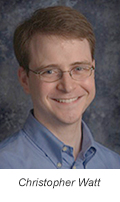 This award was established in 1980-1981 as a memorial to Leonard Berwick by his family and the department of pathology to recognize “a member of the medical faculty who in his or her teaching effectively fuses basic science and clinical medicine.” This award is intended to recognize outstanding teachers, particularly among younger faculty.
Christopher D. Watt is an assistant professor of clinical pathology and laboratory medicine at the Hospital of the University of Pennsylvania (HUP), and has been on the faculty since 2010. Dr. Watt is the associate director for the Molecular Pathology Laboratory in the Division of Precision & Computational Diagnostics. As a molecular pathologist, his clinical expertise is in the field of molecular diagnostics as it pertains to a wide spectrum of diseases including inherited disorders, viral infections and cancers. Inspired by a multitude of amazing teachers at the University of Kentucky and the University of Pennsylvania, Dr. Watt teaches medical students, residents, clinical fellows and graduate students (with an undeniable sense of enthusiasm and joy) about the practice of laboratory medicine with molecular techniques. He endeavors to continue the pathology department’s long-standing commitment to excellence in teaching. Dr. Watt received the Leonard Berwick Resident Teaching Award in 2008 and the Kevin E. Salhany Award for Excellence in Clinical Teaching in 2013. In 2014, he began serving as one of the co-directors for the pathology residency program. One of his former residents stated: “Through his role-modeling and his coupling of freedom with guidance, he has certainly shaped my leadership style for the better and provided me invaluable lessons that I will take with me going forward.”
The Robert Dunning Dripps Memorial Award for Excellence in Graduate Medical Education
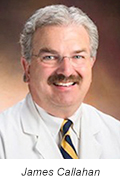 This award was established by the department of anesthesia in 1983-1984. As a pioneer in the specialty of anesthesia and chair of the department from 1943 to 1972, Dr. Dripps was instrumental in the training of more than 300 residents and fellows, many of whom went on to chair other departments. This award recognizes excellence as an educator of residents and fellows in clinical care, research, teaching or administration.
James Callahan is the interim chief of the division of emergency medicine in the department of pediatrics, an associate director of the Pediatric Residency Program at the Children’s Hospital of Philadelphia (CHOP) and professor of clinical pediatrics. Dr. Callahan was the inaugural director of medical education for emergency medicine at CHOP (2006-2010). He continues to co-direct the division’s continuing medical education programs and has served as an associate director of the pediatric residency program since 2006. He has authored articles in several peer-reviewed journals and over 20 book chapters on topics related to pediatric emergency medicine. He is a member of the Pediatric Emergency Medicine Subspecialty Board representing the American Board of Pediatrics and a member of the Committee on Pediatric Emergency Medicine and the National Steering Committee Pediatric Education for Prehospital Professionals (PEPP) program for the American Academy of Pediatrics. He is the editor of the Basic Life Support version of the PEPP Textbook. He has been named to the Faculty Honor Roll by the pediatric residents at CHOP every year since 2007. One of his former trainees stated: “Dr. Callahan definitely stands out as someone who made a lasting impact on my education and the way I practice medicine and I cannot think of anyone more deserving of this award.”
Blockley-Osler Award
Created in 1987 by the Blockley Section of the Philadelphia College of Physicians, this award is given annually to a member of the faculty at an affiliated hospital for excellence in teaching modern clinical medicine at the bedside in the tradition of William Osler and others who taught at Philadelphia General Hospital.
This year, there were two recipients.
 Aba Barden-Maja is a professor of clinical medicine at the Perelman School of Medicine. After completing a residency at Yale New Haven Hospital, she completed a general medicine fellowship at Cornell and joined the Penn faculty in 1997. Dr. Barden-Maja is a current Measey fellow and the recipient of the Maurice Attie Faculty Teaching Award, the Dean’s Award for Excellence in Clinical Teaching at an Affiliated Hospital, the John Eisenberg Faculty Teaching Award and a Penn Pearls Teaching Award. Her teaching style is interactive, engaging, collegial and inclusive. She consistently endeavors to find new ways to explain difficult concepts, identifies how people learn and brings the best out of each learner. She is a strong believer in bedside teaching and models this effortlessly for students and residents. A former trainee stated: “Her thoughtful approach to prioritizing medical or psychosocial issues at the bedside was a learning experience that I carry with me into my current career as a Fellow.”
 Lisa B. Zaoutis is an associate professor of pediatrics and the director of the General Pediatrics Residency Program at CHOP. She is a general pediatric hospitalist and a pioneer in helping to establish the field of pediatric hospital medicine. One resident wrote, “Perhaps the most impressive teachers are those that do not just display their knowledge, but rather pull that knowledge out of his/her learners. Dr. Z is just that kind of teacher. Without a shred of ego, Dr. Z remains one of our most effective and dynamic teachers.” A medical student wrote, “Dr. Z is a phenomenal physician and teacher. Energetic, passionate and fun, she exudes a profound sense of curiosity and wonder about the human body and the disease processes that affect it. This inspires those working with her to view medicine with a similar sense of wonder and awe.”
Dean’s Award for Excellence in Basic Science Teaching
The Dean’s Award for Excellence in Basic Science Teaching was established in 1987 to recognize teaching excellence and commitment to medical student teaching in the basic sciences. One or more Dean’s Awards are given annually, the recipients being selected on the advice of a committee composed of faculty and students.
 Brian Keith is an adjunct professor in the department of cancer biology and associate director for education and training in the Abramson Cancer Center. He has taught in cell & tissue biology for many years, and in 2015 developed a new MS1 course that focuses on the development of effective, novel cancer therapeutics based on our increasingly mechanistic understanding of transformed cells and the tumor microenvironment. He is also an adjunct professor of biology (SAS), where he developed an undergraduate course on cancer cell biology. He received the Provost’s Award for Teaching Excellence by Non-Standing Faculty in 2010 and the Excellence in Medical Education Award from PSOM classes of 2015 and 2018. One student writes: “Dr. Keith is a phenomenal lecturer—he navigates clearly and seamlessly from broad concept down into detail and then back up to broad concept.” Others commented: “Clear, concise and passionate about the topic he teaches” and “Dr. Keith makes me want to be an oncologist!”
Dean’s Award for Excellence in Clinical Teaching (at an Affiliated Hospital)
The Dean’s Award for Excellence in Clinical Teaching was established in 1987 to recognize clinical teaching excellence and commitment to medical education by outstanding faculty members from affiliated hospitals. One or more Dean’s Awards are given annually, the recipients being selected on the advice of a committee composed of faculty and students.
This year, there were two recipients.
 Robin Canada is an assistant professor of general internal medicine whose practice and teaching focus on medically underserved populations. She completed her residency at Penn and worked with migrant farm workers and homeless populations, then moved to Arizona to work with the White Mountain Apache for the Indian Health Service. She recently established a link between Penn and the Fort Defiance Navajo reservation, creating an IHS elective rotation for residents. She mentors and precepts medical students and residents interested in Native American and Latino health care. She serves as the medical director for Puentes de Salud, a local Latino health clinic for undocumented immigrants. After working for one of the city’s safety net clinics, she created a community medicine immersion experience in West Philadelphia for primary care internal medicine residents. One trainee stated: Her “lessons have made our clinical experience as residents more fruitful and enjoyable, and in my case, they have inspired me to strive to be not only a clinician but also an advocate.”
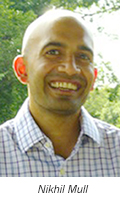 Nikhil Mull is an assistant professor of clinical medicine in the Section of Hospital Medicine. He joined Penn in 2012. Dr. Mull teaches evidence-based medicine principles that can be used at the point of care. He is assistant director for the Penn Medicine Center for Evidence-based Practice and has taught similar principles for faculty development, advanced practitioner grand rounds series and the introduction to medicine internship for sub-intern students. He received the Donald B. Martin Award in Teaching Excellence from the department of medicine in 2014. One of his former trainees stated: “Dr. Mull brings a unique combination of high expectations and insightful guidance to the attending-housestaff relationship which empowers those who work with him to grow as clinicians and be well-prepared to assume the next level of responsibility.”
Dean’s Award for Excellence in Medical Student Teaching by an Allied Health Professional
This award was established in 1996-1997 to recognize outstanding teaching by allied health professionals (e.g. nurses, physician’s assistants, emergency medical technicians). One award is made annually. The recipient is selected on the advice of a committee of faculty and students.
 Jason Hutchings is a psychologist and clinical associate faculty member in the department of psychiatry. He serves as the attending psychologist on 6 Spruce, the inpatient psychiatric unit at Pennsylvania Hospital. Dr. Hutchings has been a part of the department since starting his internship in 2011 and has continued on staff since 2013, teaching medical students, psychology interns and psychiatry residents. He teaches psychotherapeutic technique and conceptualization, psychological testing and mindfulness-based intervention, and lectures in several courses for psychiatry residents. He has co-created a mindfulness program for Penn employees. One of his former fellows stated: “The transition to the inpatient rotation was a steep learning curve for me and Dr. Hutchings provided a stable, empathic leadership style which allowed me to establish a confidence with my work by the end of my rotation. These qualities were also present in his supervision within the outpatient clinic.”
The Scott Mackler Award for Excellence in Substance Abuse Teaching
This award was established in 2000 by the Penn/VA Center for Studies of Addiction and the department of psychiatry. Dr. Mackler (Almanac November 19, 2013) was known for his excellence in teaching medical students, residents, post-doctoral fellows, nurses and others in different departments in the area of substance abuse.
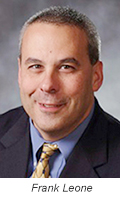 Frank Leone is a pulmonologist in the department of medicine. He directs Penn’s Comprehensive Smoking Treatment Program, a clinical program of the Harron Lung Center, located at both Penn Presbyterian Medical Center and the Perelman Center for Advanced Medicine. Dr. Leone’s scholarship focuses on investigating advanced treatment strategies for tobacco use disorder, and on testing educational strategies for improving the care of tobacco-dependent patients. His scholarly activity occupies the intersection of physical and behavioral medicine in a meaningful way. Many of his trainees find his teaching to be transformative, regardless of level of experience or professional discipline. He has taught a variety of professionals—including undergraduate and medical students, oncologic surgeons and psychiatrists, and community addiction counselors—all with the same effect. He has made several unique contributions to the University’s teaching mission and has received special attention from a number of professional and scientific societies. A former fellow stated: “He is a master educator with infectious enthusiasm and his lectures have aided numerous trainees and faculty in developing a more sophisticated armamentarium to effectively counsel patients.”
The Special Dean’s Award
The Special Dean’s Award was established in 1989-1990 to recognize outstanding achievements in medical education by faculty members, particularly in the development of new, innovative educational programs. The senior vice dean for education, in consultation with the Teaching Awards Selection Committee, identifies unique contributions by the faculty, resulting in their receipt of this special honor.
This year, there were four recipients.
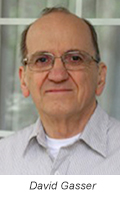 David Gasser, professor emeritus of genetics, is receiving the Special Dean’s Award in recognition of his serving as the course director for PSOM’s genetics course for first-year medical students since its beginning as a founding course in Curriculum 2000. He has been completely dedicated to medical student education and also served as the original leader of Module 1, the portion of the curriculum devoted to pre-clinical sciences. He performs his role with great dedication and equanimity. Dr. Gasser sits on multiple administrative committees for the Immunology Graduate Group, the department of genetics and PSOM. Students have commented that “genetics was perfectly designed to help me learn.” He has demonstrated great commitment to students irrespective of their scientific background and has been a leader of medical education at PSOM.
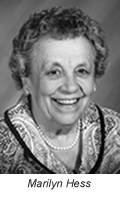 Marilyn Hess, the late professor emerita of pharmacology, who died last fall (Almanac November 3, 2015), is receiving this posthumously. She was known for her tireless service and earnest commitment to the mission of the Perelman School of Medicine. Her research background and long-standing commitment to the educational mission of the School provided special insights into the essential components of a successful and productive research program. Dr. Hess was instrumental in the initial design, implementation and assessment of the School’s Curriculum 2000, which was implemented in 1998. Her efforts were essential to ensuring that medical students were exposed to basic pharmacology across all organ systems. The model that was developed with her help is in place to this day. She was a tireless educator with an enduring impact on the School.
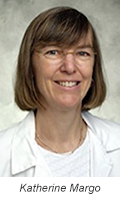 Katherine Margo has been the director of student programs for the department of family medicine & community health since 2000. She has been the clerkship director and co-director of the Doctor-Patient Communication course since 2001. She helped start the Sayre Health Center, a Federally Qualified Health Center (FQHC) in West Philadelphia that has the dual mission of service to the community and education at all levels; she has been an active board member and now serves on its advisory board. Dr. Margo has been active nationally through the Society of Teachers of Family Medicine, where she founded the Medical Student Educators Development Institute and served as director for its first eight years. She has been active in the American Balint Society and recently chaired its Credentials Committee. She won the Lindback Award in 2013.
 Rudolf R. Roth is an associate professor of clinical dermatology and the director of clinical dermatology at Penn Medicine at Radnor. He completed his dermatology residency at Walter Reed Army Medical Center in 1988 and completed a 26-year career in the United States Air Force before joining the Penn faculty in 2001. He was nominated for this award because of his work in creating educational partnerships between Penn and programs in other countries, and a joint service trip to an underserved part of each country. A supporting letter states that he “envisioned a program that would allow Penn’s department of dermatology to partner with dermatology residency programs in developing countries. The program was initiated by Dr. Roth visiting an international residency program based in Guatemala. A core motivation of these trips is teaching others, including residents from Penn who often accompany Dr. Roth on these weeklong trips, as well as the residents and staff from [the host country].”
The Jane M. Glick Graduate Student Teaching Award
The Jane M. Glick Graduate Student Teaching Award was established in 2010 by the Glick family in remembrance of Jane Glick (Almanac November 24, 2009) and her dedication to the Biomedical Graduate Studies (BGS) programs.
 Erika Holzbaur is a professor of physiology. She completed her postdoctoral fellowship at the Worcester Foundation for Experimental Biology before joining the biochemistry department at Penn in 1992. She is chair of the graduate program in cell biology, physiology & metabolism within the Cell & Molecular Biology Graduate Group (CAMB) and has provided long-standing, exemplary service to the BGS/PSOM/Penn core mission of educating, mentoring and training the next generation of biomedical scientists. She received considerable praise and appreciation from her colleagues and students for her teaching and mentoring acumen, as well as for her leadership roles in the Graduate Group across many years. Her dedication to these efforts exemplifies the type of scientist/educator represented by Jane Glick.
Medical Student Government Clinical Teaching Award
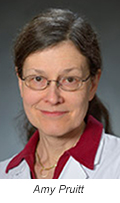 Amy Pruitt is a professor of neurology and director of Medical Student Education for Neurology. She is described as “a treasure” and “a fantastic teacher and physician who is loved by all trainees at all levels.” She is known to include clinical anecdotes related to case studies, making the material more tangible. As one student said, “Dr. Pruitt is quite possibly the smartest person I have ever met. She is an incredible student educator and an expert at her craft.” Another said, “She has a unique ability to impart information in a way that makes it impossible to forget.” A third student said, “Fantastic, phenomenal, amazing, awesome—there are just a few adjectives that come to mind when describing Dr. Pruitt.”
Dr. Pruitt received the Lindback Award for Distinguished Teaching in 2007, as well as four Penn Pearls Awards presented by the medical students for outstanding teaching in 2000, 2007, 2011 and 2016. She was elected to the inaugural class of the Academy of Master Clinicians in 2013. She is the recipient of the C. William Hanson Distinguished Service Award, Medical Board of the University of Pennsylvania; and the Alfred Stengel Health System Champion Award. She also received the Medical Student Government Clinical Teaching Award in 2014.
Medical Student Government Basic Science Teaching Award
 James White is an adjunct associate professor of cell & developmental biology in the Perelman School of Medicine, where he teaches a number of introductory courses, including gross anatomy, neuroscience and histology. Dr. White is described as an “engaging instructor who helps students find answers for themselves.” One student said, “Professor White is animated and clearly demonstrates a passion for cell and tissue biology. Even though the material is pretty dry, he manages to make it entertaining and interesting.” Another said, “He is clear and thorough and very good at explaining complex concepts.” Students appreciate Dr. White’s willingness to stay late and review structures with them. As one student summed it up, “Beyond being a great teacher, I think this really shows his dedication.” This is the seventh year he has won the award.
Of Record: Salary Guidelines for 2016-2017
The University of Pennsylvania’s merit increase program is designed to recognize and reward the valuable contributions of faculty and staff to the University’s commitment to the highest levels of excellence in teaching, research and administration by paying market competitive salaries in a fiscally responsible manner. The merit increase pool for fiscal year 2017 is based on market trends and economic conditions. With this in mind, the following guidelines are recommended.
Faculty Increase Guidelines
Below are the standards for faculty increases that the deans are asked to follow. The deans will give the department chairs their own guidelines at the school level regarding available resources.
• The minimum academic salary for new assistant professors will be $67,000.
• Merit increases for faculty should be based solely on performance as evidenced by scholarship, research, teaching and service to the University and the profession. As in previous years, there will be no cost-of-living increase for continuing faculty.
• The aggregated merit increase pool for faculty will be 3.0 percent. Some Schools and Centers may have financial constraints that can only support budget growth of less than 3.0 percent. Salary increase recommendations that are below 1.0 percent for non-meritorious performance, as contrasted with general limits applied to an entire class of faculty, must be made in consultation with the Provost. Likewise, salary increases that exceed 5.0 percent due to market conditions must also be made in consultation with the Provost. Deans may wish to give careful consideration to salary adjustments for faculty who have a strong performance record but whose salaries may have lagged behind the market.
Staff Increase Guidelines
Presented below are the merit increase guidelines for July 1, 2016.
• This year’s aggregate salary increase pool is 3.0 percent with a range of zero to 5.0 percent. Merit increases should not exceed 5.0 percent. Any variation less than a 3.0 percent pool must be approved by the Provost and/or the EVP and will be communicated separately by the School or Center administration.
• Monthly, weekly and hourly paid staff members are eligible for a merit increase if they are regular full-time, regular part-time or limited service status employees, and were employed by the University on or before February 29, 2016. The following groups are not covered under these guidelines: student workers, interns, residents, occasional and temporary workers, staff on unpaid leave of absence, staff on long-term disability and staff who are covered by collective bargaining agreements.
• The merit increase program is designed to recognize and reward performance. The foundation of this program is the Performance and Staff Development Plan. Salary increases should be based on performance contributions within the parameters of the merit increase budget. The performance appraisal system documents each employee’s performance and contributions and establishes performance goals for the new fiscal year. All employees must receive a Performance and Staff Development Plan for the next review cycle whether or not they receive a merit increase. Schools and Centers are requested to submit performance appraisals by June 1, 2016. The Division of Human Resources’ Staff and Labor Relations team is available to discuss performance management issues.
• Merit increases should average no more than 3.0 percent and may average less if a School or Center establishes a lower percentage merit pool based on financial considerations. The aggregated salary pool within a School or Center may not exceed 3.0 percent regardless of performance rating distributions. Performance expectations should be raised each year as employees grow in experience and job mastery. Performance ratings and raises should reflect a normal distribution for all employees. Employees with unacceptable performance are not eligible for a merit increase.
• The University’s salary ranges have been increased effective April 1, 2016. All staff salaries must be at or above the minimum of their respective grades as of April 1, 2016.
• There will be no bonuses, in keeping with the elimination of discretionary bonuses announced in prior years.
The Division of Human Resources’ Compensation office is available to discuss specific merit increase parameters with Schools and Centers. Staff and Labor Relations team members are available to discuss performance management issues.
—Amy Gutmann, President
—Vincent Price, Provost
—Craig Carnaroli, Executive Vice President
Benefits Open Enrollment April 18-29
Benefits Open Enrollment begins Monday, April 18 and ends Friday, April 29. Below is the information you need to make changes to your health care benefits for the new plan year, which begins July 1.
How to Enroll: From Monday, April 18 through Friday, April 29, make changes to your benefits coverage online at www.pennbenefits.upenn.edu using your PennKey and password.
If you don’t have internet access, go to one of the following locations on campus to enroll online, or contact the Penn Benefits Center at 1-888-PENN-BEN (1-888-736-6236), Monday-Friday, 8 a.m.-6 p.m. (EST), and complete your enrollment over the phone.
Goldstein Undergraduate Study Center
3420 Walnut Street
(ground level of Van Pelt-Dietrich Library)
Monday-Thursday:
24 hours daily
Friday: closes
12 midnight
Saturday:
10 a.m.-2 a.m.
Sunday:
opens 10 a.m.
Human Resources
3401 Walnut Street,
5th Floor
Monday-Friday:
8:30 a.m.-5 p.m.
UA Staffing (formerly Unique Advantage)
3624 Market Street, Suite 1SD
Monday-Friday:
8 a.m.-5 p.m.
Making Changes During Open Enrollment: During Open Enrollment you need to determine if your current benefits still meet your needs or if you need to make a change, such as:
• Enrolling, switching or dropping a medical, dental or vision plan.
• Increasing or decreasing your life insurance coverage.
• Reviewing your life insurance beneficiary.
• Changing how much you contribute to a flexible spending account.
• Adding or dropping a dependent from your benefits coverage.*
*If you add a new dependent, you’ll receive a letter requesting that you provide verification of that dependent’s eligibility under Penn’s plan rules. You’ll also need to provide verification if you re-enroll a spouse/partner who had previously been covered.
If You Don’t Enroll: If you don’t make changes during Open Enrollment, you’ll receive the same coverage you had last year.
It is important to remember that under the Affordable Care Act, if you waive your University coverage, you are still responsible for obtaining coverage through some other source.
Making Changes After Enrollment: The choices you make during Benefits Open Enrollment will remain in effect through June 30, 2017, unless you experience a qualifying event. Qualifying events include the birth or adoption of a child, marriage or domestic partnership (prior to July 1, 2016), divorce or separation, death of a dependent and change in your dependent’s eligibility for benefits.
When Are Changes Effective? Changes made during Open Enrollment will be effective as of July 1, 2016. New rates for all plans will be reflected in your July 2016 paycheck. Your pay must support your contributions for the benefits elected. If that is not the case, your enrollment cannot be processed.
More Information: Learn more about the 2016-2017 Open Enrollment period from the following resources:
Open Enrollment Presentations: Presentations run for 45 minutes and are followed by a Q&A session.
Tuesday, April 12
noon
Houston Hall, Golkin Room
Thursday, April 14
noon
Perelman School of Medicine, BRB Auditorium
Monday, April 18
11 a.m.
Houston Hall, Golkin Room
Monday, April 25
noon
Houston Hall, Golkin Room
Attend a Fair
Tuesday, April 19
10 a.m.-2 p.m.
Houston Hall, Hall of Flags
Wednesday, April 20
10 a.m.-2 p.m.
New Bolton Center,
Alumni Hall
Visit the Website: At www.hr.upenn.edu/openenrollment you can access 2016-2017 rates, benefit comparison charts, contribution charts and online provider directories. Contact the Penn Benefits Center at 1-888-PENN-BEN (1-888-736-6236), Monday-Friday, 8 a.m.-6 p.m. (EST).
—Division of Human Resources

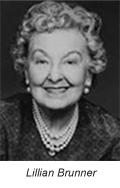 Lillian Sholtis Brunner, HUP’40, ED’45, HON’85, a former Overseer of the University of Pennsylvania School of Nursing, died on March 23. She was 97 years old.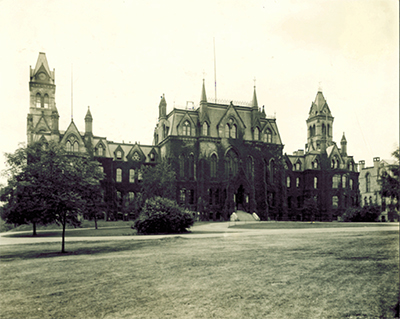

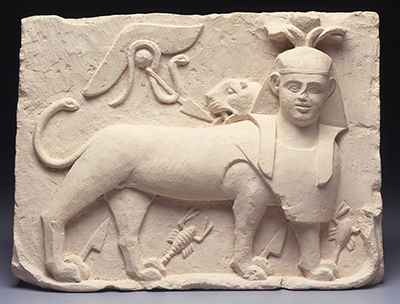 Protective amulets, incantation bowls, curse tablets, powerful rings, magical stones and anatomical votives—these objects and more, once used by ancient peoples seeking to fulfill desires through supernatural means, are featured in Magic in the Ancient World. The new exhibition opens Saturday, April 16 at the Penn Museum, and runs through April 2017.
 Employees of the University of Pennsylvania and UPHS are invited to take home a free yard tree as part of Penn’s continuing efforts to increase the greenery in the greater Philadelphia area. This spring, Penn is partnering with Philadelphia Parks and Recreation for Creating Canopy 2016. A limited number of free trees will be given away on a first-come, first-served basis to interested Penn and UPHS staff and faculty who pre-register online registration before April 29.