Procedures for Resolving Complaints Against Faculty of Sexual Assault,
Sexual Violence, Relationship Violence and Stalking
Effective Date: March 1, 2016
Over the last several years, sexual violence on college campuses has been the subject of considerable attention from the White House, the US Senate, and the US Department of Education’s Office for Civil Rights (OCR). New legislation has been passed by Congress, and new guidance has been issued by OCR that affects colleges and universities across the country. Penn has a long track record of offering innovative education and prevention programs and has been a longtime leader in responding to complaints of sexual violence. To help ensure that our policies and protocols reflect best practices, we periodically review those policies and protocols in consultation with faculty, students and staff. As a result, we have, in recent years, revised our Sexual Violence, Relationship Violence and Stalking Policy (“Sexual Violence Policy”); created and filled a new position for a Sexual Violence Educator; and strengthened the educational initiatives offered as part of New Student Orientation.
The procedures below, which have been reviewed by the Faculty Senate and the Council of Deans, address the process by which complaints against a University faculty member for a violation of the Sexual Violence Policy will be adjudicated and resolved. All such complaints will be investigated by the Office of the Sexual Violence Investigative Officer beginning March 1, 2016, according to the specific procedures enumerated below.
Ensuring the safety and wellbeing of our community is among our highest priorities, and the prevention of sexual violence on campus is central to that aim. We will continue to do all that we can to help ensure that those making complaints and those responding to those complaints are treated fairly and receive the support they need throughout the process. We again express our gratitude to the members of our community who work tirelessly on violence prevention and response efforts. We thank all of those who offered advice and counsel and encourage your continued engagement in discussions about these important matters.
—Amy Gutmann, President
—Vincent Price, Provost
Introduction
The University of Pennsylvania is committed to providing a safe and healthy environment, free of gender-based misconduct, to all members of our community and visitors to our community. As such, sexual assault, sexual violence, relationship violence and stalking will not be tolerated. In order to ensure the creation of a climate where members of the community are able to thrive and achieve their full potential, the University has developed a wide range of policies, educational programs, broad-based resources, support and reporting systems. These procedures supplement these other policies and initiatives, addressing the process by which complaints against a University faculty member for a violation of the Sexual Violence, Relationship Violence and Stalking Policy (“Sexual Violence Policy”) will be adjudicated and resolved.
Confidentiality
Confidentiality is of critical importance in ensuring that these sensitive matters are handled appropriately. The University has an obligation to address complaints with respect to the violation of the Sexual Violence Policy as fairly and expeditiously as possible as soon as it becomes aware of an allegation that the Policy has been violated. To that end, if any University official or other responsible person at the University is informed of an allegation that the Policy has been violated, the University is required to respond, unless the informed official is serving in a privileged capacity (for example, a designated confidential resource, a therapist, clergy or a medical provider).
The response to the complaint, however, including seeking a resolution under this procedure, should be treated as confidential to the extent permitted by law. University staff and faculty may share information with University administrators and others who have a legitimate need to know in order to address complaints fairly and effectively, but the information should be considered confidential and should be protected to the greatest extent possible. Such administrators may include, for example, the applicable Dean or Department Chair, the Office of the Vice Provost for Faculty, the Office of the Vice Provost for University Life, the Office of the Sexual Violence Investigative Officer, the Title IX Officer, Public Safety, the Office of General Counsel, Counseling and Psychological Services, Student Health Service and academic advising offices.
I. Reporting Complaints of Violation of the Sexual Violence Policy
A. Office of the Sexual Violence Investigative Officer
The Office of the Sexual Violence Investigative Officer (SVIO) will be responsible for managing all complaints made against a University faculty member alleging a violation of the Sexual Violence Policy. All SVIO responsibilities as described in these procedures may be performed directly by the SVIO or by his or her designee, in consultation with the appropriate Dean or the Vice Provost for Faculty.
Complaints must either be presented in writing, or based upon information provided by the complainant or another individual making the report to the SVIO who will then memorialize the allegations in writing and ask the complainant to confirm the allegations. Complainants may include University students, staff or faculty members, as well as others both within and outside the University community, alleging a violation against a University faculty member.
B. Office of the District Attorney and Office of Civil Rights
Complainants may also choose to file a report with the District Attorney or with the Office of Civil Rights of the U.S. Department of Education. The University system and the legal system are independent of one another, and the University has its own interest in, and responsibility for, the enforcement of its Sexual Violence Policy.2 Therefore, the University will not unilaterally defer its proceeding pending the outcome of a criminal process, nor will the outcome of any legal process be determinative of the University result. The University will, however, comply with reasonable requests by law enforcement for cooperation, and may temporarily suspend its fact-finding process in a sexual assault investigation so as not to impede the law enforcement process.
C. Support, Counseling and Advice
In making a decision about whether to file a complaint, complainants may seek support, counseling and advice from other offices on campus. A list of these offices is provided in Section III. A. below. Should the complainant determine to proceed with an on-campus complaint investigation and resolution process against a University faculty member, the Office of the Sexual Violence Investigative Officer will be the single place to initiate the process.3
D. Timeframe for Submitting a Complaint
The University does not limit the timeframe for filing a report of a violation of the Sexual Violence Policy. Reports may be filed at any time, although the University’s ability to investigate or take action may be limited by the passage of time, or by changes in the employment relationship of the alleged respondent at the time the report is made.
E. Complainant Request for Confidentiality
The University is required by Title IX to weigh the complainant’s request for confidentiality/privacy with the University’s commitment to provide a reasonably safe and nondiscriminatory environment. In situations where a complainant requests privacy, the University’s ability to investigate and respond to the allegations may be limited.
The SVIO will notify the complainant if the University cannot, in unusual cases, maintain the complainant’s confidentiality/privacy. The complainant’s and respondent’s identities will only be revealed to those individuals who need to know their names in order to investigate or adjudicate the complaint or provide interim measures.
In situations where the University becomes aware of behavior or a pattern of behavior by one or more respondents, the University will take appropriate action in an attempt to protect the University community.
II. Investigation and Resolution of Complaints
A. Timely Resolution
The process of resolving complaints, exclusive of any appeal, should be completed, unless there are special circumstances, within 60 business days of the filing of the written complaint. The appeal should be completed, absent special circumstances, within 30 business days of the filing of the appeal.
In the event that a Hearing Panel is convened, the complainant and the respondent will both be provided with a copy of the decision of the Panel and given 10 business days from the date of the transmittal of the Hearing Panel’s decision to file an appeal.
B. Rights and Protections for Complainant and Respondent
1. The complainant and respondent have the right to a process that is fundamentally fair, and free of bias or prejudice.
2. The complainant and respondent have the right to be treated with respect, dignity, sensitivity and fairness throughout the entire process. They are both entitled to seek support from the University and to be informed about the process both before the process is initiated and throughout the process as it unfolds.
3. Both parties have the right to participate in the process, or to refrain from participation. The failure to participate will not be used as evidence against either party, but also will not prevent the process from proceeding unless the complainant determines to withdraw the complaint and the University determines to abide by that request.
4. Both parties may have a lawyer or other advisor present when being interviewed by the Investigative Team and the Hearing Panel, but the lawyer or other advisor will not be permitted to present statements, seek the production of evidence, or question any witnesses. A non-lawyer advisor must be a member of the University community.
5. Evidence of prior sexual conduct by the complainant or respondent with other partners will not be considered in the process, and any evidence of a prior sexual relationship between the parties will not be determinative of the issue of consent. If there is credible evidence of a pattern of violations of the Sexual Violence Policy, evidence that helps to establish such a pattern may be considered by the Hearing Panel.
6. While the process is underway, appropriate interim measures will be taken to protect the parties. If both the complainant and the respondent are faculty members, the Dean(s) of the school(s) to which the faculty members have appointments—or the Dean(s)’ designee(s)—would work with the complainant and respondent, ensuring support is provided to both sides, and implementing interim measures to protect the parties, consistent with principles of fairness. In the event that the complainant is a staff member or a student, the Dean of the school to which the respondent has an appointment—or the Dean’s designee—will work with Human Resources (for staff members) and the Vice Provost for University Life (for students) to implement interim measures.
C. Preliminary Determination
Upon receiving a complaint, the SVIO will make a preliminary determination as to whether the complaint falls within the purview of the Sexual Violence Policy and whether, on its face, there appears to be a sufficient basis to conduct a full investigation. In making this determination, the SVIO may interview the complainant and the respondent and conduct whatever preliminary investigation the Officer deems necessary to determine if the actions alleged in the complaint would, if true, constitute a violation of the University’s Sexual Violence Policy and there is a reasonable basis for investigating the charges. If the SVIO concludes there is insufficient basis to proceed, the matter will be concluded and the parties so advised.
D. Investigation
If the SVIO makes the determination that there is a sufficient basis to proceed, the Officer will issue a Statement of Charge Letter, based on the complaint and any preliminary investigation conducted. The Charge Letter will be provided to the complainant and the respondent. The respondent will be provided the opportunity to respond in writing to the Charge, and any response will be shared with the complainant. The Dean of each school to which the respondent faculty member has an appointment will also receive a copy of the Charge Letter.
The SVIO will lead a thorough and impartial investigation, assisted by one or more co-investigators who may come from the school of the complainant or respondent or from elsewhere in the University (the “Investigative Team”). The co-investigator(s) will be University staff or faculty members appropriately trained as investigators in handling sexual violence cases, and will be selected for individual cases by the SVIO. The investigation will include interviews of the complainant and respondent, interviews of witnesses, and review of documentation, physical evidence and any other relevant evidence.
Prior to interviews, the complainant, the respondent and any relevant witnesses will be informed by the SVIO that statements they make during the process may be admissible in concurrent or subsequent civil or criminal court proceedings, and will accordingly also be informed of their rights as outlined in Section B above. The parties will be advised of the seriousness of the proceeding and the expectation that the information they provide is both accurate and complete. Any false or misleading statements may subject the party making such statements to proceedings under the applicable University policy, handbook, code and/or charter. The complainant and respondent may have their advisors4 and/or outside counsel present for their interviews, but the advisors or outside counsel will not be permitted to participate in the interview other than to provide advice to the person they have accompanied, and they may be excluded from the interview for disruptive behavior.
In conducting the investigation, the Investigative Team may, as appropriate, also consult with other campus officials including but not limited to administrators in the relevant school(s), Public Safety, the Title IX Coordinator, the Vice President for Institutional Affairs, the Vice Provost for Faculty or the Vice Provost for University Life. The Investigative Team may also consult with the Office of General Counsel, who may determine in particular cases to engage outside counsel to assist the University throughout this process. The Investigative Team may engage forensic and other experts, as needed.
E. Investigative Report
At the conclusion of the investigation, the Investigative Team will prepare a draft factual investigative report, including assessments of credibility, a recommended finding as to responsibility, and recommended sanctions, if appropriate. In making the responsibility determination, the Investigative Team will use a “preponderance of the evidence” standard. In other words, to find a faculty member responsible for violating the Sexual Violence Policy, the Investigative Team must be convinced that it is more likely than not that a violation of the Sexual Violence Policy has occurred.
1. Opportunity for Review and Comment
The draft investigative report will be provided to both the complainant and respondent for their prompt review and comment, under strict instructions that the draft report is confidential, and not to be shared with anyone other than their families and advisors, who must be members of the University community and/or outside counsel, as described above. Sharing of the report by either party, their families, advisors or outside counsel with any additional persons will be strictly prohibited. The complainant and respondent will also be provided the opportunity to review the underlying evidence and witness statements with their advisors, but they will not be provided, or permitted to make, copies.
2. Final Report
As a result of the response and comments received, the Investigative Team may conduct a further investigation and/or amend the draft report, if the Team determines either action to be warranted. A final investigative report will be prepared, incorporating any changes, and shared with the complainant and the respondent. The complainant and respondent may submit formal objections or comments to the final report, which will become part of the final report of the matter.
F. Resolution Without a Hearing
The matter may be resolved at this stage if both parties agree to the recommendations of the Investigative Team with respect to responsibility and, if applicable, sanctions, or if the parties otherwise reach a mutually acceptable resolution. The University, however, will not compel either the complainant or the respondent to engage in face-to-face mediation or to accept the recommendations of the Investigative Team.
G. Hearing Panel
If the matter is not resolved at this stage in a mutually acceptable manner, the SVIO will present the final investigative report, together with any comments provided by the complainant and/or respondent, to a Hearing Panel (“Panel”).
1. Panel Membership
The Panel will be comprised of three (3) faculty members and the Designated Hearing Officer (DHO), who will be a non-voting member. The DHO will make all decisions about the organization of the Panel, including decisions regarding the admissibility of evidence, witnesses to appear before the panel, or any additional decisions regarding the administration of the hearing process.5
Membership of the Panel, including the DHO, will observe the following guidelines:
i. Members will be selected from a pool of faculty who have agreed to serve for a term of one or more years.
ii. Only Panels that have training in handling complaints involving sexual misconduct will hear sexual misconduct cases.
iii. Faculty comprising the Panel should be from academic departments in which neither of the parties is affiliated (e.g., has a faculty appointment or is enrolled in a course of study), and no faculty member may serve on the Panel who has a professional, academic or personal relationship with either of the parties.
iv. Faculty asked to serve must recuse themselves or be dismissed if they have any personal ties to either of the parties or to individuals with whom the parties are closely associated. Faculty with personal knowledge of the alleged incident of sexual misconduct also must recuse themselves or be dismissed.
v. The University will train members of the pool to fulfill their responsibilities as adjudicators according to the procedures and policies outlined here and to ensure compliance with Title IX and other applicable state and federal guidelines. In addition, the Panel will be provided with “just in time” training on adjudicating sexual violence cases, unless the Panel members have recently been trained.
vi. The SVIO may not serve on the Panel; however, the SVIO may be interviewed by the Panel regarding his or her investigation and may assist the DHO as needed in organizational and administrative matters related to the Panel.
vii. The complainant and respondent will be notified of the membership of the Panel in advance of the Hearing. Any challenges for cause against individual Panel members must be made promptly so as not to delay the conduct of the Hearing, and will be given serious consideration by the DHO to ensure impartiality of the proceedings.
viii. All proceedings must be kept strictly confidential among the parties, witnesses and members of the Panel. All individuals involved in such hearings must agree to such conditions of confidentiality.
2. Hearing Procedures
Hearings must be prompt, fair and impartial, affording the complainant’s allegations and the respondent’s defenses all due consideration and protecting the rights of both parties. The Panel will review the Investigative Team’s final report, including any responses, objections or comments provided by the complainant and/or respondent. The Panel will also carefully review the evidentiary record, including witness statements, documents and physical evidence.
i. Hearing Panel Interviews
The Panel will interview separately the SVIO (and co-investigator(s) if the Panel so chooses), the complainant and the respondent. The Panel will, whenever possible, provide the complainant and respondent with five days advance notice of the Hearing. If reasonably possible, interviews will be conducted on one day, but if such scheduling would require an unreasonably long day, or if such scheduling would unreasonably delay the proceeding, the Hearing may be scheduled over multiple days.
The Panel may seek additional evidence from the SVIO and interview key witnesses on whom the SVIO relied in drawing his or her conclusions, as well as request additional evidence from the SVIO to clarify the evidentiary record, provided that it can do so without unreasonably delaying the process. In the event that a new witness comes forward during the Hearing who was not originally interviewed by the SVIO, or new evidence is discovered after the SVIO has issued his or her report, the DHO may allow that witness to be interviewed or admit the evidence to the hearing, but only if the DHO judges the new witness or evidence to be highly relevant to an accurate and fair determination of the outcome.
a. The Hearing will be held in private, and only the Panel may conduct interviews. Only the person interviewed (and in the case of the parties, that person’s advisor or outside counsel) will be present at the Hearing during interviews. The complainant or respondent (and their advisor or outside counsel, as applicable) will be able to view testimony from separate rooms, upon request, via closed-circuit television or similar video transmission.
b. Subject to the protections set forth in Section B above, the Panel has wide latitude when questioning the complainant, the respondent and any witnesses in order to determine the accuracy of the report.
c. The complainant and respondent may propose witnesses and provide specific questions in advance that they believe important to ask of other parties or witnesses. The parties also may submit questions during the Hearing that they wish to have asked. The DHO, in consultation with the Panel, will determine the relevance as well as the appropriateness of witnesses and questions, and may accordingly place restrictions on, include or exclude witnesses or other information.
d. When the Panel is conducting the interview of the complainant and respondent, each may bring an advisor or outside counsel with them to provide advice and support, but the advisor or outside counsel will not be permitted to participate in the interview other than to provide advice to the complainant or respondent and may be excluded from the interview by the DHO for disruptive behavior.
e. The interviews by the Panel will be recorded (audio only). No observers will be permitted to make any audio or video recordings.
3. Hearing Panel Decision
After the Hearing concludes, the Panel will immediately deliberate in private to decide whether a preponderance of the evidence shows that the respondent is responsible for a violation of the University’s Sexual Violence Policy. Preponderance of the evidence means that the Panel must be convinced based on the evidence that it is more likely than not that a violation has occurred in order to find a faculty member responsible for violation of the policy. A finding of responsibility requires a majority vote of the members of the Panel.
i. If the respondent is found responsible, the Panel will also recommend an appropriate sanction, by majority vote, based upon the facts of the case and University precedent, with a presumption in favor of the sanction recommended by the SVIO.
ii. The Panel will arrive at its conclusion as expeditiously as possible, and will promptly advise both the complainant and the respondent in writing of its decision with respect to responsibility and, if applicable, recommended sanctions. In keeping with guidelines for timely resolution as provided in Section A above, the written decision will be provided as soon after the conclusion of the proceeding as is possible.
iii. Decisions made by the Panel are considered final, subject only to appeal as outlined below.
H. Appeal of Hearing Panel Decision
The Panel decision is subject to appeal by either party in writing to the Vice Provost for Faculty (or his or her designee), who has exclusive jurisdiction to decide appeals. In keeping with guidelines for timely resolution as provided in Section A above, appeals should be submitted within 10 business days of transmission of the decision of the Panel. Letters of appeal should specifically state whether the objection is to the judgment of responsibility, the recommended sanction or both, and explain in detail the grounds for appeal.
1. The Vice Provost for Faculty (or his or her designee) will review the report of the Investigative Team and the decision of the Panel to ensure that the process was consistent with University policy and that the decision was not arbitrary or capricious. The audio record from the Panel Hearing, the supporting evidence and any other relevant materials may also be reviewed by the Vice Provost for Faculty (or his or her designee) at his or her discretion.
2. After considering the appeal, the Vice Provost for Faculty (or his or her designee) will promptly notify the parties in writing as to whether the Panel’s decision is upheld or modified.
I. Sanctions
After a final decision has been rendered (either by the Panel or, if an appeal is filed, by the Vice Provost for Faculty (or his or her designee), the matter is presented to the Dean of the school to which the respondent has an appointment for procedures related to sanctions. The Dean is provided the investigative report, along with the Panel’s decision and the appellate decision (if any).
1. If the respondent is a member of the Standing Faculty, the Dean will follow the procedures described in the Faculty Handbook’s section regarding Procedure Governing Sanctions Taken Against Members of the Faculty (Section II.E.16) starting at Subsection 3 (for Minor Sanctions) or Subsection 4 (for Major Sanctions), as appropriate, to determine what, if any, sanction should be imposed against the respondent based on the determination rendered by the Investigative Team, as well as the Panel and the appellate decision by the Vice Provost for Faculty (or his or her designee), if applicable, and following the Dean’s consultation with the Vice Provost for Faculty.
2. If the respondent is a member of the Non-Standing Faculty, the Dean will consider the determination rendered by the Investigative Officer, as well as the Panel and the appellate decision by the Vice Provost for Faculty (or his or her designee), if applicable, and consult with the Vice Provost for Faculty before implementing an appropriate sanction.
The matter will be referred to the Provost for sanctions purposes in lieu of the Dean in the event that the Dean is the respondent or if referral to the Dean would create an actual or apparent conflict of interest.
III. Resource Offices
A. Confidential Resources
The following is a list of confidential resources that can be contacted for support, counseling and advice. The information shared with these resources generally will be held in confidence, consistent with the University’s obligation to address complaints of sexual violence, unless the person sharing the information gives his or her consent to the disclosure of that information. The commitment to confidentiality does not preclude the sharing of information among responsible University administrators as needed, including to keep members of the University community safe.
Special Services Department, Division of Public Safety
24-hour Helpline: (215) 898-6600
4040 Chestnut Street
http://www.publicsafety.upenn.edu/special-services/
Counseling & Psychological Services
Main Number: (215) 898-7021
After-hours emergency number: (215) 349-5490
3624 Market Street, 1st Floor, West
http://www.vpul.upenn.edu/caps
Sexual Trauma Treatment Outreach and Prevention:
http://www.vpul.upenn.edu/caps/sttop.php
Penn Women’s Center
(215) 898-8611
3643 Locust Walk
http://www.vpul.upenn.edu/pwc/
Student Health Service
(215) 746-3535
3535 Market Street, Suite 100
http://www.vpul.upenn.edu/shs/
Lesbian Gay Bisexual Transgender Center
(215) 898-5044
3907 Spruce Street
http://vww.vpul.upenn.edu/lgbtc/
African American Resource Center
(215) 898-0104
3643 Locust Walk
http://www.upenn.edu/aarc/
Office of the Chaplain
(215) 898-8456
240 Houston Hall, 3417 Spruce Street
http://www.upenn.edu/chaplain/
Office of the Ombudsman
(215) 898-8261
113 Duhring Wing, 236 S. 34th Street
http://www.upenn.edu/ombudsman/
Employee Assistance Program, Penn Behavioral Health
(888) 321-4433
http://www.pennbehavioralhealth.org/services-eap.aspx
Office of Sexual Violence Prevention & Education
(215) 898-6081
VPUL, 3611 Locust Walk
https://secure.www.upenn.edu/vpul/pvp/gethelp
B. Official Reporting Office
The following is the official reporting office for violations of the Sexual Violence Policy.
Title IX Coordinator (Executive Director, Affirmative Action and Equal Opportunity Programs)
(215) 898-6993
3600 Chestnut Street, Sansom Place East, Suite 228
http://www.upenn.edu/affirm-action/titleix.html
C. Official Office for Sexual Violence Complaints and Investigation
The following is the official office for initiating a formal complaint and investigation for violations of the Sexual Violence Policy.
Office of the Sexual Violence Investigative Officer
(215) 898-2887
Suite 320, 3901 Walnut Street
http://www.upenn.edu/svio/

 The crisis of Philadelphia’s schools drew preeminent teaching expert Pam Grossman to the deanship of Penn’s Graduate School of Education (GSE), which she has led since January 2015 (Almanac April 1, 2014).
 The map demonstrates the range and depth of Penn GSE’s work. Penn GSE’s master’s and doctoral students participate in training partnerships in more than 90 city schools; they are teaching, counseling and leading. GSE’s researchers are engaged in efforts like Shared Solutions, a deep partnership between the University and school district to better understand the district’s turnaround efforts in order to make changes that can work across systems. Also, programs like the Philadelphia Writing Project provide professional development to hundreds of area educators.
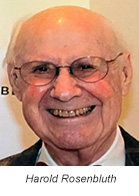 Harold S. Rosenbluth, C’47, L’50, a former Overseer of Penn Libraries, died of cancer at home in Haverford, Pennsylvania, on February 3. He was 91 years old.
 At Penn, going the extra mile gets you noticed. In its 17th year, the Models of Excellence Program will honor 77 outstanding staff members who play key roles in Penn’s successes every day.
 Modern African dance and traditional African music, an African marketplace, a mancala game station and craft making for families converge at the Penn Museum’s annual Celebration of African Cultures on Saturday, February 27, from 11 a.m. to 4 p.m. Local griots and artists lead guests in an interactive exploration of traditions from across the African continent, set among the Museum’s collection of textiles, sculpture and masks in the Africa Gallery, as well as among statuary and tomb materials from 5,000 years of Egyptian culture in the Egyptian galleries. Egun Omode (Children of the Ancestors), a West African dance and drum and Yoruba-folklore performing arts collective, will offer a grande finale performance.