
Richard Dunn, History
Richard Dunn, History
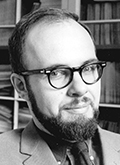 Richard Slator Dunn, the Roy F. and Jeannette P. Nichols Professor Emeritus in the department of history in the School of Arts and Sciences, passed away recently. He was 93.
Dr. Dunn completed his BA in 1950 at Harvard College, then went on to receive an MA from Princeton University in 1952, and a PhD in history from Princeton University in 1955. In 1957, he joined Penn’s faculty as an assistant professor of history. Six years later, he was promoted to associate professor, and in 1968, he became a full professor.
In 1961, Dr. Dunn received a grant from the American Council of Learned Societies to study revolutions in the U.K. and U.S., work that was published the following year as Puritans and Yankees. Five years later, he received a Guggenheim fellowship and also assumed acting directorship of Penn’s General Honors program. Also in 1966, he penned a piece in Almanac (April 1966) opining that Penn’s general honors program was too generic: “The general honors philosophy is that students who enter the program must take it in toto, and cannot skip courses in uncongenial fields.” In accord with these thoughts, in the late 1960s, he served on a committee to decide on the direction of the School of Arts and Sciences. He also served on several other governance committees at Penn, including a 1972 University Commission and a 1976 Task Force on Black Presence.
In 1972, Dr. Dunn was named the chair of Penn’s history department (a position he held for five years). Also in 1972, Dr. Dunn published a monograph, Sugar and Slaves, that contained groundbreaking revelations about colonial Jamaica (and was the subject of a 50th anniversary retrospective in 2021). The next year, he co-led (with faculty from Bryn Mawr College) an archaeological expedition in York, England. He was tapped to lead a prominent project again in 1979, when he spearheaded the publication of Pennsylvania founder William Penn’s papers, held by Penn, on the tercentenary of the state’s founding (Almanac May 8, 1979). During the 1980s, the papers came out in four volumes, edited by Dr. Dunn and his wife, Mary Maples Dunn.
Dr. Dunn’s defining contribution to Penn crystallized in 1977, when he launched the new Philadelphia Center for Early American Studies using a grant from the Andrew W. Mellon Foundation (Almanac October 25, 1977) and from the National Endowment for the Humanities (Almanac December 18, 1973). The center was renamed the McNeil Center for Early American Studies in 1998. As Emma Hart, today’s Richard S. Dunn Director of the center, stated, “the McNeil Center would not exist without Richard. He created the community of early Americanists at Penn that became the Philadelphia Center for Early American Studies. He then secured donations from Robert L. McNeil, Jr., and the Barra Foundation that endowed the vast expansion of the center’s fellowship programs, the establishment of its publication program, and, of course, funding for the directorship bearing his name that I am now honored to occupy. He and his spouse Mary Maples Dunn also repeatedly made extremely generous financial contributions to the center during the past two decades.”
Dr. Dunn chaired the McNeil Center from 1977 to 1980, then became the chair of the center’s Advisory Council. In 1984, he was named the first Roy F. and Jeannette P. Nichols Professor of American History (Almanac September 4, 1984). During the academic year 1987-1988, he was elected to the Harold Vyvyan Harmsworth Professorship of American History at Oxford University, but he remained active at Penn; in 1994, he chaired a community to select a new deputy provost. Dr. Dunn retired from Penn and took emeritus status in 1996, but his retirement did not prevent him from continuing to contribute to the field of early American history; in 2000, he was elected to the American Academy of Arts and Sciences. Two years later, he was named an executive officer of the American Philosophical Society.
A Richard S. Dunn directorship of the McNeil Center and a Richard S. Dunn Teaching Award in the department of history have been established in Dr. Dunn’s honor. Dr. Dunn is survived by his two children, Rebecca (Andrea Kurtz) and Ceci (Lee Campbell); and three grandchildren.