Arthur Asbury, Neurology
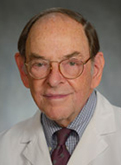 Arthur Knight Asbury, HON’15, the Van Meter Professor of Neurology Emeritus at the Perelman School of Medicine, former interim dean and vice dean of the school, former executive vice president of the University of Pennsylvania Medical Center, and a 2015 Penn honorary degree recipient, died on October 19 from prostate cancer and dementia. He was 93.
Born to two physicians in Cincinnati, Ohio, Dr. Asbury grew up at the historic Forest Retreat, a thoroughbred horse farm in Carlisle, Kentucky. He attended high school at Phillips Academy in Andover, Massachusetts, then earned a bachelor’s degree in agriculture from the University of Kentucky in 1951. He served in the U.S. Army Reserve from 1951 to 1953, where, based on his BS degree, he was assigned to the First Guided Missile Group as an instructor. He then graduated first in his class from the University of Cincinnati College of Medicine in 1958 and completed an internship and residency at Massachusetts General Hospital, then held research and clinical fellowships at the hospital and Harvard Medical School from 1963 to 1965. In 1969, he became chief of the neurology service at the San Francisco Veterans Administration Medical Center. At the same time, he was first an associate professor, then a professor and vice chair of neurology and a professor of pathology at the Medical School of the University of California, San Francisco.
In 1974, a year-long national search selected Dr. Asbury as the chair of neurology at the University of Pennsylvania School of Medicine. During his first decade at Penn, he was active in his field, becoming a leading researcher in peripheral neuropathies like Guillain-Barré Syndrome and writing a book and over 100 articles on the subject. He stepped down as chair in 1982 and was appointed to the Van Meter professorship the next year (Almanac January 17, 1984). His leadership in Penn’s health system was far from over, however: He served as interim dean and executive vice president of the University of Pennsylvania Medical Center in 1988-89 (Almanac July 12, 1988; April 11, 1989), then fulfilled a three-year term as vice dean for research and a four-year term as vice dean for faculty affairs. Dr. Asbury retired and took emeritus status in 1997, but remained active at Penn, again becoming interim dean of the School of Medicine in 2000-2001 (Almanac February 22, 2000).
During his periods of leadership of the School of Medicine, Dr. Asbury continued to teach, and in 2000, he won Penn’s Lindback Award for Distinguished Teaching (Almanac April 18, 2000). “It was because Dr. Asbury was chairman that I sought out my residency at Penn; he was known as a superior clinician and teacher,” wrote a resident. “He was and is the consummate traditional academic clinician.” A physician wrote, “Because of his combination of academic achievement, intellectual skills and personal qualities, Dr. Asbury is one of the pivotal individuals in my neurological training.” A student said, “Dr. Asbury’s importance as a mentor has never flagged. I still turn to him when I need help with a particularly challenging clinical problem. He is a strong advocate for young scientists and epitomizes excellence in teaching.” The School of Medicine established the annual Arthur K. Asbury Outstanding Faculty Mentor Award and the Arthur Knight Asbury Professorship in Neurology on his honor, and a portrait of him hangs in the second floor of Penn’s Clinical Research Building.
At Penn and in the field, Dr. Asbury was renowned for his clinical and experimental studies of peripheral neuropathies, particularly those seen with chronic kidney failure, and in patients with diabetes mellitus and Guillain-Barré syndrome. This research has continued to impact diverse treatments, ranging as far as swine flu vaccines. Over the course of his career, his work was published in over 230 articles, chapters and books. He was elected to the Institute of Medicine of the National Academy of Sciences, led many editorial boards, and was chief editor of the Annals of Neurology. Dr. Asbury was involved with the World Federation of Neurology, the American Neurological Association, and the Council of the National Institute of Neurological Disorders and Stroke, and was a fellow of the American Association for the Advancement of Science and the Royal College of Physicians. Dr. Asbury received the Penn Health System I.S. Ravdin Master Clinician Award, the Lifetime Achievement Award of the World Federation of Neurology, and the Meritorious Service Award of the College of Physicians of Philadelphia. For several years in the 1990s, Dr. Asbury was listed in the annual The Best Doctors in America publication. In 2015, Penn awarded him an honorary doctorate of sciences (Almanac February 17, 2015).
Dr. Asbury skied, played tennis and golf, and had season tickets for the Phillies. He enjoyed the Philadelphia Orchestra, and he and his family vacationed in Maine.
He is survived by his wife, Carolyn; his daughters Dana and Lyndia; his son, Will; two grandchildren; three great-grandchildren; a sister; and other relatives. Donations in his name may be made to the GBS-CIDP Foundation International, 375 East Elm St., Suite 101, Conshohocken, PA 19428; Penn Medicine Hospice Services, 150 Monument Rd., Suite 300, Bala Cynwyd, PA 19004; and the Arthur K. Asbury Accelerator Fund, Penn Medicine Development, 3535 Market St., Suite 750, Philadelphia, PA 19104.