Dolores Albarracín: 2024 BBVA Frontiers of Knowledge Award
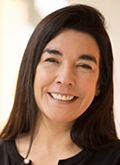 Dolores Albarracín, a Penn Integrates Knowledge Professor with appointments in the School of Arts & Sciences and the Annenberg School for Communication, is among five recipients of the 2024 BBVA Foundation Frontiers of Knowledge Award in Social Sciences. The honor recognizes Dr. Albarracín and her fellow recipients as “revolutionizing the way we understand and measure attitudes” through their research.
The BBVA Foundation established the Frontiers of Knowledge Awards in 2008, and today, the awards are presented through a partnership between the financial services group BBVA and the Spanish National Research Council, a leading public research institution in Spain. In its announcement, the foundation said Dr. Albarracín’s work “has increased our understanding of how attitudes can be changed, particularly with regard to persuasive messages,” and pointed to her close scrutiny of strategies dealing with disinformation and conspiracy theories.
The Social Sciences Award is one of eight awards in different categories. Along with the distinction, recipients are allotted a €400,000 prize (more than $450,000), which they split equally. Dr. Albarracín’s fellow social sciences awardees include Icek Ajzen of the University of Massachusetts Amherst, Mahzarin Banaji of Harvard University, Anthony Greenwald of the University of Washington, and Richard Petty of Ohio State University.
Dr. Albarracín, who also serves as the director of the communication science division of the Annenberg Public Policy Center, most recently began teaching at Penn in 2021. She has received numerous awards and accolades for her research into communication and behavior patterns, and has authored multiple books, including Prediction and Change of Health Behavior: Applying the Theory of Reasoned Action Approach and The Handbook of Attitudes.
Rameen Iftikhar: Gates Cambridge Scholarship
Rameen Iftikhar, who completed a master’s degree in international education development at Penn’s Graduate School of Education in January 2025, has been awarded a Gates Cambridge Scholarship to pursue a PhD in education at the University of Cambridge in England.
Ms. Iftikhar, from Pakistan, is one of 95 new Gates Cambridge Scholars selected worldwide. The scholarship covers the full cost of studying at Cambridge for as long as four years, as well as additional discretionary funding.
Drawing from her background in economics, politics, and international development, Ms. Iftikhar’s doctoral research explores the potential of communities to expand girls’ education and life paths. Her work investigates whether the knowledge, skills, and resources that young girls gain from education translate into capabilities that allow them to pursue alternative life paths and envisions communities as key levers of change in these relationships.
Ms. Iftikhar received the President Gutmann Leadership Award in 2024, recognizing original research contributions and providing funding for conference travel in Europe. She was a graduate research assistant for the course Teaching Beyond September 11 and a course assistant for Education in Developing Countries, both taught by GSE’s Ameena Ghaffar-Kucher.
Mathew Madhavacheril and Co-Researchers Receive Funding from RCSA for Scialog Initiative
A team including Mathew Madhavacheril, an assistant professor of physics and astronomy in the School of Arts & Sciences, is among the first-ever recipients of funding from a new initiative supporting an ambitious 10-year project. The undertaking aims to answer pressing questions about dark energy, dark matter, and supermassive black holes, among other space phenomena.
Dr. Madhavacheril’s team, which includes colleagues from the University of North Carolina at Chapel Hill and the University of Utah, will receive $60,000 in direct costs to support its ongoing research into relativistic transients, or energetic explosions in the broader universe. The award is one of 21 equal allotments that will support 20 scientists from various Canadian and U.S. universities and institutions, part of a broader push to ensure the success of the decade-long Legacy Survey of Space and Time (LSST).
LSST involves taking hundreds of images of the southern sky at the Vera Rubin Observatory on the El Peñon peak of Cerro Pachón, located in northern Chile, on a nightly basis. It produces approximately 20 terabytes of data at a time to help astronomers crack open the mysteries beyond our planet. To jump-start the survey, the Research Corporation for Science Advancement (RCSA) is funneling seed money into Scialog: Early Science with the LSST, an initiative empowering cross-disciplinary connections between early-career scientists, including Dr. Madhavacheril and his co-researchers.
Scialog itself is a three-year initiative, taking its name from a portmanteau of “science” and “dialog.” RCSA hopes that the undertaking will help break down disciplinary silos and serve as a catalyst for major scientific breakthroughs. Dr. Madhavacheril said the Rubin Observatory has made some simulated data available, with real sky data currently scheduled for July 2025.
Tariq Thachil: Ananda Kentish Coomaraswamy Prize
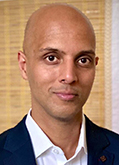 Tariq Thachil, the Madan Lal Sobti Chair for the Study of Contemporary India in the School of Arts & Sciences, has been awarded the Ananda Kentish Coomaraswamy Prize from the Association for Asian Studies (AAS) alongside Adam Auerbach, a professor at Johns Hopkins University who researches South Asia and climate issues. They are being honored for their book, Migrants and Machine Politics: How India’s Urban Poor Seek Representation and Responsiveness, published in 2023 by Princeton University Press.
AAS announced the winners of several prizes during its annual conference in Columbus, OH. Also receiving the prize is the University of Virginia’s Neeti Nair, for her book Hurt Sentiments: Secularism and Belonging in South Asia.
Named for Ananda Kentish Coomaraswamy, a Ceylonese metaphysician and historian, the award “honors a distinguished work of scholarship in South Asian Studies that promises to define or redefine the understanding of whole subject areas.” Specifically, it recognizes works from authors who have already been published and acknowledged in their fields. To determine honorees, AAS seeks nominations of works with “innovative approaches that may concern any topic in any discipline or may cross disciplinary lines.”
Drs. Thachil and Auerbach have received several additional awards and distinctions for Migrants and Machine Politics, including two from the American Political Science Association—the Giovanni Sartori Book Award and the Best Book Award.
Four Penn Faculty Elected to the National Academy of Sciences
Four faculty members from the University of Pennsylvania have been elected to the United States National Academy of Sciences (NAS). The new honorees are Mark Devlin of the School of Arts & Sciences and Katalin Karikó, Virginia Lee, and E. John Wherry III of the Perelman School of Medicine.
The scholars are among 120 new domestic members and 30 new international members selected by their peers this year. Recognized for “distinguished and continuing achievements in original research,” this new class brings the total number of active members to 2,662 and the number of international members to 556.
Dr. Devlin, the Reese W. Flower Professor of Astronomy and Astrophysics, specializes in experimental cosmology. His work in the millimeter and submillimeter spectral bands is geared toward the study of the evolution of structure in the universe. He has led a number of ground-based and high-altitude balloon experiments, including the Atacama Cosmology Telescope and the Balloon-Borne Large Aperture Submillimeter Telescope. More recently, he was appointed co-director of the Simons Observatory, supported by the National Science Foundation (NSF). His pioneering research has earned him an NSF Early Career Development Award and a Sloan Foundation Fellowship. His work has been published in the Astronomical Journal, the Astrophysical Journal, and IEEE Transactions on Nuclear Science.
Dr. Karikó is an adjunct professor of neurosurgery who is renowned for her groundbreaking work in mRNA technology, which laid the foundation for the COVID-19 vaccines. She was awarded the 2023 Nobel Prize in Medicine with Drew Weissman for discoveries that enable the use of modified mRNA in Pfizer-BioNTech and Moderna vaccines. At Penn Medicine, Dr. Karikó helped develop a method to modify mRNA and package it in lipid nanoparticles, making it safe and effective for triggering immune responses. Dr. Karikó also holds 14 U.S. patents and is a professor at the University of Szeged in Hungary. Her contributions to science have been recognized with the Breakthrough Prize in Life Sciences, Princess of Asturias Award, Lasker-DeBakey Clinical Medical Research Award, and Vilcek Prize for Excellence in Biotechnology.
Dr. Lee is the John H. Ware 3rd Professor in Alzheimer’s Research in the department of pathology and laboratory medicine and director of the Center for Neurodegenerative Disease Research. She has been awarded numerous academic honors, notably the Breakthrough Prize in Life Sciences, for the discovery of the genetic origins of three different proteins associated with Alzheimer’s disease, Parkinson’s disease, and related neurodegenerative disorders. This discovery described tau, alpha-synuclein, and TDP-43 as critical proteins and further clarified the role they play in each disease. Dr. Lee has also received the Sheila Essey Award for ALS Research from the ALS Association and the American Academy of Neurology, the Lifetime Achievement Award in Alzheimer’s Disease Research from the Alzheimer’s Association, the Helis Foundation Award for Parkinson’s and Neurodegenerative Disease Research, the Robert A. Pritzker Award for Leadership in Parkinson’s Disease Research from the Michael J. Fox Foundation, the J. Allyn Taylor International Prize in Medicine, and the John Scott Award from the Board of Directors of City Trusts.
Dr. Wherry, the Richard and Barbara Schiffrin President’s Distinguished Professor and chair of systems pharmacology and translational therapeutics, is a pioneer in the field of T cell exhaustion, the mechanisms by which T cell responses are attenuated during chronic infections and cancer. These exhausted T cells also have an emerging role in autoimmunity. Dr. Wherry helped identify the role of the “checkpoint” molecule PD-1 and others for reinvigoration of exhausted T cells in cancer. His work has defined the underlying molecular and epigenetic mechanisms of exhausted T cells, and his laboratory has recently focused on applying systems immunology approaches to define immune health patients across a spectrum of diseases. In recent years, his laboratory established a new immune health project to interrogate and use immune features to identify novel treatment opportunities.
2025 Projects for Progress Recipients
For five years and under the direction of Penn’s Office of Social Equity & Community (SEC), the Projects for Progress (P4P) initiative has supported teams of University staff, students, and faculty in their efforts to address serious issues that impact everyday lives in the city of Philadelphia. This cohort of Penn P4P teams will receive up to $100,000 each to support education, health, and urban agriculture in Philadelphia. SEC received 16 applications for the award this year.
“It is always exciting to see the thoughtful proposals that come in from the applicant teams, especially when they use this opportunity to take an interdisciplinary approach to problem-solving,” said Nicole Maloy, who oversees the initiative and serves as director of the Office of SEC. “As we all know, incorporating a range of perspectives leads to greater innovation and better results, so that’s exactly what you want to have whenever you are attempting to generate real-world solutions.”
Ms. Maloy emphasized that all of the applicants deserve accolades for embodying Penn founder Benjamin Franklin’s assertion that serving humankind is “the great aim and end of all learning.” University Chaplain and Vice President for Social Equity & Community Reverend Charles “Chaz” Howard agreed. “Penn is at its best when we are in a posture of service,” he said.
As Dr. Howard congratulated the 2025 co- hort, he noted his hope that others would find encouragement in their example. “This year’s award recipients, like their predecessors, will help our University and our community to keep working to be our best selves.”
This year’s Projects for Progress recipients are:
The College App Classroom
The College App Classroom is a free 28-lesson modular course created to address the curricular gap for students and their supporters who need vetted instructional resources about applying to college and financial aid. The course is currently piloted in six schools. The project’s goal is to build sustainable models to increase college access for students across the School District of Philadelphia.
- Danielle Fitzgerald, senior content producer, communications in the Office of Undergraduate Admissions
- Lamesha Brown, director of the Penn College Achievement Program (PennCAP) at Penn First Plus
- Ronald Harvey, director of the Penn Rising Scholar Success Academy (PennRSSA) in the Division of Student Engagement
- John Haggerty, senior associate director of undergraduate aid in Student Registration & Financial Services
- Ellen Rhudy, associate director of instructional design in the Center for Excellence in Teaching, Learning and Innovation (CETLI)
Providing Access to Health (PATH)
PATH aspires to address the lack of availability and accessibility of health system navigation support among under-resourced communities. The team will assist community members in applying for public health insurance, finding providers, scheduling appointments, managing medical bills, and securing medications. PATH will establish support sessions at community sites, develop a call center for follow-up, and create a platform for medication procurement and delivery.
- Bayan Galal, medical student in the Perelman School of Medicine
- Ziad Hassan, medical student in the Perelman School of Medicine
- Jaya Aysola, executive director in the Penn Medicine Center for Health Equity Advancement, and associate professor of medicine in the Perelman School of Medicine
- Christina Bach, psychosocial content editor, OncoLink, Penn Medicine Department of Radiation Oncology
- Allison Hoffman, professor of law in Penn Carey Law
Urban Food Systems Community of Practice
This award will establish the Urban Food Systems Community of Practice (CoP), uniting Philadelphians to improve the city’s food system. It will address the varied needs of urban growers through the Urban Growers Institute and Keep Growing program. This CoP will facilitate collaboration between Penn staff and students and food system leaders in Philadelphia.
- Emylee Fleshman, program coordinator for Public Health and Well-Being, Wellness at Penn
- Maris Altieri, UACS nutrition systems and education manager at the Netter Center for Community Partnerships
- Elliot Bullen, research associate and project manager at PennPraxis in the Weitzman School
- Frankie Cameron, program manager in the Penn Center for Public Health at Penn Medicine
- Doris Wagner, professor of biology in the School of Arts & Sciences

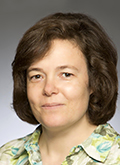 Marisa C. Kozlowski, the Ponzy Lu Endowed Professor of Chemistry, will become associate dean for the natural sciences in the School of Arts & Sciences, effective June 1, 2025.
 Benjamin Nathans, the Alan Charles Kors Endowed Term Professor of History in the School of Arts & Sciences, has won the 2025 Pulitzer Prize in General Nonfiction for his book To the Success of Our Hopeless Cause: The Many Lives of the Soviet Dissident Movement. The narrative tells the story of the men and women who, beginning in the 1960s, demanded that the Kremlin obey its own laws.
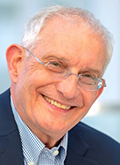 Michael Paul Cancro, a professor and the vice chair for faculty development and academic affairs in the department of pathology & laboratory medicine in the Perelman School of Medicine (PSOM), died on February 7. He was 75.
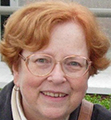 Virginia (Ginny) Greene, G’68, a former senior conservator and director of the conservation lab at the Penn Museum, died on January 23. She was 82.
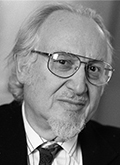 Richard Wernick, an emeritus professor of music in the School of Arts & Sciences, died on April 25 from age-associated decline. He was 91.