
Richard Wernick, Music
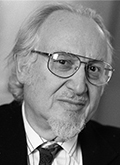 Richard Wernick, an emeritus professor of music in the School of Arts & Sciences, died on April 25 from age-associated decline. He was 91.
Born in Boston, Massachusetts, Mr. Wernick attended Brandeis University, where he studied composition with Irving Fine, Harold Shapero, and Arthur Berger. He then went on to study composition with Leon Kirchner at Mills College and conducting with Leonard Bernstein at the Tanglewood Music Center. After graduating from Mills College, Mr. Wernick taught at SUNY Buffalo and the University of Chicago before joining Penn’s faculty in 1968 as an associate professor of music. He became a full professor in 1977, and eventually chaired the music department for four years, working indefatigably to enhance Penn’s programs in both musical composition and musical scholarship. Graduate students in musical composition remember Mr. Wernick as a teacher who feigned austerity and severity, but who adored his students, sparing no effort in sharing with them his abiding commitment to the craft of composition. At various times during his tenure at Penn, Mr. Wernick served as the Magnin Professor of Humanities and the Irvine Fine Professor of Music before retiring in 1996.
Mr. Wernick’s music was extensively recorded and widely renowned; during his career, Mr. Wernick earned awards and commissions from the Ford, Guggenheim, and Naumburg Foundations, among many others. In 1977, he won the Pulitzer Prize for Visions of Terror and Wonder, a powerful work for mezzo-soprano and orchestra set to texts from the Old and New Testaments and the Quran, all of which contain appeals for peace. His Violin Concerto tied for first place in the 1986 Kennedy Center’s Friedheim Award for New American Music, and in 1991, his String Quartet No. 4 made him the first two-time winner of the Friedham Award. He was named the 2006 Composer of the Year by the Classical Recording Foundation. His work has been performed at the Academy of Music, Curtis Institute, Carnegie Hall in New York, the Ravenna Festival in Italy, the Aspen Music Festival in Colorado, and elsewhere around the world.
Mr. Wernick developed an eclectic style that emphasized formal and harmonic complexity, while offering at the same time an extraordinary measure of accessibility. In addition to his composing, Mr. Wernick conducted extensively. He served as music director of the Winnipeg Ballet and as conductor of a new music ensemble at SUNY Buffalo. In 1979, he led the Philadelphia Orchestra in performing George Crumb’s orchestral work Star Child. During Riccardo Muti’s tenure as music director of the Philadelphia Orchestra, beginning in 1983, Mr. Wernick served as his advisor on the selection of new works to be performed by the orchestra. At Penn, Mr. Wernick led the Penn Contemporary Players for many years.
His life as a composer is documented in the autographs, scores, recordings, letters, and photographs that comprise the Wernick Papers in the Kislak Center for Special Collections at Penn.
Mr. Wernick is survived by his wife of sixty-eight years, Bea; and his two sons, Lewis and Adam. Services will be private; donations in his name may be made to Children’s Hospital of Philadelphia, Box 781352, Philadelphia, PA 19178.